



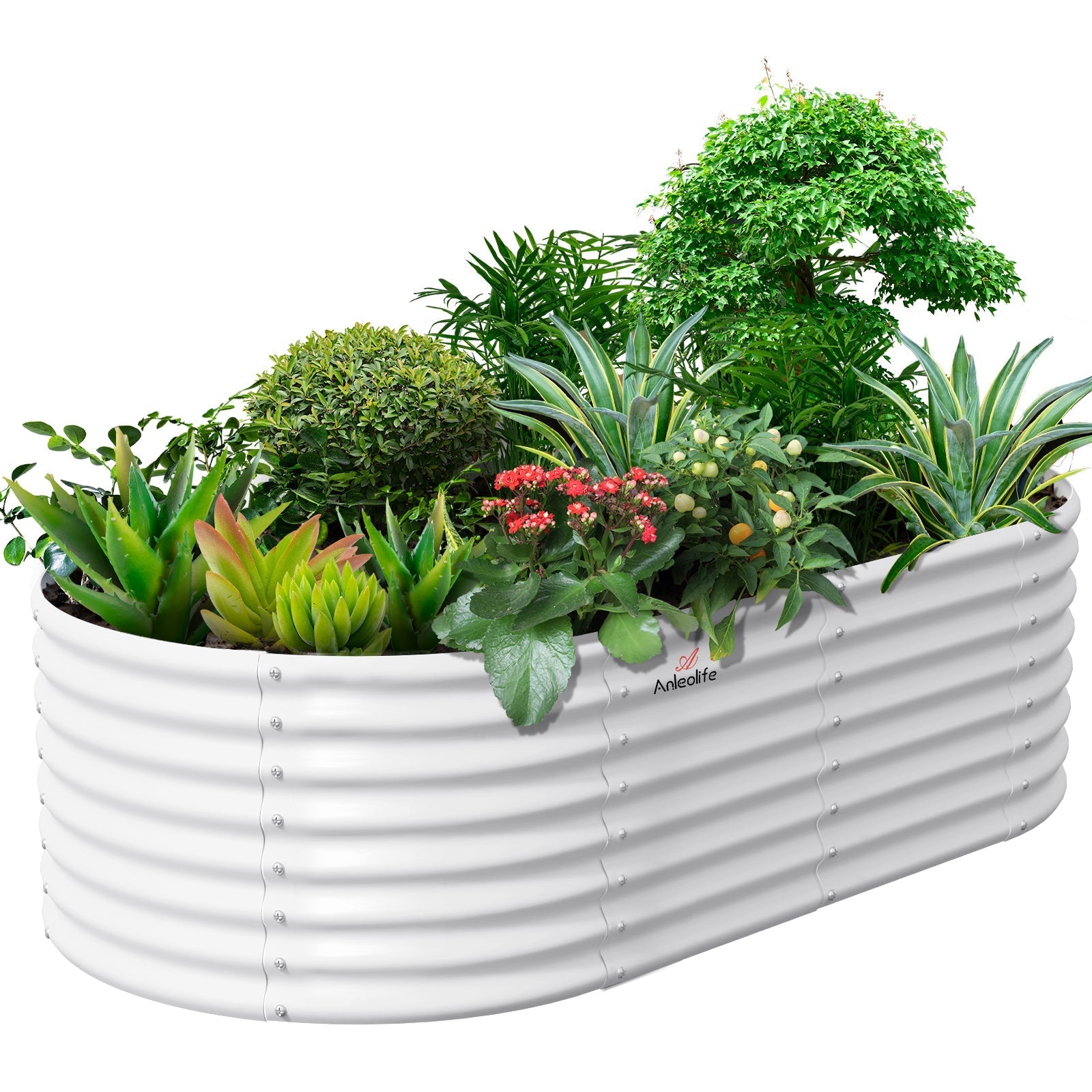
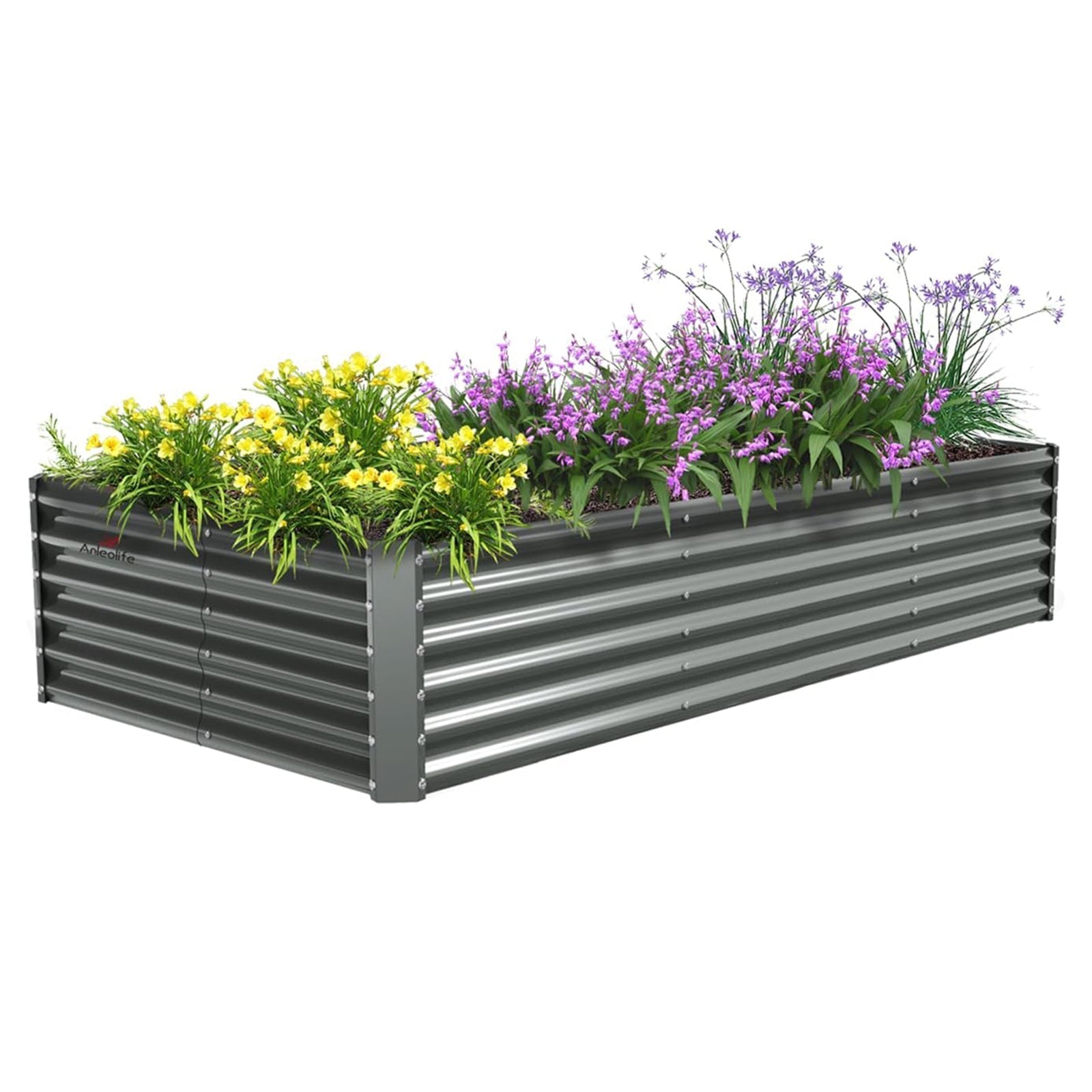

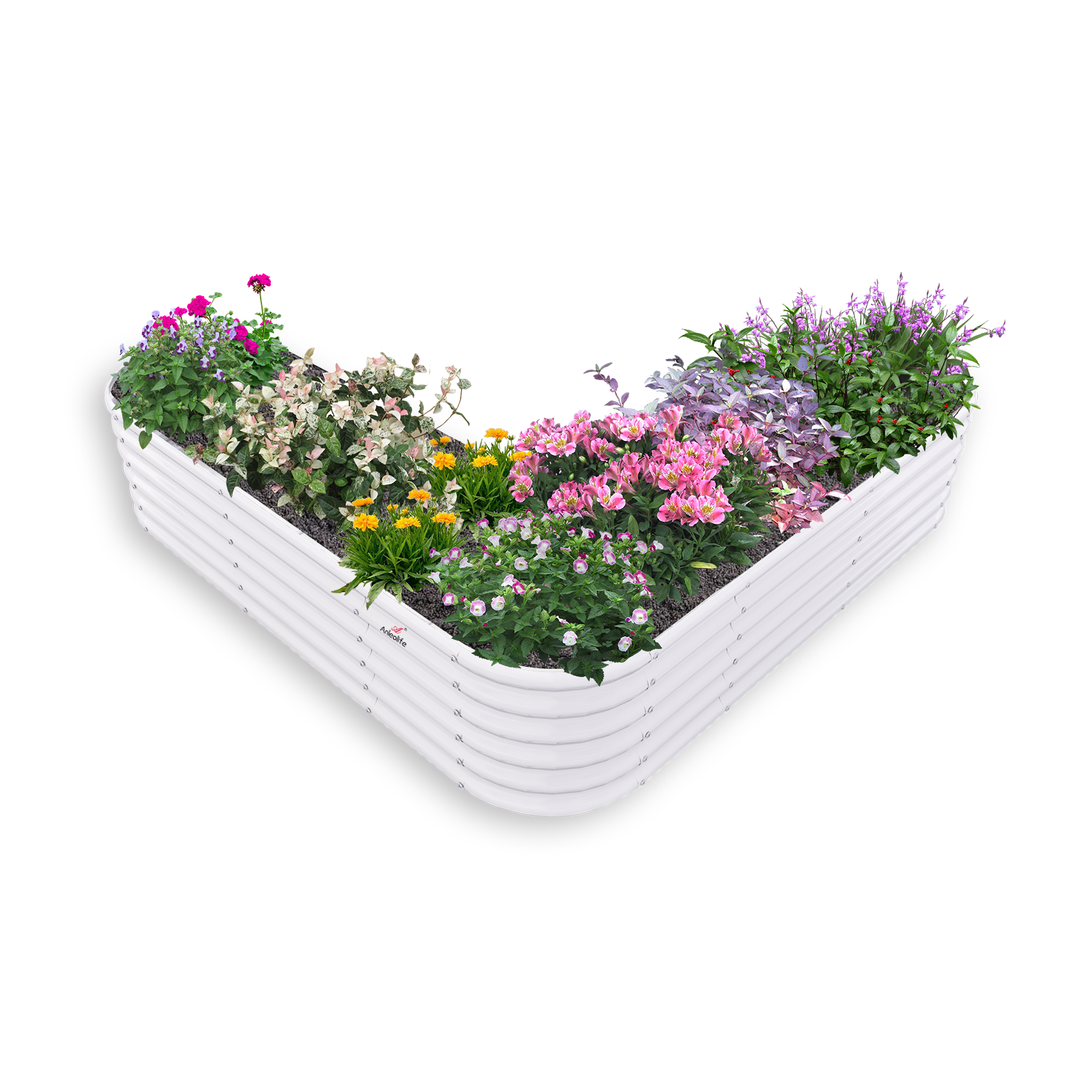
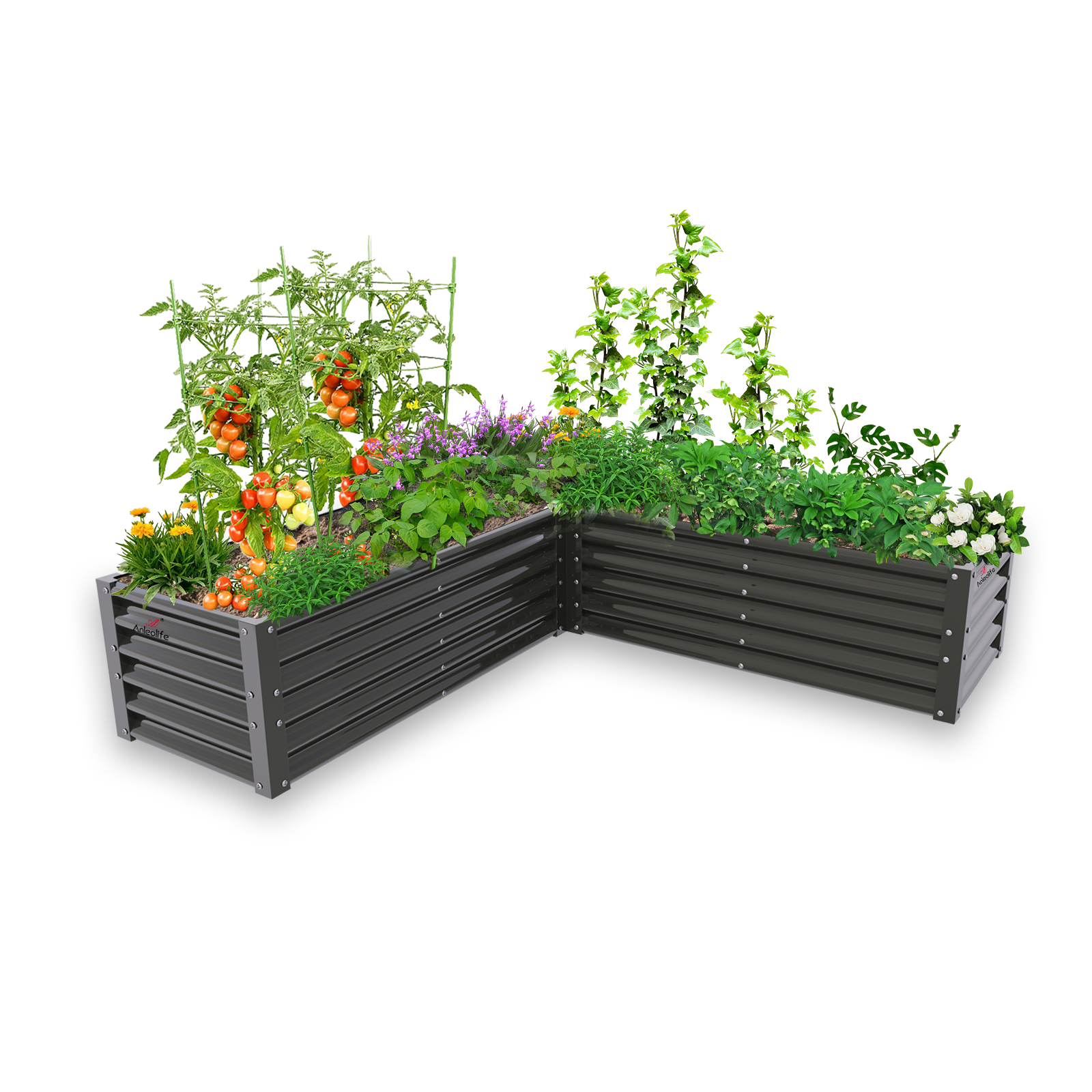
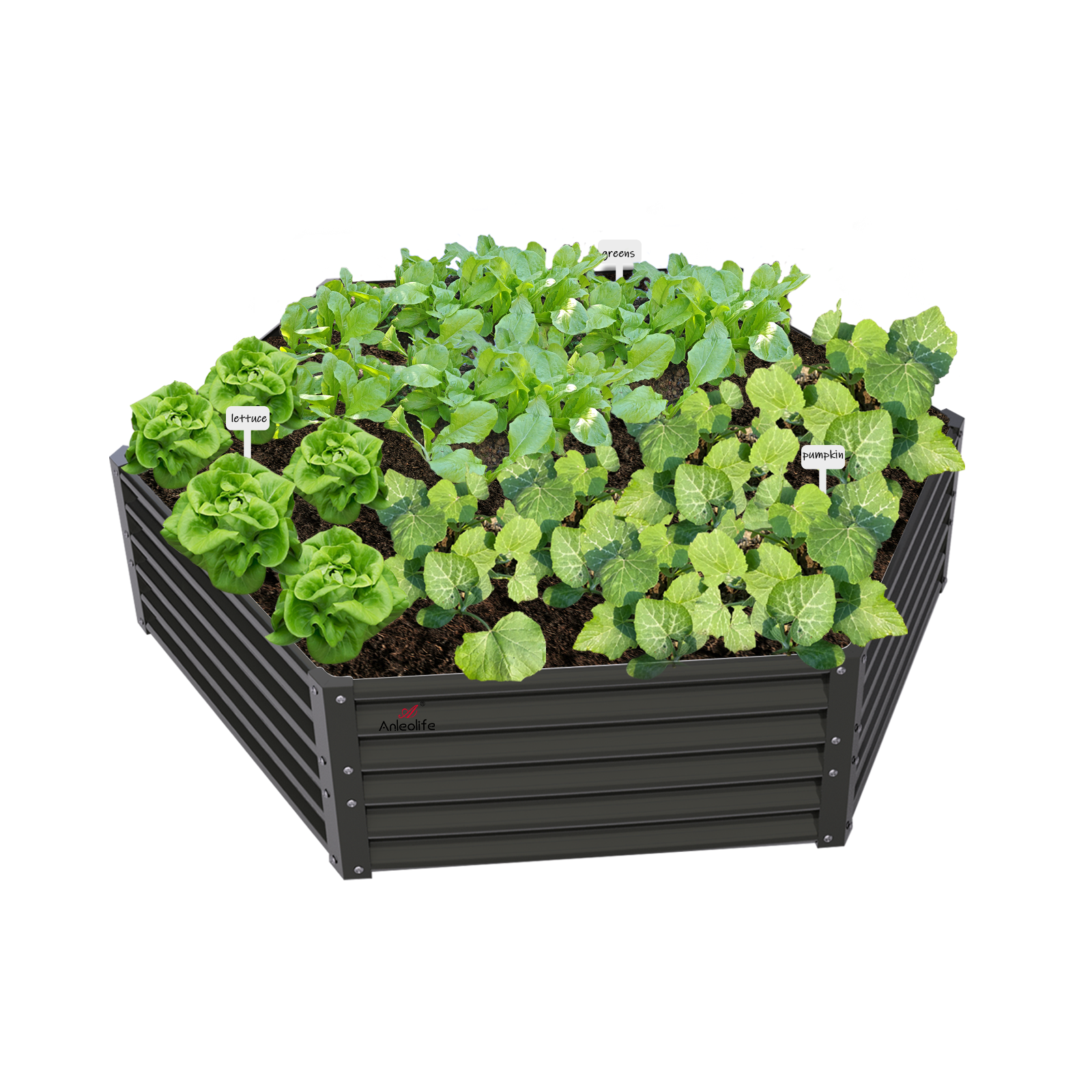
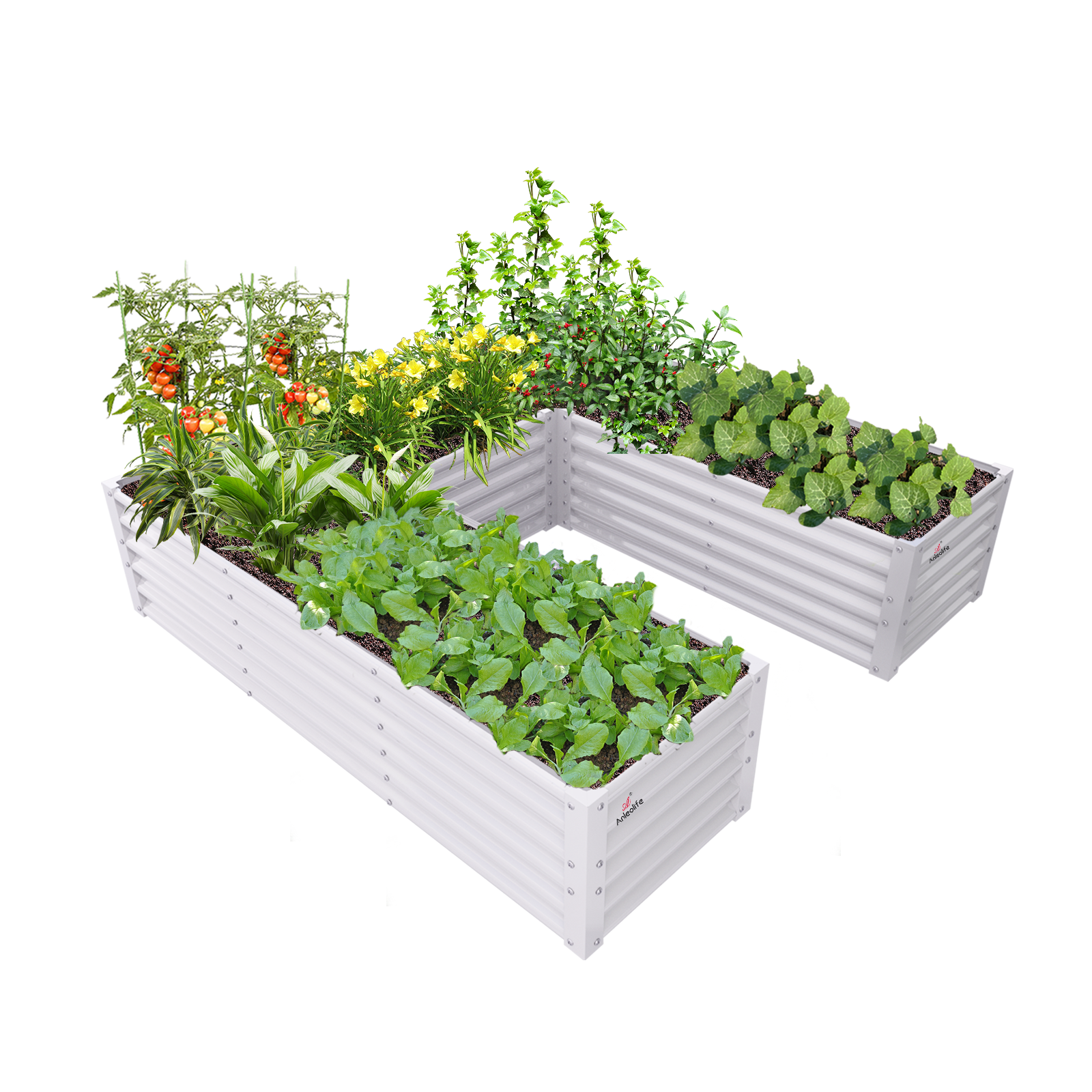

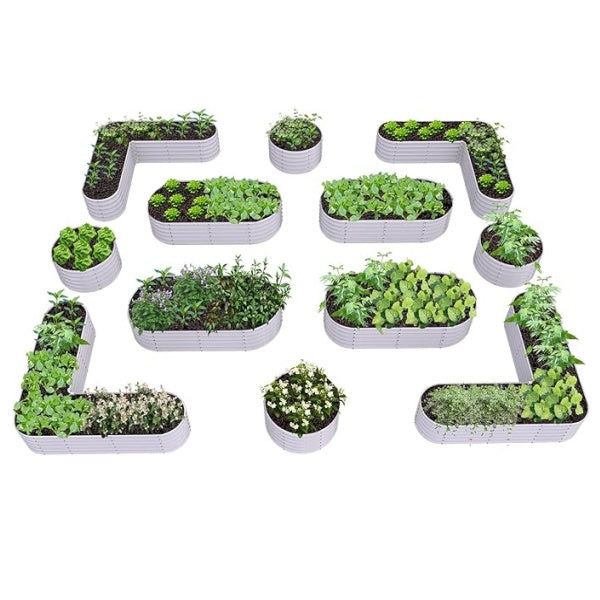


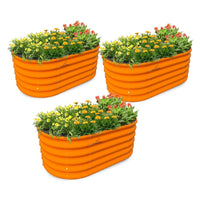
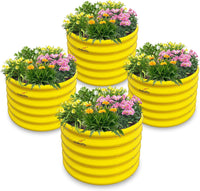
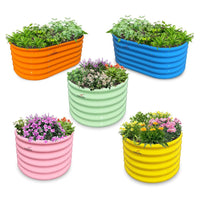




ALT: Gardener with chronic back pain choosing the right raised bed height for comfortable planting
Why Raised Bed Height Is the Most Important Decision You'll Make as a Gardener With Chronic Back Pain
The single most important question gardeners with chronic back pain ask us is this: how tall does my raised bed need to be before gardening stops hurting? The direct answer is that no universal number fits every body, but a well-informed raised bed garden layout — one built around your specific physical constraints rather than a generic planting plan — can eliminate the forward bending and ground-level kneeling that aggravate lumbar and cervical pain almost entirely.
This question deserves a deeper analysis right now because the raised bed gardening movement has matured considerably. Where early adopters were primarily focused on soil quality and drainage, today's home growers are increasingly asking how their raised bed layout can also serve their bodies. For gardeners managing herniated discs, spinal stenosis, osteoarthritis, or chronic muscle tension, the height of the bed wall is not an aesthetic preference — it is a therapeutic decision. Getting it right means the difference between a garden you tend joyfully for decades and one you abandon after a single painful season.
The Growing Intersection of Chronic Pain Management and Raised Bed Gardening
Raised bed gardening is one of the fastest-growing segments of the North American home gardening market, and its appeal has shifted significantly in recent years. Originally embraced for its soil control and pest management advantages, the raised bed planting layout has increasingly been adopted by older adults, people recovering from injury, and individuals managing long-term musculoskeletal conditions. In our work with clients across the country, a pattern we consistently see is that the decision to move from in-ground growing to a raised bed setup is almost always triggered by pain — specifically, the pain of bending, kneeling, and rising from ground level repeatedly over the course of a gardening session.
The demographics driving this trend are significant. According to the Centers for Disease Control and Prevention (CDC), chronic pain affects tens of millions of American adults, with back pain consistently ranking as one of the most common types. Simultaneously, the American Gardening Association and similar bodies have documented steady growth in the over-55 gardening demographic. These two trends intersect directly in the raised bed category: gardeners who can no longer comfortably work at ground level are seeking structures that bring the garden up to meet them.
What makes this moment particularly relevant is that the market has responded with a much wider range of bed heights than existed even a few years ago. Products now range from modest 12-inch walls designed to warm soil and improve drainage, all the way up to 35-inch waist-high structures that allow seated or near-standing work. The challenge for the individual gardener is that marketing language rarely translates these options into ergonomic guidance. A bed described as "extra tall" on a product page may or may not be tall enough to protect your specific spine, depending on your height, your exact condition, and your working posture.
This is why the conversation about raised bed garden layout has to begin with the body — specifically, with how the spine moves and fails during gardening — before it can meaningfully address bed dimensions.
How Bed Height Directly Affects Spinal Load: The Biomechanics Explained
Understanding why height matters requires a brief look at how the spine responds to forward flexion — the bending-forward motion that defines almost every ground-level gardening task.
The Biomechanics of Bending and Lumbar Compression
Forward flexion is the technical term for bending forward at the waist, and it is one of the most mechanically demanding movements the lumbar spine performs. Research in occupational biomechanics, including work published through institutions like the National Institute for Occupational Safety and Health (NIOSH), consistently shows that the compressive forces on lumbar discs increase substantially as the torso bends forward — even before any weight is added. When a gardener reaches down to weed, transplant, or water at ground level, the lower back muscles must contract powerfully to support the weight of the torso against gravity, and the intervertebral discs bear compressive loads that can be multiples of simple standing load.
For someone with a healthy spine, these forces are manageable and transient. For someone with a herniated disc, spinal stenosis, degenerative disc disease, or chronic muscle imbalance, repeated forward flexion at low angles can trigger inflammation, nerve compression, or muscle spasm — sometimes severe enough to end the gardening session entirely and cause pain that persists for days.
The Ergonomic Sweet Spot: What Height Achieves What
Ergonomic height in a raised bed context refers to the wall height that allows a gardener to work with the torso at or near vertical — either standing upright or seated — without any significant forward flexion of the lumbar spine. This target height varies by individual body dimensions, primarily standing elbow height and, for seated gardeners, seated elbow height.
As a practical framework used consistently in our work with home gardeners managing physical limitations:
- Beds in the 18-inch range reduce the most acute ground-level bending but still require meaningful forward lean for most adults when working at the bed's center.
- Beds in the 24-inch range — what the industry commonly calls "extra tall" — represent a meaningful improvement, particularly for shorter gardeners or those who can still tolerate mild bending.
- Beds in the 30-inch range approach the ergonomic threshold for many standing adults of average height, dramatically reducing lumbar load during most tasks.
- Beds at 35 inches — genuinely waist-high for many users — allow near-vertical torso posture for standing work and are the recommended starting point for gardeners whose pain is severe or whose mobility is significantly limited.
The raised bed layout implications are equally important: a deeper bed (front-to-back dimension) requires more reaching, which reintroduces forward lean even at appropriate wall heights. This is why bed width deserves as much attention as bed height.
Width, Reach, and the Hidden Ergonomic Problem
A common mistake in planning a raised bed planting layout for pain management is focusing exclusively on height while ignoring bed width. A 30-inch-tall bed that is 8 feet wide is only ergonomically safe if you can access it from both long sides — and even then, reaching to the center of a 4-foot-wide bed at any height requires some forward lean. For gardeners with severe limitations, narrower beds — those in the 2- to 3-foot width range — allow all planting zones to be reached without any spinal flexion. When planning a modular garden layout, pairing appropriate height with a conservative bed width is often the highest-impact ergonomic decision a pain-affected gardener can make.
The Role of Stable, Level Surfaces
One factor consistently underestimated in discussions of raised bed height and chronic pain is the importance of the surface surrounding the bed. Uneven ground, soft lawn, or gravel pathways force micro-adjustments in standing balance that engage and fatigue the very lumbar stabilizers that are already compromised. Gardeners who invest in the right bed height but neglect the path and standing surface often find they still experience pain — not from the gardening motion itself, but from the postural effort of maintaining balance on imperfect ground.
Evidence and Perspectives: Comparing Raised Bed Height Approaches for Pain-Affected Gardeners
Different schools of thought exist on how best to configure a raised bed garden layout for chronic pain management, and each approach has genuine merit alongside real trade-offs.
| Perspective / Approach | Strengths | Trade-offs | Best Fit |
|---|---|---|---|
| Standard 18" bed with wide stance technique | Lower cost, widely available, suitable for mild discomfort | Still requires forward lean for most tasks; limited benefit for significant pain | Gardeners with occasional mild back tightness rather than chronic conditions |
| 24" extra-tall bed with narrow width | Good mid-range improvement; accessible price point; reduces acute bending | May still require forward lean for taller gardeners or deep-center reaching | Gardeners with moderate chronic pain who retain reasonable flexibility |
| 30" extra-tall with 3-ft width | Strong ergonomic profile for standing gardeners of average or above-average height | Limits planting volume per bed; requires more beds for equivalent growing area | Gardeners with significant lumbar conditions who garden standing |
| 35" waist-high with seating option | Closest to clinical ergonomic ideal; enables seated gardening; minimal spinal load | Higher initial investment; requires garden stool or chair as complementary tool | Gardeners with severe chronic pain, post-surgical recovery, wheelchair users |
| Modular, height-adjustable systems | Maximum flexibility; can be reconfigured as needs change | More complex assembly; higher upfront cost | Gardeners whose conditions change over time or who plan long-term expansion |
In our direct observation of how home gardeners adapt their raised bed layouts over time, the most consistent regret we hear is that gardeners initially chose a bed height based on cost or aesthetics and had to retrofit or replace their setup within a season or two as their pain either persisted or worsened. Starting with the ergonomically appropriate height from the outset is nearly always the more economical long-term choice.
It is also worth noting that material matters alongside height. Galvanized steel raised garden beds — like those offered across the Anleolife product line — provide the structural rigidity to maintain precise wall heights over years of use, resisting the warping and settling that can reduce the effective working height of wood or composite alternatives over time. Anleolife's galvanized steel beds are designed for a lifespan of up to 20 years, which makes the ergonomic investment meaningful rather than temporary. For gardeners in regions with high humidity and heavy rainfall, the relationship between material and long-term performance is particularly important — something explored in depth in this guide to choosing raised garden bed materials that thrive in humid Southern climates.
Where the Raised Bed Height Conversation Is Heading — and What It Means for You
The ergonomic raised bed garden layout is no longer a niche accommodation for people with extreme physical limitations — it is becoming a mainstream design consideration for the majority of serious home gardeners. As the population of home growers ages and as awareness of occupational and lifestyle-related musculoskeletal health grows, the demand for beds at 24 inches, 30 inches, and 35 inches continues to outpace demand for the traditional 12- to 18-inch standard height. Manufacturers are responding, but the retail landscape has not yet caught up with clear, body-centric buying guidance.
For individual gardeners managing chronic back pain, the practical implications of this trend are encouraging. The product options available today — including genuinely waist-high structures designed from the ground up for accessibility — are better than they have ever been. At the same time, the abundance of options creates its own decision challenge, which is why the framework in this article — starting with your spine, not with a bed catalog — is the right starting point.
Several actionable takeaways flow directly from the analysis above:
First, identify your target working height before you shop. Stand in your kitchen and find the counter height at which you can work with your torso fully vertical and your elbows comfortably bent. That counter height is approximately your ergonomic target for a raised bed wall. Use it as your filter when comparing products.
Second, prioritize narrow bed widths alongside appropriate height. A 35-inch waist-high bed that is 4 feet wide accessed from one side still requires bending. A 30-inch bed that is only 3 feet wide may serve your spine better because you never need to reach uncomfortably.
Third, plan your raised bed layout to include stable, level pathways between beds. Poured concrete, compacted gravel, or pavers provide the stable footing that allows your spine to work as efficiently as the bed height enables.
Fourth, think in decades, not seasons. A well-chosen galvanized steel raised bed, with its 20-year design lifespan, is not a seasonal purchase — it is a long-term infrastructure investment. Choosing the right height now means choosing a garden environment that will serve your body well through changes in your condition, your age, and your mobility.
Fifth, consider modularity as a future-proofing strategy. Planning a modular garden layout from the outset allows you to expand, reconfigure, or add taller sections as your needs evolve — without abandoning your existing investment.
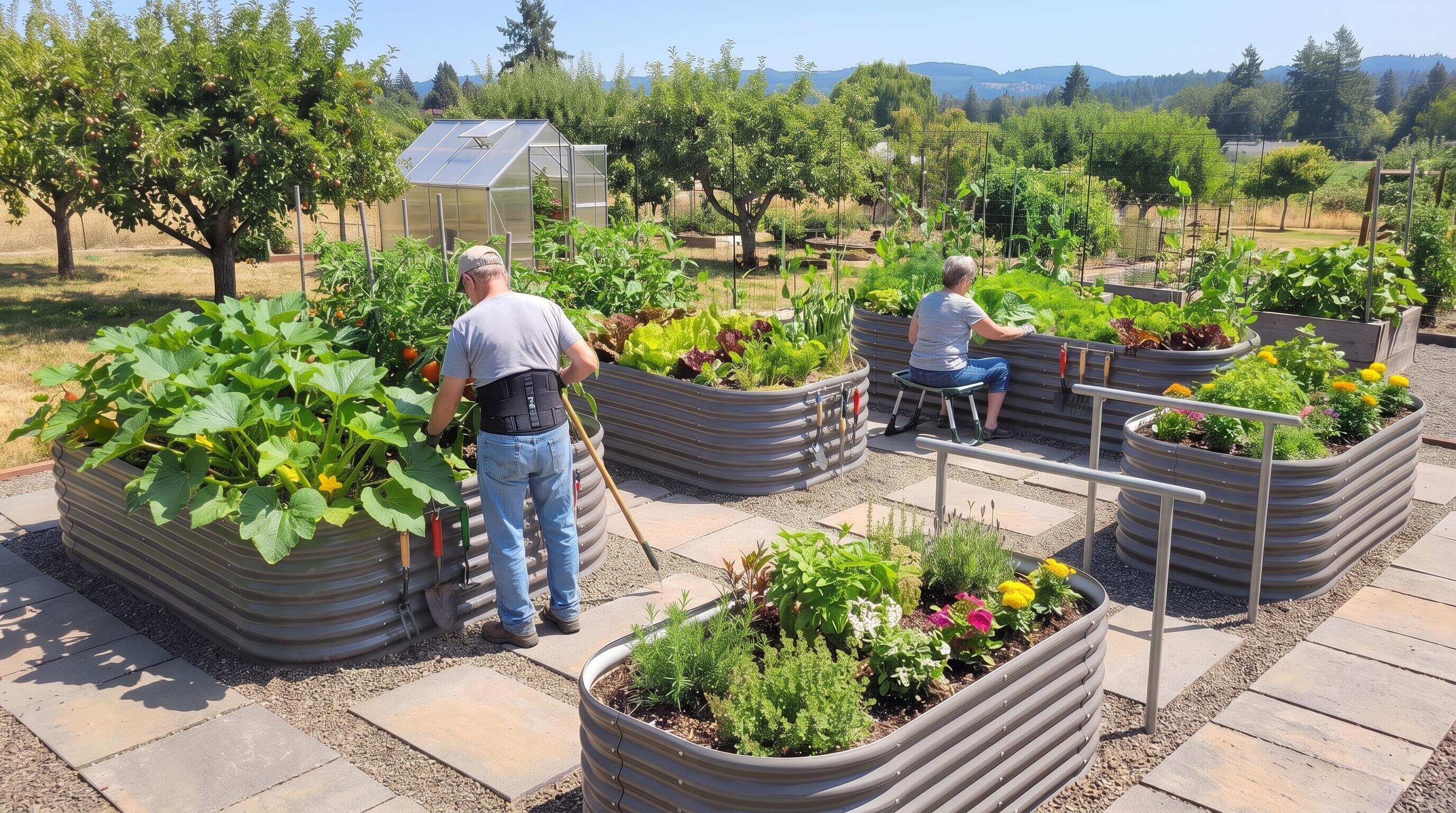
ALT: Waist-high raised bed garden layout designed for gardeners managing chronic back pain, showing accessible planting height and stable pathway
Questions & Answers
Q1: How do I determine the correct raised bed height for my specific type of back pain?
The best starting point is to identify your standing elbow height — the distance from the floor to your relaxed, bent elbow while standing — and use that as your target working surface height. Gardeners with lumbar disc conditions generally benefit most from heights that allow a completely vertical torso. Those with muscle-based pain may have more flexibility but still benefit from reducing repetitive forward bending. Consulting a physical therapist before finalizing your raised bed garden layout can provide personalized guidance, especially if your condition involves nerve compression.
Q2: Are wider raised beds ever appropriate for back pain sufferers?
Wider beds are appropriate only when access from both long sides is fully possible and when bed height already eliminates the need for forward lean. A 4-foot-wide bed accessed from both sides places the maximum reach at roughly 2 feet, which is manageable at 30- to 35-inch heights for most standing adults. However, if your mobility, balance, or pain level means you typically work from one side only, keeping bed width at 2 to 3 feet is strongly advisable regardless of height. The raised bed planting layout should always prioritize reachability over growing volume.
Q3: How long does it take to notice pain relief after switching to an ergonomic raised bed height?
Most gardeners report a noticeable reduction in post-gardening back soreness within the first few sessions in a properly sized bed — often immediately, because the lumbar loading during the gardening work itself is reduced. However, full benefit depends on also adjusting surrounding factors: pathway stability, tool handle lengths, seating support if needed, and total time on your feet. Raised bed gardening is not a medical treatment, but an ergonomically configured raised bed layout, combined with appropriate physical conditioning and medical guidance, can meaningfully improve the quality and comfort of your gardening experience over the long term.
Summary
Choosing the right raised bed height for chronic back pain is fundamentally a biomechanical decision before it is a gardening one. Three core findings from this analysis bear repeating.
First, forward flexion of the lumbar spine is the primary driver of gardening-related back pain, and raising the bed wall directly and proportionally reduces the angle of that flexion during every planting, weeding, and harvesting task. The ergonomic benefit of moving from an 18-inch bed to a 30- or 35-inch bed is not marginal — for a gardener with a significant lumbar condition, it can be transformative.
Second, height alone is insufficient. Bed width, pathway surface quality, and the depth of your soil system all influence how much forward lean your body actually performs during a session. A comprehensive raised bed planting layout for pain management addresses all of these variables together.
Third, material and durability are part of the ergonomic equation. A bed that settles, warps, or requires replacement after two seasons is not genuinely ergonomic — it is a temporary workaround. Investing in a high-quality galvanized steel structure with a 20-year lifespan ensures that your carefully calibrated garden height remains stable and consistent for decades.
For your next step: measure your standing and seated elbow heights today, use those numbers as your non-negotiable filter when evaluating beds, and then visit Anleolife to explore the full range of raised bed heights — from 18-inch standard to 35-inch waist-high — that can be configured to meet your body's specific needs.
Ready to build a garden that works with your body, not against it? Explore Anleolife's full raised bed lineup — available from 18 inches to 35 inches tall — on the official Anleolife website, and through major retailers including Amazon, Walmart, Home Depot, Lowe's, and Wayfair. With warehouse locations across California, Texas, Florida, New York, Illinois, and Washington, your order arrives in 3–8 business days. Start with the height that fits your spine, and let a modular design grow with you — from your first ergonomic bed to a complete planting-and-raising ecosystem built for long-term comfort and joy.
References
- Centers for Disease Control and Prevention (CDC). "Chronic Pain Among Adults."
https://www.cdc.gov/ - The Old Farmer's Almanac. "Raised Bed Garden Layout Plans."
https://www.almanac.com/raised-bed-vegetable-garden-layouts-beginners - Savvy Gardening. "4x8 Raised Bed Vegetable Garden Layout Ideas."
https://savvygardening.com/4x8-raised-bed-vegetable-garden-layout/ - American Society of Agronomy. "Soil Health and Raised Bed Gardening Practices."
https://www.agronomy.org/
Note: Standards and guidelines may be updated; please check the latest official documents or consult professional advisors for current recommendations.