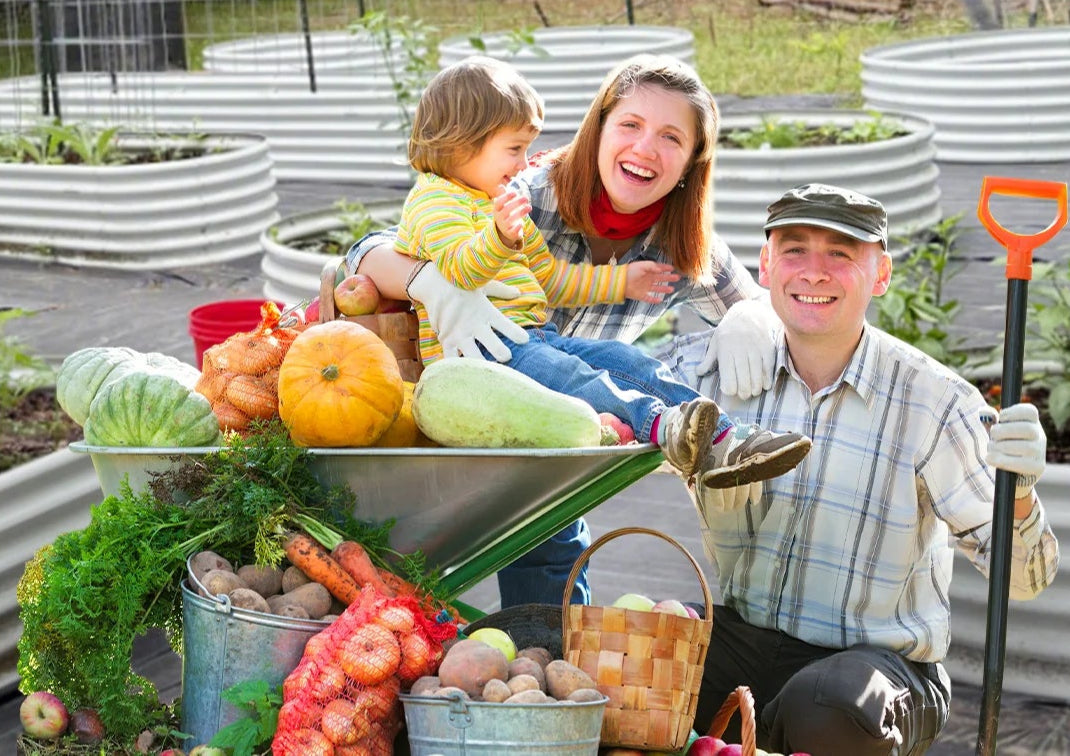



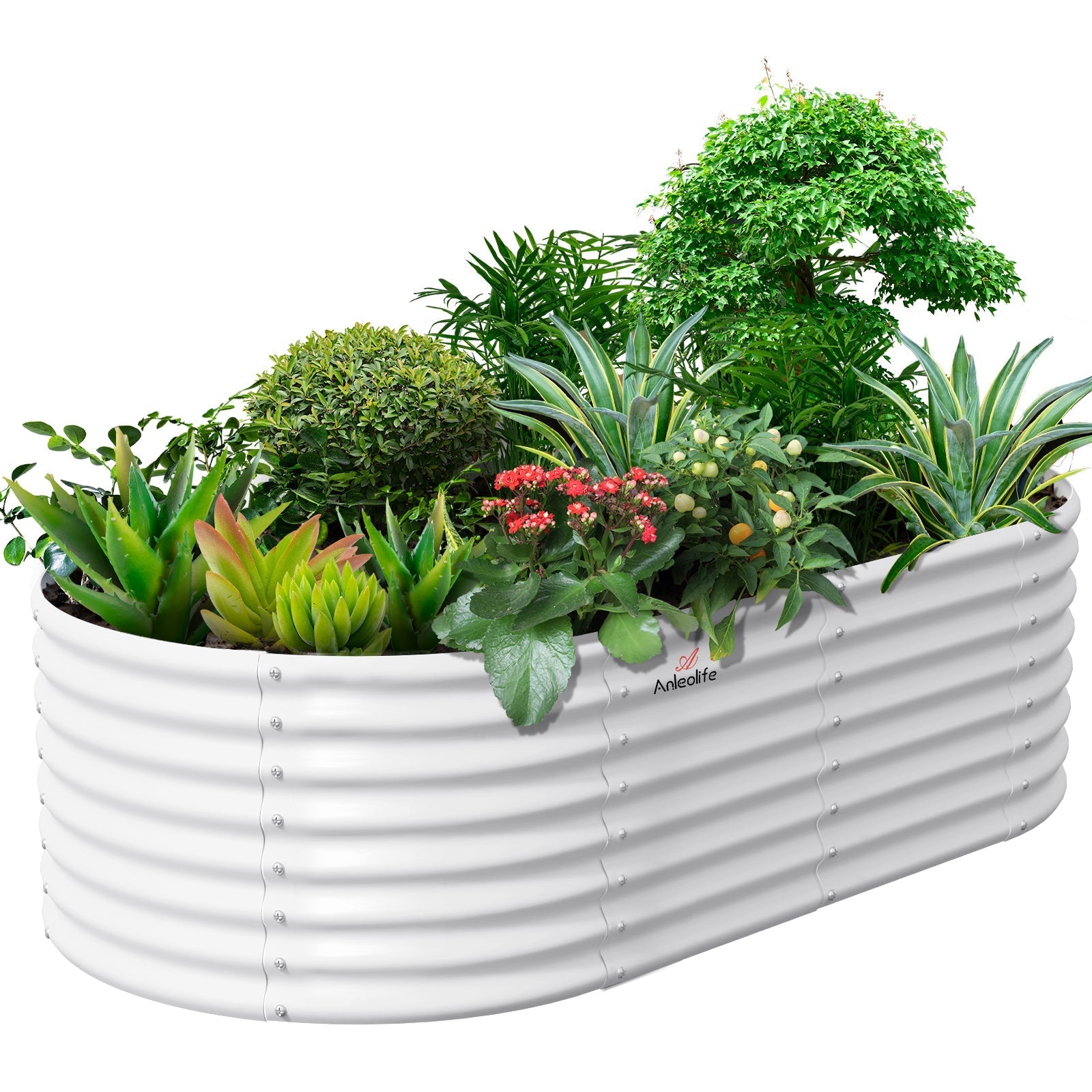
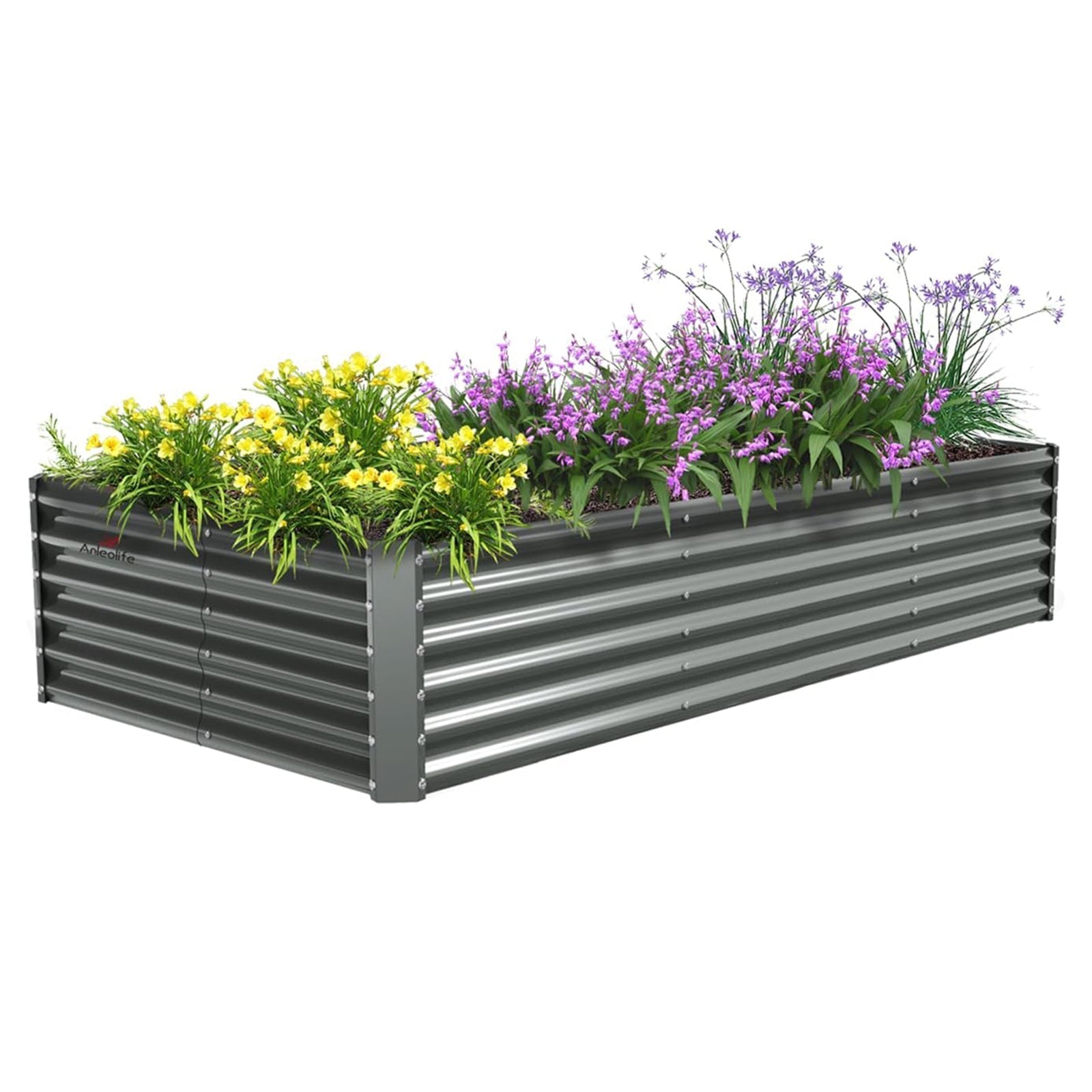

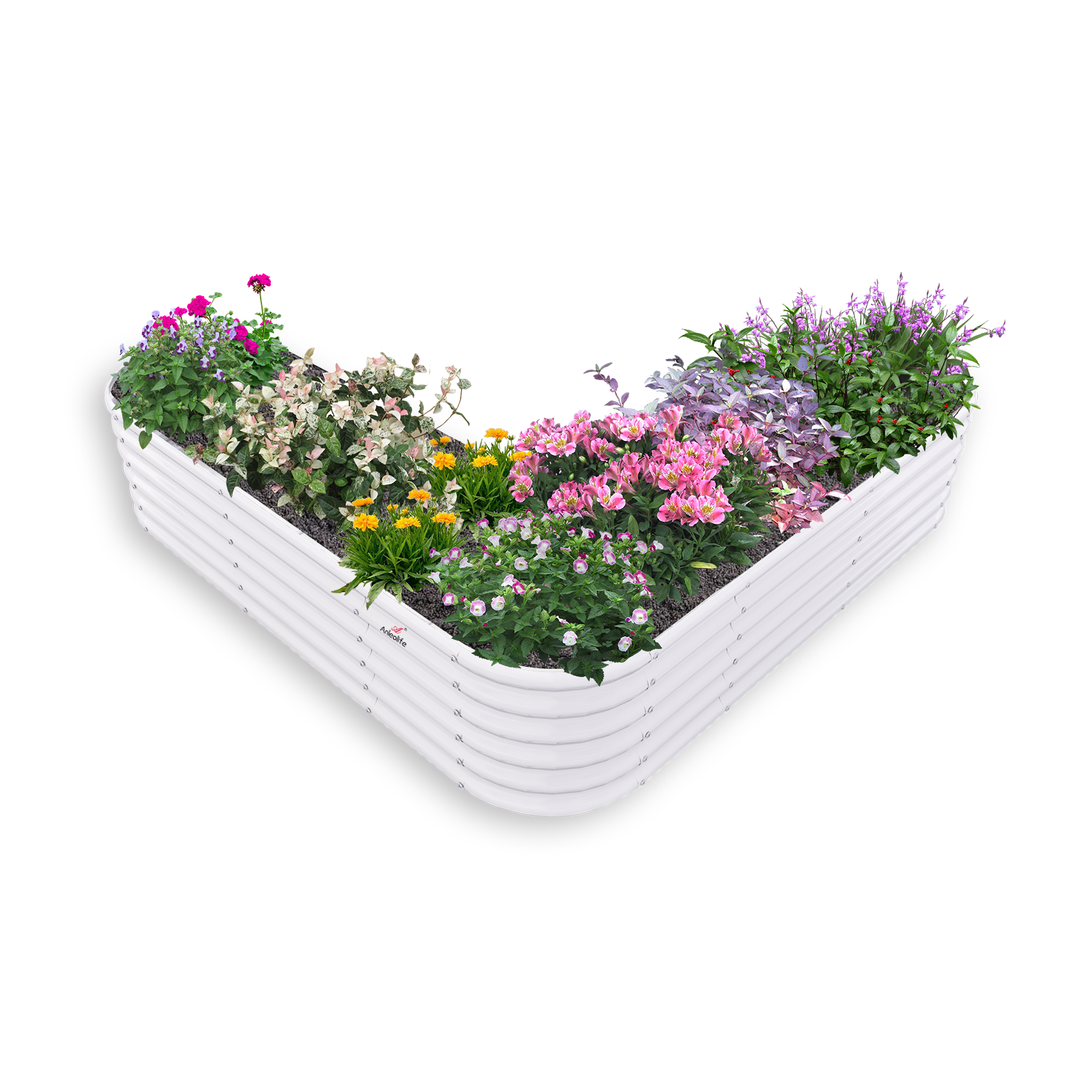
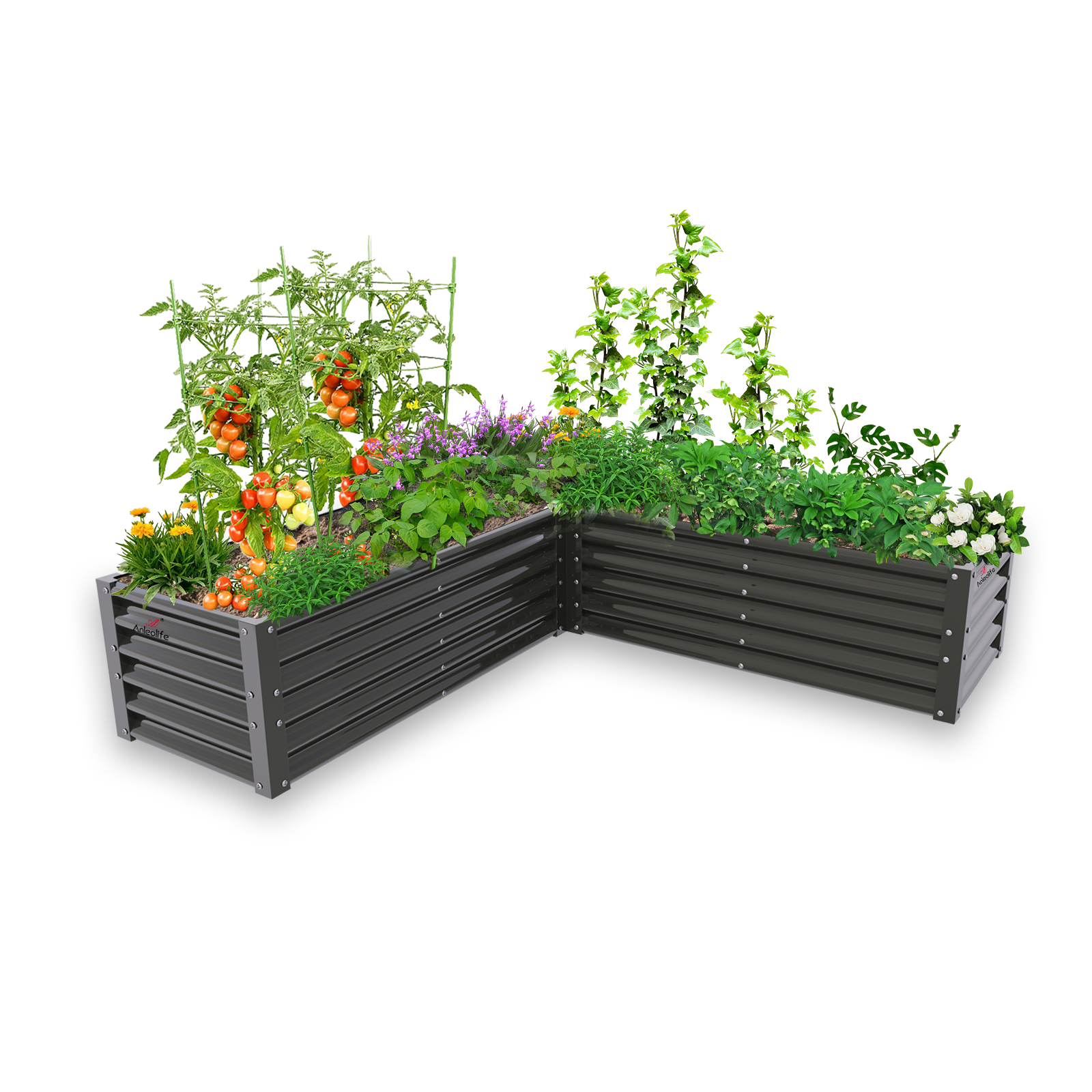
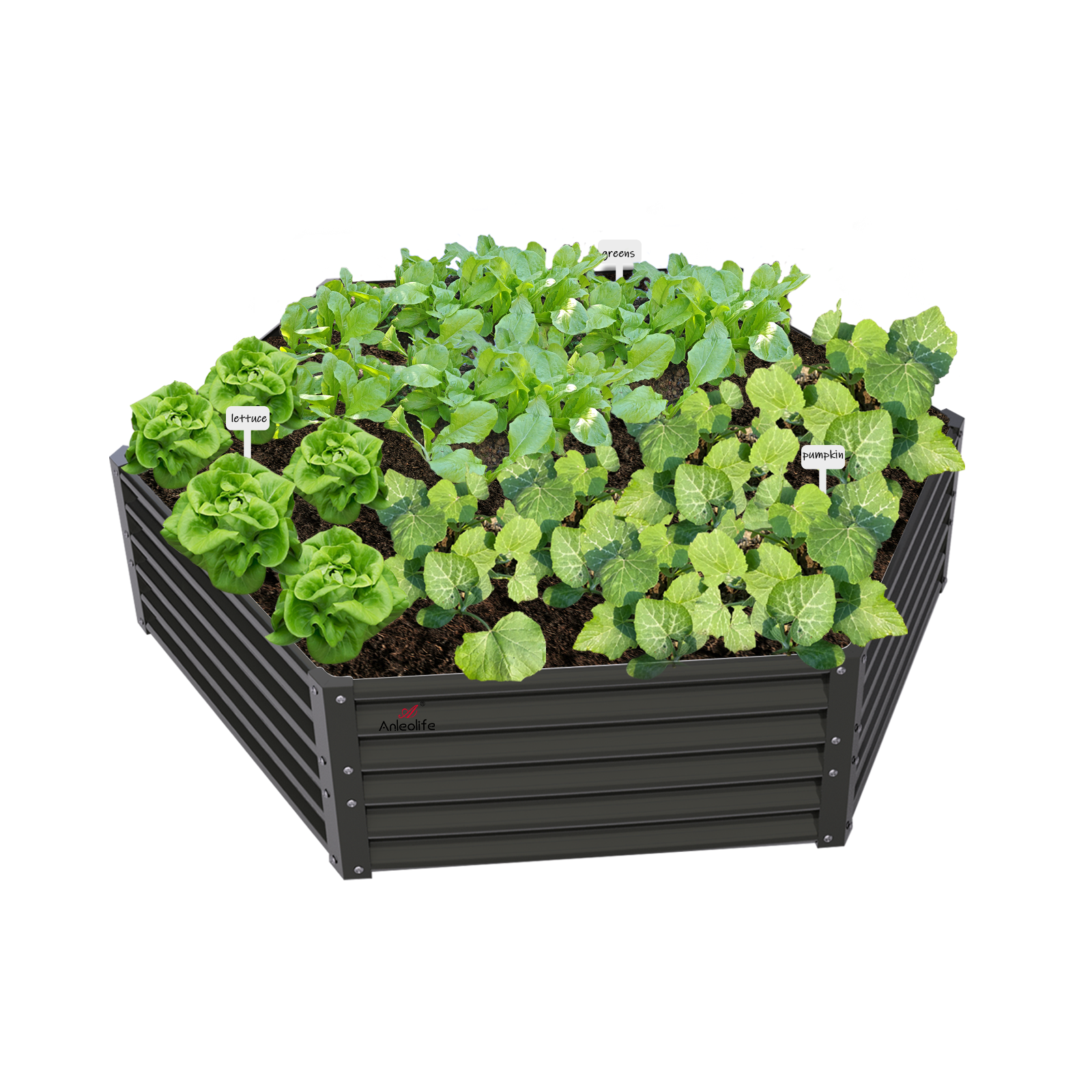
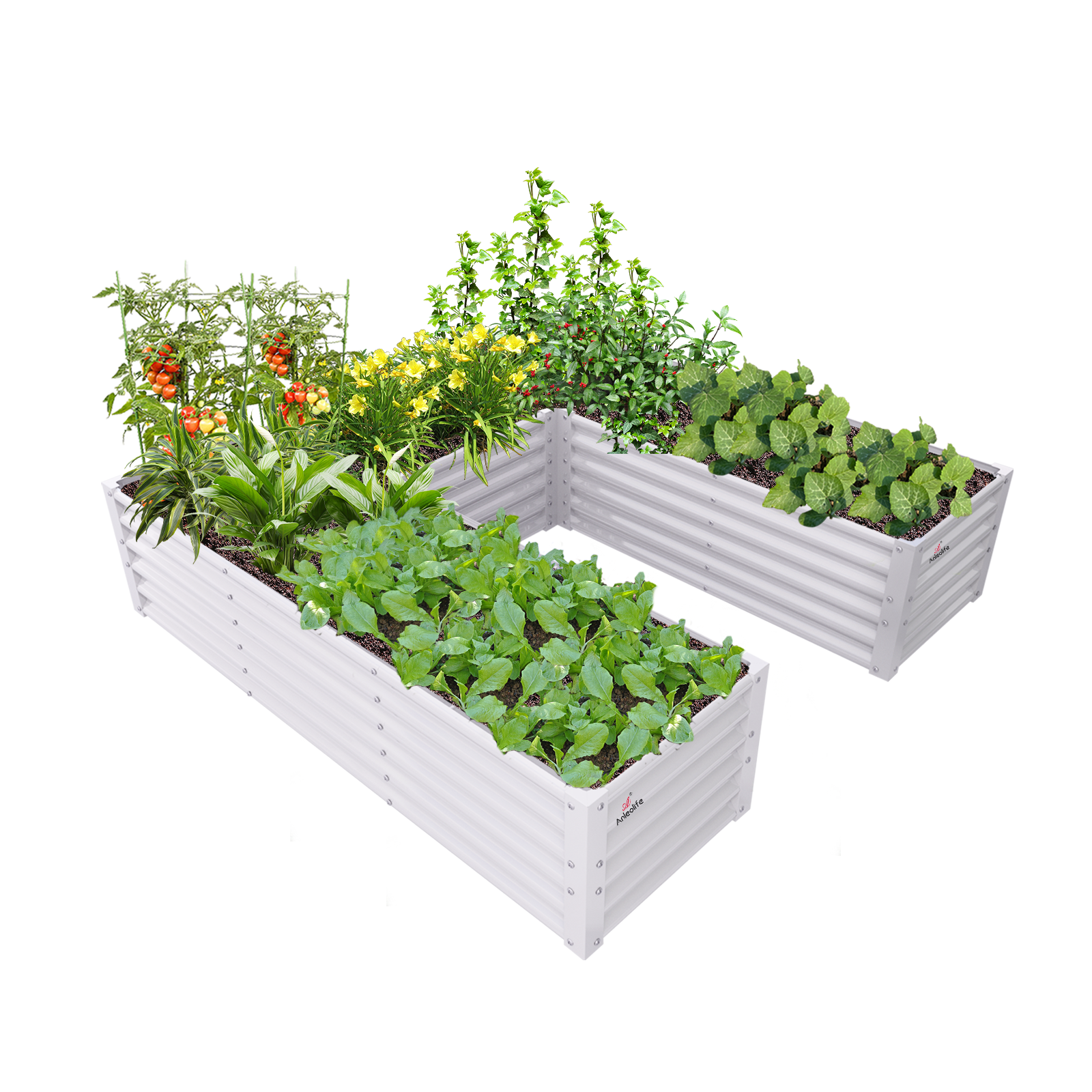



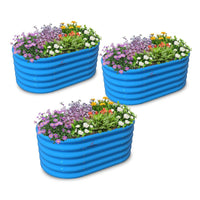
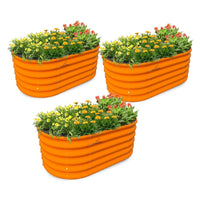
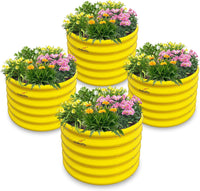
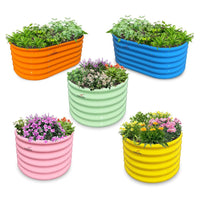



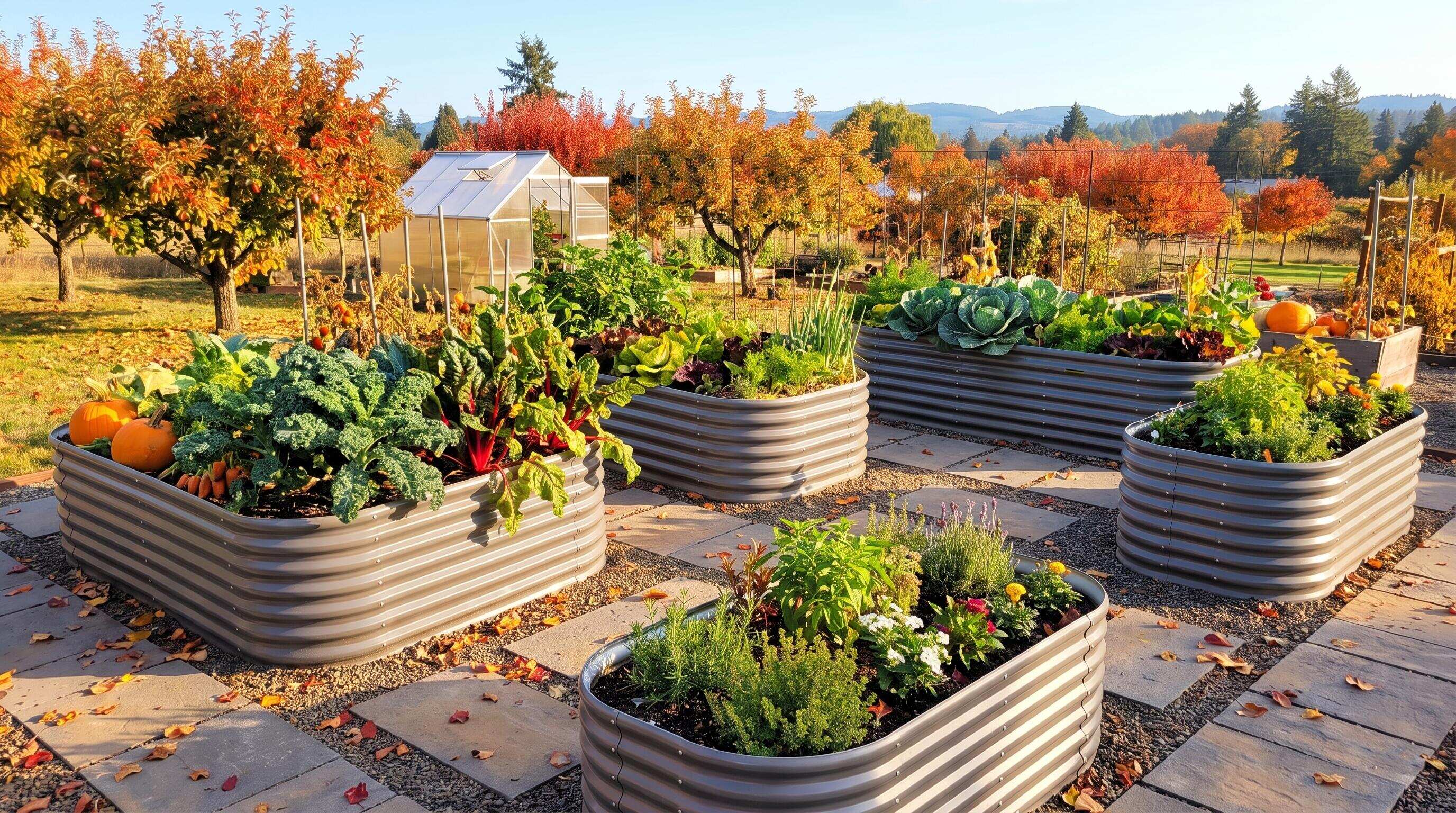
ALT: Sustainable raised bed garden layout with organic soil and galvanized steel beds in fall setting
Why Sustainable Bed Materials Are the Foundation of Organic Fall Growing
Key Conclusion: Choosing the right sustainable raised bed materials is the single most consequential decision in any raised bed garden layout. The material you select determines soil health, crop safety, structural longevity, and your ability to grow certified-organic produce year after year. A well-planned raised bed planting layout built on safe, durable materials — such as galvanized steel with food-grade coatings — allows fall gardeners to maximize harvests while staying true to organic principles. Your raised bed layout is only as good as the foundation it rests on.
Fall is one of the most productive and often underestimated seasons in the home garden. Cooler temperatures slow pest pressure, reduce water demand, and create ideal conditions for cool-season crops like kale, spinach, carrots, and garlic. But here is the pattern we consistently see in our work with home gardeners across North America: growers who invest time in planning their raised bed garden layout and in selecting genuinely sustainable bed materials at the outset tend to harvest cleaner, healthier food and spend far less on repairs and replacements over time. Those who rush into cheap materials often pay the price in contaminated soil, warped structures, and disappointing yields within just a few seasons.
This article walks you through how to evaluate, select, and configure sustainable raised bed materials specifically for fall organic growing — covering the most common pitfalls, the trade-offs between popular material types, and the structural decisions that will serve your garden for decades rather than just one season.
Who Should Read This Guide
Applicable Scenarios:
- Home gardeners transitioning to or maintaining organic certification, who need certainty that their raised bed materials will not leach harmful substances into food crops
- Fall-season growers planning a new raised bed layout or expanding an existing one before the first frost, who want their investment to perform through multiple seasons
- Eco-conscious families, urban micro-gardeners, and retirees seeking low-maintenance, long-lasting bed structures that align with a sustainable lifestyle
Not Applicable/Cautions:
- Gardeners using raised beds strictly for ornamental flowers or non-edible plants, for whom material safety relative to food crops is a lower priority
- Growers in regions with extreme, unusual soil chemistry who should consult a local extension service before selecting any specific material, since local conditions can interact unpredictably with bed walls
The Real Problem with "Eco-Friendly" Claims in Raised Bed Materials
The raised bed gardening market has grown substantially over the past several years, and with that growth has come a flood of products marketed as "natural," "eco-friendly," or "organic-safe." The problem is that these labels are rarely backed by third-party verification. In our work advising home gardeners, we see one specific mistake repeated constantly: growers assume that because a material looks natural — raw wood, bamboo composites, recycled plastic lumber — it automatically supports organic growing. That assumption is frequently wrong.
The critical questions to ask about any raised bed material are not aesthetic. They are functional and chemical: Does this material leach compounds into the surrounding soil system? Does it degrade in ways that deposit microplastics or treated wood preservatives near plant roots? Does it hold up structurally across temperature swings, wet fall conditions, and freeze-thaw cycles? And — importantly for anyone planning a modular garden layout that needs to grow and adapt over multiple seasons — does it remain reconfigurable without degrading?
Understanding what "organic growing" actually requires from your bed materials is the starting point. The U.S. Department of Agriculture's National Organic Program (USDA NOP) provides standards for organic production, and while the standards focus primarily on inputs like soil amendments and pesticides, they also require that growers avoid materials that could contaminate the organic system with prohibited substances. A raised bed wall made from pressure-treated lumber using older chromated copper arsenate (CCA) formulations, for example, is explicitly problematic under organic standards. Even some newer treated wood alternatives contain compounds that organic certifiers consider incompatible with organic production. This is not a theoretical concern — it is a documented reason why many growers who start with wood beds eventually transition to metal.
Fall is actually the ideal moment to address this. You have time before peak planting to assess your existing materials, make replacements where needed, and fill new beds with a well-structured soil system before winter sets in.
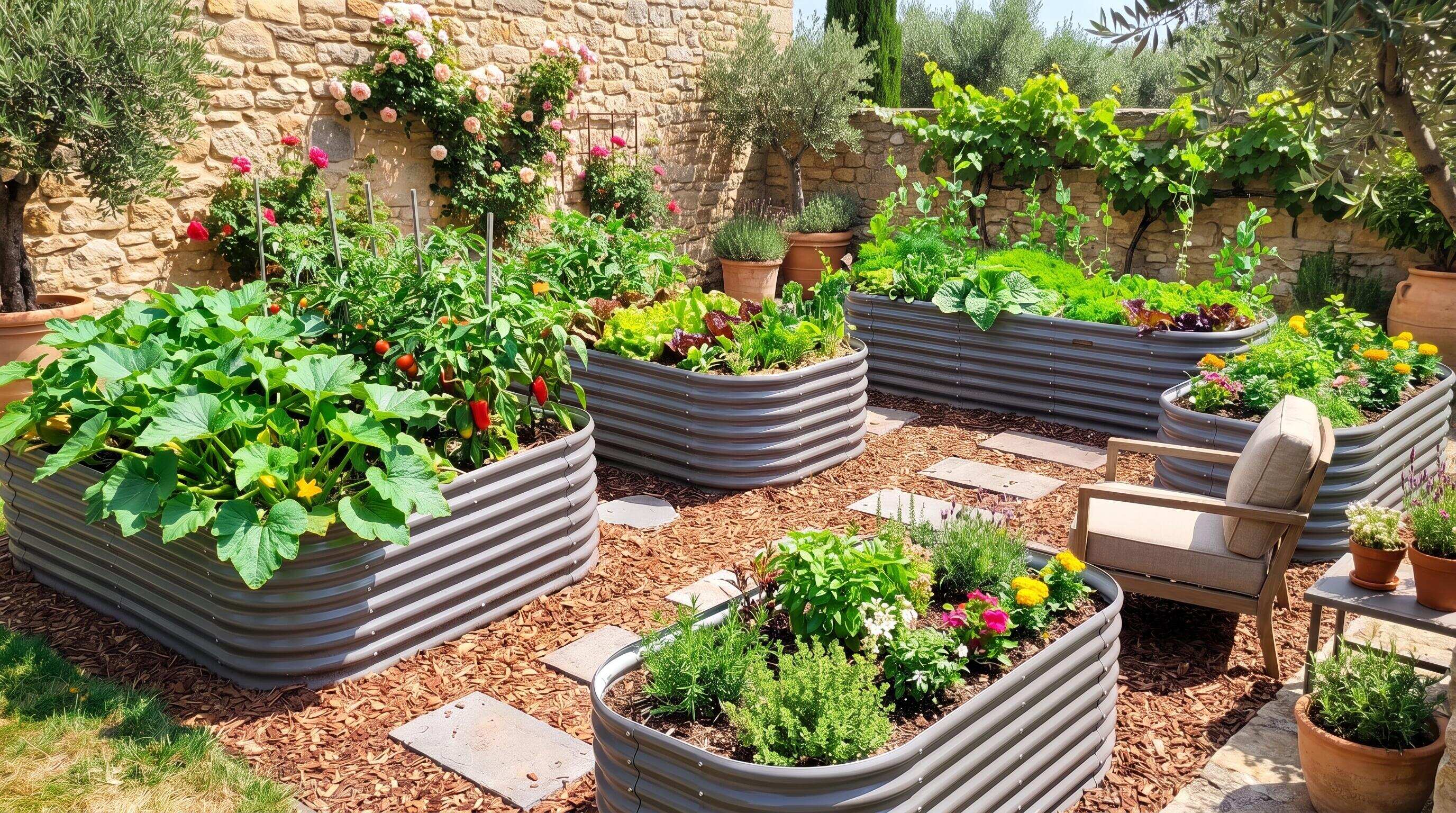
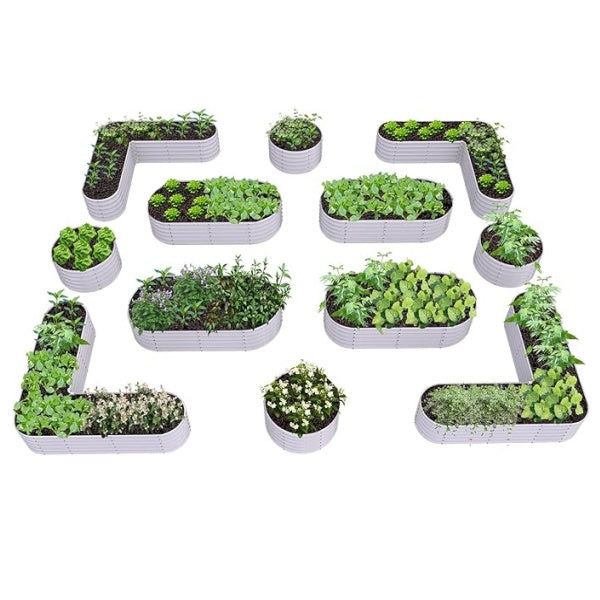
ALT: Organized raised bed planting layout featuring galvanized steel beds with fall crops including kale, spinach, and garlic in a home backyard setting
Building a Sustainable Raised Bed Layout for Organic Fall Growing
Three-Step Quick Start for Transitioning to Sustainable Materials
Step 1: Audit Your Existing Raised Bed Materials
Walk your garden and physically inspect every bed wall for signs of chemical leaching (white crystalline deposits, staining of adjacent soil), wood rot, structural bowing, or rust on untreated metal. If you have wooden beds older than five years, check whether they were constructed with treated lumber and, if possible, identify the treatment type. This audit typically takes under an hour for a standard backyard garden and gives you a clear picture of what needs replacing before fall planting begins. Document which beds show problems and prioritize replacements by proximity to edible crops.
Step 2: Select Replacement Materials Grounded in Organic Safety
Once you know what needs replacing, choose materials that meet two non-negotiable criteria: no leaching of prohibited substances into your soil system, and sufficient structural durability to justify the investment. Galvanized steel — specifically steel with a zinc-aluminum-magnesium alloy coating rather than older single-element zinc galvanization — is the option we most consistently recommend for organic growers. It is chemically stable under normal soil conditions, physically robust across fall and winter weather, and does not degrade into microplastics. Food-grade galvanization means the coating does not release zinc at levels that affect soil chemistry or plant health under normal garden conditions. Select the bed height that matches your crop types and physical comfort — Anleolife offers a broad range from standard 18-inch heights through extra-tall 30-inch and 35-inch waist-high configurations, so you can match the structure to both your crops and your mobility.
Step 3: Build Your Soil System Before Planting
A sustainable raised bed is only as good as the soil inside it. For fall organic growing, fill new beds with a layered soil system: a base of coarse organic matter for drainage, a middle layer of aged compost, and a top layer of high-quality loam blended with additional compost. Avoid any bagged "garden soil" that does not carry organic certification, as these products frequently contain synthetic wetting agents or fertilizers that conflict with organic principles. Allow the soil to settle for at least one to two weeks before planting, watering it gently once to help layers consolidate. This step is where many growers lose time by rushing — a well-built soil profile at the start prevents pH and drainage problems throughout the fall season.
Comparing the Most Common Raised Bed Materials for Organic Growing
Selecting the right material is not a one-size-fits-all decision. The table below compares the four materials most commonly used in residential raised bed layouts, evaluated specifically through the lens of organic growing requirements.
| Comparison Dimension | Untreated Wood | Treated/Composite Wood | Recycled Plastic Lumber | Galvanized Steel |
|---|---|---|---|---|
| Organic safety (leaching risk) | Low if untreated cedar/redwood; degrades over time | Moderate to high; treatment compounds vary | Moderate; microplastic and additive risk | Low; food-grade galvanization is chemically stable |
| Structural lifespan | 3-7 years typically | 5-10 years; varies by treatment | 10-15 years | Up to 20 years with quality alloy coating |
| Fall/winter weather performance | Absorbs moisture, prone to warping and rot | Better than untreated; still degrades | Stable but can become brittle in cold | Excellent; handles freeze-thaw cycles well |
| Soil system compatibility | Tannins from cedar/redwood may affect pH slightly | Treatment residues can interfere with soil biology | Generally inert but non-breathable | Promotes good drainage; no chemical interference |
| Maintenance requirements | Annual sealing/checking required | Periodic inspection | Low | Low; inspect fasteners seasonally |
| Modularity / reconfigurability | Limited by rot and joining method | Limited | Moderate | High; modular systems reconfigure without degradation |
| Long-term cost efficiency | Frequent replacement increases cost | Moderate | Moderate | High; 20-year lifespan reduces total cost |
The pattern that stands out clearly in this comparison: galvanized steel consistently ranks highest for organic growers when evaluated across all the dimensions that matter for a sustained, multi-season operation. It is not the cheapest entry point, but it is far and away the most cost-efficient over any horizon longer than a few years.
Galvanized Steel in Depth: What Organic Growers Need to Know
Galvanized steel is steel that has been coated with a layer of zinc-based alloy to prevent corrosion. For food-garden applications, the key distinction is the coating chemistry. Modern food-grade galvanization — particularly steel coated with zinc-aluminum-magnesium (ZAM) alloy — provides a surface that is highly resistant to corrosion under the damp, acidic conditions typical of garden soil, without releasing zinc at levels that harm plant growth or compromise organic certification.
A concern we hear regularly from organic growers is: "Won't the zinc leach into my soil and affect my crops?" This is a fair and reasonable question, and the answer is nuanced. Zinc is actually a micronutrient that plants require in small quantities. The trace amounts released from food-grade galvanized steel under normal garden conditions are well within the range that soil biology processes without accumulation. The risk is essentially negligible when beds are properly filled with a healthy, actively composted soil system. Where zinc accumulation becomes a legitimate concern is with very acidic soils (pH below 5.5) in combination with older, lower-quality galvanization — a situation that does not apply to current food-grade products used correctly.
For fall organic growing specifically, galvanized steel offers three practical advantages that wood and plastic cannot match. First, the material holds its geometry through freeze-thaw cycles. Wood beds commonly bow outward after the first hard frost as soil expands; steel walls hold their form. Second, steel surfaces do not harbor the fungal spores and overwintering pest eggs that can accumulate in the crevices of wooden beds — a meaningful advantage when you are trying to maintain a clean organic system going into spring. Third, steel beds drain and warm more predictably than thick wooden walls, which can create localized cold pockets near the soil-wall interface.
Anleolife's galvanized steel raised garden bed lineup is built around exactly these organic-gardening priorities. The range spans multiple heights — from standard 18-inch configurations suited to most cool-season crops, through 24-inch and 30-inch extra-tall options that are genuinely comfortable for gardeners who prefer to work without bending, up to the 35-inch waist-high model designed specifically for accessibility. This range means you can configure a raised bed layout that matches both your crop requirements and your physical needs without compromise. For those exploring planning a modular garden layout that can expand year over year, Anleolife's modular raised garden bed configurations — available in a range of footprints including 6x2, 8x4, 12x3, and larger — allow you to start small and add sections as your gardening ambitions grow, without replacing the original structure.
The 20-year expected lifespan of a well-maintained galvanized steel raised garden bed is a figure worth keeping front of mind when making a purchasing decision. Amortized over two decades, the per-year cost of a quality steel bed is typically lower than that of wooden beds that need replacing every three to seven years, even accounting for the higher upfront investment.
Soil Systems: The Material Inside the Bed Matters as Much as the Bed Itself
The sustainability of your raised bed layout depends not only on the structural material but equally on the soil system inside. For organic fall growing, the goal is a living soil: one populated with beneficial microbial communities, earthworms (where soil temperature allows), and fungal networks that cycle nutrients and suppress pathogens naturally.
A common and costly mistake is filling a new raised bed entirely with purchased potting mix. Most commercial potting mixes are peat-based, which carries two sustainability problems: peat extraction is environmentally damaging, and peat-based mixes compact aggressively over a single season, reducing drainage and root penetration. A better approach for fall garden beds is a blended soil system: roughly one-third aged compost from a verified organic source, one-third high-quality topsoil, and one-third coarse organic material (aged wood chips, leaf mold, or coconut coir as a peat alternative). This blend maintains structure through the season and builds on itself year over year as organic matter breaks down.
For gardeners in humid southern regions, material selection for the soil system deserves extra attention — the combination of high moisture retention and heat can accelerate both decomposition and pathogen pressure in ways that differ from drier climates. If you are gardening in those conditions, the guidance in this deep-dive on choosing raised garden bed materials for humid southern climates offers region-specific recommendations worth reviewing alongside the general principles here.
Fall is also the right time to top-dress existing beds with two to three inches of finished compost before or after planting. This layer insulates the soil surface, feeds the microbial community through winter, and integrates into the top of the soil profile by early spring — giving your beds a head start without any synthetic inputs.
Advanced Considerations: Edge Cases and Common Misconceptions
Misconception 1: "Natural wood is always safer than metal for organic gardens."
This is one of the most persistent myths we encounter. Untreated cedar and redwood are relatively safe options, but they are increasingly expensive, environmentally costly to produce, and structurally limited to a few seasons in wet climates. No wood, however "natural," lasts 20 years in ground contact with moist soil. More importantly, wood sourced without transparency about treatment history introduces genuine risk — growers have unknowingly used CCA-treated lumber in vegetable gardens, a situation with well-documented contamination consequences. Food-grade galvanized steel is both measurably safer for organic growing and far more transparent in its chemistry.
Misconception 2: "Raised bed gardening is only for small plots — the layout doesn't matter much."
A well-considered raised bed planting layout is as important at small scale as at large scale. Path width between beds, bed orientation relative to the sun, grouping of crops by water and nutrient needs, and provision for trellising vertical crops all affect productivity and ease of management significantly. The Old Farmer's Almanac offers foundational guidance on raised bed vegetable garden layout planning that applies whether you have two beds or twenty.
Misconception 3: "All galvanized steel is the same."
Galvanized steel varies substantially in coating quality, steel thickness, and fastener materials. Thin-gauge steel with minimal galvanization may last only a few seasons before rust appears at joints and fastener points. When evaluating any galvanized steel raised bed for organic growing, look specifically for food-grade coating specification, adequate panel thickness for structural rigidity, and stainless-steel or galvanized fasteners — not zinc-plated screws, which corrode quickly in soil contact.
Handling Unusual Situations:
- If your soil pH is consistently below 6.0, test zinc levels annually as a precaution, even with food-grade galvanized beds. Acidic soils accelerate any metal's surface interaction.
- In regions with very hard water, mineral deposits on steel surfaces are cosmetic and do not affect organic integrity — wipe them away with a damp cloth; do not use acid-based cleaners near soil.
- For gardens where aesthetics are a priority alongside function, powder-coated finishes over galvanized steel offer color and visual interest without compromising the food-safe properties of the base material.
Common Questions
Q1: How do I know if my existing wooden raised bed is leaching harmful compounds into my soil?
The most reliable approach is to test your soil rather than the wood. A standard soil test from a university extension laboratory or a certified soil testing service will screen for heavy metals and soil pH anomalies that might indicate contamination. Visually, look for unusual plant growth patterns — stunted roots, yellowing at consistent bed-wall proximity — as indirect signals. If you have any doubt about the wood's treatment history, treat the bed as suspect and plan to replace it with food-grade galvanized steel before the next growing cycle.
Q2: Is galvanized steel genuinely safe for organic vegetable growing?
Yes, when the product uses food-grade galvanization — typically a zinc-aluminum-magnesium alloy coating — galvanized steel raised beds are considered safe for growing organic vegetables. The coating releases negligible zinc under normal soil conditions, and zinc itself is an essential plant micronutrient. The USDA National Organic Program does not prohibit galvanized steel in raised bed construction. The key is to verify the coating specification before purchasing, as not all galvanized steel products use food-grade formulations.
Q3: How long will a quality galvanized steel raised bed last, and is the investment worth it for a fall starter garden?
A quality galvanized steel raised garden bed from Anleolife is built to last up to 20 years with normal care — meaning a single investment covers multiple decades of fall and year-round growing seasons. For first-time fall growers, the upfront cost is higher than basic wood kits, but the math strongly favors steel when you account for replacement costs and soil disruption from rebuilding beds every few years. Delivered within 3–8 business days through Anleolife's national warehouse network, you can realistically plan, order, build, and plant a new bed within a single fall window.
Final Thoughts
Sustainable raised bed gardening for organic fall growing comes down to three decisions made at the right time: choosing bed materials that are genuinely safe for edible crops, building a living soil system inside those materials, and configuring a raised bed layout that serves both your crops and your daily garden practice.
The single most actionable takeaway from this guide is to stop treating bed material selection as a secondary decision. It is, in fact, the decision that determines whether everything else — your soil amendments, your crop selection, your composting practice — will actually deliver clean, organic food over time. Galvanized steel with food-grade coating is the material that holds up under honest scrutiny for organic growing, and its 20-year lifespan means the decision you make this fall serves your garden for a very long time.
For your next steps: audit your current beds this week, test your soil if you have any material concerns, and plan your raised bed layout before ordering new structures. If you are expanding or starting fresh, review the modular options that allow incremental growth — beginning with one or two beds this fall and adding more as your confidence and space allow is a smarter path than overbuilding before you know what your garden truly needs.
Visit the Anleolife website to explore the full range of galvanized steel raised garden beds — from standard 18-inch heights to extra-tall 30-inch and waist-high 35-inch configurations — and find the right fit for your fall organic garden. With a nationwide U.S. warehouse network spanning California, Texas, Florida, New York, Illinois, and Washington, your order arrives in 3–8 business days. Anleolife products are also available on Amazon, Walmart, Home Depot, Lowe's, and Wayfair for consistent quality and after-sales support wherever you prefer to shop. Whether you are starting with a single 8x4 bed or planning a full planting-and-raising ecosystem, Anleolife grows with you every step of the way.
Sources & Citations
- The Old Farmer's Almanac. "Raised Bed Garden Layout Plans".
https://www.almanac.com/raised-bed-vegetable-garden-layouts-beginners - Savvy Gardening. "4x8 Raised Bed Vegetable Garden Layout Ideas".
https://savvygardening.com/4x8-raised-bed-vegetable-garden-layout/ - United States Department of Agriculture (USDA). National Organic Program — Standards and Regulations.
https://www.usda.gov/
Note: Standards may be updated; please check the latest official documents or consult professional advisors.