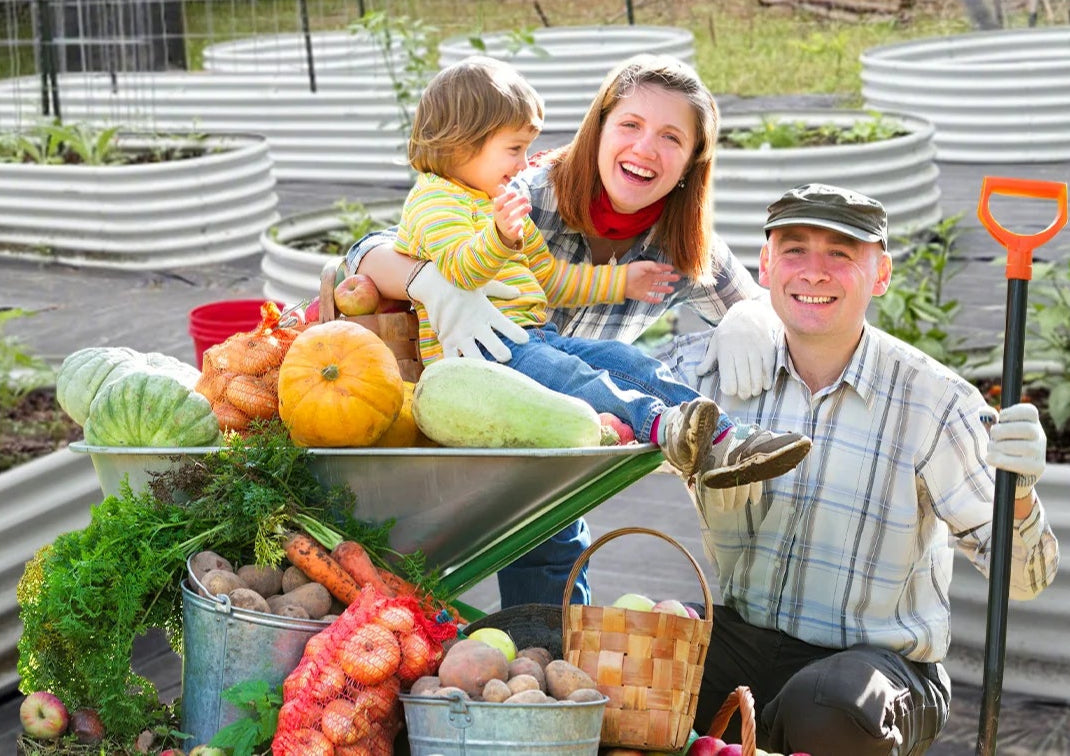



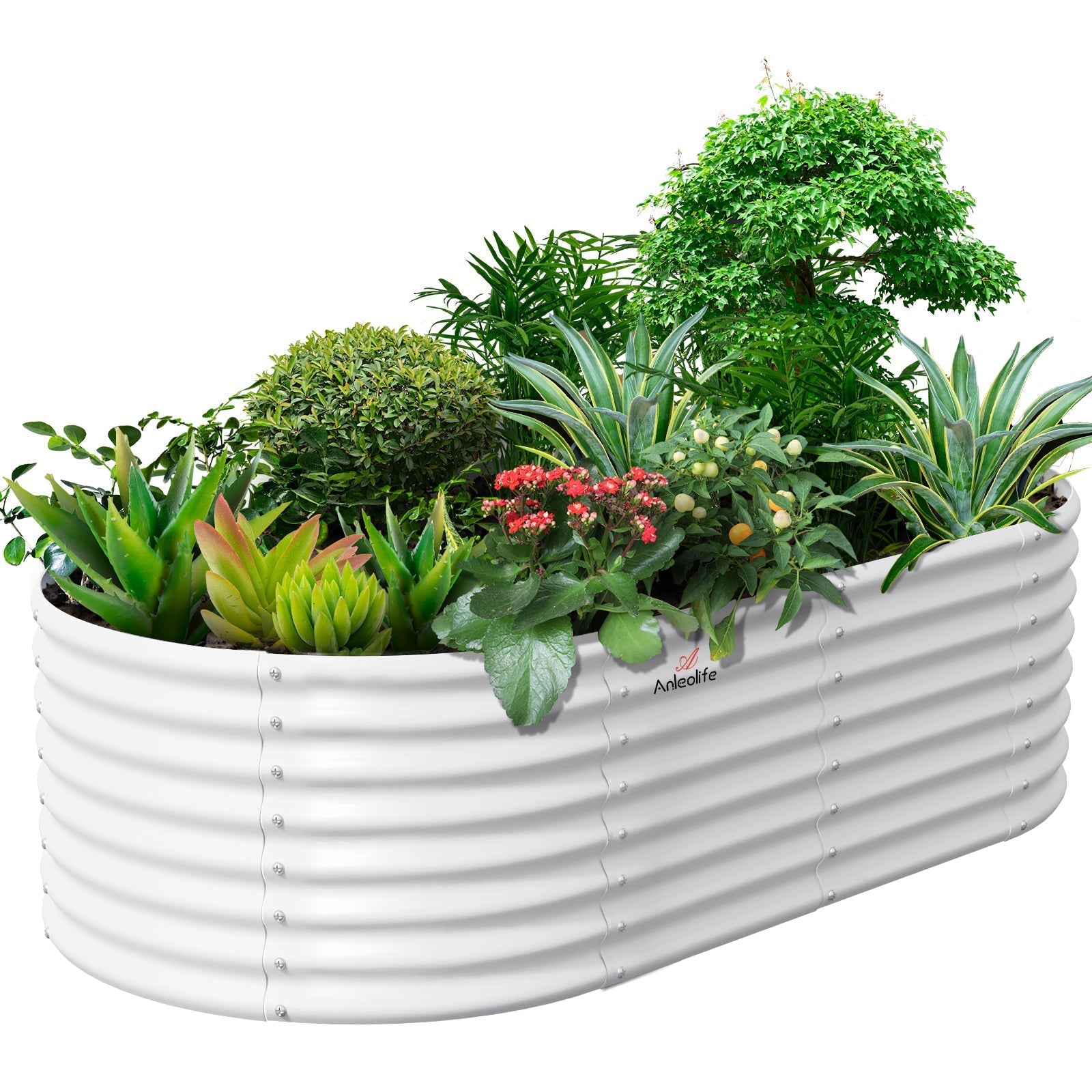
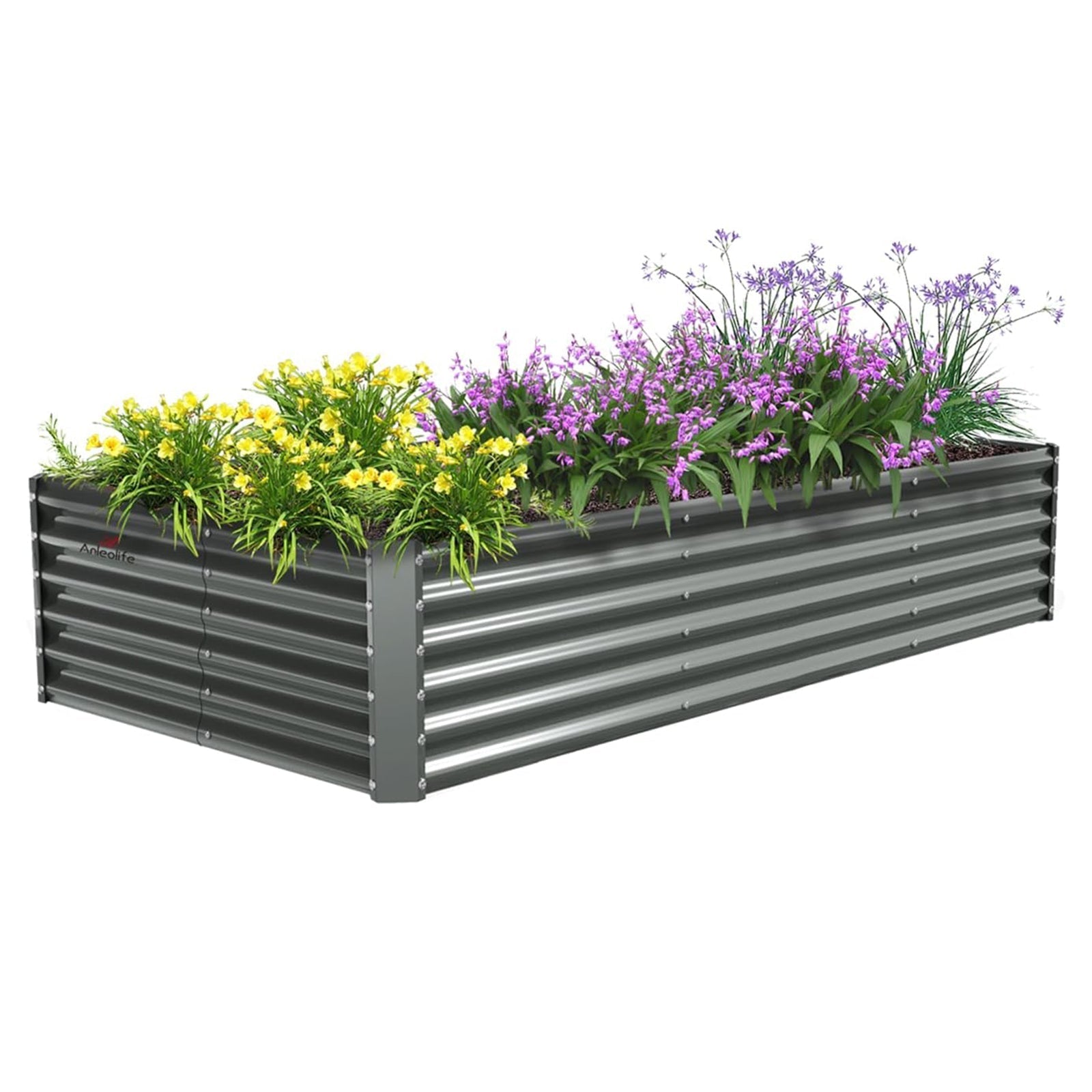
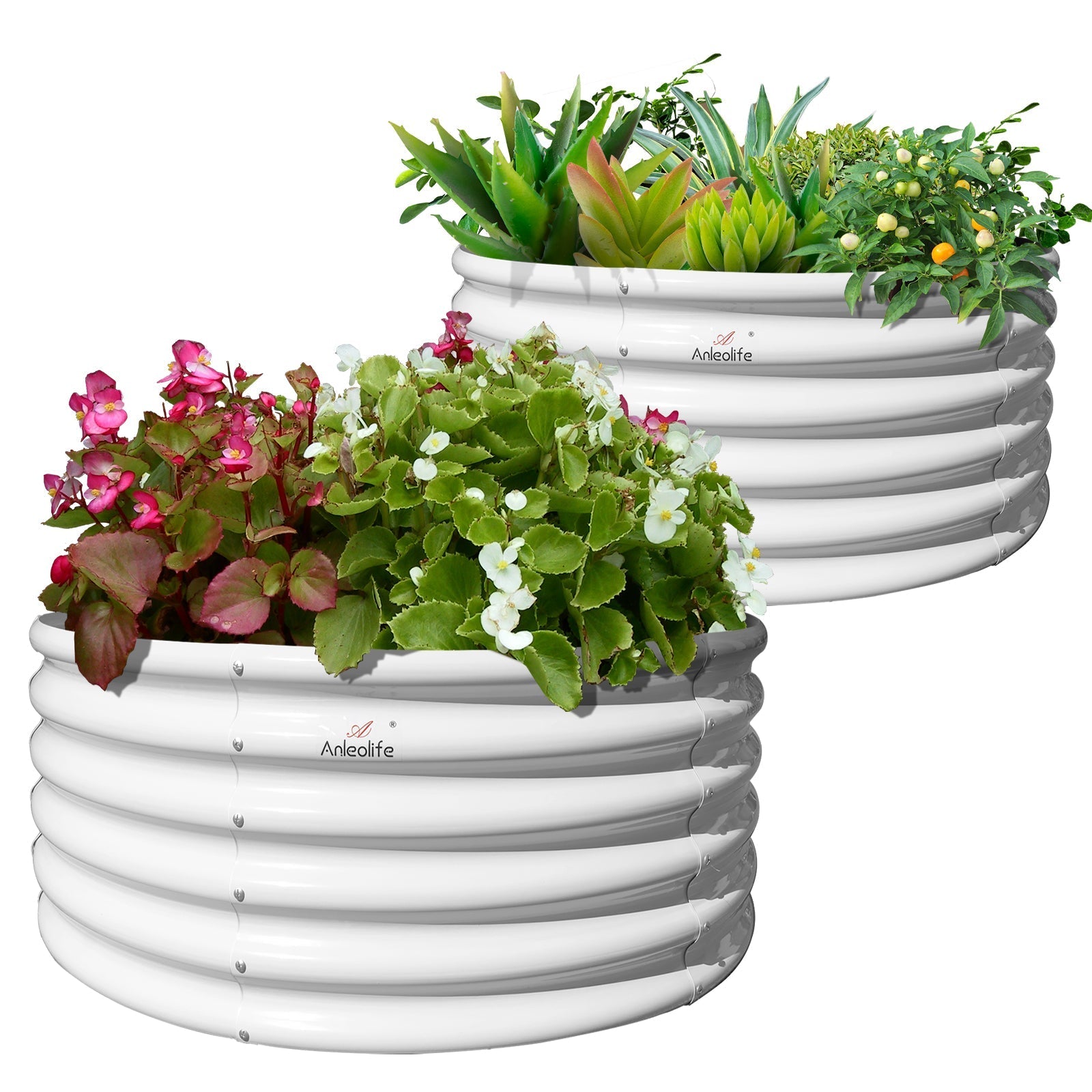
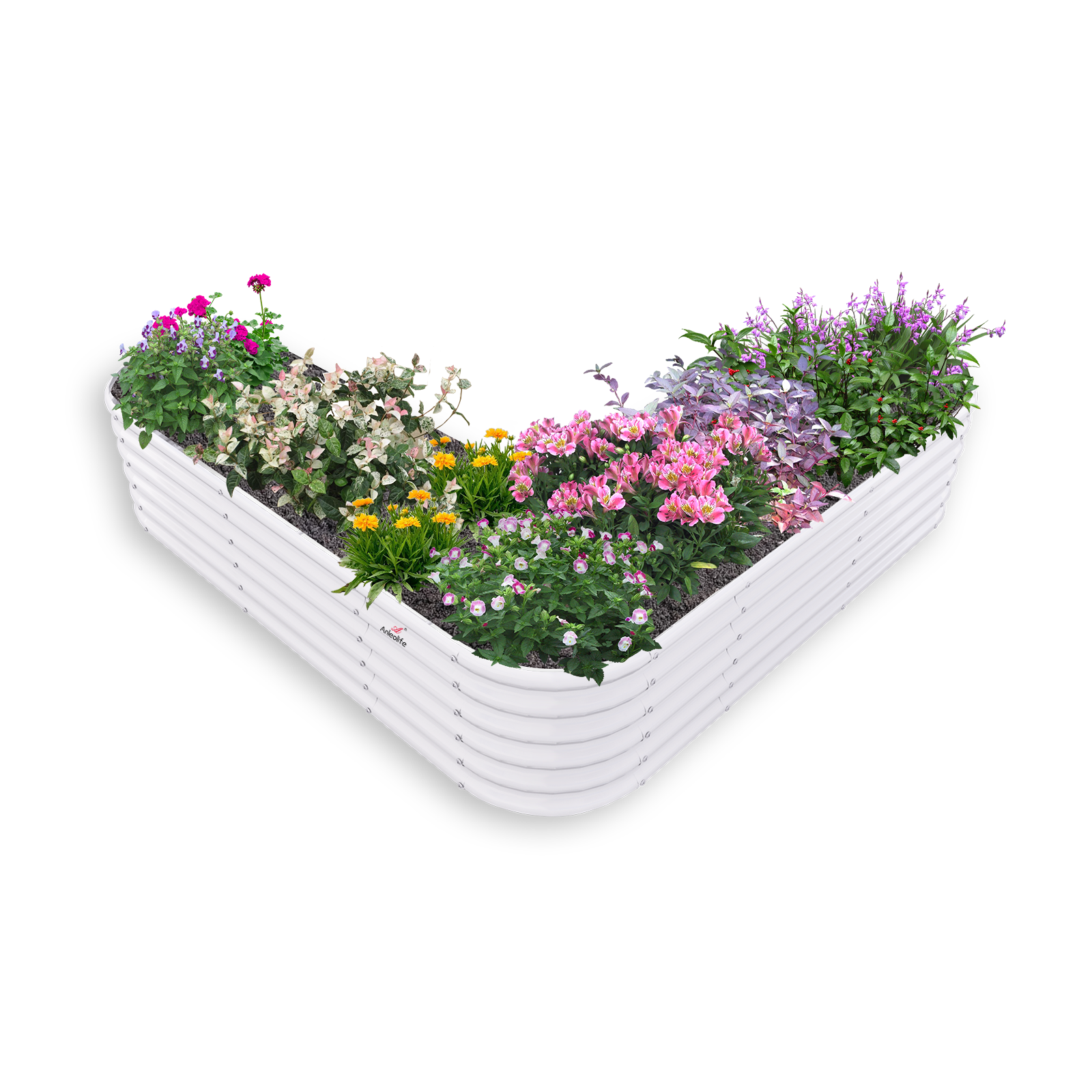
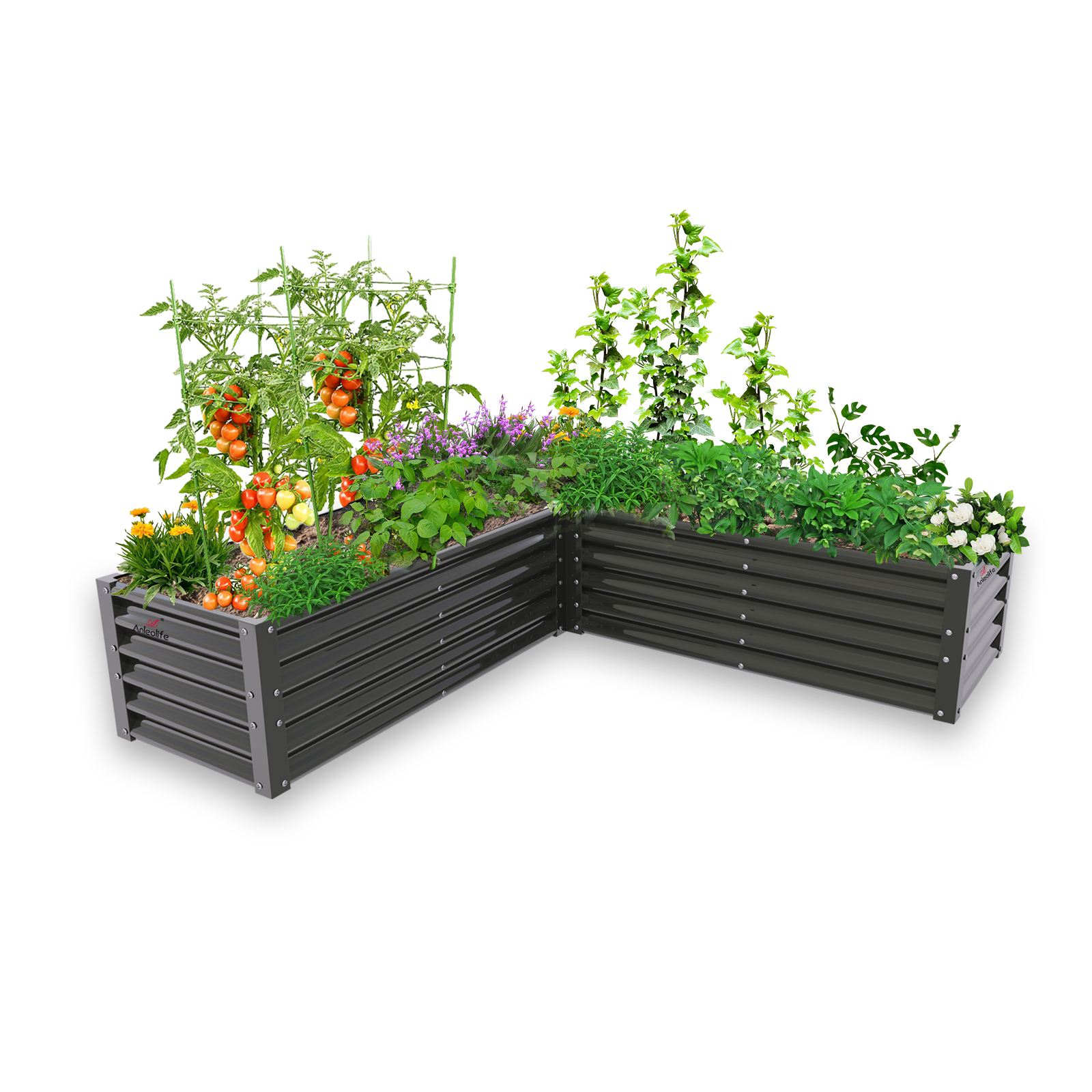
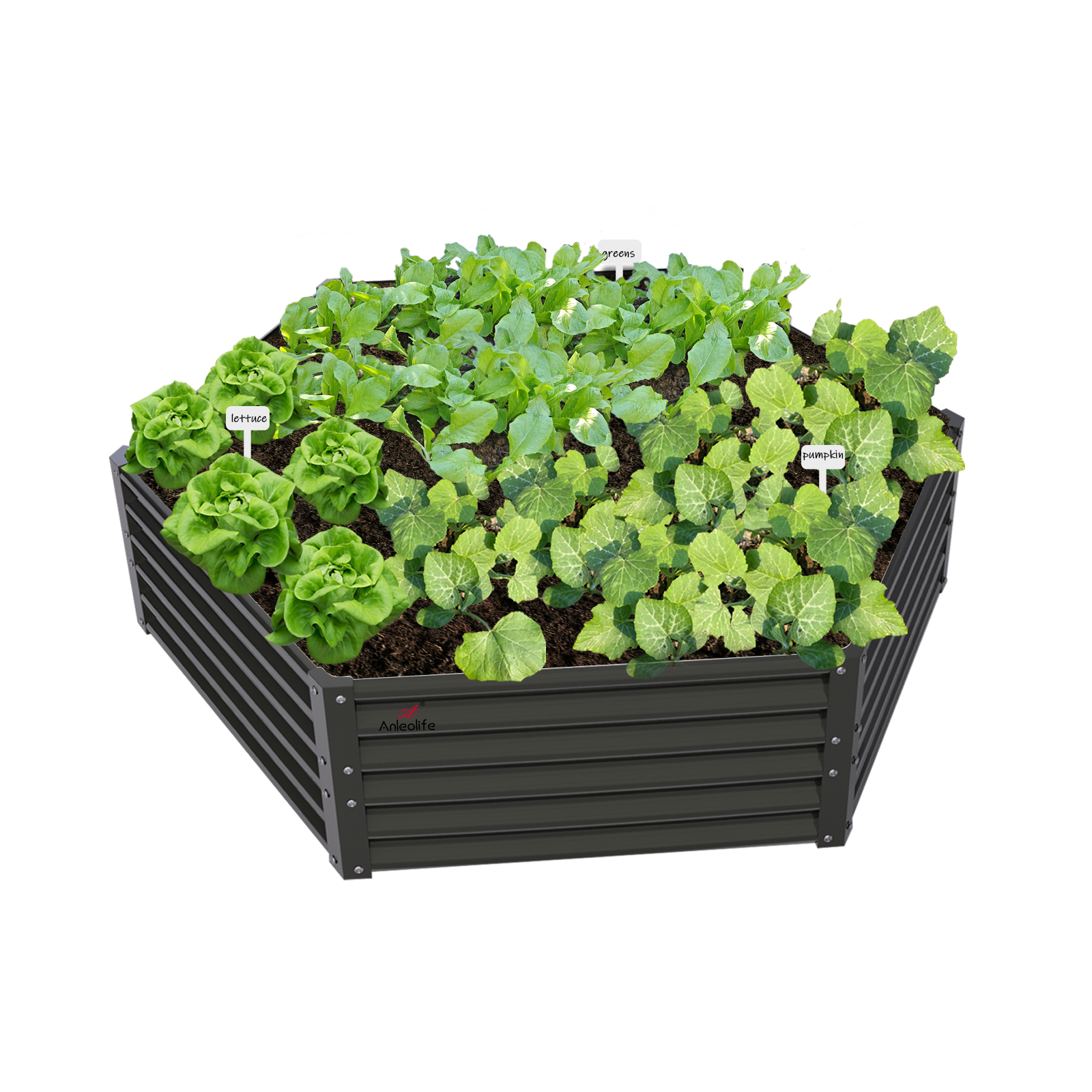
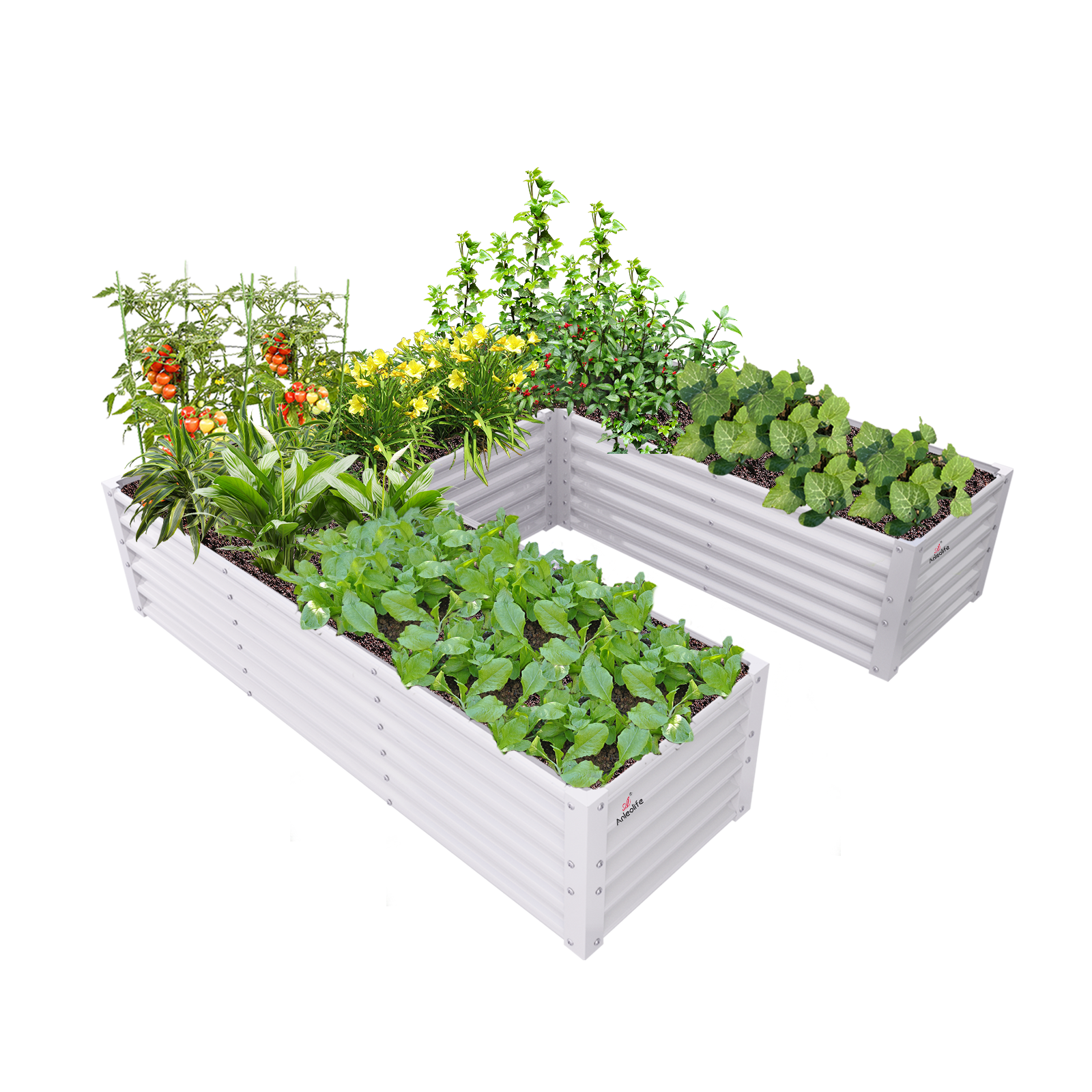


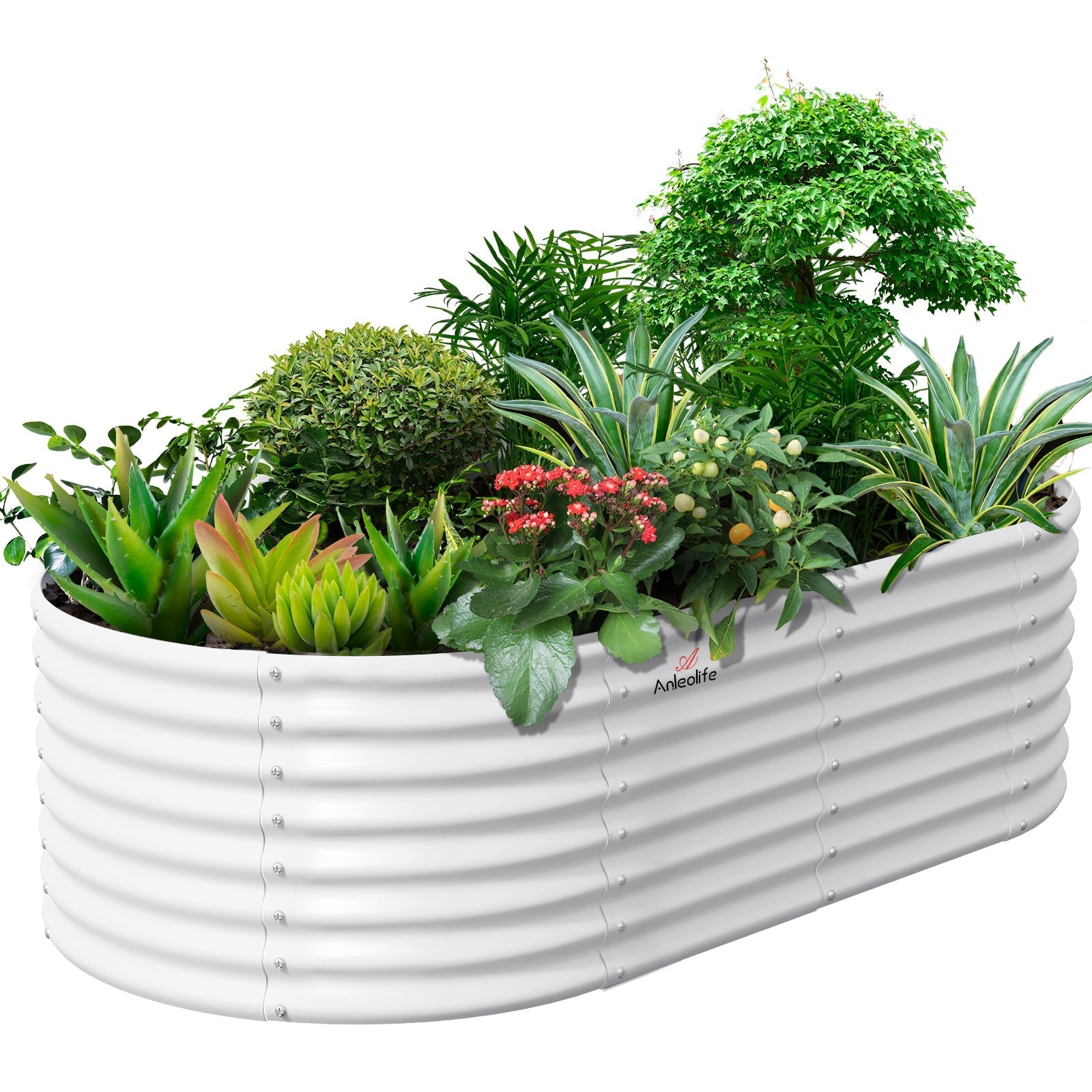

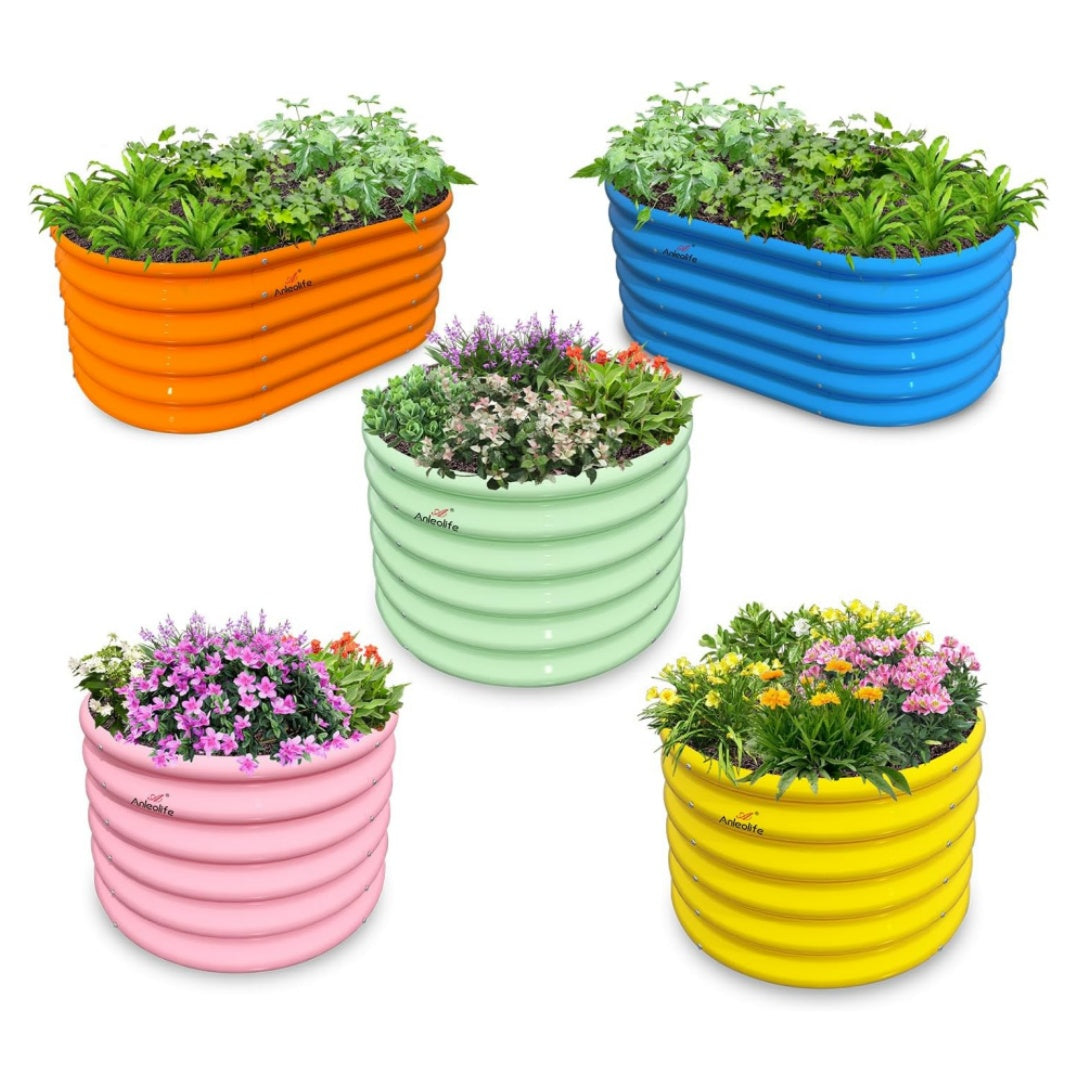
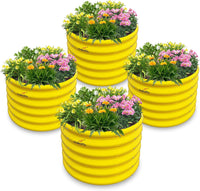
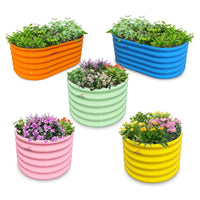
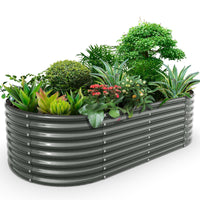



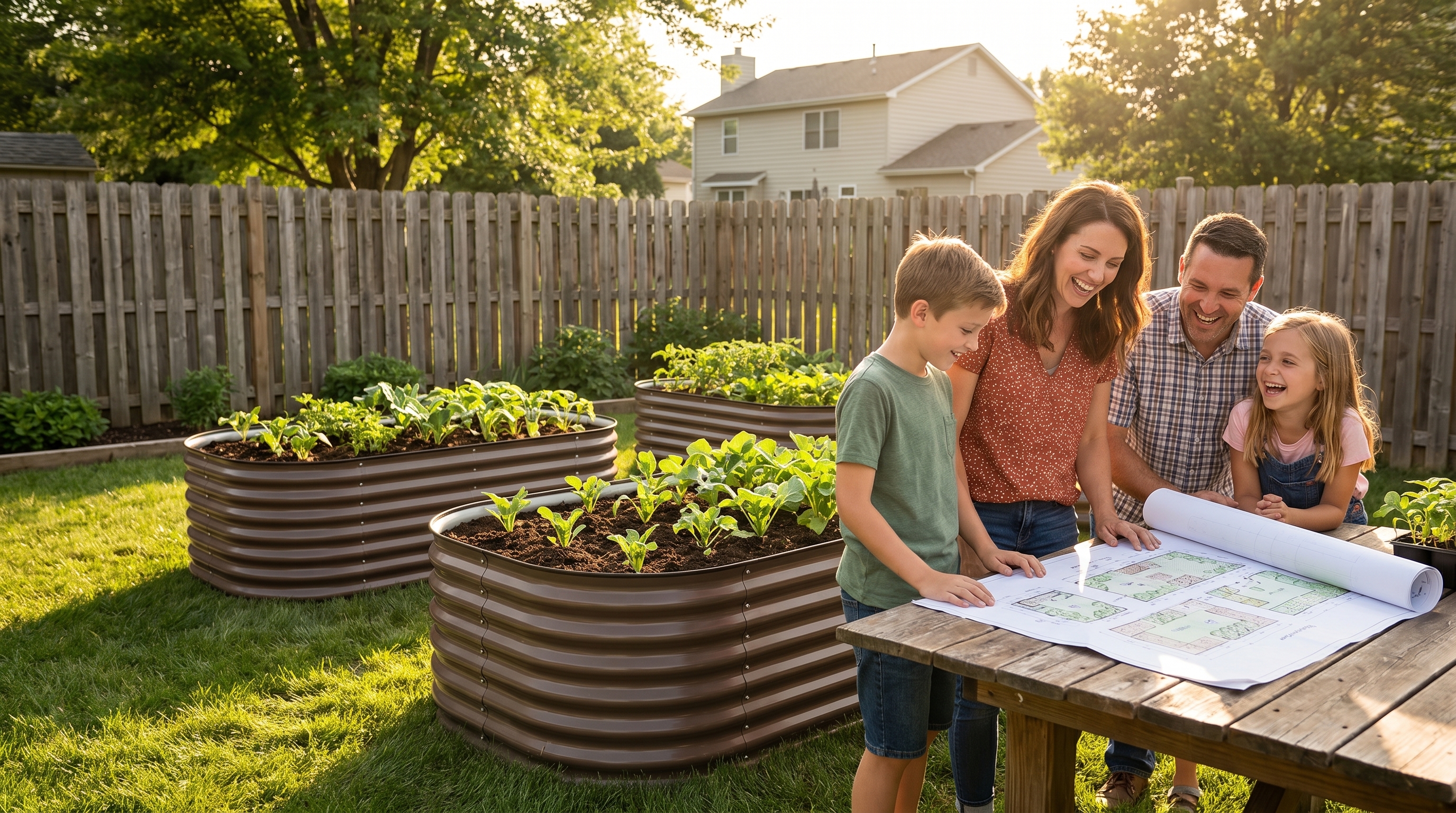
ALT: Family of four planning raised bed vegetable garden layout with metal raised garden beds in sunny backyard
How Many Raised Beds Does a Family of Four Really Need to Grow Enough Food?
Key Conclusion: For a family of four aiming to grow a meaningful portion of their own vegetables, most gardening experts recommend starting with at least 3–4 raised beds of substantial size. The exact number depends on what you want to grow, how much space you have, and whether your goal is supplementing meals or achieving near-self-sufficiency. With the right raised garden beds, smart crop selection, and a seasonal rotation plan, even a modest backyard setup can produce hundreds of pounds of fresh produce annually—without overwhelming a busy household.
Planning a family vegetable garden is equal parts excitement and uncertainty. You know you want fresh tomatoes, crisp salad greens, and maybe a patch of strawberries—but translating that vision into an actual number of raised beds? That's where most people get stuck.
The good news is that there's a clear, practical framework for figuring out exactly how many beds you need, sized correctly for the crops you love. In this guide, we'll walk through that calculation step by step, compare setup options, and help you build a garden that grows with your family for years to come.
Who This Guide Is For: Applicable Scenarios for Planning a Family Raised Bed Garden
✅ Applicable Scenarios:
- Families of four (including children) who want to grow a significant portion of their own vegetables and herbs
- Homeowners with at least a small-to-medium backyard, patio, or side yard who are ready to commit to a structured garden layout
- Gardeners transitioning from container gardening or in-ground plots to a dedicated raised bed system for better soil control and productivity
- Empty nesters or retirees scaling back to a manageable but rewarding growing setup that produces real food, not just ornamental plants
- Urban micro-gardeners looking to maximize yield per square foot on limited property
❌ Not Applicable/Cautions:
- Apartment dwellers or renters without outdoor ground access (container gardening or vertical setups would serve you better)
- Families who only want to grow a few herbs casually—a single small bed or window box is more appropriate than a multi-bed system
- Those unwilling to commit to regular watering, weeding, and seasonal soil amendments, as raised beds require consistent care to deliver on their promise
Why Raised Beds Are the Smart Choice for Family Food Production
Home food gardening has surged in popularity across North America over the past several years. According to the National Gardening Association, food gardening participation reached historic highs during and after the pandemic years, with millions of new households trying their hand at growing vegetables for the first time. Among experienced gardeners, raised garden beds—especially galvanized metal models—have become the gold standard for backyard food production.
Why? Because raised beds solve the most common problems home gardeners face:
Soil quality control is perhaps the biggest advantage. In-ground gardening means working with whatever soil your property has—often compacted clay, nutrient-poor fill dirt, or worse. Raised beds let you fill with an optimized blend of topsoil, compost, and amendments from day one, giving plants an ideal growing environment that translates directly into higher yields.
Weed suppression is dramatically easier in a raised bed. With a weed barrier at the base and clean growing medium on top, you're not fighting the persistent weed seed bank that exists in native soil. This matters enormously for busy families who can't spend every weekend weeding.
Extended seasons are another major benefit. The soil in a raised bed warms up faster in spring and stays warmer longer into fall, often adding four to six weeks of productive growing time compared to in-ground planting. For a family trying to maximize food production, that's a significant bonus.
Durability and longevity are particularly important when you're investing in a permanent garden infrastructure. Anleolife's galvanized steel raised garden beds are built to last up to 20 years, meaning the setup you build this spring will still be serving your family long after your kids have graduated college. That kind of longevity makes the initial investment genuinely worthwhile.
Accessibility matters too, especially as families grow and parents age. Taller raised bed options—from 18-inch standard heights up to 30- or 35-inch waist-high configurations—mean less bending, kneeling, and back strain. This is a game-changer for older gardeners or anyone with mobility considerations.
The trend toward galvanized metal beds over wood has also accelerated, driven by concerns about rot, pesticide leaching from treated lumber, and the desire for eco-friendly materials. Galvanized steel is rust-resistant, free from chemical treatments, and genuinely built for the long haul—making it one of the best eco-friendly materials for raised garden beds available today.
How Many Raised Beds Does a Family of Four Actually Need? Step-by-Step Planning Framework
Three-Step Quick Start for Calculating Your Bed Count
Step 1: Define Your Food Production Goals
Before counting beds, clarify what "enough" means to your family. Are you aiming to supplement your grocery shopping with fresh salads and herbs (light supplementation)? Do you want vegetables at every dinner table throughout the growing season (moderate production)? Or are you pursuing meaningful self-sufficiency—growing 30–50% of your family's vegetable needs (serious production)? Write this down. Your answer directly determines how many beds you'll need. Spend 15–20 minutes discussing this as a family; it sets the entire foundation for your plan.
Step 2: Map Your Available Space and Sun Exposure
Walk your property and identify areas that receive a minimum of 6–8 hours of direct sunlight per day—this is non-negotiable for most vegetables. Measure those spaces. Note any permanent obstacles (trees, structures, utilities) that can't move. Also assess slope, drainage, and access to a water source. Most families are surprised to discover they have more usable garden space than they thought, especially when they consider side yards, front yards, and the space along sunny fence lines. This step takes about 30–45 minutes with a tape measure and a notepad.
Step 3: Match Crop Requirements to Bed Sizes and Count
Different crops have very different space requirements. Heavy feeders like tomatoes, squash, and peppers need generous room; salad greens and herbs are incredibly space-efficient. Create a simple list of the 8–12 vegetables your family actually eats, then research the recommended spacing for each. Group crops by their space needs and sunlight requirements, and begin sketching which bed sizes and configurations make sense. This matching exercise will give you a concrete bed count rather than a guess.
Comparing Raised Bed Setup Options for a Family of Four
Not all raised bed configurations are equal. Here's how common approaches stack up against one another for a typical family of four:
| Comparison Dimension | Minimal Setup (2 beds) | Standard Family Setup (3–4 beds) | Serious Production Setup (5–6+ beds) |
|---|---|---|---|
| Approximate Yield Potential | Herbs + salads only | Salads, herbs, tomatoes, peppers | Most vegetables year-round |
| Weekly Maintenance Time | 1–2 hours | 3–5 hours | 5–10 hours |
| Best For | Casual/beginner growers | Most families of four | Self-sufficiency goals |
| Crop Rotation Feasibility | Difficult | Manageable | Excellent |
| Investment Level | Lower upfront cost | Moderate, best ROI long-term | Higher upfront, maximum yield |
| Recommended Bed Sizes | 8x4 ft or 6x3 ft | Mix of 8x4 ft and 12x3 ft | Multiple large beds + specialty sizes |
| Space Footprint | Small yard friendly | Mid-sized yard | Larger yard preferred |
For most families of four, the 3–4 bed standard setup represents the sweet spot—enough growing space to produce meaningful quantities of food without overwhelming your time or budget.
The Detailed Breakdown: What to Grow Where and Why Bed Count Matters
Thinking in Square Footage, Not Just Bed Count
The most useful way to plan a family garden is to think in square feet of growing space rather than simply counting beds. A useful benchmark from intensive gardening methods suggests that roughly 100 square feet of well-managed raised bed space per person is a reasonable target for meaningful vegetable production. For a family of four, that's approximately 400 square feet of growing area.
Before you panic at that number—400 square feet sounds like a lot, but it's far more achievable than it appears when you break it down into individual beds:
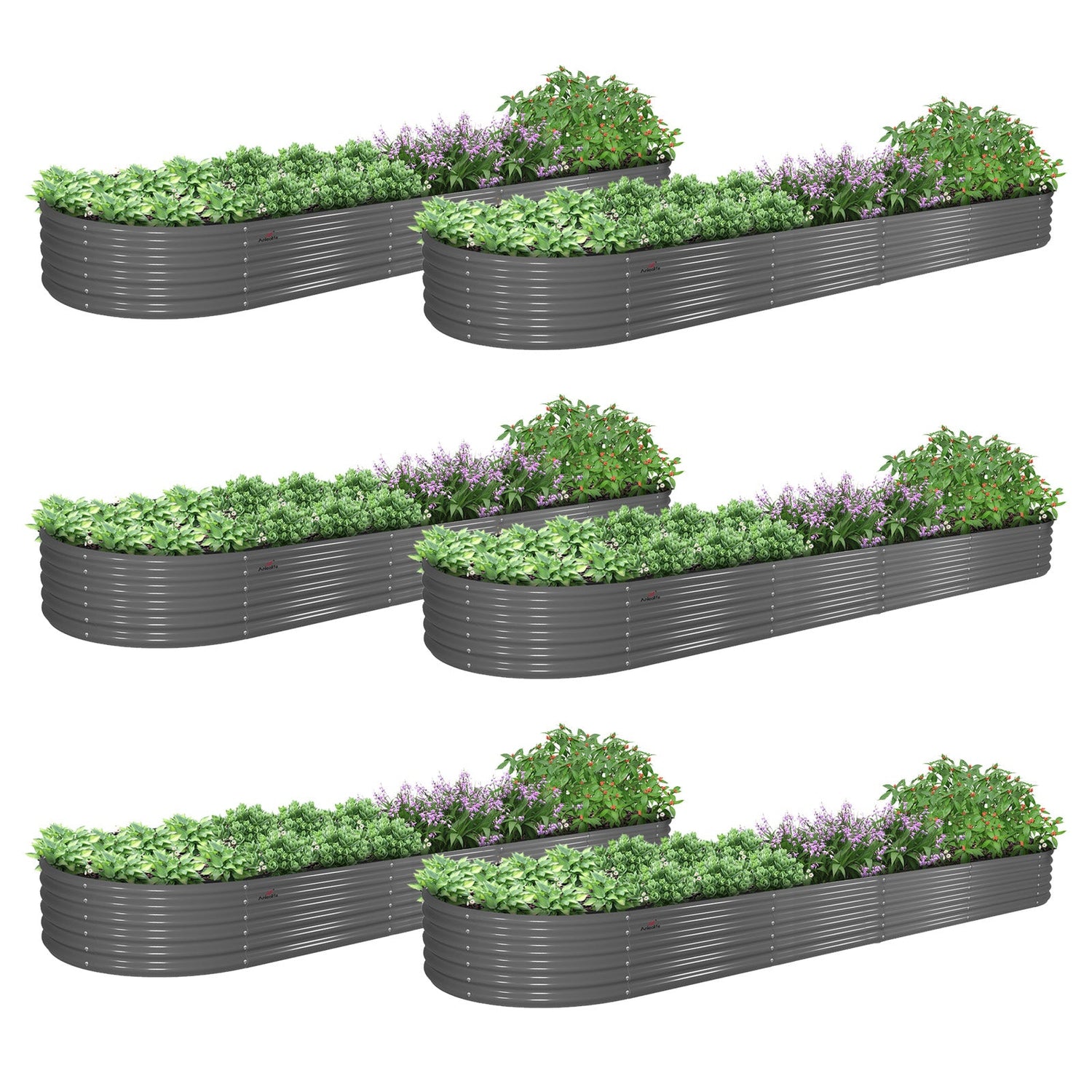
- Four 8x4 ft beds = 128 square feet
- Two 12x3 ft beds = 72 square feet
- Two additional 6x3 ft beds = 36 square feet
Mix and match configurations to hit your target square footage based on the space you have available.
How Crop Choice Affects Your Bed Count
Some crops are spectacularly space-efficient. Salad greens, herbs, radishes, and green onions can produce impressive harvests from just a few square feet and are ideal candidates for smaller beds or even the edges of larger ones.
Other crops are notorious space hogs. Zucchini is the classic example—a single plant can sprawl over 4–6 square feet and produce far more than most families can eat. Watermelons and pumpkins are similar. For a family of four trying to maximize their beds, these crops deserve careful consideration: the yield-to-space ratio may not justify the real estate.
Tomatoes sit in the middle—they take significant vertical space but can be managed with caging or staking to keep their footprint compact. A single 8x4 ft bed can comfortably support 4–6 tomato plants, which will produce abundantly for a family of four through peak summer.
Strawberries are a perennial favorite, especially for families with children. The best size raised bed for strawberries is typically a 4x4 or 4x8 configuration, which allows for a single dense planting of 16–25 plants—enough to provide regular harvests for a family. Strawberries are perennials, so dedicate one bed specifically to them so you don't disrupt them during seasonal replanting.
The Case for Dedicating Beds by Crop Category
Experienced family gardeners often find it helpful to organize their raised beds by crop category rather than mixing everything together. A practical 4-bed layout for a family of four might look like:
Bed 1 – Salad & Quick Crops: Planted with lettuces, spinach, arugula, radishes, and herbs. This bed gets harvested frequently and replanted throughout the season, delivering consistent fresh greens for family meals.
Bed 2 – Nightshades: Tomatoes, peppers, and perhaps eggplant. These are warm-season crops that take longer to mature but produce heavily once established. A larger bed like an 8x4 ft configuration handles this category well.
Bed 3 – Brassicas & Root Vegetables: Broccoli, kale, cabbage, carrots, and beets thrive together and prefer cooler growing conditions. This bed is most productive in spring and fall, making it ideal for extended-season gardening.
Bed 4 – Beans, Squash & Cucumbers: These vining crops benefit from vertical support (a trellis or cage) and produce reliable harvests. A 12x3 ft or 8x4 ft bed works well here, providing the length needed for trellis installation along one end.
This categorical approach also makes crop rotation straightforward—something every family gardener should practice. Rotating crop families between beds each season dramatically reduces soil-borne disease pressure and pest buildup, keeping your garden productive over the long term.
Choosing the Right Bed Heights for Your Family
Bed height is often an afterthought, but it deserves real consideration. Standard 18-inch tall beds are appropriate for most vegetables and most gardeners. They provide adequate root depth for everything from carrots to tomatoes, and the height is comfortable for most adults to tend without excessive bending.
For families with older members, anyone managing back issues, or retirees who plan to spend significant time in the garden, the 24-inch extra tall or even 30-inch extra tall configurations are genuinely life-changing. Anleolife's 35-inch waist-high raised garden bed option essentially eliminates the need to bend at all—a feature that keeps gardening enjoyable rather than painful for decades.
For children who want to participate in the garden (and encouraging this is one of the great joys of family gardening), a standard 18-inch bed is perfectly accessible.
Accounting for Pathways and Access
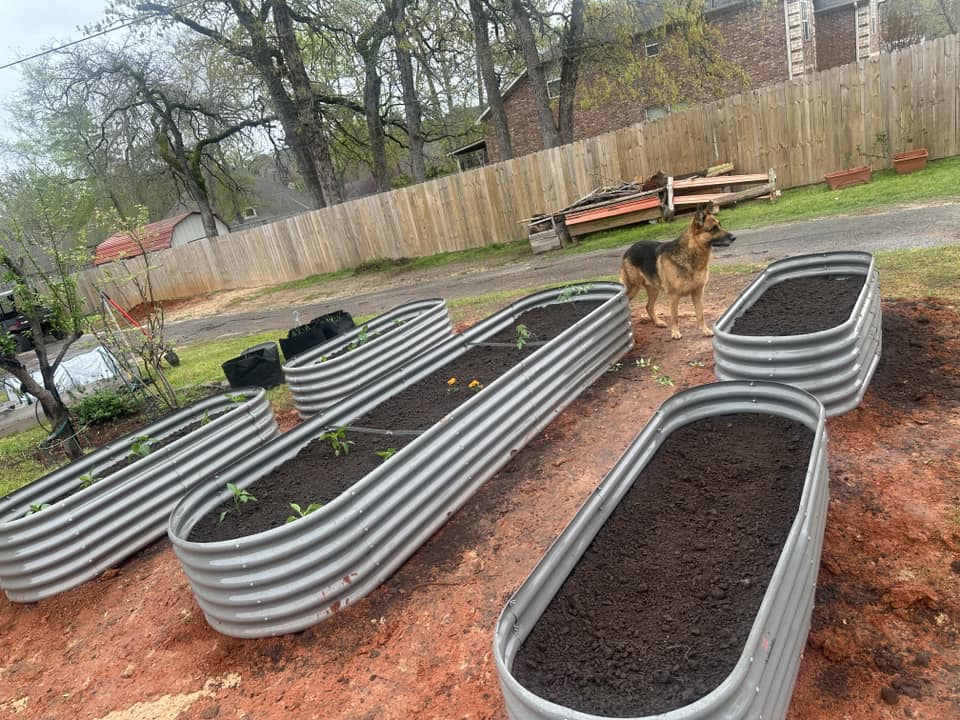
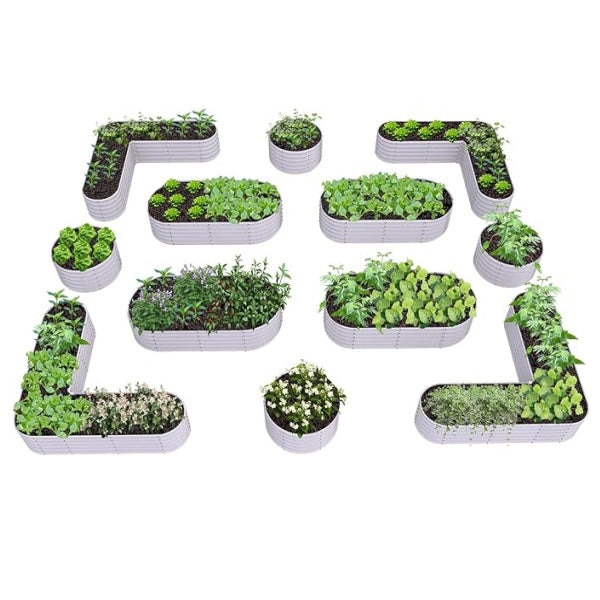
One aspect of bed count planning that beginners consistently overlook: the space between beds matters as much as the beds themselves. You need comfortable pathways—typically 18–24 inches wide at minimum, with 30–36 inches preferred for wheelbarrow access—between every bed. This pathway space adds up quickly and should be factored into your overall garden footprint calculation before you order beds.
Proper pathways also reduce soil compaction (you're never stepping in the beds), make harvesting easier, and give the garden an organized, intentional look that elevates the entire space.
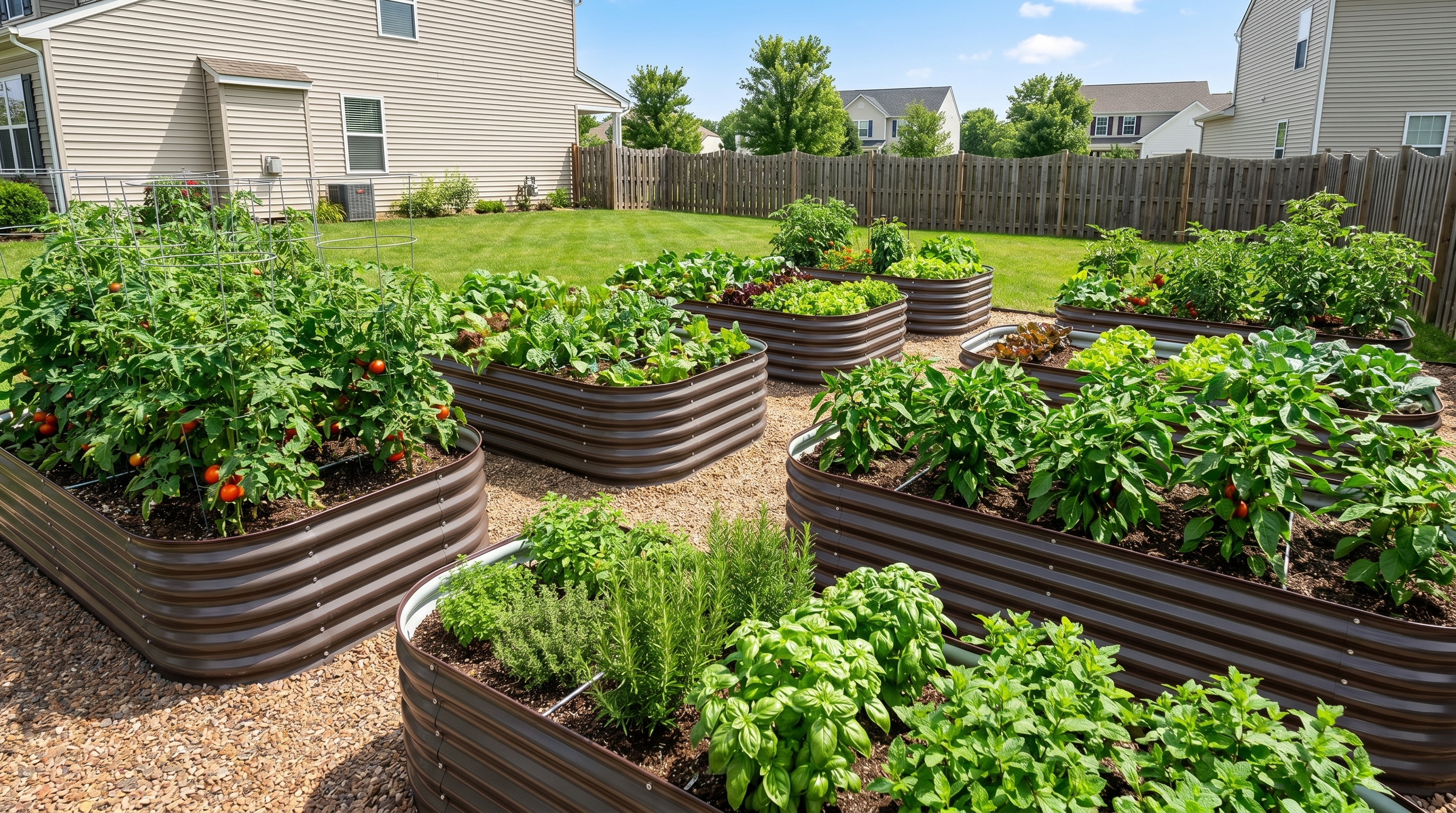
ALT: Organized family raised bed garden featuring multiple galvanized metal raised garden beds with clear walking pathways and thriving vegetable plants
Advanced Considerations: Beyond the Basic Bed Count
Scaling Up Gradually Is Smarter Than Going All In
One of the most common mistakes new family gardeners make is building the maximum possible garden in year one. The enthusiasm is understandable, but an overbuilt garden that exceeds your time and energy quickly becomes a source of stress rather than joy. A better strategy is to start with 2–3 beds in your first season, develop your skills and systems, and add beds in subsequent years as your confidence and capacity grow.
Anleolife's modular raised garden bed designs are specifically engineered with this gradual expansion in mind. You can begin with a pair of 8x4 ft beds and add configurations as your needs grow—the system is designed to integrate seamlessly rather than requiring you to start over.
Common Misconceptions About Family Garden Planning
Misconception #1: "Bigger is always better." Not for beginners. A well-tended smaller garden consistently outproduces a neglected large one. Match your ambition to your realistic available time.
Misconception #2: "You need perfect soil to start." One of the core advantages of raised beds is that you bring in your own growing medium. You're not dependent on your native soil quality at all.
Misconception #3: "Raised beds require more watering." While raised beds do drain more freely than in-ground plots, pairing them with drip irrigation or soaker hoses actually makes watering more efficient and targeted—often using less water overall than traditional gardens.
Misconception #4: "Metal beds overheat and cook plant roots." Modern galvanized steel beds, particularly those with proper construction, do not create problematic heat levels for plants. The soil mass inside the bed acts as a thermal buffer, and the concern about metal beds overheating is largely overblown for standard residential gardening conditions.
The Container Gardening Bridge
For families in the planning stages or those with limited space, the best container gardening setup for small patios can serve as a productive bridge while you plan and build your permanent raised bed system. Large containers (15–25 gallons) can grow tomatoes, peppers, and herbs successfully on a patio, generating experience and enthusiasm while you finalize your raised bed layout and budget. Think of containers as the starting line, not the finish.
Frequently Asked Questions FAQ
Q1: How much space does a family of four actually need for a productive raised bed garden?
A practical guideline suggests approximately 100 square feet of growing space per person for meaningful vegetable production, putting a family of four in the 300–400 square foot range. However, this doesn't mean you need to achieve that all at once. Starting with 200 square feet (roughly three to four 8x4 ft beds) and expanding over subsequent seasons is a perfectly reasonable approach that matches how most successful family gardens actually develop over time.
Q2: Are galvanized steel raised garden beds safe for growing food?
Yes, galvanized steel raised garden beds are widely considered safe for food production. Modern galvanization uses zinc as a protective coating, and while zinc does leach into soil in very small amounts over time, it is an essential plant micronutrient at those trace levels. Extensive research has not established health concerns for consumers eating produce grown in galvanized beds. They are one of the best eco-friendly materials for raised garden beds available, avoiding the chemical treatment concerns associated with some older pressure-treated wood options.
Q3: How long will a quality metal raised garden bed last, and is it worth the investment?
A well-made galvanized steel raised garden bed is a genuinely long-term investment. Anleolife's raised garden beds are built to last up to 20 years, meaning the cost amortized over their lifespan is remarkably low—especially when you factor in the grocery savings from growing your own produce. Compared to wood beds that may need replacement every 5–10 years, metal beds offer superior long-term value while requiring significantly less maintenance over their lifetime.
Summary
Planning the right number of raised beds for a family of four comes down to three core principles:
First, start with your goals. Light supplementation, moderate seasonal production, and serious self-sufficiency all require different levels of infrastructure. Knowing which category you're aiming for prevents both under-building (frustration at running out of space) and over-building (overwhelm and neglect).
Second, think in square feet, not just bed counts. Targeting approximately 100 square feet of growing space per family member gives you a concrete planning target. Mix bed sizes strategically—larger formats for heavy producers like tomatoes and squash, smaller or specialty configurations for strawberries, herbs, and greens.
Third, build to grow. The best family garden is one you can actually maintain with the time and energy you realistically have. Starting with 2–3 well-managed beds and expanding over time is a proven path to lasting success—and far more rewarding than launching a sprawling operation that burns you out before harvest season.
For most families of four, 3–4 raised beds of meaningful size (primarily 8x4 ft and 12x3 ft configurations) represents the practical sweet spot: productive enough to make a real difference in your family's food, manageable enough to actually enjoy the process.
Ready to Build Your Family Garden?
Anleolife makes it easy to bring this plan to life. With a nationwide U.S. warehouse network strategically located in California, Texas, Florida, New York, Illinois, and Washington, your order arrives in as fast as 3–8 business days—so your garden plans never sit on hold.
Shop across major platforms including Amazon, Walmart, Home Depot, Lowe's, Wayfair, and directly at Anleolife.com for consistent quality assurance and dedicated after-sales support.
Anleolife's three core garden scenarios—Planting (metal raised garden beds, soil systems), Raising (chicken coops, rabbit hutches), and Beautification (decorative accessories, pathway systems)—give your family everything needed to build not just a vegetable garden, but a complete outdoor living space that evolves with your lifestyle.
We understand that an ideal garden is not built overnight, but gradually improved over time. Our modular product design allows flexible expansion based on your needs—from your first 8x4 ft raised bed to a fully integrated planting-and-raising ecosystem. We grow with you every step of the way.
References
- National Gardening Association. "Garden to Table: A Guide to Growing Food at Home".
https://garden.org - University of California Cooperative Extension. "Vegetable Gardening in California: Planning Your Garden".
https://ucanr.edu/ - Oregon State University Extension Service. "Raised Bed Gardening".
https://extension.oregonstate.edu/gardening/techniques/raised-bed-gardening - Penn State Extension. "Planning the Home Vegetable Garden".
https://extension.psu.edu/planning-the-home-vegetable-garden - USDA National Agricultural Library. "Home Gardening Resources".
https://www.nal.usda.gov/farms-and-agricultural-production-systems/home-gardening
Note: Standards and recommendations may be updated; please check the latest official documents or consult professional advisors for the most current guidance.
About Anleolife
Anleolife is a leading outdoor garden solutions provider in North America, dedicated to offering a full-scenario product ecosystem for home gardening enthusiasts, covering planting, raising, and garden beautification. Since its founding, we have upheld our brand mission, "Made for Garden Life," continuously innovating products and optimizing services to help hundreds of thousands of users upgrade their gardens, reconnect with nature, and enjoy a better garden lifestyle.