



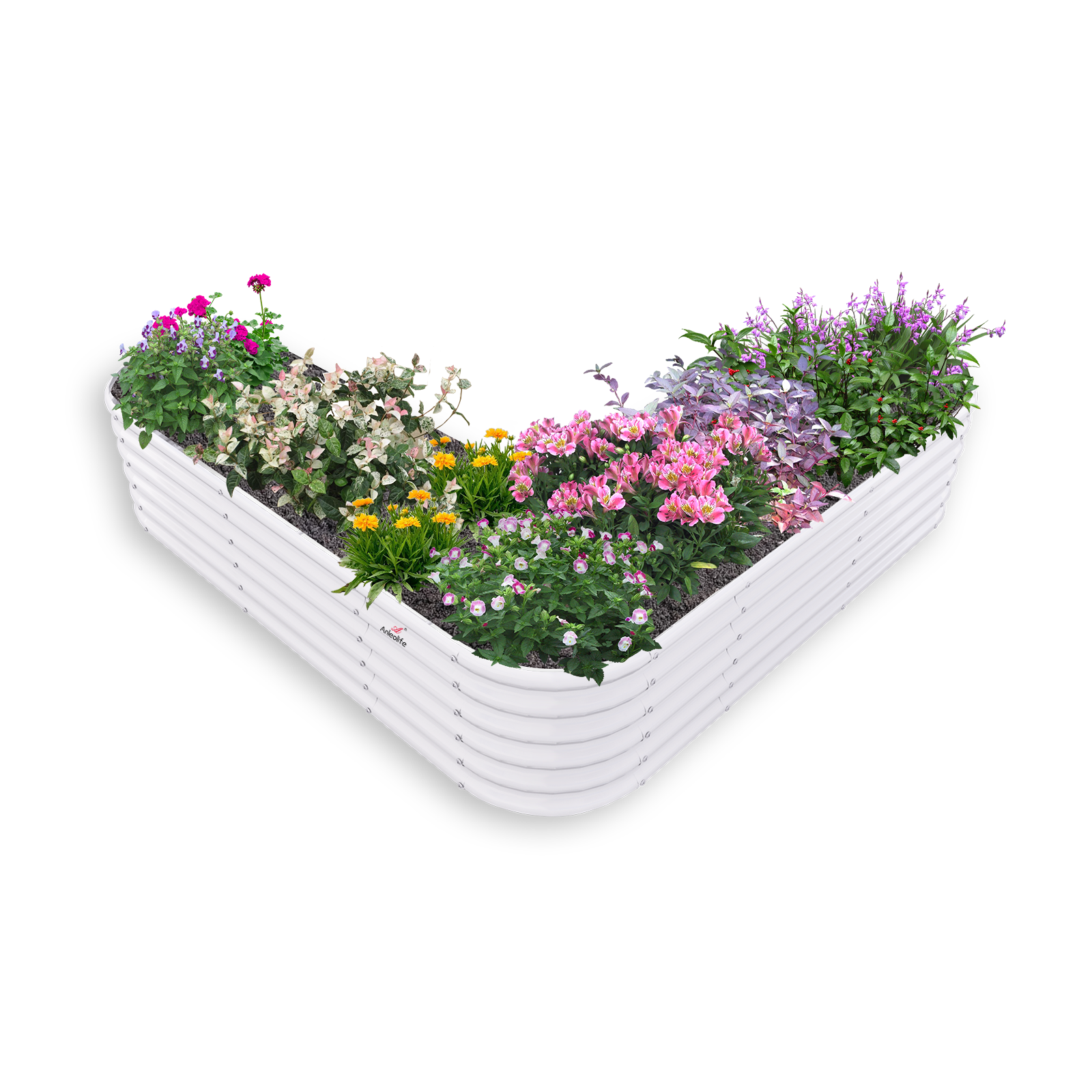
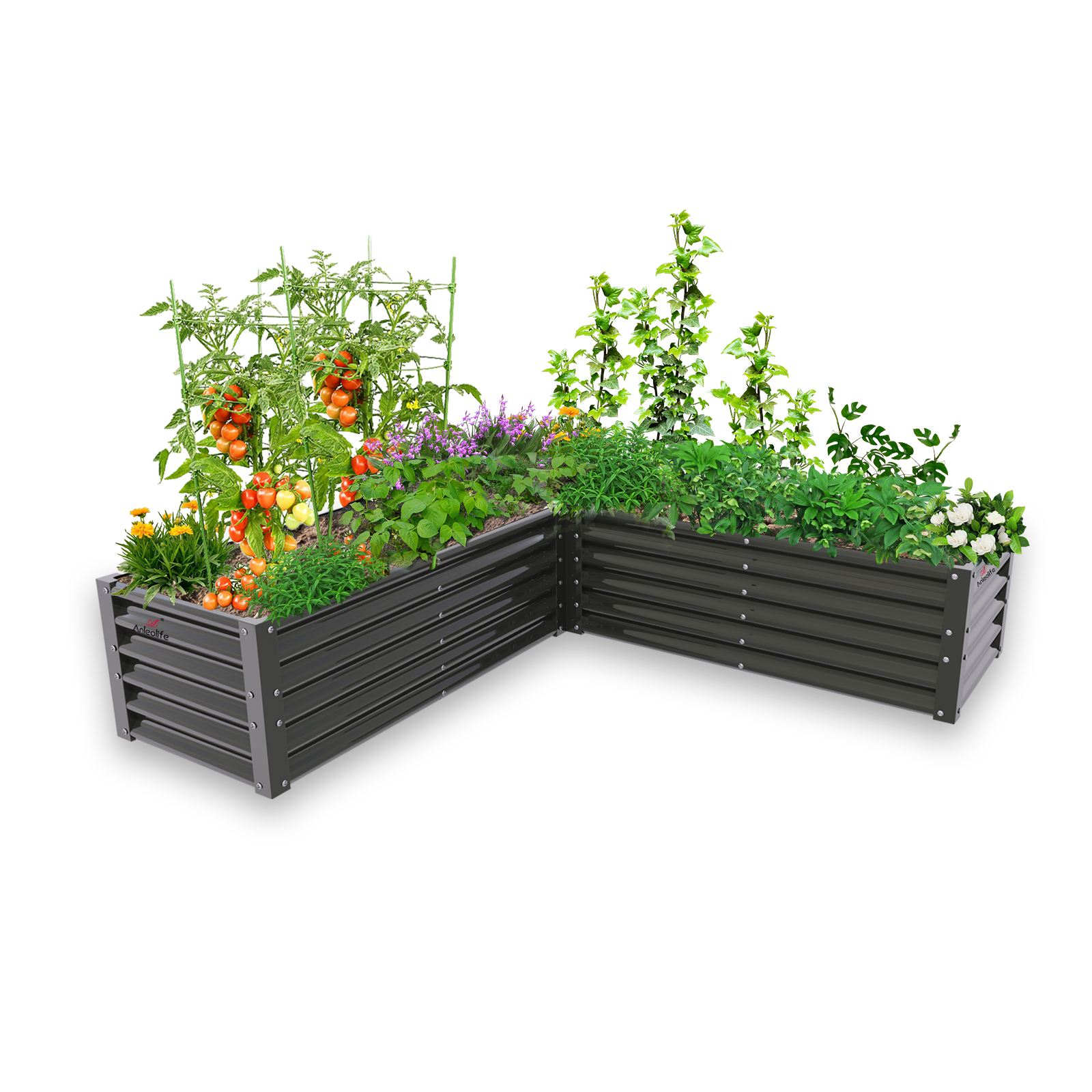
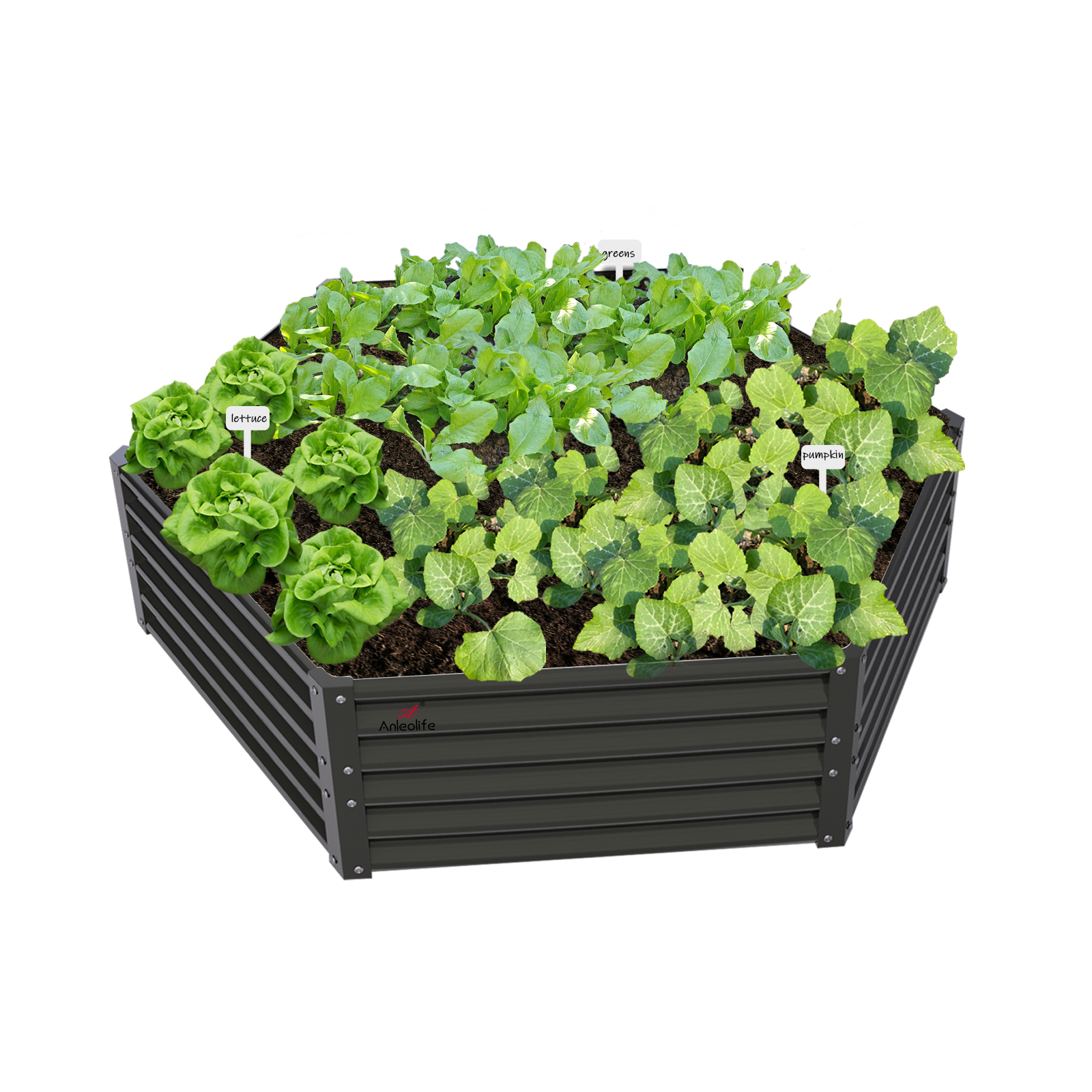
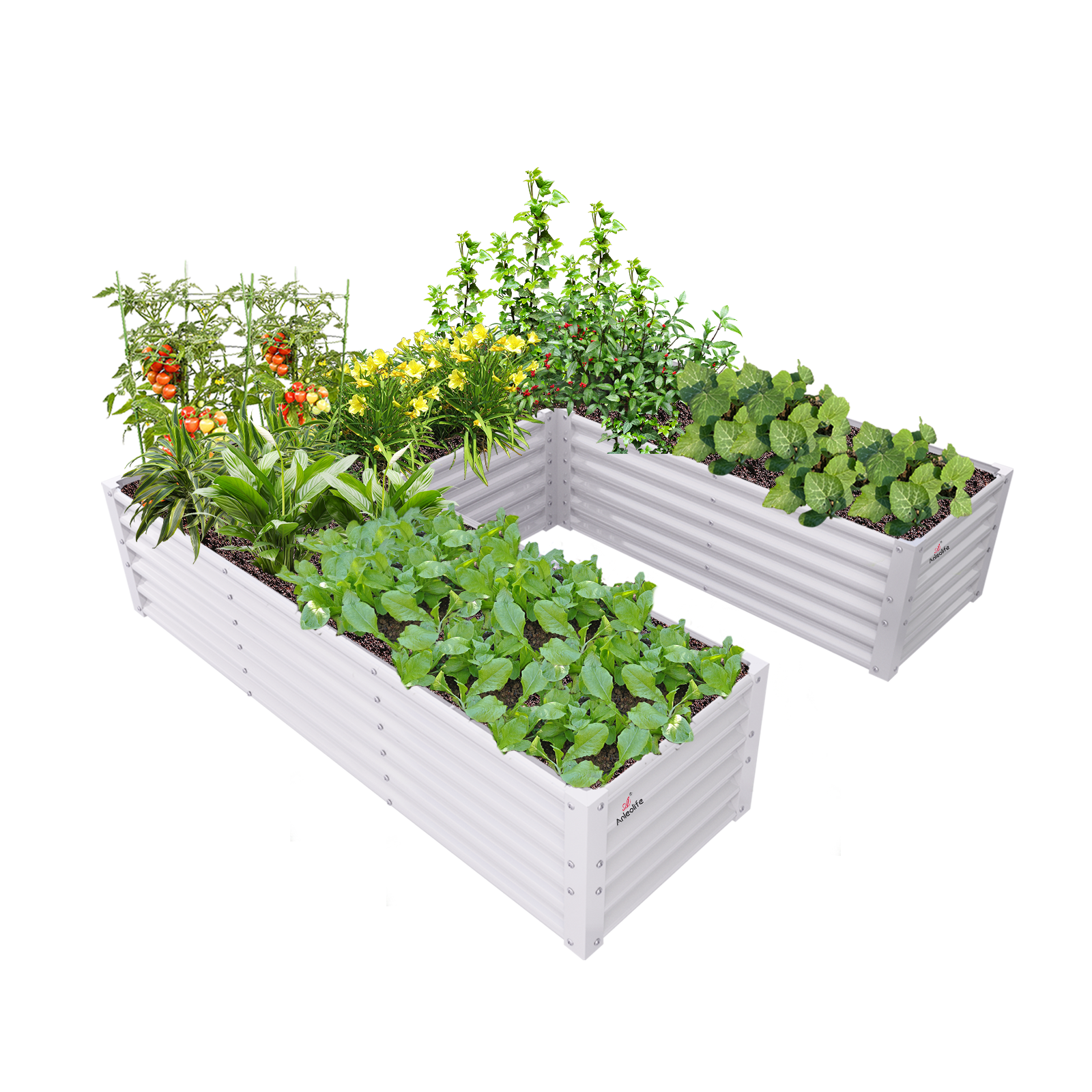

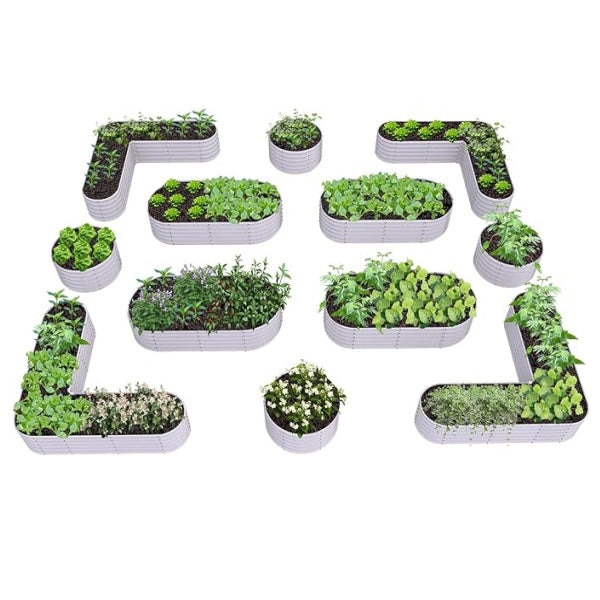


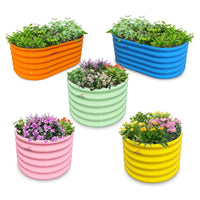
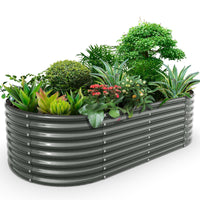



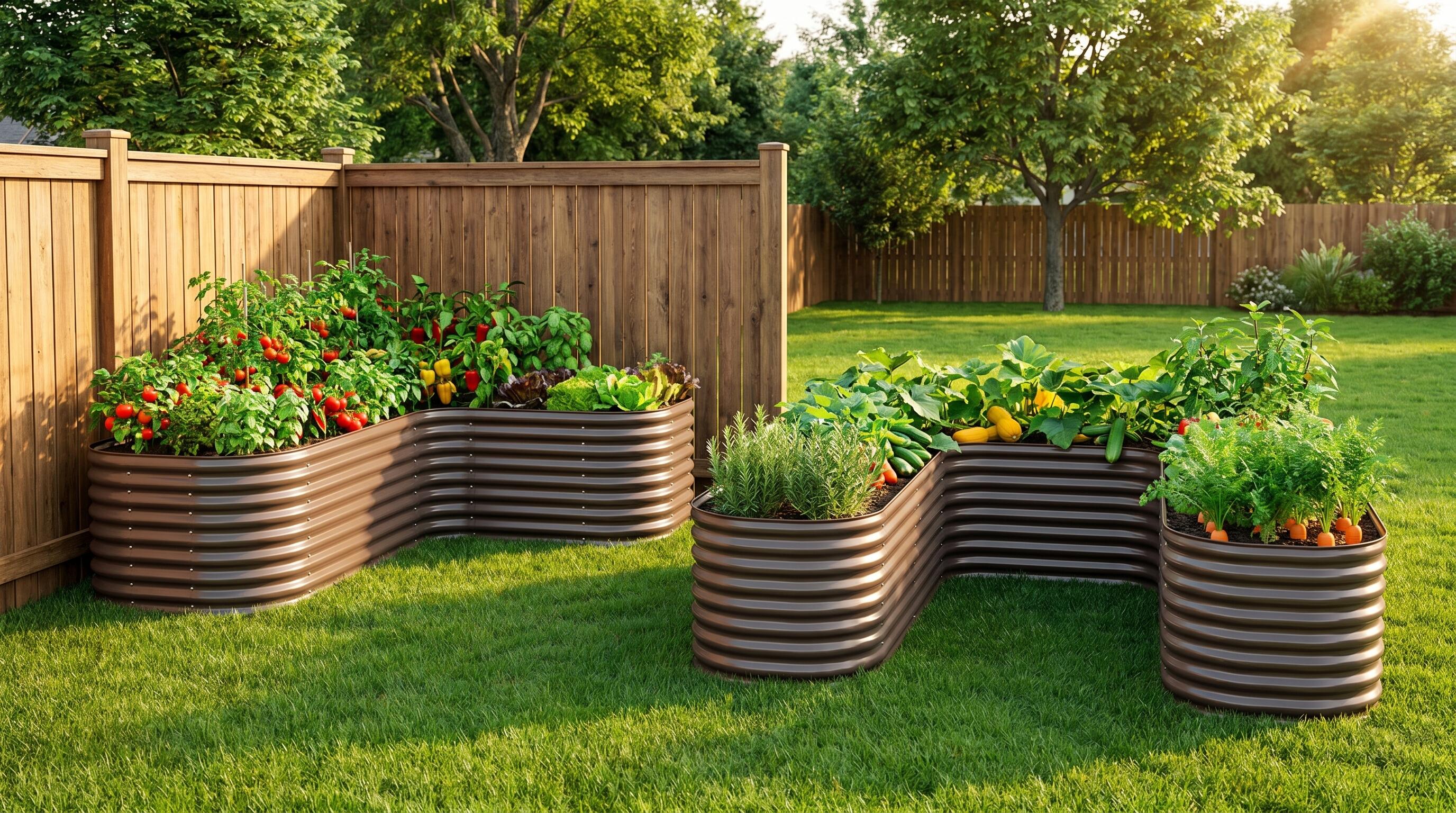
ALT: L-shape vs U-shape raised garden bed layouts maximizing backyard space for home gardeners
L-Shape vs. U-Shape Raised Garden Beds: Which Raised Bed Garden Layout Actually Works Best for Your Yard?
Key Conclusion: Choosing between an L-shape and U-shape raised bed garden layout isn't just about aesthetics—it's a functional decision that directly impacts how much you can grow, how comfortably you can work, and how efficiently your backyard space gets used. L-shape configurations excel in corner spaces and smaller yards, while U-shape layouts create a wrap-around workstation ideal for dedicated growers. Understanding your space, mobility needs, and planting goals is the first step toward finding the best raised bed planters setup for your lifestyle.
When homeowners first start planning their garden, they often focus on what to grow rather than how the beds are arranged. But experienced gardeners know that layout is everything. A well-planned raised bed garden layout can mean the difference between a thriving productive space and a frustrating tangle of plants you can barely reach.
In this guide, we'll break down the key differences between L-shape and U-shape raised garden bed configurations, compare them across practical dimensions like accessibility, planting capacity, and space efficiency, and help you decide which layout deserves a place in your backyard.
Who Should Read This Guide: Applicable Scenarios and Cautions
✅ Applicable Scenarios:
- Homeowners with medium to large backyards looking to maximize planting square footage while keeping paths clear
- Urban micro-gardeners and patio growers who need a structured, efficient container gardening setup for small patios or side yards
- Empty nesters and retirees who want ergonomic, easy-to-reach garden configurations that reduce bending and strain
- Eco-conscious families interested in creating a dedicated, organized kitchen garden with long-term durability in mind
❌ Not Applicable/Cautions:
- Renters or temporary gardeners who need fully portable setups—fixed L- and U-shape configurations are better suited for permanent or semi-permanent installation
- Very small balcony or rooftop spaces where footprint constraints make multi-piece layout systems impractical; single rectangular beds or compact round beds may be more appropriate in those cases
Why Raised Bed Layout Planning Has Become a Hot Topic in Home Gardening
Over the past decade, backyard gardening has evolved from a niche hobby into a mainstream lifestyle choice. According to the National Gardening Association, millions of American households now grow some portion of their own food, a trend accelerated by a growing interest in food security, organic eating, and outdoor wellness.
With this growth has come increasing sophistication. Home growers are no longer satisfied with a single rectangular bed tossed in the corner of the yard. They're asking bigger questions: How do I organize multiple beds efficiently? How do I make the most of an awkward corner space? How do I build a garden that will last 20 years without rotting, rusting, or requiring constant maintenance?
That's where the conversation around raised bed garden layouts—specifically L-shape vs. U-shape configurations—has taken off. Search interest for terms like "best raised bed planters," "best container gardening setup for small patios," and "who makes the best metal raised garden beds" has risen sharply, reflecting a more informed, design-minded generation of home gardeners.
At the same time, material choices have become more intentional. Many growers are specifically seeking out the best eco-friendly materials for raised garden beds—options that are safe for edible plants, long-lasting, and responsibly made. Galvanized steel and rust-resistant steel have emerged as top contenders, offering structural integrity without the chemical concerns of treated wood.
Understanding layout isn't just about aesthetics. It's about making a smart, long-term investment in your outdoor space—one that fits your land, your body, and your goals.
Comparing L-Shape and U-Shape Raised Garden Bed Layouts: A Complete Breakdown
Three Steps to Choosing the Right Layout Before You Buy
Step 1: Map Your Available Space
Before you decide on a configuration, spend 20–30 minutes walking your yard and measuring usable planting zones. Note corners, fences, slopes, and any obstacles like trees or utility boxes. Take photos from different angles. An L-shape layout is designed to tuck neatly into a 90-degree corner, making it ideal when two fence lines or walls meet. A U-shape layout needs open space on at least three sides and requires sufficient room to walk into the central work zone comfortably.
Step 2: Identify Your Primary Gardening Goals
Ask yourself: Are you growing mainly for beauty, mainly for food, or a combination? If you want a visually defined garden "room" that creates a sense of enclosure and organization, the U-shape is remarkably satisfying. If you want to maximize corner utilization in a smaller yard while still having open lawn access on all sides, the L-shape fits more naturally into mixed-use spaces. Think about how many different crops you want to grow simultaneously—more varieties generally benefit from more segmented, accessible bed space.
Step 3: Consider Mobility, Reach, and Ergonomics
One of the most overlooked factors in raised bed garden layout decisions is physical accessibility. Both L-shape and U-shape configurations can be built at standard height or at extra-tall heights—such as the 24" or 30" extra tall options available in Anleolife's lineup—which dramatically reduce the need to kneel or bend. However, the U-shape's interior workspace allows you to stand or sit in the center and reach plants on three sides without ever repositioning. For gardeners managing joint pain, aging-related mobility challenges, or back issues, this ergonomic advantage is significant.
Head-to-Head Comparison: L-Shape vs. U-Shape Raised Garden Bed Layouts
Here's a detailed side-by-side comparison to help you evaluate which layout best serves your specific needs. Note that individual product dimensions vary—consult your provider for exact measurements.
| Comparison Dimension | L-Shape Layout | U-Shape Layout | Single Rectangular Bed |
|---|---|---|---|
| Best suited space | Corner lots, narrow side yards | Open central backyard zones | Any yard size, versatile |
| Planting square footage | High – wraps two walls | Very high – three-sided enclosure | Moderate per unit |
| Ergonomic reach | Good from outside edges | Excellent – work from inside center | Good from all four sides |
| Visual impact | Structured, architectural | Garden room feel, immersive | Clean, minimalist |
| Path clearance | Opens up central lawn | Uses central zone for work | Leaves maximum open space |
| Ideal for small patios | Yes, especially corner patios | Less ideal – needs more open area | Best for very tight spaces |
| Multi-crop organization | Good – two distinct planting arms | Excellent – three segmented zones | Limited to one zone |
| Assembly complexity | Moderate | Moderate to higher | Lowest |
| Expansion flexibility | Good with modular systems | Good with modular systems | Excellent |
This table makes clear that neither layout is universally "better"—the right choice depends entirely on your space, priorities, and how you garden.
Understanding the L-Shape Layout: Strengths, Limitations, and Best Use Cases
What Makes L-Shape Configurations So Appealing
The L-shape raised garden bed layout is essentially two rectangular beds joined at a right angle. This creates an elegant, space-efficient solution for corners—arguably one of the most underutilized zones in the average backyard.
Visually, L-shaped beds create a defined boundary that separates the garden from the lawn without closing it off. You can approach from multiple angles, which means better airflow around plants and easier access for maintenance. For families with children or pets, an L-shape keeps the center of the yard open for other activities while still carving out a meaningful growing space.
From a planting perspective, L-shaped configurations allow for natural zoning. You might dedicate one arm of the "L" to herbs and greens—crops you harvest frequently—while reserving the longer arm for tomatoes, squash, or climbing plants. The corner joint can serve as an anchor point for a vertical trellis or support structure.
When L-Shape Beds Work Best
L-shape layouts shine in yards where you're working with existing structures—a fence corner, the junction between a house wall and a garage, or the intersection of two garden borders. They feel natural in these spaces, almost as if the bed belongs there.
They're also a strong choice for urban micro-gardeners with limited square footage. A well-placed L-shape can transform a bare corner into a productive growing station without dominating the entire outdoor area. If you're exploring the best container gardening setup for small patios, an L-configuration using compact bed sizes gives you meaningful growing capacity without making the space feel cramped.
Limitations to Keep in Mind
The main limitation of the L-shape is that the inner corner can be harder to reach depending on the bed's depth. If the bed is wide, you may need to lean or use a kneeler to tend plants in the innermost section. This is worth factoring in, especially for gardeners with limited reach. Choosing extra-tall bed heights can partially offset this by bringing the soil line closer to waist level.
Understanding the U-Shape Layout: Strengths, Limitations, and Best Use Cases
The U-Shape's Core Advantage: The Integrated Work Zone
The U-shape raised garden bed layout is designed around a central idea: putting the gardener at the center of their plants. By arranging three bed sections in a U formation, you create an enclosed workspace where you can stand or sit and reach every plant within a comfortable arm's length.
This design is widely considered one of the most ergonomically efficient garden layouts available. Professional growers, physical therapists working with aging patients, and gardening educators all tend to recommend U-shape configurations for people who want to garden intensively without physical strain.
For empty nesters and retirees, this is often the layout that transforms gardening from a chore into a genuine pleasure. You're not fighting your body to tend your plants—you're simply standing in your workspace, surrounded by greenery, doing exactly what you love.
Planting Capacity and Organization
U-shape layouts also offer exceptional planting density. Because you have three segmented bed arms, you naturally end up with distinct growing zones. This makes crop rotation more intuitive, companion planting easier to manage, and visual organization cleaner. Many dedicated food gardeners find that a U-shape bed system becomes their primary growing infrastructure—especially when combined with tall bed heights that allow for deep root vegetables.
For those wondering who makes the best metal raised garden beds, Anleolife's galvanized steel and rust-resistant raised garden bed lines are purpose-built for exactly this kind of intensive, long-term growing. Their beds are engineered to last up to 20 years, making the investment in a U-shape system genuinely worthwhile over a long gardening horizon.
Limitations of the U-Shape
The U-shape requires more open space than an L-shape. You need enough room to walk into the central zone comfortably, and the overall footprint is larger. In very small yards or tight patio situations, this can be a real constraint.
Assembly also tends to be slightly more involved, though modular bed systems have made this much more manageable. Anleolife's Modular Raised Garden Bed series is specifically designed to be reconfigured over time, giving you the flexibility to start with an L-shape and expand into a U-shape as your space and confidence grow.
Material Matters: What Makes a Raised Bed Last in Any Configuration
Whether you choose an L or U layout, the material you build with will determine how your investment holds up over years of weather, watering, and soil pressure.
Many gardeners are now asking what are the best materials for raised garden beds that won't rust—and for good reason. Traditional untreated wood beds decompose within a few years. Treated wood raises concerns about chemical leaching into edible soil. Plastic beds degrade under UV exposure and rarely offer adequate structural rigidity for larger layouts.
Galvanized steel has emerged as the leading answer to this question. When properly manufactured, galvanized steel beds resist rust, hold their shape under soil pressure, and remain safe for edible gardening. Anleolife's Galvanized Steel Raised Garden Beds are available in a wide range of sizes and heights—from 18" standard-height options to 30" extra-tall configurations—making it straightforward to build L- or U-shape systems at whatever height best suits your gardening style.
For those specifically seeking the best eco-friendly materials for raised garden beds, rust-resistant steel offers an excellent profile: it's durable, fully recyclable, requires no chemical treatments, and doesn't leach harmful substances into garden soil. Anleolife's Rust-Resistant Raised Garden Bed line is designed with exactly this in mind, offering a clean, modern option that aligns with environmentally conscious home growing values.
Regardless of layout choice, a bed system built from quality galvanized or rust-resistant steel can realistically serve your garden for up to 20 years—meaning the upfront investment pays dividends across decades of growing seasons.
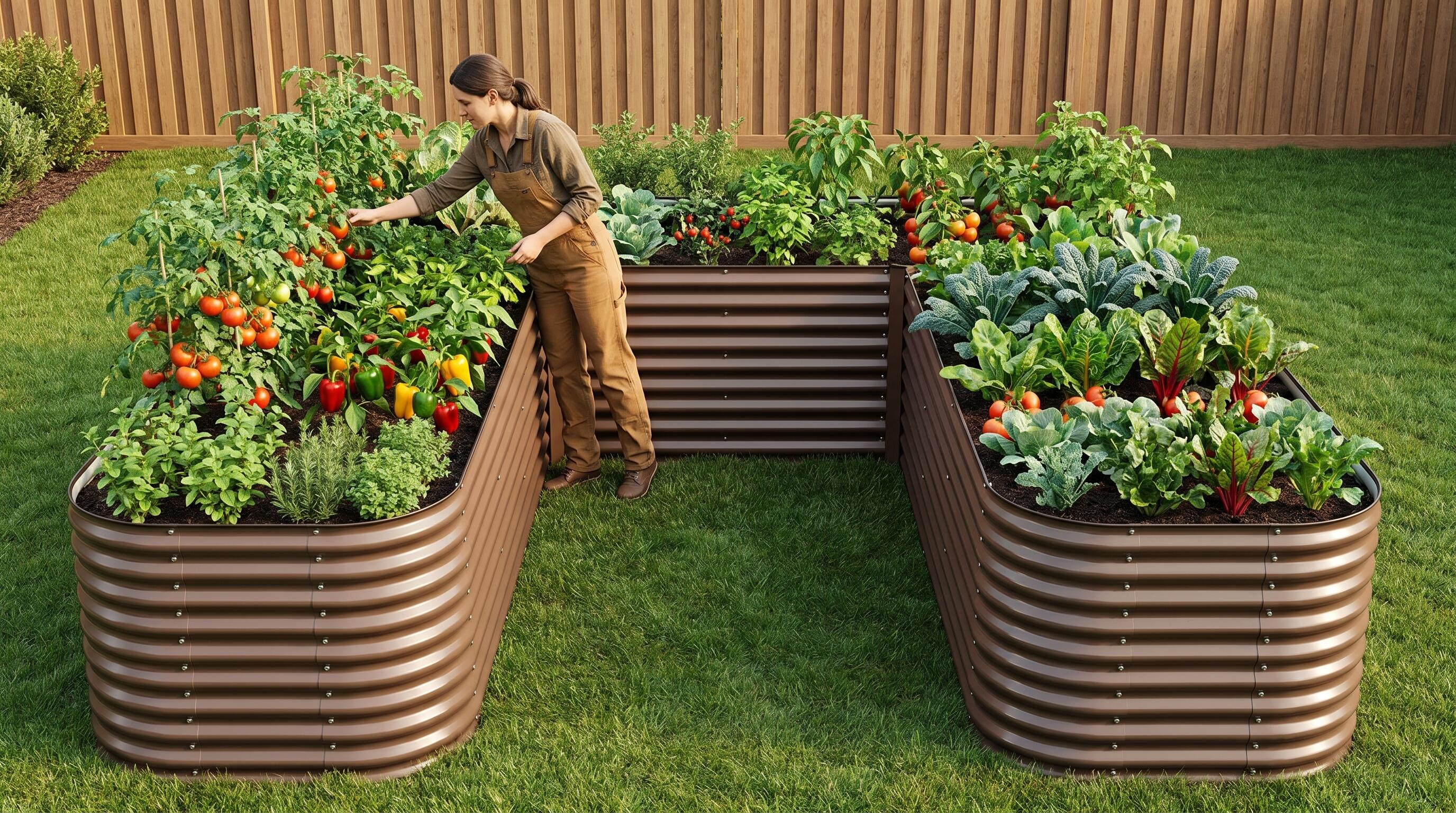
ALT: Galvanized steel U-shape raised garden bed layout with lush plantings in a suburban backyard, showing ergonomic access and organized growing zones
Advanced Considerations: Elevation, Expansion, and Common Misconceptions
Choosing the Right Height for Your Layout
One often-overlooked dimension of raised bed layout planning is vertical height. The choice between standard 18" height and extra-tall 24"–30" heights changes the entire user experience—especially in L- and U-shape configurations where you'll be working within or around the bed system regularly.
For younger, mobile gardeners, standard 18" height offers good soil depth and a lower profile that doesn't visually dominate the yard. For older gardeners or those with back and knee concerns, 24" to 30" extra-tall beds bring the growing surface to near waist height, effectively eliminating the need to kneel. Anleolife's lineup includes options at every major height tier, including their 35" waist-high option for truly accessible growing.
Modular Expansion: Start Small, Grow Over Time
A common misconception among new gardeners is that they need to plan and purchase their entire layout upfront. In reality, the smartest approach is often to start with one or two beds, learn how you use the space, and expand intentionally.
Anleolife's Modular Raised Garden Bed series is designed with exactly this philosophy in mind. You can begin with a single rectangular bed, add perpendicular sections to create an L-shape, and eventually build out to a full U-shape system—all using compatible components that fit together cleanly.
Misconception: L-Shape Beds Are Only for Small Spaces
Many gardeners assume L-shaped layouts are only a workaround for limited space. In fact, large L-shape configurations can encompass substantial planting square footage while still maintaining an open, airy feel in the yard. They're equally at home in spacious suburban backyards as in tight urban plots—it's the corner orientation, not the size, that defines the L-shape's character.
Frequently Asked Questions FAQ
Q1: How do I decide which layout fits my backyard if I've never gardened before?
Start by sketching your yard to scale and identifying any corners, fence lines, or walls where a bed could sit naturally. If you have an underutilized corner, an L-shape is usually the easiest entry point. If you have a more open space and want an immersive growing experience, try a U-shape. Consider your physical comfort—if bending is an issue, prioritize extra-tall bed heights in either layout. When in doubt, start with a single rectangular bed and expand into your preferred configuration using a modular system.
Q2: Are galvanized steel raised garden beds safe for growing vegetables?
Yes. High-quality galvanized steel uses a zinc coating process that forms a stable, protective layer over the steel surface. Research from institutions like the University of California Agriculture and Natural Resources indicates that zinc levels in garden soil from galvanized beds remain well within safe ranges for food crops. Anleolife's galvanized and rust-resistant beds are specifically engineered for edible gardening applications, providing a clean, safe growing environment without the chemical concerns associated with pressure-treated lumber.
Q3: How long will a metal raised garden bed system last, and is the investment worth it for an L- or U-shape layout?
A well-built galvanized or rust-resistant steel raised garden bed is designed to last up to 20 years under normal outdoor conditions. When you're investing in a larger layout like a U-shape system with multiple connected bed sections, that long-term durability makes the upfront cost considerably more justifiable. Compare this to wood beds, which typically need replacement every 3–5 years. Over a 20-year period, a quality metal bed system is almost always the more economical and less labor-intensive choice.
Summary
Choosing between an L-shape and U-shape raised garden bed layout comes down to three core factors: your available space, your gardening goals, and your physical needs.
Key takeaways:
- L-shape layouts are the smart choice for corner spaces, mixed-use yards, and urban micro-gardeners who want meaningful planting capacity without giving up their entire outdoor area. They're versatile, visually clean, and work well in a wide range of yard sizes.
- U-shape layouts offer the most ergonomic, immersive gardening experience available in a home setting. For dedicated food growers, retirees, or anyone who spends significant time tending their plants, the U-shape's integrated work zone is a genuine quality-of-life upgrade.
- Material quality determines longevity. Whether you choose L or U, building with galvanized steel or rust-resistant steel ensures your investment lasts up to 20 years—making both layouts a sound long-term choice for eco-conscious, health-oriented home gardeners.
Your next step: sketch your yard, measure your corner spaces, and consider where you'd most naturally want to spend time gardening. Then explore Anleolife's modular bed options to find the right starting point for your layout vision.
Start Building Your Ideal Garden Layout with Anleolife
Anleolife makes it easy to bring your L-shape or U-shape vision to life, wherever you are in the United States. With a nationwide warehouse network strategically located in California, Texas, Florida, New York, Illinois, and Washington, your order arrives in 3–8 business days—so your garden upgrade plans never have to wait.
Shop across the channels you already trust: Amazon, Walmart, Home Depot, Lowe's, Wayfair, and directly at Anleolife.com, where you'll find consistent quality assurance and dedicated after-sales support.
Anleolife's three core scenarios cover everything your backyard needs: Planting (metal raised garden beds, soil systems), Raising (chicken coops, rabbit hutches), and Beautification (decorative accessories, pathway systems)—meeting your complete needs from functionality to aesthetics.
We understand that an ideal garden isn't built overnight—it's built gradually, with intention. Our modular product design allows flexible expansion based on your needs, from your first raised bed to a fully integrated planting-and-raising ecosystem. We grow with you every step of the way.
References
- National Gardening Association. "Food Gardening in the United States."
https://garden.org/ - UC Agriculture and Natural Resources. "Vegetable Research and Information Center – Raised Bed Gardening."
https://ucanr.edu/ - University of Minnesota Extension. "Raised Bed Gardening."
https://extension.umn.edu/yard-and-garden/raised-bed-gardening - Penn State Extension. "Raised Bed Gardening."
https://extension.psu.edu/raised-bed-gardening
Note: Standards and research findings may be updated. Please check the latest official documents or consult professional advisors for the most current guidance.
About Anleolife
Anleolife is a leading outdoor garden solutions provider in North America, dedicated to offering a full-scenario product ecosystem for home gardening enthusiasts, covering planting, raising, and garden beautification. Since its founding, we have upheld our brand mission, "Made for Garden Life," continuously innovating products and optimizing services to help hundreds of thousands of users upgrade their gardens, reconnect with nature, and enjoy a better garden lifestyle.