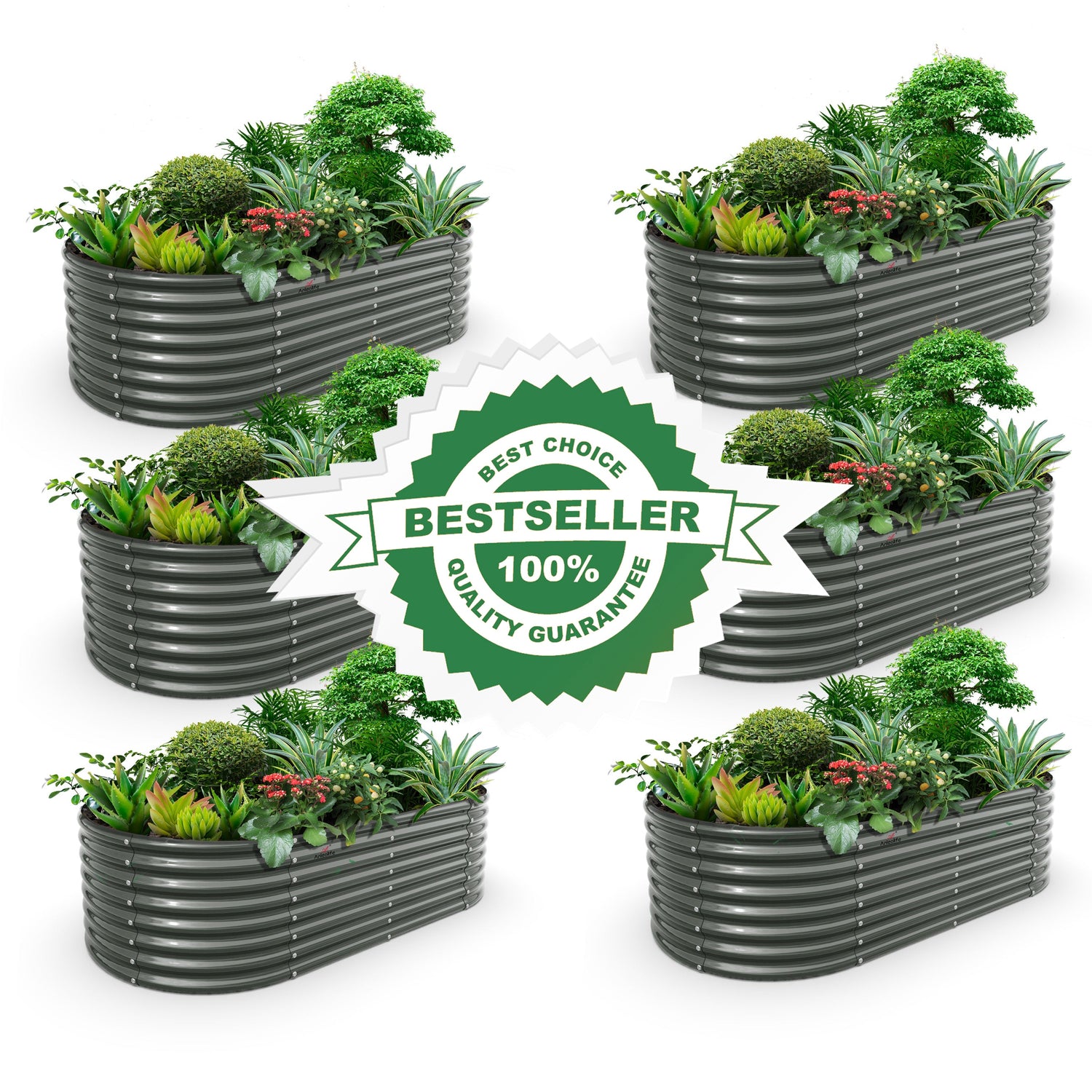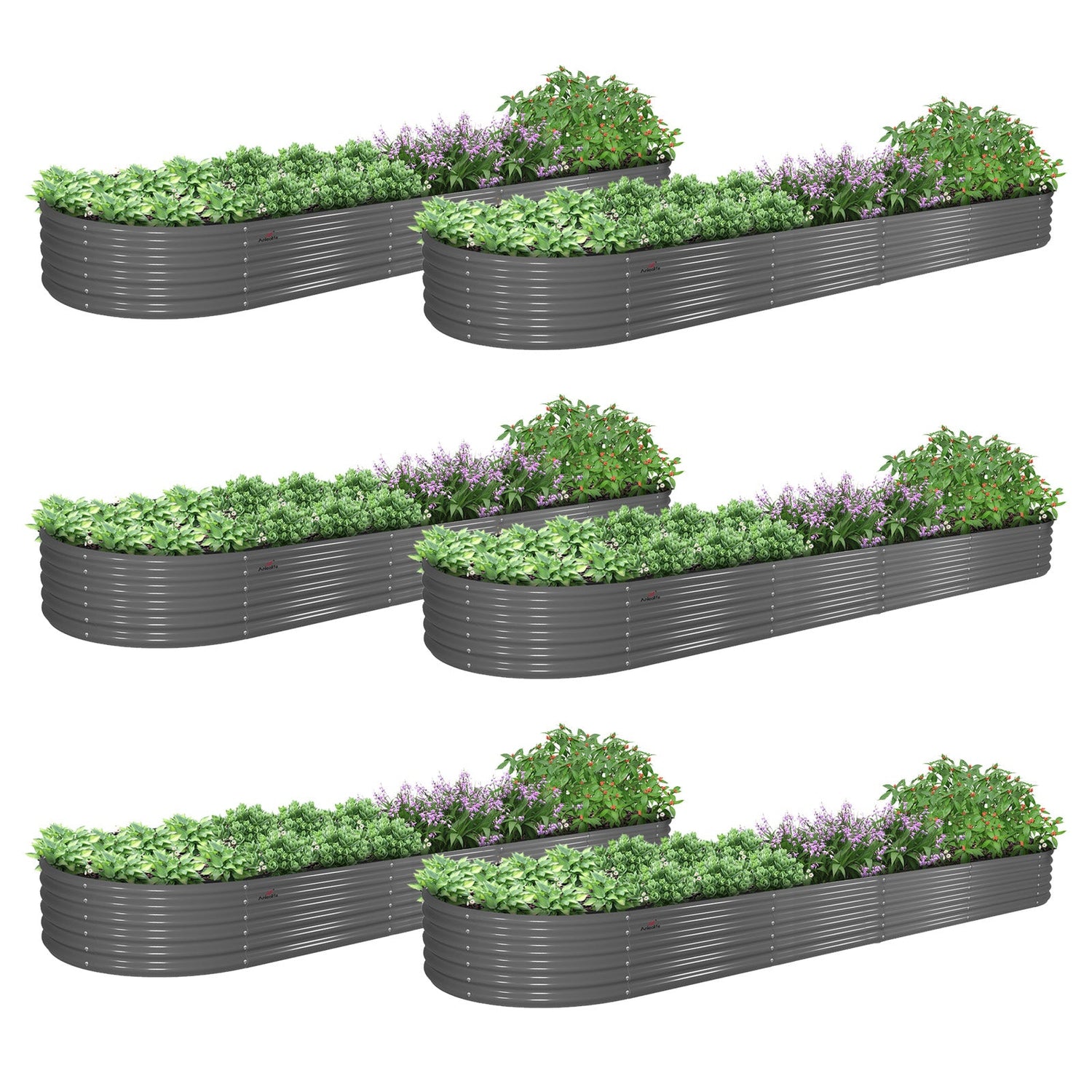



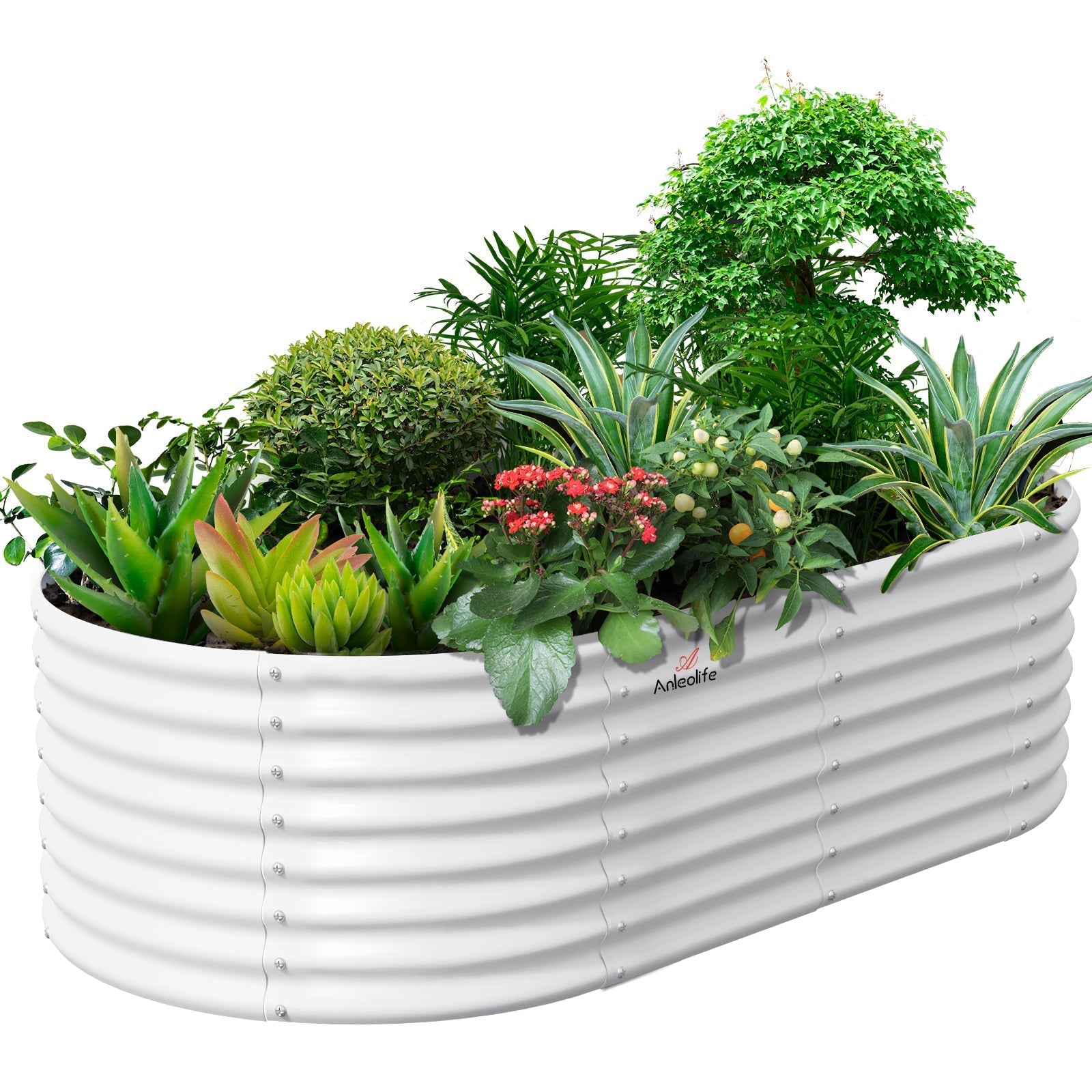
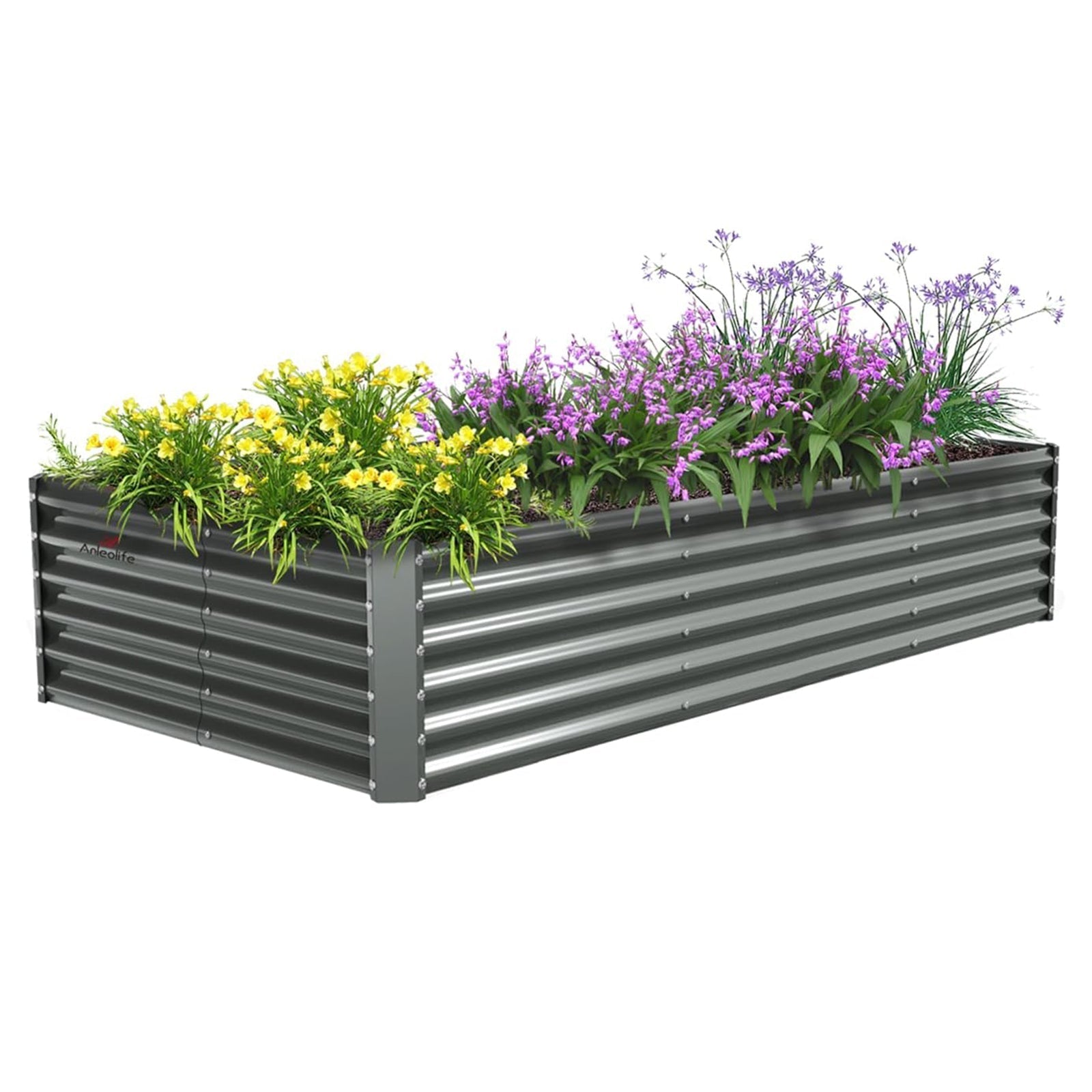

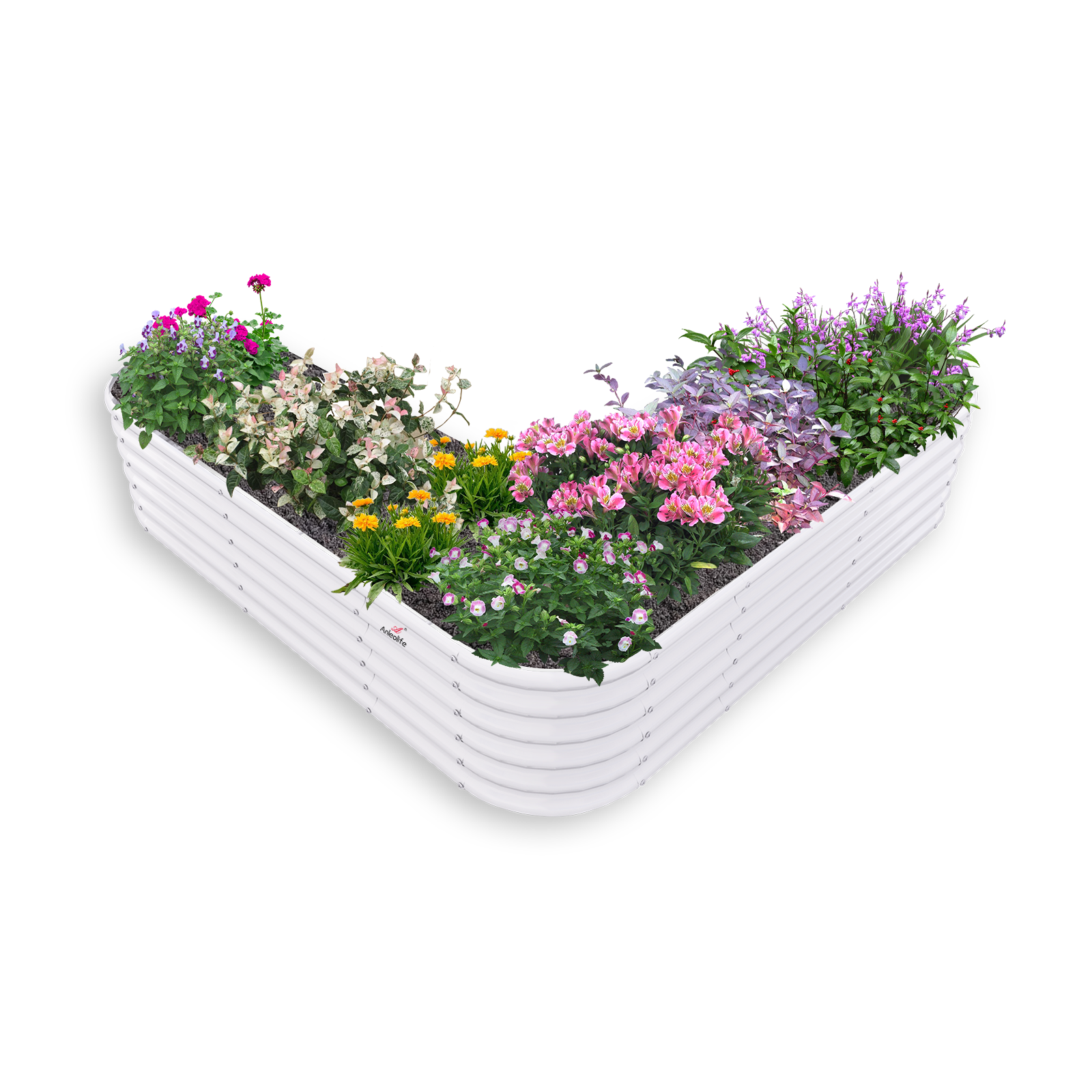
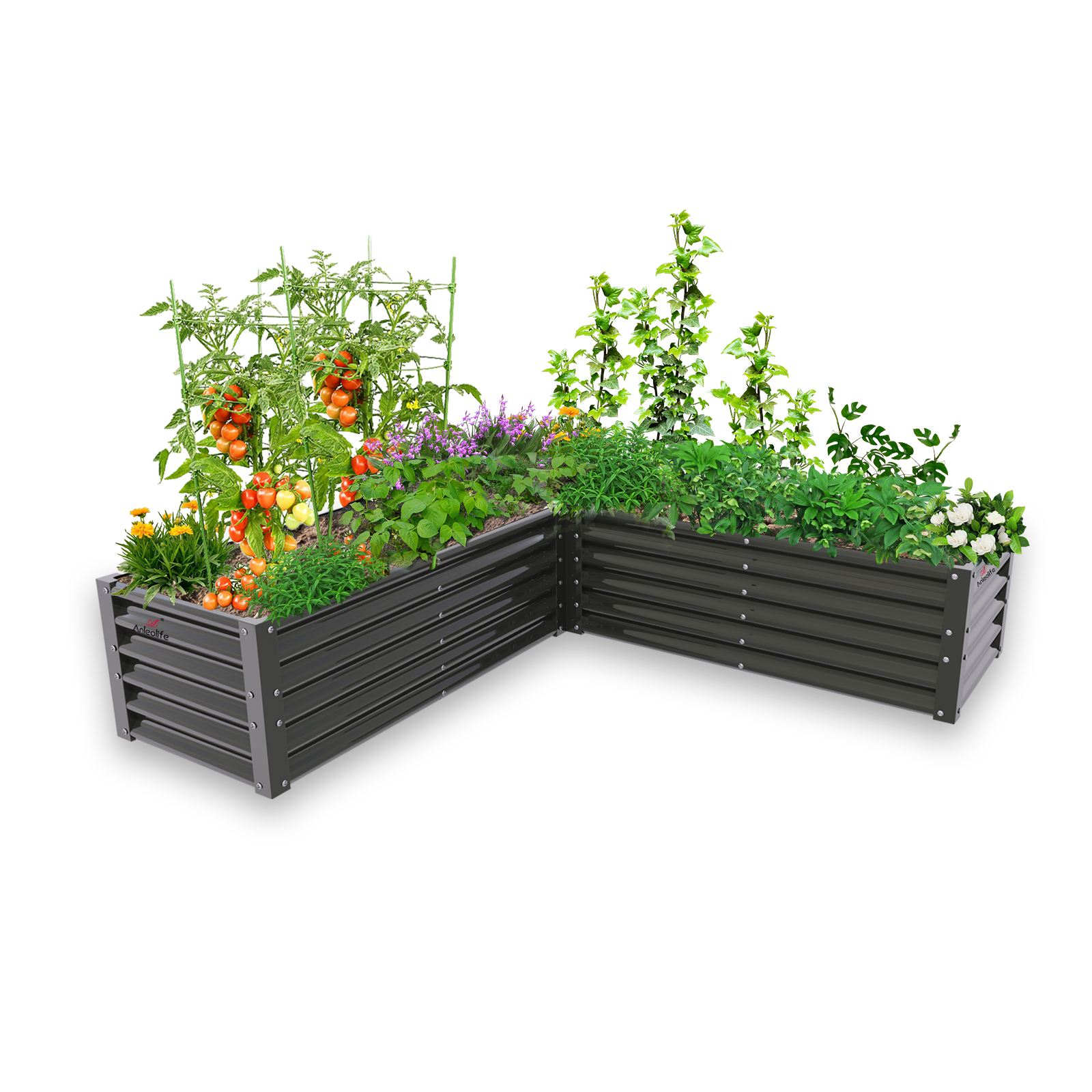
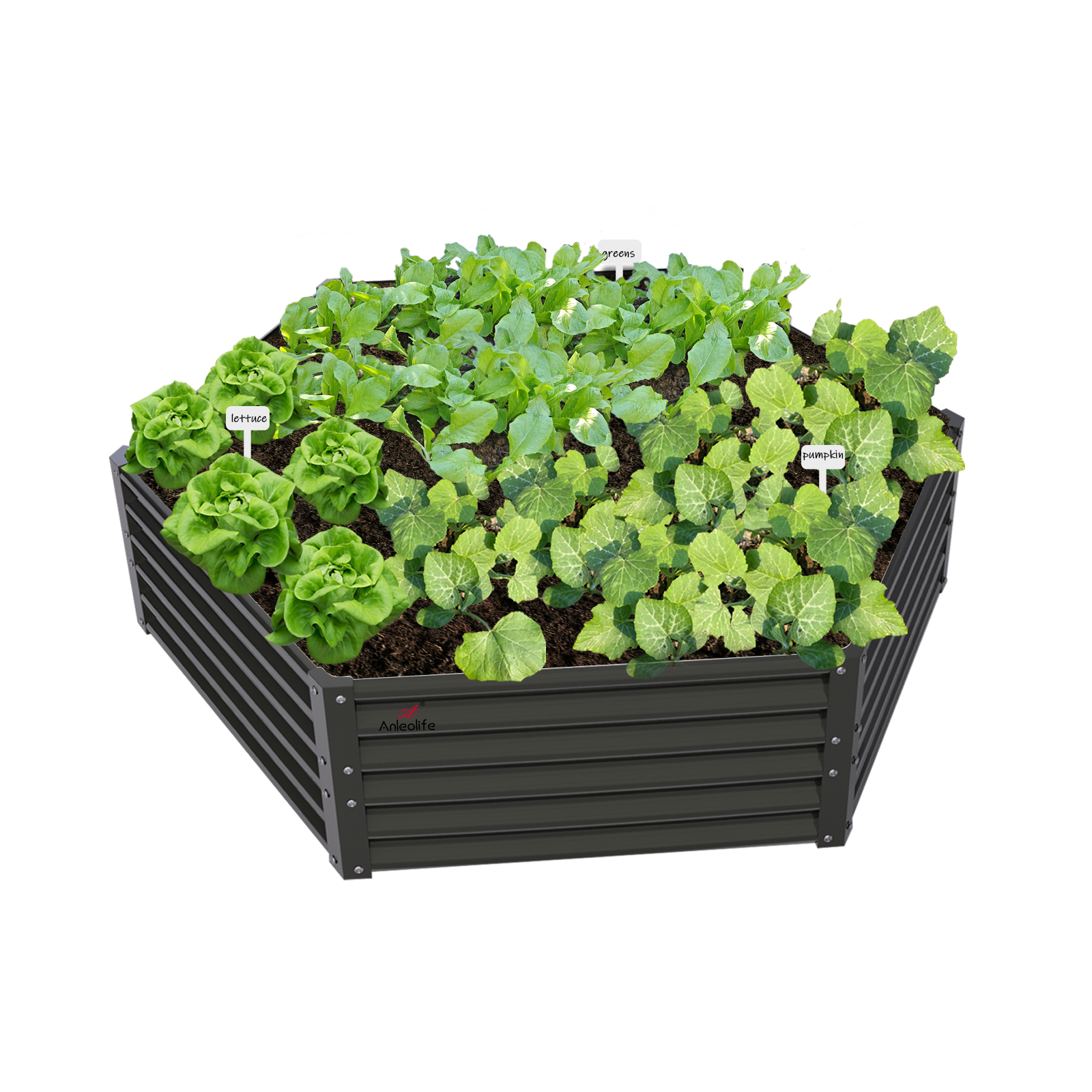
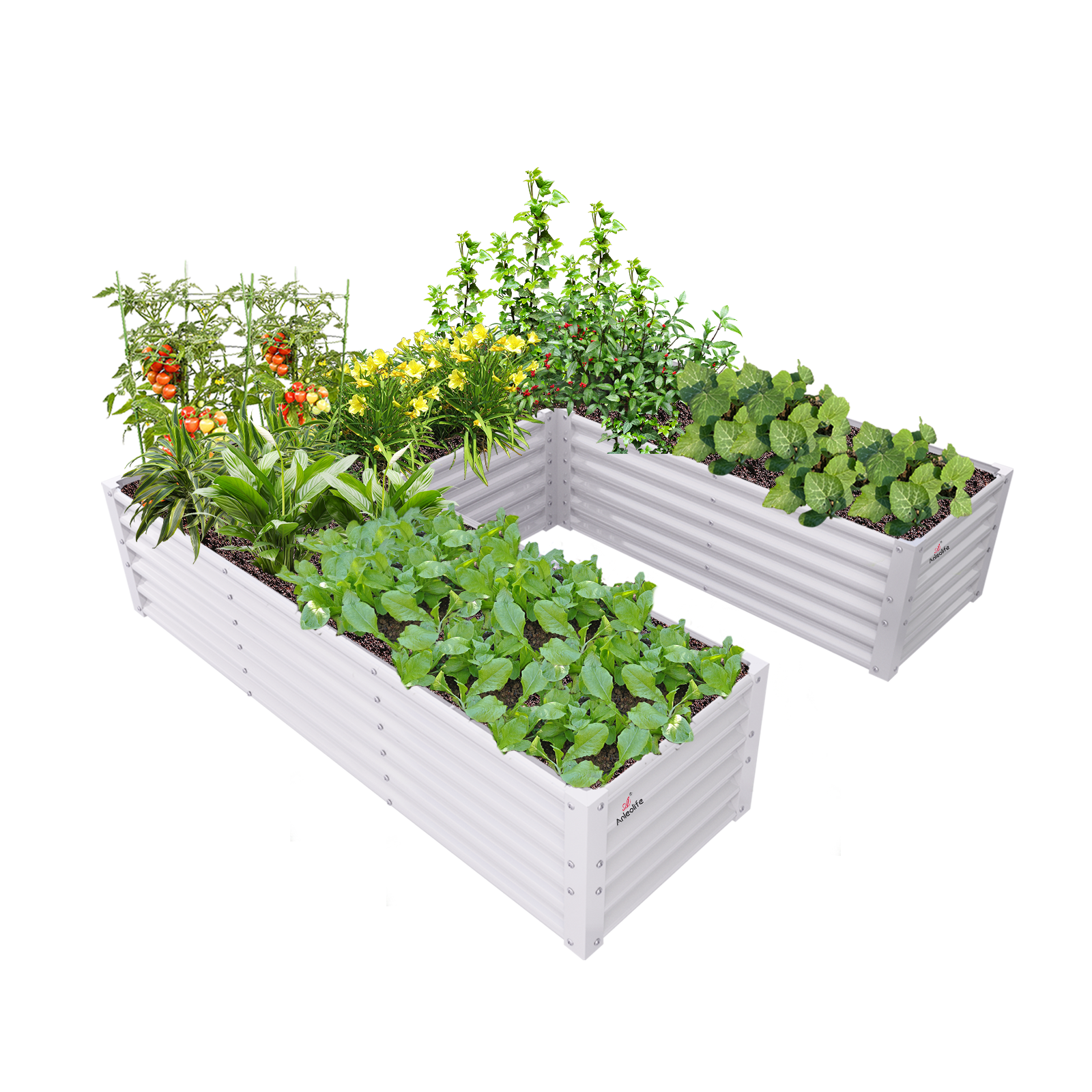

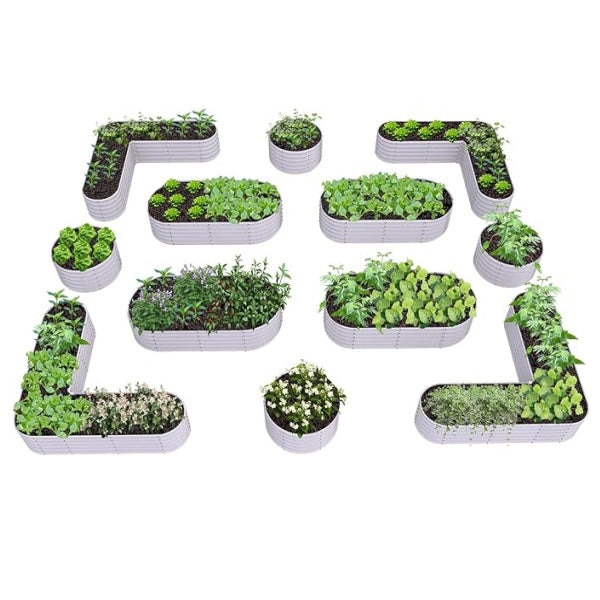


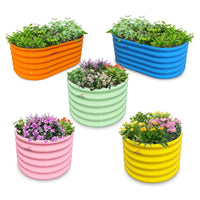
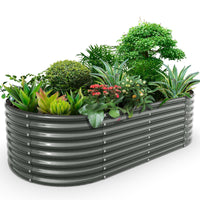




ALT: Comparing 8x4 ft and 12x3 ft raised garden bed footprints in a narrow yard for optimal space planning
8x4 vs. 12x3 ft Raised Garden Beds: Which Footprint Works Better in a Narrow Yard?
Key Conclusion: Choosing between an 8x4 ft raised garden bed and a 12x3 ft raised garden bed isn't just about square footage—both measure 32 square feet, yet their shapes create very different gardening experiences in a narrow yard. The 12x3 layout stretches along a fence or wall beautifully, while the 8x4 design maximizes central planting access. Understanding how each footprint interacts with your yard's dimensions will determine which one helps you grow more, stress less, and enjoy your outdoor space for up to 20 years.
If you've ever stood in your backyard with a tape measure, wondering whether that strip of space between the fence and the patio could actually grow tomatoes, herbs, or salad greens, you're not alone. Narrow yard gardening is one of the fastest-growing trends among urban homeowners, retirees downsizing to smaller properties, and eco-conscious families trying to make every square foot count.
The good news? You don't need a sprawling suburban backyard to grow a productive garden. What you need is the right raised garden bed footprint—and that choice matters more than most people realize. In this guide, we'll break down the practical differences between the 8x4 and 12x3 ft configurations, help you visualize each in a real narrow-yard context, and point you toward the solution that matches your gardening goals.
Who Should Read This Guide — Scope of Application
✅ Applicable Scenarios:
- Homeowners with side yards, fence lines, or narrow strips of usable outdoor space (typically 4–5 ft wide or less)
- Urban micro-gardeners looking to maximize a small backyard, balcony-adjacent patio, or townhouse outdoor area
- Empty nesters and retirees wanting a manageable, ergonomic growing space without bending or overreaching
- First-time raised bed gardeners comparing their first purchase between two similarly sized options
- Gardeners planning to grow vegetables, herbs, or flowers along a single wall or fence
❌ Not Applicable/Cautions:
- Gardeners with open, wide yards where space is not a constraint (a 4x8 or larger configuration might be more flexible)
- Those planning large-scale food production requiring multiple beds arranged in grid formations, where shape variety matters less than raw capacity
- Anyone needing a bed taller than what their chosen configuration supports — in that case, checking extra-tall or waist-high options would be advisable before deciding on footprint shape
Why Footprint Shape Matters More Than You Think in a Narrow Yard
Most first-time raised bed shoppers focus on volume: how much soil fits, how many plants can grow. But experienced gardeners will tell you that the shape of your garden bed footprint is often the deciding factor in how functional — and how enjoyable — your garden actually feels day to day.
Here's the core issue: an 8x4 ft bed and a 12x3 ft bed contain the exact same 32 square feet of growing area. But they are not interchangeable, especially in a narrow yard. Their proportions create entirely different spatial relationships with your house, fence, walkway, and body while you're working.
According to the University of California Cooperative Extension, raised bed gardening is one of the most productive and resource-efficient ways to grow food at home, particularly in limited urban spaces. The way a bed is oriented relative to pathways and structures significantly affects both harvest yields and the physical comfort of the gardener.
The rise of narrow-lot housing, townhomes, and urban infill development across North America means more gardeners are working with side yards that might be 3–5 ft wide, or backyard strips between a fence and a deck that measure just 10–14 ft in length. In these environments, the difference between a 12 ft long bed and an 8 ft long bed isn't just aesthetic — it's the difference between a bed that fits and one that doesn't.
Understanding this distinction is also key to answering one of the most common questions among new raised bed shoppers: which raised garden bed is best for vegetables in a small yard? The answer almost always starts with footprint shape before moving to height, material, or price.
At Anleolife, both the 8x4 and 12x3 configurations are available across multiple product lines — from galvanized steel to rust-resistant options and heavy-duty builds — giving you the freedom to choose the right shape without compromising on material quality or longevity. Every Anleolife raised garden bed is built to last up to 20 years, which means the footprint decision you make today shapes your garden space for two full decades.
How to Choose Your Ideal Raised Bed Footprint: A Three-Step Process
Measure Your Space Before Browsing
Step 1: Map Your Available Width
Before comparing bed shapes, you need one critical number: the usable width of your planting zone. Grab a tape measure and record the distance between your fence (or wall) and the nearest hard surface — a path, deck, or lawn edge. Subtract at least 18–24 inches for a comfortable walking path on at least one side. This remaining width is your maximum bed width. If this number is close to 3 ft, the 12x3 layout becomes your natural frontrunner. Allow 10–15 minutes for this step.
Step 2: Measure Your Available Length
With width established, measure the length of the zone where you want to place the bed. Can it accommodate 12 ft along a fence line? Or does a gate, corner, or downspout interrupt at around 8–10 ft? A 12x3 bed needs a clear, uninterrupted 12 ft run, while an 8x4 bed can often be placed perpendicular to a fence, giving you more positioning flexibility. Document both dimensions. Allow 10 minutes including sketching a simple top-down view of your space.
Step 3: Test Your Reach Comfort
Stand at the edge of your planned bed location and extend your arm comfortably to the center. A standard ergonomic guideline recommends that no point in a raised bed be more than 24–30 inches from a working edge. For a 4 ft wide bed, this means reaching 24 inches to the center from either side — which is comfortable for most adults. For a 3 ft wide bed, the center is only 18 inches away — even more accessible. If you have limited mobility or prefer less stretching, the narrower 3 ft width of the 12x3 configuration may be the more comfortable daily gardening experience. Allow 5 minutes to test both widths physically if possible.
Comparing the Two Footprints Side by Side
Understanding the differences between these two configurations becomes much clearer when you examine several practical gardening dimensions together. Both contain 32 square feet of growing area, but their spatial behavior in a narrow yard diverges significantly across several categories.
| Comparison Dimension | 8x4 ft Bed | 12x3 ft Bed | Notes |
|---|---|---|---|
| Total Growing Area | 32 sq ft | 32 sq ft | Equal growing capacity |
| Maximum Width | 4 ft | 3 ft | 12x3 is easier to reach across |
| Length Along Fence | 8 ft | 12 ft | 12x3 fits better in a long narrow strip |
| Access from One Side | 24 in to center | 18 in to center | 12x3 more ergonomic for single-side access |
| Flexibility of Placement | High (fits in wider zones, perpendicular to fence) | Moderate (best along a fence line) | 8x4 more versatile in varied layouts |
| Visual Impact | More square/compact | Long, linear, architectural | 12x3 creates a cleaner fence-line look |
| Best for Retirees/Limited Mobility | Good | Excellent | Narrower width reduces reaching strain |
| Pathway Requirement | ~2 ft on each long side | ~2 ft on one long side (fence on other) | 12x3 works with just one walkable side |
| Ideal Zone Width | 6–8 ft or more | 4.5–5.5 ft | 12x3 thrives in tighter spaces |
Deep Dive: Understanding Each Configuration in Real Narrow-Yard Scenarios
The 8x4 ft Raised Garden Bed — The Versatile Square-ish Workhorse
The 8x4 ft raised garden bed is arguably the most popular configuration in North American home gardening, and for good reason. Its near-square proportions make it accessible from all four sides, it fits naturally into a variety of yard layouts, and its 4 ft width is the ergonomic "sweet spot" for most adults who can reach comfortably to the center from both sides.
In a narrow yard scenario, the 8x4 bed works best when placed in a zone that's at least 6–7 ft wide, allowing for a comfortable walking path along the long sides. It can also be positioned with one 4 ft end flush against a fence, with the length running away from the structure — an approach that works beautifully in yards that have a bit more depth than width.
For vegetable growers, the 8x4 layout offers excellent crop diversity. You can divide it mentally into quadrants: tomatoes or squash in one corner, leafy greens in another, herbs along the edge, and root vegetables in the fourth. The 4 ft width means even taller plants in the back (north-facing center) don't shade shorter plants at the front edge as severely.
At Anleolife, the 8x4 ft footprint is available across the widest range of height options of any configuration. For narrow yards, the 24" Extra Tall 8x4 ft option in both the Galvanized Steel Raised Garden Beds and Rust-Resistant lines offers deep root space for heavy feeders like tomatoes and peppers without bending uncomfortably. The Modular Raised Garden Bed in 8x4 ft is also worth noting for gardeners who want the option to reconfigure their layout as the seasons or their needs change.
The 8x4 footprint does require one important caveat in very tight spaces: if your narrow strip is genuinely only 4–5 ft wide, placing an 8x4 bed with its width facing you means you'll have almost no walking path. In that scenario, you'd need to orient the bed differently, or consider whether the 12x3 configuration actually serves you better.
The 12x3 ft Raised Garden Bed — The Narrow-Yard Specialist
If the 8x4 is the generalist, the 12x3 ft raised garden bed is the narrow-yard specialist. It was practically designed for the challenge of a side yard, a fence-line strip, or the sliver of space between a driveway and a property edge.
At just 3 ft wide, the 12x3 bed can be placed flush against a fence with only one accessible side needed — and from that single side, you can comfortably reach every inch of the bed's width. This makes it exceptionally ergonomic for older gardeners, those with back concerns, or anyone who doesn't want to feel like they're performing yoga every time they harvest basil.
The 12 ft length creates a linear, architectural quality that can actually make a narrow yard feel intentional and designed rather than cramped. Plant it with alternating textures — feathery carrot tops next to broad-leafed chard, compact basil alongside climbing beans on a trellis — and a fence-line 12x3 bed becomes a living wall feature that adds genuine beauty to a modest outdoor space.
In terms of crop planning, the 3 ft width does require some thoughtful plant selection. Very wide-spreading plants like large pumpkins or sprawling melons will quickly exceed the bed boundaries. However, this configuration is excellent for:
- Row crops like lettuce, spinach, and arugula planted in clean horizontal bands
- Herb gardens running the full 12 ft length
- Root vegetables like carrots, radishes, and beets that grow down rather than out
- Vertical growers like pole beans, cucumbers, or small tomato varieties trained up a fence trellis
Anleolife offers the 12x3 ft footprint in multiple configurations to match varying soil depth needs. The 18" Tall 12x3 ft option in both the Galvanized Steel and Rust-Resistant lines suits most standard vegetables, while the 30" Extra Tall 10x3 ft in the Heavy Duty line offers an insight into what's possible for gardeners who want genuine depth in a narrow format. All Anleolife beds are built to last up to 20 years, so you're investing in a garden feature, not just a season's experiment.
Budget Considerations: Getting Value in Both Configurations
One of the most common questions among new raised bed shoppers is whether quality beds can be found at accessible price points. Both the 8x4 and 12x3 configurations are available at a range of price points depending on material, height, and construction.
For gardeners looking for the best budget-friendly raised bed options, galvanized steel beds from quality brands tend to offer the best long-term value — the upfront cost is offset by a lifespan that can reach 20 years with proper care, compared to untreated wood that may need replacement in 3–5 years. Anleolife's Rust-Resistant Raised Garden Beds offer an excellent entry point for cost-conscious shoppers who don't want to sacrifice durability.
When evaluating best raised garden bed brands, look for consistent quality across the full product line, availability on major platforms (so you can shop where you're most comfortable and confident), and responsive after-sales support. Anleolife products are available through Amazon, Walmart, Home Depot, Lowe's, Wayfair, and directly at Anleolife.com, delivered within 3–8 business days from a nationwide warehouse network spanning California, Texas, Florida, New York, Illinois, and Washington.

ALT: Anleolife 12x3 ft galvanized steel raised garden bed installed against a fence in a narrow backyard, ideal for urban vegetable gardening
Advanced Considerations: When the Choice Gets More Complicated
What If Your Yard Can Fit Both?
Some narrow yards are long enough to accommodate multiple beds. In that case, a popular combination strategy is to pair one 12x3 ft bed along the fence with one 8x4 ft bed placed centrally, giving you the best of both worlds: the fence-line linear bed for herbs and greens, and the more accessible square bed for larger vegetable plants. This approach also creates a natural pathway between the two beds.
The Height Variable Changes Everything
Don't let the footprint discussion overshadow the importance of bed height. For narrow yards where you'll often be working from one side only, extra-tall configurations (24" or 30") dramatically reduce the bending involved. Anleolife's Extra Tall and Waist-High options exist in both the 8x4 and 12x3 footprints, so you don't have to sacrifice ergonomics for shape.
Common Misconception: "More Square Footage Means More Plants"
Many gardeners assume that because both beds have 32 square feet, they'll grow exactly the same number of plants. In reality, the shape affects how you can arrange plant spacing grids. A 3 ft wide bed actually allows for cleaner row-based planting that reduces wasted corner space with certain crops — while a 4 ft wide bed opens up more diagonal spacing strategies for plants like kale or chard. The "right" footprint depends more on how you like to plant than on the raw numbers.
Soil Depth Matters for Narrow-Yard Raised Beds
In a narrow yard where you're working with limited space, deeper beds mean you can grow more vertically, reducing the footprint pressure. Root vegetables need at least 12 inches of loose soil; tomatoes thrive with 18 inches or more. This is why taller configurations (18", 24", 30") are consistently recommended for serious vegetable growers, regardless of footprint shape.
Frequently Asked Questions FAQ
Q1: How do I decide between the 8x4 and 12x3 ft raised garden bed if my side yard is exactly 5 ft wide?
In a 5 ft wide side yard, the 12x3 configuration is the stronger choice for most gardeners. Placing a 3 ft wide bed leaves you with 2 ft of working path — which is the practical minimum for comfortable gardening access. Placing a 4 ft wide bed leaves only 1 ft, which is too narrow for comfortable movement. The 12x3 layout along the fence maximizes growing space while preserving a usable pathway for watering, weeding, and harvesting.
Q2: Are galvanized steel raised garden beds safe for growing vegetables?
Yes, modern galvanized steel raised garden beds — particularly those using food-safe zinc coatings — are widely considered safe for vegetable gardening. The zinc coating provides corrosion resistance and is chemically stable under normal soil and moisture conditions. Organizations like the University of California Agriculture and Natural Resources have noted that galvanized steel is a durable, long-lasting material appropriate for food gardens. Anleolife's galvanized steel and rust-resistant beds are designed for long-term use, with a built lifespan of up to 20 years.
Q3: How long does it take to receive and assemble an Anleolife raised garden bed, and what's the cost range?
Anleolife ships from a strategic warehouse network across six U.S. states, with delivery within 3–8 business days depending on your location. Assembly is typically straightforward with included hardware, and most beds can be assembled by one or two people in under an hour. For pricing, Anleolife's range spans from entry-level rust-resistant options to premium heavy-duty configurations — products are listed on Amazon, Walmart, Home Depot, Lowe's, Wayfair, and Anleolife.com so you can compare prices and choose the platform that works best for you.
Summary
Choosing between an 8x4 ft and a 12x3 ft raised garden bed ultimately comes down to three key factors:
1. Your yard's usable width. If your planting zone is 5 ft wide or less, the 12x3 ft configuration is almost always the smarter fit, preserving a functional walking path while maximizing growing space along a fence or wall.
2. How you access and work your bed. The 3 ft width of a 12x3 bed makes it more ergonomic for single-side access — ideal for retirees, gardeners with limited mobility, or anyone working in a fenced side yard. The 4 ft width of the 8x4 bed rewards two-sided access and suits more open planting zones.
3. Your planting style and crop selection. Linear row crops (herbs, greens, root vegetables) thrive in the 12x3 layout. Diverse mixed plantings and larger vegetable plants shine in the 8x4 configuration.
Both configurations share the same 32 square feet of growing potential, and with Anleolife's galvanized steel or rust-resistant materials, both are built to last up to 20 years — making whichever you choose a genuinely long-term investment in your outdoor lifestyle.
The best next step? Measure your yard today using the three-step process outlined above, then browse the full Anleolife lineup to find the configuration that's exactly right for your space.
Start Your Narrow-Yard Garden with Anleolife
Nationwide U.S. warehouse network: Strategically located in California, Texas, Florida, New York, Illinois, and Washington to ensure delivery within 3–8 business days — so your garden upgrade plans never have to wait.
Multi-channel sales network: Products are available on major e-commerce platforms including Amazon, Walmart, Home Depot, Lowe's, and Wayfair, as well as the official website Anleolife.com, providing consistent quality assurance and after-sales service.
Three core scenarios: Planting (metal raised garden beds, soil systems), Raising (chicken coops, rabbit hutches), and Beautification (decorative accessories, pathway systems) — meeting complete needs from functionality to aesthetics.
Upgrade your garden with Anleolife. We understand that an ideal garden is not built overnight, but gradually improved over time. Our modular product design allows flexible expansion based on your needs — from your first 8x4 ft or 12x3 ft garden bed to a fully integrated planting-and-raising ecosystem. We grow with you every step of the way.
References
- University of California Agriculture and Natural Resources. "Sustainable Vegetable Gardening in Small Spaces".
https://ucanr.edu/ - U.S. Department of Agriculture (USDA). "Home Gardening and Urban Agriculture Resources".
https://www.usda.gov/topics/farming/urban-agriculture - Cornell Cooperative Extension. "Raised Bed Gardening: Layout, Soil, and Plant Selection Guide".
https://cce.cornell.edu/ - Oregon State University Extension Service. "Planning Your Vegetable Garden: Bed Size and Spacing".
https://extension.oregonstate.edu/ - National Gardening Association. "Raised Bed Gardening Guide".
https://garden.org/
Note: Standards and recommendations may be updated; please check the latest official documents or consult professional advisors for the most current guidance.
About Anleolife
Anleolife is a leading outdoor garden solutions provider in North America, dedicated to offering a full-scenario product ecosystem for home gardening enthusiasts, covering planting, raising, and garden beautification. Since its founding, we have upheld our brand mission, "Made for Garden Life," continuously innovating products and optimizing services to help hundreds of thousands of users upgrade their gardens, reconnect with nature, and enjoy a better garden lifestyle.