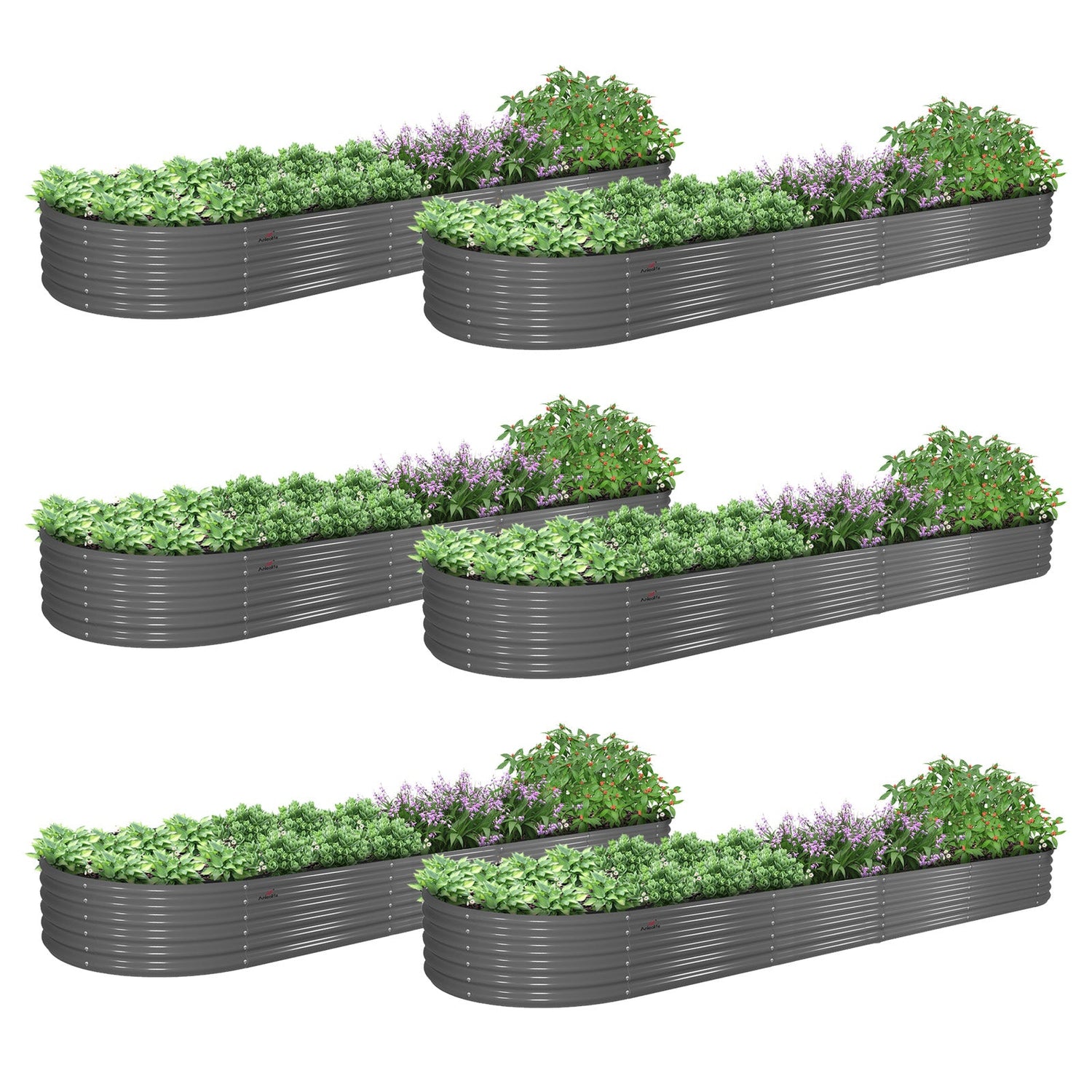



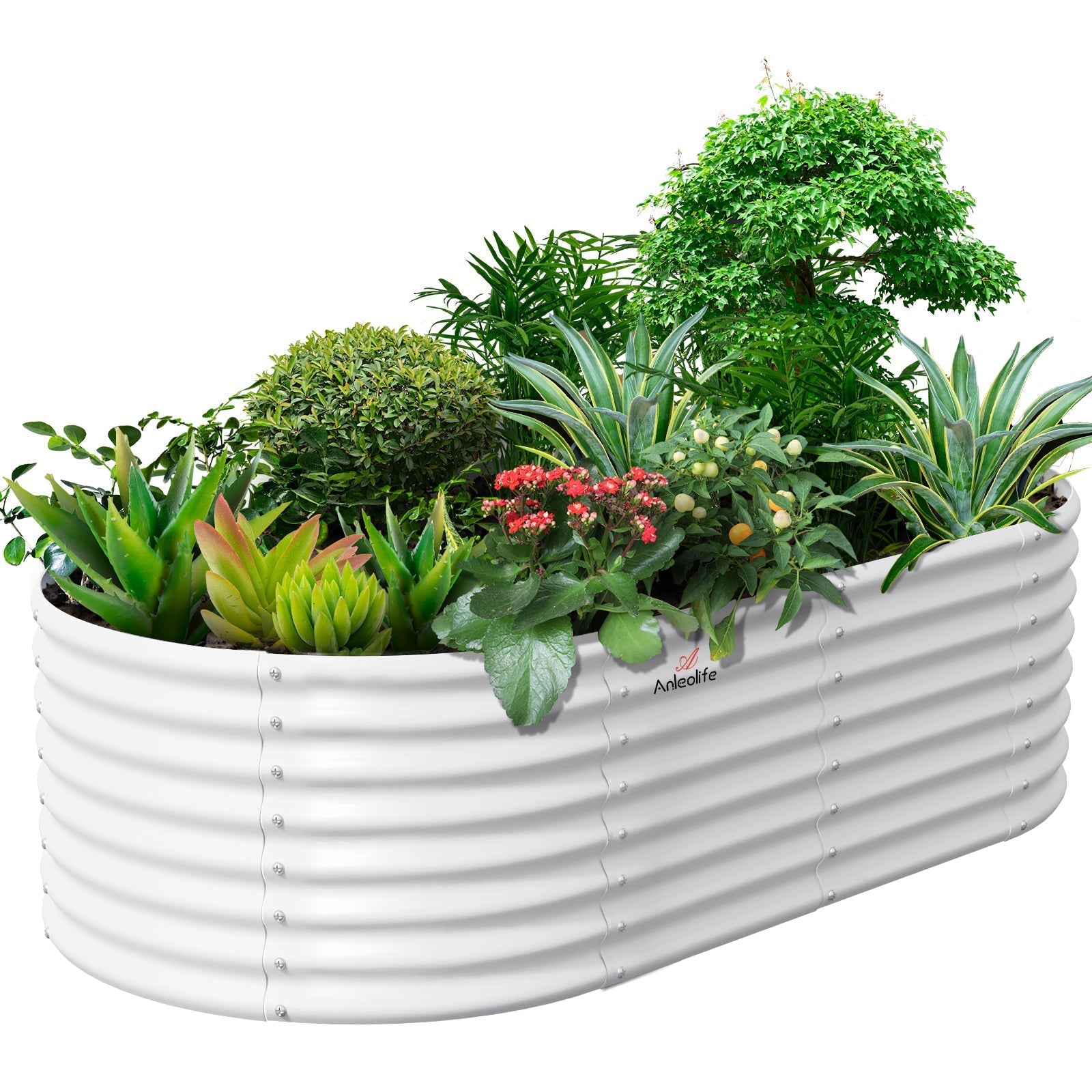
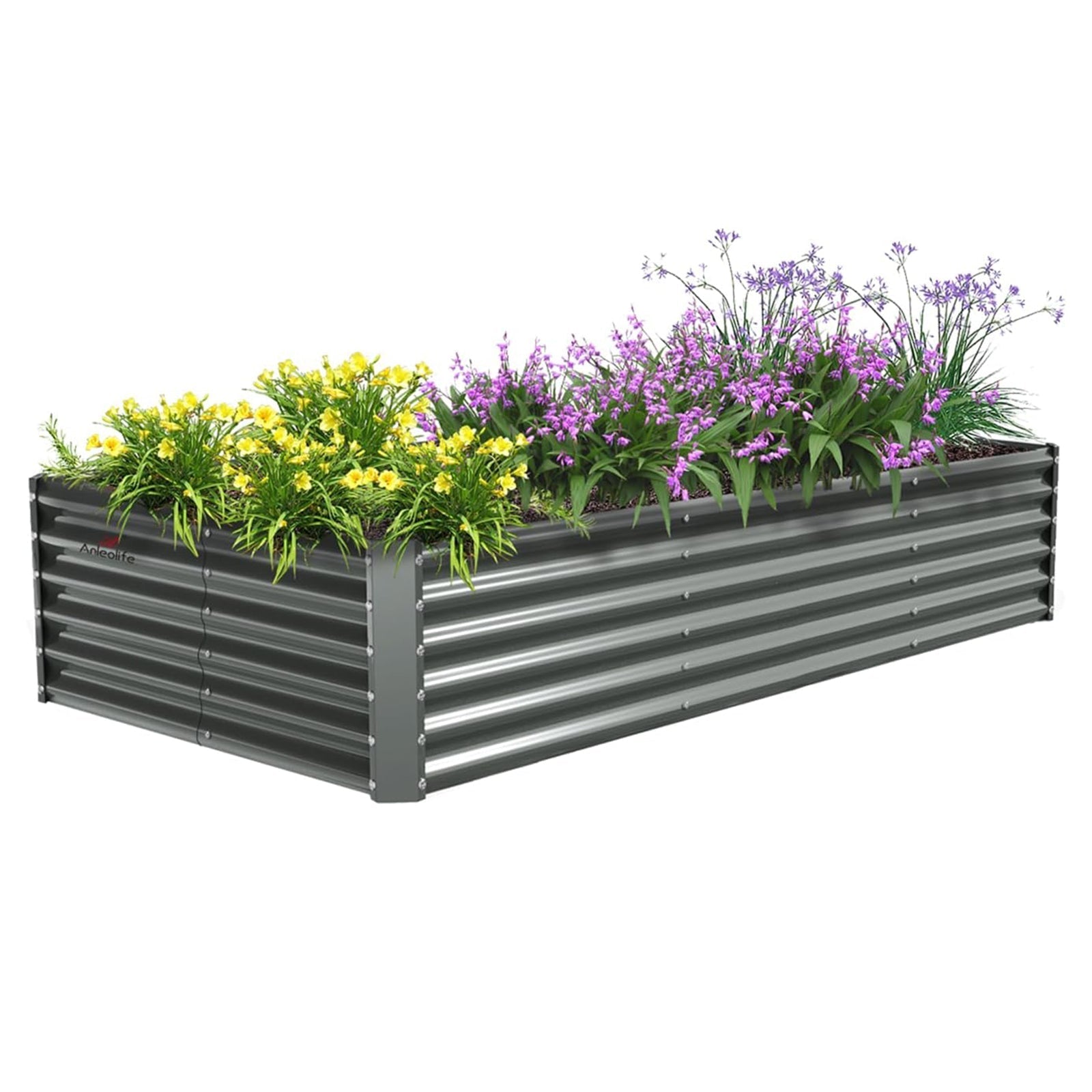

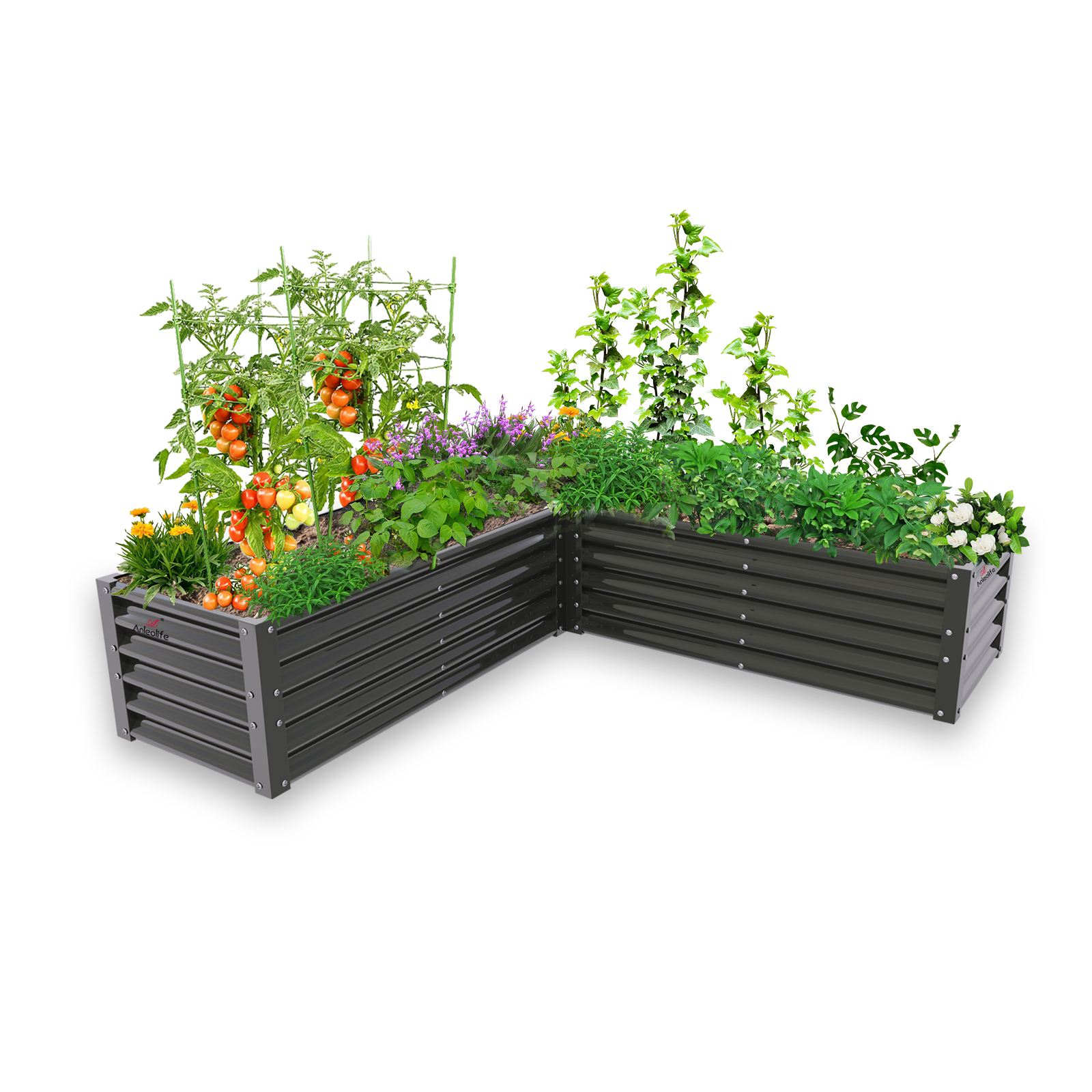
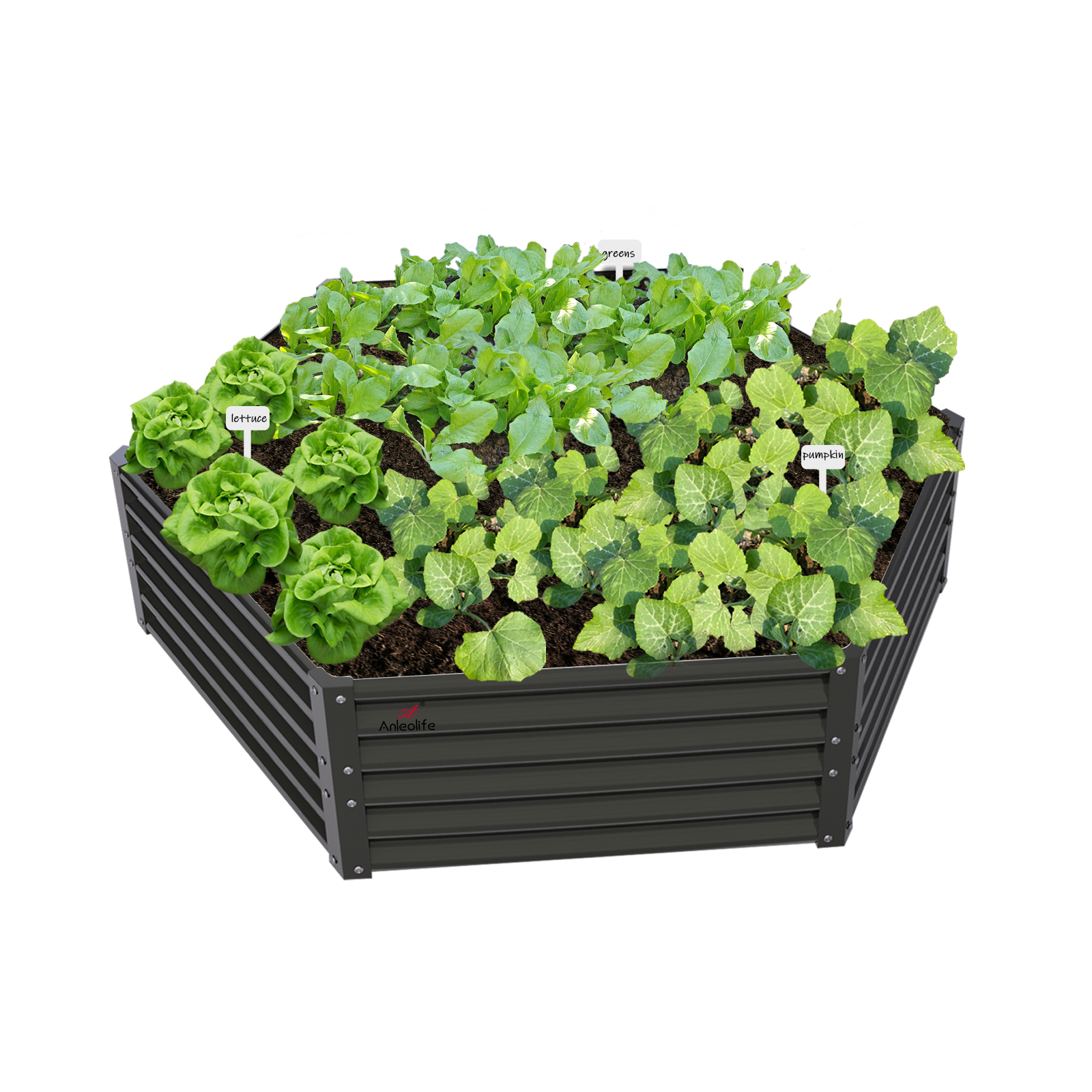
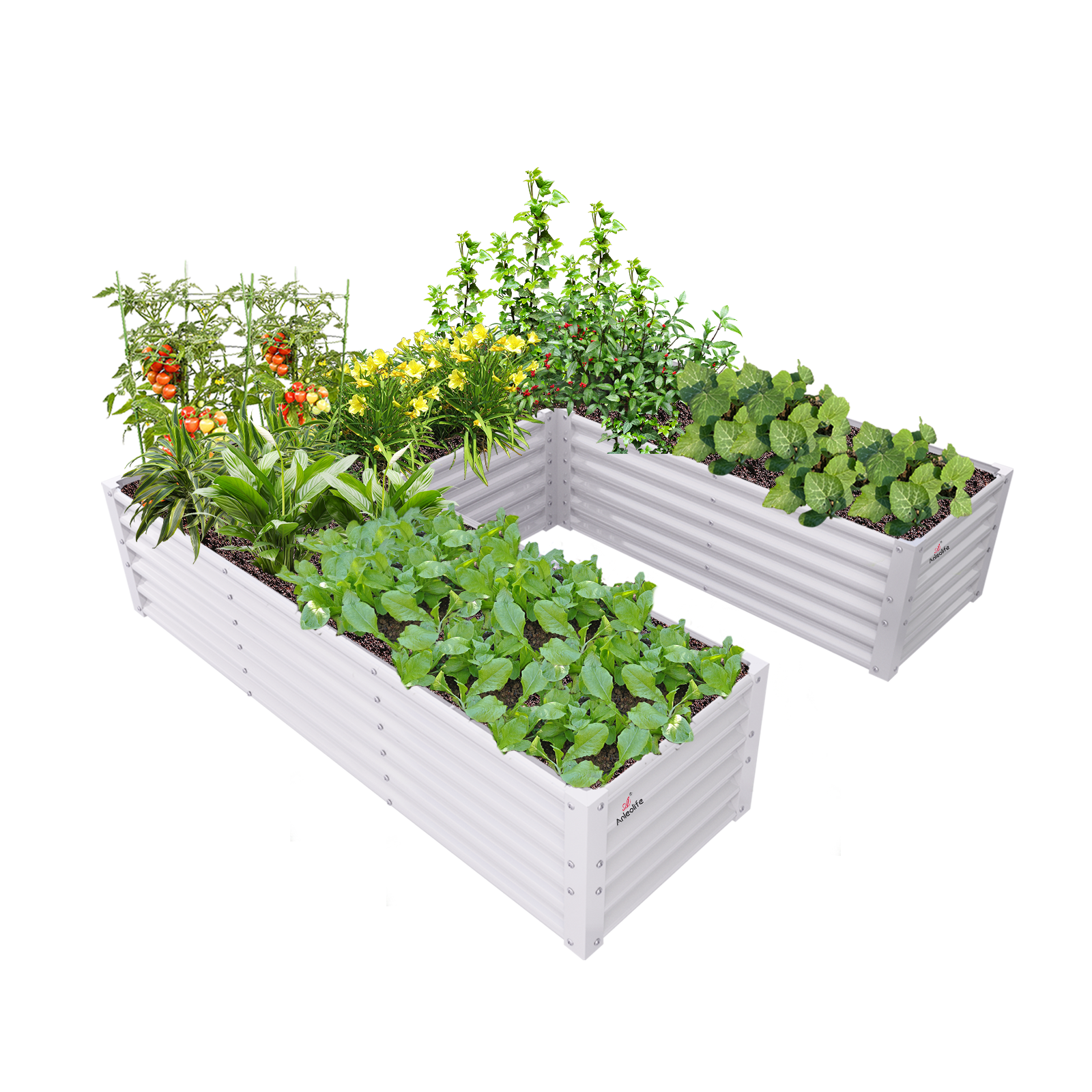

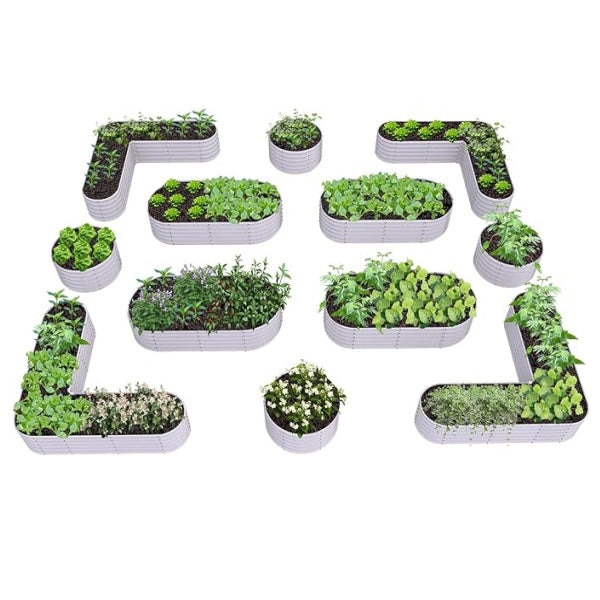


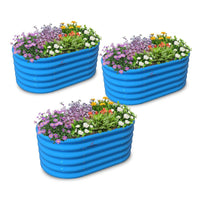
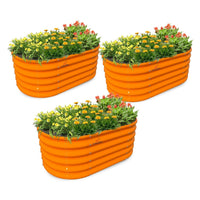
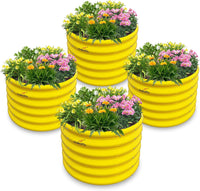
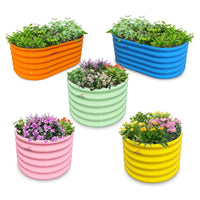
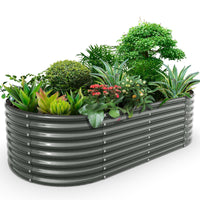



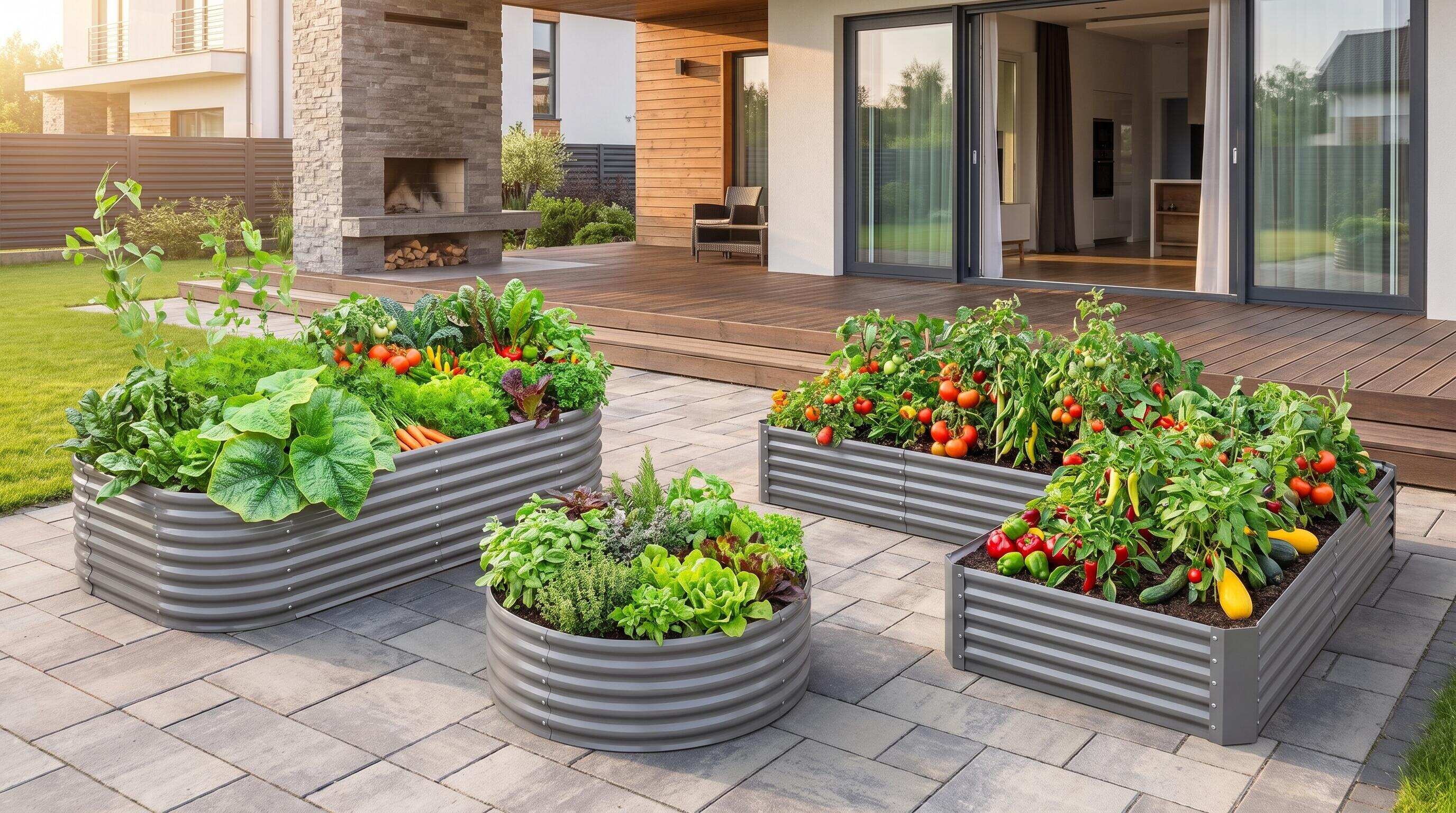
ALT: Rectangular circular and L-shaped raised bed garden layout matching yard geometry for home growers
Choosing the Right Raised Bed Shape for Your Yard's Geometry
Key Conclusion: The most effective raised bed garden layout begins not with plant selection, but with yard geometry. Whether your outdoor space is a long narrow strip, a wide open square, or an awkward corner lot, matching your raised bed planting layout to the actual contours of your yard determines how functional, beautiful, and scalable your garden becomes. A well-considered raised bed layout improves access, maximizes growing area, and creates a cohesive outdoor environment that works with your landscape rather than against it.
Every experienced gardener knows the frustration of choosing a bed shape because it looked appealing in a catalog, only to discover it fights the natural flow of the yard. In our work with clients across North America, a pattern we consistently see is that shape selection is treated as an afterthought — when in reality, it is one of the first and most consequential decisions in the planning process. This article walks through three primary bed shapes — rectangular, circular, and L-shaped — and explains precisely when each excels, where each falls short, and how to read your yard's geometry to make the right call.
Who This Guide Is For
Applicable Scenarios:
- Homeowners designing a raised bed garden layout from scratch on a blank or minimally landscaped lot
- Gardeners working with irregular, narrow, or corner-constrained outdoor spaces who need a raised bed layout that respects existing boundaries
- Families or retirees looking to expand a current planting setup with additional beds that integrate visually and functionally
- Urban micro-gardeners maximizing yield in compact spaces where every square foot counts
Not Applicable/Cautions:
- Renters or those in temporary housing who cannot commit to a permanent or semi-permanent raised bed installation
- Gardeners whose primary constraint is budget rather than geometry — shape matching matters most once a basic investment threshold is met, and choosing a complex shape to solve a problem that a simpler layout addresses more cheaply is counterproductive
- Properties governed by HOA restrictions that prohibit freestanding garden structures without prior approval
Why Bed Shape Is a Geometry Problem First, a Gardening Problem Second
Most gardening guides lead with soil depth, sun exposure, and plant spacing — all important, but all downstream from a more fundamental question: does this bed actually fit the space? The geometry of your yard sets hard constraints that no amount of good soil or careful watering can override.
According to the Old Farmer's Almanac's guidance on raised bed vegetable garden layouts, access width is one of the most critical ergonomic factors in bed design — you should never need to step into the bed to reach its center. This principle alone eliminates certain shapes in certain spaces, because a bed that looks proportional from above may force awkward reaching or footstep damage to roots in practice.
A broader trend in residential gardening, well-documented by cooperative extension services and national gardening associations across the United States, shows that home gardeners are increasingly treating their outdoor plots as integrated living spaces rather than purely utilitarian growing areas. That shift makes shape selection doubly important: the bed must perform agronomically and read as intentional design from the patio, the kitchen window, or the street.
Understanding the three dominant shapes — rectangular, circular, and L-shaped — is therefore not about aesthetics preference but about spatial problem-solving. Each shape has a geometry profile that matches specific yard conditions, and mismatching them leads to wasted space, poor workflow, or a layout that feels perpetually incomplete. For those planning a multi-bed system from the outset, planning a modular garden layout that grows with your family is a sound strategic approach that accounts for both present needs and future expansion.
Reading Your Yard, Choosing Your Shape
Three-Step Quick Start
Step 1: Map the actual footprint of your usable space
Before you open a product page or browse bed dimensions, go outside with a measuring tape and a sketch pad. Record the length and width of your planting zone, note any fixed obstacles — fence posts, utility access panels, downspouts, mature tree roots — and mark which edges receive consistent foot traffic. This step takes roughly 30 to 45 minutes but eliminates the single most common planning mistake: choosing a bed that physically conflicts with daily movement through the yard.
Step 2: Identify your access constraints and workflow
Walk through the space as you would during a planting or harvesting session. Where do you naturally enter from? Where would you stage soil bags, compost, or tools? A bed shape that works beautifully in isolation can create bottlenecks when placed in a real yard with real movement patterns. Note the directions from which you would need to access each side of the bed, and whether a corner or curved edge would impede or improve that access. Budget 20 to 30 minutes for this step — it pays dividends throughout the growing season.
Step 3: Match shape to geometry using the decision framework below
With your footprint map and access notes in hand, apply the shape-matching criteria in the next section. The goal is not to force a preferred shape onto the space but to let the space tell you which shape it accommodates best. Where multiple shapes are viable, secondary considerations — visual style, plant variety diversity, and modularity for future expansion — can guide the final choice.
Shape-by-Shape Comparison: Rectangular, Circular, and L-Shaped
The three shapes serve fundamentally different spatial problems. Understanding what each does well — and where each underperforms — is the core of an effective raised bed garden layout strategy.
| Comparison Dimension | Rectangular | Circular | L-Shaped |
|---|---|---|---|
| Best yard geometry match | Long narrow strips, open rectangles, rows | Open square or wide circular zones, focal areas | Corner spaces, wrap-around fences, irregular lot angles |
| Access from all sides | Easy (4-side access on freestanding beds) | Excellent (reach from any point on perimeter) | Good on two outer sides; inner corner requires planning |
| Space efficiency | High — tiles perfectly with other rectangular beds | Lower — circular footprint leaves interstitial gaps | Very high in corners — utilizes otherwise wasted area |
| Visual character | Structured, formal, grid-friendly | Soft, organic, focal-point worthy | Architectural, defined, anchors a corner aesthetically |
| Scalability / expansion | Excellent — add rows, extend length, stack heights | Limited — does not tile or extend naturally | Moderate — can deepen each arm but not infinitely |
| Soil volume per footprint | Maximized | Slightly reduced relative to bounding square | High, especially in larger configurations |
| Ideal user profile | Most growers; especially those growing in rows | Ornamental-herb focus; decorative garden rooms | Corner-lot owners; those maximizing awkward boundaries |
Rectangular Beds: The Workhorse of the Raised Bed Planting Layout
Rectangular raised beds are the most widely used shape in home gardening because they solve the most common spatial problem: an open, roughly rectangular zone of usable yard. Their straight edges align with fence lines, property boundaries, and paving edges. They tile seamlessly with other rectangular beds, allowing a gardener to expand a raised bed layout row by row without visual fragmentation. And because both short and long sides present unobstructed access, harvesting and maintenance follow a logical, repeatable workflow.
In our experience working with home gardeners from California to the mid-Atlantic states, rectangular beds are the default choice not because growers lack imagination but because most suburban and urban yards are themselves rectangular — and matching bed shape to yard shape is simply good spatial logic.
The practical case for rectangles is well-supported. Resources like Savvy Gardening's guide on 4x8 raised bed vegetable garden layout ideas consistently demonstrate that a standard 4-foot-wide rectangular bed allows full reach from either long side without stepping into the planting zone, which protects soil structure and root systems. Width, not length, is the ergonomic constraint — you can extend the length of a rectangular bed considerably without sacrificing access quality.
Anleolife's line of galvanized steel raised garden beds exemplifies how rectangular geometry translates to real-world growing versatility. Sizes range from compact 4x4 ft configurations suited to tight patios to generous 12x3 ft and 8x4 ft footprints for serious vegetable production, with heights from a standard 18 inches up to a waist-high 35 inches that eliminates bending entirely — a meaningful benefit for older gardeners or those managing back or knee conditions. Built to last up to 20 years, these beds represent a long-term commitment to a layout that should, by design, be stable over time.
For growers committed to rectangular configurations, a consistent pattern we observe is the benefit of planning the full grid from day one even if only one or two beds are installed initially. Consistent spacing between beds — typically 18 to 24 inches for comfortable movement — means that future beds drop in without redesigning the whole layout.
Circular Beds: Focal Points and Flexible Herb Gardens
Circular raised beds are best suited to open, roughly square zones where a single bed serves as a visual centerpiece rather than one unit in a repeating grid. Their curved perimeter allows access from every angle with equal ease, making them particularly well-suited to herb gardens, edible-ornamental plantings, or pollinator-focused beds where frequent small-harvest visits from multiple directions are the norm.
The limitation of circular beds is spatial: a circle inscribed within any rectangular space leaves unused triangular or curved corners that cannot be filled with another circular bed of the same size. This interstitial loss means circular beds are inefficient when deployed in multiples across an open lawn. They work best as standalone statements — perhaps at the center of a kitchen garden room, at the terminus of a garden path, or as a softening counterpoint to an otherwise angular layout.
According to guidance from Gardeners Supply Company's pre-planned garden resources, circular and curved beds perform particularly well in informal garden styles where the geometry of the space is itself softened by organic shapes. If your yard already incorporates curved pathways, informal hedgerows, or naturalistic planting areas, a circular raised bed reads as a natural continuation of that design language rather than an interruption.
Anleolife's 18-inch tall 48-inch wide round raised garden bed provides a compact, self-contained planting zone that delivers the circular form without demanding a large footprint — practical for a courtyard, a patio corner with a circular paving feature, or a feature point in a cottage-style garden.
One nuance worth addressing: many growers assume circular beds are primarily decorative. In practice, the 360-degree access profile makes them ergonomically superior to wide rectangular beds for solo gardeners who cannot easily reach a bed's center from two sides. If you are gardening alone and working a bed without a helper, a circular form can reduce physical strain considerably.
L-Shaped Beds: Solving the Corner Problem
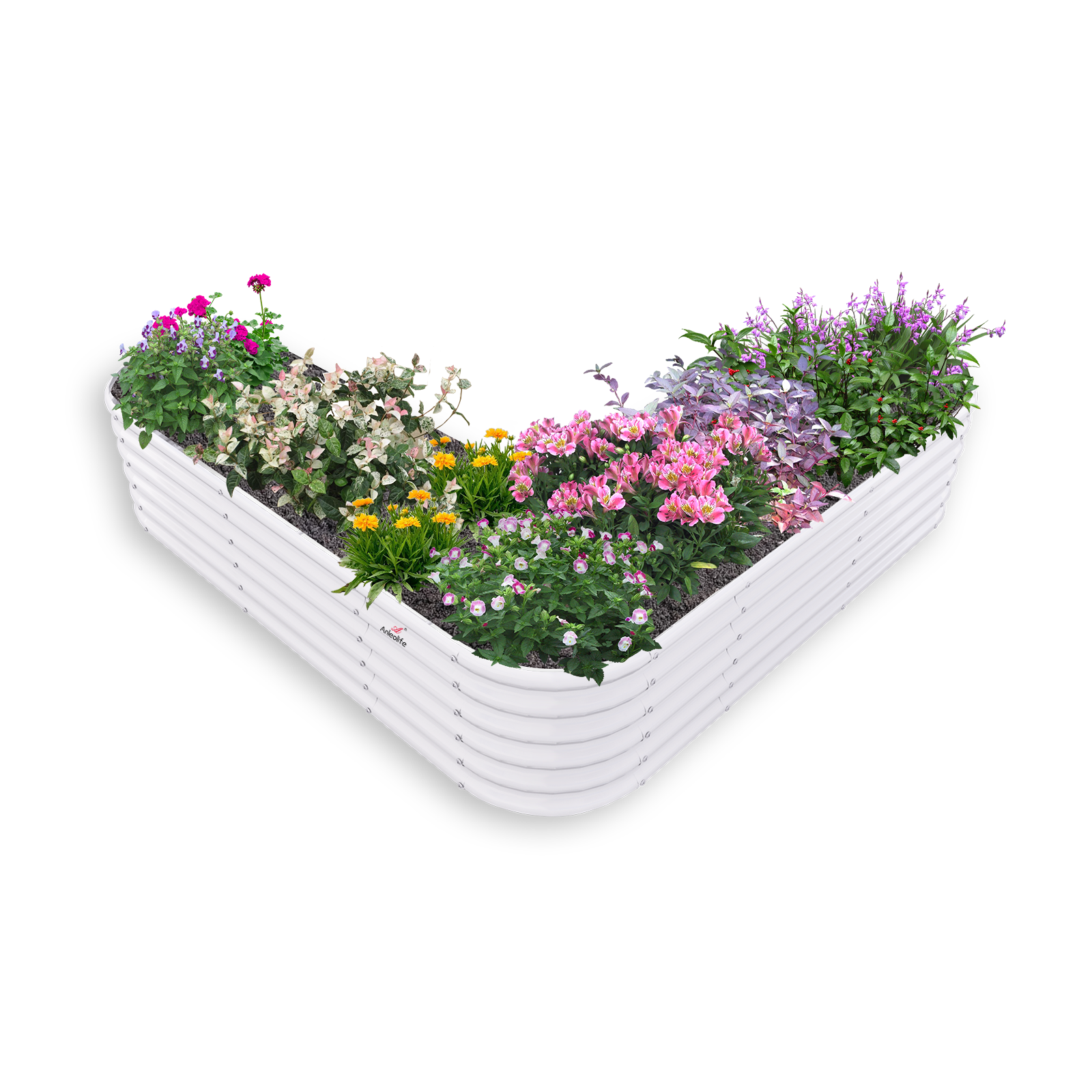
L-shaped raised beds are the purpose-built solution for corner spaces — the areas where two fence lines meet, where a house wall turns, or where an irregular lot boundary creates an awkward angle that rectangular or circular beds cannot fill without leaving significant wasted area. The L configuration wraps around a corner, turning a problematic zone into premium growing space.
From a design perspective, L-shaped beds anchor corners visually in a way that no other shape replicates. A corner that previously read as unused dead space becomes a defined garden room. The two arms of the L create a sense of enclosure without the full closure of a square — a visual effect that feels generous and intentional rather than cramped.
The access consideration for L-shaped beds is their primary design challenge. The inner corner of the L is the hardest point to reach, particularly if the bed is wide. A well-designed L-shaped raised bed planting layout manages this by keeping each arm's width within the standard ergonomic reach limit — approximately 24 inches from one side — so that the inner corner remains accessible from either adjacent arm without stepping into the soil.
Anleolife's modular raised garden bed system is particularly well-matched to L-shaped applications. The modular design allows each arm of the L to be configured independently in length and height, then connected at the corner joint, giving growers flexibility to match the exact dimensions of their corner space. This adaptability is a significant advantage over fixed-dimension beds when working with non-standard corner angles or varying fence line lengths.
A practical pattern we consistently see in L-shaped layouts: growers use the two arms for different planting categories — one arm for taller, trellis-supported crops like tomatoes or cucumbers, and the other for lower-growing herbs, greens, or root vegetables. The visual separation reinforces the functional division, and the corner itself becomes a natural staging area for tools, a compost bin, or a small seating element.
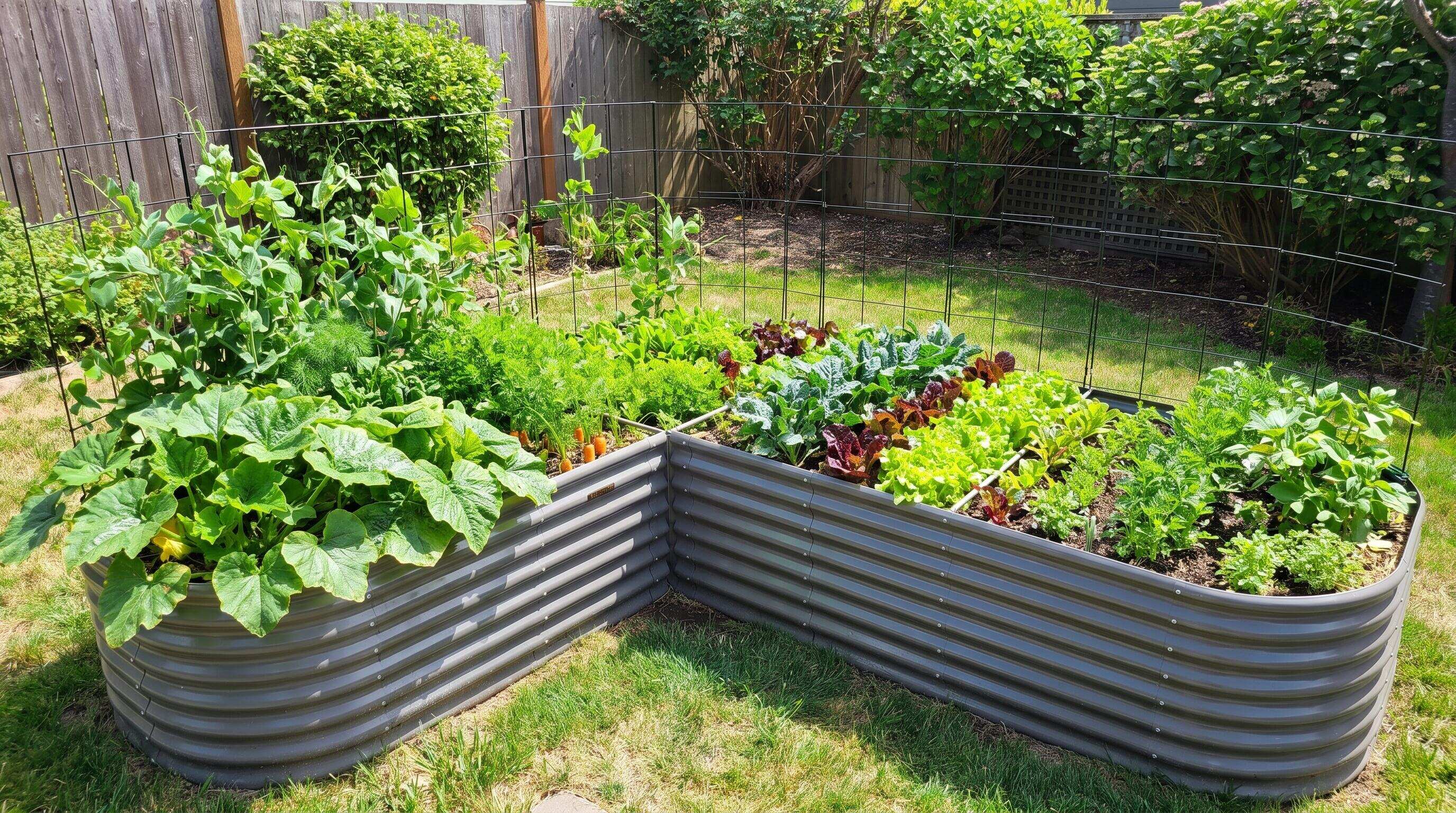
ALT: L-shaped raised bed garden layout in a corner yard next to fence with rectangular beds and planting rows
Advanced Considerations: Mixed Shapes, Slopes, and Long-Term Flexibility
Combining Shapes in a Single Raised Bed Layout
The most sophisticated raised bed garden layouts in residential settings are rarely mono-shape. A common high-performing configuration pairs a rectangular bed grid along one fence line with an L-shaped bed wrapping the corner and a circular bed serving as a focal point near the patio or entry path. Each shape occupies the zone it serves best, and the combination creates a layout with more spatial intelligence than any single shape could achieve alone.
The design principle that ties mixed-shape layouts together is consistent height — or intentional height graduation. When multiple shapes share the same bed height, the layout reads as a cohesive system. When heights vary deliberately — shorter rectangular beds near seating areas, taller waist-high beds along a less-accessed fence — the variation communicates hierarchy and improves ergonomics without visual fragmentation.
Working with Sloped Terrain
Sloped yards introduce a complication that shape selection alone cannot solve: level growing surface. On moderate slopes, rectangular beds with stepped terracing are the most practical approach — each level is a self-contained rectangle, and the stepped profile is easy to build and maintain. Circular and L-shaped beds on slopes require more precise leveling work because their non-linear perimeters make it harder to establish a consistent base height.
For steep slopes, cooperative extension gardening programs administered through state land-grant universities consistently recommend terraced rectangular beds as the safest and most structurally stable approach. The straight edges are easier to anchor, and the regular geometry simplifies drainage calculations.
The Modularity Advantage for Future Expansion
One of the least-discussed aspects of raised bed layout planning is the expansion question: what happens when you want more? Rectangular beds expand most naturally — new beds of the same width extend the row, or new rows are added parallel to existing ones. L-shaped beds can deepen each arm. Circular beds are the most constrained: adding a second circle adjacent to the first creates spatial gaps that are difficult to use productively.
Choosing a shape that allows graceful expansion is a form of future-proofing your garden. Anleolife's modular raised garden bed designs are built specifically with this expansion logic in mind — individual panels can be reconfigured and extended as your growing ambitions develop, without requiring a complete reinstallation.
It is also worth noting that high-quality galvanized steel beds, built to a 20-year lifespan standard, make the expansion investment more rational: the original beds will still be structurally sound when new sections are added years later, maintaining a visually consistent system across the full layout.
If you are planning an expansion of existing beds before the next growing season, reviewing signs your raised garden bed needs repair before next planting season is a practical first step — ensuring the foundation is sound before building on top of it.
A Common Misconception: Bigger Is Always Better
In our work with home gardeners at various stages of experience, one misconception appears repeatedly: that larger beds are inherently more productive. In reality, a bed that exceeds your comfortable reach creates a zone of under-attended planting at its center — soil compacted by the occasional step, weeds that get missed, crops that are harvested late because reaching them requires effort. A correctly sized bed of the right shape, maintained consistently, outperforms an oversized bed of any shape.
According to the Almanac's guidance on raised bed garden layout plans for beginners, the principle of "never step in the bed" is foundational — and it is a principle that directly governs maximum bed width regardless of shape. The shape you choose should make that principle easy to honor, not something you have to work around.
Common Questions
Q1: How do I decide between a rectangular and an L-shaped bed when I have both open space and a corner available?
Use the rectangular bed for the open space and the L-shaped bed for the corner — these two shapes are complementary rather than competitive. Rectangular beds maximize production efficiency in open zones, while L-shaped beds turn corners from wasted areas into active growing space. In a typical suburban backyard, deploying both shapes together produces more total growing area and a more visually resolved layout than using one shape throughout. Keep bed widths consistent between the two for a cohesive look.
Q2: Are circular raised beds actually as productive as rectangular ones of similar soil volume?
Circular raised beds are fully productive when they are well-sized and well-maintained. The shape does not inherently disadvantage plant growth — soil depth, quality, and irrigation matter far more than perimeter geometry. The productivity question is really a space-efficiency question: a circular bed uses more of its footprint for perimeter framing (relative to interior soil area) than a rectangular bed of similar scale. For maximizing yield per square foot of yard, rectangles and L-shapes are more efficient. Circular beds excel when the goal includes visual impact alongside production.
Q3: How much does bed shape affect the soil volume I need to fill, and does that change cost significantly?
Shape affects soil volume primarily through depth and footprint area — both of which vary independently of shape. A circular bed and a rectangular bed of identical height and similar planting area require similar soil volumes. Where shape creates cost differences is in the perimeter-to-area ratio: very narrow rectangular beds or very small circular beds have a higher perimeter length relative to their soil area, which can mean slightly more structural material per unit of growing space. For most residential garden installations, the soil system cost is the more significant variable and is largely independent of shape choice.
Wrapping Up
Matching raised bed shape to yard geometry is the foundational design decision that determines how well your entire garden functions — ergonomically, productively, and visually.
Key Takeaways:
- Rectangular beds are the most space-efficient, scalable, and versatile choice for open or strip-shaped spaces, and they form the backbone of most multi-bed raised bed garden layouts.
- Circular beds serve best as focal points in open square zones or ornamental-herb applications, where 360-degree access and visual softness matter more than grid efficiency.
- L-shaped beds are purpose-designed for corners and irregular boundaries, turning spatial liabilities into premium growing zones.
- Combining shapes — rectangular grid plus L-shaped corner plus circular focal point — is the highest-performing approach for yards with varied geometry.
- Ergonomic reach limits (approximately 24 inches from the nearest accessible side) should govern bed width in every shape choice, ensuring that "never step in the bed" is structurally enforced by the design itself.
The right next step is to sketch your yard's actual footprint — obstacles, access paths, and boundary lines included — before selecting any product. That sketch, combined with the shape-matching framework in this guide, will give you a raised bed planting layout that serves your growing goals for years to come.
Ready to build a layout that fits your yard precisely? Explore the full range of galvanized steel, rust-resistant, modular, and heavy-duty raised garden beds at Anleolife — available through Amazon, Walmart, Home Depot, Lowe's, Wayfair, and the official Anleolife website, with delivery in 3–8 business days from a strategically located nationwide warehouse network. Whether you are starting with a single 8x4 bed or designing a complete planting-and-raising ecosystem, Anleolife's modular system grows alongside your ambitions.
Sources & Citations
- The Old Farmer's Almanac. "Raised Bed Vegetable Garden Layouts for Beginners."
https://www.almanac.com/raised-bed-vegetable-garden-layouts-beginners - Savvy Gardening. "4x8 Raised Bed Vegetable Garden Layout Ideas."
https://savvygardening.com/4x8-raised-bed-vegetable-garden-layout/ - Gardeners Supply Company. "Pre-Planned Gardens."
https://www.gardeners.com/pages/kitchen-garden-planner-preplanned-gardens - National Gardening Association. "Home and Community Gardening."
https://www.garden.org - U.S. Department of Agriculture (USDA) — National Institute of Food and Agriculture. "Community and School Gardens."
https://www.nifa.usda.gov
Note: Standards and guidelines may be updated; please check the latest official documents or consult professional advisors for current recommendations.