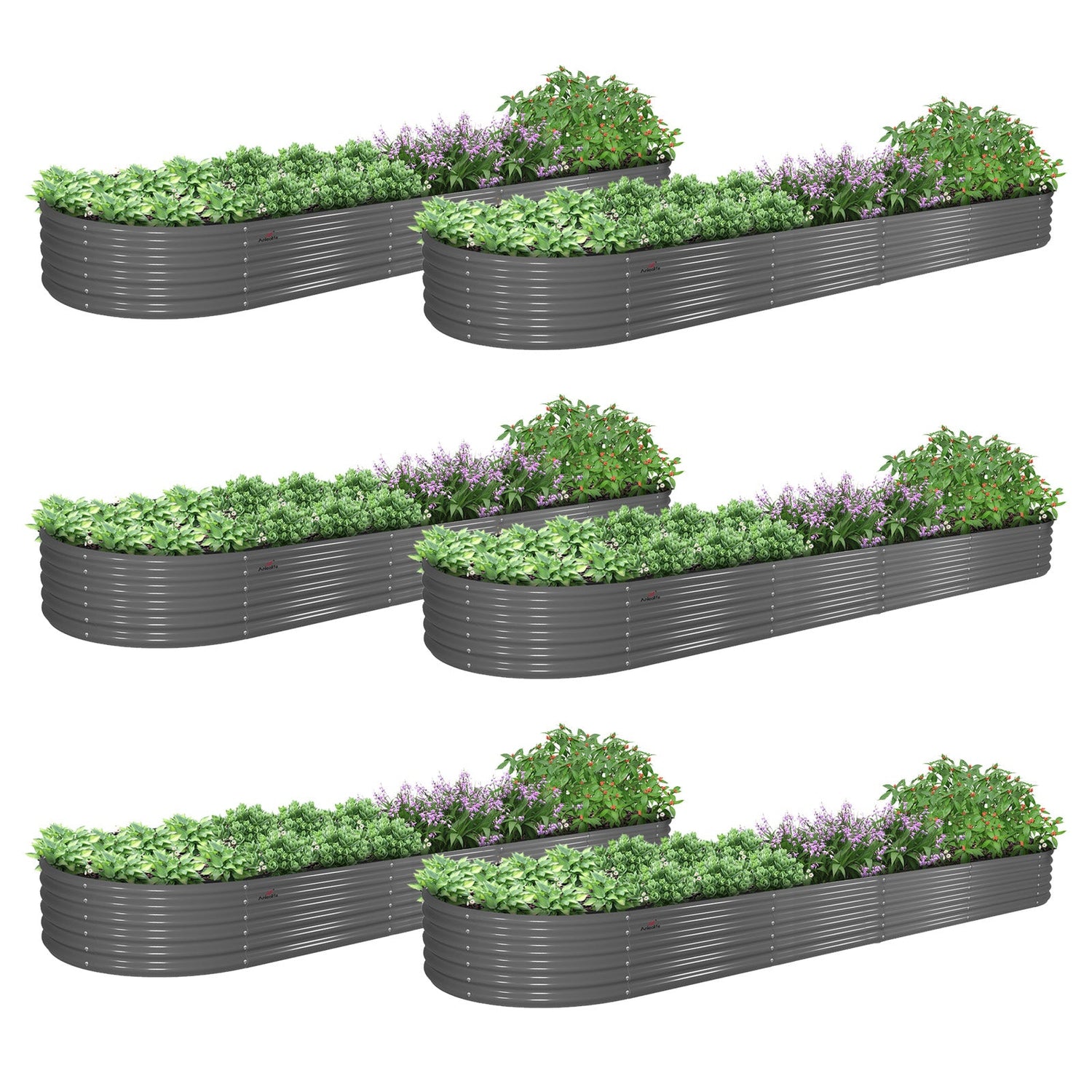



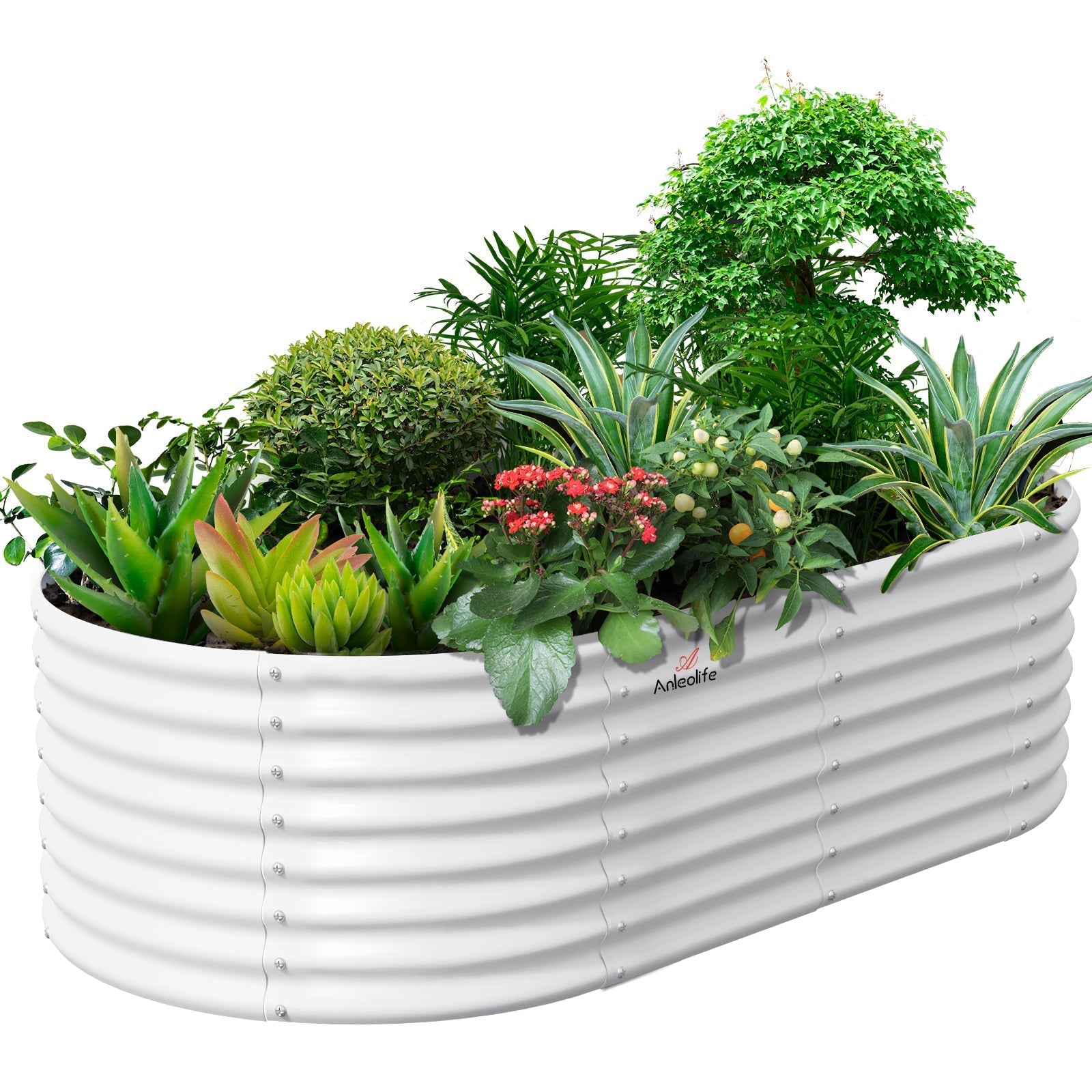
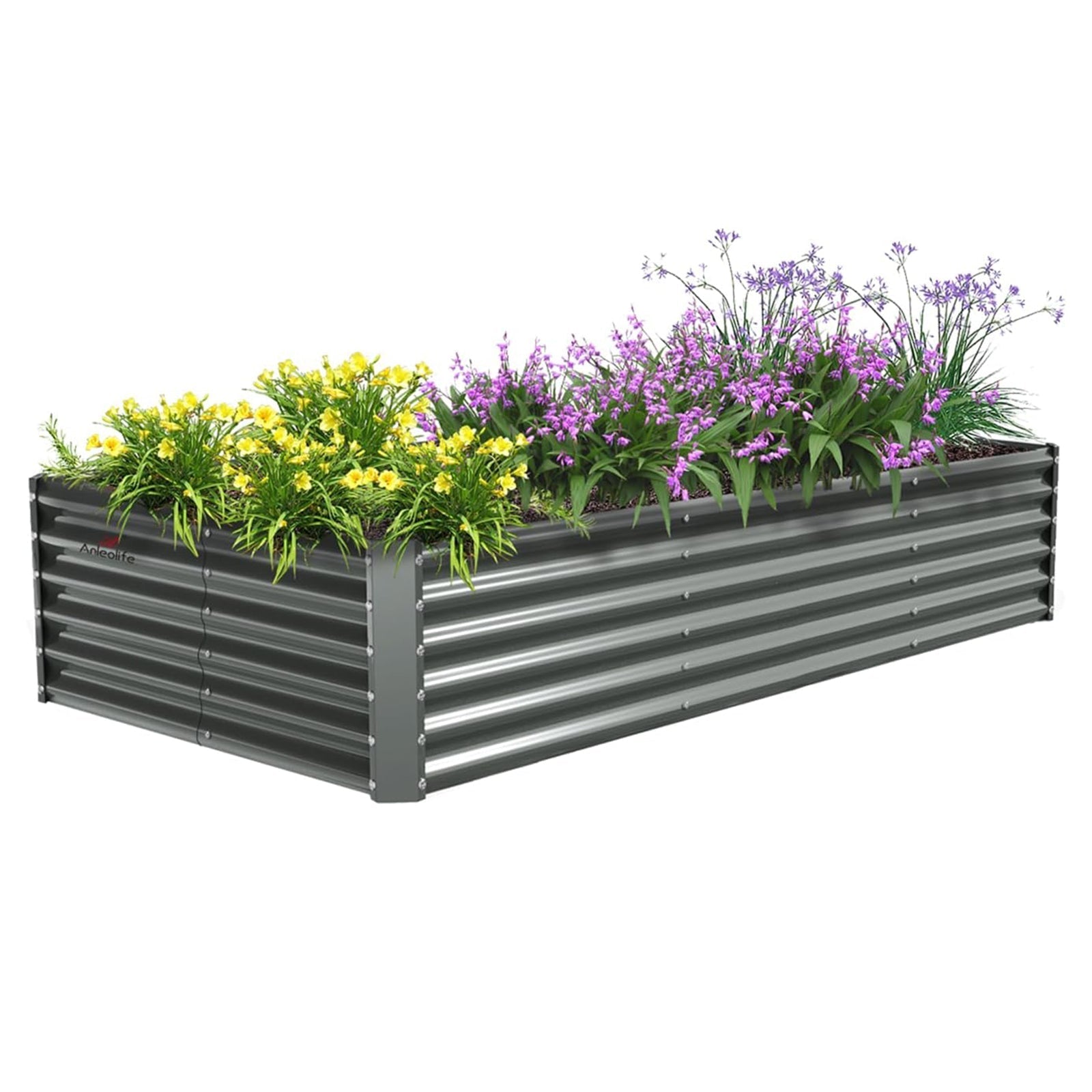

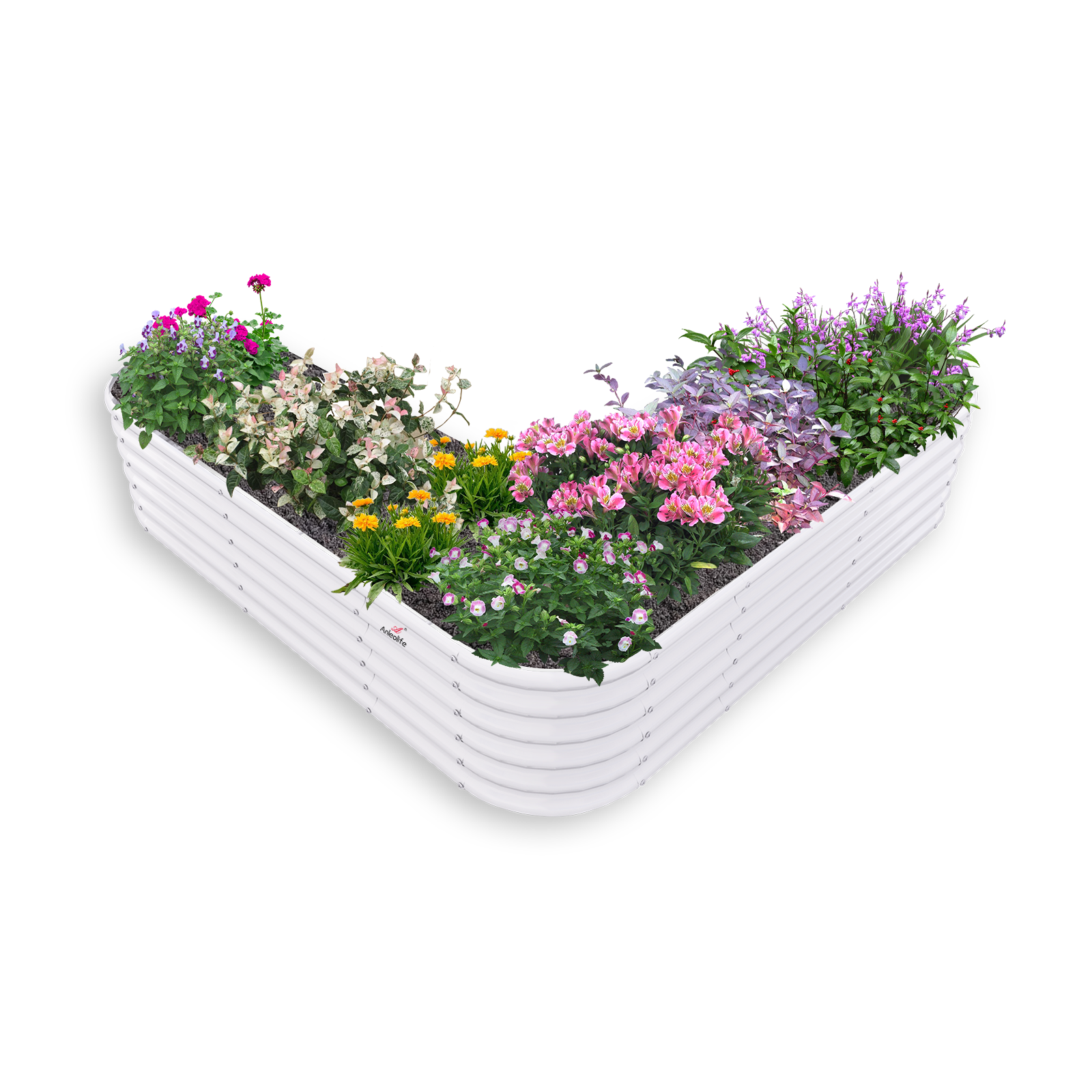
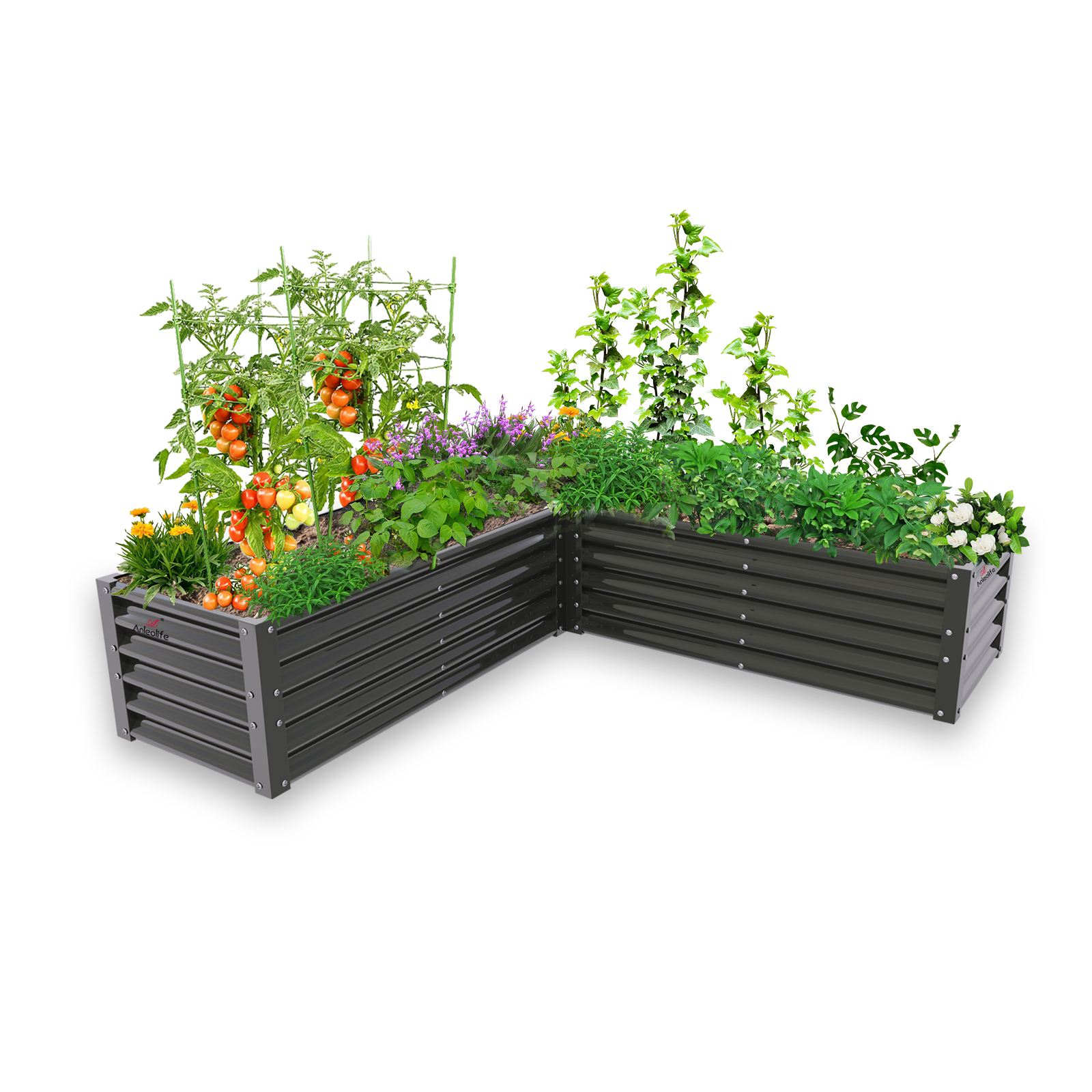
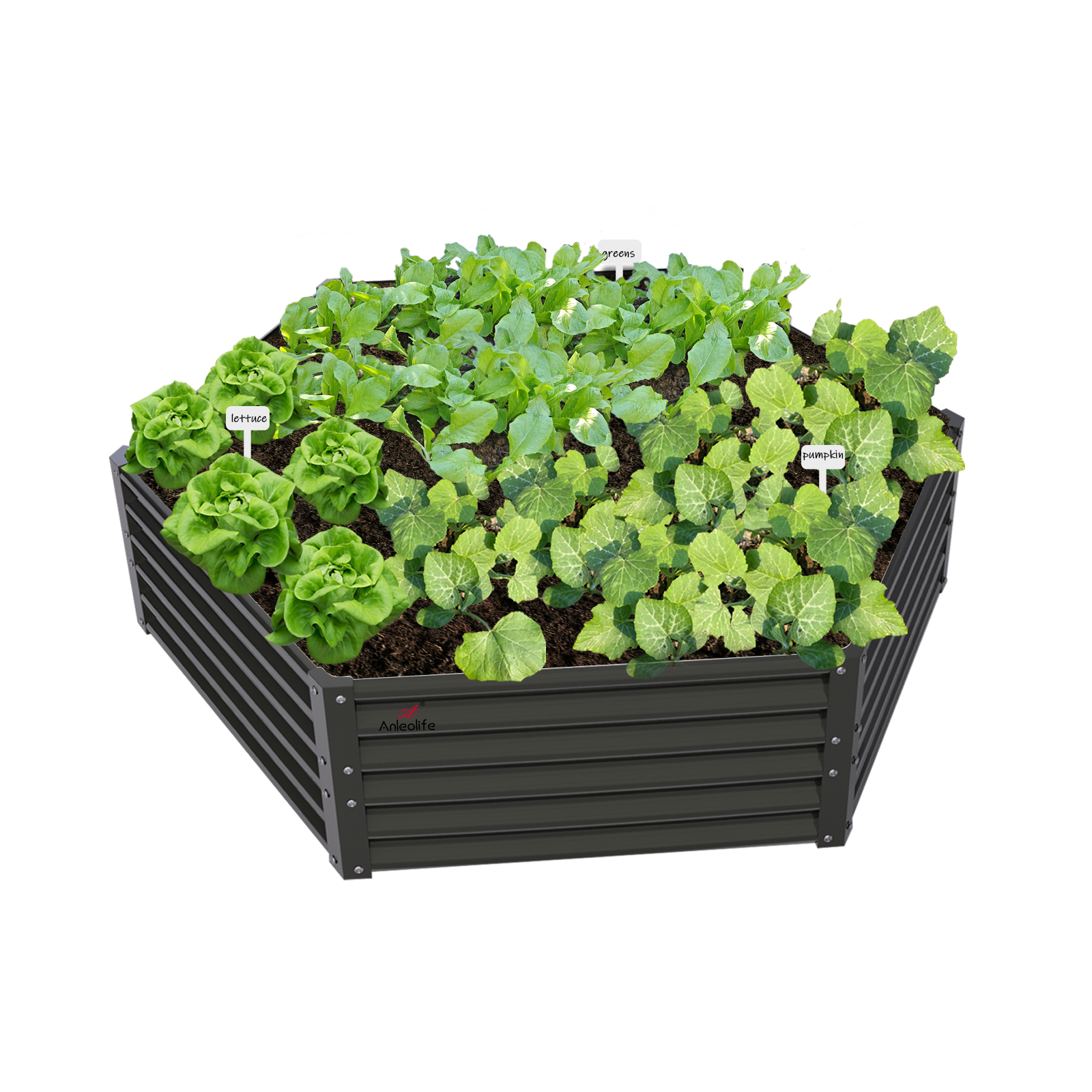

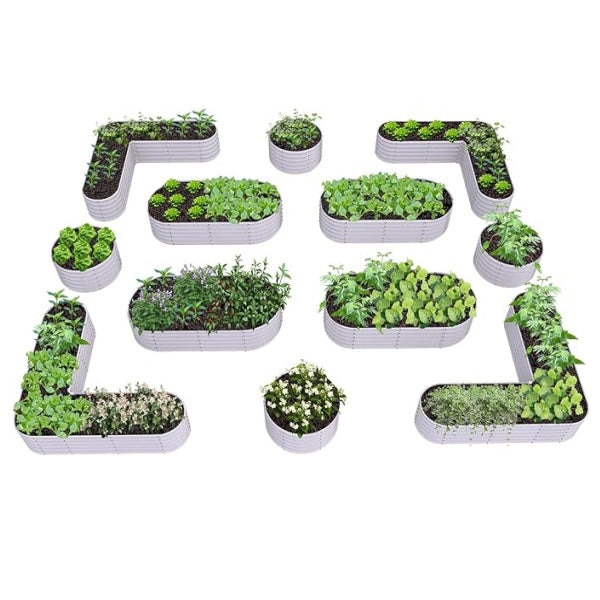


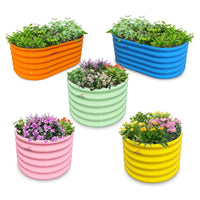
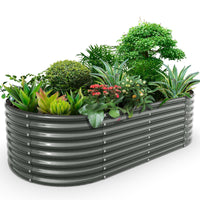



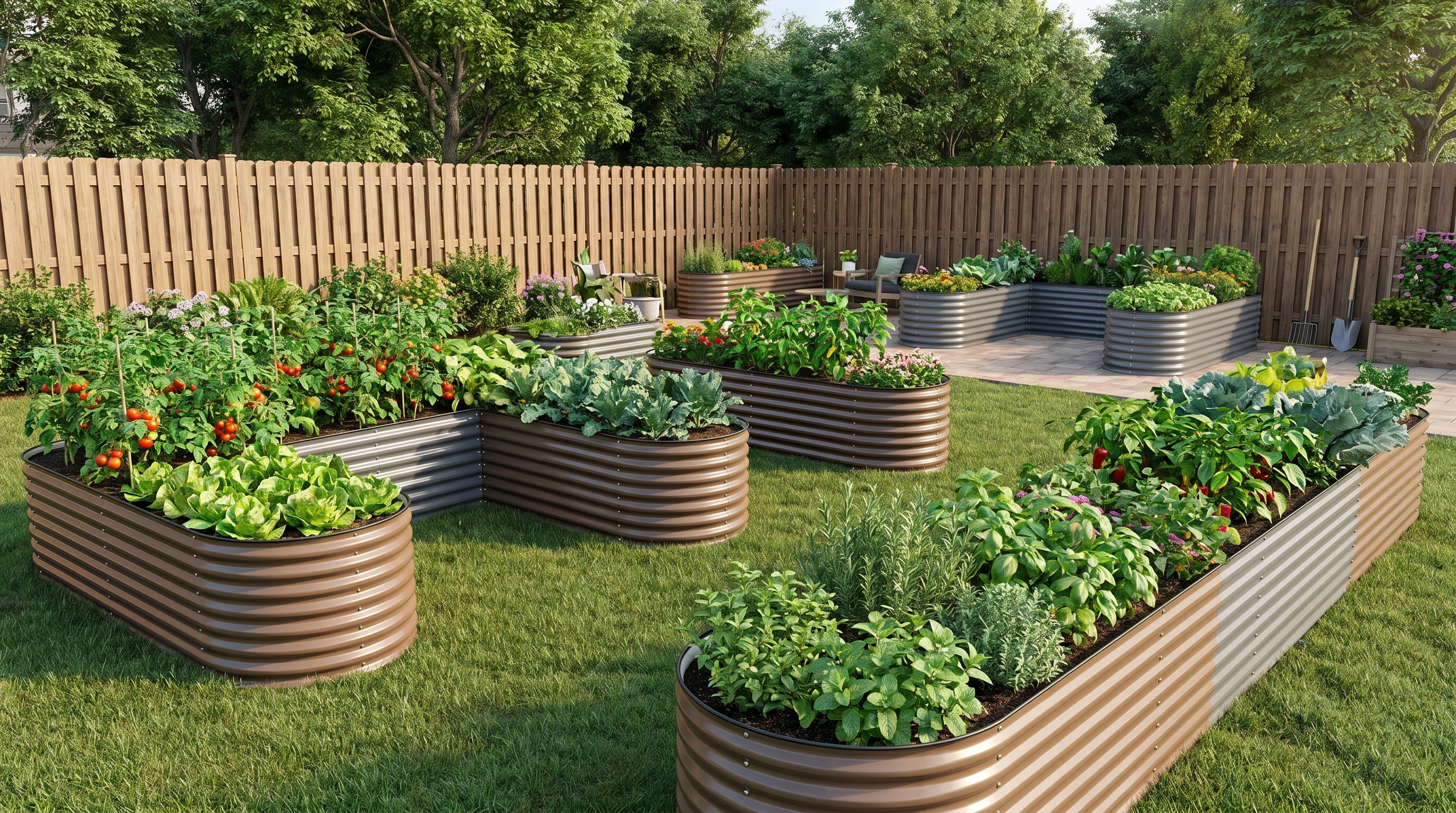
ALT: Modular raised garden beds in flexible layout configurations showing expandable garden bed planting layout options
Is the Premium Price of Modular Raised Garden Beds Actually Justified?
Key Conclusion: Modular raised garden beds offer long-term value that often outweighs their higher upfront cost. For gardeners serious about optimizing their raised bed garden layout, these systems provide unmatched flexibility, allowing you to reconfigure your raised bed planting layout as your needs evolve. Whether you're expanding a small patio setup or designing a full backyard raised bed layout, the adaptability, durability, and time savings of a modular system can make it a genuinely worthwhile investment over 5–10+ years of consistent use.
When you walk into a garden center or browse online, the price difference between a basic fixed raised bed and a modular system can feel jarring. A standard 4×8 galvanized steel bed might run $80–$120, while a comparable modular system starts closer to $150–$250 or more. That gap is real, and it deserves an honest answer.
The truth is: the "extra cost" question isn't just about the initial price tag. It's about how the system performs across seasons, how well it adapts to your life changes, and whether it saves or costs you money over time. In this article, we break down exactly what you get with a modular raised garden bed, who it's right for, and how to decide if the investment makes sense for your garden goals.
Who Should (and Shouldn't) Consider Modular Raised Garden Beds
✅ Applicable Scenarios:
- Growing households or renters who may need to relocate their garden or reconfigure their raised bed planting layout when living situations change
- Serious home growers producing vegetables, herbs, or berries year-round who need a system that can expand progressively without starting from scratch
- Urban and suburban gardeners working with irregular or limited spaces who benefit from customizable modular raised bed layout shapes and sizes
- Retirees and empty nesters investing in a long-term garden setup they want to build gradually without replacing entire structures
- Eco-conscious gardeners who want durable, rust-resistant materials that won't degrade, leach chemicals, or require frequent replacement
❌ Not Applicable/Cautions:
- Casual or seasonal gardeners who only plant one or two crops per year and don't need the flexibility that modular design offers—a basic fixed bed is likely sufficient
- Extremely tight budgets where even the mid-range cost of a modular system is prohibitive—though in this case, phased buying (starting with one module) can help
- Temporary installations for a single growing season where the longevity advantage of a modular system won't be realized
Why Modular Raised Beds Have Become a Garden Trend Worth Understanding
The raised garden bed market has expanded dramatically over the past decade. According to the USDA, home vegetable gardening participation surged during and after 2020, with millions of American households growing at least some of their own food. This renewed interest in home growing pushed manufacturers to innovate—and modular designs emerged as one of the most significant product developments in the category.
Traditional raised beds—wooden frames, simple rectangles—served gardeners well for generations. But they came with clear limitations: fixed dimensions that couldn't adapt, wood that rotted in 3–5 years, and no ability to expand without buying a completely new unit. As gardening became a more serious lifestyle commitment for middle-class families, eco-conscious growers, and aging baby boomers looking to tend manageable plots, the demand for better systems grew.
Modular raised garden beds answer several of these pain points at once. Instead of one rigid structure, a modular system consists of interlocking panels, connectors, or stackable sections that can be assembled in multiple configurations. Want an L-shape to wrap around a fence corner? Done. Need to add a second tier for root vegetables? Add a panel. Moving to a new home? Disassemble and rebuild.
This evolution in raised bed garden layout design reflects a broader shift in how Americans approach home improvement: they want products that grow with them, not products they outgrow.
The UC ANR (University of California Agriculture and Natural Resources) has long emphasized that the physical design of a raised bed—its dimensions, depth, and accessibility—significantly affects both planting productivity and gardener ergonomics. Modular systems, by allowing custom depth stacking and shape variation, align well with evidence-based gardening recommendations.
Understanding the full landscape of raised bed layout options—from basic kits to premium modular systems—is essential before making a purchase. Let's get into the specifics.
Breaking Down the Value of Modular Raised Garden Beds
Three Steps to Evaluating Whether a Modular System Is Worth It for You
Step 1: Audit Your Current Garden Goals and Space
Before comparing costs, spend 15–20 minutes mapping out what you actually want to grow, how much space you have, and whether your needs are likely to change in the next 3–5 years. Sketch a rough raised bed planting layout on paper. If your plot is irregularly shaped, if you plan to expand, or if you're gardening in a space that has multiple microclimates (sunny corner, shadier edge), a modular system's configurability immediately becomes relevant. Gardeners who skip this step often over-buy or under-buy.
Step 2: Calculate the True Cost Per Year
Divide the total cost of any raised bed by its expected lifespan. A $100 wooden bed that lasts 5 years costs $20/year. A $220 modular galvanized steel bed that lasts 20 years costs $11/year. When you factor in replacement costs, the premium modular system often wins on a per-year basis. Add the cost of your time and labor for replacement, and the math shifts even further in favor of the durable option. This step alone surprises most gardeners who assume the cheaper bed is the economical choice.
Step 3: Identify the Expansion Path You'll Actually Use
Modular systems are only worth the premium if you'll use the modularity. Ask yourself: Will I add a second bed next season? Do I want to try a different raised bed layout configuration? Am I growing a wider variety of crops that need different depths? If you answer yes to at least two of these, the modular advantage is real. If your plan is one bed, one shape, forever—a fixed bed may serve you just as well at lower cost.
Comparing Fixed, Semi-Modular, and Fully Modular Raised Bed Systems
The market offers three broad categories of raised garden beds. Understanding the differences helps frame the cost-versus-value discussion clearly.
| Comparison Dimension | Fixed Raised Beds | Semi-Modular Beds | Fully Modular Systems |
|---|---|---|---|
| Layout Flexibility | Single fixed shape | Limited pre-set shapes | Fully configurable raised bed layout |
| Material Durability | Wood: 3–7 years typical | Galvanized steel: 10–15 years | Premium galvanized/coated steel: 15–20+ years |
| Expandability | None—buy new unit | Limited add-on options | Seamless panel expansion |
| Initial Cost | $50–$150 | $120–$200 | $150–$350+ |
| True Annual Cost | $15–$30/year | $10–$18/year | $8–$15/year |
| Relocation | Difficult/destructive | Moderate effort | Designed for disassembly |
| Setup Complexity | Simple | Moderate | Moderate (tool-free most systems) |
| Best For | Beginners, low-commitment | Intermediate growers | Serious, long-term gardeners |
The semi-modular category is often overlooked but worth noting: systems like Anleolife's modular metal garden beds sit at a sweet spot where premium galvanized steel construction meets thoughtful design that allows practical layout customization without the complexity of high-end architectural systems.
The Real-World Case for Modular Beds: Flexibility, Longevity, and Garden Design
Flexibility That Serves Real Life Changes
One of the most underappreciated advantages of a modular raised bed garden layout is that life changes—and your garden should be able to change with it.
Consider a common scenario: a family starts with a 4×4 bed on a small patio. Two years later, they have more space, more enthusiasm, and more crops they want to grow. With a fixed bed, expansion means buying a second separate unit that may not match the original aesthetically or functionally. With a modular system, expansion is built into the design—add panels, add tiers, add a connecting section that transforms two beds into an L-shape or U-shape raised bed layout that better uses corner space.
Empty nesters are a particularly good example. Many retirees come to serious gardening in their 50s and 60s, often with the physical consideration that bending and kneeling become harder over time. Modular systems that allow stacking to 24-inch or deeper heights mean the garden can adapt to changing physical needs without rebuilding from scratch. The OSU Extension specifically recommends elevated or taller raised beds for older gardeners and those with mobility considerations.
Longevity That Changes the Math
The durability question is central to the cost calculation. Wood—even treated wood—degrades. Most pine or cedar beds show significant degradation within 5–7 years, and pressure-treated lumber raises concerns about chemical leaching near food crops. The EPA has historically recommended caution with older CCA-treated wood near vegetable gardens, and while modern formulations have improved, soil contamination concern remains a real consideration for food growers.
Galvanized steel modular systems, by contrast, are built to last. Quality modular beds use aluminized or hot-dip galvanized steel with multi-layer coating systems that resist rust, UV degradation, and soil moisture corrosion. Anleolife's metal raised garden beds, for example, are built with a 20-year lifespan in mind—meaning that premium cost is distributed across two decades of gardening rather than 5–7 years.
Over a 20-year period, a gardener using wooden beds would likely replace their setup 3–4 times, spending $300–$600+ in total plus the labor of disassembly, disposal, and reassembly. A quality modular steel system purchased once for $220–$350 may never need replacement within that same window. The environmental calculation matters too: replacing garden beds every few years generates significant material waste, which conflicts with the eco-conscious values of many serious home growers.
Design Quality and the Raised Bed Planting Layout Experience
Beyond cost math, there's an experiential dimension to modular raised beds that matters for gardeners who care about how their outdoor space looks and functions.
A thoughtfully designed raised bed planting layout integrates multiple beds into a cohesive garden system—beds that match in height, color, and material; pathways that flow naturally between them; and zones dedicated to different plant families or growing methods. Modular systems make this kind of intentional design accessible for home gardeners who aren't professional landscapers.
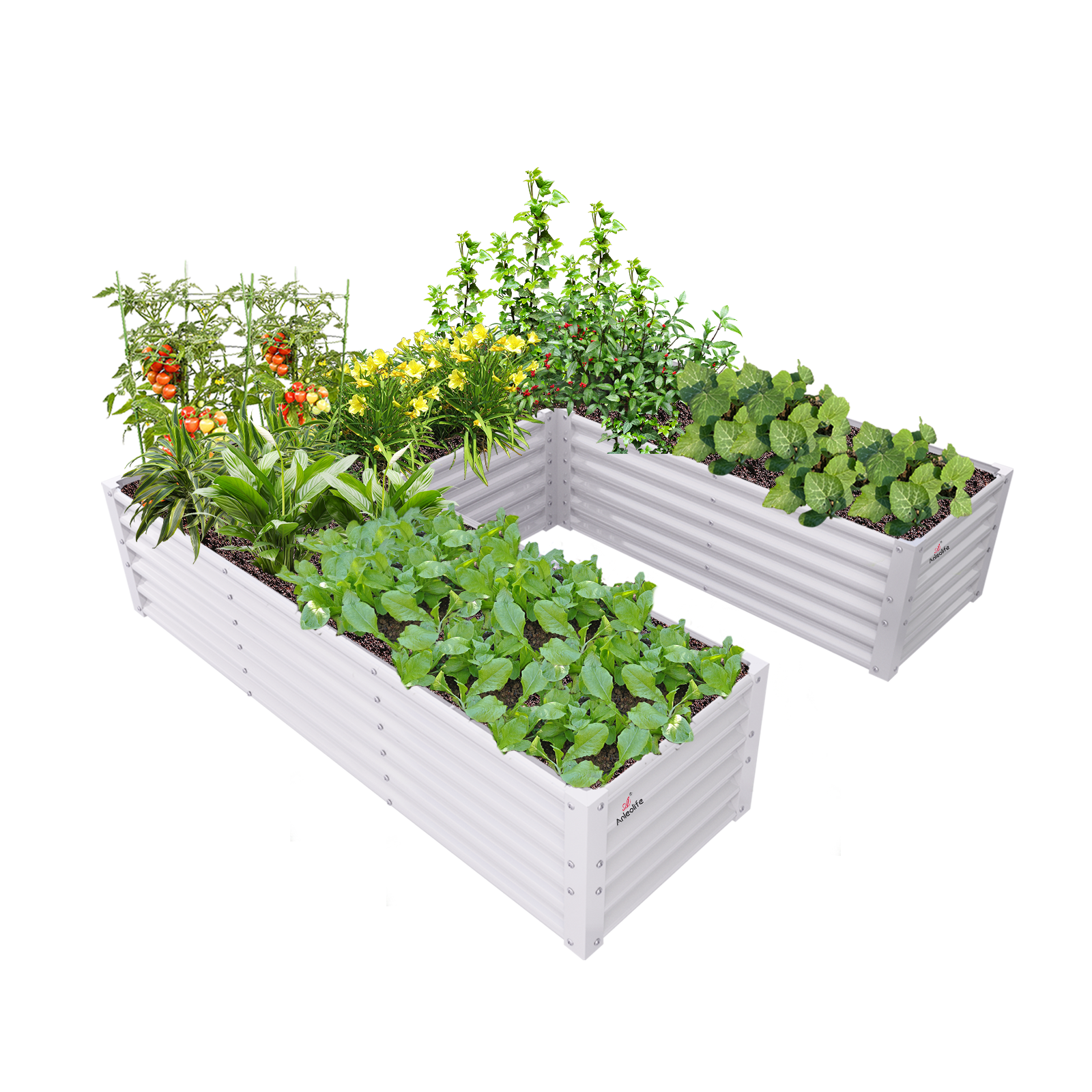
For example, an L-shaped configuration along a fence line creates a natural focal point while maximizing linear planting space. A U-shaped raised bed layout creates a working station where a gardener can tend all sides without stepping into the bed. A tiered modular setup—lower sections for leafy greens, deeper tiers for root vegetables—allows for more intentional crop-specific soil preparation.
This design coherence isn't just aesthetic. Organized planting layouts improve airflow between crops, make watering and harvesting more efficient, and allow for better companion planting strategies. Research from UC ANR has shown that thoughtful bed arrangement and spacing can meaningfully improve yield density in home gardens.
The modular system doesn't just give you a place to plant—it gives you a platform for serious, organized gardening.
Assembly, Convenience, and Time Value
One often-overlooked cost is time. Budget raised beds that require complicated assembly, temporary fixes when corners fail, or complete teardown when you want a different layout consume hours of weekend time that serious gardeners would rather spend actually gardening.
Most quality modular systems are designed with tool-free or minimal-tool assembly in mind. Panels click or bolt together logically, connectors are standardized, and the design allows one person to reconfigure a layout in an afternoon rather than a weekend project. For busy families and retirees alike, this matters.
Anleolife's modular garden bed systems are designed with this practical ease in mind, with clear assembly instructions and hardware that's built to be used repeatedly without degrading through reconfiguration cycles.
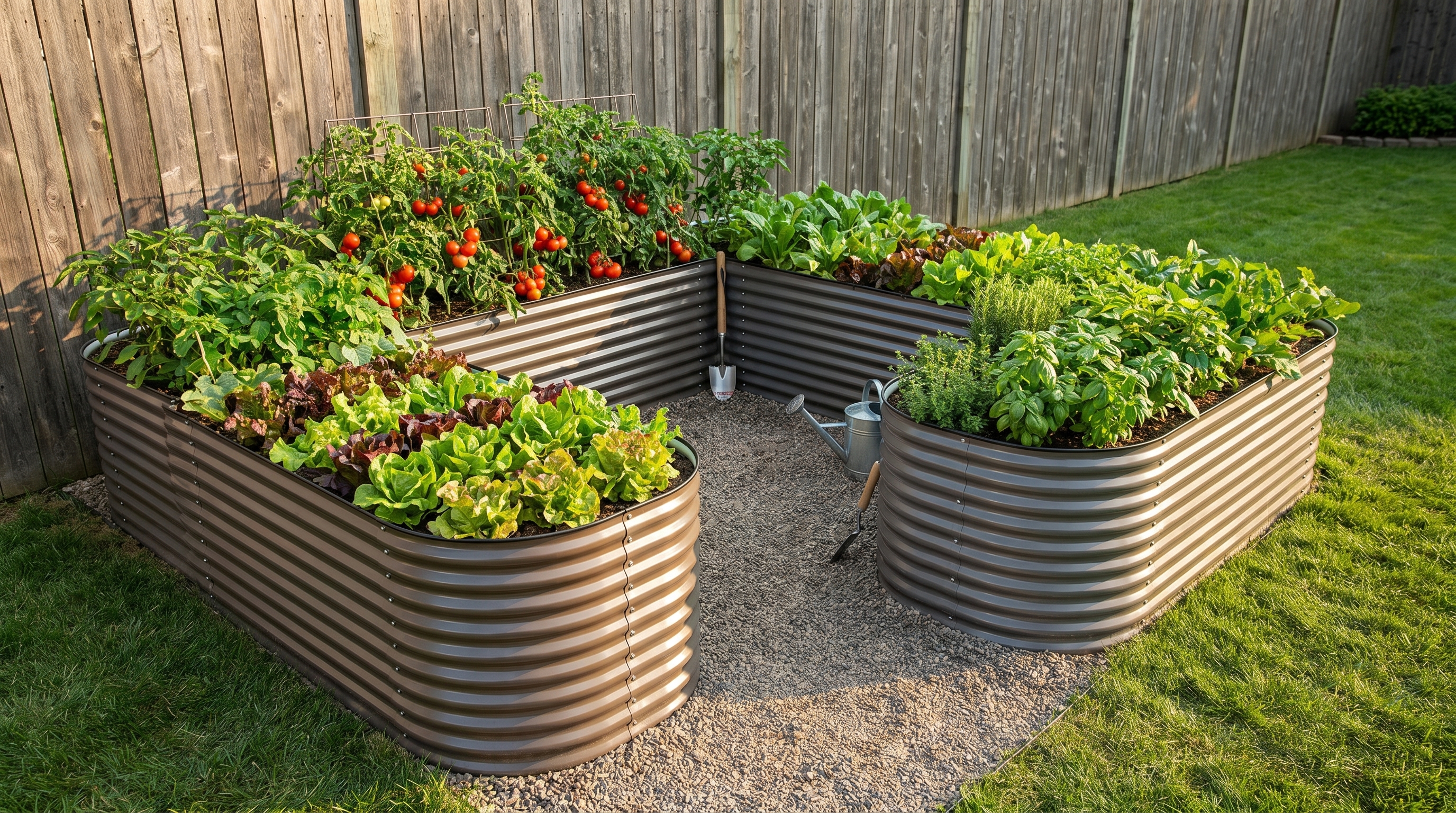
ALT: Galvanized steel modular raised garden beds in a U-shaped raised bed planting layout with thriving vegetables and herbs
Advanced Considerations: What Most Reviews Don't Tell You
Soil Volume Economics
A less-discussed financial factor is soil. Modular systems—especially those that allow depth customization—require more soil than shallow fixed beds. A 24-inch deep modular bed needs significantly more growing medium than a 10-inch fixed bed. This is a real upfront cost that should be included in your total investment calculation. However, deeper soil also means less frequent watering, better root development, and the ability to grow a wider range of crops including carrots, beets, and potatoes that simply don't perform in shallow beds.
The net benefit of deeper, higher-quality soil volume typically outweighs the initial soil cost over multiple growing seasons—but it's worth planning for in your budget.
The "Modular Premium" Misconception
Some gardeners assume that modular means complicated or fragile—that more parts equals more failure points. In practice, the opposite is often true. Modular systems use heavier gauge steel panels with reinforced corner connections that outperform the staple-and-screw construction of many budget fixed beds. Each panel in a quality system is a structurally sound component, not a thin veneer.
The misconception stems from cheap modular kits made from thin plastic or low-gauge steel that genuinely do fail quickly. Distinguishing between quality and budget modular systems requires attention to steel gauge (12–14 gauge is a reliable standard), coating quality, and corner connector design.
Integration with Broader Garden Ecosystems
Serious home gardeners increasingly think beyond individual beds to complete garden ecosystems. Modular raised beds integrate naturally with companion products: soil amendment systems, drip irrigation setups, garden fencing for pest control, and even chicken coops or rabbit hutches that provide natural fertilizer for the beds. Anleolife's full-scenario approach—spanning planting, raising, and beautification—reflects this holistic gardening philosophy and makes it easier to build a coherent, functional garden ecosystem over time.
Frequently Asked Questions FAQ
Q1: How do modular raised garden beds affect long-term raised bed planting layout flexibility?
Modular systems are specifically designed to evolve with your gardening practice. Because panels are standardized, you can reconfigure your raised bed planting layout from a single rectangle to an L-shape, U-shape, or multi-tier arrangement as your space and goals change. This means you're not locked into a single garden design for life. According to OSU Extension guidelines, accessible bed layouts that can be adjusted for ergonomics and crop rotation are consistently associated with better long-term gardening outcomes and greater gardener satisfaction.
Q2: Are galvanized steel modular raised beds safe for growing vegetables and edible crops?
Yes—modern galvanized steel raised beds use zinc-coated steel that is widely considered safe for food gardening at typical soil contact levels. The EPA and food safety researchers generally recognize that zinc leaching from galvanized beds into soil occurs at levels far below thresholds of concern for human health, especially when beds are used with quality growing medium that buffers metal uptake. Galvanized steel is a significantly safer long-term choice than older CCA-treated wood, which the EPA has flagged for potential chromium and arsenic concerns near food crops.
Q3: How much does a quality modular raised garden bed system actually cost over 20 years compared to replacing fixed beds?
The math is often surprising. A quality modular galvanized steel system costs $200–$350 upfront and, with a 20-year lifespan, averages $10–$18 per year. A comparable wooden fixed bed costs $80–$150 but typically needs full replacement every 5–7 years—meaning 3–4 replacements over 20 years, totaling $240–$600 in materials alone, plus labor. For serious gardeners growing food consistently, the modular system is genuinely the more economical choice when evaluated honestly across the full raised bed garden layout lifespan.
Summary
The question of whether modular raised garden beds are worth the extra cost doesn't have a one-size-fits-all answer—but for most serious home growers, the evidence points clearly in one direction.
Three core value points stand out:
- True cost-per-year favors modular systems. When you calculate the full 20-year cost of ownership—including replacement cycles for inferior materials, labor, and disposal—a quality modular bed almost always costs less annually than repeatedly buying and replacing cheaper fixed beds.
- Flexibility protects your investment. A raised bed garden layout that can adapt to your changing life—different home, different physical abilities, different gardening ambitions—is more valuable than one that locks you in. Modular systems give you that adaptability by design.
- Durability and food safety align. Premium galvanized steel that resists rust, doesn't leach harmful chemicals, and lasts 20 years is the better choice for food-producing gardens, full stop. It's better for the environment, better for your soil, and better for your peace of mind.
Next steps: If you're ready to evaluate a modular system for your garden, start by sketching your ideal raised bed layout on paper—shape, size, depth, number of beds. Then compare that vision against your available space and budget. Consider starting with one or two modules and expanding progressively; quality modular systems are designed specifically for this kind of phased growth.
The best garden isn't built in a single weekend. It's built season by season, with tools and structures that grow alongside you.
Start Building Your Garden System with Anleolife
Nationwide U.S. Warehouse Network: Strategically located in California, Texas, Florida, New York, Illinois, and Washington, Anleolife's fulfillment infrastructure ensures delivery within 3–8 business days—so your garden upgrade plans never have to wait through long shipping delays.
Multi-Channel Availability: Anleolife products are available across major platforms including Amazon, Walmart, Home Depot, Lowe's, and Wayfair, as well as directly through Anleolife.com—with consistent quality assurance and after-sales support across every channel.
Three Complete Garden Scenarios: Planting (metal raised garden beds with a 20-year lifespan, soil systems), Raising (chicken coops, rabbit hutches), and Beautification (decorative accessories, pathway systems)—meeting your complete needs from functionality to aesthetics in one cohesive brand ecosystem.
We understand that an ideal garden isn't built overnight—it's grown gradually, season by season, with products that earn their place in your outdoor space. Anleolife's modular product design lets you start with what you need today—perhaps a single 8×4×2 raised bed—and expand into a fully integrated planting-and-raising ecosystem as your passion grows. We grow with you, every step of the way.
Shop Modular Raised Garden Beds at Anleolife.com →
References
This article is based on the following official materials (as of January 2026):
- [USDA]. "Home Vegetable Gardening Resources and Guidelines."
https://www.usda.gov/ - [EPA]. "Reregistration Eligibility Decision: Chromated Arsenicals and Wood Preservatives."
https://www.epa.gov/ - [UC ANR]. "Raised Bed Gardening: Design, Soil, and Planting Guidance."
https://ucanr.edu/ - [OSU Extension]. "Accessible Garden Design: Raised Bed Recommendations for Home Gardeners."
https://extension.oregonstate.edu/
Note: Gardening product standards and material safety guidelines may be updated. Please consult the latest official documents or a qualified professional for the most current recommendations.
About Anleolife
Anleolife is a leading outdoor garden solutions provider in North America, dedicated to offering a full-scenario product ecosystem for home gardening enthusiasts, covering planting, raising, and garden beautification. Since its founding, we have upheld our brand mission, "Made for Garden Life," continuously innovating products and optimizing services to help hundreds of thousands of users upgrade their gardens, reconnect with nature, and enjoy a better garden lifestyle.