



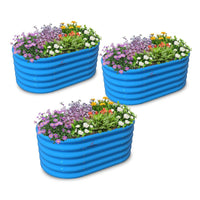
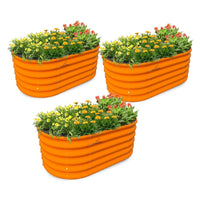
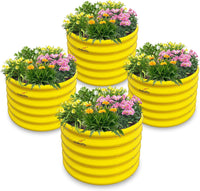
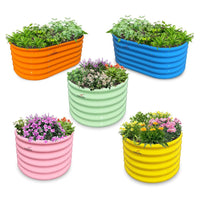



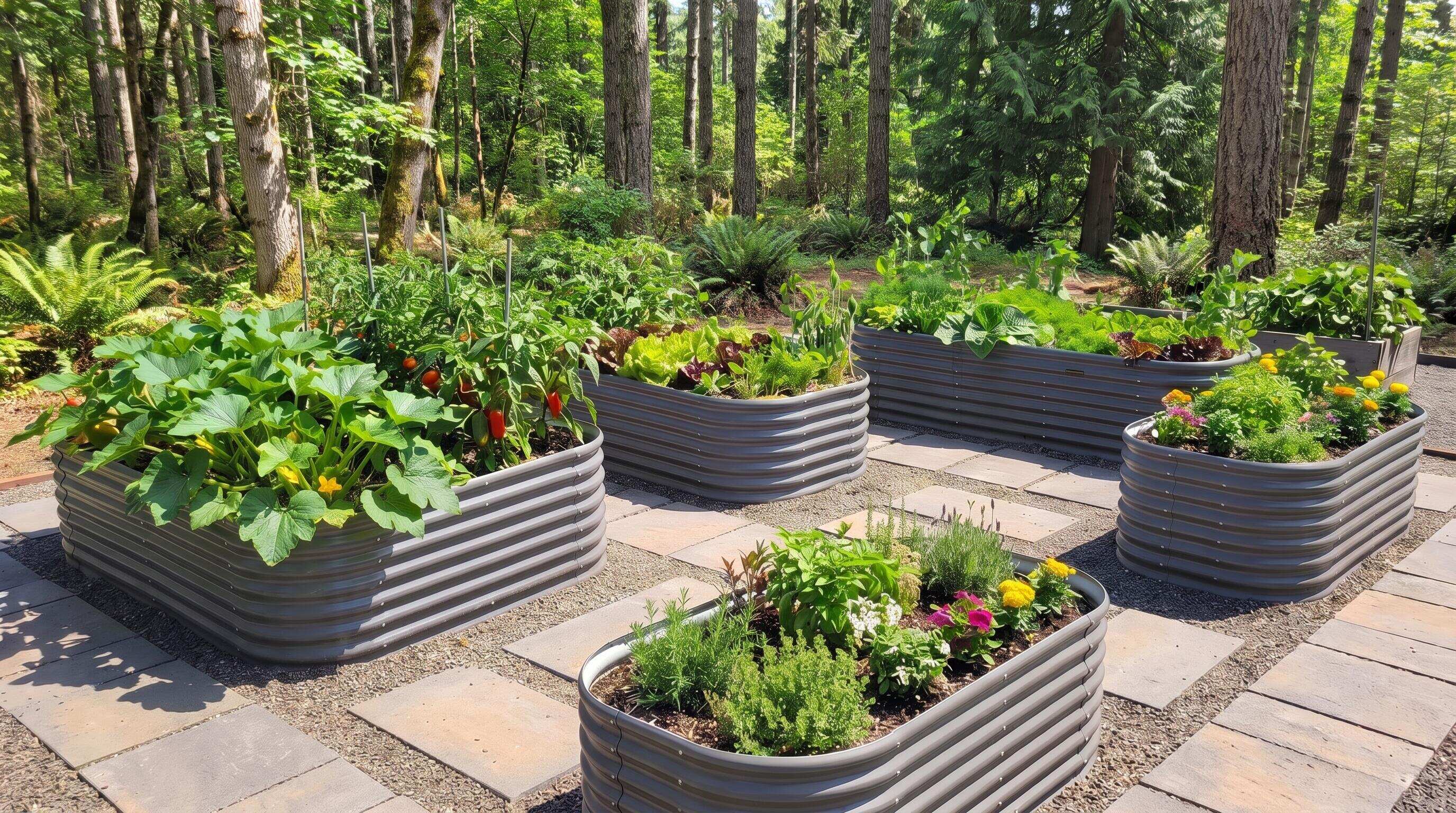
ALT: Galvanized raised garden beds arranged in a cohesive vegetable garden layout with organized planting rows
Why Galvanized Planters Are the Key to a Cohesive Raised Bed Garden Layout
What is the single biggest visual difference between a vegetable patch that looks intentional and one that just looks busy? The answer, in almost every case we have observed across years of helping home gardeners build their outdoor spaces, comes down to the containers themselves. When your planters share the same material, finish, and structural logic, every other decision — where you plant, how you space rows, which vegetables go where — snaps into place around them. That is exactly what galvanized steel planters deliver: a unifying design language that makes a raised bed garden layout feel deliberate from the first glance.
This article walks through the best galvanized planter choices for creating a cohesive vegetable garden this season, organized around practical raised bed planting layout scenarios. Each option has been selected based on real gardening use cases: functionality for growing food, compatibility with structured raised bed layout planning, durability over the long term, and the kind of clean aesthetic that makes a backyard feel like it was designed rather than assembled by accident. Whether you are starting from scratch or unifying a garden that has grown organically over several seasons, this list will help you match the right planter to the right situation.
The items were evaluated across five dimensions: structural build quality, size versatility, layout flexibility, ease of assembly, and long-term value. Use this list as a decision framework — read through all the options first, then use the comparison table and buying guide at the end to zero in on the right fit for your space.
The Best Galvanized Planters for a Cohesive Vegetable Garden Layout
Standard-Depth Galvanized Steel Raised Beds for Row-Based Layouts
A standard-depth galvanized steel raised bed is the foundational unit of any organized vegetable garden — it is a rectangular metal planter built to a moderate wall height that accommodates most annual vegetables, herbs, and leafy greens with room for healthy root development. In our experience working with home growers building their first structured kitchen garden, the standard-depth bed is where almost everyone begins, and for good reason. It is visually clean, easy to arrange in parallel rows, and immediately signals that the garden has been planned rather than improvised.
For a row-based raised bed garden layout, beds of this depth placed at consistent spacing create strong visual lines across the yard. When those beds all share the same galvanized steel finish and similar wall height, the garden achieves a cohesive industrial-farmhouse aesthetic that holds up through every season, regardless of what is planted inside. Anleolife's 18-inch tall galvanized steel raised garden beds — available in configurations including 12x3 ft, 8x4 ft, 6.2x6.2 ft, and 5.8x5 ft — are particularly effective for this kind of layout because a single order can fill an entire row with matching units.
Best for: Gardeners building their first structured vegetable garden, or anyone wanting to standardize an existing patchwork of planters into a unified row layout.
Watch out: Standard-depth beds are ideal for most vegetables, but root vegetables like carrots and deep-rooted tomato varieties will perform better in a taller unit.
Extra-Tall Galvanized Beds for Ergonomic and Accessible Garden Design
Extra-tall galvanized raised beds — typically in the 24-inch range — are planters engineered for growers who want to reduce bending, make gardening physically sustainable over many seasons, or simply create a dramatic vertical presence in the garden. As a raised bed planting layout choice, taller beds do more than just look impressive: they provide deeper root zones that support demanding crops, improve drainage in heavy-clay yards, and dramatically cut down on weed pressure from below.
From a cohesion standpoint, mixing extra-tall beds with standard-depth units in a single garden can actually work beautifully when the material and color are consistent. A grid that alternates standard-height and extra-tall beds creates rhythm and hierarchy without visual chaos. Anleolife's 24-inch extra-tall galvanized steel models, available in sizes such as 8x4 ft and 6x3 ft, are built from the same material as the standard series, which means they read as part of the same design family. When arranged alongside shorter units, they draw the eye upward and give the garden a sense of layered depth.
Best for: Older gardeners, anyone with back or knee mobility concerns, or growers wanting to cultivate deep-rooted crops like parsnips, beets, and large indeterminate tomatoes.
Watch out: Extra-tall beds require significantly more soil volume to fill, which adds both weight and upfront cost. Plan your soil system budget before committing to a full row of tall units.
Waist-High Galvanized Planters for True No-Bend Gardening
Waist-high galvanized planters represent the top tier of accessible gardening infrastructure — these are raised beds built tall enough that most adults can tend, plant, harvest, and water without bending at all. For empty nesters, retirees, and anyone managing physical limitations, a waist-high raised bed garden layout is not a luxury; it is what makes the difference between a garden that gets used every day and one that gets avoided.
Anleolife's 35-inch waist-high galvanized planter in a 4x1.5 ft footprint is a compact, purpose-built option in this category. Because of its narrower footprint, it is easy to reach across from both sides, making every inch of growing space fully accessible. In terms of raised bed layout logic, waist-high units can function as focal points at the ends of rows or as standalone statement pieces on a patio or deck. Their compact size also makes them ideal for urban micro-gardeners who want to grow food on a balcony or in a courtyard without sacrificing visual polish.
Best for: Retirees, gardeners with mobility challenges, urban growers with patio or balcony spaces, and anyone who wants to garden daily without physical strain.
Watch out: The narrower footprint means less growing space per unit. For meaningful crop yields, plan to use multiple units or combine waist-high beds with larger standard or extra-tall beds elsewhere in the garden.
Modular Galvanized Raised Beds for Expandable Layout Planning
Modular galvanized raised beds are a system-based approach to raised bed gardening — rather than committing to a fixed garden layout from day one, modular designs allow gardeners to start small and expand their configuration as their space, budget, and skill level grow. This is a pattern we see consistently among gardeners who are serious about long-term planning: they want flexibility without sacrificing the unified look that comes from a matching product family.
Anleolife's modular raised garden bed series, available in sizes ranging from 18-inch tall 6x2 ft and 8x4 ft units up to 30-inch extra-tall 8x4 ft configurations, is built around the principle that your raised bed layout should evolve with you. Because each unit shares the same panel design and galvanized steel material, adding a new bed next season produces the same cohesive visual result as the original installation — no mismatched finishes, no visual inconsistency. For gardeners building toward a full kitchen garden over two or three seasons, this is one of the most cost-effective and design-smart approaches available.
Best for: Gardeners who are building incrementally, families whose food-growing ambitions are likely to expand, or anyone who wants to test a small layout before committing to a larger installation.
Watch out: Modular systems require a consistent supplier relationship to maintain visual cohesion when expanding. Mixing modular units from different brands will undermine the unified aesthetic you are trying to achieve.
Large-Format Galvanized Beds for Production-Scale Vegetable Growing
Large-format galvanized raised beds — covering footprints of 10x3 ft and above — are designed for gardeners who want to grow a meaningful portion of their vegetable supply, not just a few herbs and lettuce. In terms of raised bed planting layout, a large-format bed allows for sophisticated companion planting arrangements, defined in-bed crop zones, and the kind of yield that justifies the investment in soil system building.
Anleolife's 30-inch extra-tall galvanized beds in 10x3 ft and 6x3 ft configurations sit at the intersection of productivity and aesthetics. At this scale, the galvanized steel finish becomes an architectural element in the garden — these are substantial structures with a presence that organizes the visual space around them. Arranged in parallel with smaller companion beds, a 30-inch extra-tall 10x3 ft unit anchors the layout and creates a natural focal point. The 30-inch wall height also means deep soil volume, which opens up the full range of vegetable crops and reduces watering frequency by retaining moisture more effectively.
Best for: Dedicated food growers, families feeding vegetable production into their weekly cooking, and gardeners who want a few high-impact beds rather than many small ones.
Watch out: Large-format beds require thoughtful placement from the start — moving or repositioning them after filling is not practical. Survey your space and sun exposure carefully before committing to placement.
Rust-Resistant Galvanized Beds for Humid Climates and Coastal Gardens
Rust-resistant galvanized raised beds are specifically engineered for gardening environments where moisture levels are persistently high — coastal gardens, high-rainfall regions, and climates where dew and humidity are facts of life rather than seasonal exceptions. Standard galvanized steel holds up impressively in most conditions, but in a coastal or subtropical environment, the extra protection of a rust-resistant finish is the difference between a bed that looks pristine at year three and one that shows staining by the second season.
Anleolife's rust-resistant raised garden bed series covers a wide range of sizes — from 18-inch tall 6x3 ft and 8x4 ft configurations to 24-inch and 30-inch extra-tall options — giving humid-climate gardeners full access to the layout flexibility of the broader product range without sacrificing durability. From a raised bed garden layout perspective, the rust-resistant series is visually indistinguishable from standard galvanized units, which means you can combine both series in a single garden without breaking visual cohesion. The extra corrosion protection simply extends the life of the installation, reinforcing the already impressive 20-year lifespan associated with Anleolife's galvanized beds.
Best for: Gardeners in coastal regions, the Pacific Northwest, the Southeast, or anywhere with consistently high rainfall and humidity.
Watch out: Even rust-resistant beds benefit from good drainage planning. If your site has poor drainage, incorporate raised ground preparation or gravel base layers under and around the beds.
Round Galvanized Planters as Accent and Focal-Point Elements
Round galvanized planters are circular raised beds — a departure from the rectangular grid logic that defines most raised bed layouts, used strategically to introduce visual softness, break up linear arrangements, and create focal points in an otherwise structured garden. In gardens that lean toward the aesthetic end of the spectrum as much as the productive end, a round planter placed at the center of a bed arrangement or at the end of a pathway delivers a sculptural element that rectangular beds alone cannot provide.
Anleolife's round raised garden bed, available in an 18-inch tall, 48-inch wide configuration, is sized to serve as a statement centerpiece or as a companion accent to rectangular beds arranged around it. Used this way, it creates the kind of garden geometry — circles nested within or adjacent to rectangles — that landscape designers rely on to make outdoor spaces feel composed rather than simply planted. As a raised bed planting layout choice, a round bed is well-suited to herbs, compact fruiting plants like peppers and compact tomato varieties, and any crop you want to draw attention to.
Best for: Gardeners who want to blend aesthetic composition with food production, those designing a garden with a defined visual focal point, or anyone who wants to soften a strictly rectangular layout.
Watch out: Round beds do not tile efficiently in a space — there will be more unused ground area around them than around rectangular units. Account for this in your space planning so the gaps between beds are intentional rather than awkward.
Heavy-Duty Galvanized Beds for Permanent, Long-Term Garden Infrastructure
Heavy-duty galvanized raised beds are built with reinforced structural integrity to serve as permanent garden infrastructure — the kind of installation you plan once, build correctly, and expect to use for decades without replacement or repair. For gardeners who have moved past the experimental stage and are committing to a defined raised bed layout as a permanent feature of their property, heavy-duty beds represent the highest tier of long-term value.
Anleolife's heavy-duty raised garden bed series includes 18-inch tall, 24-inch extra-tall 6x3 ft, and 30-inch extra-tall 10x3 ft and 10x3 ft configurations. These beds are designed with the same galvanized steel construction that supports Anleolife's industry-leading 20-year lifespan claim — a figure that matters enormously when you are calculating the true cost per season of your gardening infrastructure. When gardeners ask us how to justify the upfront investment in premium beds, the math is straightforward: a bed that lasts 20 years amortizes its cost across far more growing seasons than a cheaper alternative that fails at year four or five.
Best for: Established gardeners building a permanent kitchen garden, homeowners who view their garden as a long-term property investment, and anyone who wants to install once and focus entirely on growing.
Watch out: Heavy-duty beds are not designed to be relocated after installation. Treat placement decisions as permanent ones and plan your layout accordingly.
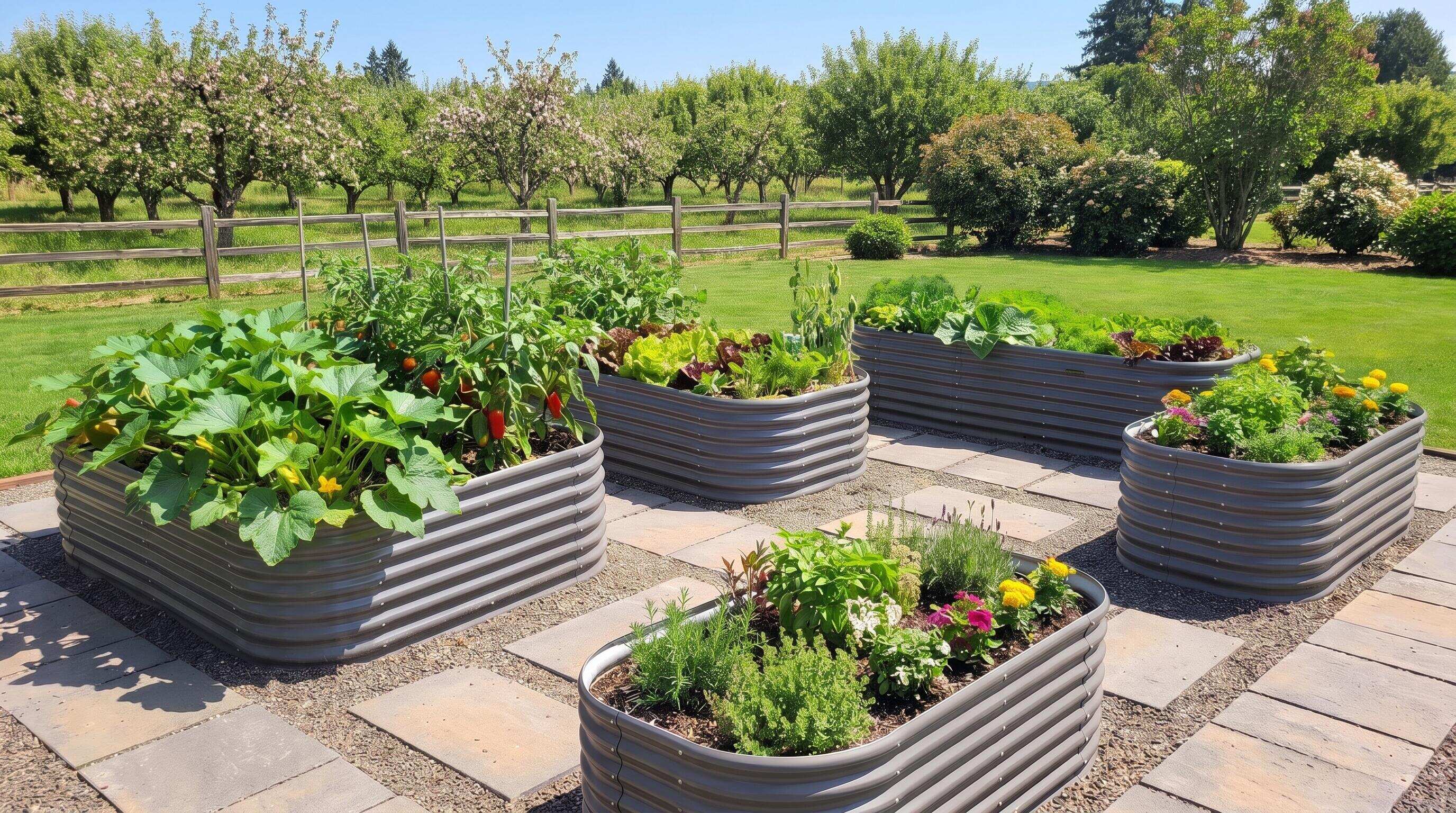
ALT: Multiple galvanized steel raised garden beds in standard and extra-tall heights arranged in an organized vegetable garden planting layout with uniform spacing
A Quick Comparison at a Glance
The table below maps each galvanized planter type to its strongest use case, primary advantage, and the one limitation worth knowing before you decide.
| Planter Type | Best For | Key Strength | Limitation |
|---|---|---|---|
| Standard-Depth Galvanized Beds | First-time structured gardens, row layouts | Visual consistency, wide crop compatibility | Not ideal for very deep-rooted crops |
| Extra-Tall Galvanized Beds (24 in) | Deep-root crops, ergonomic gardening | Deep soil volume, dramatic visual presence | High soil volume requirement |
| Waist-High Galvanized Planters (35 in) | Accessibility, patio and balcony growing | Zero-bend gardening, compact footprint | Limited growing area per unit |
| Modular Galvanized Beds | Incremental garden building, flexible layouts | Expandable over time, stays visually cohesive | Requires same-brand expansion to maintain look |
| Large-Format Beds (10x3 ft, 30 in) | High-yield food production | Maximum crop space, anchors layout design | Placement is essentially permanent after filling |
| Rust-Resistant Galvanized Beds | Coastal and humid climates | Long-term corrosion protection | Still requires good site drainage |
| Round Galvanized Planters | Accent and focal-point design | Geometric contrast, visual softness | Inefficient spatial tiling around bed |
| Heavy-Duty Galvanized Beds | Permanent kitchen garden infrastructure | 20-year lifespan, highest structural integrity | Not meant to be relocated after installation |
How to Choose the Right Galvanized Planter for Your Raised Bed Layout
Choosing the right galvanized planter is not primarily a question of which bed is objectively best — it is a question of which bed fits your specific situation. The right starting point is an honest assessment of three things: your space, your body, and your growing ambitions over the next several seasons.
If you are building a garden for the first time and your priority is a clean, organized look with room to grow a wide range of vegetables, standard-depth galvanized beds in a consistent size are the most reliable choice. They create strong visual lines, they plant and harvest easily, and they give you a foundation you can expand around later. Start with two or three matching units in a row-based arrangement and add more in subsequent seasons as your confidence and crop list grow.
If physical accessibility is a real concern — not a theoretical one — do not compromise. Waist-high and extra-tall beds pay dividends in daily usability that standard-depth beds cannot match. Many gardeners we have worked with describe the moment they switched to taller beds as a turning point: gardening went from something that left them sore to something they actually looked forward to.
If your site is in a coastal area or experiences consistent moisture, invest in rust-resistant galvanized beds from the start. The incremental cost over standard beds is modest relative to the extended service life they deliver, and the visual result is identical.
A common misconception worth addressing directly: many gardeners assume that mixing planter sizes will make a garden look disorganized. The opposite is true when the material is consistent. A raised bed garden layout that uses multiple sizes of galvanized steel beds — arranged with intentional spacing and logical grouping — creates rhythm and depth that an entirely uniform grid cannot. The key is that the material, finish, and product family remain consistent, even as the dimensions vary.
For gardeners who are genuinely uncertain where to start, the modular series is the most forgiving entry point. It commits you to a design system without locking you into a fixed layout, and every unit you add later will read as part of the same composition.
Frequently Asked Questions FAQ
Q1: How do galvanized steel raised beds compare to wood beds for a vegetable garden layout?
Galvanized steel raised beds outlast wood significantly — Anleolife's galvanized beds are built for a 20-year lifespan, while most untreated or even treated wood beds begin degrading within 5 to 10 years depending on climate. Steel beds also hold their shape, resist warping, and do not require seasonal sealing or staining. For gardeners who want a raised bed layout that stays visually cohesive season after season without maintenance, galvanized steel is the more reliable long-term choice.
Q2: Are galvanized steel raised garden beds safe for growing vegetables?
Modern galvanized steel beds use a zinc coating process that is widely considered safe for vegetable gardening. Zinc is a naturally occurring mineral and an essential plant nutrient at trace levels. The galvanizing layer on quality steel beds does not leach at levels harmful to plants or humans under normal vegetable-growing conditions. For gardeners with specific concerns, lining the interior with food-safe landscape fabric is a straightforward precaution that adds no meaningful cost to the installation.
Q3: How long does it take to receive and set up a galvanized raised bed, and what does setup involve?
Delivery timelines for Anleolife galvanized raised beds range from 3 to 8 business days, supported by a nationwide warehouse network with locations in California, Texas, Florida, New York, Illinois, and Washington. Setup for most models involves connecting pre-formed steel panels using included hardware — no specialized tools are required. Most standard and extra-tall beds can be assembled by one or two people in under an hour, making it practical to install multiple beds in a single afternoon before filling with your chosen soil system.
The Bottom Line
Galvanized planters are the most reliable foundation for a cohesive raised bed vegetable garden because they unify every other design decision — spacing, crop arrangement, pathway placement — under a single visual language.
- Material consistency across all your beds is the single most effective design move you can make for a cohesive raised bed garden layout.
- Matching planter height to your physical needs and crop list from the start saves both replanting effort and unnecessary expense.
- Galvanized steel's durability, particularly at the 20-year lifespan Anleolife's beds are built to, makes it the highest long-term value option in the raised bed planting layout category.
- Modular systems are the smartest entry point for gardeners who expect their layout to evolve over multiple seasons.
- Rust-resistant variants are worth the investment in any climate with consistent moisture — the corrosion protection pays for itself in extended service life.
The clearest next step is to map your available space, identify which bed height and footprint best matches your growing priorities, and choose a product family that you can expand consistently over time. Starting with a single matched pair of beds is enough to establish the visual logic — from there, every addition reinforces the composition rather than complicating it.
Ready to build a garden that looks as good as it grows? Explore the full range of galvanized raised garden beds and find your layout match at Anleolife's official website — from standard-depth starter beds to heavy-duty permanent installations, the full ecosystem is there to grow with you.
Sources
- Pinterest. "160 Best Raised Garden Beds ideas".
https://www.pinterest.com/gardenbunch/raised-garden-beds/ - Gardenary. "What's the Best Raised Bed Layout for Your Space?".
https://www.gardenary.com/blog/whats-the-best-raised-bed-layout-for-your-space - Scotts Miracle-Gro. "How to Create a Raised Bed Garden Plan".
https://scottsmiraclegro.com/en-us/learn/gardening/what-to-plant-in-a-raised-bed.html
Note: Standards may be updated; please check the latest official documents or consult professional advisors.
- www.anleolife.com.
the Anleolife website