



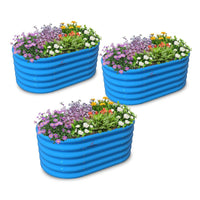
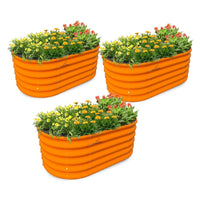
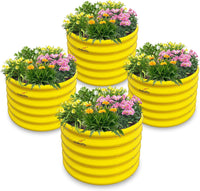
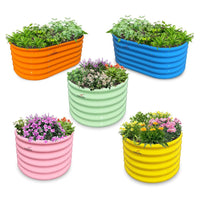



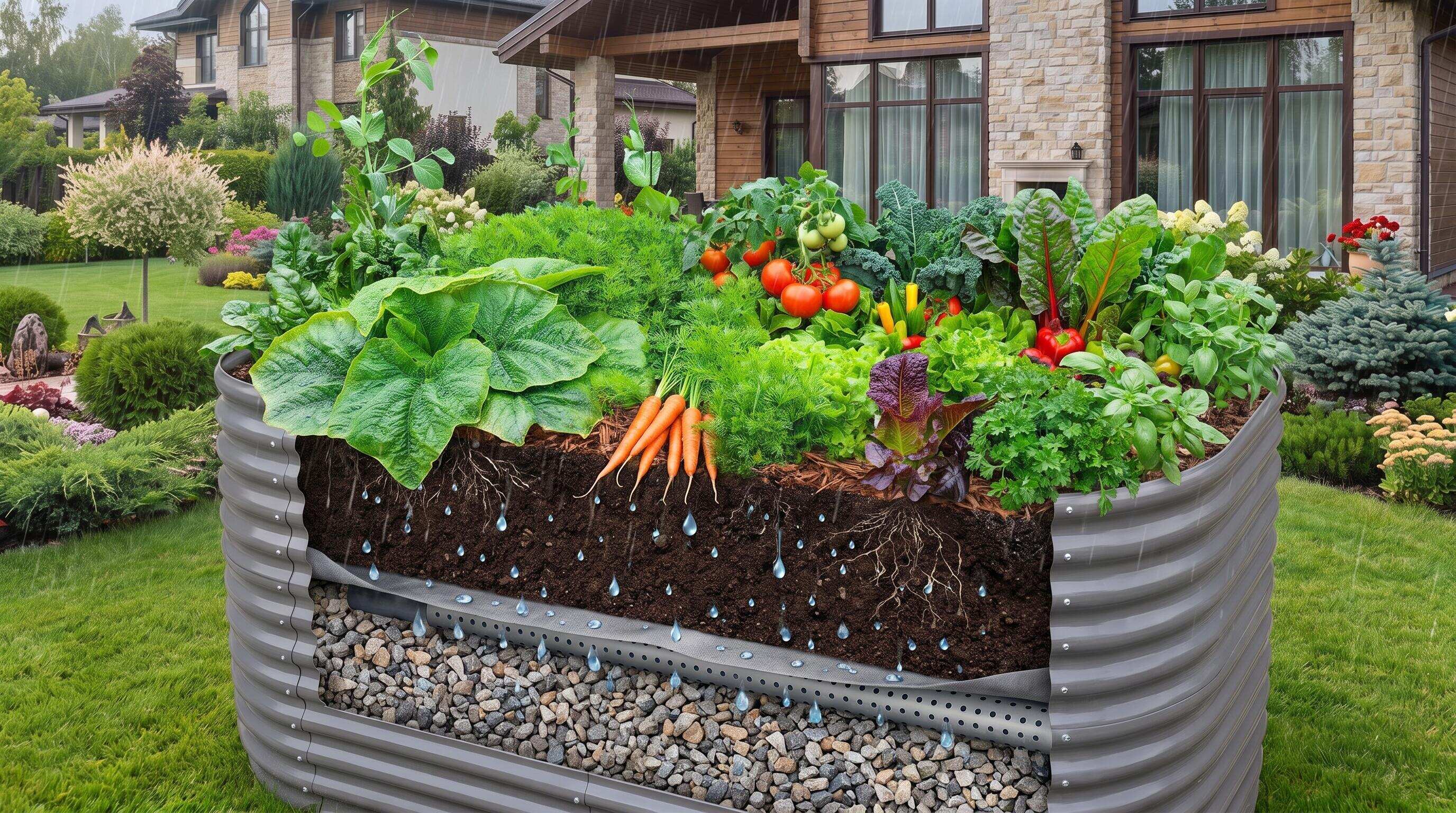
ALT: Best soil texture for raised vegetable beds showing healthy garden bed layout with rich loamy soil
Why Soil Texture Makes or Breaks Your Raised Bed Garden Layout This Season
You've built the bed, chosen your location, and sketched out your raised bed garden layout — but the moment you fill it with the wrong soil mix, everything that follows is an uphill battle. Compacted, sandy, or nutrient-poor soil turns even the most thoughtful raised bed planting layout into a frustrating exercise. The good news is that raised bed gardening gives you complete control over your soil environment, and understanding soil texture is the single most powerful lever you can pull this growing season.
This guide breaks down the best soil textures for raised vegetable beds into clear, actionable categories — from foundational mixes to specialized amendments. Whether you're setting up your first raised bed layout or refining an established system after a few seasons of learning, each item in this list is chosen because it addresses a real, recurring challenge we see among home gardeners. The selection is based on a combination of plant science fundamentals, the practical demands of container-style growing environments, and patterns we consistently observe in how gardeners succeed or struggle when they fill their beds.
The Best Soil Textures and Mix Components for Raised Vegetable Beds
Loam-Based Core Mix: The Gold Standard for Raised Bed Gardening
A loam-based core mix is a balanced blend of sand, silt, and clay in roughly equal proportions, and it is widely recognized as the most reliable foundation for a raised vegetable bed. Loam drains well enough to prevent waterlogging while retaining sufficient moisture and nutrients to support vigorous vegetable growth. In our work with clients setting up new raised bed layouts, a loam-based core is almost always where we start the conversation — because getting this right means every other amendment you add has a healthy base to work from.
The structure of loam supports root development across a wide variety of vegetables, from shallow-rooted lettuce and herbs to deeper-rooted tomatoes and carrots. It also maintains its texture season after season with modest topdressing, reducing the need for complete soil replacement.
Best for: First-time raised bed gardeners building an all-purpose growing environment, and experienced growers who want a reliable, low-maintenance baseline.
Watch out: True garden loam is not always easy to source in consistent quality. Bagged "topsoil" sold at garden centers varies widely and often lacks the organic matter content needed for productive vegetable growing — always check the composition before purchasing.
The Mel's Mix Ratio: A Proven Raised Bed Soil Formula
Mel's Mix — a one-third each blend of coarse vermiculite, peat moss or coconut coir, and blended compost — is a soil system developed specifically for the demands of intensive raised bed planting layouts. It is notably lightweight, which matters when you are filling a deep bed such as an extra-tall 24- or 30-inch raised bed where total soil volume is substantial. The mix is also virtually weed-free when made from new materials, which is a meaningful practical advantage in a productive kitchen garden.
The vermiculite component provides excellent aeration and moisture retention simultaneously, addressing two competing needs that most single-ingredient fills cannot solve. The blended compost fraction — ideally sourced from five or more different compost types — delivers a broad spectrum of nutrients and microbial activity.
Best for: Intensive square-foot planting layouts, urban micro-gardeners working with compact raised beds, and anyone who wants a consistent, repeatable soil formula across multiple beds.
Watch out: Vermiculite can be expensive, particularly in the volumes needed for large or multiple beds. Coconut coir, while a sustainable alternative to peat moss, may require additional calcium supplementation over time as it has a naturally low nutrient content.
High-Compost Blends: Building Long-Term Soil Fertility
A high-compost blend — typically 40 to 60 percent finished compost mixed with other structural materials — is the cornerstone of organic raised bed gardening. Compost is not simply a fertilizer; it is a living soil amendment that improves texture, feeds soil biology, buffers pH, and enhances both drainage and water retention simultaneously. A pattern we consistently see is that gardeners who invest in quality compost from the outset spend far less effort troubleshooting plant health problems mid-season.
Finished compost should be dark, crumbly, and earthy-smelling with no recognizable original material remaining. For raised beds, blending compost with a structural material such as coarse perlite or aged pine bark fines prevents the mix from compacting as the organic matter breaks down over the season.
Best for: Eco-conscious and health-oriented home growers who prioritize organic methods, and established gardeners who are amending existing beds after a previous growing season.
Watch out: Fresh or incompletely finished compost can introduce pathogens, weed seeds, and nitrogen that is temporarily locked up in decomposition — always use fully finished material in vegetable beds.
Sandy Loam with Perlite: Drainage-First for Root Vegetables
Sandy loam is a soil texture that contains a higher proportion of sand particles than standard loam, resulting in faster drainage and a looser, more friable structure. When enhanced with horticultural perlite — a lightweight volcanic glass that prevents compaction — sandy loam creates an ideal environment for root vegetables like carrots, parsnips, radishes, and beets that need to push downward without obstruction.
In a raised bed layout designed for root crops, soil texture is especially critical because the walls of the bed define the total rooting depth available. A dense or compacted soil in a 12-inch-deep bed effectively reduces usable root depth to only a few inches, stunting yield and causing forked or misshapen roots.
Best for: Dedicated root vegetable beds, raised bed planting layouts in hot climates where fast drainage prevents root rot, and growers in regions with heavy rainfall patterns.
Watch out: Sandy loam dries out faster than loam-based mixes, meaning irrigation frequency increases — this matters most during midsummer heat. Supplementing with organic matter annually is essential to maintain fertility.
Clay-Amended Blends: Moisture Retention in Dry Climates
Contrary to the common instinct to avoid clay in raised beds entirely, a small and carefully calibrated clay content — typically no more than 15 to 20 percent — can be a deliberate advantage in hot, arid growing regions where moisture retention is a primary challenge. Clay particles carry a negative charge that attracts and holds positively charged mineral nutrients including calcium, magnesium, and potassium, essentially functioning as a natural slow-release mineral reservoir.
The key is proportion and amendment. Pure clay or high-clay soils compact severely in a raised bed context. But a blend where clay is balanced by coarse sand, compost, and perlite delivers the moisture-holding and nutrient-binding benefits of clay without its structural downsides.
Best for: Raised bed gardeners in USDA zones with hot, dry summers who want to reduce irrigation demands, and growers focusing on brassicas, squash, and other heavy-feeding crops that benefit from consistent mineral availability.
Watch out: Getting the clay-to-amendment ratio wrong is easy to do, and a heavy clay blend will suffocate roots and create drainage failure. Start with a commercially blended mix that specifies clay content rather than mixing raw clay yourself.
Coconut Coir-Enriched Mix: Sustainable Structure for Modern Garden Beds
Coconut coir is a fibrous material derived from coconut husks and is a renewable, sustainable alternative to peat moss in soil mixes. As a soil texture modifier in a raised bed soil system, coir contributes excellent water retention, resists compaction, and maintains its structure through multiple wet-dry cycles far better than peat does. It also has a neutral pH, which makes it compatible with a broader range of vegetable crops without pH adjustment.
A coir-enriched mix — typically 25 to 35 percent coir blended with compost and a drainage amendment — has become a preferred choice among environmentally conscious gardeners who are aware that peat is a non-renewable resource harvested from sensitive bog ecosystems. Coir is particularly effective in raised beds that receive intensive planting because it maintains air pockets around roots even under the foot traffic of regular harvesting.
Best for: Eco-conscious growers, urban micro-gardeners with limited access to bulk compost, and anyone refreshing or topping off existing beds between growing seasons.
Watch out: Coir has very low inherent nutrient content and requires deliberate compost or fertilizer supplementation. It can also temporarily affect potassium and calcium balance — a minor issue easily addressed with standard vegetable garden fertilization.
Biochar-Amended Mixes: Long-Cycle Soil Health Investment
Biochar is a form of charcoal produced through the pyrolysis of organic material and, when incorporated into raised bed soil, functions primarily as a long-term habitat for beneficial soil microorganisms rather than as a direct nutrient source. Research documented by academic agricultural institutions indicates that biochar improves cation exchange capacity — the soil's ability to hold onto positively charged nutrients — and can improve water retention in sandy or low-organic-matter mixes over multiple growing seasons.
In a raised bed garden layout designed for perennial crops or long-term productivity, biochar is a compelling amendment because its structural benefits persist for years. For annual vegetable beds, the benefits are most pronounced when biochar is "charged" before use by mixing it with compost or a dilute liquid fertilizer, allowing microbial colonization before it enters the bed.
Best for: Long-term raised bed gardeners who view their soil as a multi-year investment, and growers in regions with leaching soils who want to improve nutrient retention without increasing fertilizer inputs.
Watch out: Uncharged or raw biochar can temporarily immobilize nitrogen in the soil as soil microbes colonize its surface — this is a reversible but real phenomenon that can slow early-season plant growth if biochar is applied in large quantities without pre-charging.
Aged Compost Topdress Layer: Seasonal Soil Texture Renewal
A seasonal topdressing of one to two inches of fully aged compost applied at the start of each growing season is one of the most cost-effective ways to maintain and improve soil texture in an established raised bed system. As the topdress layer is incorporated by earthworms, irrigation, and planting activity, it continuously replenishes organic matter that breaks down over the previous season, maintaining the loose, crumbly texture that vegetable roots need.
This practice is especially important in galvanized steel raised garden beds — such as the range offered by Anleolife — which can support productive gardening for up to 20 years. Over that lifespan, annual topdressing is what keeps the soil system performing as well in year fifteen as it did in year one, without requiring full bed excavation and refilling.
Best for: Gardeners maintaining established raised bed layouts over multiple seasons, particularly those who grow heavy-feeding crops like tomatoes, squash, and corn that deplete organic matter rapidly.
Watch out: Topdressing is a maintenance strategy, not a remediation tool. If a bed's soil has become severely compacted or depleted, a full or partial soil replacement is necessary before returning to an annual topdressing routine.
pH-Balanced Starter Mix: Precision Soil Chemistry for Sensitive Crops
Soil pH is a numerical measure of the hydrogen ion concentration in soil and directly controls nutrient availability — a pH that is even slightly off-target can lock out essential minerals regardless of how much fertilizer or compost is present. A pH-balanced starter mix is a commercially prepared or custom-blended soil that is adjusted to a target pH range before planting begins, eliminating one of the most common sources of nutrient deficiency in raised vegetable beds.
Most vegetables thrive in a pH range of 6.0 to 7.0, with the sweet spot for general vegetable production sitting around 6.5. Crops like blueberries are exceptions, requiring a more acidic environment. In a new raised bed layout, starting with a pH-balanced mix and testing annually with an inexpensive soil test kit is a simple practice that prevents far more complex problems later.
Best for: Gardeners growing pH-sensitive crops such as brassicas, peppers, and leafy greens, and anyone starting a new raised bed in a region with naturally alkaline or acidic water sources that influence soil pH over time.
Watch out: pH can shift over time due to irrigation water quality, fertilizer choice, and organic matter decomposition. A single-time pH adjustment at planting is a good start but not a permanent solution — annual testing is the only reliable way to maintain optimal soil chemistry.
Quick Comparison at a Glance
| Soil Type / Mix | Best For | Key Strength | Limitation |
|---|---|---|---|
| Loam-Based Core Mix | All-purpose vegetable growing | Balanced drainage and retention | Quality varies by source |
| Mel's Mix (1/3 each) | Intensive square-foot layouts | Lightweight, weed-free, consistent | Vermiculite cost at scale |
| High-Compost Blend | Organic and fertility-focused growing | Living soil, broad nutrition | Must use fully finished compost |
| Sandy Loam with Perlite | Root vegetables, hot climates | Excellent drainage, friable structure | Dries quickly, needs frequent irrigation |
| Clay-Amended Blend | Dry climates, heavy-feeding crops | Moisture and mineral retention | Easy to over-apply, compacts if unbalanced |
| Coconut Coir-Enriched Mix | Eco-conscious and urban gardeners | Sustainable, resists compaction | Low nutrient content, needs supplementation |
| Biochar-Amended Mix | Long-term bed productivity | Improves cation exchange capacity | Raw biochar can temporarily tie up nitrogen |
| Aged Compost Topdress | Established bed maintenance | Low cost, continuous improvement | Not sufficient for severely depleted beds |
| pH-Balanced Starter Mix | Sensitive crops, new bed setups | Precision nutrient availability from day one | pH drifts over time, needs annual testing |
How to Choose the Right Soil Texture for Your Raised Bed Layout
Choosing the right soil texture for your raised vegetable beds starts with an honest assessment of three variables: your local climate, the crops you intend to grow, and the age and condition of your existing beds.
If you are building a new raised bed from scratch in a temperate climate and want a single reliable mix that handles most vegetables without additional complexity, a loam-based core mix or Mel's Mix will serve you well. Both are forgiving for first-time growers and perform consistently across a wide range of crops and seasons.
If you are in a hot, dry region — particularly in the American Southwest or parts of the South — prioritize moisture retention by leaning toward a clay-amended blend or a high-coir mix, and plan your irrigation strategy around faster evaporation rates.
If root vegetables are a priority in your raised bed planting layout, sandy loam with perlite is worth the extra specificity. The looser texture directly translates to longer, straighter, more productive roots — a difference you'll notice at harvest.
For gardeners with established beds entering their second, third, or fifth season, the annual aged compost topdress is the highest-return investment available. Full soil replacement is expensive, labor-intensive, and rarely necessary when consistent organic matter replenishment is in place.
One common misconception worth addressing directly: more compost is not always better. Excessive compost — particularly at concentrations above 60 to 70 percent without structural amendment — creates an overly rich, nitrogen-heavy environment that promotes lush leaf growth at the expense of fruiting. Vegetables growing in pure compost also often suffer from inconsistent moisture because compost shrinks significantly as it decomposes, creating air pockets and uneven watering patterns. Balance is the operative principle.
A second misconception is that raised beds require the same soil as in-ground gardens. Because raised beds are essentially contained growing environments, they depend entirely on what you put in them — there is no reservoir of native soil to buffer mistakes or supplement deficiencies. This is why soil texture selection matters so much more in a raised bed garden layout than it does in a traditional garden row.
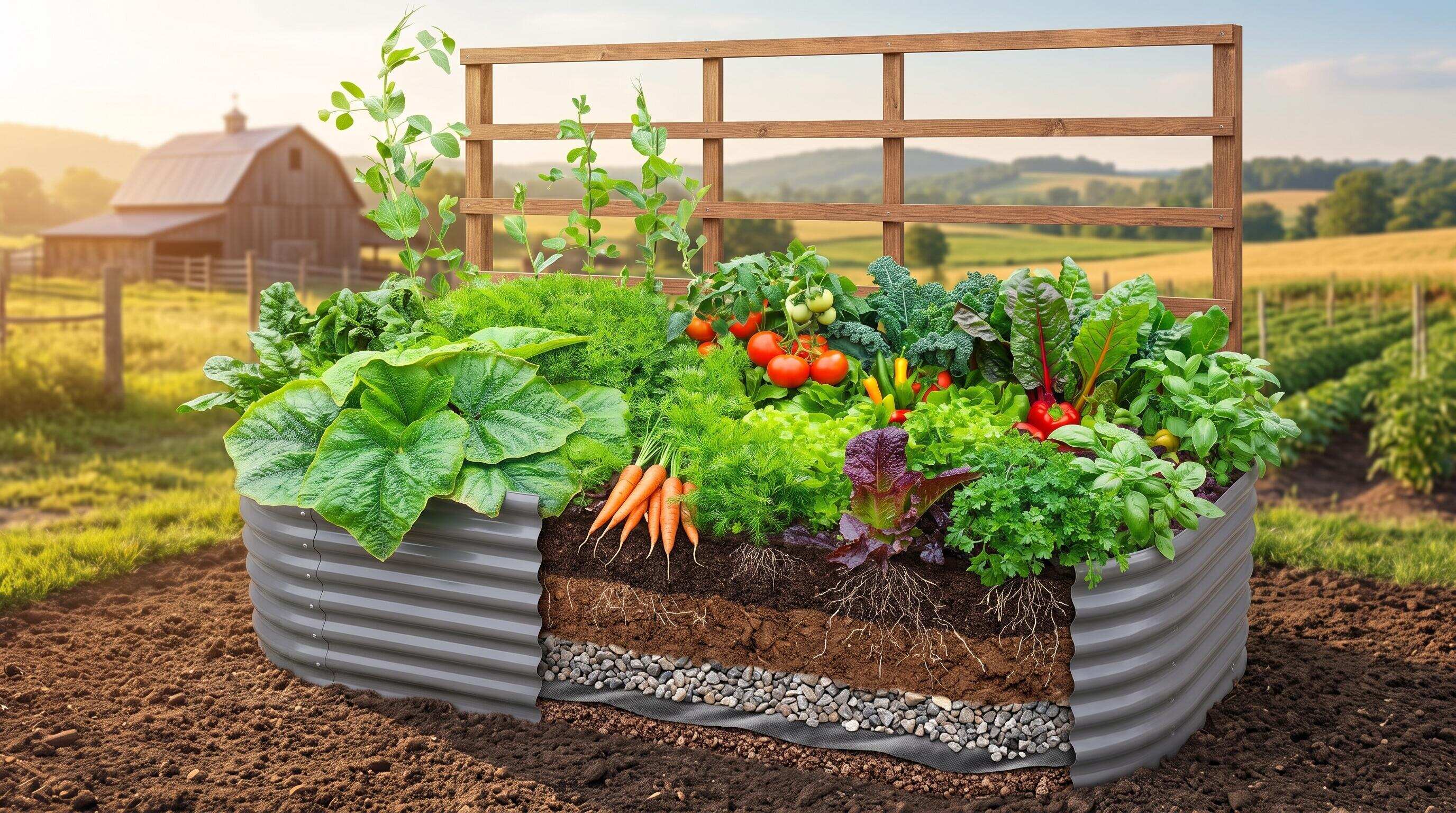
ALT: Close-up comparison of different soil textures in raised vegetable garden beds showing loam, compost, and perlite amendments for optimal raised bed planting layout and drainage
Questions & Answers
Q1: How often should I replace or refresh the soil in my raised vegetable bed?
Full soil replacement in a raised bed is rarely necessary if you practice consistent soil maintenance. Most gardeners find that an annual topdress of one to two inches of finished compost, combined with occasional deep amendments like perlite or biochar every two to three years, keeps soil texture and fertility at productive levels indefinitely. Full replacement is typically only warranted if soil has become severely compacted, contaminated, or if a soilborne disease has established itself — none of which are likely outcomes of good routine maintenance.
Q2: Is peat moss still a good choice for raised bed soil mixes in current gardening practice?
Peat moss remains effective as a soil texture amendment for moisture retention and pH adjustment, but its environmental profile is increasingly a concern among eco-conscious gardeners. Peat bogs are non-renewable on any practical timescale, and harvesting disrupts important carbon storage ecosystems. Coconut coir offers functionally similar texture benefits — moisture retention, resistance to compaction, pH neutrality — with significantly better sustainability credentials. For gardeners who prioritize environmental impact alongside garden performance, coconut coir is now the preferred alternative recommended by most sustainable agriculture advocates.
Q3: How deep should my raised bed soil be, and does depth affect which soil texture I should use?
Bed depth directly influences which soil texture is most appropriate. Shallow beds of 6 to 12 inches suit compact, shallow-rooted crops like lettuce, herbs, and radishes and work well with general loam or compost-based mixes. Deeper beds — from 18 to 30 inches — support root vegetables, tomatoes, and squash, and benefit from a layered approach: a sandy loam or perlite-enriched lower zone for drainage and root penetration, topped with a richer loam-compost blend in the upper layer where most root feeding activity occurs. Deeper beds also require greater total soil volume, making lightweight options like Mel's Mix particularly practical for extra-tall configurations.
Summary
Getting soil texture right in your raised vegetable beds is not a one-time decision — it is an ongoing practice that shapes every growing season for the life of the bed. Three core principles should anchor your approach.
First, match your soil mix to your climate and crops. The same mix that thrives in a humid Pacific Northwest garden may underperform in a Texas summer. Drainage, moisture retention, and nutrient availability all behave differently under different conditions, and your soil texture choices should reflect that reality.
Second, treat organic matter as infrastructure, not an optional extra. Finished compost is the structural backbone of productive raised bed soil — it feeds biology, stabilizes texture, and buffers chemistry. Annual topdressing is the simplest and most effective maintenance habit any raised bed gardener can adopt.
Third, test before you amend. pH imbalance is the most common invisible cause of poor vegetable performance in raised beds, and it costs almost nothing to test for. An inexpensive soil test at the start of each season takes the guesswork out of amendment decisions and ensures that your investment in quality soil components actually reaches your plants.
Raised bed gardening gives you a level of control over your growing environment that in-ground gardening cannot match. Used well, that control translates directly into healthier plants, higher yields, and a more satisfying garden experience season after season.
Ready to build a raised bed that supports your soil investment for the long term? Explore durable galvanized steel and rust-resistant raised garden beds — available in a wide range of sizes, from compact 4x1.5 ft waist-high beds to expansive 10x3 ft extra-tall configurations — at the Anleolife website. With a nationwide warehouse network spanning California, Texas, Florida, New York, Illinois, and Washington, delivery arrives in 3–8 business days so your growing season stays on schedule. Products are also available on Amazon, Walmart, Home Depot, Lowe's, and Wayfair, all backed by consistent quality assurance and after-sales support. Anleolife's modular product design grows with your garden — from your first bed to a fully integrated planting-and-raising ecosystem built to last up to 20 years.
References
- How to Create a Raised Bed Garden Plan. "How to Create a Raised Bed Garden Plan".
https://scottsmiraclegro.com/en-us/learn/gardening/what-to-plant-in-a-raised-bed.html - What's the Best Raised Bed Layout for Your Space?. "What's the Best Raised Bed Layout for Your Space?".
https://www.gardenary.com/blog/whats-the-best-raised-bed-layout-for-your-space
Note: Standards may be updated; please check the latest official documents or consult professional advisors.
- www.anleolife.com.
the Anleolife website