


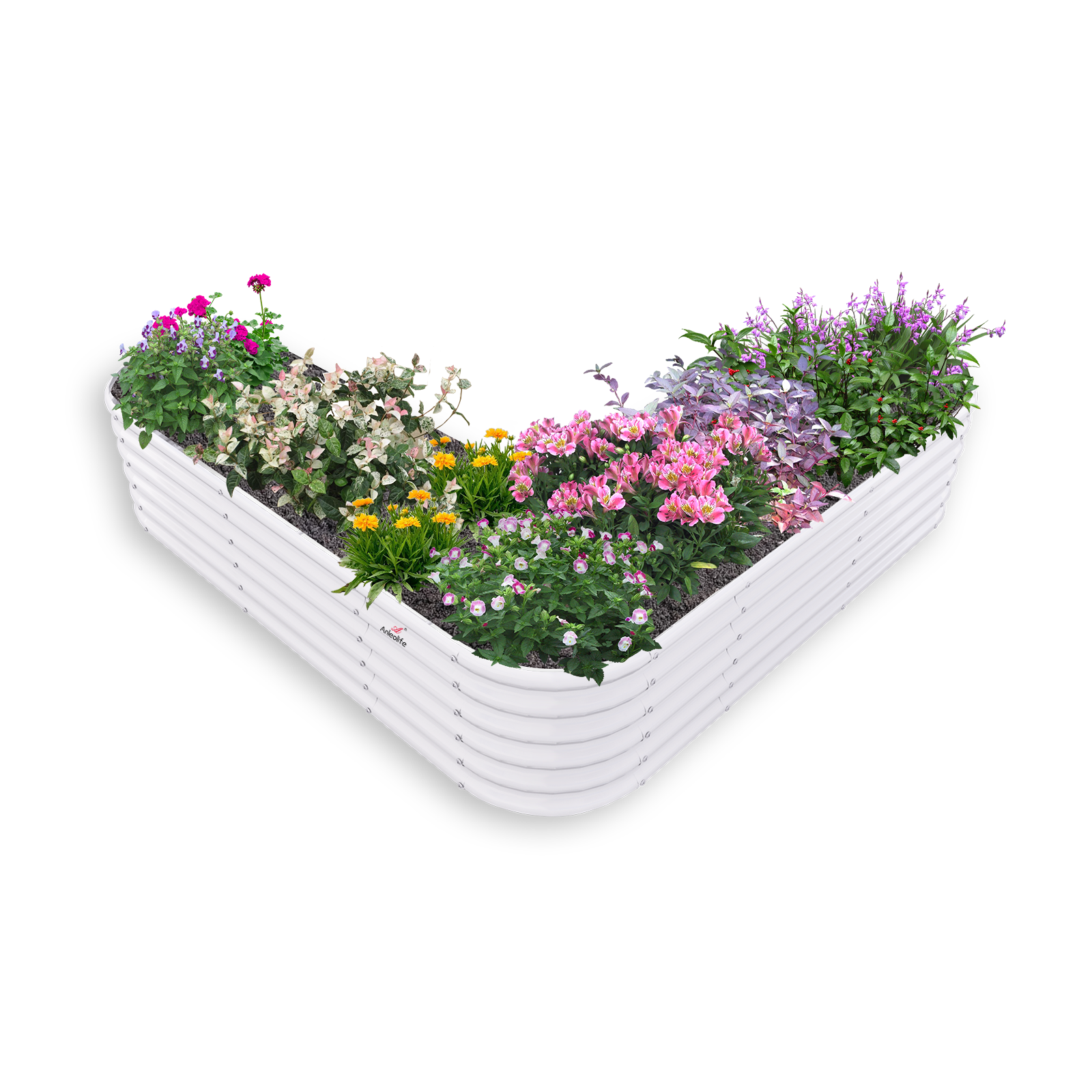
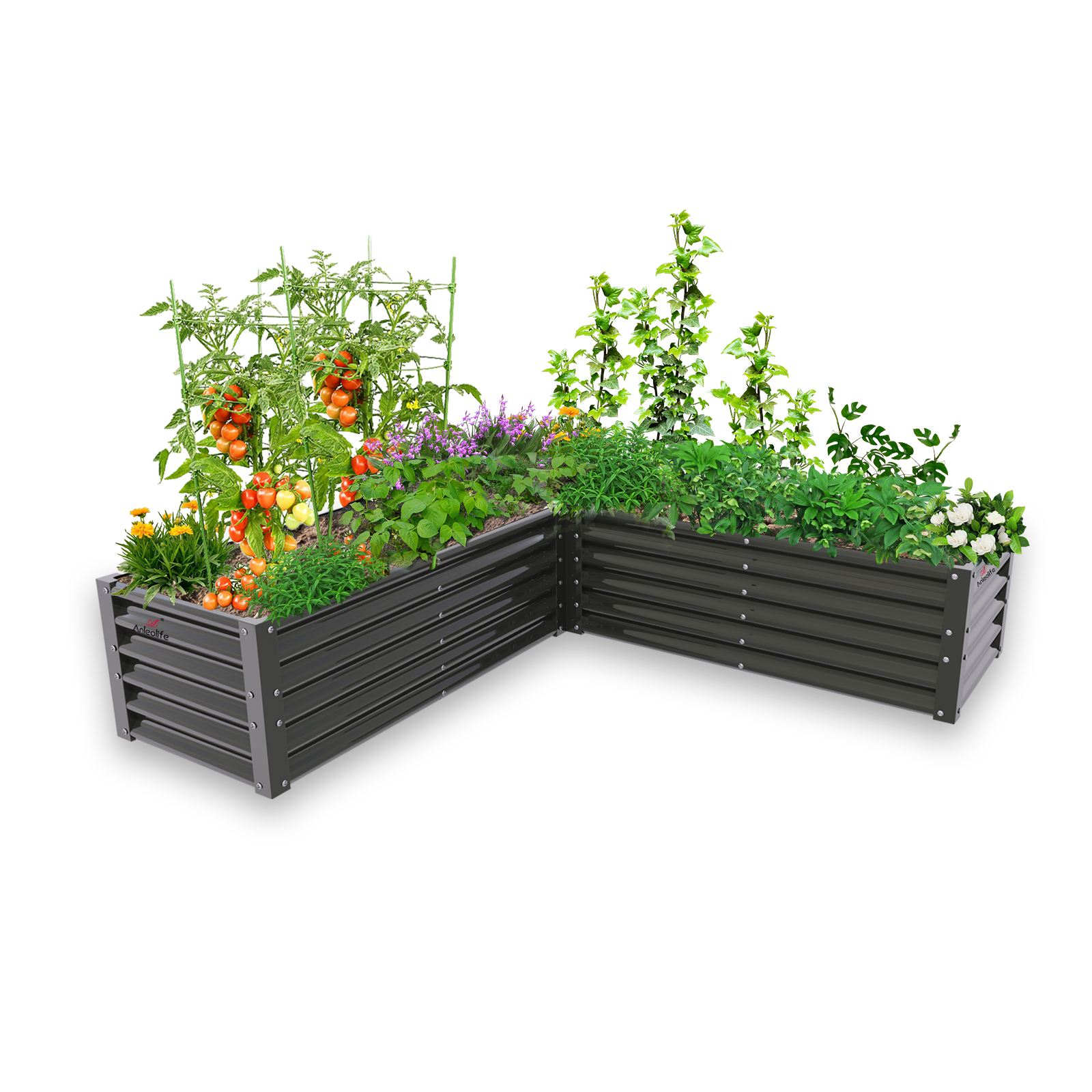
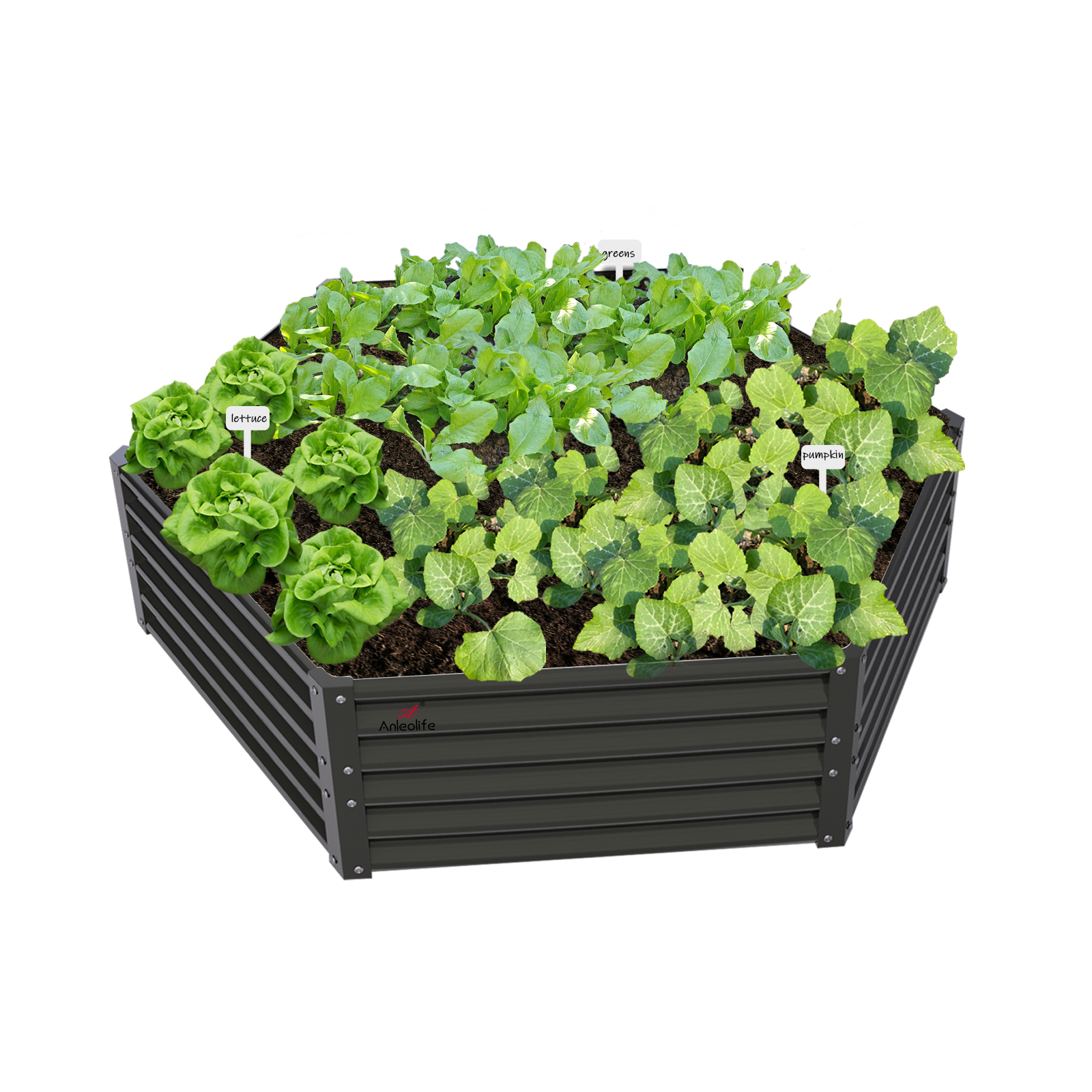
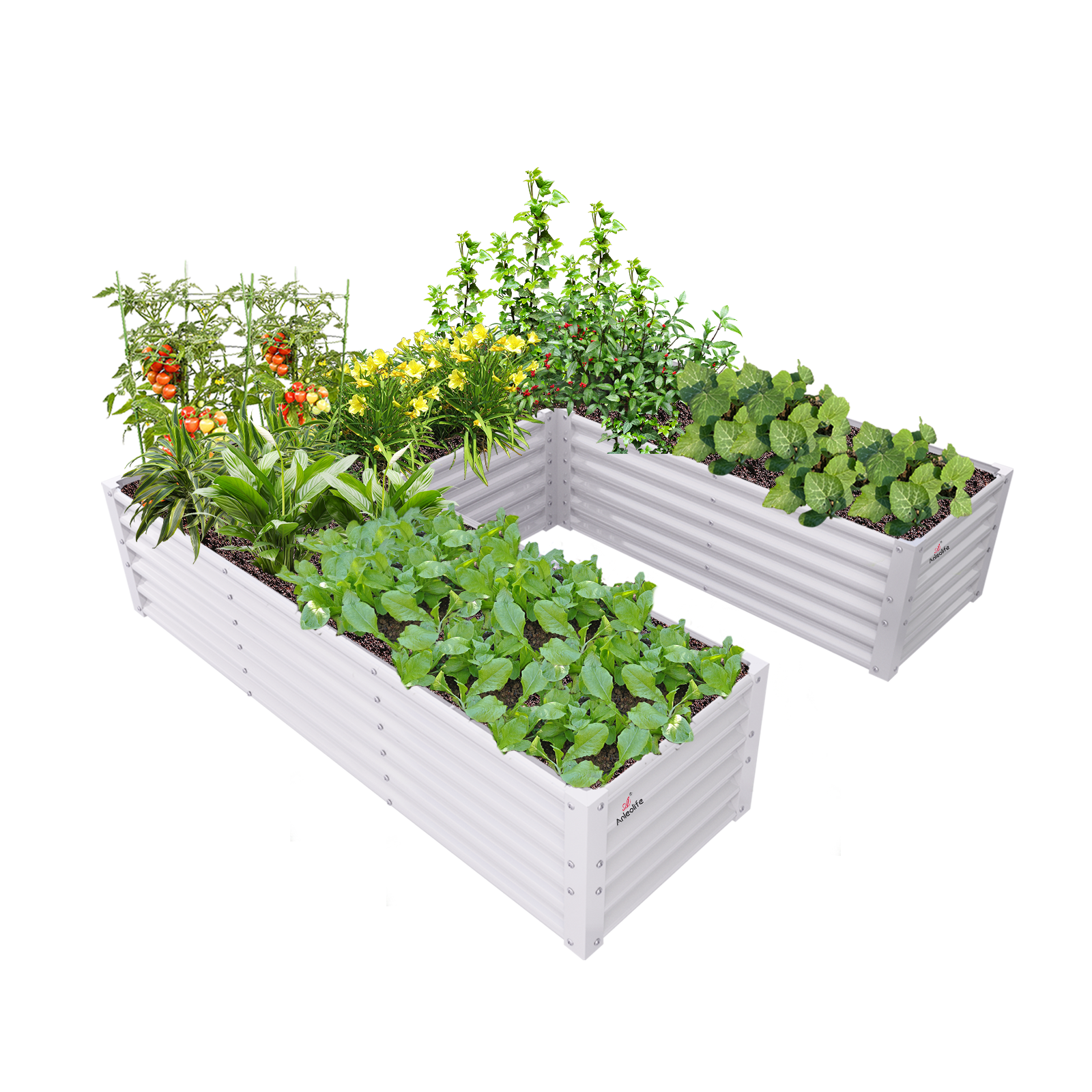

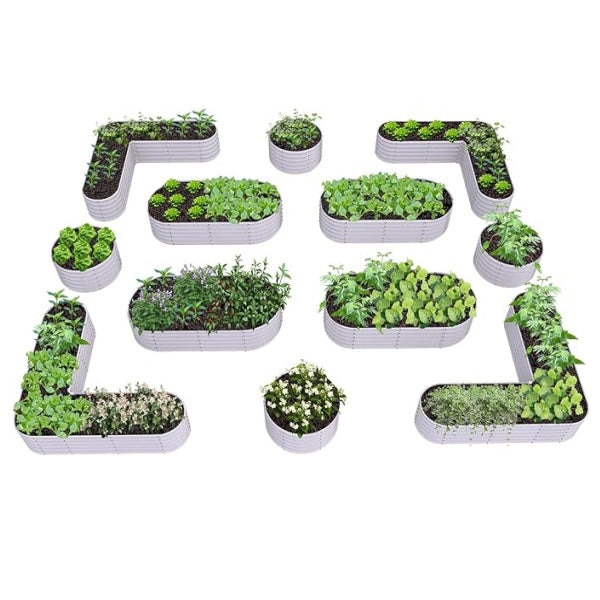

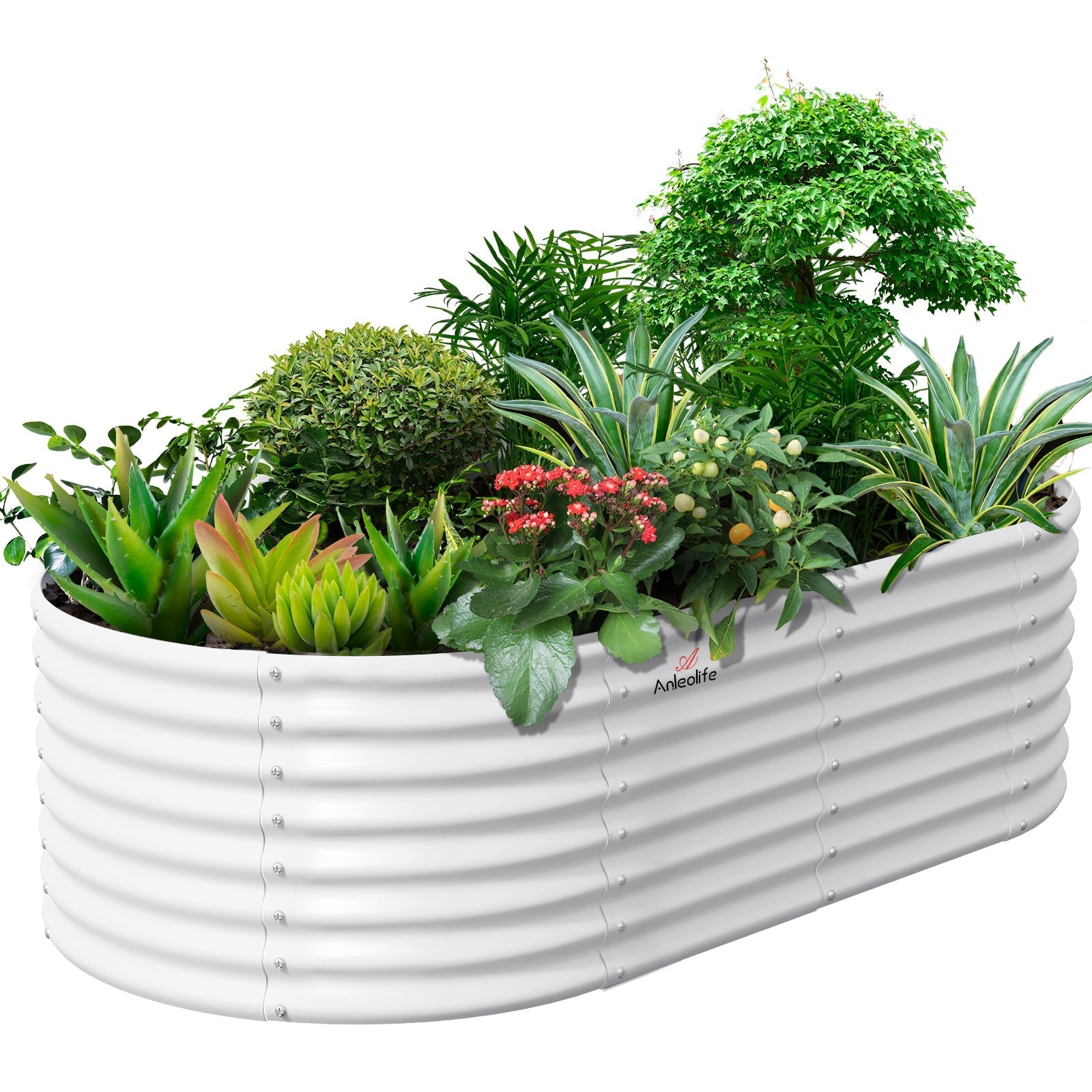


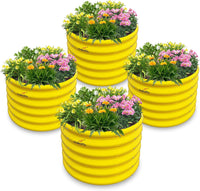
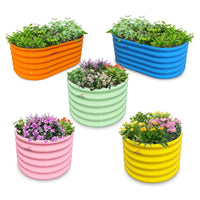
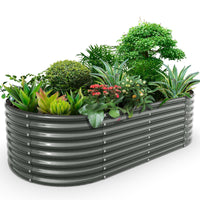



ALT: Best raised garden beds for small spaces narrow yards raised bed garden layout ideas
Finding the Right Raised Bed Garden Layout for Tight Spaces
Small yards and narrow side yards are among the most common constraints we hear about from home gardeners across North America. The good news is that a thoughtfully chosen raised bed garden layout can transform even the most awkward strip of outdoor space into a productive, beautiful growing area — without requiring a sprawling property or a professional landscaper.
This article lists the best raised garden bed options specifically selected for small spaces and narrow yards, evaluating each on footprint, height, material durability, and how naturally it fits into a compact raised bed planting layout. Whether you are working with a 3-foot-wide side yard, a balcony-adjacent patio, or a segmented backyard, these picks have been chosen because they genuinely solve the real problems that tight-space gardeners face.
The selection criteria prioritize three practical factors: the bed's physical footprint relative to common small-yard dimensions, structural durability that justifies the investment over many seasons, and flexibility to expand or rearrange as your raised bed layout evolves. Each item below is followed by a "Best for" and "Watch out" note so you can match a bed to your specific situation without guesswork.
The Best Raised Garden Beds for Small and Narrow Spaces
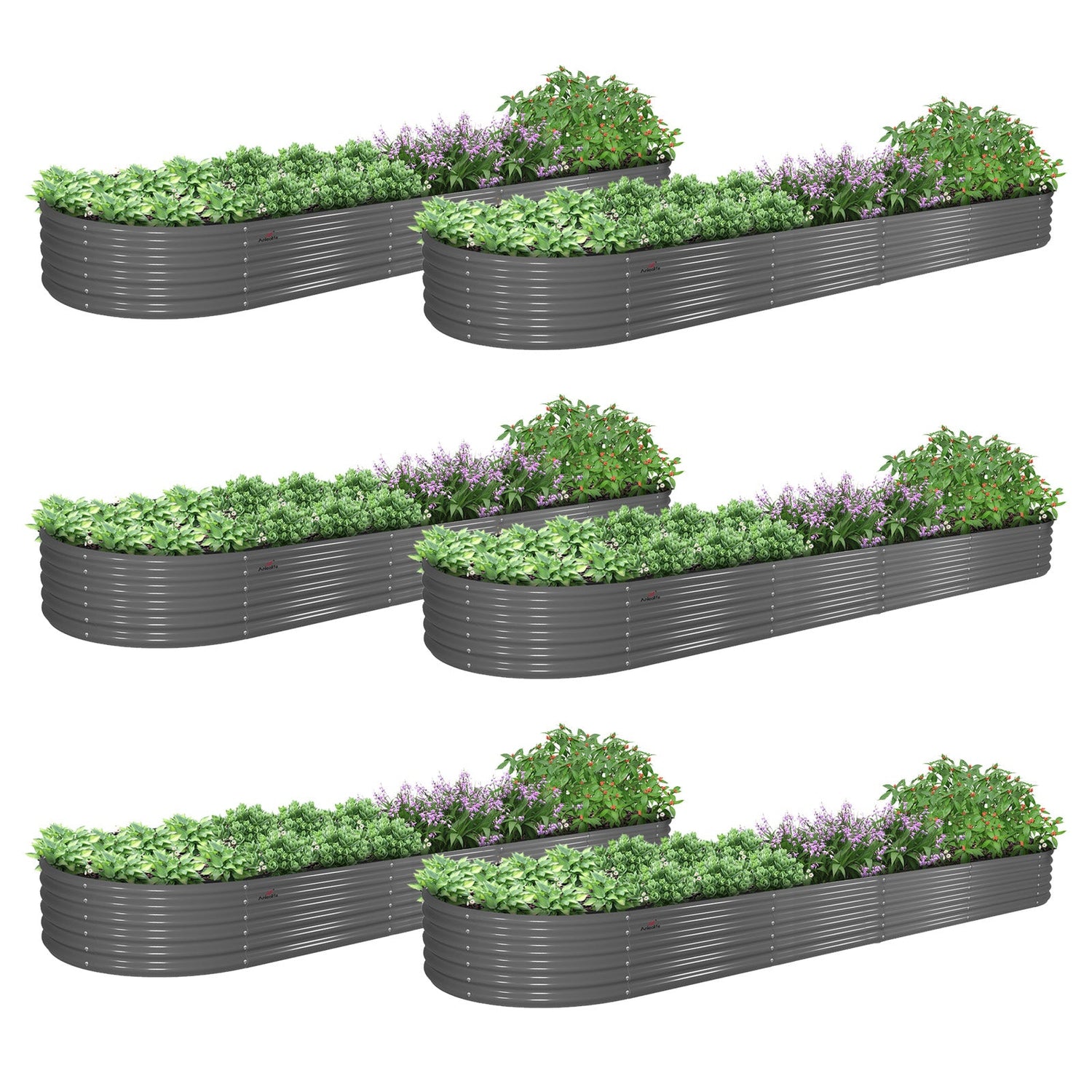
Long, Narrow Beds: The 12x3 ft Galvanized Steel Raised Garden Bed
A 12x3 ft galvanized steel raised garden bed is the go-to solution for narrow side yards and fence lines, because its elongated footprint hugs linear boundaries while delivering substantial planting surface area. At 18 inches tall, this configuration keeps the soil well above ground level, improving drainage and reducing back strain — two recurring wins we observe in our work with clients who are transitioning from in-ground plots to raised bed gardening for the first time.
The galvanized steel construction in Anleolife's 18" Tall 12x3 ft model resists corrosion season after season, and the material carries a documented lifespan of 20 years — making it a sound long-term investment for any permanent raised bed planting layout along a boundary wall or fence. The long, slim profile means you can reach the center of the bed from either side without stepping in, which is a practical ergonomic detail that matters enormously for daily tending.
- Best for: Side yards, fence lines, and any linear space where width is the limiting factor.
- Watch out: A 12-foot run requires careful planning of irrigation placement; a single drip line along the center of the bed is typically the most efficient approach.
Compact Square Format: The 4x4 ft Galvanized Steel Raised Garden Bed
A 4x4 ft raised garden bed is the classic compact format in raised bed garden layout design, because every corner of the bed is reachable from the perimeter with no need to step inside. Anleolife's 18" Tall 4x4 ft galvanized steel model fits naturally into corner spots, patio edges, and small backyard areas where a longer rectangular bed would feel oversized or unmanageable.
The square raised bed layout is also beginner-friendly: it aligns naturally with the Square Foot Gardening method, which recommends dividing the planting surface into a grid to maximize yield per square foot. University Cooperative Extension programs across the U.S. consistently reference this layout approach as one of the most productive strategies for small-space vegetable growing. The 4x4 footprint is wide enough to plant meaningful quantities of vegetables, herbs, or flowers without overwhelming a compact garden plan.
- Best for: Corner placements, patio edges, renters or homeowners with limited permanent outdoor space, and anyone new to raised bed gardening who wants a manageable starting footprint.
- Watch out: Soil volume is limited compared to larger beds, so plants with deep root systems — such as full-size tomatoes or winter squash — may need additional vertical support or a taller companion bed.
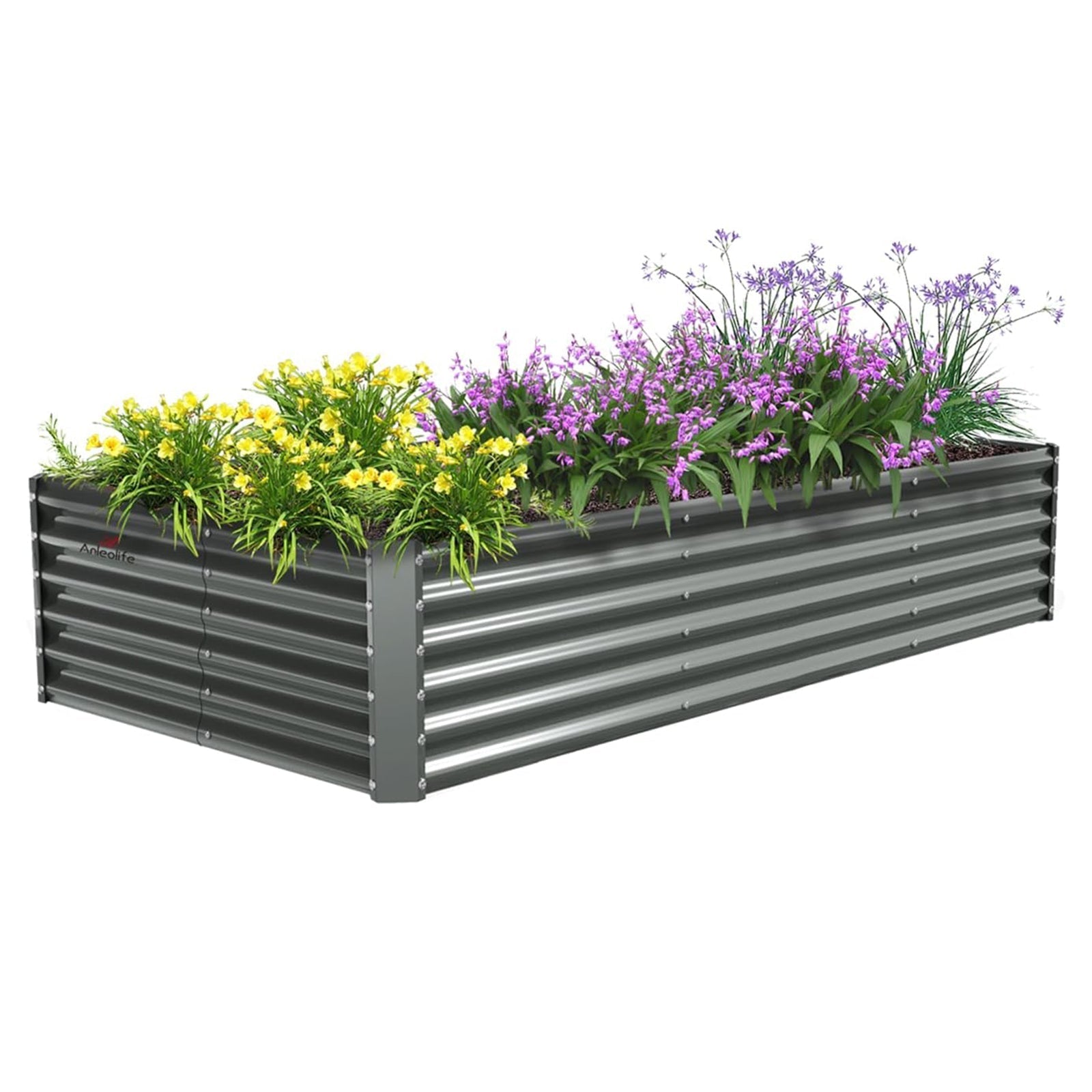
Mid-Size Rectangle: The 8x4 ft Galvanized Steel Raised Garden Bed
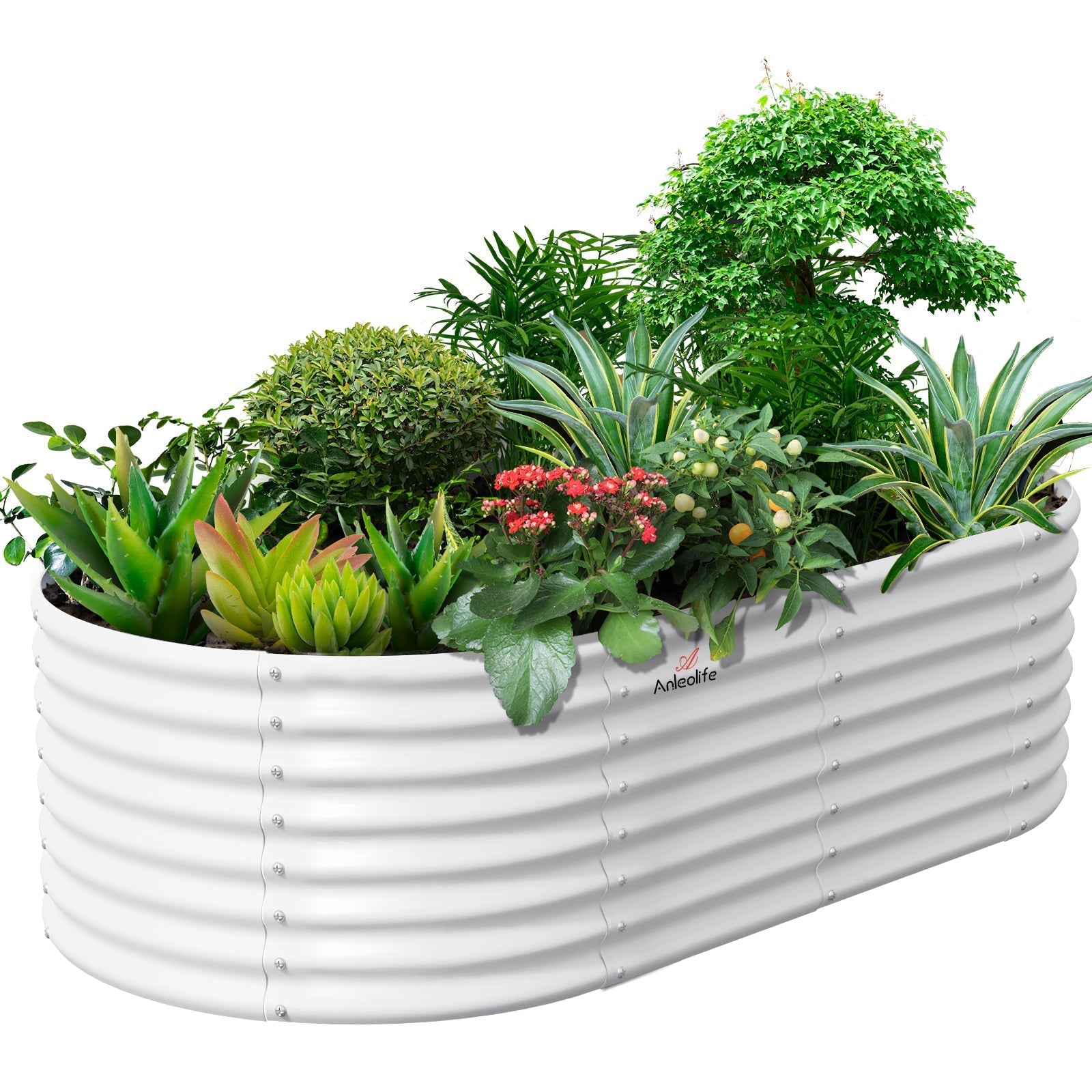
The 8x4 ft raised garden bed is the most versatile format in a compact raised bed layout, because it delivers roughly twice the planting area of a 4x4 bed while still fitting within most standard backyard zones and leaving walking clearance on all sides. Anleolife offers this footprint in multiple heights — 18" Tall, 24" Extra Tall, and 30" Extra Tall — which makes it adaptable to gardeners of different mobility needs and soil depth requirements.
In our experience working with home growers, the 24" Extra Tall 8x4 ft model is particularly popular among empty nesters and retirees who want to garden without prolonged kneeling or bending. The deeper wall also accommodates a thicker soil system, which is important for root vegetables and perennial herbs that need more vertical growing room. If you are building out a full raised bed garden layout over time, the 8x4 format is also the easiest to pair with row covers, trellises, and drip irrigation accessories.
- Best for: Gardeners who want meaningful production capacity in a mid-size footprint, and anyone planning to grow root vegetables, deep-rooted herbs, or climbing plants.
- Watch out: An 8-foot bed needs clearance on its long sides for comfortable access; ensure at least 18–24 inches of walking space on each long edge before committing to the placement.
Extra-Narrow Strip Bed: The 6x3 ft or 6x2 ft Modular Raised Garden Bed
Strip gardens — those narrow runs of space between a fence and a path, or beside a garage wall — are notoriously difficult to use productively. The 6x3 ft and 6x2 ft raised bed formats solve this by offering a shorter, narrower planting surface that can be placed in spaces where a standard 8x4 ft bed would not physically fit. Anleolife's Modular Raised Garden Bed line includes an 18" Tall 6x2 ft option that is particularly well-suited to genuine micro-footprint situations.
The modular design is a meaningful advantage in small-yard raised bed layout planning: panels can be reconfigured or expanded over time as your space or ambitions grow, without needing to buy an entirely new structure. As a practical note on material quality, understanding rust-resistant garden bed materials is especially important for narrow strip beds, which are often positioned in shadier, damper microclimates where inferior steel degrades more quickly.
- Best for: True strip gardens, narrow side yards under 3 feet wide, and gardeners who want to start small and expand their layout incrementally.
- Watch out: A 6x2 ft bed has limited soil volume per bed; plan on pairing multiple units side by side or end to end as your layout grows.
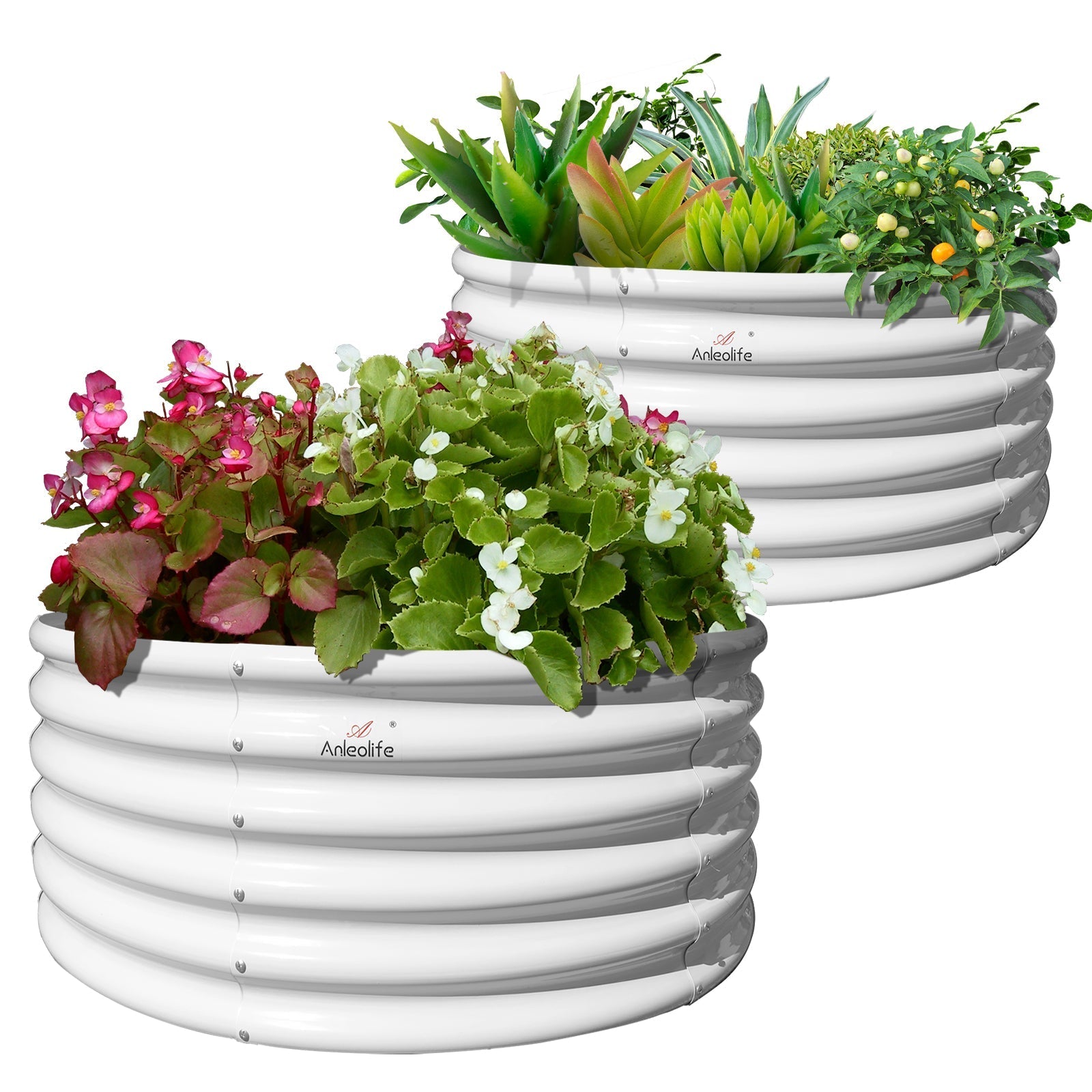
Round Raised Garden Bed: The 18" Tall 48" Wide Round Bed
A round raised garden bed is a raised bed built in a circular form, typically used as a focal point planting feature or a space-efficient standalone unit in areas where rectangular beds feel too rigid. Anleolife's 18" Tall 48" Wide Round Raised Garden Bed delivers a full 48-inch-diameter growing circle, which accommodates a surprisingly diverse planting scheme — herbs, salad greens, compact flowers — in a footprint that fits naturally into corners, patio centers, or alongside walkways.
The circular form is an underused strategy in raised bed garden layout design. Because access is equal from all points around the perimeter, every inch of the planting surface is reachable, and the shape visually softens hardscaped spaces that would otherwise feel monotonous with only rectangular structures. For urban micro-gardeners working with patios or courtyard spaces, a round bed placed alongside a rectangular companion bed creates an interesting, layered raised bed planting layout that reads as intentional and designed rather than improvised.
- Best for: Patio centers, courtyard focal points, accent planting near seating areas, and anyone who wants to break up the monotony of an all-rectangular garden layout.
- Watch out: The round format does not tile efficiently with rectangular beds, so leave-space planning is important if you intend to place multiple units together.
Waist-High Accessibility Bed: The 35" Waist-High 4x1.5 ft Galvanized Steel Bed
A waist-high raised garden bed is a tall-format bed positioned at standing height so that gardening activities require no bending or kneeling whatsoever. Anleolife's 35" Waist-High 4x1.5 ft Galvanized Steel Bed is the tallest option in the lineup and the most focused on physical accessibility — a pattern we consistently see requested by retirees, gardeners with back conditions, and anyone recovering from surgery who wants to maintain an active garden practice without physical strain.
At 1.5 feet wide, this bed is also the narrowest format in the collection, which makes it a natural fit for balcony railings, deck edges, and narrow terrace spaces where a standard 3- or 4-foot-wide bed would simply not fit. The slim profile does limit the planting variety compared to wider beds, but for herbs, salad greens, strawberries, and compact flowers, the 4x1.5 ft footprint is entirely adequate. This is also a meaningful option for gardeners who want to introduce a small raised bed planting layout without committing to a larger structure first.
- Best for: Gardeners with mobility limitations, balcony and deck spaces, and anyone who needs a fully accessible raised bed at a standing working height.
- Watch out: The narrow width means plants with wide horizontal spread — such as sprawling squash or large-leaf herbs — will quickly overwhelm the bed; stick to upright or compact varieties.
Extra-Tall Deep-Soil Format: The 30" Extra Tall 6x3 ft or 10x3 ft Raised Garden Bed
A 30-inch extra-tall raised garden bed provides the deepest standard soil column in Anleolife's lineup, making it the best choice for gardeners who want to grow root vegetables — carrots, parsnips, beets — or establish perennial plants that require a deep, undisturbed soil system. The 6x3 ft footprint keeps the narrow-yard-friendly proportions while delivering exceptional soil depth, and the 10x3 ft version extends that same depth across a longer run for higher-yield production layouts.
The deep-soil advantage is not just about plant performance. According to information from the U.S. Department of Agriculture's Natural Resources Conservation Service, soil structure and depth are primary determinants of water retention, drainage, and root health — all of which are improved when a thick soil column is separated from compacted or degraded native ground. In a compact raised bed layout, getting the soil system right from the start is one of the most important decisions you can make, and a 30-inch wall gives you the physical capacity to build a genuinely layered, high-performance growing medium. For more on best soil composition for organic vegetable raised beds, it is worth reviewing established guidance before filling any deep-wall bed for the first time.
- Best for: Root vegetable production, perennial herb beds, and experienced gardeners who want to invest in a high-performance soil system inside a narrow-yard-friendly footprint.
- Watch out: A 30-inch-tall bed requires more fill material than standard-height beds; budget appropriately for soil, compost, and drainage layers before purchasing.
Rust-Resistant Raised Garden Bed: The 18" or 24" Tall Rust-Resistant Line
Anleolife's Rust-Resistant Raised Garden Bed line is a distinct product category engineered specifically for high-moisture environments — coastal climates, areas with frequent rain, shaded side yards where condensation lingers, and any space where standard galvanized steel might face accelerated weathering. Available in multiple footprints including 18" Tall 6x3 ft, 18" Tall 8x4 ft, and 24" Extra Tall 6x3 ft among others, this line covers most of the common small-space raised bed layout configurations.
Material choice matters significantly in a permanent raised bed planting layout. A bed that degrades within a few seasons forces you to rebuild your layout, re-amend your soil, and replace your investment — all avoidable costs. Beds from the rust-resistant line, like all Anleolife raised garden beds, carry a 20-year lifespan rating, giving small-space gardeners confidence that the raised bed layout they plan today will perform reliably well into the future. If you want to go deeper on material comparisons before deciding, this comparison of galvanized versus powder-coated steel provides a useful framework for the decision.
- Best for: Coastal properties, high-rainfall climates, shaded or semi-enclosed side yards, and any placement where moisture exposure is above average.
- Watch out: Rust-resistant coatings still benefit from occasional inspection, especially at cut edges or fastener points; check annually to maintain long-term performance.
Quick Comparison at a Glance
| Bed Format | Best For | Key Strength | Limitation |
|---|---|---|---|
| 12x3 ft Galvanized (18" Tall) | Fence lines, side yards | Maximum linear planting length in narrow footprint | Irrigation planning required for full length |
| 4x4 ft Galvanized (18" Tall) | Corners, patios, beginners | Ergonomic all-around reach; beginner-friendly | Limited depth for large root vegetables |
| 8x4 ft Galvanized (18"–30" Tall) | Mid-size yards, serious growers | Versatile height options; strong production capacity | Needs perimeter clearance on long sides |
| 6x2 ft Modular | Strip gardens, micro-yards | Reconfigurable; fits genuinely tight spaces | Low per-bed soil volume; best used in sets |
| 48" Wide Round (18" Tall) | Patios, courtyards, focal points | Aesthetic versatility; full-perimeter access | Does not tile efficiently with rectangular beds |
| 35" Waist-High 4x1.5 ft | Accessible gardening, decks | Fully standing-height access; deck-friendly width | Narrow planting surface limits variety range |
| 30" Extra Tall 6x3 ft / 10x3 ft | Root vegetables, deep soil systems | Maximum soil depth; excellent for root crops | Higher fill cost; substantial structural weight |
| Rust-Resistant Line (Multiple) | Coastal and high-moisture climates | Purpose-built for damp environments; 20-year lifespan | Regular inspection of edges and fasteners advised |
How to Choose the Right One for Your Space
Choosing the right raised bed for a small or narrow yard comes down to one honest first step: measuring your actual available footprint — not what you think it is, but what it is with a tape measure in hand. A common misconception among first-time raised bed gardeners is that a "small" yard can accommodate any compact bed. In practice, a 6x3 ft bed still needs walking clearance on at least one long side, and a waist-high bed needs overhead clearance if it is placed under a pergola or low-hanging branches.
Once you have your dimensions, match your space to a bed format using these practical decision points:
If your available space is primarily linear — a fence line, a wall, or a path edge — the 12x3 ft or 10x3 ft long rectangle is the most efficient use of that geometry. The long axis runs parallel to the boundary, and the narrow width keeps everything within arm's reach.
If your available space is a compact zone — a corner, a patio section, or a defined square area — the 4x4 ft or 8x4 ft formats will serve you better. The 4x4 is the starting point for a single-bed raised bed garden layout; the 8x4 is the right step up when you want more planting volume without dramatically increasing the footprint.
If physical accessibility is a priority, start with the waist-high 4x1.5 ft bed and consider pairing it with a second unit to increase total planting area. This combination gives you a genuinely functional raised bed planting layout that can be tended entirely from a standing position.
If moisture exposure is high in your intended location — coastal fog, a shaded courtyard, a wet climate — prioritize the rust-resistant line regardless of footprint. A bed that holds up across decades protects both your soil investment and your raised bed layout design. New buyers planning their first purchase can also benefit from reviewing a first-time buyer's guide to sizing a raised garden bed kit before committing to a size.
The most common misconception we encounter is that a single large bed is always better than multiple smaller beds. In tight spaces, the opposite is often true: two or three well-placed smaller beds create a more functional, navigable raised bed garden layout than one oversized bed that leaves no comfortable working room around it.
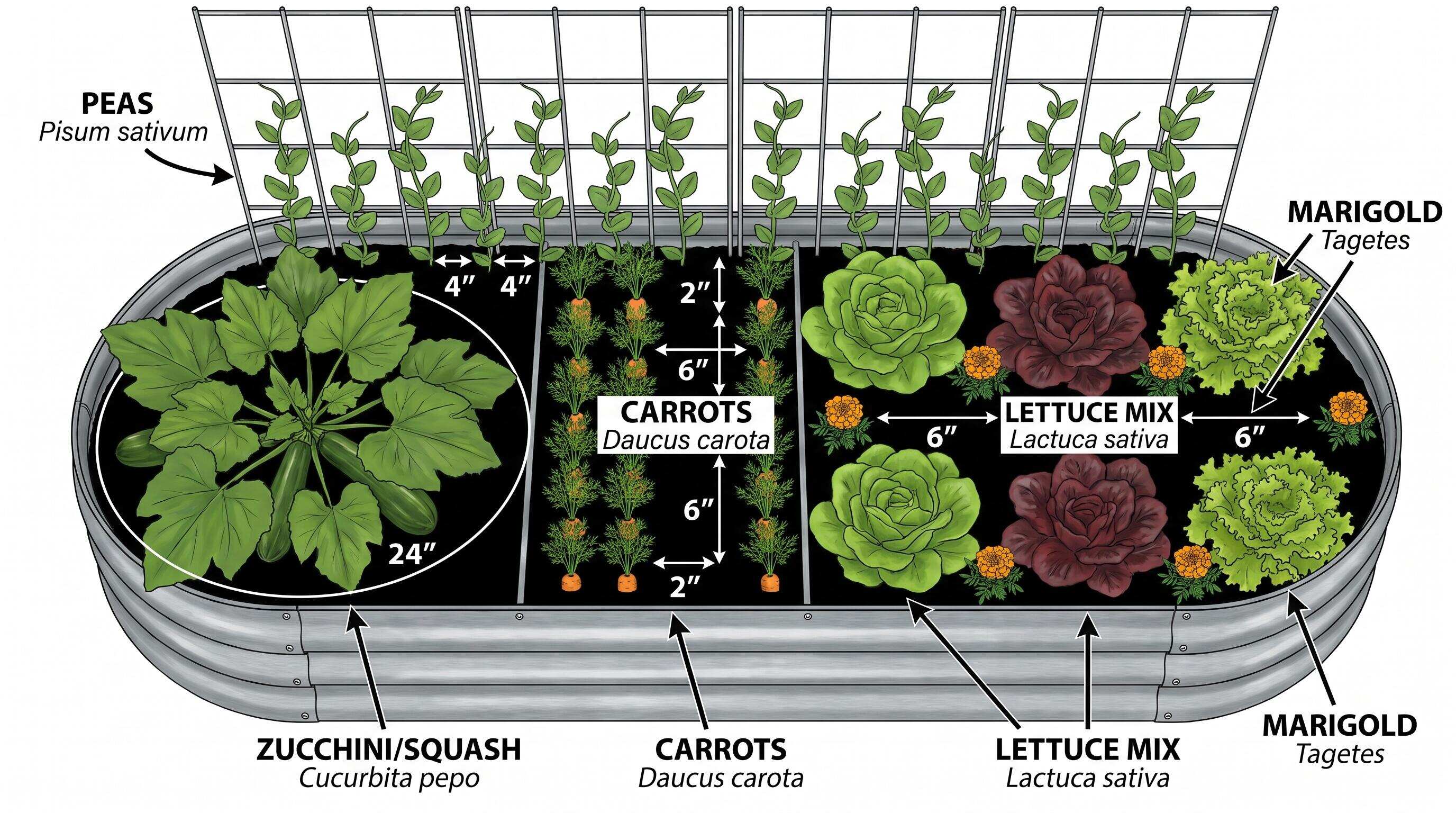
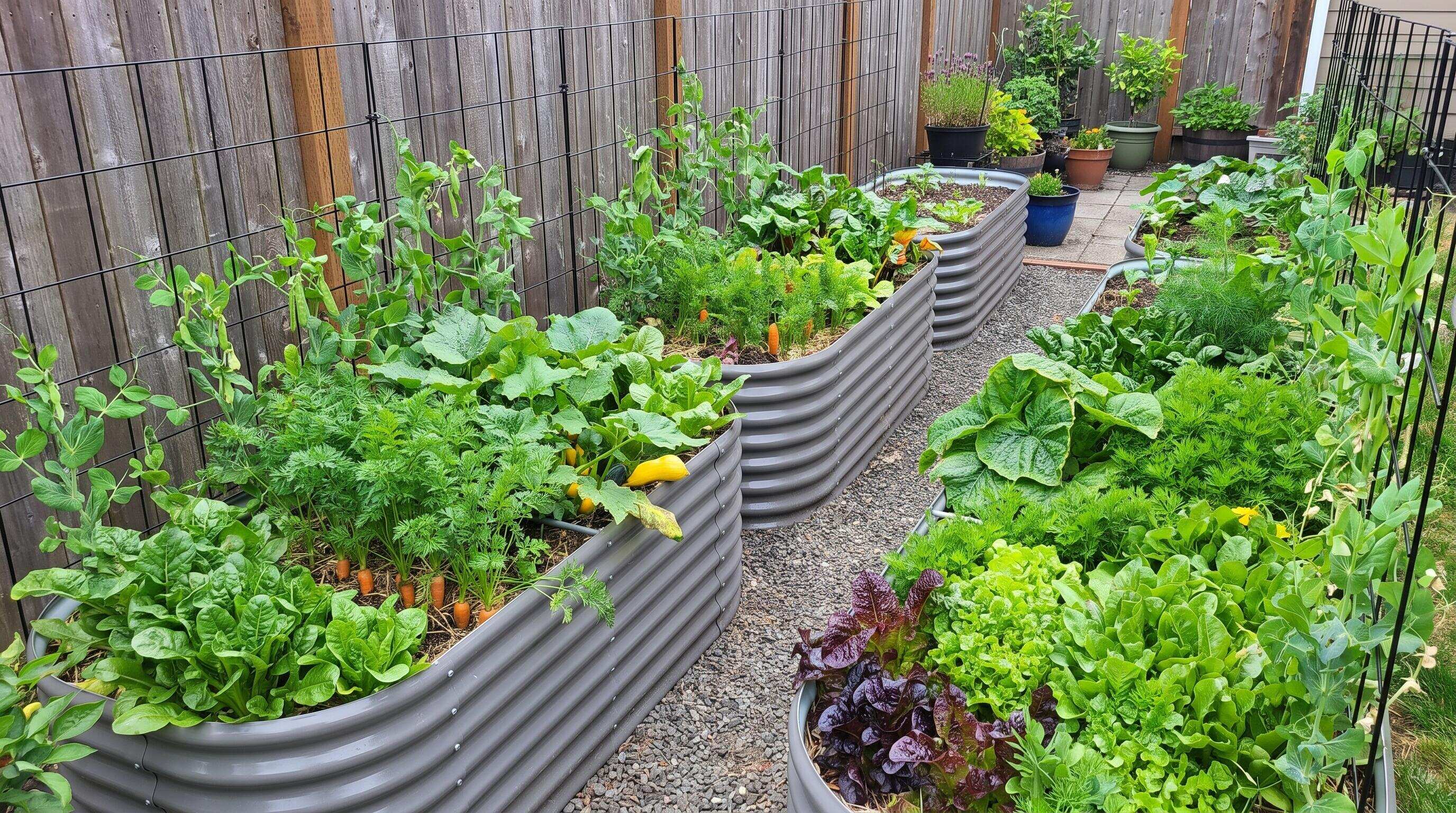
ALT: Compact raised bed garden layout planning for narrow yards small spaces with galvanized steel beds showing planting arrangement and spacing
People Also Ask
How do I plan a raised bed garden layout for a narrow yard?
Planning a raised bed garden layout for a narrow yard starts with measuring the full length and usable width of the space, then selecting bed formats that leave at least 18 inches of walking clearance on access sides. Long, narrow beds — such as a 12x3 ft or 6x3 ft format — run parallel to fences or walls and maximize planting area without consuming walking space. Grouping two or three modular beds end to end is a practical alternative when a single long bed is not available.
Are galvanized steel raised garden beds safe for growing vegetables?
Galvanized steel raised garden beds are widely used for vegetable production and are considered safe for food growing. The zinc coating used in galvanization has been reviewed by horticulture and food safety researchers, with general consensus among Cooperative Extension programs at land-grant universities that modern galvanized steel does not leach harmful levels of zinc into soil under typical garden conditions. The soil itself acts as a buffer, and zinc is also an essential micronutrient for plants in trace amounts. Anleolife's galvanized steel beds carry a 20-year lifespan rating, reflecting the durability of the material under sustained outdoor use.
How much does it cost to fill a raised garden bed in a small yard?
Soil fill cost for a raised garden bed depends on the bed's volume and your local material prices. A common approach recommended by extension horticulturalists is the "lasagna" or layered method: filling the bottom third with coarse organic material (wood chips, straw, cardboard), the middle layer with compost-rich topsoil, and the top layer with a high-quality planting mix. This reduces the volume of premium soil required and improves long-term drainage. For smaller beds — 4x4 ft or 6x3 ft formats — material costs are proportionally lower, making compact raised bed layouts more economical per bed to set up than large single-bed installations.
Final Thoughts
Small spaces do not require small ambitions. The most productive raised bed garden layouts we see are not the largest — they are the ones that match bed size and format to the actual geometry of the space, prioritize durable materials that eliminate rebuild costs, and leave enough working clearance to make gardening physically enjoyable season after season.
Three points worth carrying forward: first, measure before you buy — the right footprint chosen precisely beats an approximate guess every time. Second, invest in material quality, because a 20-year lifespan bed pays for itself many times over compared to lower-cost alternatives that degrade within a few seasons. Third, think in systems rather than single beds — a well-planned raised bed planting layout with complementary bed sizes and shapes will outperform a single oversized bed placed in the wrong spot.
The next practical step is to sketch your available space — even a rough sketch with dimensions is enough — and match it against the bed formats in the comparison table above. From there, the right raised bed garden layout becomes a straightforward selection rather than a guessing game.
Ready to build the garden layout your space deserves? Explore the full Anleolife range of galvanized steel and rust-resistant raised garden beds at the Anleolife website — available with delivery in 3–8 business days through a nationwide U.S. warehouse network across California, Texas, Florida, New York, Illinois, and Washington. Whether you are placing your first 4x4 ft bed or building out a multi-bed planting ecosystem, Anleolife's products are also available on Amazon, Walmart, Home Depot, Lowe's, and Wayfair for consistent quality assurance wherever you prefer to shop. Start small, plan well, and grow with confidence — your garden layout will evolve with you every step of the way.
References & Further Reading
- U.S. Department of Agriculture, Natural Resources Conservation Service. "Soil Health Principles and Resources."
https://www.nrcs.usda.gov/ - U.S. Environmental Protection Agency. "Safer Choice and Garden Inputs: Environmental Guidance for Home Growers."
https://www.epa.gov/ - American Society for Horticultural Science. "Research and Standards in Vegetable Production and Soil Systems."
https://www.ashs.org/ - ASTM International. "Standards for Metallic-Coated Steel Products and Corrosion Resistance Testing."
https://www.astm.org/
Note: Standards may be updated; please check the latest official documents or consult professional advisors.