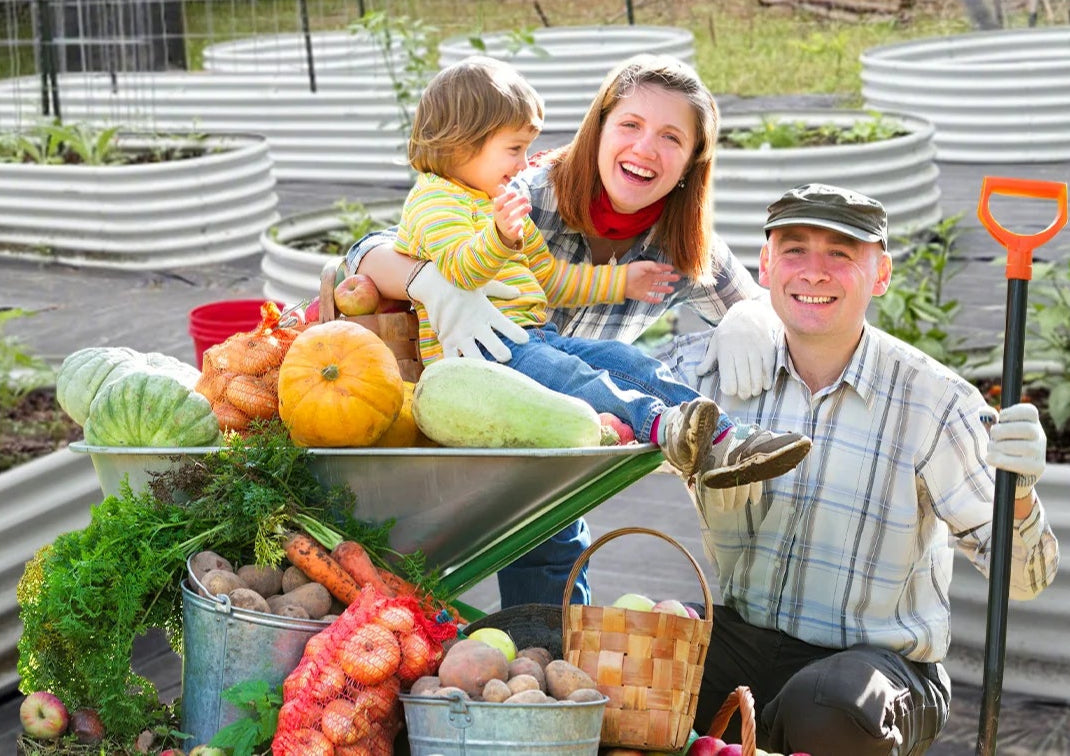



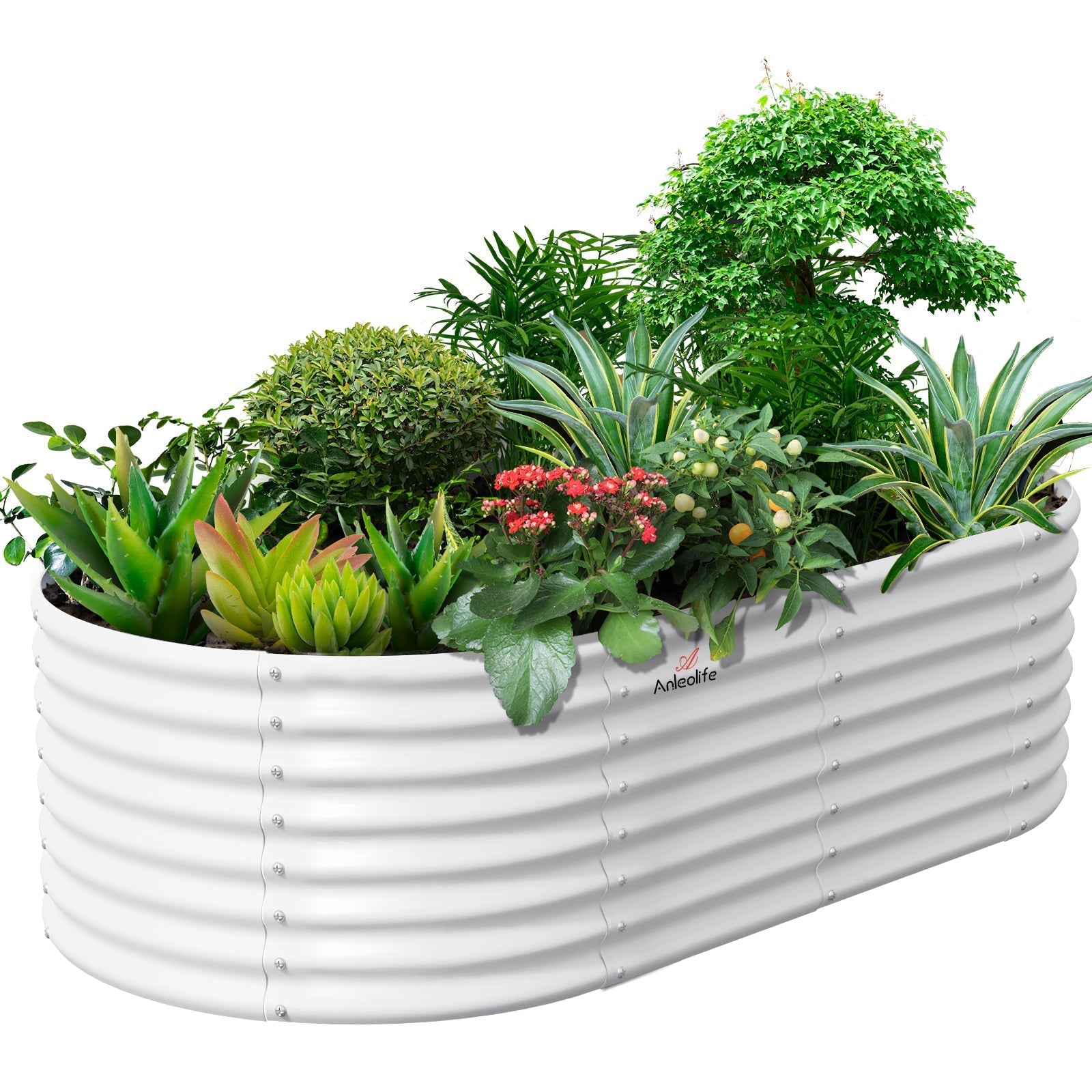
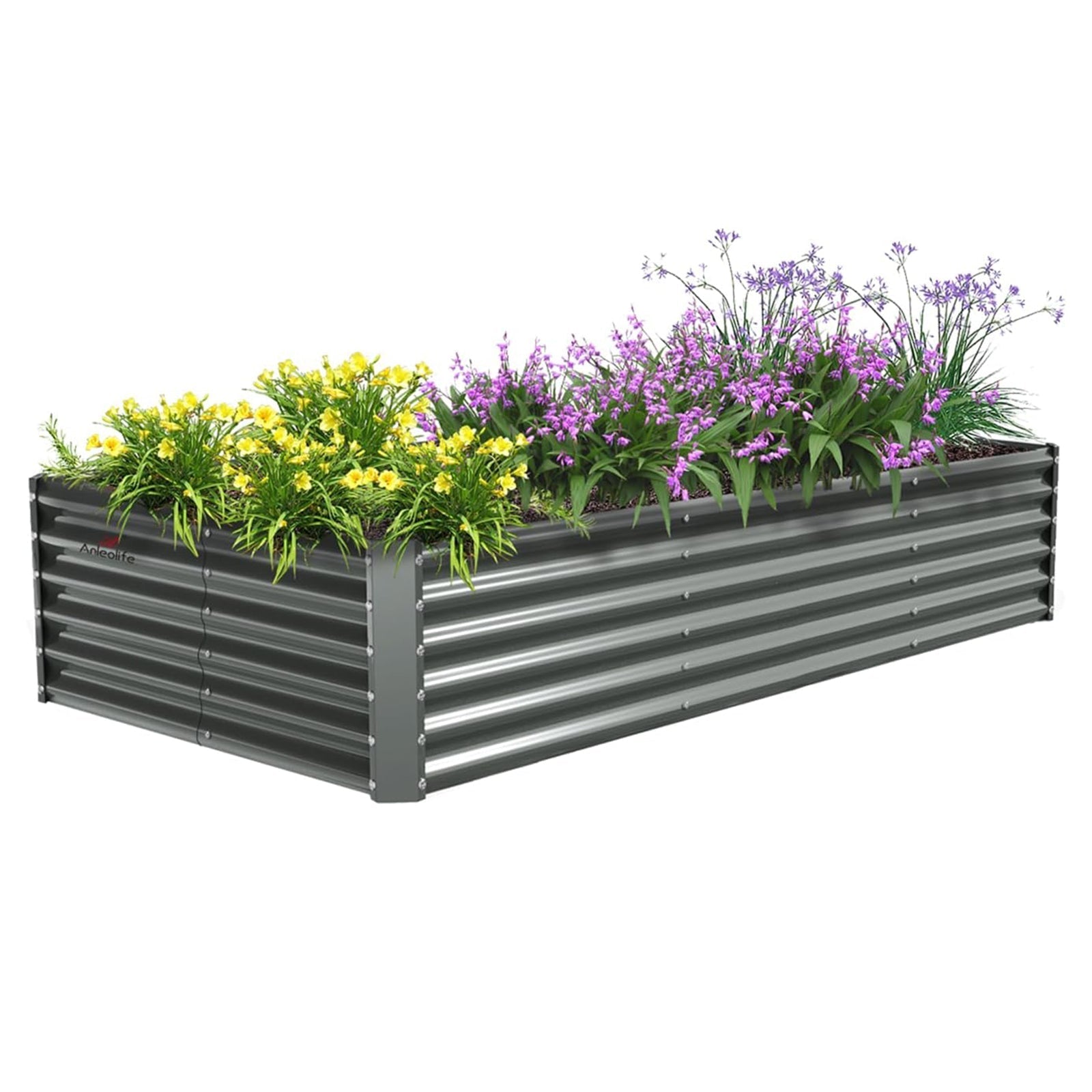

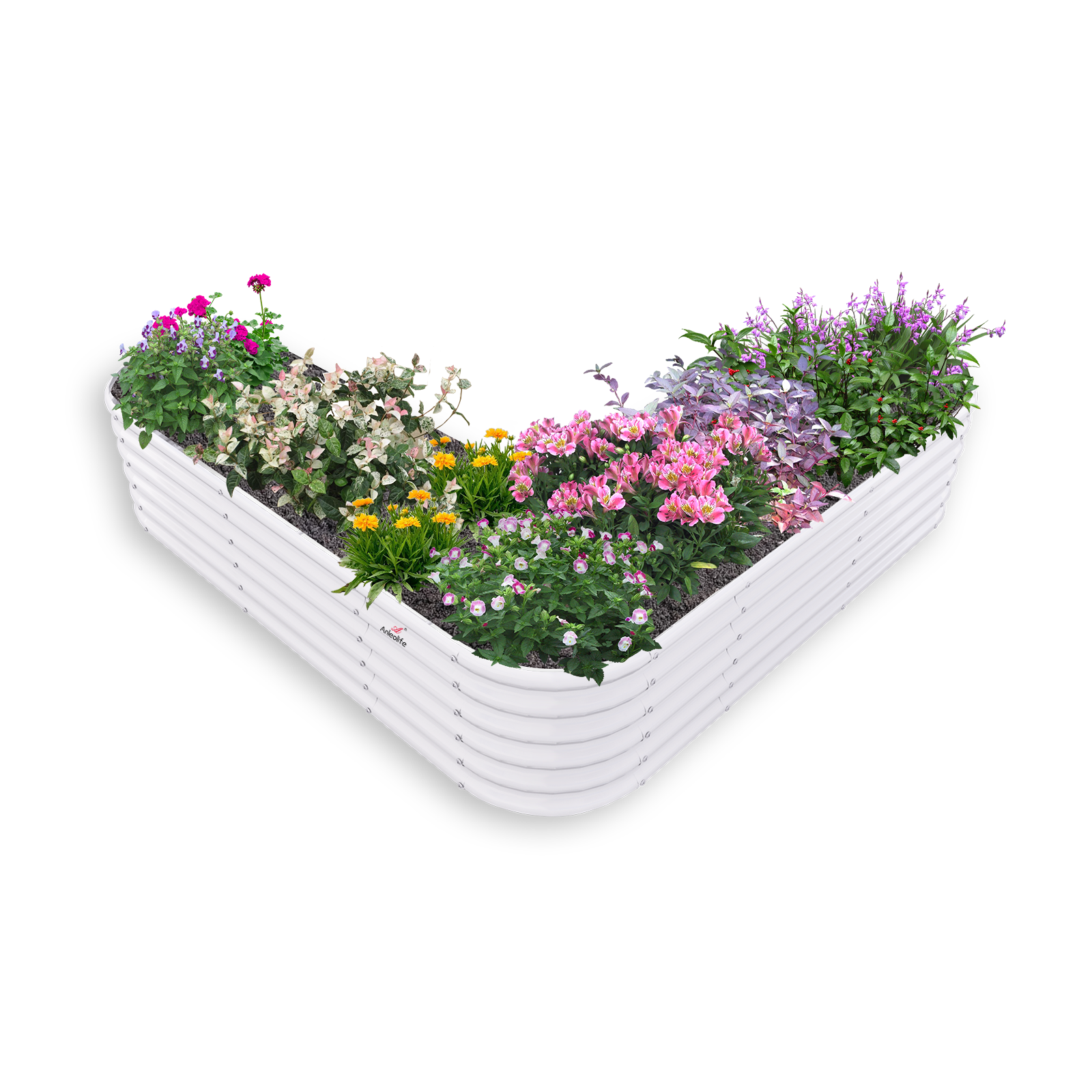
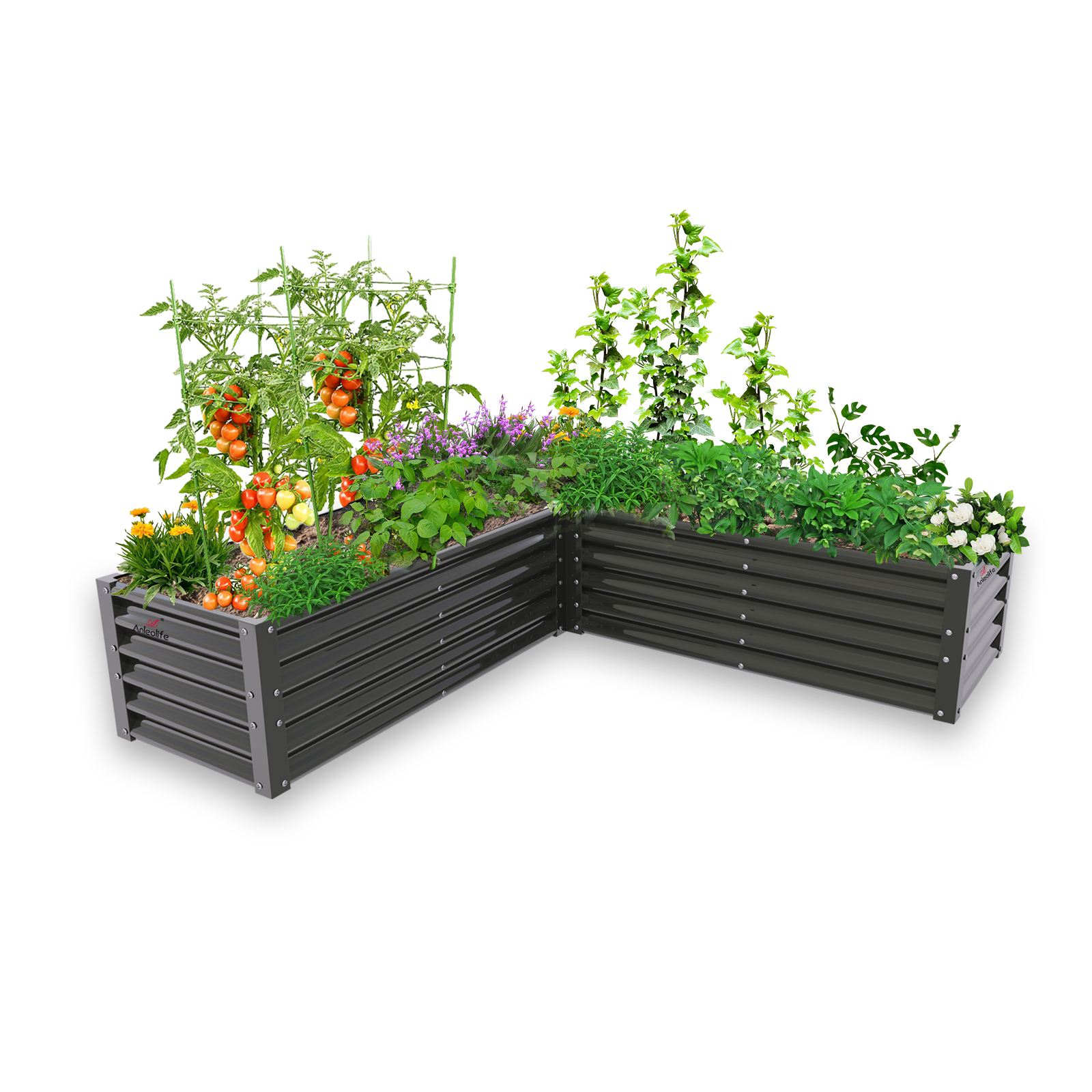
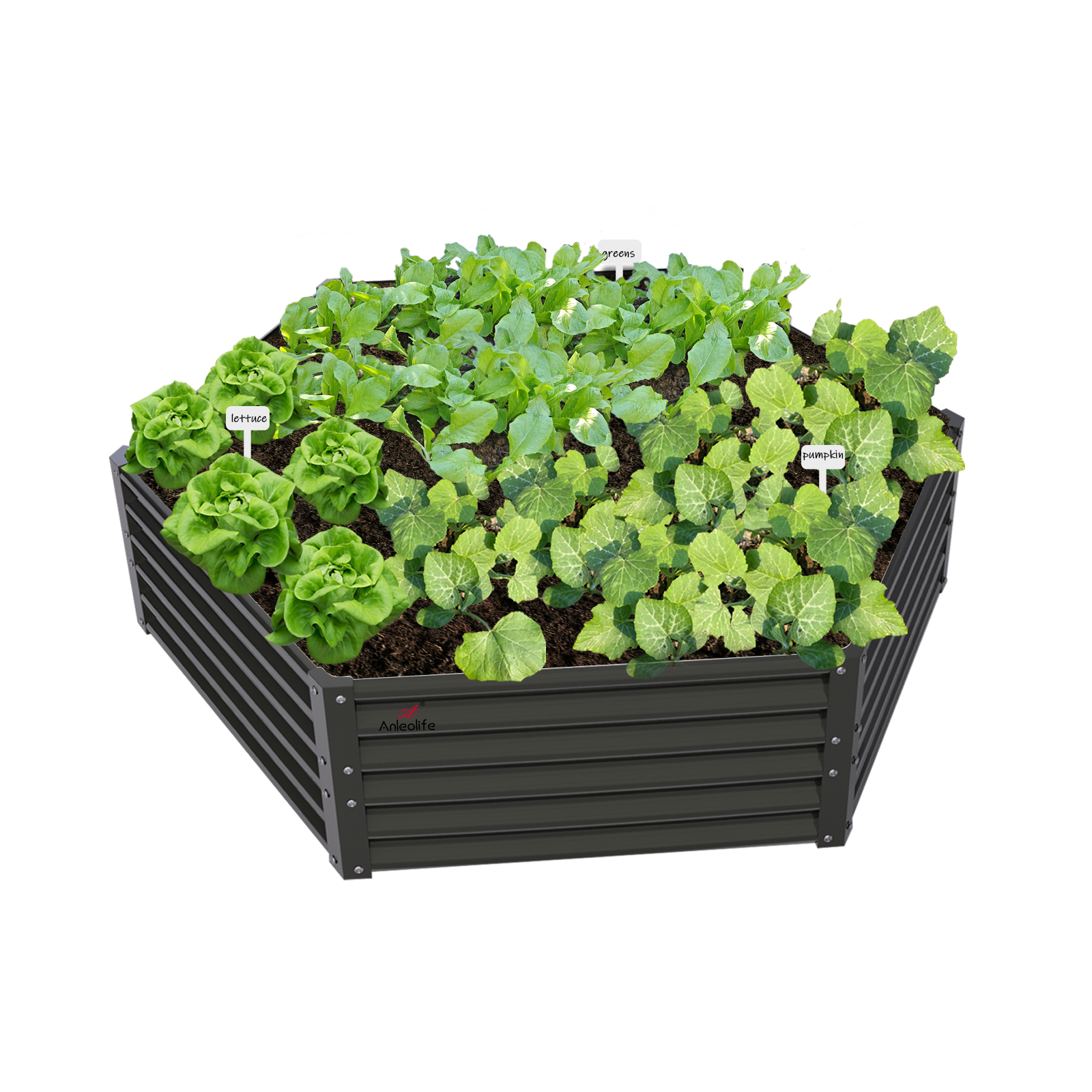
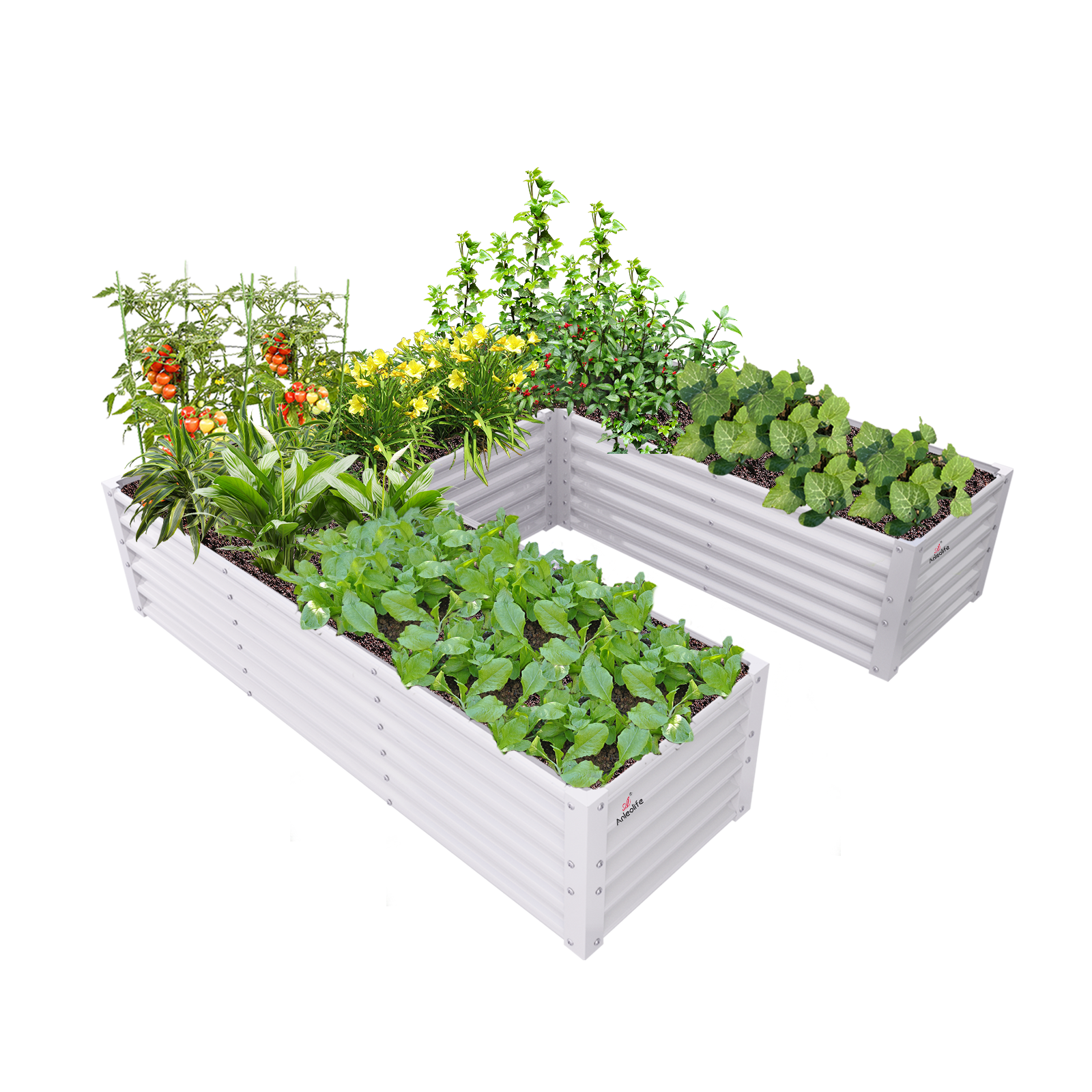

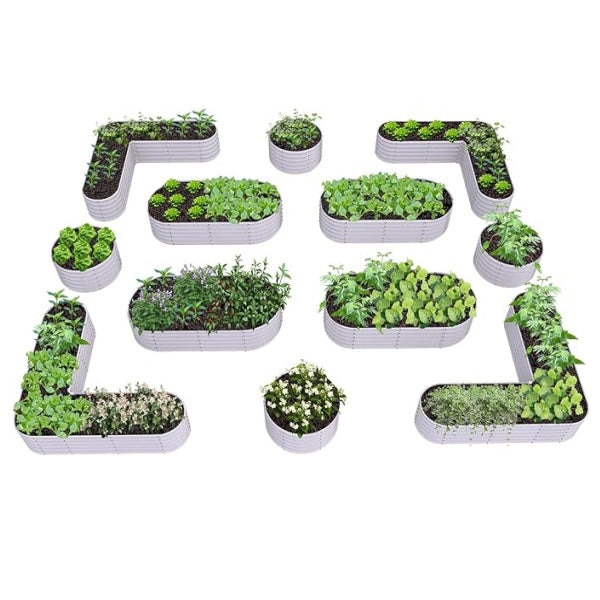


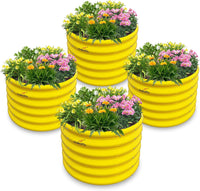
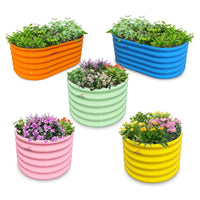
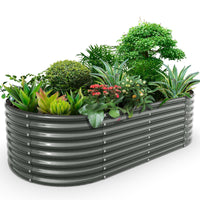



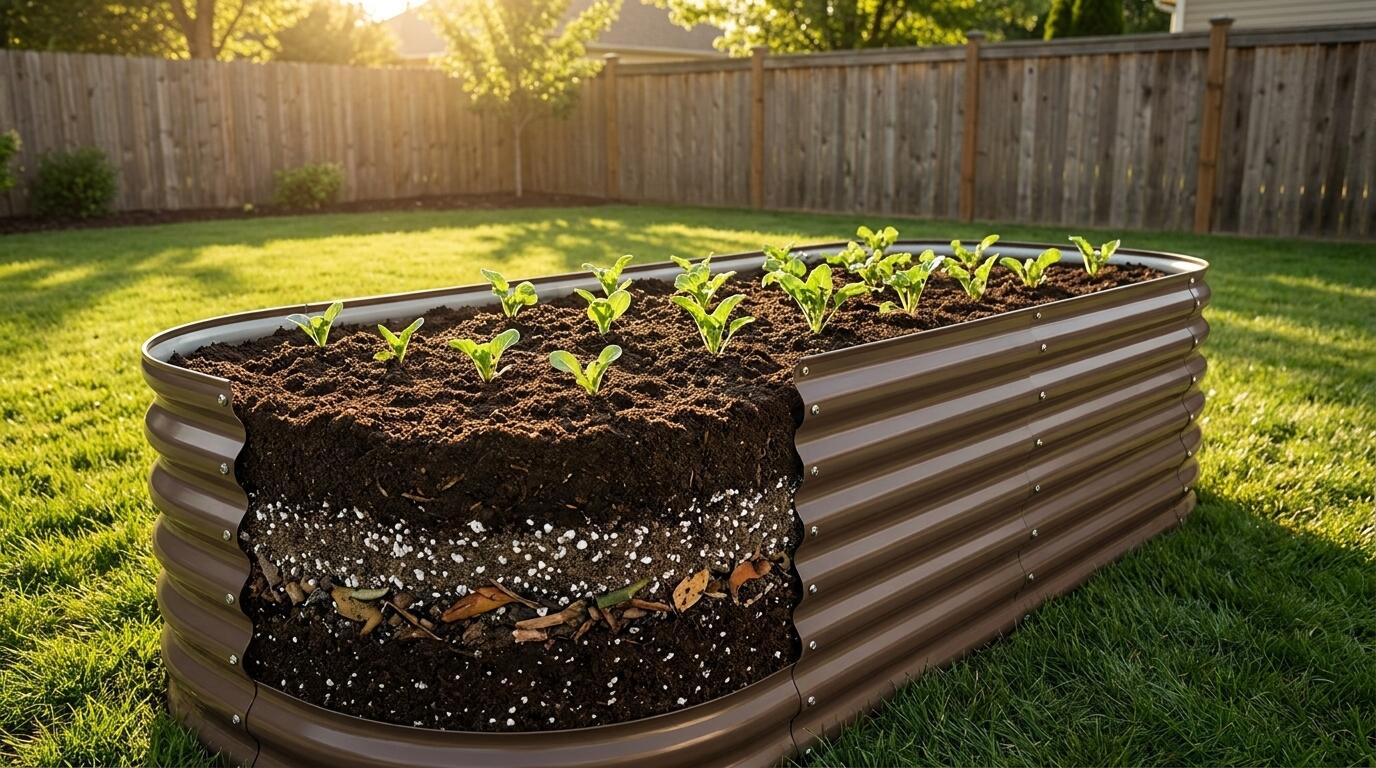
ALT: Rich organic vegetable raised bed with layered soil composition for thriving home garden this growing season
What Goes Into the Soil of a Truly Productive Organic Raised Bed?
That question sits at the center of almost every conversation we have with home growers — from first-timers filling their very first galvanized steel bed to experienced gardeners trying to push their yields higher season after season. The short answer is that great raised bed gardening starts below the surface: the soil mix you pack into your bed determines how well roots breathe, how effectively nutrients move, and ultimately whether your vegetables thrive or merely survive.
This guide walks you through the seven most important components of a high-performance organic soil system for vegetable raised beds. Each item was chosen based on the patterns we consistently see in raised bed gardens that outperform their neighbors: strong drainage, steady fertility, and biological life that keeps improving year after year. Whether you are mapping out a raised bed garden layout for the first time or refining an existing raised bed planting layout, understanding what goes into your soil mix is the single highest-leverage step you can take before the season begins.
The items below are organized from foundational structure to living amendments. You don't need every single one of them in equal measure, but knowing what each contributes — and where it falls short — lets you build a mix that fits your specific bed size, climate, and crop list.
The 7 Core Components of Organic Raised Bed Soil
High-Quality Compost: The Non-Negotiable Foundation
Finished compost is decomposed organic matter — typically a blend of plant scraps, food waste, and other carbon- and nitrogen-rich materials processed by microbes until it resembles dark, crumbly earth. Compost is the single most important ingredient in any organic raised bed soil system because it simultaneously delivers slow-release nutrients, feeds soil biology, and improves both drainage and moisture retention. According to the U.S. Department of Agriculture's Natural Resources Conservation Service, compost improves soil aggregate stability, which is the quality that keeps your growing medium from compacting into a dense, root-choking mass over time.
A well-built raised bed soil typically contains a substantial portion of compost — some experienced growers go as high as one-third of the total volume. The key is using fully finished compost; partially decomposed material can tie up nitrogen and introduce weed seeds or plant pathogens.
Best for: Every grower, every crop, every season. There is no raised bed planting layout that doesn't benefit from quality compost.
Watch out: Not all bagged compost is equal. Municipal yard-waste compost may lack the microbial diversity of homemade or worm-processed compost, and some commercial products have a high salt index that can stress seedlings.
Peat Moss or Coconut Coir: The Moisture-Retention Matrix
Peat moss is a fibrous, partially decomposed organic material harvested from northern bogs. Coconut coir is the shredded fibrous husk of coconuts and serves a nearly identical structural role. Both create a loose, moisture-retaining matrix within your soil that prevents the fast drying that plagues raised beds in hot or windy climates. In our work with clients setting up beds in warm, dry regions like the American Southwest and Texas, inadequate moisture retention is one of the most common reasons a well-intended raised bed garden layout fails in midsummer.
Coir has grown in favor in recent years because it is a byproduct of coconut processing — a renewable resource — whereas peat extraction raises environmental concerns. For a genuinely organic approach, coir is generally the preferred choice.
Best for: Gardeners in dry or hot climates, and anyone growing crops with high water needs like lettuce, spinach, or cucumbers.
Watch out: Peat moss is acidic (roughly pH 3.5–4.5), which can lower your bed's overall pH if used in large quantities. Balance it with garden lime if you're going heavy on peat. Coir is pH-neutral, making it easier to work with.
Coarse Perlite or Vermiculite: The Drainage and Aeration Agent
Perlite is a lightweight volcanic glass that has been heat-expanded into small white granules. Vermiculite is a mineral silicate that expands when heated into accordion-like layers. Both improve aeration and drainage in raised beds, preventing waterlogged conditions that suffocate roots and encourage fungal disease. The difference lies in their secondary behavior: perlite drains freely and adds almost no nutrients, while vermiculite holds some moisture and slowly releases trace minerals.
For most vegetable raised beds, perlite is the workhorse choice because vegetables need consistent drainage. A pattern we consistently see is that growers who skip a drainage amendment end up with dense, poorly aerated soil by the second or third season — particularly in beds where they've been adding compost without balancing structure.
Best for: Any raised bed situation, but especially critical in beds placed on surfaces with limited natural drainage or in climates with heavy rainfall.
Watch out: Perlite can float to the surface over time, particularly after heavy watering. It doesn't break down and doesn't contribute fertility.
Topsoil: The Mineral Backbone
Topsoil is the uppermost layer of natural soil, containing a blend of sand, silt, clay, and organic matter. In a raised bed soil mix, a measured proportion of topsoil provides mineral density and weight that pure compost-coir mixes lack. It introduces a range of trace minerals that purely organic blends can miss, and it gives roots the physical resistance they need to anchor effectively.
The proportion matters enormously. Too much topsoil and your bed drains poorly, compacts easily, and behaves like in-ground soil — losing the core advantages of a raised bed layout. Too little and your mix may drain too fast and lack the slow-release mineral nutrition that crops need mid-season.
Best for: Gardeners blending their own soil from scratch who want a cost-effective mineral base. It's the backbone of the widely-cited Mel's Mix approach (roughly equal parts compost, peat/coir, and coarse perlite) — though topsoil-based variations are also common in more budget-conscious builds.
Watch out: Bagged "garden soil" sold at hardware stores often contains more clay or sand than ideal. Source it from a reputable landscape supplier if possible, and avoid topsoil from sites with unknown chemical histories.
Aged Manure: Slow-Release Nitrogen and Biology
Aged or composted manure — typically from chickens, cattle, horses, or rabbits — is one of the most potent organic fertility amendments available. Unlike fresh manure, which contains concentrated nitrogen salts and pathogens that can burn plants and pose food safety risks, aged manure has been composted down into a stable, nutrient-dense form that feeds soil biology as it slowly mineralizes.
Chicken manure, even when aged, is particularly high in nitrogen — a nutrient that drives leafy green growth. Rabbit manure is famously mild and can often be used in a semi-fresh state without burning. In our experience, beds that receive aged manure at the start of the season establish faster and maintain stronger mid-season color and growth than those relying on compost alone.
If you're also keeping backyard rabbits or chickens — something many home growers do as part of a broader garden-and-raising ecosystem — you have a built-in source of one of the best soil amendments available.
Best for: Heavy-feeding crops like tomatoes, squash, and corn. Particularly effective as a pre-season soil amendment mixed in before planting.
Watch out: Always verify that manure is fully aged or composted before adding it to a bed where you'll be growing edible crops. Fresh manure near root vegetables poses real food safety concerns.
Organic Fertilizer Amendments: Targeted Nutrient Precision
Organic fertilizer amendments — including bone meal (phosphorus), blood meal (fast-release nitrogen), kelp meal (trace minerals and growth hormones), and greensand (slow-release potassium) — allow you to fine-tune the nutrient profile of your soil mix beyond what compost and manure provide. These are not replacements for the foundational components; they are precision tools.
The advantage of organic amendments over synthetic fertilizers is their release mechanism: they feed soil biology first, which then mineralizes nutrients into plant-available forms at a pace that tracks root uptake. This dramatically reduces the risk of nutrient leaching — a common problem in raised beds, which drain faster than in-ground soil by design.
Per guidance from the Rodale Institute, one of North America's leading organic farming research organizations, building a layered fertility program from diverse organic inputs consistently outperforms relying on a single amendment source, because it replicates the nutrient complexity of healthy native soil.
Best for: Gardeners who have been running the same bed for multiple seasons and are noticing declining yields or pale foliage — both signs of nutrient depletion.
Watch out: More is not better with concentrated amendments like blood meal. Excess nitrogen causes lush foliage but poor fruiting, and some amendments (especially feather meal) break down slowly and may not benefit the current season's crop.
Worm Castings: The Biological Multiplier
Worm castings — the processed excrement of earthworms, specifically red wigglers in vermicomposting operations — are among the most biologically active amendments you can add to a raised bed. A small volume of worm castings introduces millions of beneficial microbes, enzymes, humic acids, and plant-growth-promoting compounds that activate the entire soil food web.
Unlike most fertilizers, worm castings cannot burn plants even at high concentrations. They also improve soil structure, enhance water retention, and have been shown in peer-reviewed studies to suppress some soil-borne pathogens. A pattern we consistently see is that beds amended with worm castings establish transplants noticeably faster in the first two to three weeks after planting — the root establishment phase where stress is highest.
Worm castings are also the most expensive component per pound, which is why they're used as a targeted amendment rather than a bulk ingredient.
Best for: Transplant establishment, seedling starts, and any crop that has historically struggled in a specific bed. Excellent mixed into the planting hole at transplant time.
Watch out: Quality varies significantly between suppliers. Look for castings that smell earthy and pleasant — not sour or ammonia-like — and that come from operations where worms are fed diverse organic inputs rather than a single material.
Quick Comparison at a Glance
The table below summarizes how each soil component performs across the dimensions that matter most to vegetable growers. Use it alongside your raised bed layout planning to prioritize which amendments to buy first.
| Component | Best For | Key Strength | Limitation |
|---|---|---|---|
| Finished Compost | All crops, all seasons | Full-spectrum nutrients + biology | Quality varies widely by source |
| Peat Moss / Coir | Dry climates, moisture-sensitive crops | Moisture retention + light structure | Peat is acidic; coir can cost more |
| Perlite / Vermiculite | Drainage in heavy or rain-prone climates | Aeration + prevents compaction | No nutritional value; perlite floats |
| Topsoil | DIY blenders, budget-conscious builds | Mineral density + root anchorage | Can compact or contain contaminants |
| Aged Manure | Heavy-feeding vegetables | High fertility + soil biology | Must be fully composted for safety |
| Organic Fertilizer Amendments | Mature beds with declining yields | Targeted precision nutrition | Over-application causes imbalance |
| Worm Castings | Transplant establishment, struggling beds | Biological activation + gentle fertility | High cost per pound |
How to Choose the Right Soil Mix for Your Raised Bed
Choosing the right combination of these seven components comes down to three practical questions: What are you growing? What is your climate? And how long has your bed been running?
If you are setting up a brand-new raised bed this season, a foundational blend of quality compost, coconut coir, and coarse perlite — roughly equal proportions with a smaller share of perlite — gives you an excellent starting point for almost any vegetable crop. Add a small portion of aged manure if you're growing heavy feeders like tomatoes, peppers, or squash.
If you are refreshing a bed that has been running for two or more seasons, the priorities shift. Beds compact and lose organic matter over time, especially in the top third of the profile where most root activity happens. Topping up with fresh compost each spring and working in worm castings around transplant zones will restore biological activity without requiring a full soil replacement.
If you are growing in a hot, dry region, weight your blend toward moisture-retentive materials like coir and vermiculite. If you are in a wet climate or planting in a deeper bed, increase perlite to ensure roots never sit in saturated conditions.
One common misconception worth addressing directly: many first-time raised bed gardeners assume that any dark, crumbly soil from a garden center will perform well in a raised bed. This is not the case. Products labeled "garden soil" or "in-ground soil" are formulated for native soil amendment — when used as the primary fill in a raised bed, they compact quickly, drain poorly, and deprive roots of the aeration they need. Always look specifically for a "raised bed mix" or blend your own from the components above.
The physical bed itself also shapes your soil decisions. Taller beds — particularly extra-tall designs in the 24- to 30-inch range — hold more soil volume, which buffers moisture and temperature more effectively than shallower beds. Anleolife offers a wide range of galvanized steel and rust-resistant raised garden beds at multiple heights, from standard 18-inch profiles to waist-high 35-inch options, built to last up to 20 years. Matching your soil depth strategy to your bed's height is a detail that pays compounding dividends across every growing season.
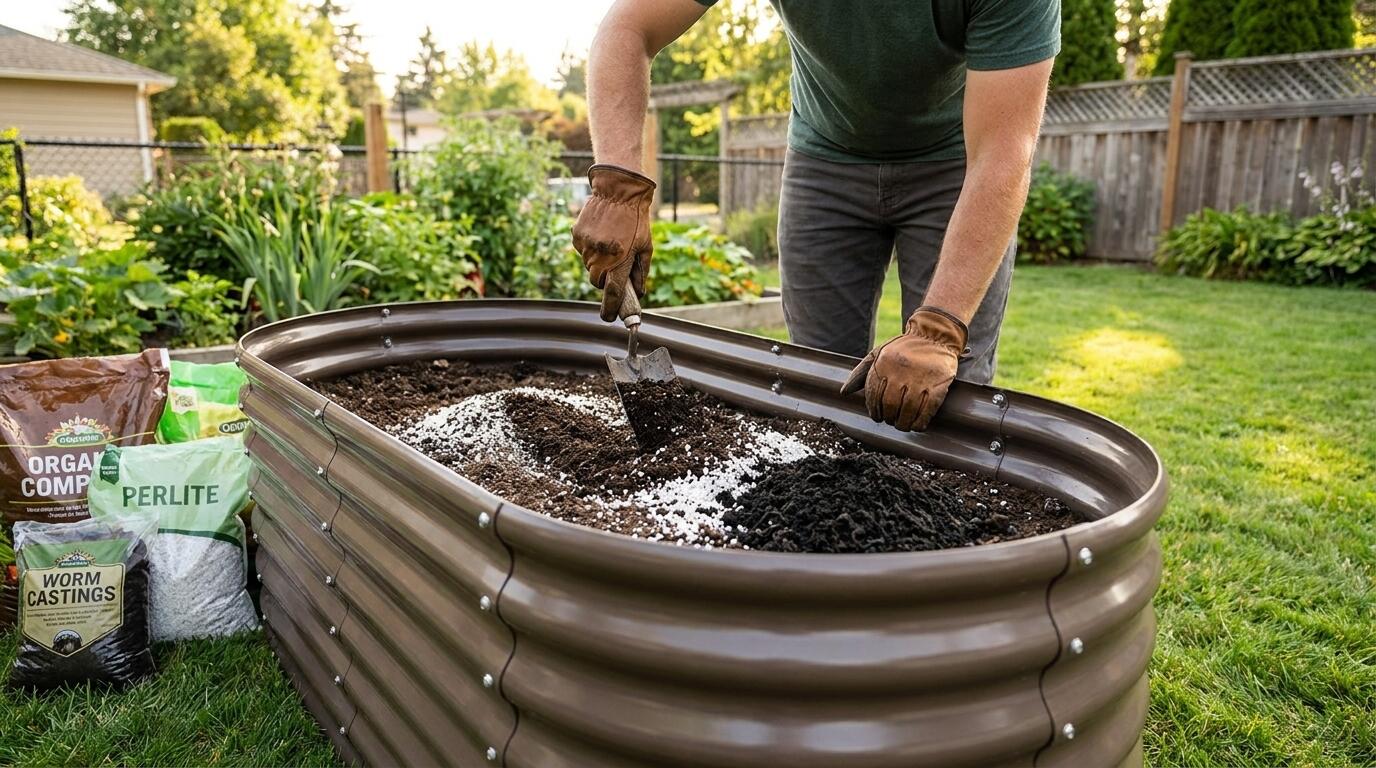
ALT: Home gardener mixing compost, perlite, and worm castings into a galvanized steel raised bed for organic vegetable growing
People Also Ask
Q1: How do you make the best organic soil mix for a vegetable raised bed?
The best organic soil mix for a vegetable raised bed combines quality finished compost, a moisture-retentive material like coconut coir, and a drainage agent like coarse perlite in roughly equal parts, with additions of aged manure and worm castings for fertility and biological activity. This blend — sometimes called a "soilless" mix — drains well, resists compaction, and feeds a diverse soil food web. Adjust proportions based on your climate: increase coir in dry areas and perlite in wet ones.
Q2: Is it safe to use manure in a raised bed where I'm growing vegetables?
Aged or fully composted manure is safe for vegetable raised beds when applied correctly. Fresh manure carries risks: it can burn plant roots with concentrated nitrogen salts and may harbor pathogens like E. coli near edible crops, particularly root vegetables. Always verify that manure has been hot-composted or aged for a sufficient period before using it in a food-growing context. The U.S. Department of Agriculture provides guidance on manure management and food safety for home growers.
Q3: How often should I replace or refresh the soil in a raised bed?
You rarely need to replace raised bed soil completely. A practical approach is to top-dress with 2–3 inches of fresh compost each spring before planting, work in organic amendments to address any specific deficiencies, and replenish worm castings around transplant zones. Over several seasons, the overall volume may settle; simply add a fresh mix of compost and coir to restore bed depth. Full soil replacement is typically only warranted if contamination or severe disease is present — a well-maintained organic bed can remain productive for many years.
Summary
Building the right soil for your organic vegetable raised bed is not complicated, but it does require intentionality. The components you choose — and the proportions you blend them in — shape every other decision in your raised bed garden layout, from how often you water to how well your transplants establish to how long your beds remain productive without intervention.
Key Takeaways:
- Finished compost is the non-negotiable foundation of any organic raised bed soil; it delivers fertility, biology, and structure simultaneously.
- Moisture retention (coir or peat) and aeration (perlite or vermiculite) must both be present for roots to thrive — drainage and moisture work together, not against each other.
- Aged manure and targeted organic amendments address fertility needs that compost alone may not fully meet, especially in heavy-feeding crop rotations.
- Worm castings are the highest-value biological multiplier per unit volume, particularly valuable during transplant establishment.
- Soil investment in a raised bed compounds over time — a well-built mix in a durable, long-lasting bed continues to improve season after season with simple annual top-dressing.
The best next step is to audit your current raised bed setup: assess the soil you have, identify the gaps from the components above, and plan your amendments before the season starts rather than reactively during it.
Ready to pair your optimized soil system with a bed built to match? Explore the full range of galvanized steel, rust-resistant, and extra-tall raised garden beds at the Anleolife website — available nationwide with delivery in 3–8 business days through warehouse locations in California, Texas, Florida, New York, Illinois, and Washington. Whether you're starting with a single bed or building out a complete planting-and-raising ecosystem, Anleolife's modular product lineup lets you expand at your own pace. Shop on the Anleolife website directly, or find products on Amazon, Walmart, Home Depot, Lowe's, and Wayfair for the purchasing experience that works best for you.
Sources & Further Reading
- Savvy Gardening. "4x8 Raised Bed Vegetable Garden Layout Ideas".
https://savvygardening.com/4x8-raised-bed-vegetable-garden-layout/ - Journey With Jill. "Raised Bed Layout Template".
https://journeywithjill.net/wp-content/uploads/2023/04/Raised-Bed-Layout-Designs.pdf - U.S. Department of Agriculture — Natural Resources Conservation Service.
https://www.nrcs.usda.gov/
Note: Standards and guidance documents may be updated; please check the latest official publications or consult a qualified horticultural advisor for current recommendations.