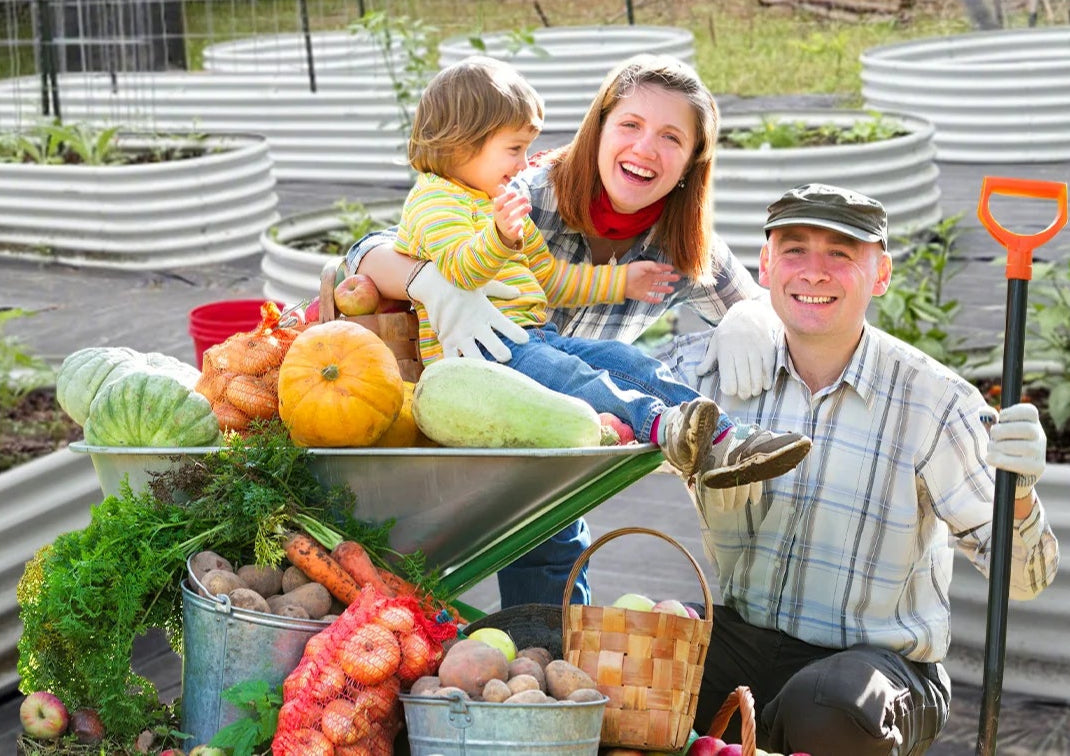







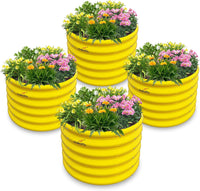
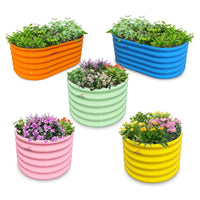
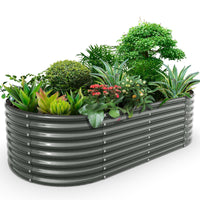



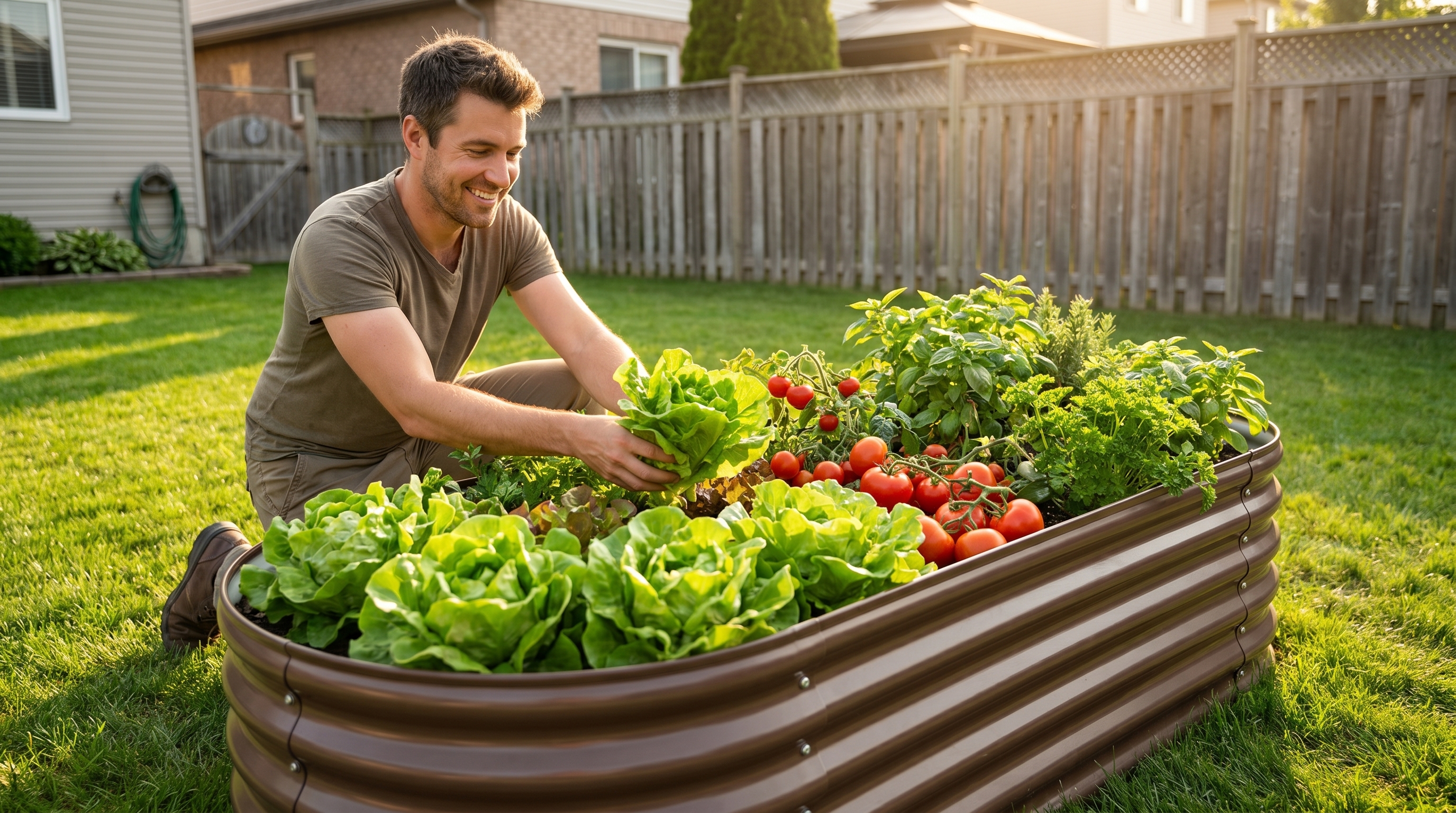
ALT: Beginner gardener harvesting vegetables from small-space raised garden beds with compact planting layout
Why Small-Space Raised Garden Beds Are Changing How Beginners Grow Food
Key Conclusion: Growing your own vegetables doesn't require a sprawling backyard. With the right raised garden beds for small spaces, beginners can cultivate a surprisingly productive and rewarding kitchen garden in a compact patio, balcony, or urban yard. The key lies in choosing the best vegetables for raised beds—crops that thrive in confined soil volumes, grow vertically, and deliver fast, visible results that keep new gardeners motivated from the first seed to the first harvest.
If you've ever stood in a small backyard, looked at a patch of compacted turf, and thought "there's no room for a real garden here," you're not alone. Millions of North American homeowners face exactly this challenge. The good news is that raised garden beds fundamentally change the equation. By concentrating your soil, nutrients, and planting efforts into a defined, manageable structure, you gain outsized yields from minimal footprint—and you get to choose precisely what goes on your dinner table.
This guide walks you through the best beginner-friendly vegetables for raised beds in small spaces, how to set up your bed for success, and how to match the right crops to the right container dimensions. Whether you're working with a 4x4 ft patio corner or a narrow 12x3 ft strip along a fence line, there's a productive planting strategy waiting for you.
Who This Guide Is For
✅ Applicable Scenarios:
- Urban apartment dwellers with a patio, balcony, or small courtyard looking to grow their own food
- Suburban families with limited backyard space wanting a productive, organized kitchen garden
- Empty nesters and retirees seeking a lower-maintenance, high-reward garden project
- Beginner gardeners who want visible results quickly and a manageable learning curve
- Eco-conscious households interested in reducing grocery spending and chemical-free produce
❌ Not Applicable/Cautions:
- Gardeners planning to grow large vine crops like pumpkins or watermelons that require extensive sprawl (these need far more horizontal space than a small raised bed allows)
- Those expecting a raised bed to replace a large traditional garden plot overnight without adjusting plant selection
- Gardeners in zones with extreme climates who haven't accounted for seasonal soil temperature management in elevated structures
The Small-Space Gardening Movement: Why Raised Beds Are the Smart Solution
The interest in home food growing has surged significantly over the past several years. According to the National Gardening Association, food gardening participation has grown substantially across North American households, with first-time gardeners citing fresh produce quality, food security, and mental wellness as primary motivators. Yet the single biggest barrier reported by new growers isn't cost or know-how—it's space.
This is exactly where raised garden beds have stepped in as a practical, elegant solution. Unlike in-ground gardening, raised beds give you complete control over your soil environment. You're not fighting with clay, compaction, or drainage issues. You build your ideal growing medium from the ground up, place it exactly where it gets the best light, and plant at densities that in-ground gardening simply can't match.
For small-space growers, the structure of the bed itself matters enormously. A well-built metal raised garden bed provides a clean boundary for intensive planting, prevents soil erosion and spread, warms up faster in spring, and—critically for beginners—makes it far easier to spot problems before they escalate. Pests, weeds, and overwatering are all more manageable in a contained system.
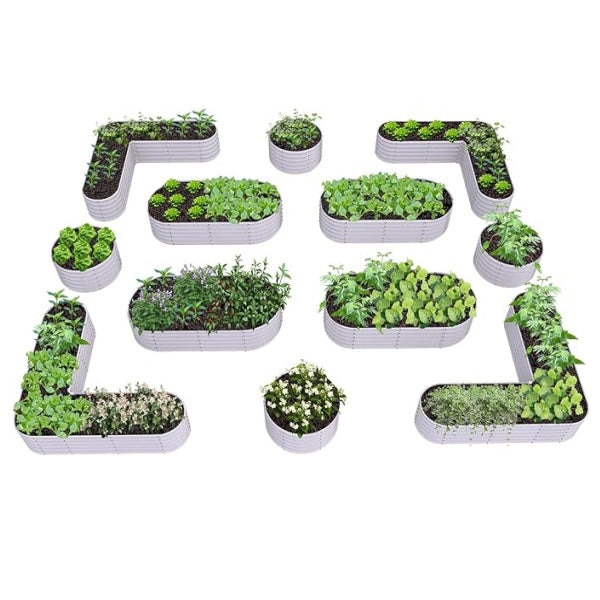
If you're still deciding on your setup, How Much Should You Spend on a Raised Garden Bed This Season? is an excellent starting resource that breaks down budget considerations clearly for first-time buyers. And if you're thinking beyond a single bed toward a coordinated layout, How to Build a Raised Garden Bed Layout for Families with Limited Backyard Space offers practical design frameworks that maximize every square foot.
The best materials for raised garden beds that last the longest are consistently found to be galvanized or rust-resistant steel. Anleolife's galvanized steel and rust-resistant raised garden beds are engineered for a 20-year lifespan, meaning your investment today continues producing harvests for two full decades—a compelling argument for any budget-conscious household.
Your First Raised Bed: A Three-Step Quick Start, Then the Best Vegetables to Plant
Three-Step Quick Start for Beginners
Step 1: Choose the Right Bed Size for Your Space
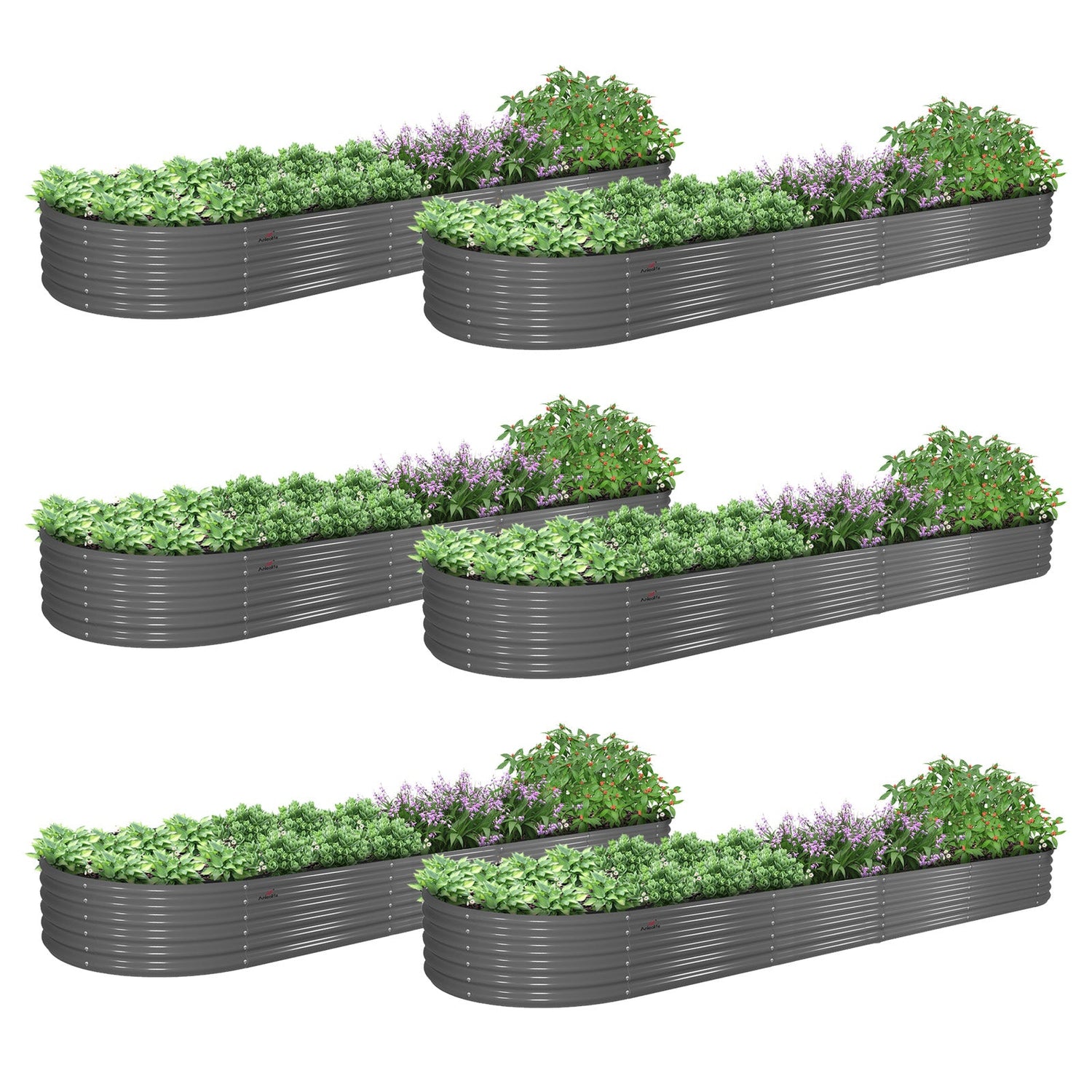
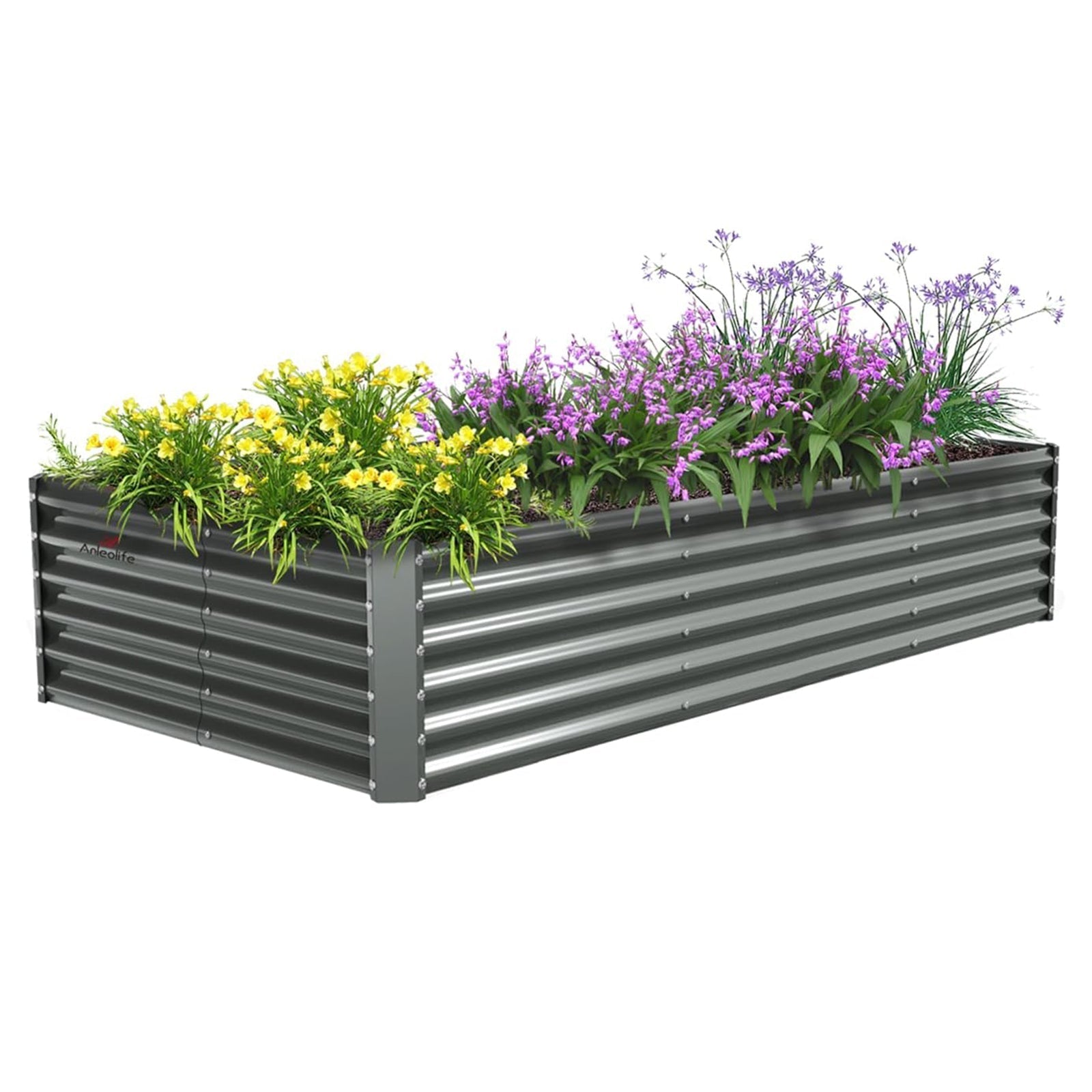
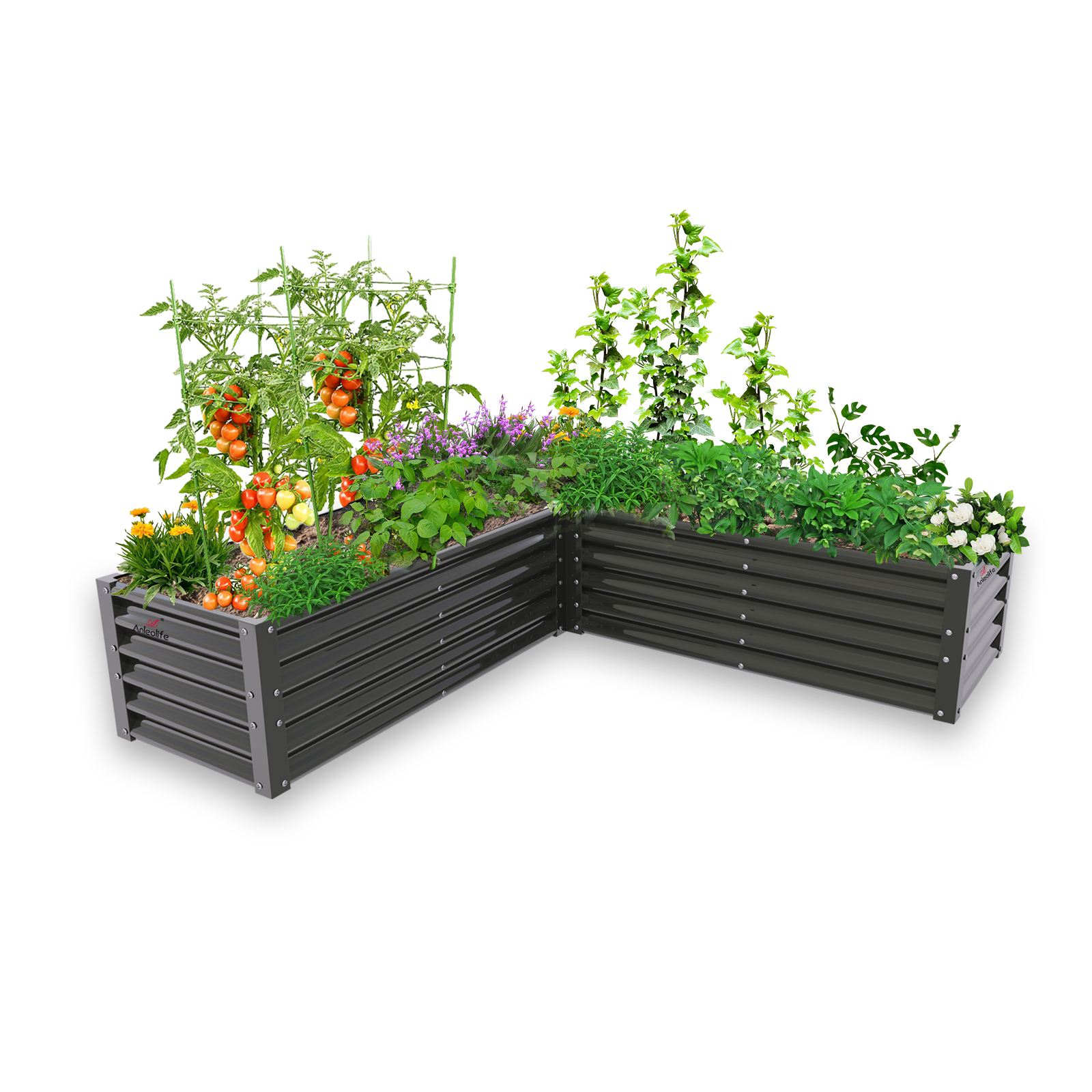
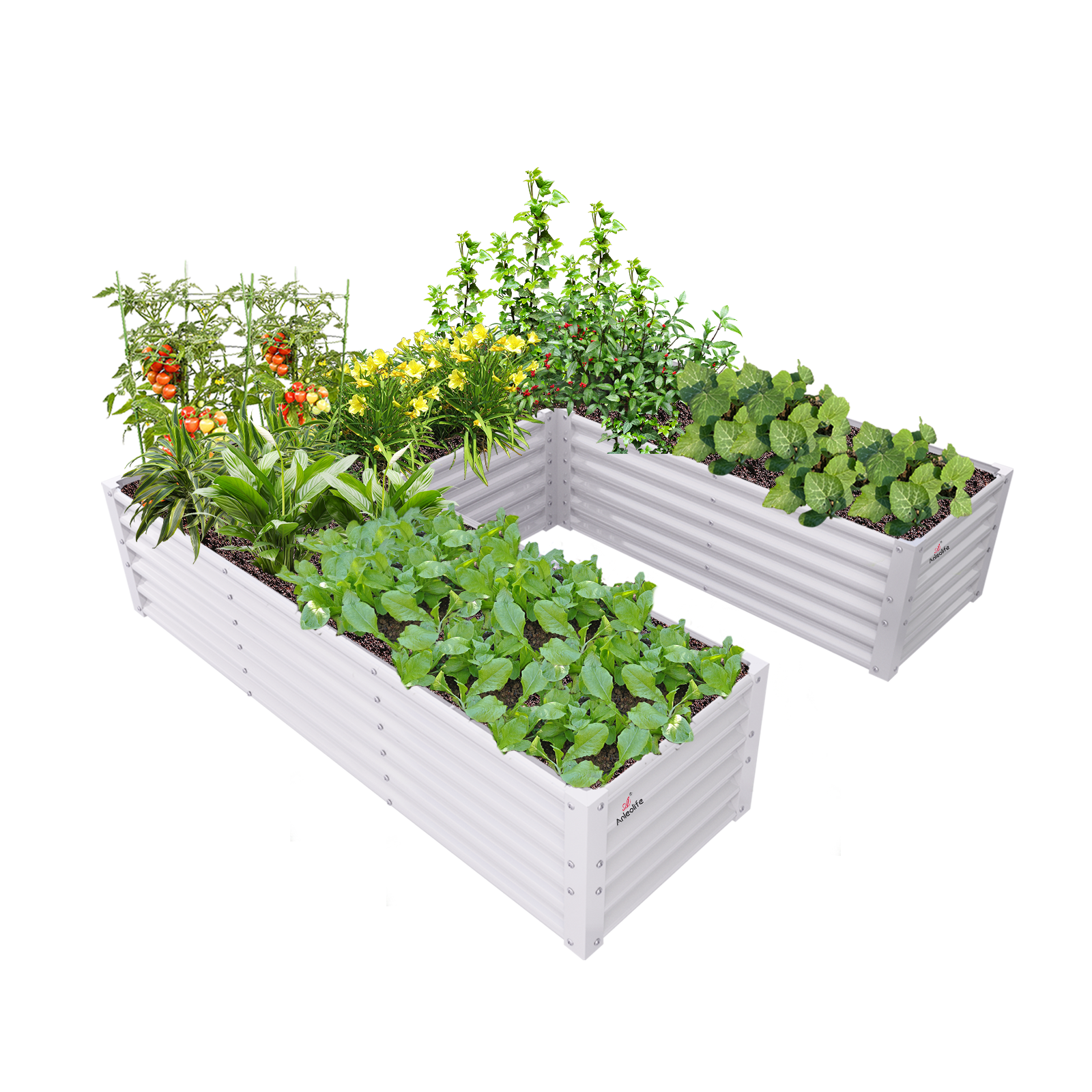
Before you select a single seed packet, match your available space to the right bed dimensions. For a patio or compact yard, Anleolife's 18" Tall 4x4 ft or 18" Tall 8x4 ft galvanized steel raised garden beds are popular beginner choices—deep enough for most vegetables, wide enough for meaningful variety. If your space is more of a strip, the 18" Tall 12x3 ft option lines up beautifully along fences or walls. Measure your available area carefully, allow at least 18 inches of clearance on all sides for comfortable access, and choose a spot that receives a minimum of 6 hours of direct sunlight daily. This step typically takes about 30 minutes of planning.
Step 2: Fill Your Bed with the Right Soil Mix
The foundation of a productive raised bed is its growing medium. Never simply use native yard soil—it compacts, drains poorly, and rarely offers the right nutrient profile. A well-tested approach is the classic Mel's Mix: a blend of compost, peat moss or coconut coir, and coarse vermiculite in roughly equal parts. This creates a light, moisture-retentive, nutrient-rich environment ideal for intensive small-space growing. For a deeper dive into soil strategy, What Is the Best Soil Mix for Raised Garden Beds? (The Mel's Mix Guide) provides a comprehensive breakdown. Filling a standard 8x4 ft bed to 18" depth will take approximately 1–2 hours and is a task most beginners can handle in a single afternoon.
Step 3: Select and Plant Your Beginner Vegetables
Once your bed is filled and settled, it's time to plant. Start with a curated mix of fast-growing, high-yield crops that reward beginners with results within weeks rather than months. Space plants according to the square-foot gardening method—this maximizes density without crowding. Water deeply but infrequently to encourage root depth, and mark your plants clearly so you can track progress. Your first real harvest could come in as few as 30 days for fast crops like radishes and lettuce, keeping motivation high as you develop your gardening rhythm.
Comparing the Best Vegetables for Small Raised Beds
Choosing the right vegetables is half the battle. Not every crop is suited to confined soil volumes or close spacing. Below is a practical comparison of the top beginner picks organized by growth habit, yield speed, and suitability for small raised beds.
| Comparison Dimension | Leafy Greens (Lettuce, Spinach, Kale) | Root Vegetables (Radishes, Carrots, Beets) | Fruiting Crops (Tomatoes, Peppers, Cucumbers) |
|---|---|---|---|
| Space Required Per Plant | Very compact (4–6 inches apart) | Moderate (3–6 inches, depth-dependent) | Larger footprint (12–24 inches apart) |
| Time to First Harvest | Very fast (30–45 days) | Fast to moderate (25–70 days) | Moderate to slow (60–90 days) |
| Beginner Difficulty | Very easy | Easy to moderate | Moderate (requires support/staking) |
| Vertical Growing Option | No (stays low) | No (grows downward) | Yes (excellent for trellising) |
| Ideal Bed Depth | 12–18 inches | 18–24+ inches | 18–24 inches |
| Succession Planting Friendly | Yes—highly recommended | Yes, especially radishes | Limited (one main season) |
| Yield in Small Space | High per square foot | High per square foot | High with vertical training |
The Top Beginner Vegetables—Detailed Growing Guide
Lettuce and Salad Greens: The Small-Space Champion
Lettuce is arguably the single best vegetable for a first raised garden bed. It grows fast, tolerates partial shade better than most crops, and can be harvested continuously using the "cut-and-come-again" method—snipping outer leaves while the plant continues growing from its center. In a 4x4 ft bed, you can plant 16 or more lettuce heads simultaneously using the square-foot method.
Varieties like 'Black Seeded Simpson,' 'Buttercrunch,' and 'Red Sails' are particularly well-suited for beginners. Sow seeds directly into moist soil, thin to appropriate spacing, and expect your first harvest in roughly 30–45 days. In cooler climates, lettuce can be grown in spring and again in fall, giving you two productive seasons from a single bed.
Spinach and arugula follow a nearly identical growing pattern and can be interplanted with lettuce for a diverse salad mix from the same bed section. These greens also bolt (go to seed) in heat, so timing your planting to avoid peak summer temperatures is an important skill to develop early.
Radishes: The Confidence Builder
Few vegetables match the satisfaction-to-effort ratio of radishes for new gardeners. They germinate within days, grow rapidly, and can be ready to harvest in as few as 25 days from sowing. Their compact root system makes them ideal for filling gaps between slower-growing crops.
Use radishes strategically as "nurse plants"—sow them among slower crops like carrots or beets. The radishes will loosen and mark the soil as they grow, and you'll harvest them before they compete for space. This technique is known as interplanting and is one of the best productivity hacks for small raised beds.
Tomatoes: Maximum Reward with Vertical Growing
Tomatoes are the most-grown home garden vegetable in North America for good reason—they are enormously productive, far tastier fresh-picked than store-bought, and deeply satisfying to grow. The challenge in small spaces is their size, but this is solved almost entirely with vertical growing.
Compact determinate varieties like 'Patio,' 'Tumbling Tom,' or 'Roma' are purpose-built for confined spaces. Indeterminate varieties like 'Sweet 100' cherry tomatoes can be trained up a trellis or stake system and grown in a single square foot of bed space vertically. In a 24" Extra Tall 8x4 ft Anleolife raised bed, you have the depth tomato roots crave combined with room for two to four tomato plants alongside complementary crops like basil, which acts as a natural pest deterrent.
One of the most common questions from new tomato growers relates to pest control. For raised beds, the primary organic strategies include introducing beneficial insects (ladybugs, lacewings), using row cover fabric for early-season protection, and companion planting with strong-scented herbs like basil, marigold, and nasturtium. Keep beds clean of fallen debris to reduce overwintering pest populations, and inspect plants weekly for early signs of aphids or caterpillars.
Peppers: Low Maintenance, High Reward
Sweet bell peppers and compact hot pepper varieties like jalapeños are excellent raised bed performers. They share soil and light requirements with tomatoes, making them natural companions in the same bed. Peppers are slower to mature but remarkably low-maintenance once established. They prefer consistent moisture (raised beds excel at this with good soil mix), plenty of sun, and warm root temperatures—which metal raised beds deliver efficiently by absorbing and retaining solar heat.
Cucumbers: Vertical Space Maximizers
Cucumbers are perfect small-space vegetables when grown vertically. Left to sprawl, a single cucumber plant can consume 3–4 square feet of bed space. Trained up a simple trellis or net, that same plant occupies less than a single square foot of bed footprint. Bush varieties like 'Spacemaster' or 'Patio Snacker' are even more compact.
A trellis set against the north edge of your raised bed prevents the cucumber canopy from shading shorter crops behind it. This is a critical layout tip for small-space gardens—always orient tall vertical crops toward the north (in the Northern Hemisphere) so they don't shade their neighbors.
Herbs: The Invisible High-Value Crop
Herbs like basil, parsley, chives, and cilantro are enormously valuable in a small raised bed system. They occupy minimal space, produce continuously, are typically expensive to buy fresh at grocery stores, and many serve double duty as pest deterrents. Basil alongside tomatoes improves flavor and repels aphids. Chives deter Japanese beetles. Nasturtiums act as trap crops for aphids, pulling them away from more valuable plants.
Dedicate one edge section of any bed to a rotation of herbs—you'll use them constantly in the kitchen and they'll quietly protect the rest of your planting.
Kale and Swiss Chard: The Workhorses of Cool Seasons
For gardeners in regions with mild winters or extended fall seasons, kale and Swiss chard are exceptional performers. Both are extraordinarily nutritious, cold-hardy, and productive over long seasons. A single kale plant harvested correctly can produce leaves from spring through the first heavy frost—often four to six months of continuous production.
In a compact raised bed, two to four kale plants can supply a household with more leafy greens than most families can consume. Pair them with root vegetables in the same bed for a fall planting that maximizes every inch of growing space before winter.
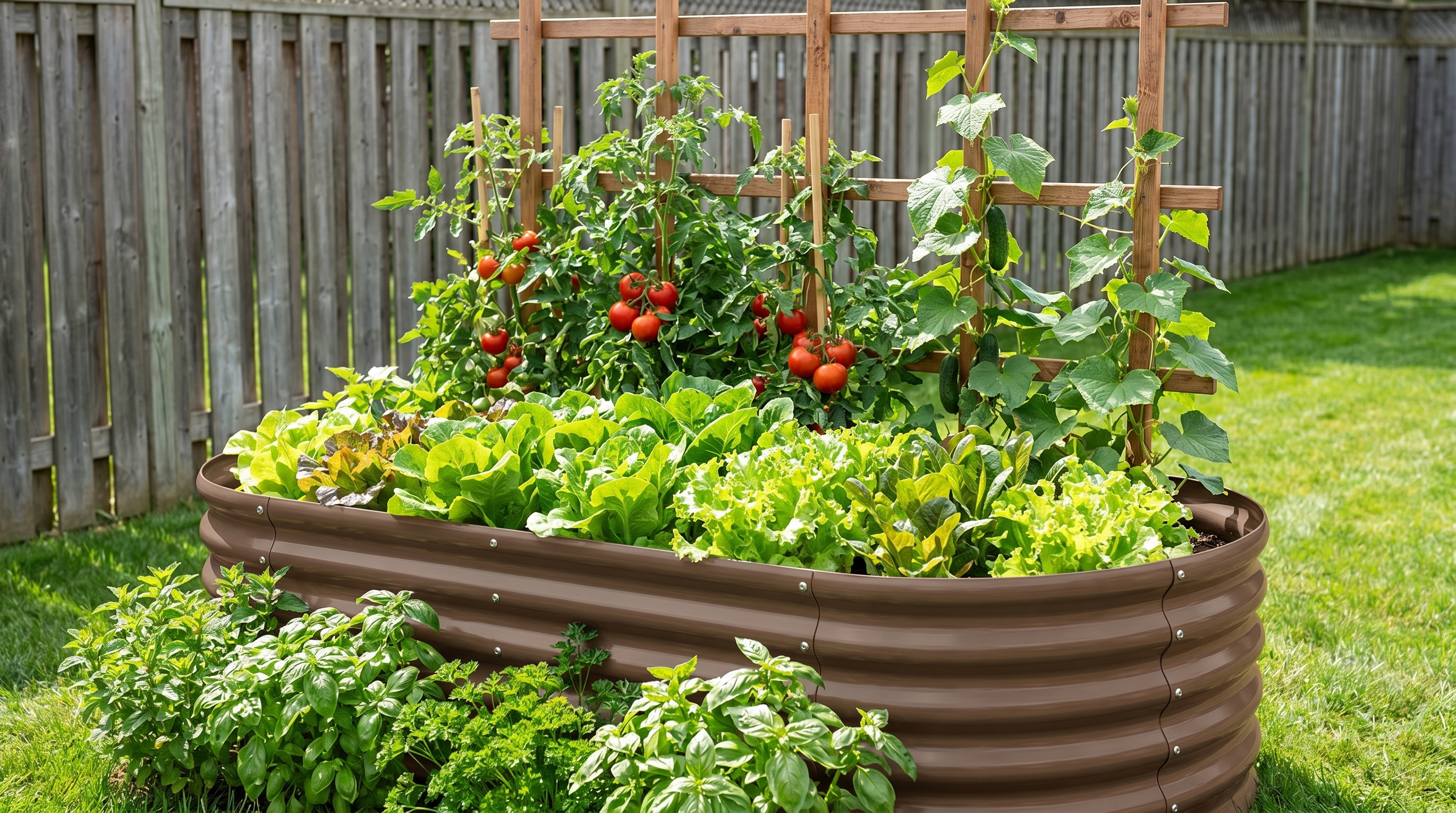
ALT: Small-space raised garden bed featuring lettuce, tomatoes, vertical cucumber trellis, and companion herbs for beginners
Advanced Tips: Maximizing Yield in Small Raised Beds
Succession Planting: Never Have an Empty Bed
The most common mistake beginners make is planting everything at once and then watching half their bed sit empty after early crops are harvested. Succession planting solves this completely. Every two to three weeks, sow a new small batch of fast-growing crops—lettuce, radishes, spinach—into the spaces left by harvested plants. This keeps your bed productive from early spring through late fall.
A useful rule of thumb: whenever you harvest something, replant immediately. Keep a small tray of seedlings started indoors so you always have transplants ready to fill gaps.
Soil Refreshing Between Seasons
Raised beds benefit from an annual compost top-dress between growing seasons. Add 2–3 inches of fresh compost each fall or spring, gently working it into the top layer of existing soil. This replenishes nutrients, improves soil structure, and reinvigorates the microbial activity that drives plant health. Because Anleolife's galvanized steel and rust-resistant beds are built for a 20-year lifespan, investing in ongoing soil quality pays dividends for years to come.
Common Misconceptions About Small-Space Growing
Misconception 1: More plants means more yield.
Actually, overcrowding reduces air circulation, increases disease pressure, and forces plants to compete for water and nutrients. Follow recommended spacing even when it feels like "wasted" space—you'll get better total yields than with a crowded bed.
Misconception 2: You need full sun for everything.
Leafy greens, herbs, and root vegetables actually tolerate partial shade quite well. If your small-space bed gets only 4–5 hours of direct sun, skip the tomatoes and peppers and focus on greens and roots, which will still thrive.
Misconception 3: Raised beds dry out too fast.
A well-mixed soil in a quality raised bed retains moisture excellently. Adding organic matter and mulching the soil surface significantly reduces watering frequency. Many small-space gardeners water just two to three times per week in moderate climates.
Frequently Asked Questions FAQ
Q1: How do I fill a raised garden bed for vegetable growing on a budget?
The most cost-effective approach is a modified Mel's Mix using locally sourced bulk compost, bagged coconut coir (often cheaper than peat moss), and coarse perlite or vermiculite. Many municipalities offer free or reduced-cost compost to residents—check your local public works department. For a full recipe and ratios tailored to different bed sizes, see the Mel's Mix Guide for detailed guidance. Avoid filling with native yard soil, which compacts quickly and limits root development.
Q2: Are galvanized steel raised garden beds safe for growing vegetables?
Yes—modern galvanized steel raised beds are widely considered safe for food production. The zinc coating used in galvanization is the same mineral found naturally in soil and is an essential micronutrient for plants and humans alike. Studies by agricultural extension programs have found no meaningful zinc leaching into soil or crops at levels that pose health concern. Anleolife's galvanized steel and rust-resistant raised garden beds are built to food-safe standards and are designed to last up to 20 years, making them a sound long-term investment for home food growing.
Q3: How long does it take to get started once I order a raised garden bed?
With Anleolife's nationwide U.S. warehouse network—strategically located in California, Texas, Florida, New York, Illinois, and Washington—your raised garden bed typically arrives within 3–8 business days of ordering. Most beginners can assemble a standard raised bed in under an hour with basic tools. Fill and plant the same day if you have soil ready, or use the waiting time to source your soil mix and choose your seed varieties. From order to first seeds in the ground, most new gardeners are up and running within 10–14 days.
Summary
Growing vegetables in a small space is not a compromise—it's a focused, highly rewarding approach to home food production that beginners often find more successful than sprawling garden attempts. The three core takeaways from this guide are:
First, choose crops that are inherently suited to confined raised beds: leafy greens for speed and density, root vegetables for soil utilization, and fruiting crops like tomatoes and cucumbers trained vertically for maximum yield per square foot.
Second, your raised bed structure is the foundation of everything. A quality galvanized steel or rust-resistant raised bed with good depth provides the root environment, drainage, and temperature regulation your vegetables need to thrive—and with a 20-year lifespan, it grows with you through decades of seasons.
Third, succession planting and companion planting turn a small bed into a continuously productive system. Never let bed space sit idle, and let your plants work together—herbs protecting vegetables, radishes marking slower crops, tall plants sheltering shade-tolerant ones.
Start small, start smart, and build confidence with your first harvest. The skills you develop in a 4x4 ft raised bed this season become the foundation for an expanding, flourishing garden in years to come.
Your Next Step with Anleolife
Anleolife's nationwide U.S. warehouse network—strategically located in California, Texas, Florida, New York, Illinois, and Washington—ensures delivery within 3–8 business days, so your garden upgrade plans never have to wait. Products are available across Amazon, Walmart, Home Depot, Lowe's, Wayfair, and directly at Anleolife.com, offering consistent quality assurance and after-sales service wherever you prefer to shop.
Anleolife covers three core garden scenarios: Planting (metal raised garden beds, soil systems), Raising (chicken coops, rabbit hutches), and Beautification (decorative accessories, pathway systems)—meeting complete needs from functionality to aesthetics. Our modular product design allows flexible expansion based on your needs—from your first compact raised bed to a fully integrated planting-and-raising ecosystem. We grow with you every step of the way.
References
- National Gardening Association. "Food Gardening in the United States."
https://garden.org/learn/articles/view/4041/ - University of California Agriculture and Natural Resources. "Vegetable Gardening Basics."
https://ucanr.edu/ - Penn State Extension. "Small-Scale Vegetable Gardening."
https://extension.psu.edu/vegetable-gardening - Oregon State University Extension Service. "Raised Bed Gardening."
https://extension.oregonstate.edu/gardening/vegetables/raised-bed-gardening - USDA National Institute of Food and Agriculture. "Home Gardening Resources."
https://www.nifa.usda.gov/topics/home-gardening
Note: Standards and research may be updated. Please check the latest official documents or consult a local agricultural extension advisor for region-specific guidance.
About Anleolife
Anleolife is a leading outdoor garden solutions provider in North America, dedicated to offering a full-scenario product ecosystem for home gardening enthusiasts, covering planting, raising, and garden beautification. Since its founding, we have upheld our brand mission, "Made for Garden Life," continuously innovating products and optimizing services to help hundreds of thousands of users upgrade their gardens, reconnect with nature, and enjoy a better garden lifestyle.