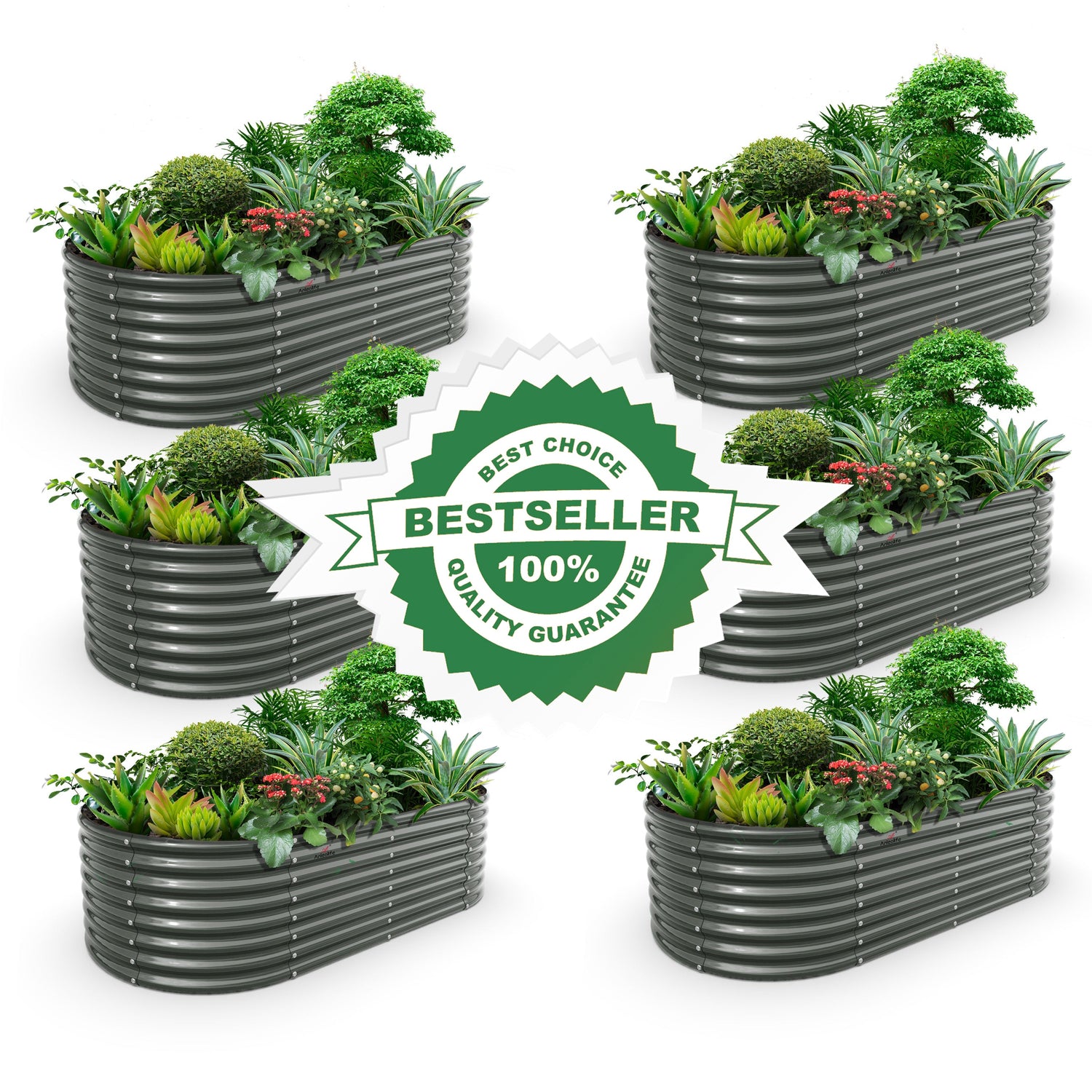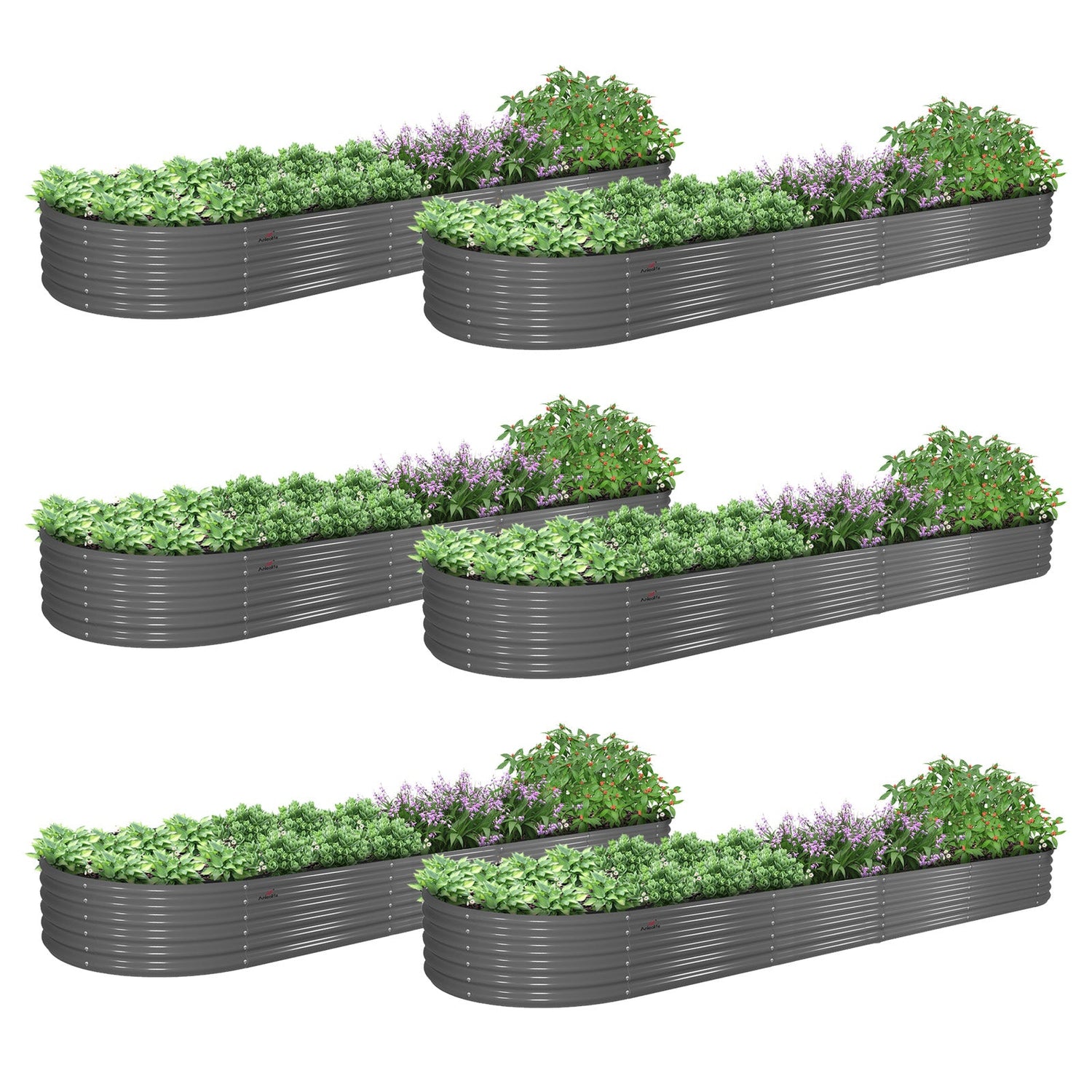



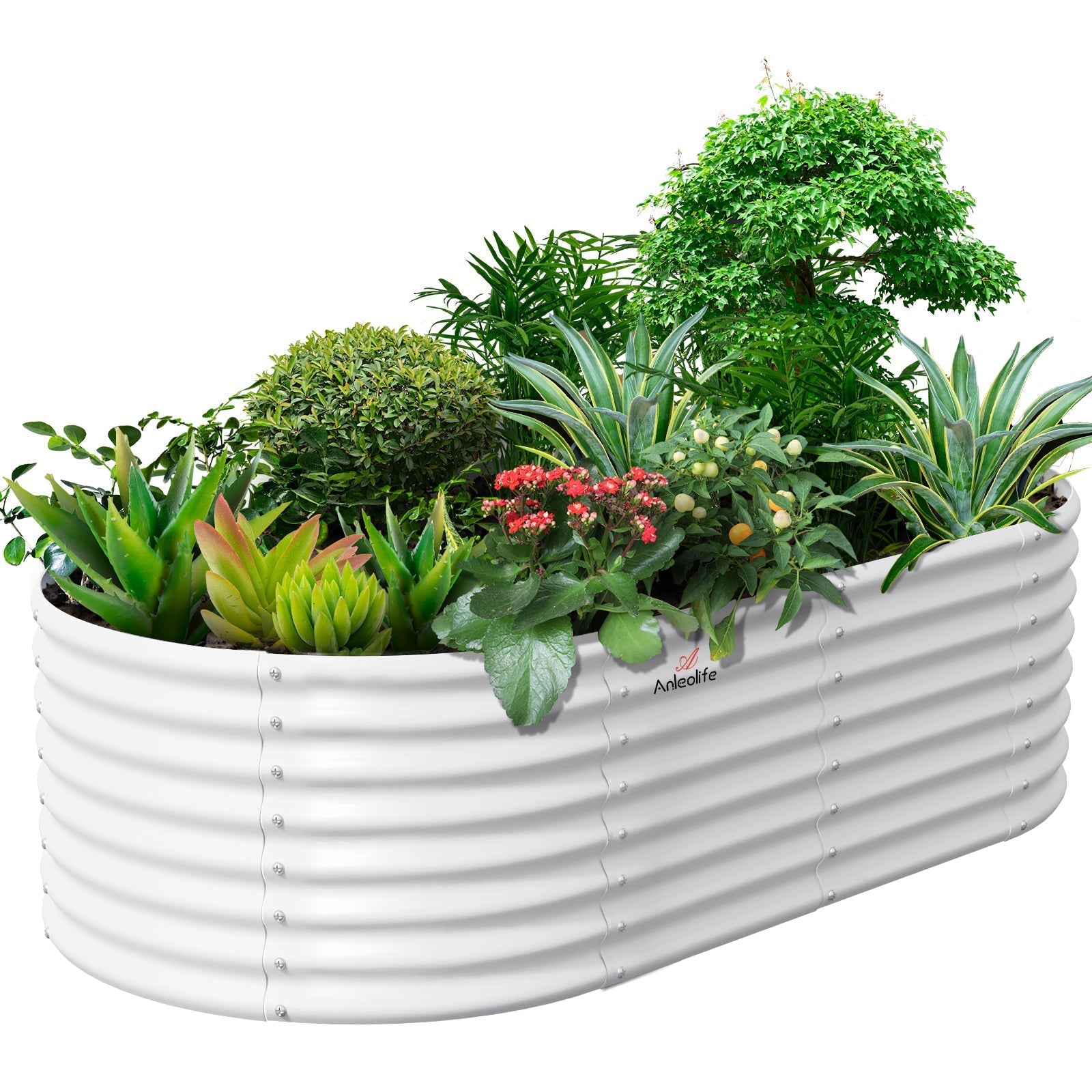
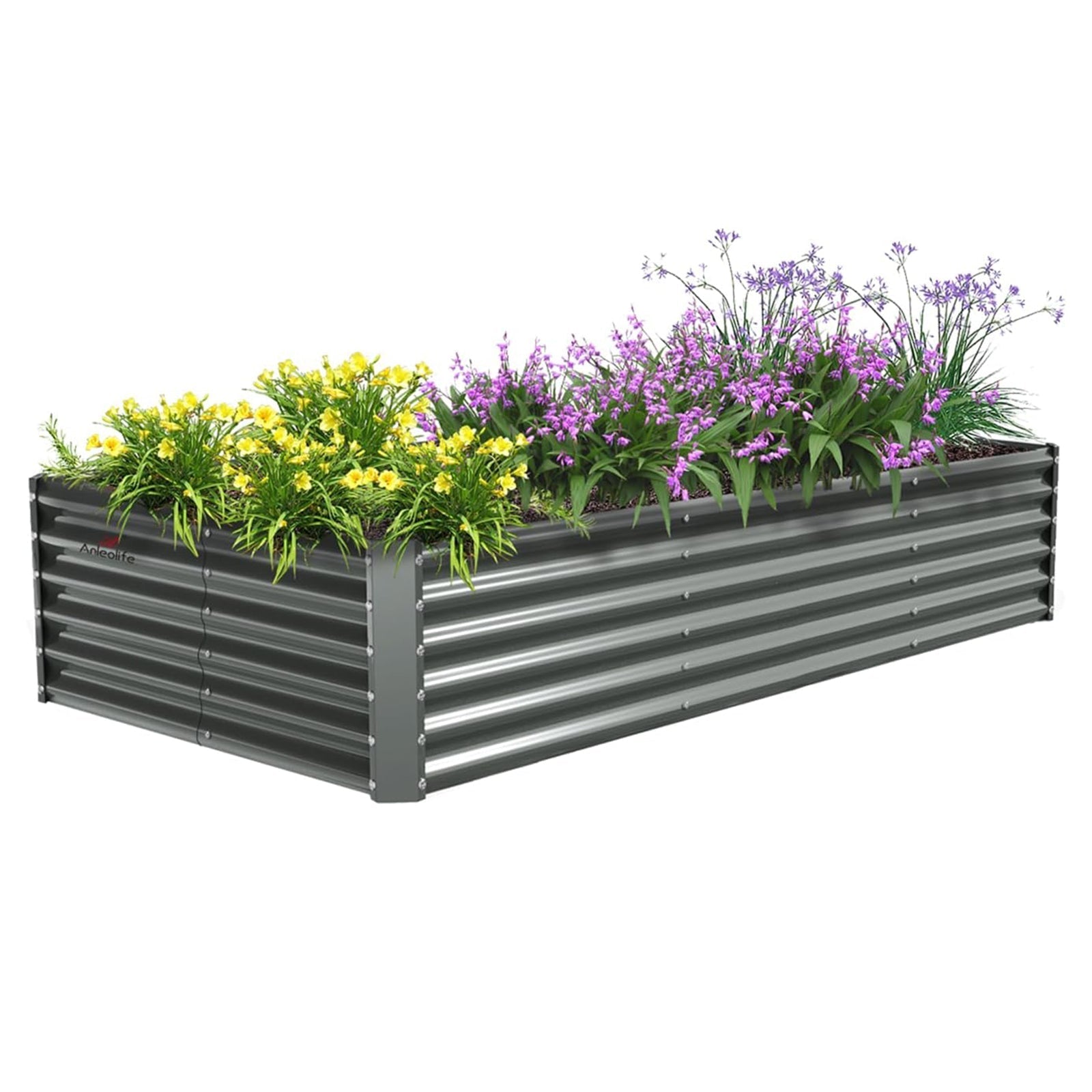

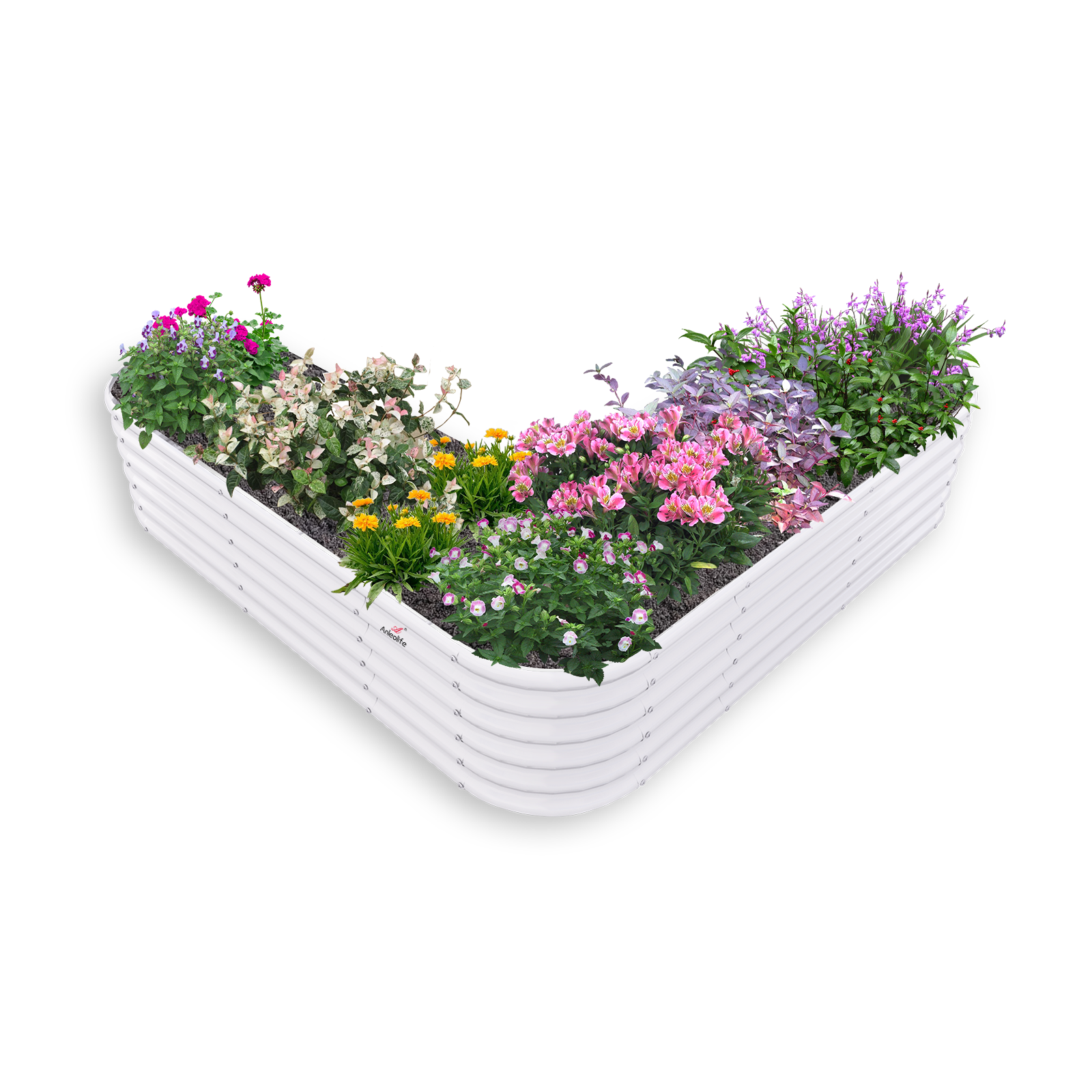
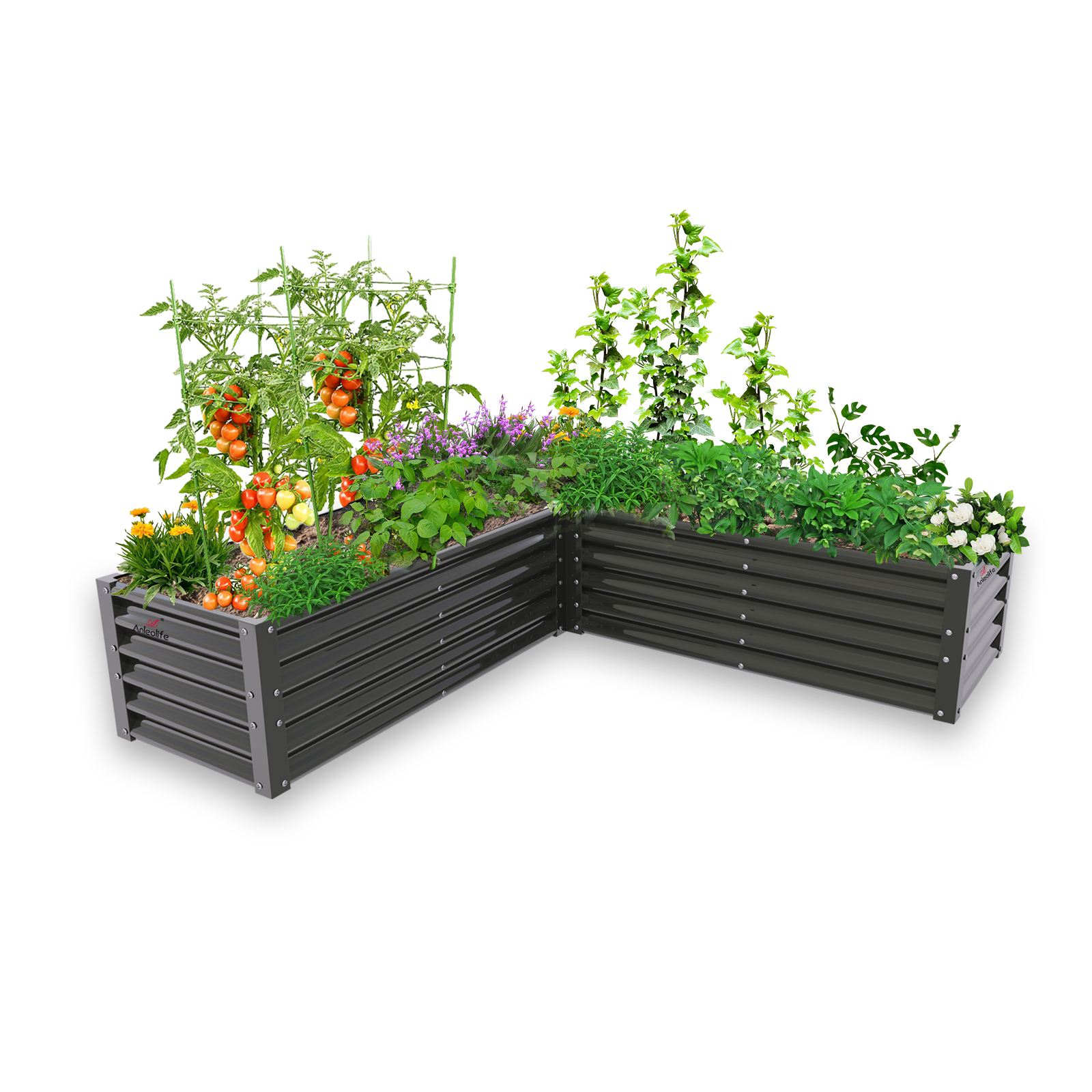
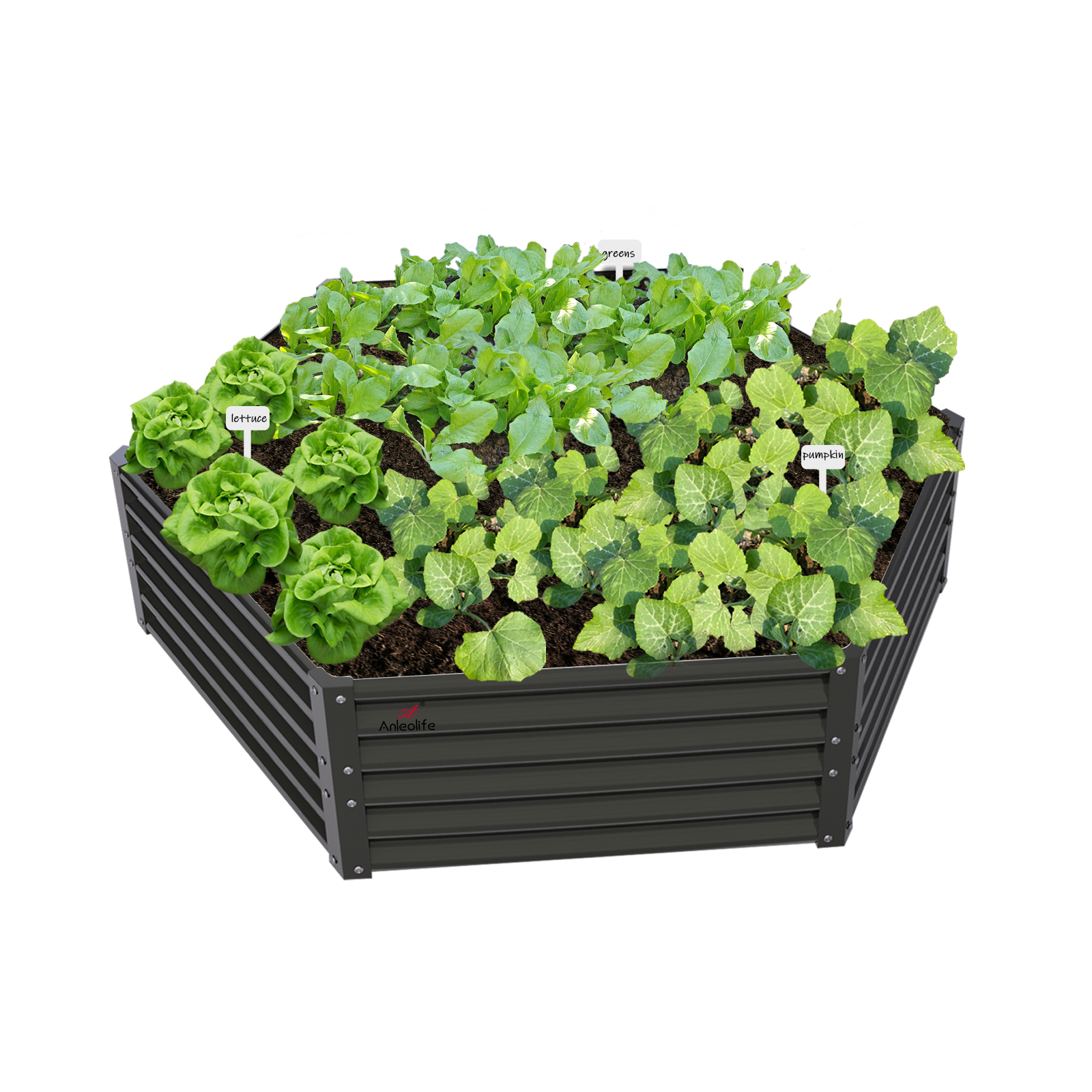
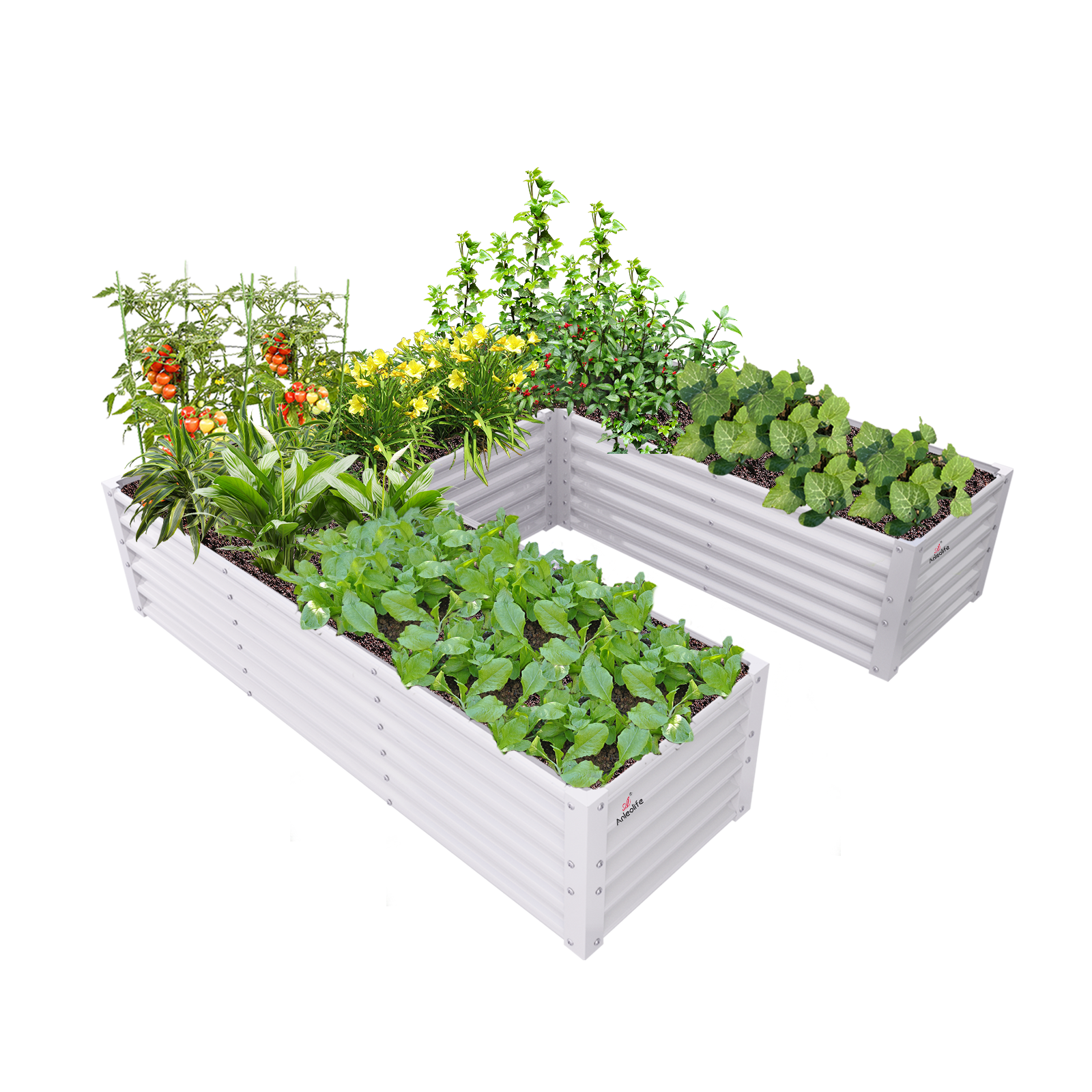

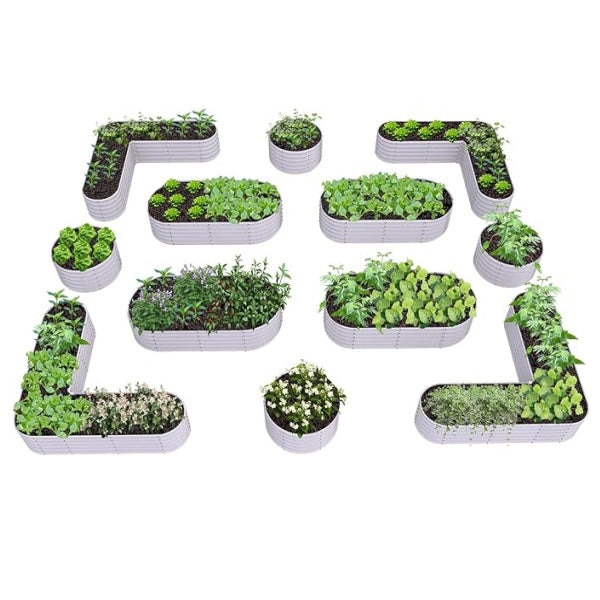


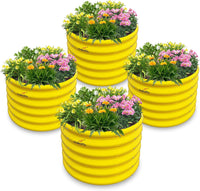
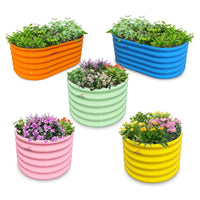
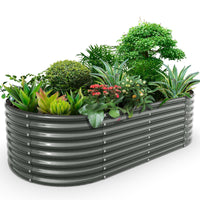



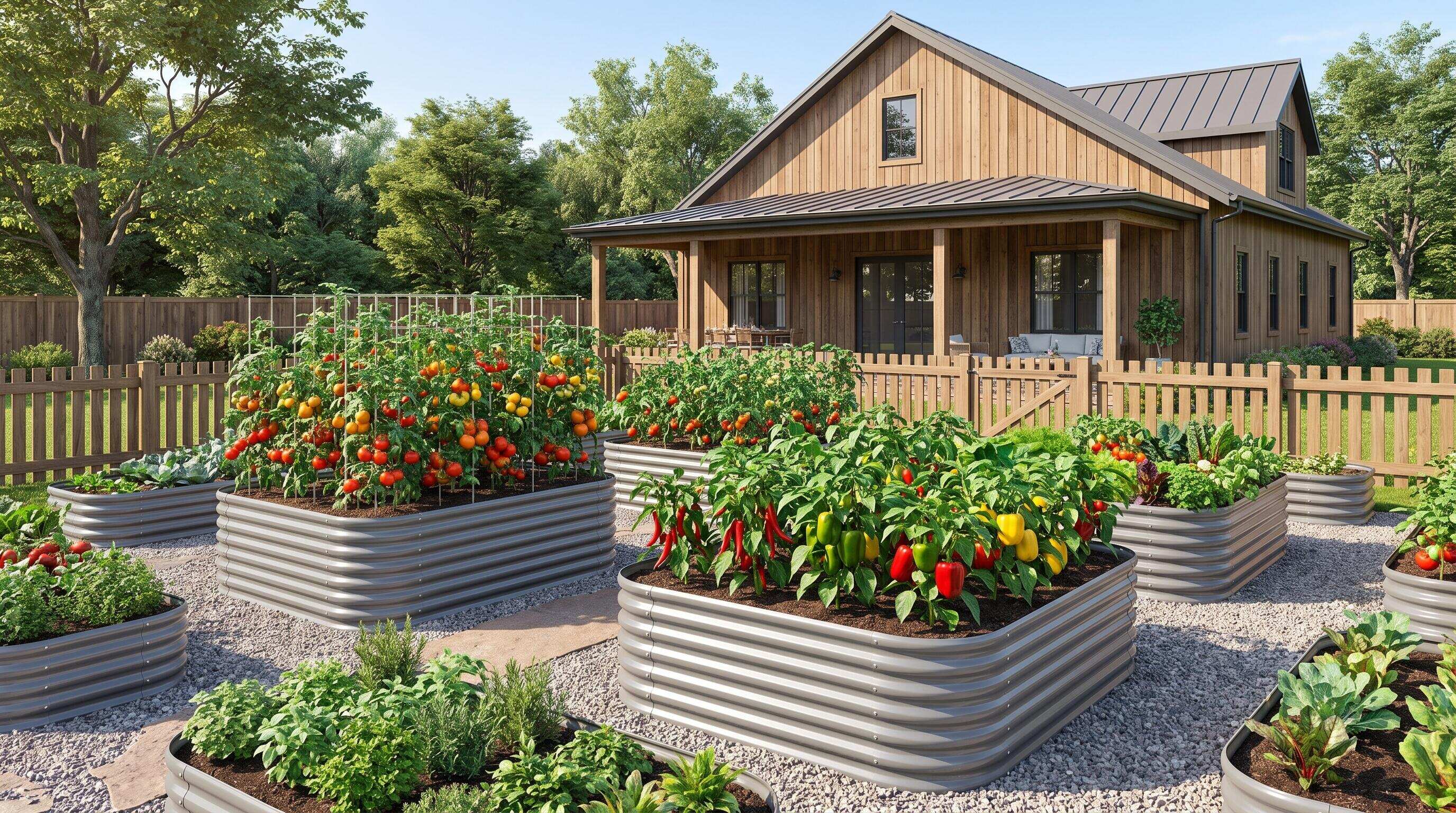
ALT: Raised bed garden layout for tomatoes and peppers with galvanized steel beds in backyard
How to Choose the Best Raised Bed Configuration for Tomatoes and Peppers This Season
Key Conclusion: Choosing the right raised bed garden layout for tomatoes and peppers directly determines how much fruit you harvest, how easily you maintain your plants, and how efficiently you use your outdoor space. This guide delivers a practical, field-tested breakdown of the most effective raised bed planting layout options — covering spacing, depth, orientation, companion planting, and structural choices — so you can build a productive, low-maintenance raised bed layout that works season after season.
In our work with home gardeners across North America, one pattern we consistently see is this: growers invest in quality plants and premium soil, then undercut their own success with a poorly planned raised bed configuration. The difference between a struggling crop and a thriving one often comes down to decisions made before a single seed goes in the ground. This list was built from hands-on experience with both novice backyard growers and dedicated urban micro-gardeners. Each item addresses a specific, commonly mishandled planning decision. Work through them in order for a complete setup, or jump to the section that addresses your biggest current challenge.
The Seven Raised Bed Configurations That Actually Work for Tomatoes and Peppers
Depth-First Planning: Getting the Root Zone Right
Soil depth is the single most underestimated variable in a raised bed garden layout for tomatoes and peppers. Both crops are deep-rooted feeders. Tomatoes in particular develop extensive root systems — shallow beds force roots to compete, restrict water uptake, and increase the risk of blossom drop during heat stress. Peppers, while somewhat more tolerant of limited depth, still benefit significantly from adequate rooting room.
A raised bed planting layout for these crops should prioritize depth before any other dimension. Beds in the 18–24 inch height range offer a strong general-purpose solution, giving roots room to develop without competition from native soil — especially valuable in regions with compacted clay or rocky ground. For serious tomato production, extra-tall configurations in the 24–30 inch range reduce the need for staking workarounds and give the root mass genuine freedom.
The Anleolife heavy-duty raised garden beds, available in both 24-inch extra-tall and 30-inch extra-tall configurations, are a practical fit for this approach. The 30-inch height in particular removes the need to bend deeply at the waist — a detail that matters enormously for empty nesters and retirees managing their gardens over the long term.
Best for: Gardeners dealing with poor native soil, heavy clay, or rocky terrain; anyone growing indeterminate tomato varieties.
Watch out: Deeper beds require more fill material. Factor in a layered soil system — coarse organic matter at the base, quality growing medium in the upper zone — to manage cost and drainage effectively.
Bed Width and the Reach Rule: The 4-Foot Standard and When to Break It
A functional raised bed layout should never require you to step inside the bed to reach plants. The widely observed guideline from university extension programs, including resources from land-grant institutions, is to keep bed width at or below four feet when the bed is accessible from both sides. This allows comfortable access from either side without compacting your growing medium.
For tomatoes and peppers, this matters in a specific way: these plants need regular pruning, staking, pest inspection, and fruit picking throughout a long growing season. A bed that feels manageable in June becomes frustrating by August when plants are full-sized and densely foliaged. The four-foot width standard keeps every plant within arm's reach without stretching or stepping.
Anleolife's 8x4 ft raised garden beds — available across multiple product lines including galvanized steel and rust-resistant configurations — represent the practical sweet spot for most home growers. The 8-foot length provides enough linear space for a meaningful planting of both tomatoes and peppers in a single bed, while the 4-foot width maintains accessibility throughout the season.
Where the four-foot rule can reasonably be broken: narrower beds (2–3 feet wide) work well in tight spaces or for single-row plantings along a wall or fence line. The 6x3 ft configuration is a strong option for growers with limited yard space who still want to grow both crops without crowding.
Best for: Any gardener who wants low-maintenance access throughout the growing season; urban micro-gardeners working in compact outdoor areas.
Watch out: Wider beds (beyond 4 feet) almost always result in a section of the bed that gets neglected — plants in the middle receive less pruning, less pest monitoring, and less consistent watering. Over time, this becomes a yield problem.
Orientation and Sun Exposure: Why North-South Bed Alignment Matters
The physical orientation of raised beds in your yard is a planning decision that cannot be corrected once the beds are installed. For tomatoes and peppers — both of which require full sun, typically defined as six or more hours of direct sunlight per day — getting orientation right at setup is critical.
A north-south bed orientation is generally recommended by cooperative extension horticulturists for tall-growing crops like tomatoes. This alignment allows sunlight to reach both sides of the bed evenly across the day, reducing the shading effect that taller plants cast on shorter ones. In an east-west oriented bed, the northern side spends a significant portion of the day in the shadow of whatever is planted along the southern edge.
In our experience reviewing garden setups, east-west orientation is one of the most common and quietly damaging layout mistakes home growers make. Pepper plants, which are shorter than most staked tomatoes, consistently underperform when placed on the shadowed side of an east-west bed.
If your yard constraints force an east-west orientation, a mitigation strategy is to plant peppers along the southern edge and staked tomatoes along the north, so the taller plants cast their shadow away from the crop rather than over it.
Best for: New garden installations where bed placement is still flexible; anyone starting with bare lawn or a clean garden zone.
Watch out: Tree shadows, rooflines, and adjacent structures can override any orientation advantage. Map your yard's sun exposure across the full day — not just at midday — before committing to a placement.
Spacing Configuration: Square Foot Gardening vs. Row Planting in Raised Beds
Two distinct spacing philosophies dominate raised bed planting layouts, and each has genuine merit for tomatoes and peppers depending on your goals and bed dimensions.
The square foot gardening method, popularized by Mel Bartholomew and widely referenced by the National Gardening Association, divides the bed into a grid of one-square-foot sections, assigning a fixed number of plants per square based on species. For tomatoes, this typically means one plant per square foot (or more realistically, one indeterminate tomato per two to four square feet in practice). Peppers work at roughly one plant per square foot.
Row planting, by contrast, runs plants in parallel lines along the length of the bed, which makes irrigation management, staking, and pruning slightly easier for tall-growing crops. Many experienced tomato growers prefer row planting in rectangular beds because it allows a clean staking line down the center of the bed.
A pattern we consistently see in well-functioning home gardens is a hybrid approach: row planting for tomatoes (which grow tall and benefit from linear staking systems), and square-foot-style grid planting for peppers (which stay more compact and can be planted at higher density). This hybrid works particularly well in an 8x4 ft bed, which provides enough area to dedicate half the length to each crop.
Best for: Growers managing multiple varieties in a single bed; anyone trying to maximize yield in a defined footprint.
Watch out: Overcrowding is the most common spacing mistake. Dense planting reduces airflow, which in humid climates creates ideal conditions for fungal disease on both tomatoes and peppers. When in doubt, give each plant more room, not less.
Companion Planting Layout: What Goes Alongside Tomatoes and Peppers
A thoughtful raised bed garden layout incorporates companion plants that actively support the main crop — not just fill empty space. For tomatoes and peppers, several companions provide measurable benefits: basil is widely cited for repelling aphids and thrips, both of which are common pepper pests. Marigolds planted at bed edges serve as a physical and olfactory deterrent to nematodes and whiteflies, according to integrated pest management resources from land-grant university extension programs.
The key layout principle for companion planting in raised beds is edge positioning: companions that stay low (basil, marigolds, chives) belong along the perimeter, where they receive light without competing for the vertical space tomatoes and peppers occupy. Taller companions — or any plant that might shade your main crop — should be avoided inside the bed entirely.
A practical configuration for a 12x3 ft bed is to run a row of tomatoes or peppers down the center length and flank the edges with low-growing companions. This maximizes the companion planting benefit while keeping the central productive zone uncompromised.
Best for: Eco-conscious and health-oriented growers looking to reduce pesticide use; anyone managing aphids, whiteflies, or spider mites organically.
Watch out: Not all "companion plants" deliver the benefits commonly attributed to them. Focus on companions with documented support from university or extension research rather than purely anecdotal internet advice. Fennel, in particular, is genuinely allelopathic to most vegetables and should be kept out of the raised bed entirely.
Multi-Bed Layout Strategy: Spacing Between Beds and Pathway Planning
A single raised bed is a starting point, but a multi-bed raised bed layout is where a productive kitchen garden really takes shape. The spacing between beds — often called the pathway width — is a planning decision that has long-term ergonomic and productivity consequences.
A minimum pathway of 18–24 inches between beds allows a single person to move through comfortably, but 24–36 inches is strongly preferable for anyone using a wheelbarrow, garden cart, or mobility aid. This is not a detail to skimp on. A pattern we consistently see is gardeners placing beds too close together in the initial installation, then regretting it by mid-season when moving equipment between beds becomes awkward.
For tomatoes specifically, pathway width also affects air circulation between beds. In humid summer climates — common across the Southeast, Gulf Coast, and Mid-Atlantic regions — poor air circulation between densely planted, closely spaced beds is a documented driver of early blight and septoria leaf spot. Wider pathways improve airflow and reduce disease pressure.
A multi-bed configuration worth considering for growers who want to separate tomatoes and peppers entirely: two parallel 8x4 ft beds with a 30-inch pathway between them. Dedicate one bed fully to tomatoes with vertical support infrastructure along the center, and the second to peppers with a companion planting border. This clean separation makes crop rotation in subsequent seasons straightforward.
Best for: Gardeners planning a permanent, multi-season productive garden; families wanting to grow enough produce to reduce grocery spending on tomatoes and peppers through summer.
Watch out: Avoid placing beds so close to walls, fences, or structures that you cannot access the back edge. Even the most carefully designed bed is only as productive as your ability to maintain every plant in it.
Material and Structural Configuration: Choosing a Raised Bed Built for Long-Term Use
The physical structure of a raised bed is the foundation that every other configuration decision depends on, and it is also the decision with the longest time horizon. A bed that rusts, warps, or degrades within a few seasons forces you to redo your entire raised bed layout — a costly and time-consuming reset.
For tomatoes and peppers, structural integrity matters in a specific way: these crops produce significant weight, require staking or caging systems that transmit lateral force into the bed walls, and are grown through a long warm season that puts cumulative stress on materials. A bed that deflects or loses shape under the pressure of a loaded tomato cage will gradually compromise your planting layout.
Galvanized steel raised garden beds are the dominant choice among experienced home growers and are the structural core of the Anleolife product line. The galvanized steel construction is engineered to resist rust and corrosion over an extended service life — Anleolife garden beds are built for a 20-year lifespan, making them a genuine long-term infrastructure investment rather than a seasonal purchase.
The modular raised garden bed configurations Anleolife offers are particularly well suited to growers who want to start with one configuration and expand over time. Beginning with an 8x4 ft modular bed and adding adjacent sections as your garden grows is a practical, low-risk approach to building out a full raised bed planting layout without committing to a large footprint in the first season.
For growers considering Anleolife raised garden beds, the full product range spans compact 18-inch-tall configurations for general vegetable gardening up to 35-inch waist-high beds designed for accessibility. The diversity of sizing means you can select a depth, footprint, and height that matches both your crop requirements and your physical comfort.
Best for: Any grower looking for a permanent, long-duration raised bed structure; gardeners who plan to expand their layout over multiple seasons.
Watch out: Not all metal beds are equal. Thin-gauge steel without proper galvanization can rust within a few seasons, particularly in humid climates or where irrigation systems create consistently wet conditions. Verify the gauge and coating quality before purchasing, and look for beds built to a documented multi-year lifespan.
Quick Comparison at a Glance
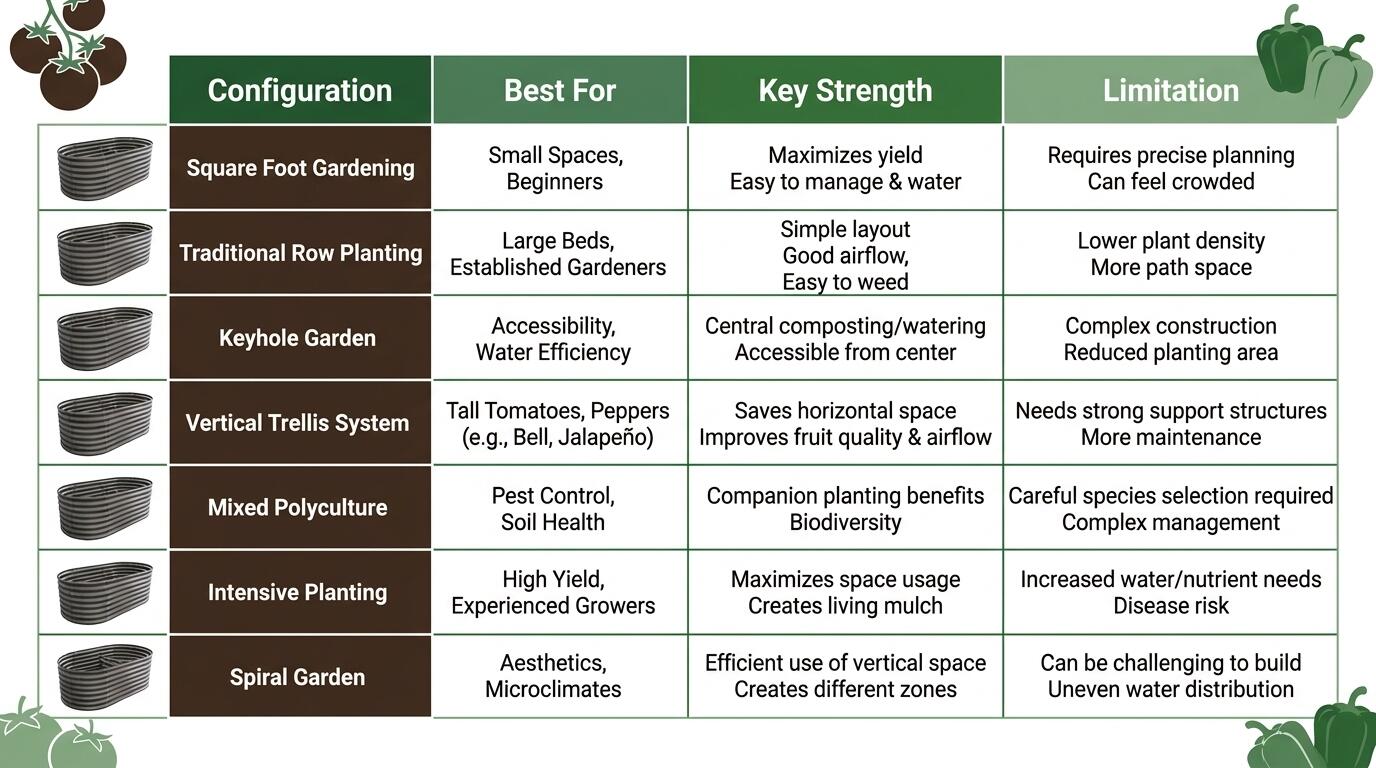
ALT: Comparison table of raised bed garden layout configurations for tomatoes and peppers in backyard growing setups
| Configuration | Best For | Key Strength | Limitation |
|---|---|---|---|
| Depth-first planning (24–30 in. tall) | Poor native soil; indeterminate tomatoes | Maximum root zone; reduces watering stress | Requires more fill material; higher upfront cost |
| 4-foot width standard | General-purpose growing; easy access | Full bed reach from both sides; low maintenance | Narrower is better in confined spaces |
| North-south orientation | New installations with flexible placement | Even sun distribution; reduces crop shading | Yard constraints may override ideal orientation |
| Square foot vs. row planting | Mixed-variety beds | Maximizes yield per square foot | Overcrowding risk if plant sizes are underestimated |
| Companion planting layout | Organic pest management; eco-conscious growers | Reduces pest pressure without chemicals | Requires research; wrong companions can harm crops |
| Multi-bed layout with wide pathways | Permanent kitchen gardens; families | Supports crop rotation; improves airflow | Requires more planning space and initial investment |
| Galvanized steel structure | Long-term installations; all climates | 20-year lifespan; structural integrity for staking | Higher upfront cost vs. wood or fabric beds |
How to Choose the Right Raised Bed Configuration for Your Situation
The right raised bed layout depends on three variables: your available space, the crops you want to prioritize, and your physical comfort requirements. Here is how to map your situation to the right configuration.
If you are starting with a small urban yard or a single patio space, prioritize a single 8x4 ft or 6x3 ft bed with good depth (at least 18–24 inches) and a north-south orientation. Get the fundamentals right in one bed before expanding. A modular design allows you to add beds in future seasons without starting over.
If you are an empty nester or retiree focused on accessibility and reduced physical strain, the waist-high and extra-tall configurations (30–35 inches) are worth the investment. The reduction in bending and kneeling makes daily garden maintenance sustainable over many seasons — which is ultimately what determines whether a garden gets tended or abandoned.
If you are a family grower aiming for meaningful summer tomato and pepper production, a two-bed layout — two 8x4 ft beds in parallel, one dedicated to each crop — is the most practical configuration. Keep pathways at least 24–30 inches wide, and plan your staking infrastructure at the same time you plan your bed placement.
If you are an eco-conscious grower focused on reducing chemical inputs, the companion planting configuration deserves serious attention. Position your beds to allow edge planting of basil and marigolds, and plan your raised bed planting layout so the companion border is accessible without stepping over the main crop.
A common misconception about raised bed gardening is that more beds automatically means more produce. In practice, more beds than you can maintain consistently means lower quality across the board. The most productive gardens we observe are not the largest — they are the best-maintained. Start with a layout you can realistically tend every week through a full growing season, then expand.
Common Questions
Q1: How deep should a raised bed be for growing tomatoes?
Tomatoes are deep-rooted crops that perform best with at least 18–24 inches of quality growing medium. A raised bed at this depth, filled with a quality soil system, supports full root development without competition from native ground. For indeterminate varieties — which keep growing and producing through the season — deeper beds (24–30 inches) reduce stress during heat periods and support higher overall yield. Soil depth is often the limiting factor in raised bed tomato performance, according to resources from cooperative extension horticulture programs.
Q2: Is it better to grow tomatoes and peppers in the same raised bed?
Growing tomatoes and peppers in the same raised bed is possible but requires careful layout planning. Both crops share similar soil and sun requirements, which simplifies management. The challenge is their size difference: indeterminate tomatoes grow large and can shade pepper plants significantly if not managed. If sharing a bed, position peppers on the southern edge in a north-south oriented bed and ensure your tomato staking system keeps growth vertical rather than sprawling. Separate beds with dedicated spacing for each crop generally produce better results for growers with enough space.
Q3: How long does a galvanized steel raised garden bed last, and is it worth the cost?
A quality galvanized steel raised garden bed is built for long-term use — Anleolife's beds, for example, are designed for a 20-year lifespan. Spread over two decades, the per-year cost of a galvanized steel bed is typically lower than the cumulative cost of replacing wood beds, which can rot or warp in as few as three to five years depending on climate and wood species. For growers committing to a permanent raised bed layout, galvanized steel is the more cost-effective choice over any multi-season horizon. Delivery from Anleolife's U.S. warehouse network takes 3–8 business days.
Final Thoughts
The best raised bed configuration for tomatoes and peppers is not a single fixed design — it is the result of aligning several well-considered decisions: soil depth, bed width, sun orientation, plant spacing, companion planting, and structural material. Each variable compounds the others. Get most of them right, and your plants largely take care of themselves. Miss two or three, and no amount of fertilizer or pest management will fully compensate.
Key Takeaways:
- Prioritize depth first — 18–24 inches minimum for tomatoes, with 30-inch extra-tall beds offering the best root zone and accessibility for daily gardening.
- Keep bed width at four feet or less so every plant stays within comfortable reach through a long growing season.
- Orient beds north-south to distribute sunlight evenly across both rows and both crops.
- Use a hybrid spacing approach — row planting for tomatoes, grid planting for peppers — to maximize yield in a shared or adjacent bed.
- Invest in galvanized steel construction for structural integrity that supports staking systems and lasts across many growing seasons.
The most practical next step is to sketch your available yard space, identify the sun exposure pattern across the day, and match a bed configuration from this guide to what your space actually allows. Start with one or two well-configured beds this season, maintain them consistently, and let your results guide your expansion in the seasons ahead.
Ready to build a raised bed layout that works as hard as you do? Browse the full range of metal raised garden beds at the Anleolife website, available through the official Anleolife.com site and major retailers including Amazon, Walmart, Home Depot, Lowe's, and Wayfair. With a nationwide warehouse network across California, Texas, Florida, New York, Illinois, and Washington, your order arrives in 3–8 business days — so your garden planning can move from paper to soil without delay. Whether you are outfitting your first raised bed or expanding into a full planting-and-raising ecosystem, Anleolife grows with you every step of the way.
References
- Growing the Home Garden. "My Vegetable Garden Layout Part 2 (Raised Beds)".
https://growingthehomegarden.com/my-vegetable-garden-layout-part-2/ - Instagram. "Vegetable Garden Layout Raised Beds".
https://www.instagram.com/popular/vegetable-garden-layout-raised-beds/ - United States Department of Agriculture (USDA). Agricultural Research and Extension Resources.
https://www.usda.gov/ - National Gardening Association. Vegetable Gardening and Plant Care Resources.
https://garden.org/ - University of California Cooperative Extension. Home Gardening and Vegetable Production Guidance.
https://ucanr.edu/
Note: Standards and guidelines may be updated; please check the latest official documents or consult professional advisors for current recommendations.