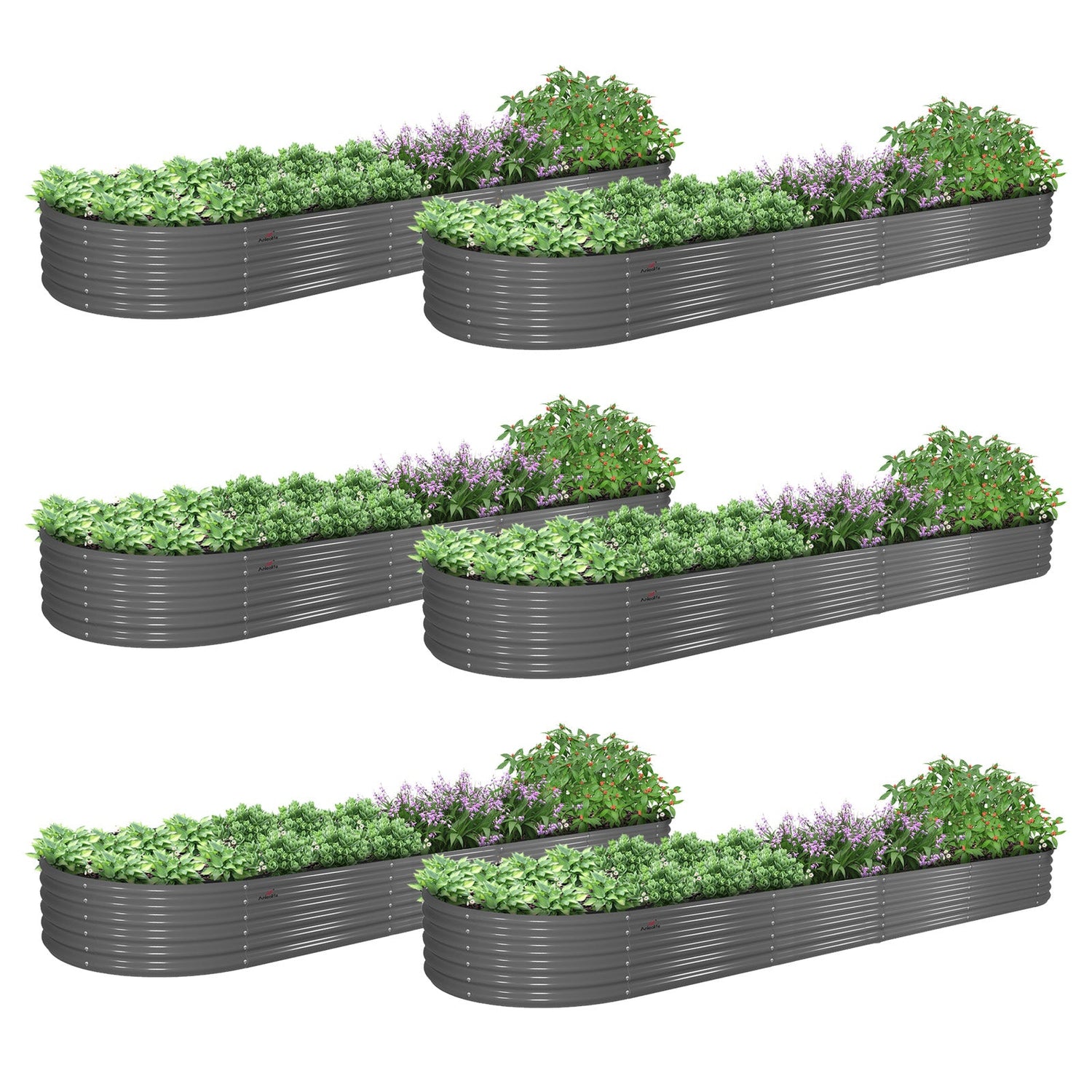



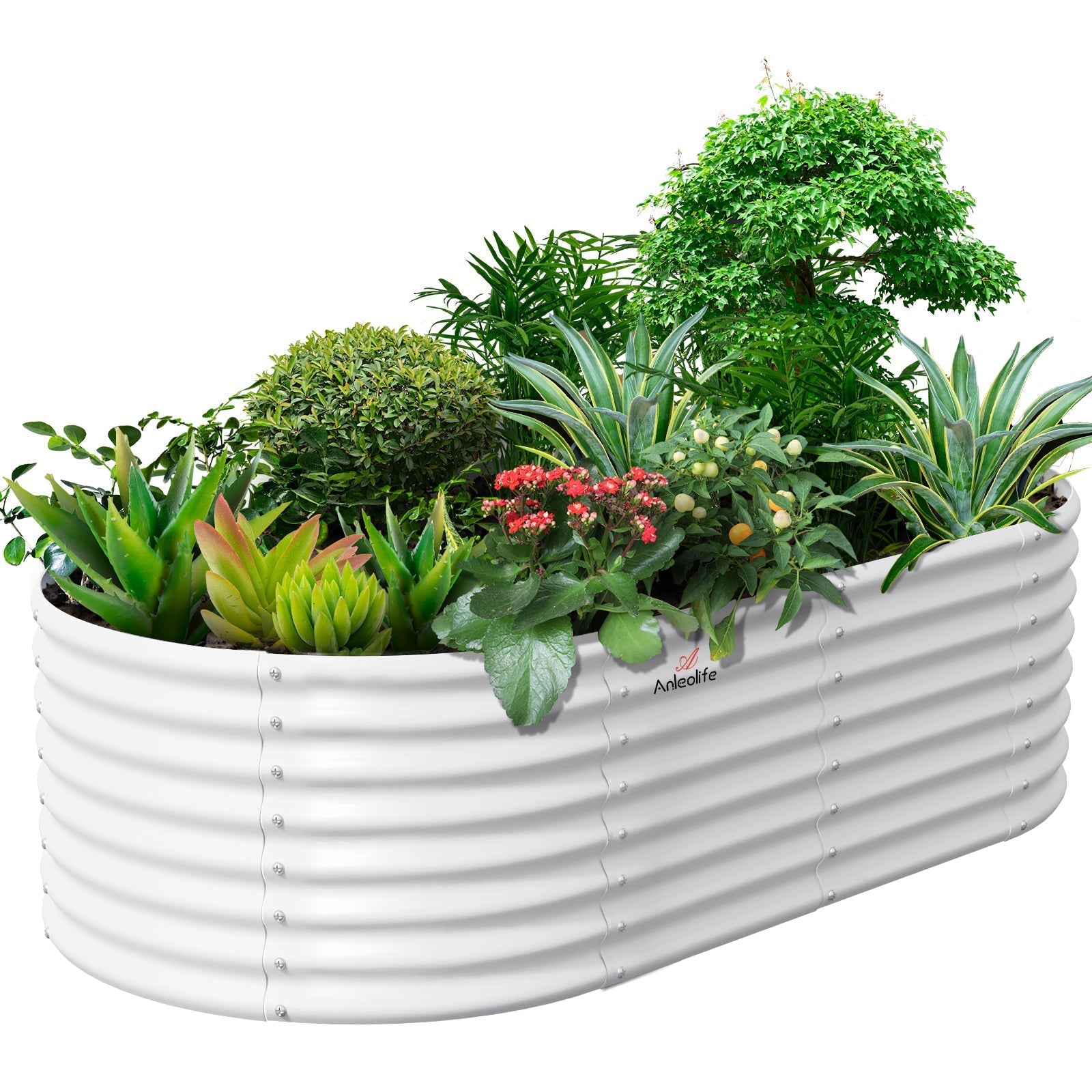

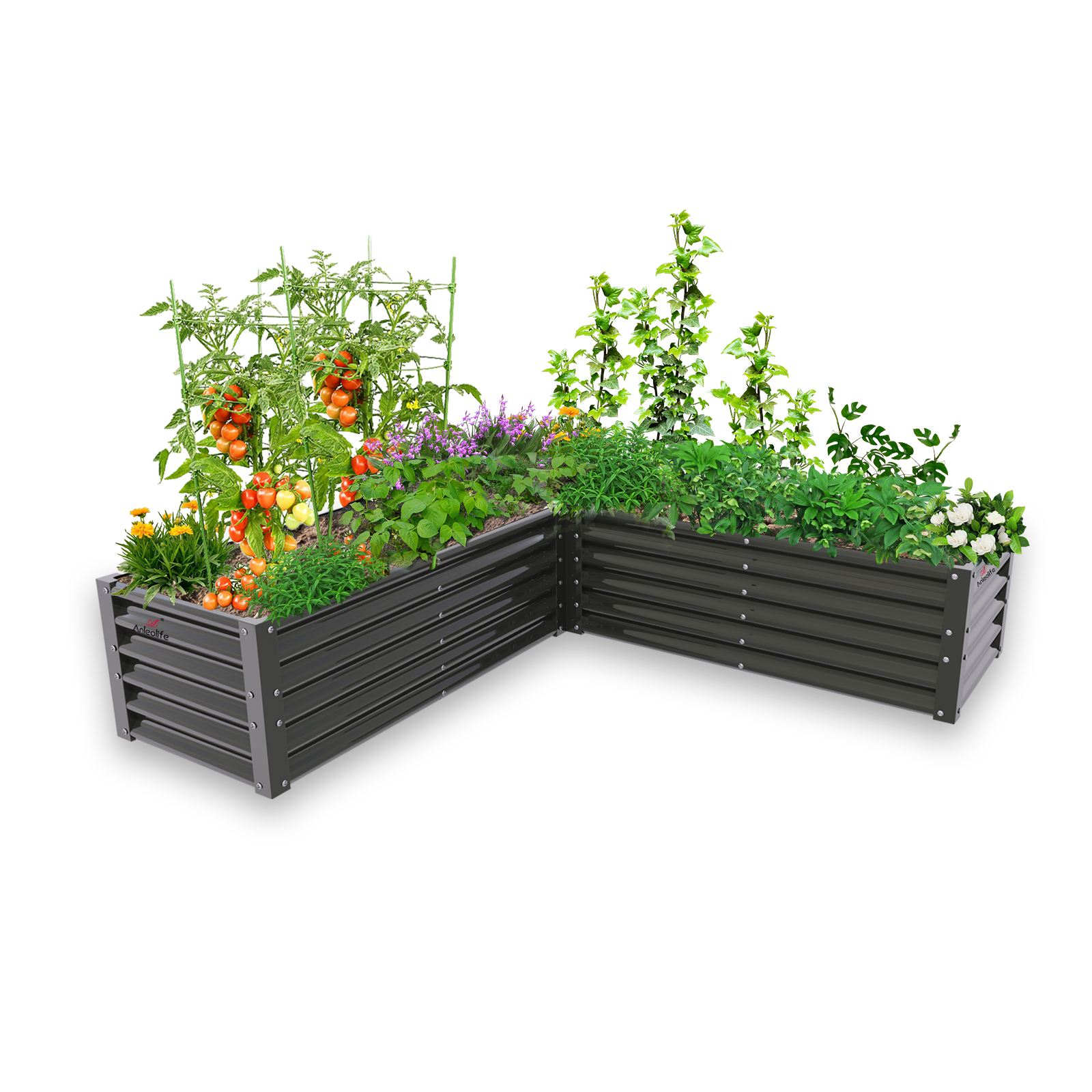
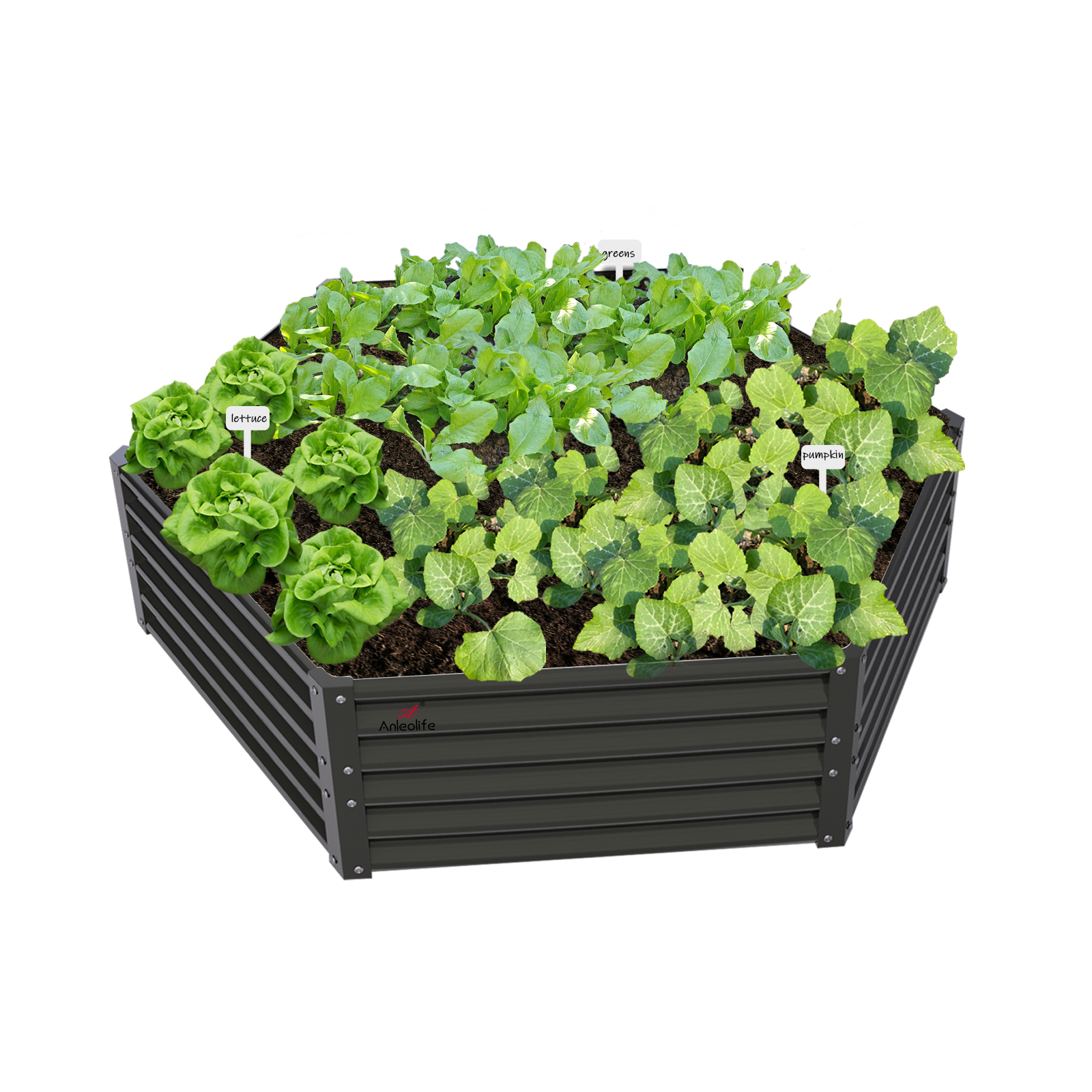
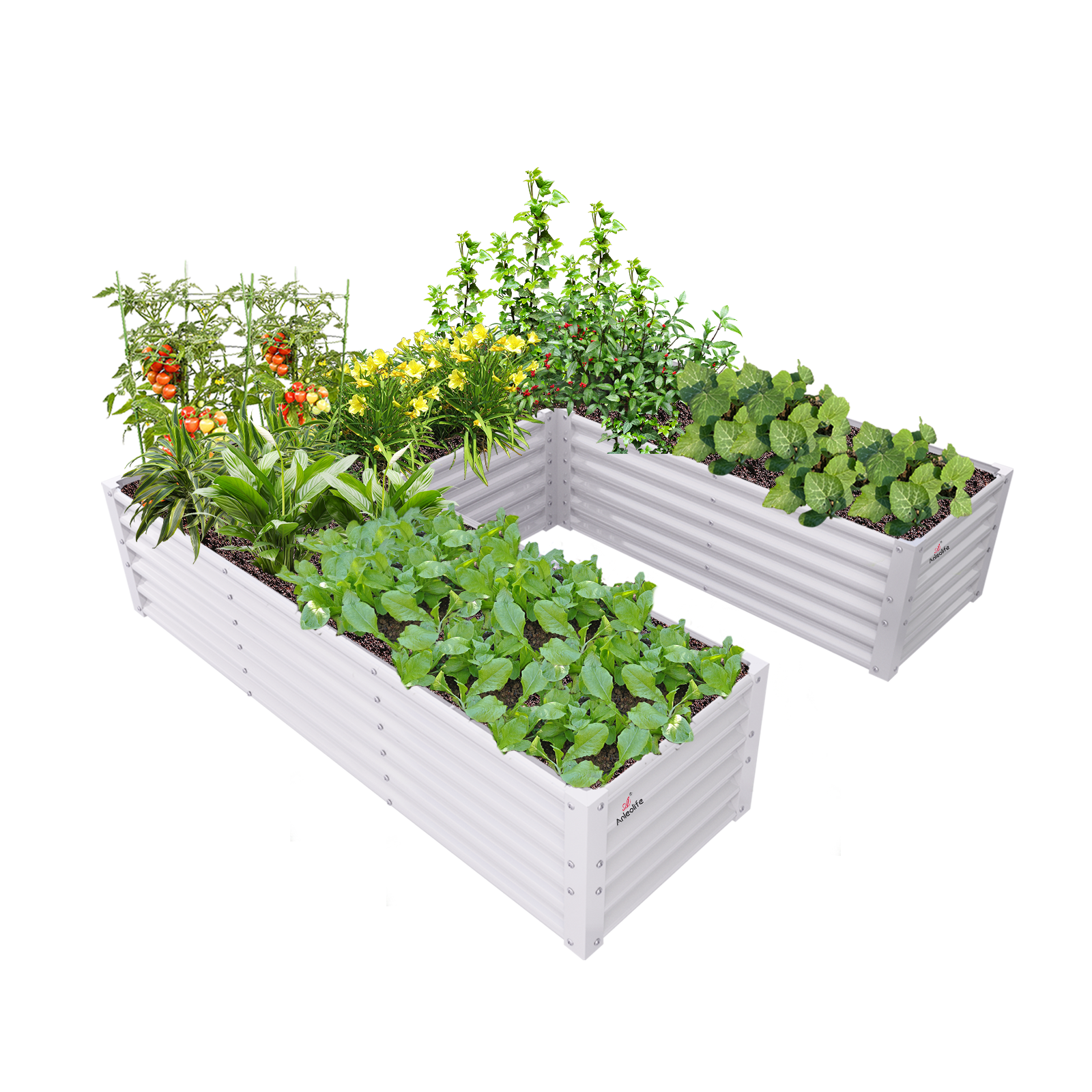

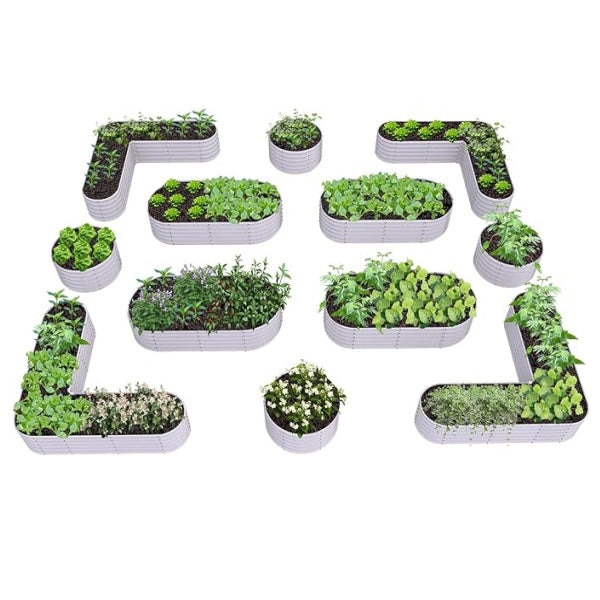


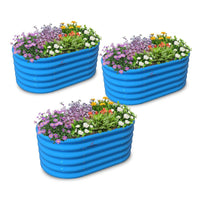
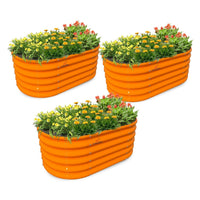
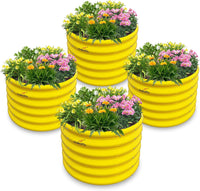
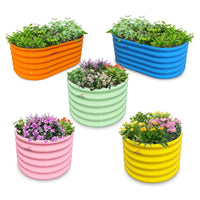
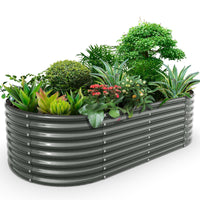



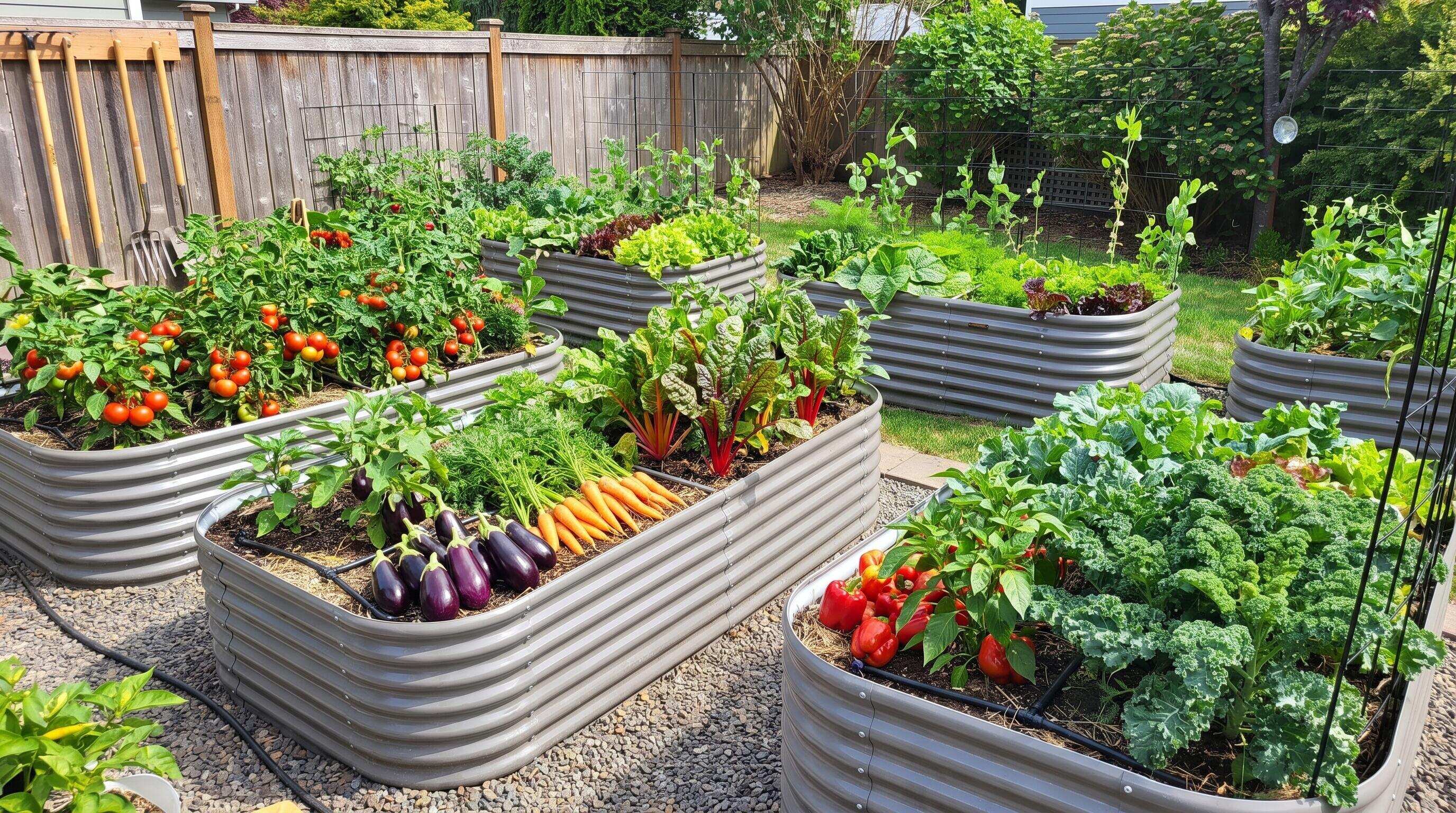
ALT: Compact backyard raised bed garden layout with multiple galvanized steel beds in efficient planting arrangement
Choosing the Right Raised Bed Kit Size: What Every Compact Backyard Gardener Should Know
The compact backyard presents one of the most nuanced challenges in raised bed garden layout planning — limited space demands that every square foot earns its place, yet the wrong size choice can leave a gardener either overwhelmed with underused real estate or frustrated by beds too cramped to grow anything satisfying. In our work with clients across North America, a pattern we consistently see is that new gardeners underestimate how profoundly bed size governs not just what grows, but how enjoyably and sustainably the garden functions season after season.
This article compares the most practical raised bed kit size categories for compact backyards — compact beds (roughly 4x2 to 6x3 ft), mid-range beds (8x4 ft), and modular multi-bed configurations — evaluated against the criteria that matter most to real home gardeners: space efficiency, planting capacity, ergonomics, cost-to-value ratio, and long-term adaptability. By the end, you will have a clear raised bed planting layout framework to choose the configuration that genuinely fits your yard, your body, and your goals.
Evaluation Criteria: How to Judge a Raised Bed Layout for a Small Yard
Choosing the right raised bed layout for a compact backyard requires more than measuring the open patch of lawn. Five criteria consistently separate layouts that thrive from those that cause ongoing frustration.
Space efficiency is the first and most fundamental criterion. In a compact backyard, the ratio of productive growing area to total footprint — including the pathways required to access beds — determines how much food or beauty your space actually generates. A bed that is too wide creates unreachable center zones; a bed that is too long creates bottlenecks in movement.
Planting capacity and companion planting compatibility matter because raised bed gardening at a small scale depends on maximizing plant diversity per square foot. Using a square-foot planting grid system (a well-documented method popularized by structured garden planning resources) allows gardeners to coexist crops that deter pests, share root depth zones, and stagger harvest windows — all of which require adequate bed dimensions.
Ergonomics and accessibility are especially relevant for empty nesters and retirees. Bed height determines whether kneeling is required; bed width determines whether the gardener can reach the center without straining. A layout that demands awkward body mechanics becomes a layout that gets abandoned.
Durability and material quality define the long-term economics of your investment. Galvanized steel raised garden beds from Anleolife are designed with a 20-year lifespan, which means the right size decision today compounds in value over decades — not just one or two seasons.
Scalability and future flexibility round out the criteria. Many compact backyard gardeners start with one bed and want to expand. Choosing a size and system that allows modular growth — adding beds, connecting configurations, or diversifying into different raised bed heights — protects against the all-too-common regret of painting yourself into a corner.
The Contenders: Raised Bed Sizes for Compact Backyards
Compact Beds (4x2 ft to 6x3 ft): Maximum Flexibility in Minimum Space
A compact raised bed — in the range of 4x2 to 6x3 feet — is the entry-level configuration that delivers genuine growing capacity without demanding a large yard. These beds are narrow enough that an average adult can reach the center from either long side without stepping in, which is exactly the ergonomic standard serious gardeners rely on.
Anleolife offers several options in this category. The Rust-Resistant Raised Garden Bed in 18" Tall 6x3 ft and the 24" Extra Tall 6x3 ft provide two height options within the same footprint — a meaningful difference for those who want deep soil capacity for root vegetables or who prefer to garden standing up. The Galvanized Steel line includes a 24" Extra Tall 6x3 ft and a 30" Extra Tall 6x3 ft, taking the same compact footprint to waist-level heights that eliminate bending entirely. For the smallest yards, the 22" Tall 4x2 ft Rust-Resistant option offers a genuinely petite footprint that fits patios, narrow side yards, and corners that most other beds cannot reach.
Compact beds excel as starter configurations, as standalone herb gardens, or as satellite beds in a multi-bed layout that creates dedicated growing zones — one for herbs, one for salad greens, one for flowering companions.
Mid-Range Beds (8x4 ft): The Workhorse of Raised Bed Planting Layouts
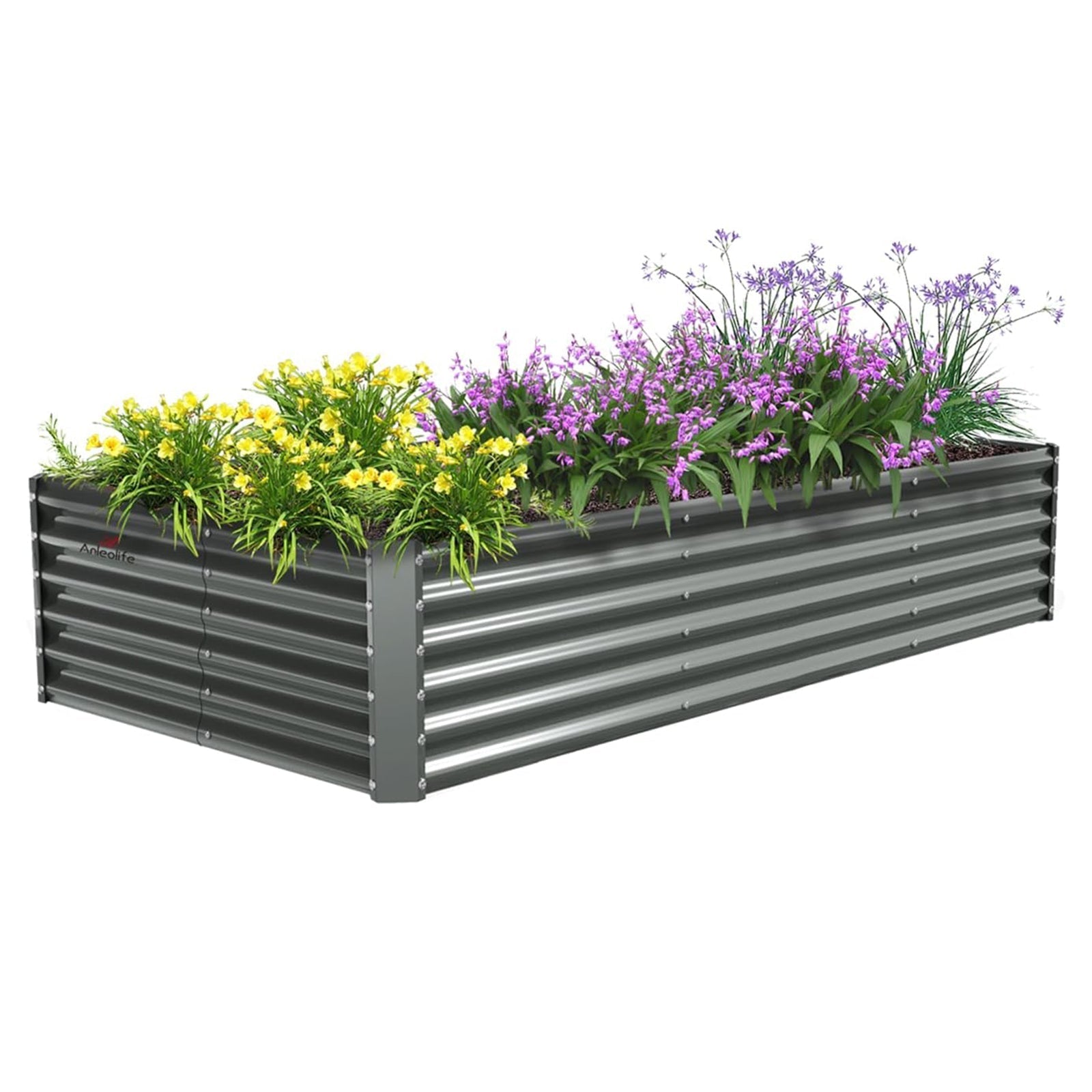
An 8x4 ft raised bed is the most commonly recommended single-bed configuration for serious kitchen gardening in a constrained space. The 4-foot width respects the reach rule, while the 8-foot length provides enough linear space to divide the bed into meaningful crop zones — one end for taller plants like tomatoes or pole beans, the middle for medium growers like peppers or eggplant, and the other end for low-profile lettuce or herbs.
Anleolife's 8x4 ft line is among the most varied in the range. The Galvanized Steel Raised Garden Bed 18" Tall 8x4 ft and the 24" Extra Tall 8x4 ft offer standard and deeper options. For gardeners who prioritize accessibility above all, the Rust-Resistant 24" Extra Tall 8x4 ft and the Modular Raised Garden Bed 30" Extra Tall 8x4 ft reach heights that make this configuration fully accessible without crouching. These beds are well-suited to the classic raised bed garden layout described by authoritative resources like the Old Farmer's Almanac, which positions the 4-foot-wide bed as the optimal width for arm reach and airflow management.
The 8x4 ft bed occupies a larger footprint than compact options, so pathway planning becomes more important. A well-documented spacing guideline is to allow at minimum 18 to 24 inches of walking path between beds — enough for comfortable movement and, where needed, wheelbarrow access.
Modular Multi-Bed Configurations: Scalable Raised Bed Layouts for Growing Ambitions
A modular configuration is not a single bed size but a planned arrangement of multiple beds, often mixing compact and mid-range footprints, to create a complete raised bed garden layout system. The value proposition of modular planning is that it makes a compact backyard feel intentional and expansive simultaneously — each bed has a clear role, pathways become defined garden corridors, and the overall layout reads as a designed outdoor space rather than a miscellaneous collection.
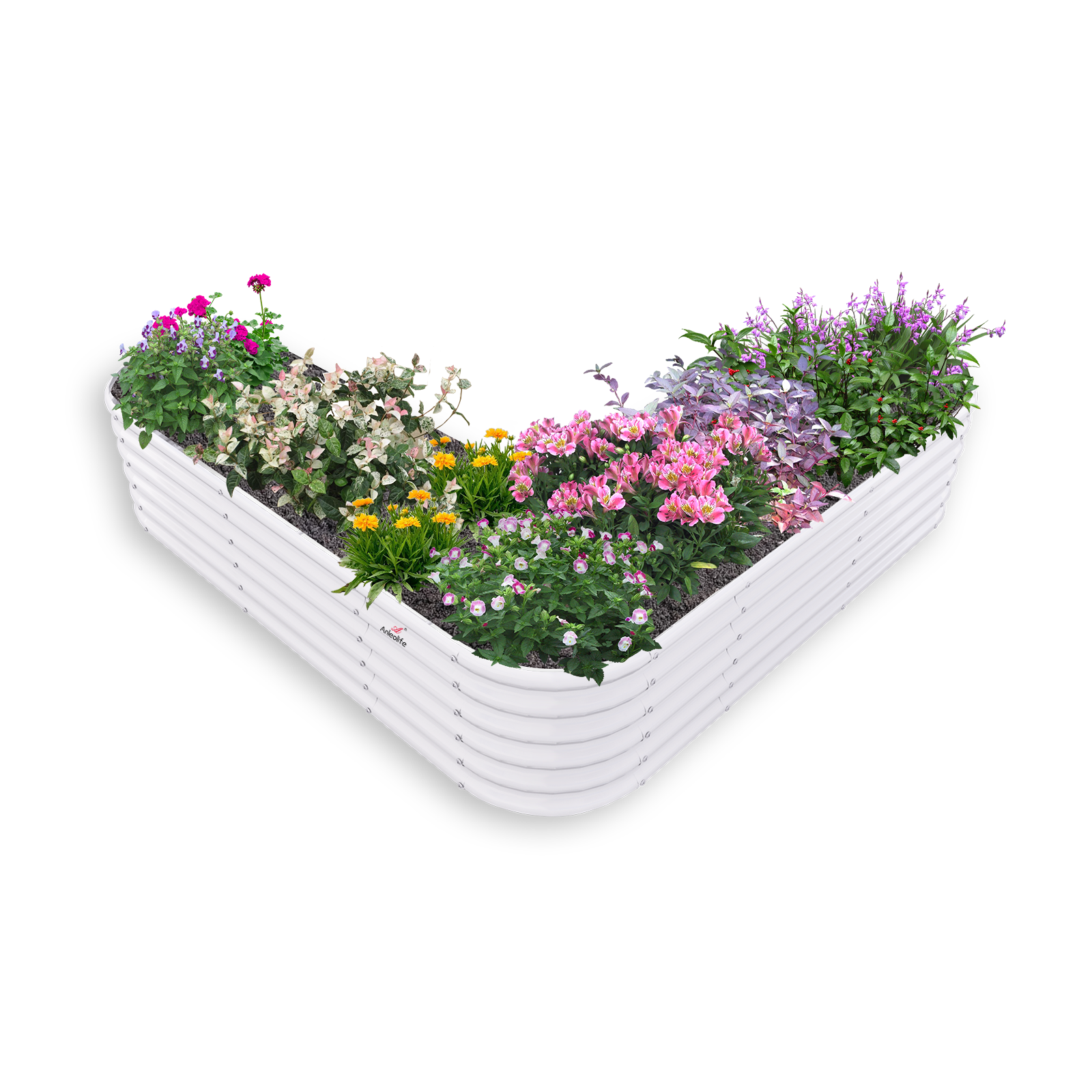
Anleolife's Modular Raised Garden Bed line is specifically engineered for this approach, available in a range of footprints from 18" Tall 6x2 ft to 30" Extra Tall 8x4 ft. These panels can be arranged in L-shapes, U-shapes, and parallel rows, adapting to yard geometry that standard pre-set beds cannot accommodate. For gardeners who want to grow beyond kitchen staples into a planting-and-raising ecosystem, the modular approach also integrates cleanly with companion structures. If you are just beginning to explore this territory, our guide to top DIY raised garden bed kits for beginners this growing season provides a practical orientation to modular-friendly starter options.
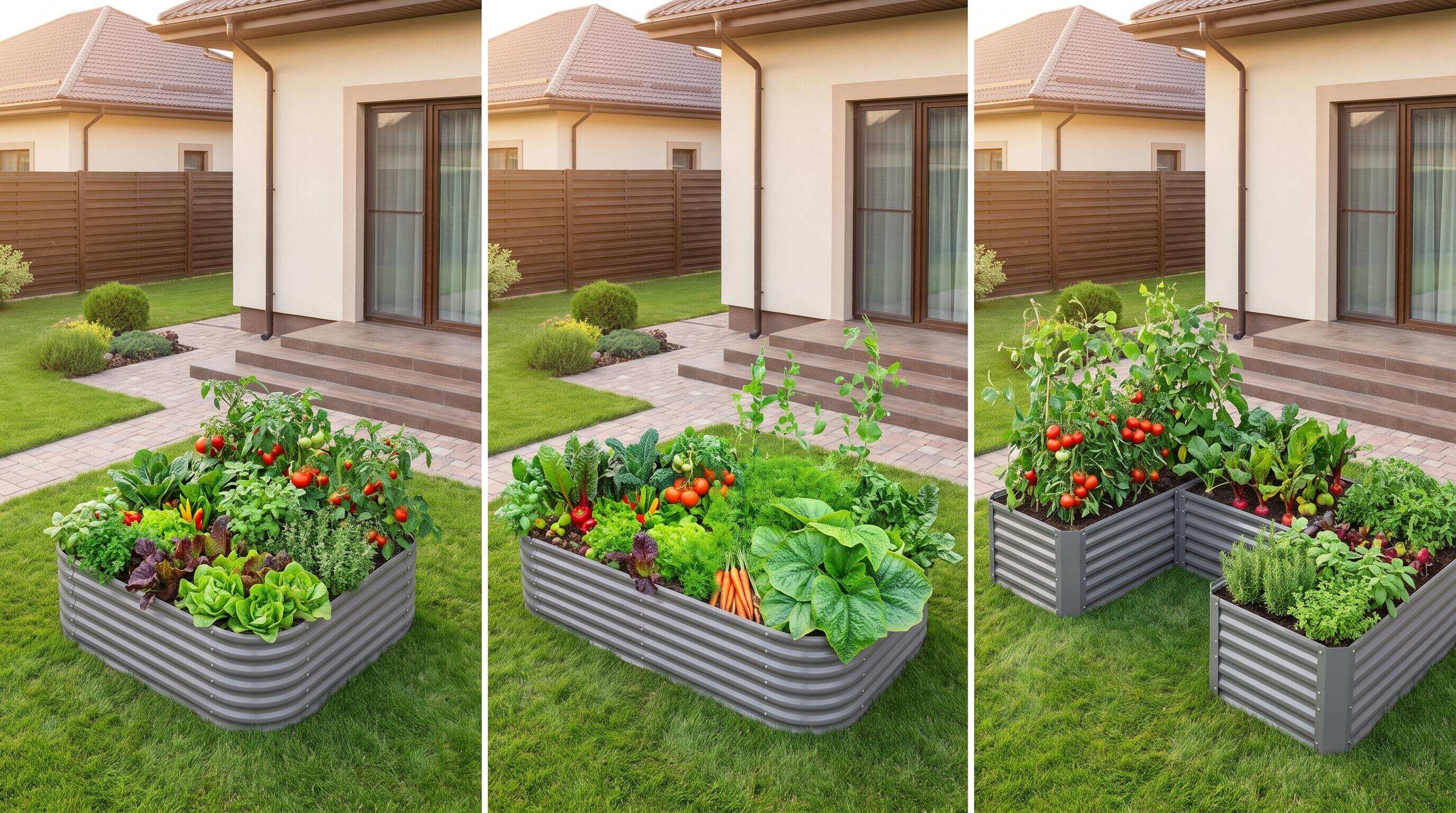
ALT: Side-by-side comparison of compact, mid-range 8x4, and modular raised bed garden layout configurations for small backyard spaces
Head-to-Head Comparison: Raised Bed Layout Sizes Evaluated
| Criterion | Compact Beds (4x2 to 6x3 ft) | Mid-Range Beds (8x4 ft) | Modular Multi-Bed Configurations |
|---|---|---|---|
| Space Efficiency | High — minimal footprint, fits corners and patios | Moderate — requires deliberate pathway planning | Variable — depends on design but maximizes overall use when planned well |
| Planting Capacity | Moderate — best for herbs, greens, shallow-root crops | High — accommodates full crop diversity including tall plants | Highest — crop zoning across dedicated beds |
| Ergonomics | Excellent — easy reach from all sides | Good — requires pathway access on long sides | Excellent when beds are individually sized correctly |
| Best Height Options | 18" to 30" Extra Tall available | 18" to 30" Extra Tall available | 18" to 30" Extra Tall available |
| Durability | 20-year lifespan (galvanized/rust-resistant steel) | 20-year lifespan (galvanized/rust-resistant steel) | 20-year lifespan (galvanized/rust-resistant steel) |
| Scalability | Easy to add more units | Requires more space per addition | Designed for staged expansion |
| Best For | Beginners, patio gardeners, solo crops | Serious kitchen gardeners, mixed vegetable plots | Growing families, multi-season planners, long-term gardeners |
| Initial Investment | Lower | Moderate | Moderate to higher depending on configuration |
The table reveals a clear pattern worth unpacking. Compact beds win decisively on flexibility and low commitment — they are the right answer when space is genuinely tight, when the gardener is uncertain about long-term commitment, or when specific micro-zones (a sunny corner, a patio edge) need to be activated without redesigning the entire yard. Their limitation is aggregate capacity: a single 4x2 or 6x3 bed will not feed a family through a growing season, but paired with one or two additional compact beds, it begins to approach meaningful production.
Mid-range 8x4 ft beds represent the highest single-bed value for most kitchen gardeners. According to planning resources like Savvy Gardening's documented 4x8 raised bed vegetable garden layout ideas, a single well-planned 8x4 bed can support a surprisingly diverse crop mix using companion planting and vertical growing techniques. The trade-off is footprint: an 8x4 bed in a small backyard consumes a meaningful proportion of available space, so the pathway and orientation decisions around it must be made deliberately.
Modular configurations are the most sophisticated answer and the highest-ceiling option for compact backyards that are not truly tiny — yards in the 200 to 400 square foot usable range, for instance, where a planned arrangement of three to five beds creates a genuinely productive kitchen garden ecosystem. The upfront design investment pays dividends in every subsequent season, and the modular panel design allows adjustment as the gardener's needs evolve. Understanding material longevity matters here, too: choosing beds built to last means the layout you design today can serve you for up to 20 years, making it worth investing time in getting the configuration right from the start.
Which Should You Choose? Scenario Recommendations for Every Compact Backyard
The right raised bed planting layout for your backyard depends less on abstract preference and more on the concrete intersection of your space, your body, and your gardening goals. Here is how the decision maps in practice.
If you have a patio, balcony, or side yard with limited continuous ground space, choose a compact bed. The Rust-Resistant 22" Tall 4x2 ft or the Galvanized Steel 18" Tall 6x3 ft are sized to activate spaces that standard beds cannot reach. Pair two or three of these in different sun-exposure zones to create a distributed garden without a continuous garden footprint.
If you are gardening primarily to produce kitchen vegetables — tomatoes, peppers, cucumbers, lettuce, herbs — for a household of two to four people, an 8x4 ft bed is the most efficient single-bed choice. The 24" Extra Tall 8x4 ft in the Galvanized Steel or Rust-Resistant line gives you deep soil for root vegetables while the generous surface area supports a full companion planting grid. According to the Old Farmer's Almanac's documented raised bed garden layout plans for beginners, organizing an 8x4 bed into a square-foot grid dramatically increases yield while simplifying crop rotation planning.
If you are an empty nester or retiree prioritizing comfort and ease of maintenance, prioritize height over all else. The 30" Extra Tall configurations across both the Galvanized Steel and Modular lines bring the soil surface to approximately counter height, eliminating the need to kneel or deeply bend. Pair one or two of these tall beds with a compact bed at a lower height for crops that benefit from cooler soil, and you have a layout that works with your body, not against it.
If you are planning a long-term kitchen garden that will expand over time, start with one 8x4 ft bed or two compact beds, and design your pathway system from the beginning to accommodate future additions. The modular approach rewards this thinking: you can add panels, reconfigure corners, and grow the overall raised bed layout in stages. For an in-depth look at how to plan for multi-season bed use, the first-time buyer's guide to sizing a raised garden bed kit walks through the key decisions in sequence.
If your primary concern is long-term durability and you want to make one careful investment, all Anleolife galvanized steel and rust-resistant beds carry a 20-year lifespan rating, so the size decision is the critical variable — not the material durability question. Focus your energy on matching footprint to space and height to physical comfort.
Compact beds offer the pros of low commitment, maximum flexibility, and easy relocation; the cons are limited per-bed production and the need for multiple units to reach meaningful yield. Mid-range 8x4 beds offer the pros of high single-bed productivity and well-documented layout frameworks; the cons are a larger footprint and less flexibility for irregular spaces. Modular configurations offer the pros of full customization and long-term scalability; the cons are higher upfront planning effort and cost.
People Also Ask
Q1: How do I decide how many raised beds to fit in a compact backyard?
Start by measuring your usable backyard area and subtracting at least 18 to 24 inches on all sides of each bed for walking access. A useful rule in raised bed garden layout planning is to prioritize sun exposure first — place beds where they receive six or more hours of direct sunlight — and then fit the number and size of beds around that sun map. Most compact backyards can accommodate one to three beds without feeling crowded, depending on yard shape and existing structures.
Q2: Are taller raised beds better for a small backyard layout?
Taller raised beds are not universally better, but they are strongly advantageous in specific scenarios. For gardeners with mobility limitations, back pain, or aging joints, a 24" to 30" Extra Tall bed eliminates most bending and kneeling. For plants with deep root systems — carrots, parsnips, deep-rooted tomatoes — the extra soil depth supports healthier growth. In a compact backyard, tall beds also make efficient use of vertical space, which is the most underutilized dimension in small-yard raised bed planting layouts.
Q3: How long will a galvanized steel raised bed last in a compact backyard, and does size affect durability?
Anleolife's galvanized steel raised garden beds are rated for a 20-year lifespan, regardless of the specific footprint size chosen. Bed dimensions do not inherently affect material durability — the steel gauge and protective galvanization treatment are consistent across the product line. What does affect long-term performance is proper soil drainage, which is one reason well-planned raised bed layouts elevate beds above grade and use well-draining soil systems. Delivery for new beds arrives within 3 to 8 business days from Anleolife's nationwide warehouse network.
Summary
Choosing the right raised bed kit size for a compact backyard comes down to three core principles that cut through the noise of endless options and specifications.
First, match bed width to your arm reach, not your ambition. The 4-foot maximum width is a hard ergonomic boundary that applies whether you choose a compact 4x2 ft bed or a full 8x4 ft — exceeding it creates dead zones you cannot plant or tend effectively. This single rule eliminates a surprising number of poor size choices before they happen.
Second, match bed height to your body and your crops. The difference between an 18" standard bed and a 30" Extra Tall bed is the difference between kneeling in soil and standing comfortably at a counter-height planting surface. For root vegetables and deep-soil crops, the extra height doubles as functional planting depth. Neither is universally better; both serve specific gardeners and crops.
Third, plan your raised bed layout for the garden you want in five years, not just the one you want this weekend. Beds rated for 20 years of use and built from modular-compatible materials give you the flexibility to expand, reconfigure, and refine your layout as your skills, appetite for gardening, and physical needs evolve.
Your next step is to measure your backyard, map your sun exposure for a full day, and identify the continuous usable zone where beds can be placed with proper pathway clearance. Once you have that measurement in hand, the size decision becomes straightforward rather than overwhelming.
Explore the complete range of raised bed sizes and configurations at Anleolife's official website to find the bed that fits your backyard, your goals, and your timeline.
Ready to build a raised bed garden layout that genuinely works for your compact backyard? Browse Anleolife's full line of galvanized steel and rust-resistant raised garden beds — from compact 4x2 ft starter options to 30" Extra Tall modular systems — on Amazon, Walmart, Home Depot, Lowe's, Wayfair, or directly at Anleolife.com. With warehouse locations across California, Texas, Florida, New York, Illinois, and Washington, your beds arrive in 3 to 8 business days so you can start planting without delay. As your garden grows, Anleolife's modular product ecosystem grows with you — from your first raised bed to a full planting-and-raising setup built exactly around your life.
Sources & Citations
- The Old Farmer's Almanac. "Raised Bed Garden Layout Plans."
https://www.almanac.com/raised-bed-vegetable-garden-layouts-beginners - Savvy Gardening. "4x8 Raised Bed Vegetable Garden Layout Ideas."
https://savvygardening.com/4x8-raised-bed-vegetable-garden-layout/ - Gardener's Supply Company. "Pre-Planned Gardens."
https://www.gardeners.com/pages/kitchen-garden-planner-preplanned-gardens - United States Department of Agriculture (USDA). National Agricultural Library — Home and Garden resources.
https://www.nal.usda.gov/
Note: Standards and guidance documents may be updated; please check the latest official sources or consult professional advisors for current recommendations.