


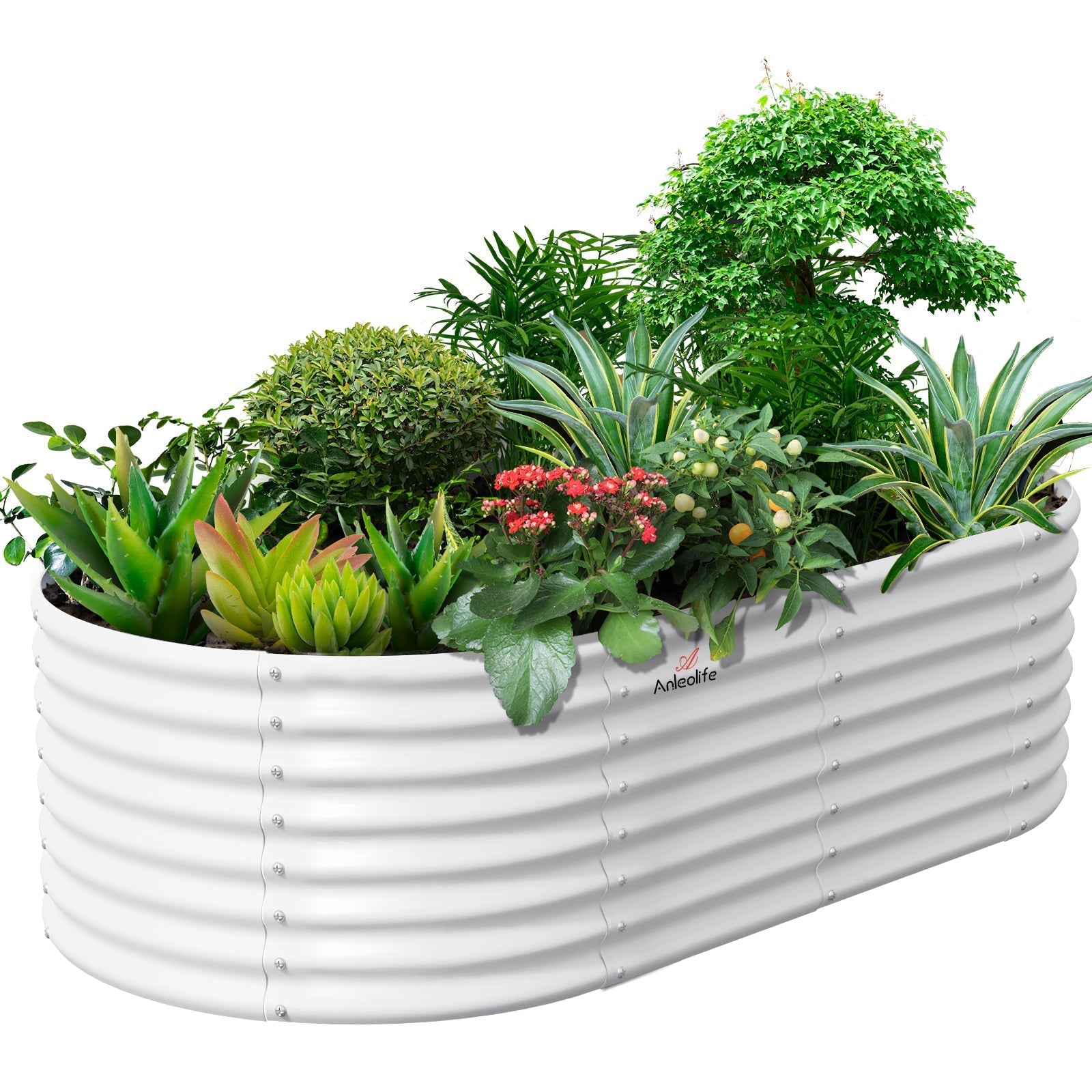
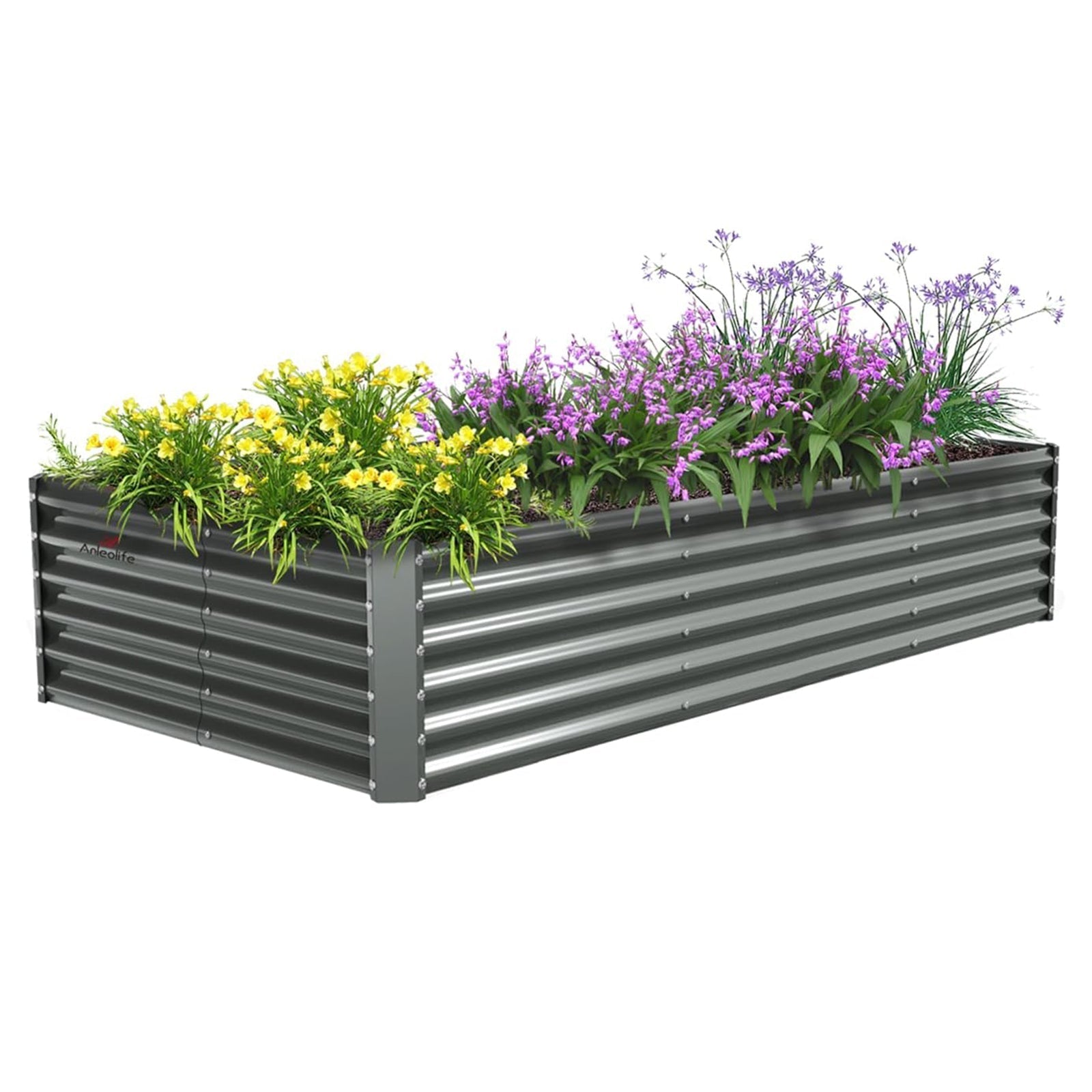

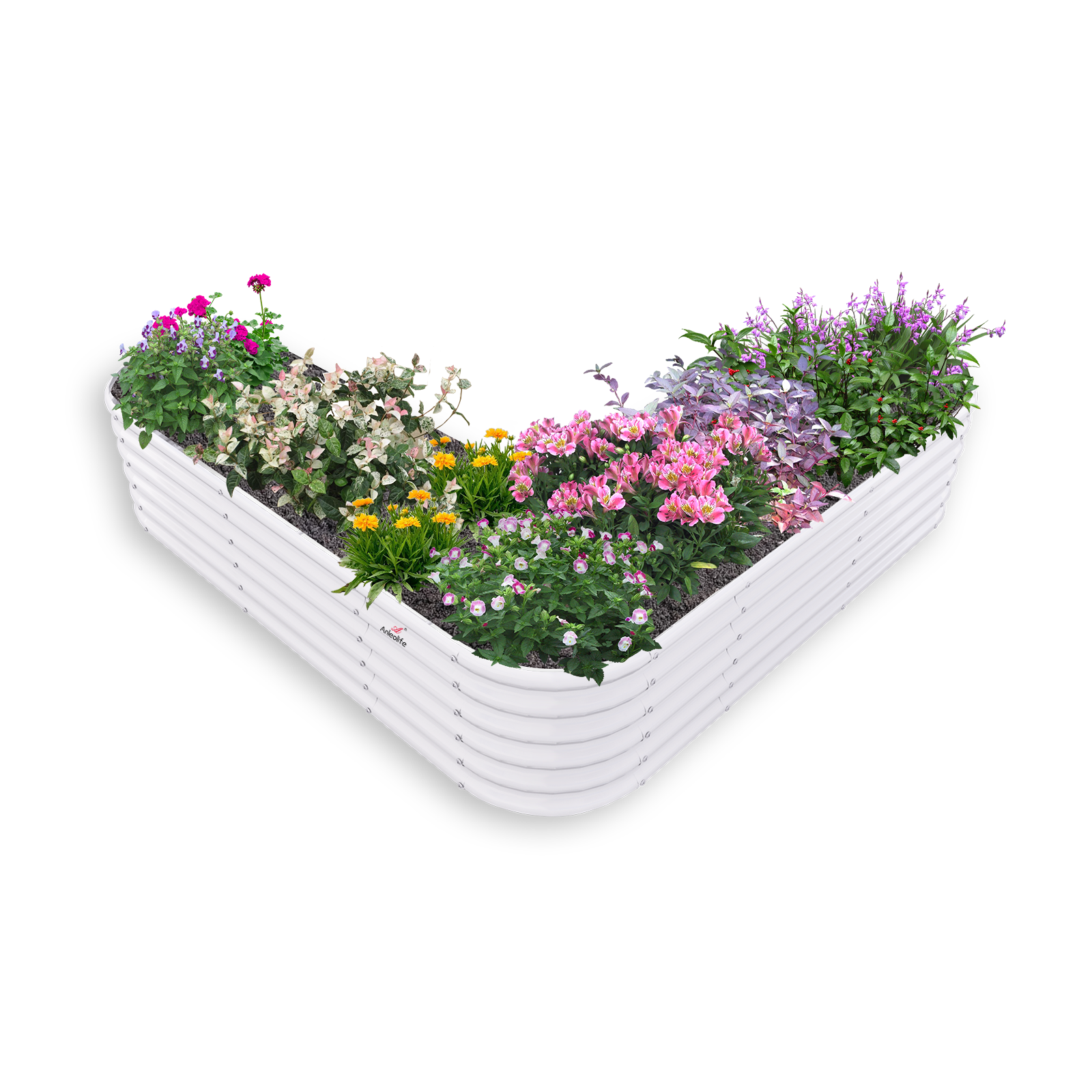
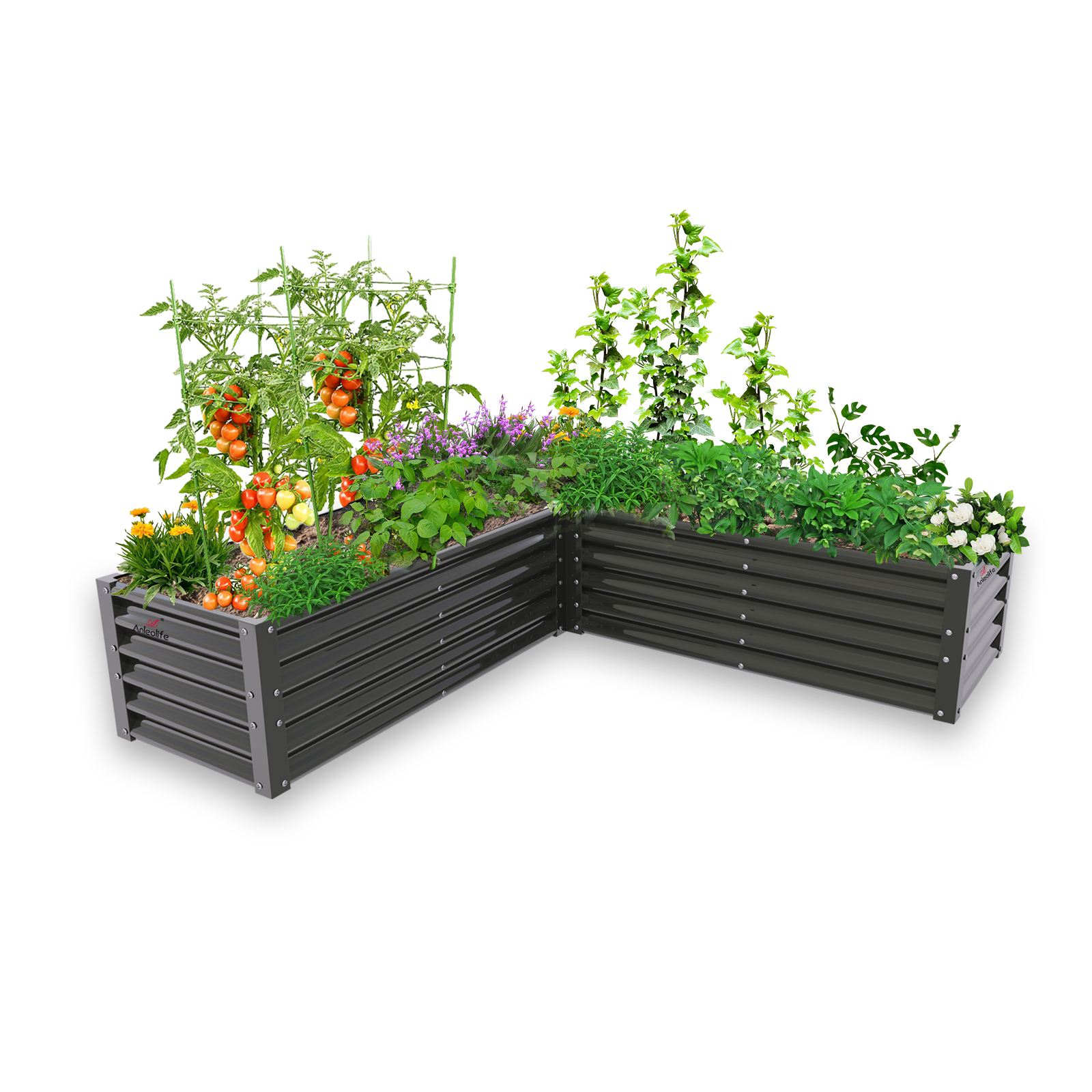
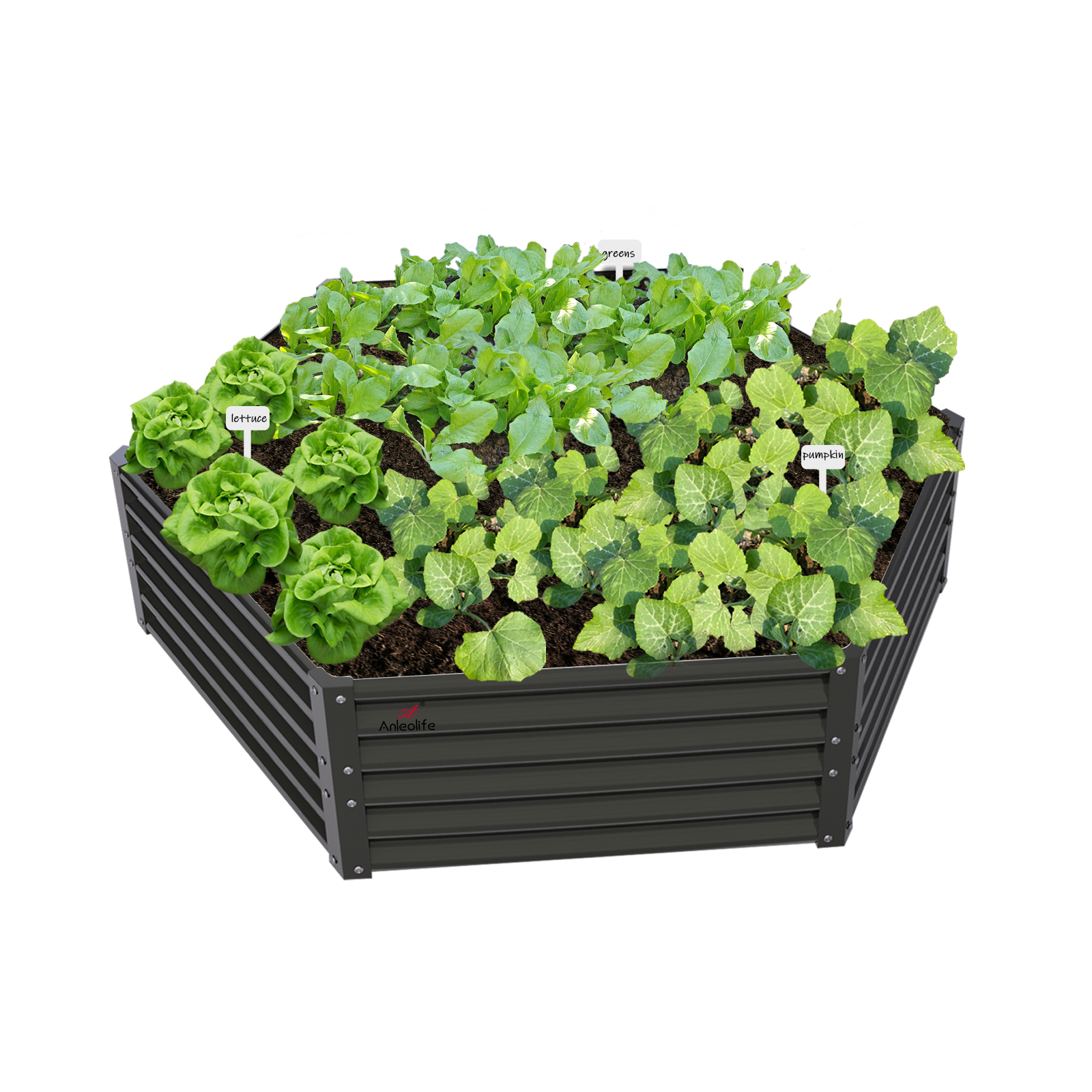
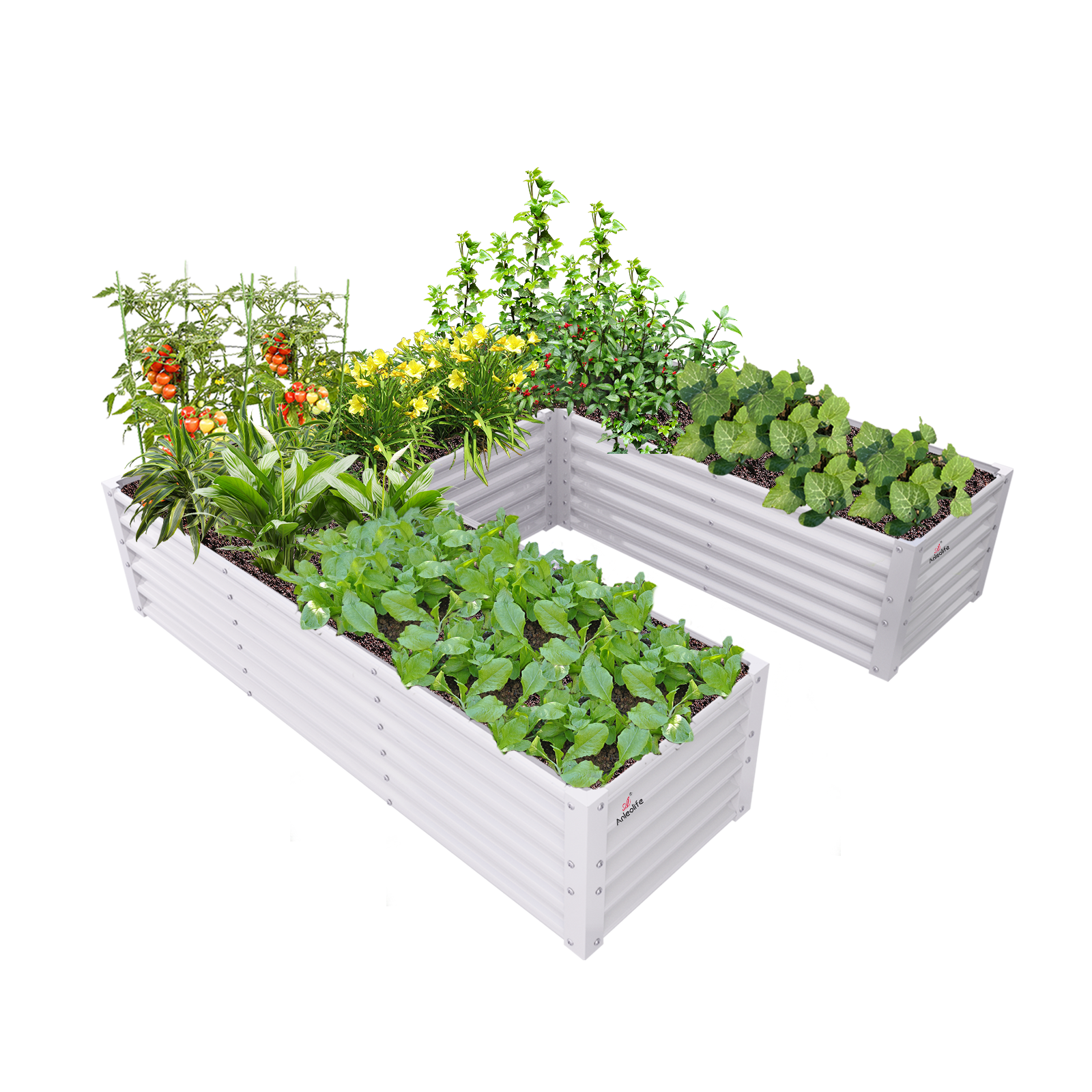



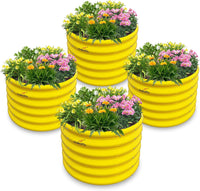
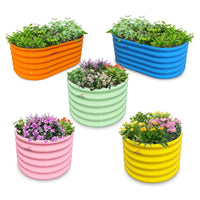
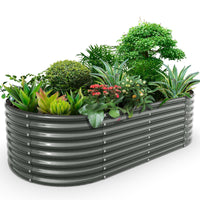



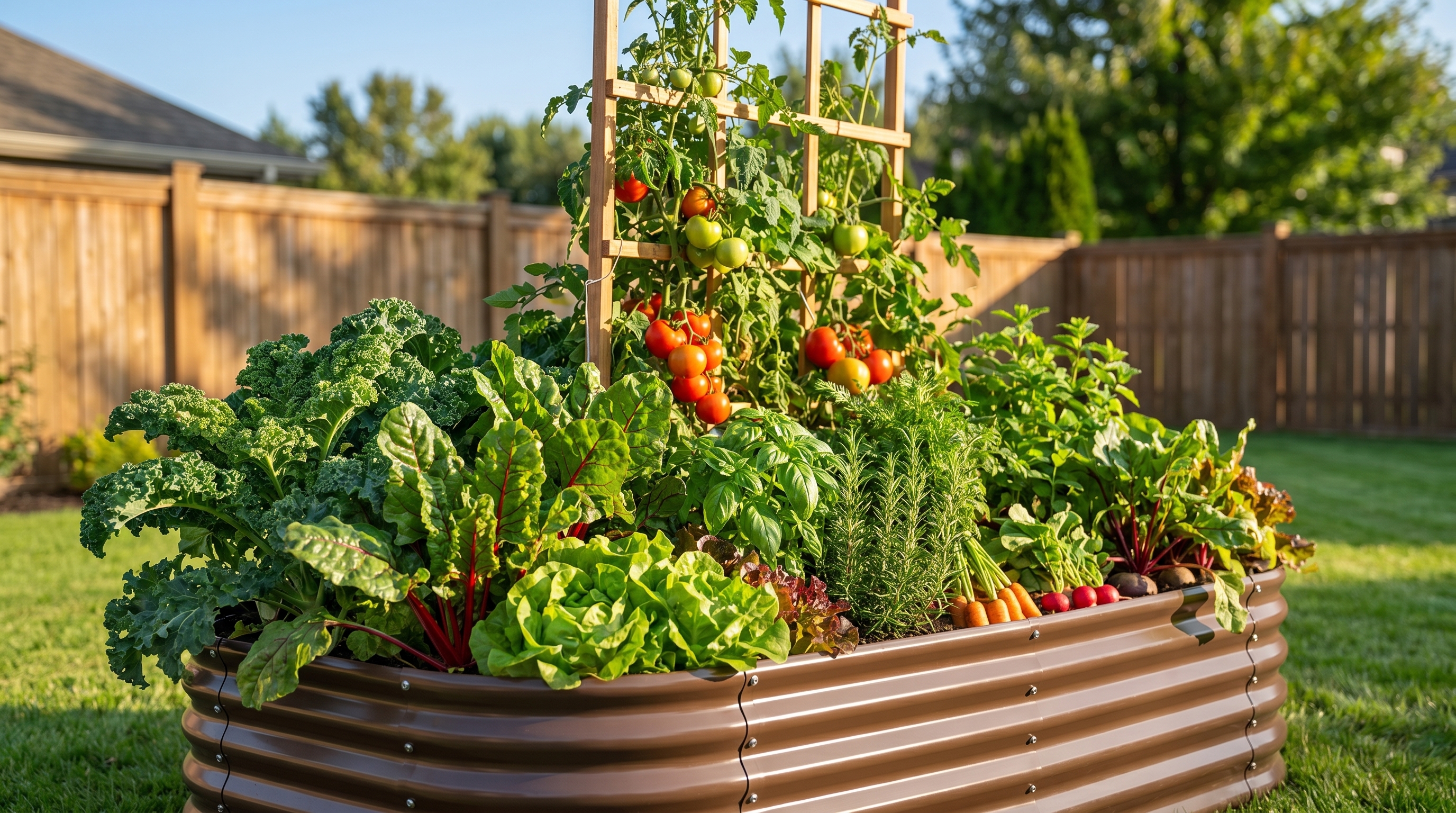
ALT: High-yield vegetables growing in a small raised garden bed, maximizing space in a compact backyard garden
Why Small Raised Beds Can Outproduce Traditional Gardens Row for Row
Key Conclusion: Small raised garden beds consistently outperform traditional in-ground plots when planted with the right high-yield vegetables. By combining intensive planting strategies, well-amended soil, and smart crop selection, even an 8×4 ft raised bed can supply fresh produce for an entire family through multiple growing seasons. Whether you're growing strawberries, leafy greens, or climbing tomatoes, the principles of getting more from less space are the same — and completely achievable with the right setup.
There's a persistent myth in home gardening that more space automatically means more food. In practice, the opposite is often true. A small, well-designed raised bed — filled with nutrient-rich soil, planted intensively, and maintained with care — routinely outproduces a much larger traditional garden row by row. The raised bed environment gives you precise control over soil quality, drainage, and spacing, which are exactly the variables that separate a mediocre harvest from an exceptional one.
The key lies not just in what you plant, but how you think about space. Vertical growing, succession planting, and companion planting can effectively multiply your usable growing area several times over. For urban micro-gardeners working with a patio or balcony, for empty nesters who've downsized their yard, or for busy families who want maximum return on minimal effort, small raised beds represent one of the smartest gardening investments available today.
Who Benefits Most From High-Yield Small Raised Beds
✅ Applicable Scenarios:
- Urban and suburban gardeners with limited yard space, patios, or rooftop gardens who want meaningful food production without a large footprint
- Health-conscious home growers who want to control what goes into their soil and onto their plates, growing organic produce on a small but productive scale
- Empty nesters and retirees looking for low-maintenance, high-reward gardening that doesn't require extensive bending, digging, or physical strain
- First-time gardeners who want to start small, learn quickly, and see results without the overwhelm of a full garden plot
- Families with children who want to engage kids in gardening with a contained, easy-to-manage growing space
❌ Not Applicable/Cautions:
- Gardeners expecting to grow large crops like corn, pumpkins, or sprawling melons in a single small bed — these crops need considerably more horizontal room than intensive small-bed growing allows
- Those who are not prepared to amend soil, manage water consistently, or replant throughout the season — intensive raised bed gardening does require attentive care to deliver on its high-yield promise
- Situations where the bed receives fewer than 6 hours of direct sunlight per day, which will significantly limit the productivity of most fruiting and root vegetables
The Real Case for Small-Space Intensive Growing
The backyard vegetable garden is experiencing a genuine renaissance. According to the National Gardening Association, participation in food gardening in the United States has grown significantly over the past decade, with millions of households now growing at least some of their own food. Much of this growth is being driven not by expansive rural homesteads, but by urban and suburban growers working in increasingly compact spaces.
Raised beds have become the format of choice for good reason. They warm up faster in spring, drain better than compacted in-ground soil, and are far less susceptible to weeds and soil-borne pests. Most importantly, the contained environment of a raised bed allows you to build and maintain an extraordinarily fertile growing medium — something nearly impossible to achieve across a large traditional garden plot.
The question of best veggie garden design has shifted dramatically. Gardening experts and extension programs have repeatedly shown that intensive planting methods — where plants are spaced based on their canopy spread rather than traditional row distances — can yield two to four times as much produce per square foot compared to conventional gardening. This means that what you do within your small raised bed matters far more than how many square feet you have.
If you're still working out the right configuration for your outdoor space, understanding the best raised garden bed size for a patio or small backyard is an excellent starting point before committing to crops and planting plans. Matching bed dimensions to your available space and target crops is arguably the most foundational decision in a small-space garden setup.
It's also worth considering what your bed is made of. Material quality directly affects how long your bed performs and whether it's safe for food production. Galvanized steel vs. Corten steel garden beds is one of the most common material debates among serious home growers — understanding the durability and safety profile of each helps you make a confident long-term choice for your kitchen garden investment.
Growing More Food in Less Space: A Complete Practical Guide
Three Steps to Setting Up Your High-Yield Small Raised Bed
Step 1: Choose the Right Bed Size and Depth for Your Target Crops
The foundation of any productive small garden is choosing a bed size and depth that matches your growing goals. For most high-yield vegetable gardens, an 8×4 ft footprint strikes the ideal balance between planting area and accessibility — you can reach the center from either side without stepping in. Depth matters enormously: shallow-rooted crops like lettuce and herbs thrive in 12–18 inches of soil, while tomatoes, carrots, and root vegetables need 24 inches or more. Anleolife offers raised beds ranging from 18" tall standard models up to 30" waist-high options, giving you genuine flexibility to match soil depth to crop type. Allow about 30–60 minutes for setup depending on the model.
Step 2: Build a High-Performance Soil Blend
Filling your raised bed with garden-center topsoil alone won't unlock its high-yield potential. A proven blend for raised bed productivity combines roughly 60% topsoil or loam, 30% compost (aged compost preferred), and 10% perlite or coarse sand for drainage. This mixture creates a light, nutrient-dense growing medium that encourages deep rooting and rapid plant establishment. Amending with slow-release organic fertilizer at planting time and side-dressing with compost mid-season keeps nutrient levels consistent. Budget approximately 2–3 hours for soil mixing and filling a standard 8×4 ft bed.
Step 3: Plan Your Planting Layout Using the Square Foot Method
Divide your bed mentally into one-foot squares and assign crops based on their mature canopy size rather than seed packet row spacing. One tomato plant per square foot, nine spinach plants per square foot, sixteen radishes per square foot — this intensive approach fills every inch of growing space with productive plants. Combine crops by height (tall plants on the north side to avoid shading) and by function (fast-maturing crops interplanted with slow growers for succession harvests). A simple paper sketch of your layout before planting saves significant time and prevents spacing mistakes. Planning typically takes 20–30 minutes but pays dividends throughout the entire growing season.
The Best High-Yield Vegetables for Small Raised Beds: A Comparative Overview
Not all vegetables are created equal when space is at a premium. Choosing crops that produce abundantly from a small footprint is the single most important crop selection principle for intensive raised bed gardening. Here's how the most popular small-bed options compare across key performance dimensions:
| Comparison Dimension | Leafy Greens (Lettuce, Spinach, Kale) | Fruiting Crops (Tomatoes, Peppers, Cucumbers) | Root Vegetables (Carrots, Radishes, Beets) |
|---|---|---|---|
| Yield Per Square Foot | Very high — continuous cut-and-come-again harvests | High — prolific fruiting over a long season | Moderate — dense planting, good total weight |
| Soil Depth Needed | Shallow (12–18 inches adequate) | Deep (24 inches or more recommended) | Medium to deep depending on variety |
| Time to First Harvest | Fast (30–60 days for most varieties) | Slow to moderate (60–90+ days) | Fast to moderate (25–70 days) |
| Vertical Space Use | Low — ground-level plants | High — trellising multiplies yield significantly | None — all below ground |
| Suitable Bed Size | Any size, including smaller 4×2 or 6×3 ft beds | 8×4 ft or larger preferred for airflow | Any size; excellent for narrow 12×3 ft beds |
| Succession Planting Potential | Excellent — replant every 2–3 weeks | Limited — one main planting per season | Excellent — multiple rounds per season |
| Best for Beginners? | Yes — forgiving, fast feedback | Moderate — some skill required | Yes — low maintenance once established |
This comparison makes clear that a well-rounded small raised bed should combine all three categories — leafy greens for fast, continuous harvests; fruiting crops for volume and variety; and root vegetables to fully use the soil column below ground level.
Crop-by-Crop Guide to the Best High-Yield Vegetables for Small Raised Beds
Leafy Greens: The Fastest Return in Your Garden
Lettuce, spinach, arugula, and kale are the undisputed champions of small raised bed productivity. They grow quickly, tolerate close spacing, and can be harvested continuously using the cut-and-come-again technique — where you remove outer leaves and allow the plant to keep producing rather than pulling it entirely. A single 4×4 ft bed planted in a mix of leaf lettuces and spinach can supply a family with fresh salads several times a week throughout the cool season.
The key to sustained leafy green production is succession planting: sow new seeds every two to three weeks so that as one batch reaches full maturity, the next is just hitting its stride. This staggered approach virtually eliminates the "feast or famine" cycle that plagues gardeners who plant everything at once. Kale in particular is a remarkable performer in raised beds — cold-hardy, nutritious, and productive from late summer well into winter in most U.S. climate zones.
Tomatoes and Cucumbers: Maximizing Vertical Space
Tomatoes are arguably the most popular home garden vegetable in North America, and for good reason — even a single well-supported indeterminate variety can produce dozens of fruits over a long season. In a small raised bed, the secret to maximizing tomato yield is going vertical. A sturdy trellis, cage, or string system trained up a wall or fence multiplies your effective growing area without consuming additional horizontal space.
Choose indeterminate varieties (which keep growing and producing all season) over determinate types (which set all their fruit at once) for maximum return from limited beds. Cherry tomato varieties in particular are extraordinarily productive relative to their footprint, producing hundreds of fruits from a single plant in a season.
Cucumbers follow the same principle. Trained up a vertical support, a cucumber plant takes up just a square foot or two of bed space while producing a remarkable number of fruit. Bush varieties are better suited to beds without trellising, but climbing varieties on a simple wire frame are the true space-maximizers. If you want to know exactly which vegetables to plant in a raised garden bed during the peak summer months, that resource breaks down the best seasonal choices by region and bed type.
Strawberries: The Best Fruit for Small Raised Beds
The question of best size raised bed for strawberries comes up constantly among small-space gardeners, and the answer is more nuanced than it might appear. Strawberries have relatively shallow roots and spread by sending out runners, which means they actually perform very well in standard-depth beds — an 18-inch depth is generally sufficient. However, they spread aggressively, so a dedicated bed prevents them from crowding out other crops.
For a family wanting a meaningful strawberry harvest, an 8×4 ft or 6×3 ft bed planted in a grid of ever-bearing varieties can produce fruit over an extended season from late spring through fall. Everbearing types like 'Albion' or 'Seascape' are particularly productive in raised bed environments because the well-draining, fertile soil extends their productive window. Once established, a strawberry bed can remain productive for several years with proper runner management and annual soil amendment.
Root Vegetables: Using Every Inch of Soil Depth
Carrots, radishes, beets, and turnips are often overlooked in small garden planning, but they're exceptional performers in raised beds because they use the full depth of your soil column — space that other crops simply can't access. Radishes mature in as little as 25 days, making them the ultimate "filler crop" to plant between slower-growing vegetables. They're ready to harvest long before their neighbors need the space.
Carrots require loose, stone-free soil to grow straight — exactly the kind of growing medium that a well-prepared raised bed provides. In dense, compacted in-ground soil, carrots fork and twist. In a raised bed filled with light, amended compost-rich soil, they grow long, straight, and sweet. Varieties bred for shorter roots (Chantenay or Danvers types) perform especially well in standard-depth beds.
For narrow raised beds — say, the 12×3 ft configuration available in Anleolife's lineup — a succession-planted root vegetable bed running the full length can produce an impressive quantity of roots throughout the growing season, with multiple plantings rotating through the same space.
Herbs: Small Footprint, Enormous Culinary Return
No small raised bed should be without at least one corner devoted to culinary herbs. Basil, parsley, cilantro, chives, and thyme occupy minimal space, require little attention once established, and deliver extraordinary value relative to their supermarket equivalent. Fresh herbs also serve as excellent companion plants — basil planted near tomatoes is a classic pairing that some growers report improves tomato flavor while deterring certain pests.
Perennial herbs like thyme, sage, and chives will return year after year in the same spot, meaning your labor investment in establishing them pays dividends for many growing seasons.
Designing the Perfect Small Backyard Garden Layout
One of the most searched questions in home gardening is what's the best way to design a backyard garden layout for a small space — and the honest answer is that the best layout is one that matches your sun exposure, access patterns, and crop priorities rather than following a generic template.
That said, several principles consistently produce better results in small-space raised bed gardens:
Maximize sun exposure first. Place your tallest crops (tomatoes, trellised cucumbers, pole beans) on the north side of your bed so they don't shade shorter plants. This single layout decision can meaningfully increase the total yield of an intensively planted bed.
Think in zones, not rows. Rather than planting in single-species rows, plant in patches or blocks. A block of twelve spinach plants in a 2×2 ft section yields more than a single spinach row running the length of your bed, and it leaves the remaining space for a complementary crop with different light and root depth requirements.
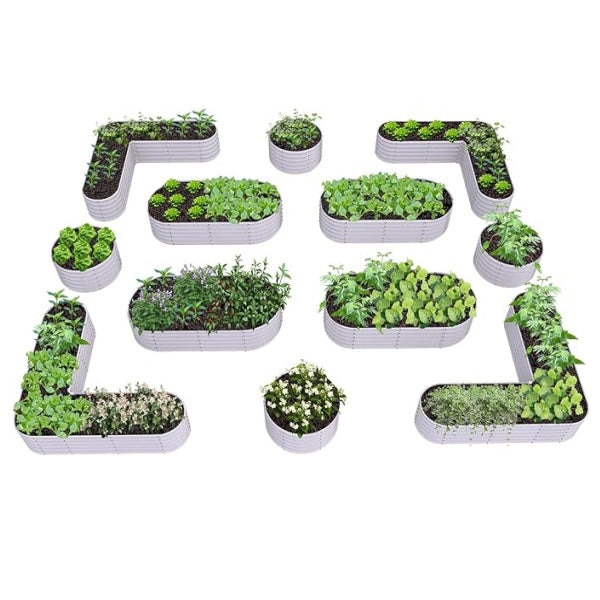
Design for access, not aesthetics alone. The most productive small gardens are ones you can actually work in comfortably. A 4-foot maximum width ensures you can reach the center from either side. A 3-foot pathway between beds (if you have multiple) gives you room to kneel, crouch, or maneuver a watering can without disturbing crops. Anleolife's range of bed sizes — from compact 4×1.5 ft waist-high options to full 8×4 ft standard beds — makes it easy to fit productive growing spaces into nearly any backyard configuration.
Plan for irrigation from the start. Hand watering an intensively planted raised bed is time-consuming and often inconsistent. Setting up a simple drip irrigation system ensures your plants receive consistent moisture, which directly translates to higher and more consistent yields. Learning how to set up a drip irrigation system for multiple raised garden beds can transform your watering routine from a daily chore into a nearly automated background process.
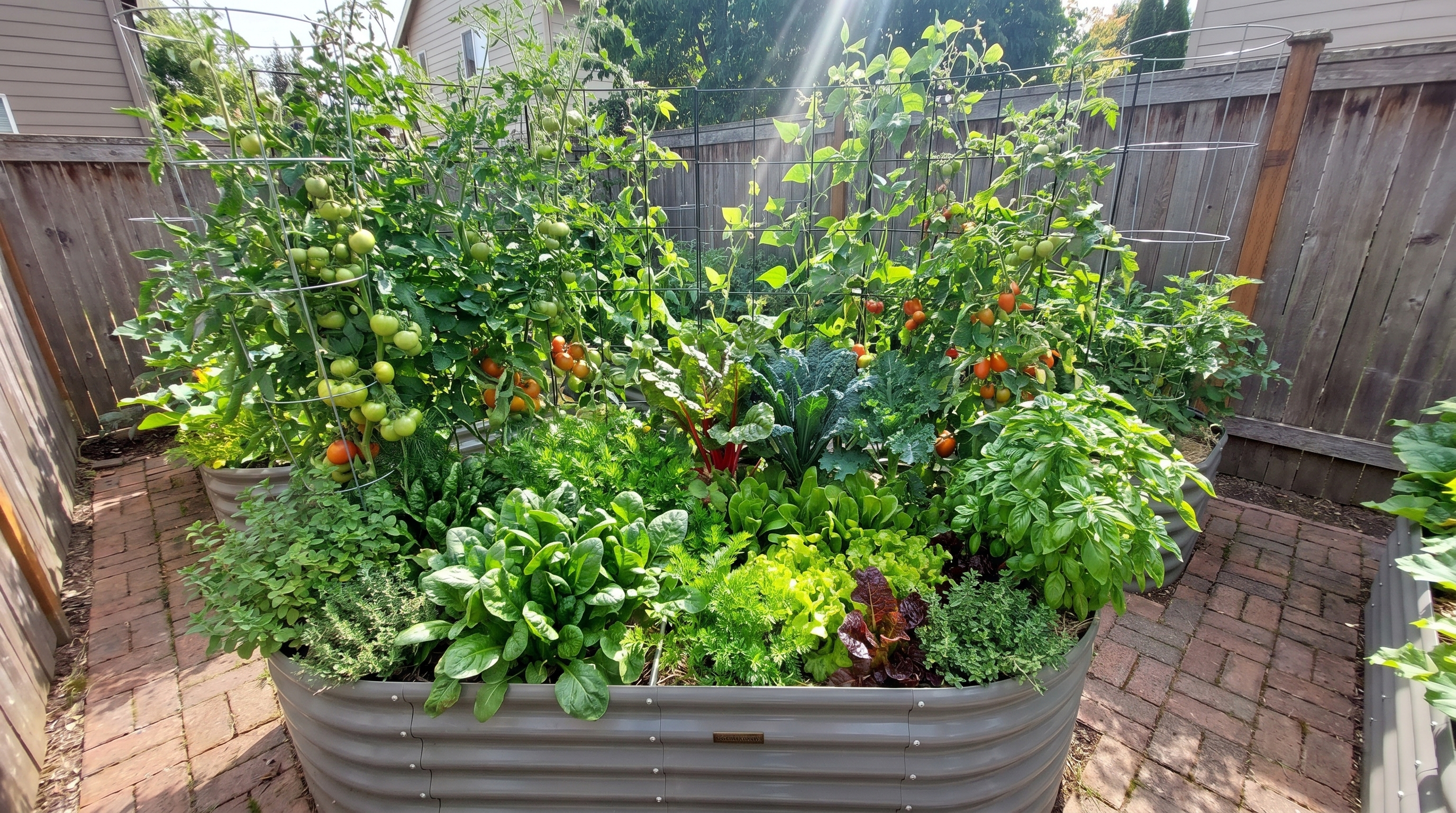
ALT: Compact backyard raised garden bed layout showing high-yield vegetables including tomatoes, leafy greens, and herbs in a small space
Advanced Strategies to Push Your Small Raised Bed Even Further
Succession Planting: Never Have an Empty Bed
The single most underused technique in small raised bed gardening is succession planting — the practice of replanting spaces as soon as a crop is harvested. Most gardeners plant once in spring and consider the season complete when the last tomato is picked. A succession-planted bed, by contrast, cycles through multiple crops in the same growing season: early cool-weather crops (spinach, peas, lettuce) in spring, heat-loving crops (tomatoes, peppers, basil) through summer, and cool-weather crops again (kale, carrots, beets) in fall.
In mild climates, a single raised bed managed this way can produce fresh vegetables for nine to eleven months of the year — a staggering return from a small footprint.
Companion Planting Misconceptions
Many new gardeners take companion planting too literally, expecting that planting basil near tomatoes guarantees a pest-free harvest. Companion planting is a useful tool, but it works on a population level rather than a plant-by-plant basis. The real value of pairing compatible crops in a small raised bed is in efficient space use: tall crops shade moisture-sensitive companions, deep-rooted plants loosen soil for shallow-rooted neighbors, and fast-maturing crops vacate space for slow-growing ones.
The classic "Three Sisters" combination (corn, beans, squash) is a powerful companion planting system but requires more horizontal space than a small bed typically provides. Better companion combinations for small beds include tomatoes with basil and carrots, lettuces with radishes and chives, or strawberries with borage.
Choosing the Right Bed Material for Long-Term Performance
Your choice of raised bed material affects not just durability but also soil temperature, pest resistance, and food safety. When evaluating what are the best brands for garden supplies, prioritize manufacturers who are transparent about materials and coatings. Anleolife's galvanized steel and rust-resistant raised garden beds are engineered for a 20-year lifespan — a significant long-term value when you consider that a productive kitchen garden is a multi-decade project, not a single-season experiment.
For gardeners with food safety concerns about metal beds, the evidence on zinc leaching from galvanized steel is reassuring — zinc is an essential plant micronutrient, and well-maintained galvanized beds pose no meaningful risk in normal garden use. This is a question many new gardeners have, and the science-backed answer is clearly laid out in resources addressing the topic directly.
Frequently Asked Questions FAQ
Q1: How do I choose the best size raised bed for growing strawberries in a small backyard?
For strawberries, an 18-inch bed depth is generally sufficient since their root systems are relatively shallow. An 8×4 ft or 6×3 ft footprint gives you enough room to plant a meaningful quantity of everbearing varieties and manage their runners effectively. Avoid mixing strawberries with aggressive spreading vegetables — a dedicated strawberry bed stays productive longer with less management. Anleolife offers several raised bed sizes in this range that work well for dedicated strawberry plantings in small yards.
Q2: Are metal raised garden beds safe for growing vegetables, and do they leach harmful chemicals?
Galvanized steel raised beds are widely considered safe for food growing. The zinc coating that gives galvanized steel its corrosion resistance is actually an essential plant micronutrient, and research has consistently shown that zinc levels in soil from galvanized beds remain well within safe ranges. Anleolife's raised beds are designed with food-safe materials and engineered to last up to 20 years. For a detailed, science-based look at this topic, the analysis of whether galvanized steel garden beds leach zinc into vegetables addresses the evidence clearly and thoroughly.
Q3: How long does it take to see a productive harvest from a newly set up small raised bed?
With fast-maturing crops like radishes, leaf lettuce, and spinach, you can expect your first harvest within 25–45 days of planting. Tomatoes and peppers typically take 60–90 days from transplant to first fruit. A well-planned small raised bed planted with a mix of fast and slow crops can deliver its first harvests within five to six weeks of initial planting and continue producing through multiple succession plantings. Anleolife raised beds ship within 3–8 business days to most U.S. locations, so you can be set up and planting within two weeks of placing your order.
Summary
Small raised beds aren't a compromise — they're a genuinely superior growing system for home gardeners who prioritize quality, efficiency, and return on investment. Three core principles drive high-yield success in compact spaces:
First, choose the right crops. Leafy greens, climbing tomatoes, strawberries, compact root vegetables, and culinary herbs are purpose-built for intensive small-space growing. They produce abundantly from minimal footprints and respond dramatically to good soil and attentive management.
Second, build exceptional soil. The raised bed's greatest advantage is the complete control it gives you over your growing medium. A well-made compost-rich soil blend delivers the fertility and drainage that transforms an average garden into a high-performing one.
Third, plan for continuous production. Succession planting, vertical growing, and companion planting are the multipliers that turn a single 8×4 ft bed from a seasonal experiment into a year-round food production system.
If you're still deciding on bed dimensions and configurations, the comparison between 8×4 and 12×3 ft raised garden beds offers practical guidance on which footprint works better for different yard shapes and crop combinations.
The best time to start is now — and the best place to start is exactly where you are.
Start Growing More With Anleolife
Anleolife's nationwide U.S. warehouse network is strategically located in California, Texas, Florida, New York, Illinois, and Washington, ensuring delivery within 3–8 business days — so your garden upgrade plans never have to wait for the growing season.
Products are available across all major platforms including Amazon, Walmart, Home Depot, Lowe's, and Wayfair, as well as directly at Anleolife.com, with consistent quality assurance and after-sales support wherever you choose to shop.
Anleolife's three core garden scenarios — Planting (metal raised garden beds, soil systems), Raising (chicken coops, rabbit hutches), and Beautification (decorative accessories, pathway systems) — cover everything from your first harvest to a fully integrated garden ecosystem.
We understand that an ideal garden isn't built overnight, but gradually improved over time. Our modular product design allows flexible expansion based on your needs — from your first compact 4×2 ft raised bed to a multi-bed planting-and-raising system. We grow with you every step of the way.
Explore Anleolife's full range of raised garden beds at anleolife.com and find the perfect fit for your small-space high-yield garden.
References
- National Gardening Association. "Garden to Table: A 5-Year Look at Food Gardening in America".
https://garden.org - University of California Agriculture and Natural Resources. "Vegetable Research and Information Center: Intensive Gardening Methods".
https://ucanr.edu/sites/nm/Vegetable_Garden/ - Cornell University Cooperative Extension. "Raised Bed Gardening: Soil Preparation and Plant Spacing".
https://gardening.cornell.edu/homegardening/ - USDA National Institute of Food and Agriculture. "Community and School Garden Programs".
https://www.nifa.usda.gov - Cooperative Extension System. "High-Yield Vegetable Gardening in Small Spaces".
https://extension.org
Note: Standards and research findings may be updated. Please check the latest official documents or consult a local cooperative extension advisor for region-specific guidance.
About Anleolife
Anleolife is a leading outdoor garden solutions provider in North America, dedicated to offering a full-scenario product ecosystem for home gardening enthusiasts, covering planting, raising, and garden beautification. Since its founding, we have upheld our brand mission, "Made for Garden Life," continuously innovating products and optimizing services to help hundreds of thousands of users upgrade their gardens, reconnect with nature, and enjoy a better garden lifestyle.