






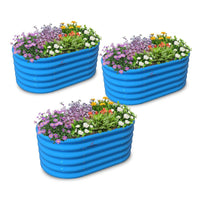
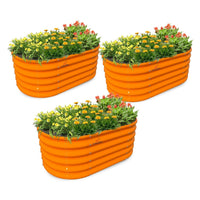
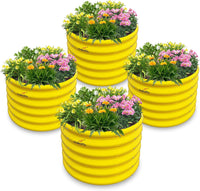
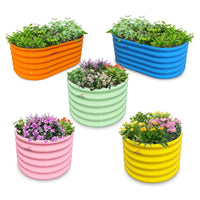
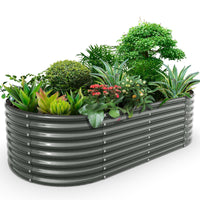



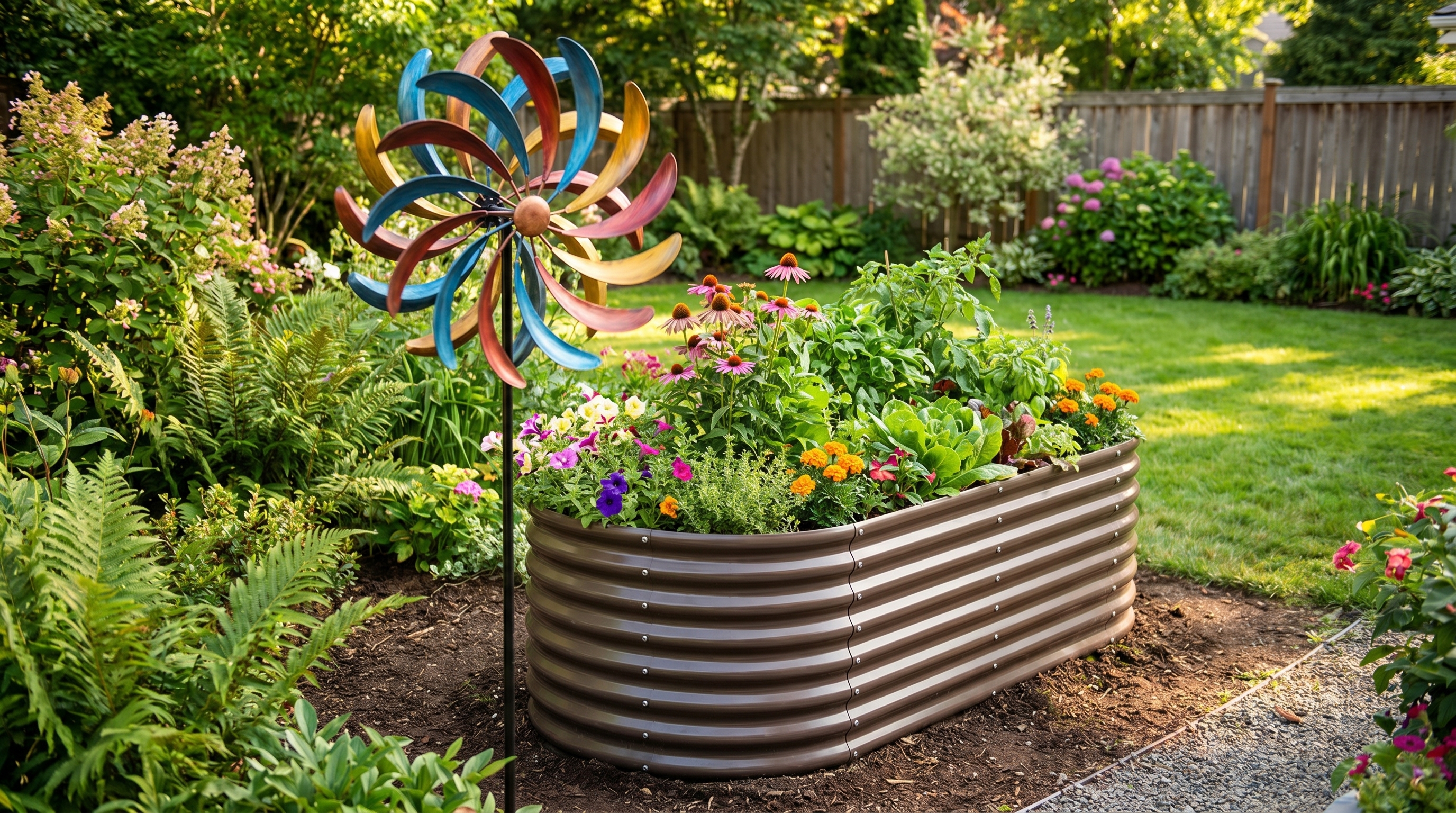
ALT: Kinetic wind spinner adding year-round movement and artistic beauty to an outdoor garden space
Why Kinetic Wind Spinners Are the Underrated Secret to a Living, Breathing Garden
Key Conclusion: Kinetic wind spinners transform static outdoor spaces into dynamic, ever-changing works of art. Whether anchored beside raised garden beds, arched over pathways, or nestled among perennial borders, these mesmerizing garden ornaments provide visual movement, seasonal interest, and a sense of whimsy that no static decoration can replicate. For home gardeners seeking to elevate both functionality and aesthetics, kinetic wind spinners are a surprisingly powerful—and affordable—design tool worth exploring year-round.
There's a quiet magic that happens when a garden comes alive with movement. Leaves rustle, water trickles, butterflies drift—and a well-placed kinetic wind spinner catches the breeze and transforms it into a graceful, hypnotic dance. Unlike stationary garden art, wind spinners respond to their environment in real time, offering a constantly shifting visual experience that draws the eye and soothes the mind.
For gardeners who've already invested in raised beds, productive vegetable plots, and carefully curated planting zones, adding a kinetic wind spinner is one of the simplest ways to bridge the gap between function and beauty. It's the finishing touch that makes a garden feel truly complete—not just a place to grow food, but a place to live.
In this guide, we'll explore how kinetic wind spinners work, where they shine brightest, how to choose and position them, and how they integrate beautifully into a well-designed outdoor garden ecosystem.
Where Kinetic Wind Spinners Work Best (and Where They Fall Short)
✅ Applicable Scenarios:
- Open garden spaces with consistent airflow, such as backyards, patios, and raised bed gardens where breezes move freely
- Decorative focal points near garden pathways, arbors, garden arches, or at the edge of a vegetable or flower bed
- Year-round gardens where visual interest is needed even during winter months when plants have died back
- Container gardens or small urban balconies looking to add vertical movement without taking up floor space
- Butterfly and pollinator gardens where gentle spinning motion attracts attention and adds naturalistic movement
❌ Not Applicable/Cautions:
- Heavily enclosed or sheltered spaces with little to no wind movement—spinners need airflow to function as intended
- Areas with extreme or unpredictable wind gusts, which may damage lightweight spinner materials or cause tangling
- Spaces where reflective metallic spinners might create distracting glare near windows or seating areas during peak sunlight hours
- Edible garden zones where very tall or top-heavy spinners might shade or physically interfere with low-growing crops
The Growing Trend of Garden Beautification: Why Movement Matters
Modern home gardening has evolved well beyond rows of vegetables and a few shrubs. Today's outdoor spaces are carefully designed environments that blend productivity with personality. According to the National Gardening Association, millions of American households actively participate in gardening each year, and decorative garden elements have become just as important as functional ones for many homeowners.
Kinetic garden art—objects that move in response to wind, water, or gravity—is one of the fastest-growing subcategories in garden décor. Unlike static sculptures or painted signs, kinetic pieces interact with their surroundings dynamically. They respond to the time of day, the season, and the weather, which means they always look slightly different. This quality of constant, subtle change is deeply satisfying to the human eye and creates a meditative quality in any garden setting.
The appeal cuts across demographics. Retirees and empty nesters who spend more leisure time in their gardens find wind spinners to be a low-maintenance way to add life and color. Urban micro-gardeners with limited planting space appreciate how a single spinner can dramatically elevate a small balcony or rooftop garden. And families with children love the playful, whimsical energy a colorful spinner brings to an outdoor space.
It's also worth noting that the best garden experiences integrate multiple sensory layers. You grow vegetables for taste and health. You plant flowers for fragrance and color. You add water features for sound. And you install kinetic art for perpetual, ever-shifting visual delight—the one dimension that most gardens miss entirely.
This is why garden beautification is now recognized as its own distinct design category. Anleolife, for example, has built its product ecosystem around three interconnected pillars: Planting, Raising, and Beautification—understanding that a truly satisfying garden must excel in all three dimensions, not just the functional ones. If you're already exploring what raised bed materials hold up best outdoors, consider reading Galvanized Steel vs. Corten Steel Garden Beds: Which Holds Up Better Outdoors? to understand how material durability choices in infrastructure set the stage for beautiful, long-lasting garden design.
How to Add Kinetic Wind Spinners to Your Outdoor Space: Core Guidance
Three-Step Quick Start for Integrating Wind Spinners into Your Garden
Step 1: Identify Your Wind Corridors
Before purchasing a spinner, spend a few days observing how wind moves through your outdoor space. Take note of where leaves flutter most, where lightweight items tend to drift, and which corners seem consistently calm. Optimal spinner placement requires reliable, moderate airflow—typically 5 to 15 mph is ideal for most spinner designs. This assessment takes only a few minutes of observation each day over 2–3 days and will dramatically improve your spinner's performance and visual impact.
Step 2: Choose the Right Spinner Style and Scale
Kinetic wind spinners come in a remarkable range of styles: stake-mounted ground spinners, hanging spiral spinners, windmill-style turbine spinners, and multi-arm geometric designs. For garden bed borders, stake-mounted spinners with a single dynamic element work beautifully. For pathway entrances or garden arches, larger spiral or multi-tiered spinners create a grander visual impact. Consider the scale of your space—a small urban balcony calls for a compact spinner, while a large backyard with expansive raised beds can support multiple tall spinners at varying heights for a layered effect.
Step 3: Install, Anchor, and Position for Maximum Effect
Most stake-mounted spinners require only a few minutes to install—simply press the ground stake firmly into soil or a planter. For hanging spinners, use a weather-resistant hook rated for outdoor use. Position spinners at eye level when possible, or slightly above to catch overhead breezes. Place them where they'll be visible from primary seating areas or windows so you can enjoy the movement from indoors as well. Check stability after the first windy day and re-anchor if necessary, especially in softer soil.
Comparing Popular Kinetic Wind Spinner Types for Garden Use
Choosing the right spinner type can feel overwhelming given how many options exist. The table below compares the most common styles across key dimensions to help you make an informed decision based on your garden's specific conditions and aesthetic goals.
| Comparison Dimension | Stake-Mounted Ground Spinner | Hanging Spiral Spinner | Windmill-Style Turbine Spinner |
|---|---|---|---|
| Best Wind Speed | Low to moderate | Low to moderate | Moderate to high |
| Installation Ease | Very easy (push into soil) | Easy (requires hook) | Moderate (requires stable post) |
| Visual Scale | Small to medium | Medium to large | Medium to large |
| Ideal Placement | Garden bed borders, pathways | Pergolas, porches, arches | Open lawn, fence lines |
| Movement Style | Spinning blades or petals | Long, flowing rotation | Blade-and-vane rotation |
| Durability (weather) | Depends on material | Depends on material | Generally most robust |
| Aesthetic Style | Floral, playful, whimsical | Elegant, flowing, modern | Classic, rustic, or contemporary |
| Maintenance Required | Minimal | Minimal | Occasional lubrication of bearings |
Understanding these differences allows you to select spinners that complement—rather than compete with—your existing garden design. A cottage-style vegetable garden with weathered wood accents might call for rustic copper or bronze-toned stake spinners, while a modern urban rooftop garden with galvanized steel raised beds might suit sleek geometric spiral spinners in brushed silver or matte black.
Designing a Garden That Moves: Placement, Materials, and Seasonal Strategy
Placement Principles That Make the Difference
The difference between a wind spinner that looks like an afterthought and one that looks intentional comes down almost entirely to placement. Strategic positioning is the golden rule of kinetic garden art.
Think in terms of visual layers. Ground-level spinners nestled among the lower edges of raised beds create a sense of movement at foot level. Mid-height spinners on 3–4 foot stakes placed between planting zones carry the eye through the middle of the garden. Taller hanging spinners or windmill styles near a garden arch or pergola draw the gaze upward and frame the sky as part of your garden's visual composition.
For raised bed gardens specifically, placing a spinner at the corner or midpoint of a long bed helps define the planting zone as a designed space rather than a purely utilitarian one. If you're planning a garden with multiple beds, consider how top vegetables planted in raised garden beds can be complemented by decorative elements that celebrate each growing zone.
Choosing Materials Built to Last Outdoors
Not all wind spinners are created equal in terms of outdoor durability. The most common materials include powder-coated steel, stainless steel, aluminum, copper, and various weatherproof plastics. For year-round outdoor use in North American climates—which can range from humid Florida summers to freezing Illinois winters—material quality and rust resistance are critical factors.
This is worth emphasizing: the same principles that govern best raised garden bed materials for rust resistance apply to garden ornaments. Just as galvanized steel is prized in raised garden beds for its ability to resist corrosion over decades (Anleolife's galvanized steel raised garden beds, for example, are built for a 20-year lifespan), rust-resistant coatings and corrosion-proof materials are equally important in wind spinners that will face rain, humidity, and seasonal freeze-thaw cycles.
For gardeners investing in how rust-resistant coatings on metal garden beds actually work, applying that same scrutiny to wind spinner materials will pay dividends in longevity. Look for powder-coated finishes, marine-grade stainless components, or anodized aluminum where possible.
Seasonal Strategies: Keeping Your Garden Alive Year-Round
One of the most compelling arguments for kinetic wind spinners is their year-round relevance. In spring and summer, they dance energetically in warm breezes and add festive color among blooming plants and leafy raised beds. In autumn, copper and bronze-toned spinners echo the colors of falling leaves, creating a seamless visual transition. In winter—when most garden beds lie dormant under a layer of frost—a wind spinner is often the only element in the garden that still moves, still catches light, and still signals that the space is alive and cared for.
This seasonal persistence is particularly valuable for gardeners in northern states where winters are long and gardens can look bare for four to five months of the year. A well-placed spinner, perhaps near the entrance to your vegetable growing area or beside a decorative pathway, maintains the garden's identity and visual interest even under snow.
Integrating Spinners with the Broader Garden Ecosystem
The most beautiful gardens are those where every element feels like it belongs. Wind spinners integrate naturally with several common garden features:
Garden arches and arbors provide natural anchor points for hanging spiral spinners, and the combination of a durable outdoor arbor with flowing kinetic art creates an entrance that feels both welcoming and artistic. When evaluating best garden arch durable outdoor arbor reviews, consider whether the arch's design allows for spinner attachments—hooks, crossbars, or side mounting points all work well.
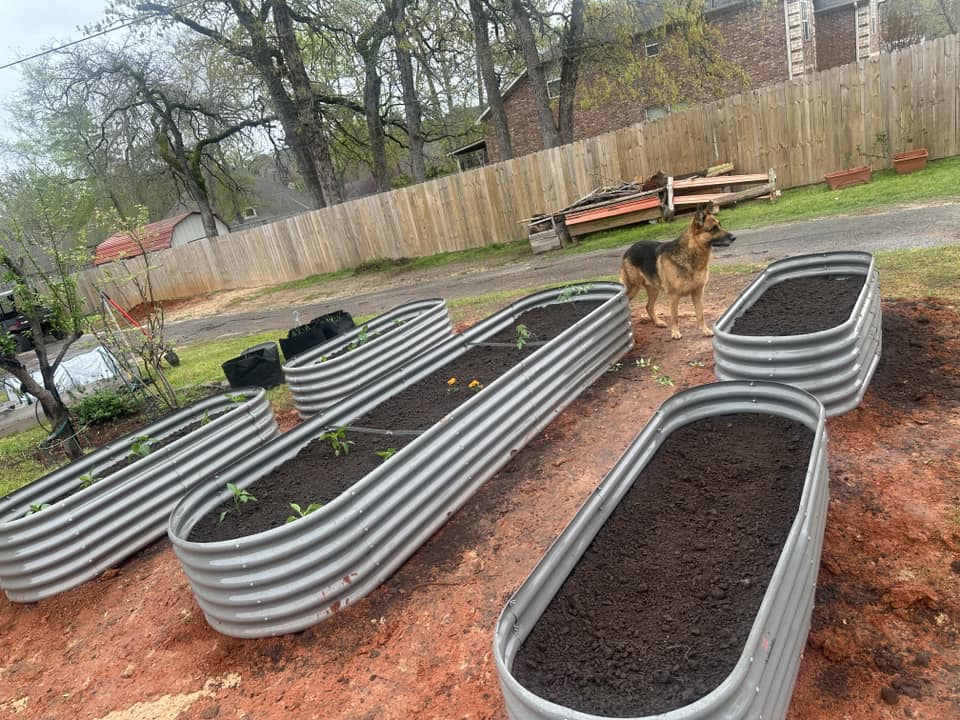
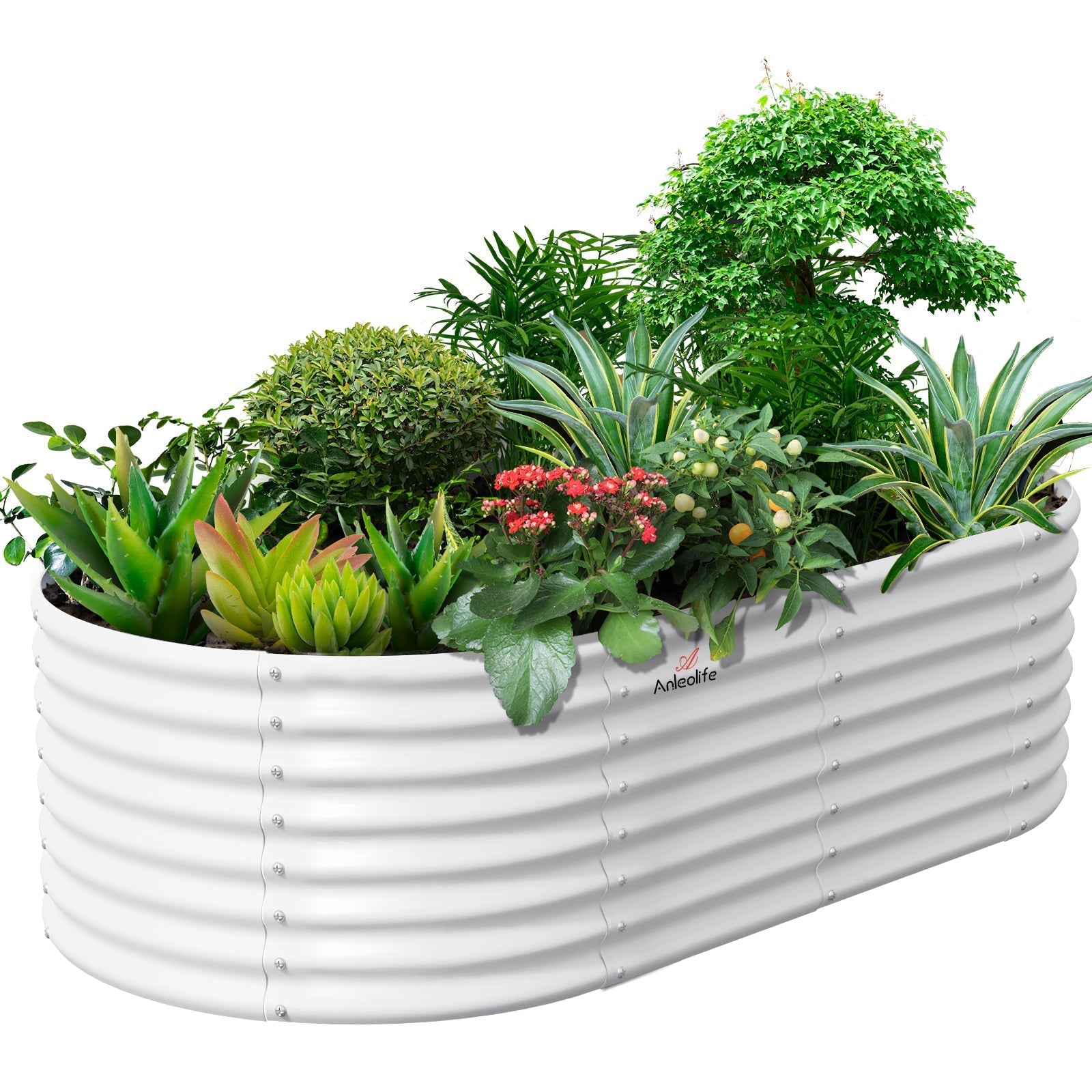
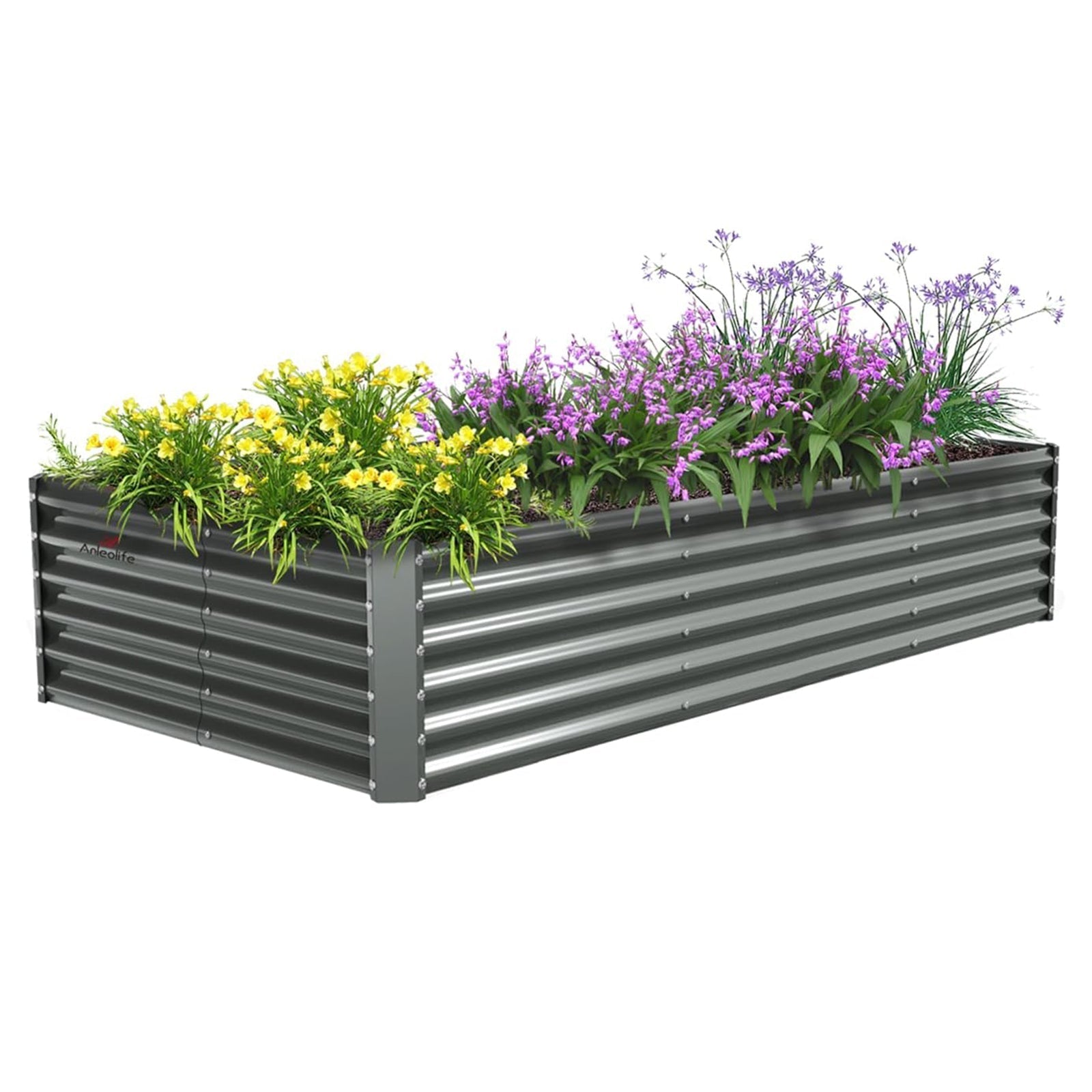
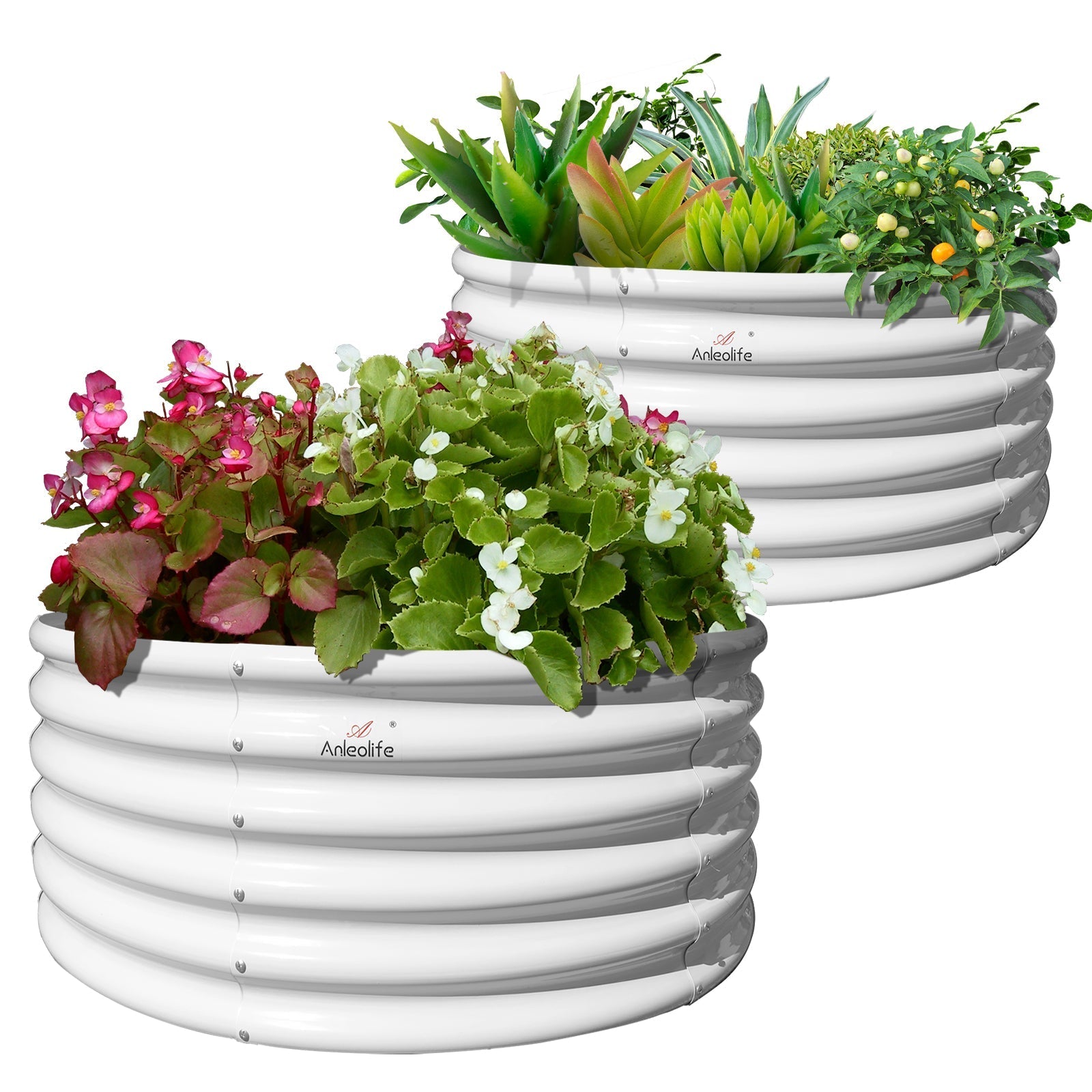
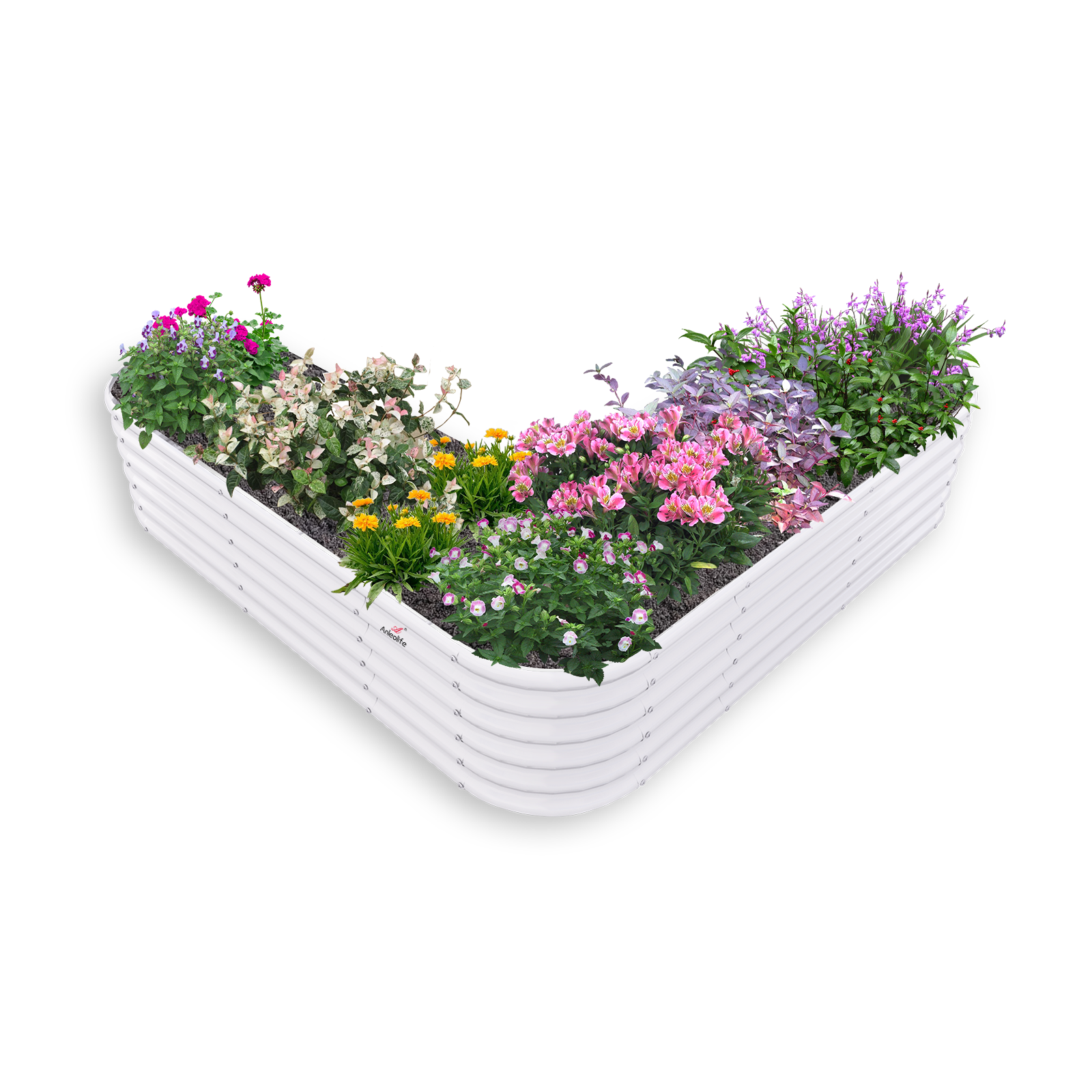
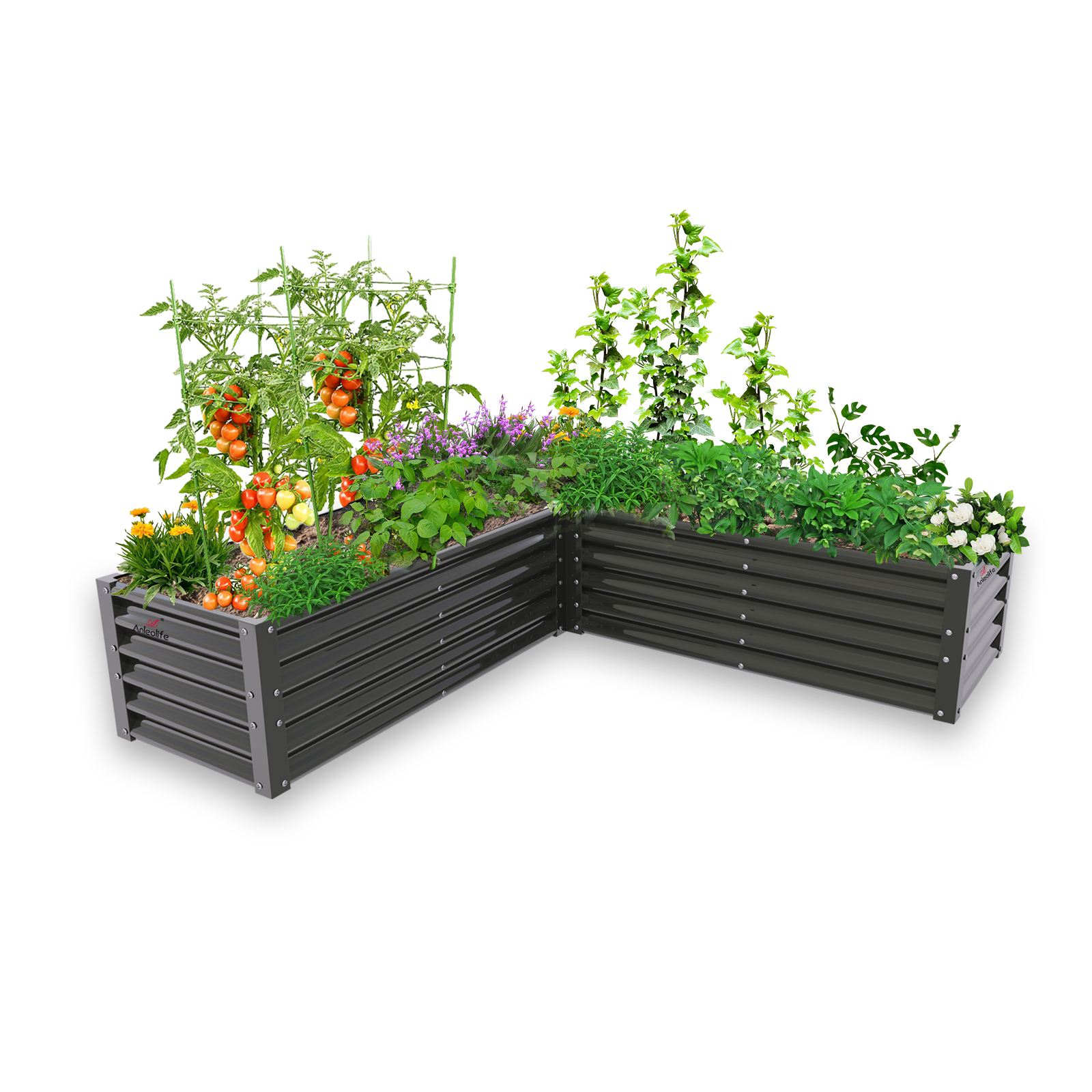
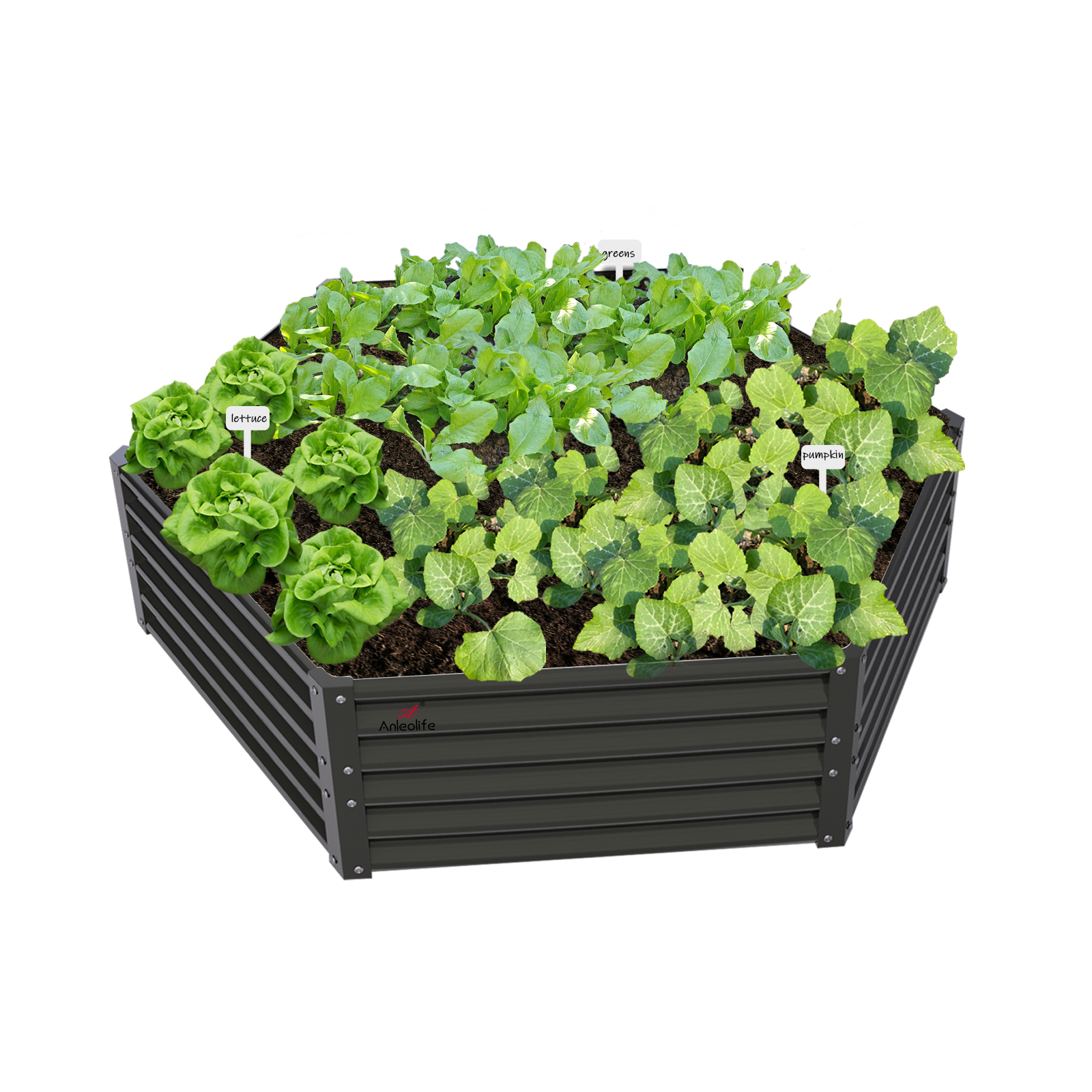
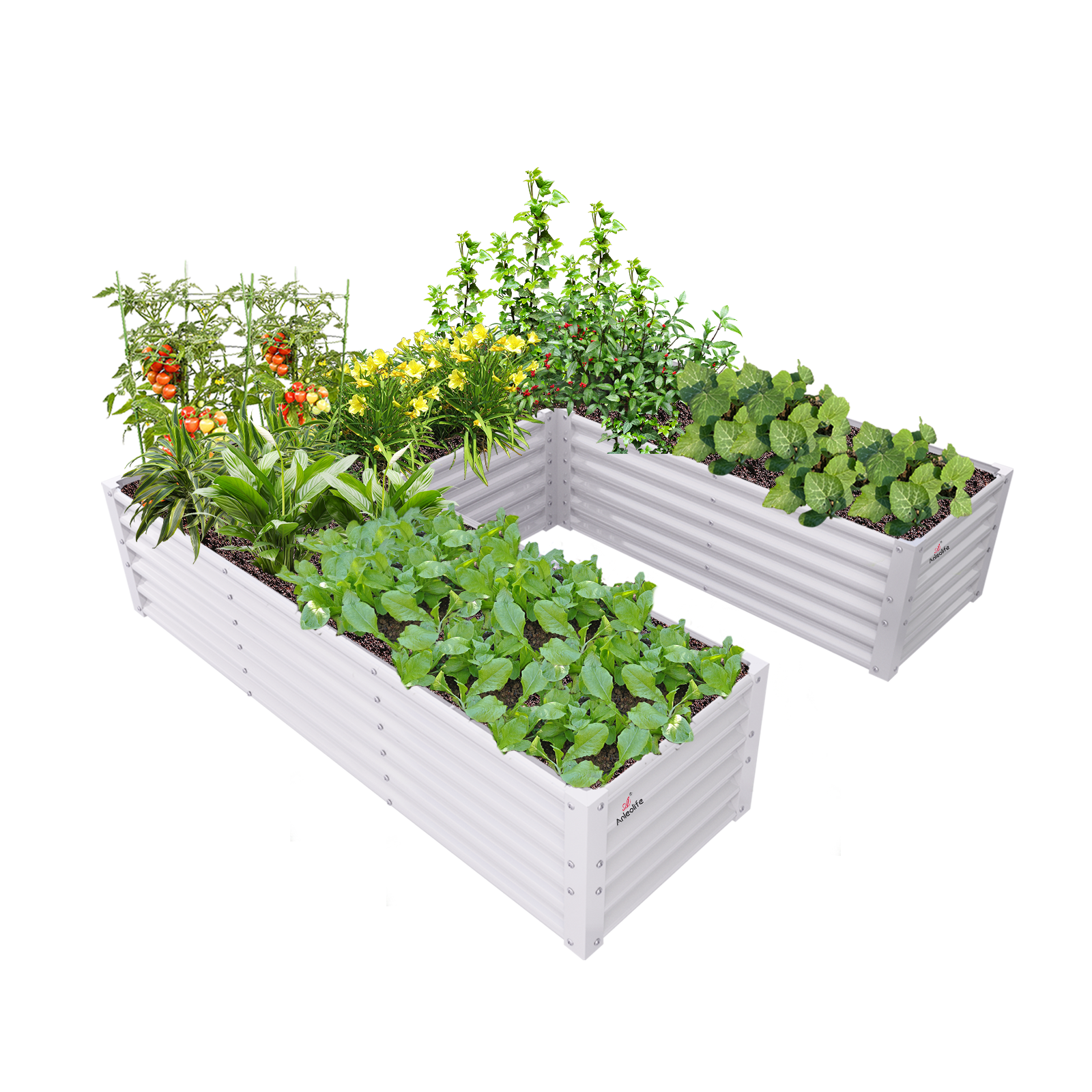
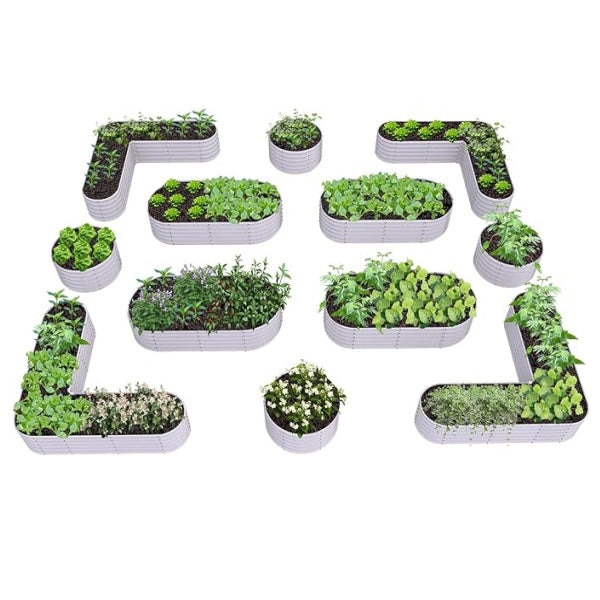
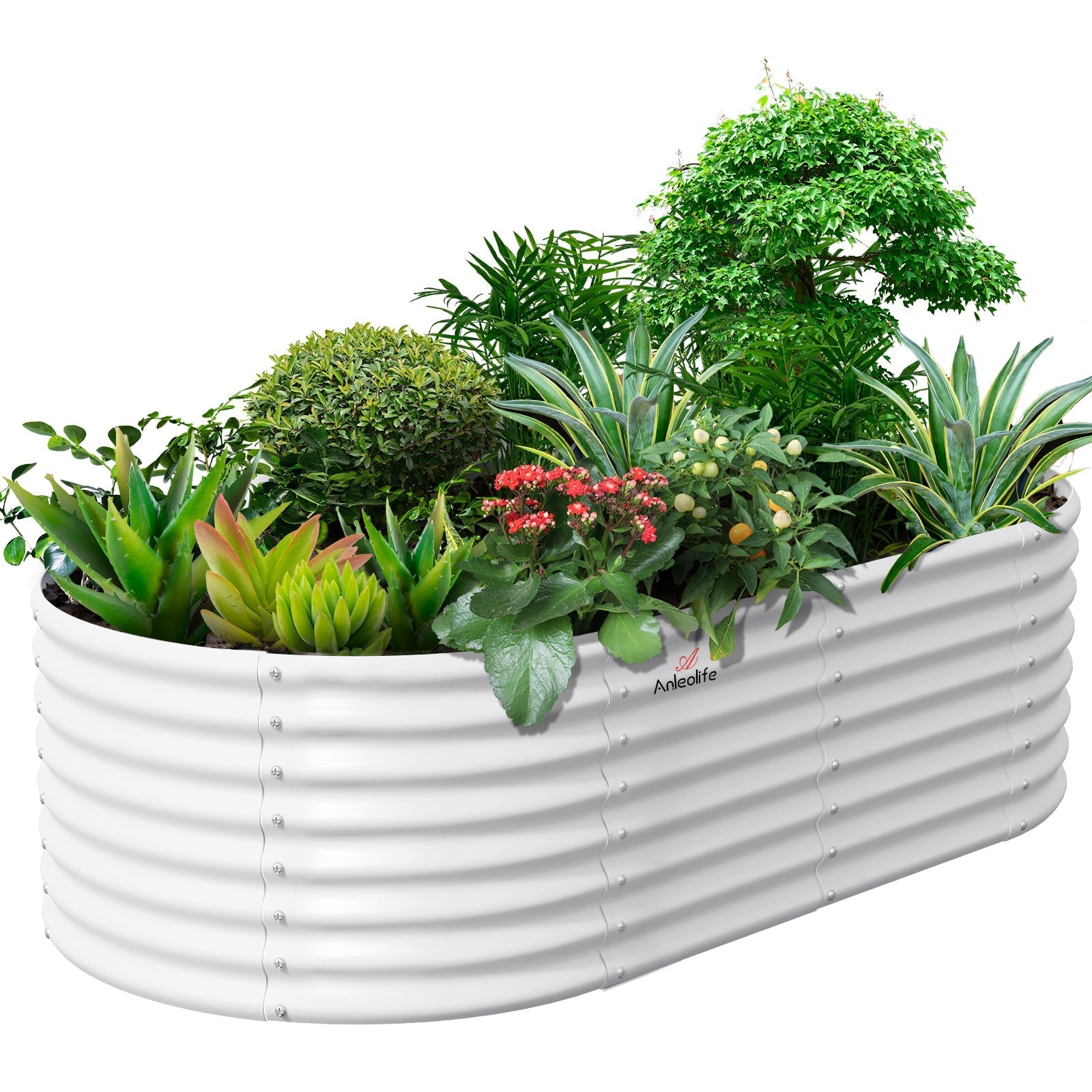
Raised garden beds create the perfect canvas backdrop for stake-mounted spinners. The clean, structured lines of a galvanized steel raised bed contrast beautifully with the organic, fluid movement of a spinning garden ornament. Anleolife offers a wide range of galvanized steel raised garden beds—from compact 4x4 ft models to expansive 12x3 ft configurations and extra-tall 30" waist-high designs—that provide excellent structural contrast for kinetic art. The beds' durability (rated for up to 20 years) means your spinner will have a long-lasting backdrop to perform against.
Pathway systems benefit enormously from strategically placed spinners at regular intervals, creating a sense of rhythm and movement that guides visitors through the garden with visual cues rather than signs or barriers.
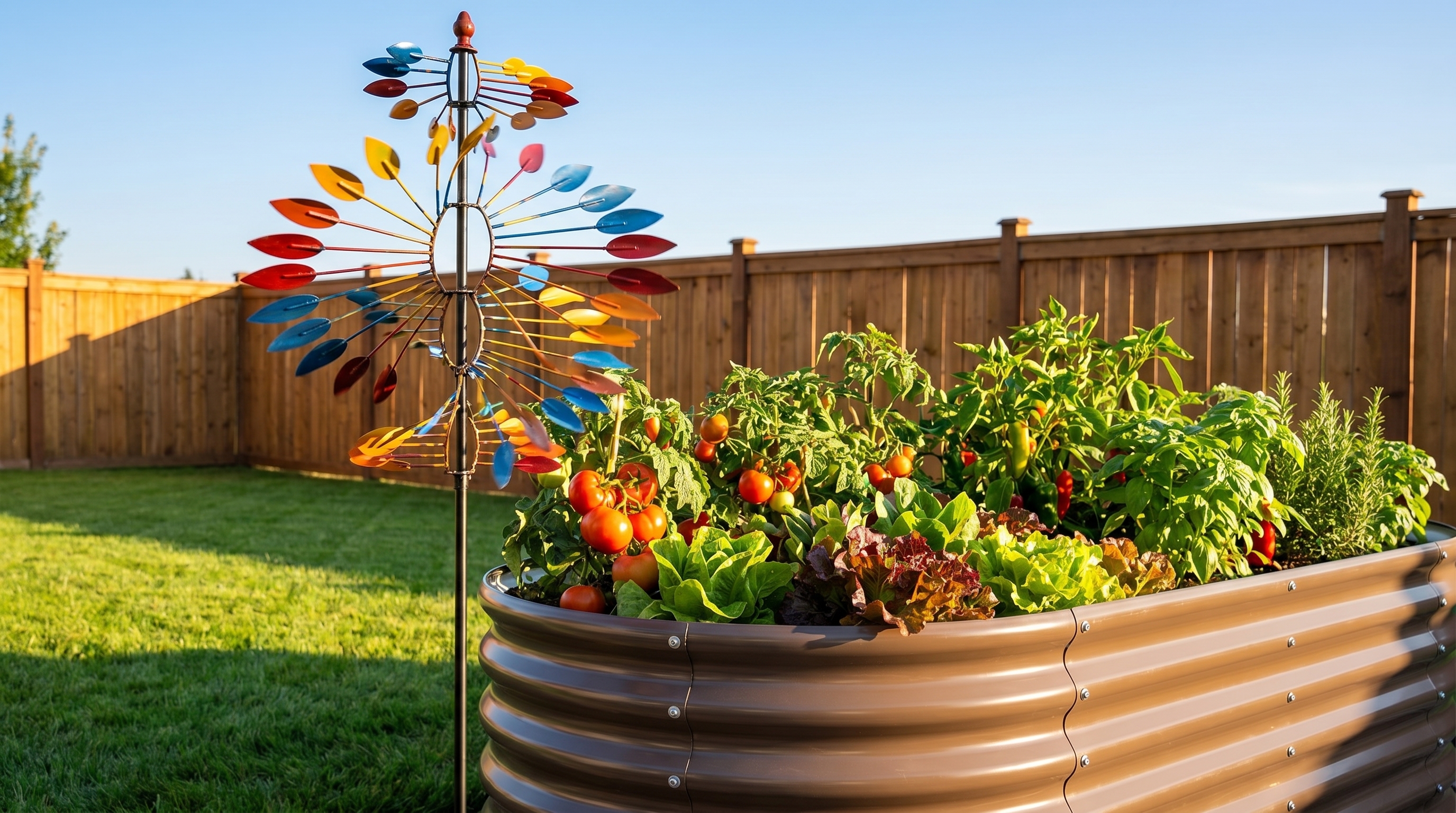
ALT: Kinetic wind spinner spinning beside a galvanized steel raised garden bed, adding year-round movement and art to a home garden outdoor space
Advanced Considerations: Getting the Most From Your Wind Spinner Investment
Handling Special Situations
High-wind environments: Coastal gardens, open plains, and elevated properties often experience wind speeds that can damage or tangle standard spinner designs. In these zones, look specifically for spinners rated for high-wind conditions—these typically feature heavier-gauge metal, reinforced bearings, and a more compact spinning profile that resists over-rotation. Alternatively, position spinners in partially sheltered locations where structures or hedgerows buffer the strongest gusts while still allowing enough airflow for movement.
Small space or balcony gardens: Urban micro-gardeners often worry that wind spinners are designed exclusively for large suburban yards. In fact, compact tabletop spinners or small hanging spiral designs work exceptionally well on balconies and patios. Choose lightweight models that respond to even gentle, channeled urban airflow, and anchor them securely using weighted bases or fixed hooks to prevent them from becoming projectiles in unexpected gusts.
Reflective glare management: Some metallic spinners—particularly those with polished stainless or mirror-finish surfaces—can create significant glare when facing south or west during afternoon sun. This is rarely a problem in garden beds, but can be an issue near windows or seating areas. Opt for brushed or matte finishes if glare is a concern, or position the spinner so its reflection angle doesn't intersect with windows or eye lines from primary seating areas.
Common Misconceptions About Wind Spinners
Misconception 1: "Wind spinners are just for whimsical or country-style gardens." This is simply outdated. Modern kinetic wind art ranges from minimalist geometric stainless steel designs to hand-painted artisan copper pieces. There's a spinner aesthetic for virtually every garden style, from sleek contemporary to rustic farmhouse.
Misconception 2: "They require a lot of maintenance." Most quality wind spinners need only an occasional wipe-down and, for windmill styles, periodic bearing lubrication. The maintenance burden is minimal compared to living plants.
Misconception 3: "One spinner is enough." In reality, using multiple spinners at varying heights and scales throughout a garden creates a far more dynamic and intentional visual effect than a single isolated piece. Think of them as you would accent lighting—layered, considered, and purposeful.
Frequently Asked Questions FAQ
Q1: How do I choose the best spinner for a raised vegetable garden without blocking sunlight?
For vegetable gardens, stake-mounted spinners placed at the corners or ends of garden beds are the least likely to cast shade on growing crops. Choose models with an open, minimal profile—thin wire arms with small spinning elements rather than large solid panels. Positioning spinners on the north-facing side of east-west oriented beds also minimizes any potential shading impact, allowing your plants maximum sun exposure throughout the day while still enjoying full visual effect from the spinner.
Q2: Are kinetic wind spinners safe to leave outdoors year-round in cold climates?
Most quality metal spinners—particularly those made from powder-coated steel, aluminum, or stainless steel—are designed to withstand year-round outdoor conditions including freezing temperatures, snow, and ice. However, plastic components and painted surfaces can become brittle or crack in extreme cold. If your climate regularly experiences temperatures below 10°F for extended periods, either choose all-metal construction or bring plastic-component spinners indoors during the harshest winter months to extend their lifespan.
Q3: How much does a good-quality wind spinner cost, and is the investment worthwhile?
Quality wind spinners range from under $20 for simple stake-mounted designs to $100–$300 or more for large artisan-crafted or commercial-grade pieces. For most home gardeners, a mid-range spinner in the $30–$80 bracket offers the best balance of visual impact, durability, and value. When you consider that a well-made metal spinner can last many years with minimal maintenance and provides 365-day visual interest regardless of what's growing (or not growing) in your garden, the investment is highly worthwhile relative to other garden décor options.
Summary
Kinetic wind spinners are one of gardening's most underappreciated design tools. They require no watering, no pruning, and no seasonal replanting—yet they deliver continuous visual delight through every season of the year. Here are the three core values they bring to any outdoor space:
1. Year-round visual movement: Unlike plants, spinners remain active and visually engaging even in winter, ensuring your garden never looks completely dormant or neglected.
2. Artistic expression: From whimsical floral designs to sophisticated geometric forms, kinetic spinners allow gardeners to express their personal aesthetic in a medium that literally responds to the living world around it.
3. Seamless integration: Whether placed beside a raised garden bed, suspended from a garden arch, or lining a pathway, wind spinners enhance—rather than compete with—every other element in a well-designed garden ecosystem.
Your next step is simple: identify the wind corridors in your outdoor space, select a spinner style that complements your garden's existing design language, and place it where it can be enjoyed from both inside and outside your home. Start with one statement piece, observe how it transforms the feel of your space, and build from there.
And if you're looking to strengthen the foundations of your garden before adding decorative touches, consider investing in durable, long-lasting infrastructure that matches the quality of your vision.
Call to Action
Nationwide U.S. warehouse network: Anleolife strategically positions fulfillment centers across California, Texas, Florida, New York, Illinois, and Washington, ensuring your order arrives within 3–8 business days—so your garden upgrade plans never have to wait for the growing season.
Multi-channel availability: Anleolife products are available on Amazon, Walmart, Home Depot, Lowe's, Wayfair, and directly at Anleolife.com—providing consistent quality assurance and dependable after-sales support wherever you prefer to shop.
Three complete garden scenarios: Whether you're growing vegetables in a galvanized steel raised bed built to last 20 years, raising backyard chickens in a well-designed coop, or beautifying your pathways and garden borders with decorative accessories and kinetic art, Anleolife's full product ecosystem supports every dimension of your outdoor life—from pure functionality to pure aesthetics.
We understand that an ideal garden is not built overnight, but improved steadily over time. Anleolife's modular product design allows you to expand flexibly based on your needs and budget—from your first raised garden bed to a fully integrated planting, raising, and beautification ecosystem. We grow with you, every step of the way.
Explore the full Anleolife collection at anleolife.com
References
- National Gardening Association. "Garden to Table: A Guide to Urban and Suburban Food Gardening."
https://garden.org - University of California Cooperative Extension. "Home Gardening and Outdoor Living Resources."
https://ucanr.edu - American Horticultural Society. "Gardening in America: Trends and Best Practices."
https://ahsgardening.org - U.S. Department of Agriculture (USDA). "People's Garden Initiative: Encouraging Home and Community Gardening."
https://www.usda.gov/peoples-garden - Penn State Extension. "Landscape and Garden Design Principles for Home Gardeners."
https://extension.psu.edu
Note: Gardening standards, product availability, and material recommendations may be updated over time. Please verify the latest information with official sources or consult a professional garden designer for personalized advice.
About Anleolife
Anleolife is a leading outdoor garden solutions provider in North America, dedicated to offering a full-scenario product ecosystem for home gardening enthusiasts, covering planting, raising, and garden beautification. Since its founding, Anleolife has upheld its brand mission—"Made for Garden Life"—continuously innovating products and optimizing services to help hundreds of thousands of users upgrade their gardens, reconnect with nature, and enjoy a better garden lifestyle.
From galvanized steel raised garden beds engineered for a 20-year lifespan to chicken coops, rabbit hutches, decorative pathway systems, and garden beautification accessories, Anleolife offers everything a home gardener needs to build an outdoor space that is productive, beautiful, and deeply personal. Whether you're a first-time gardener planting your debut 8x4 ft raised bed or an experienced grower managing a multi-bed food production system, Anleolife is the partner that grows with you—season after season, year after year.