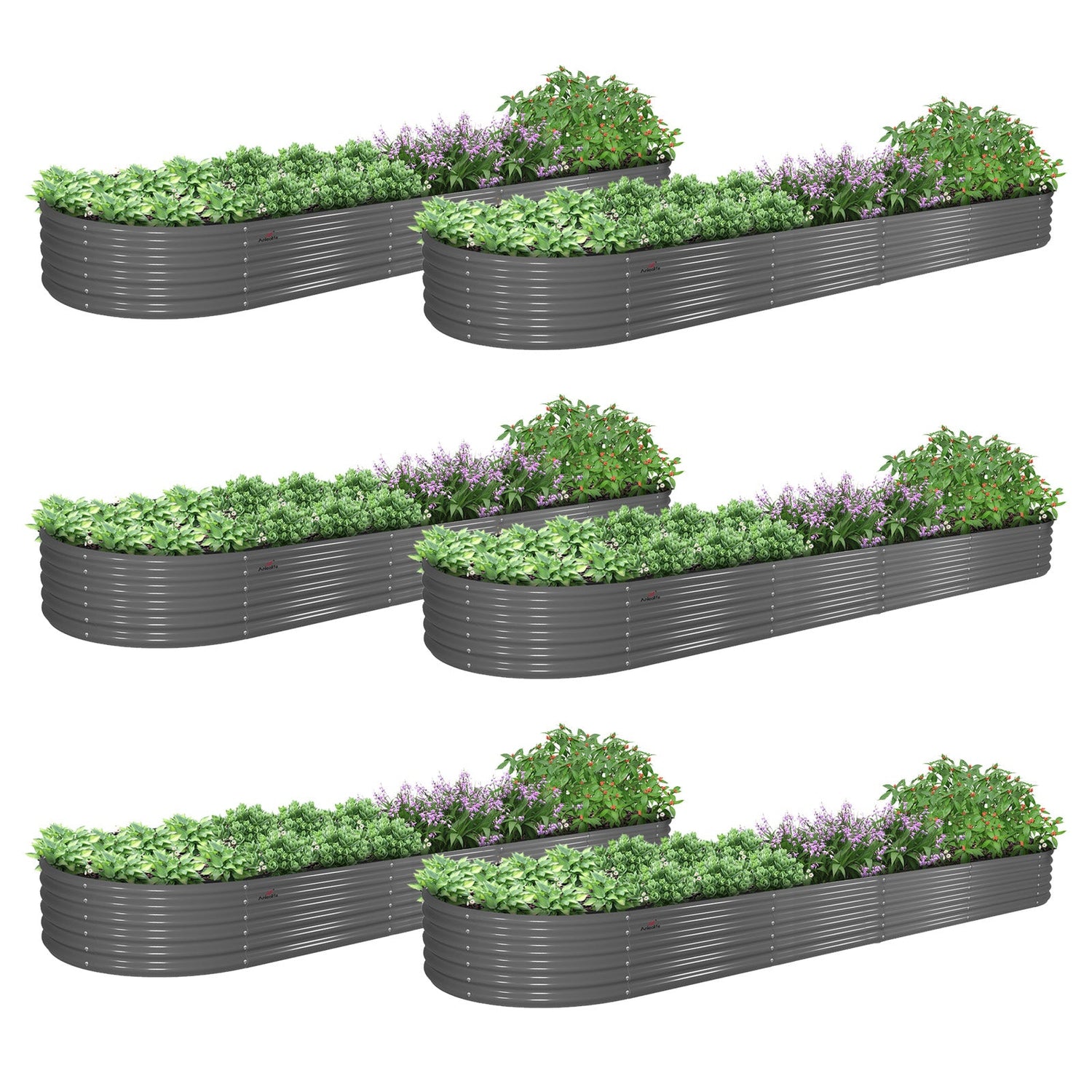



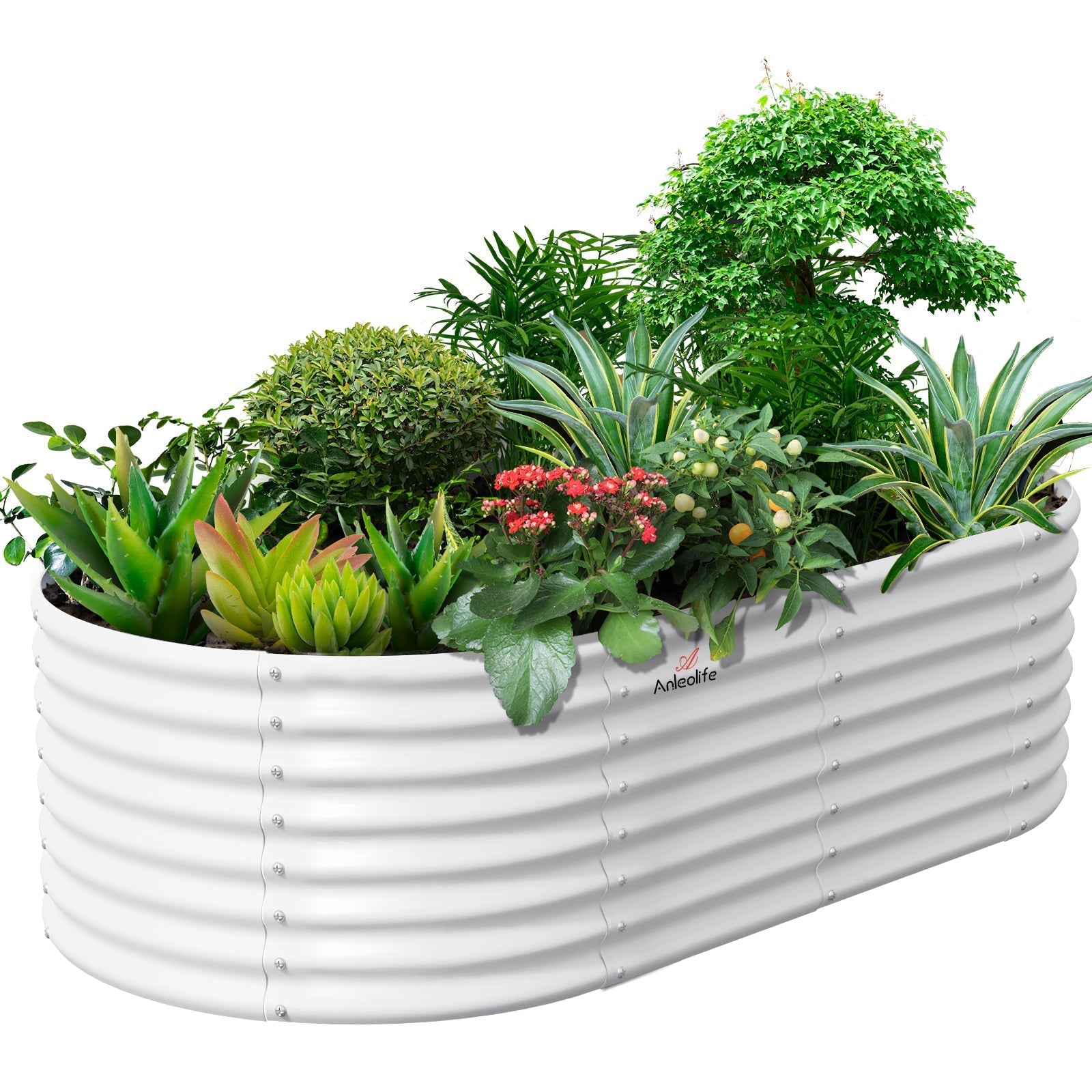
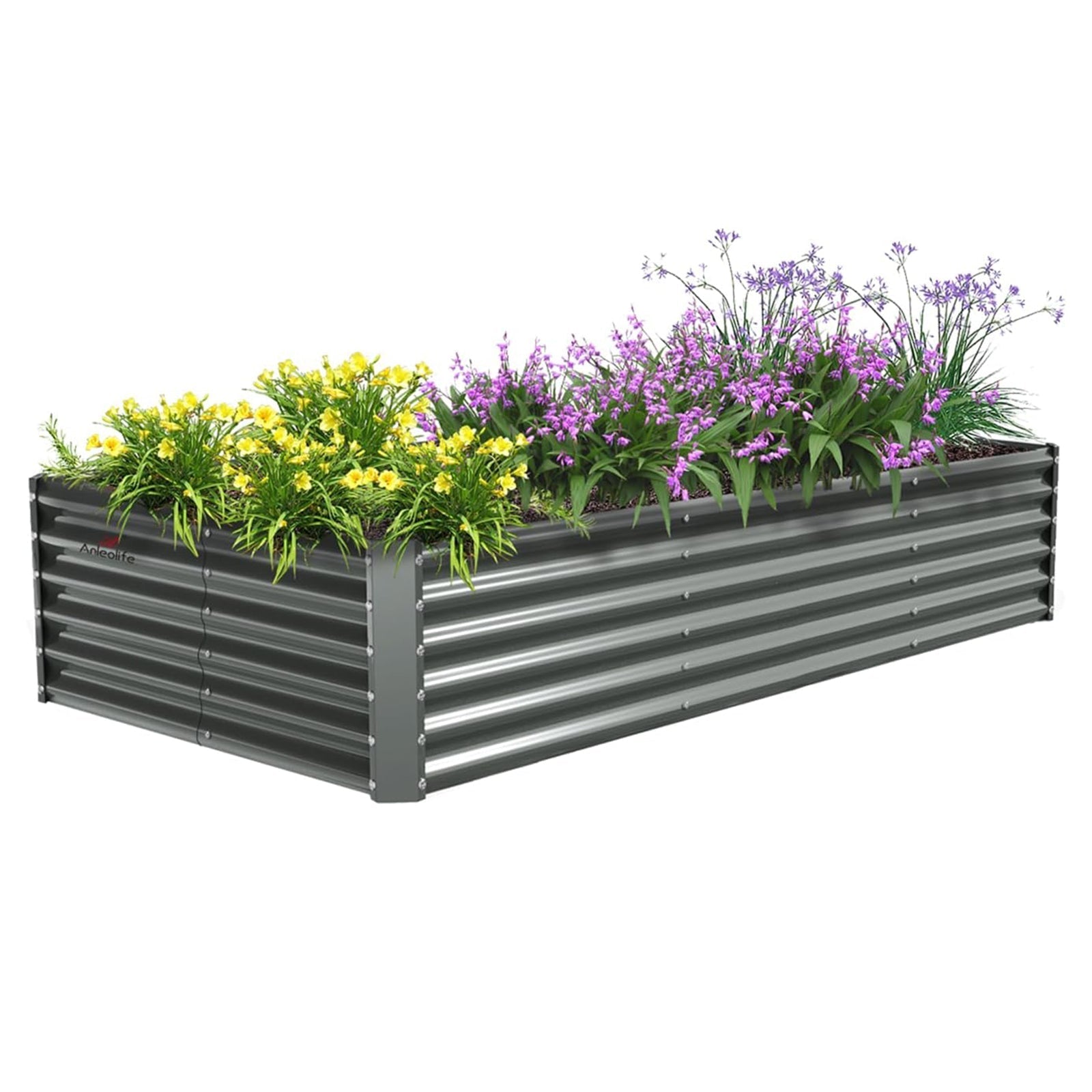

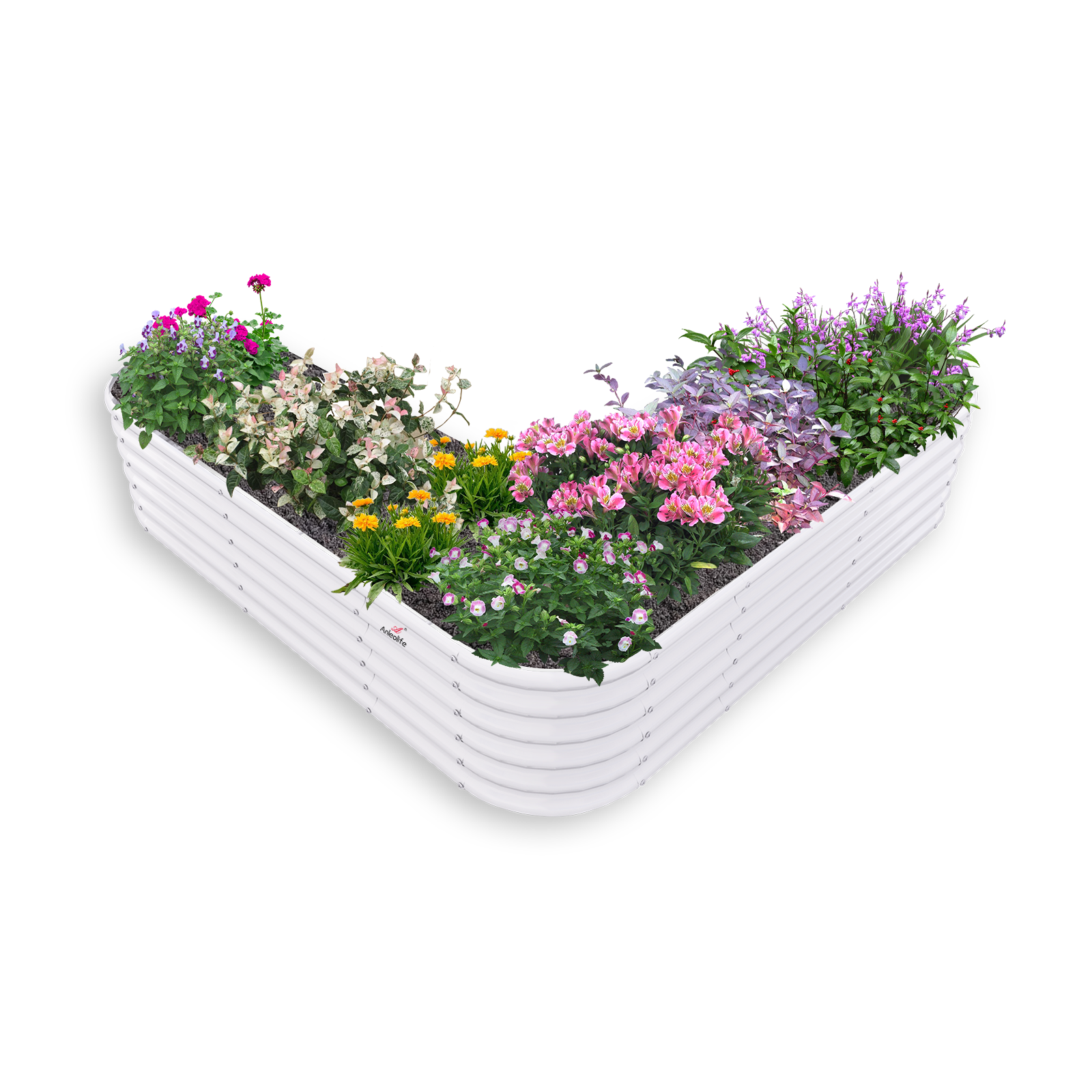
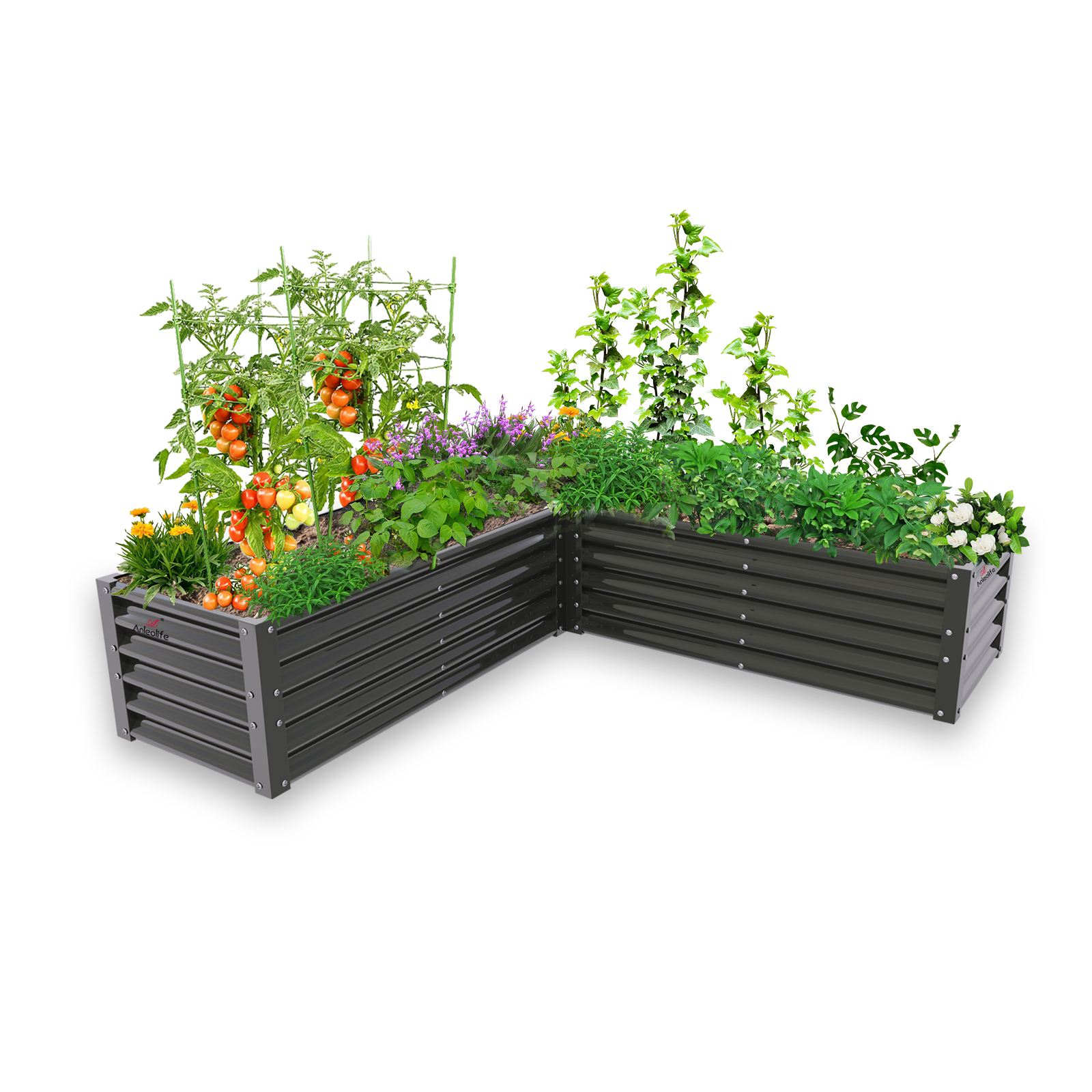
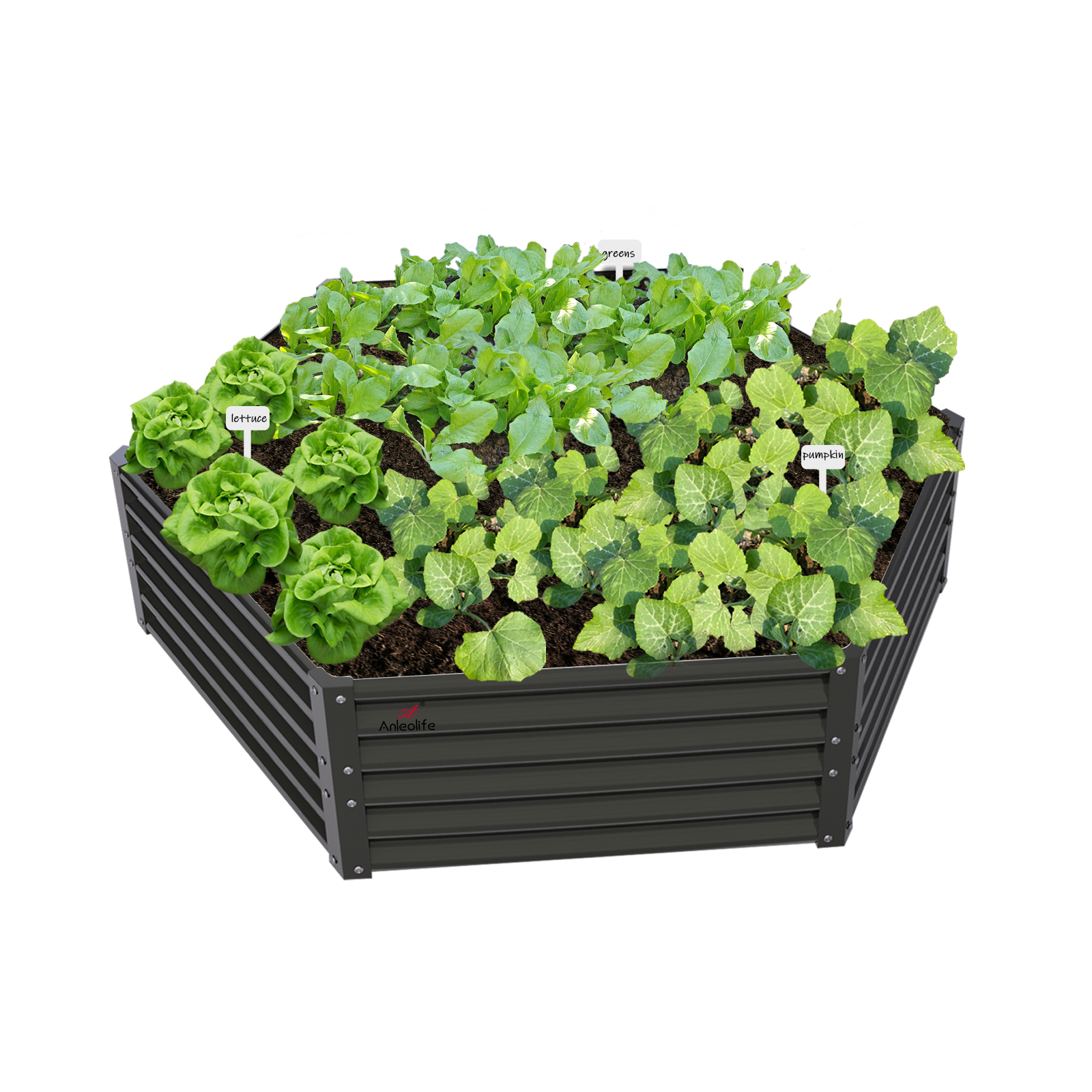
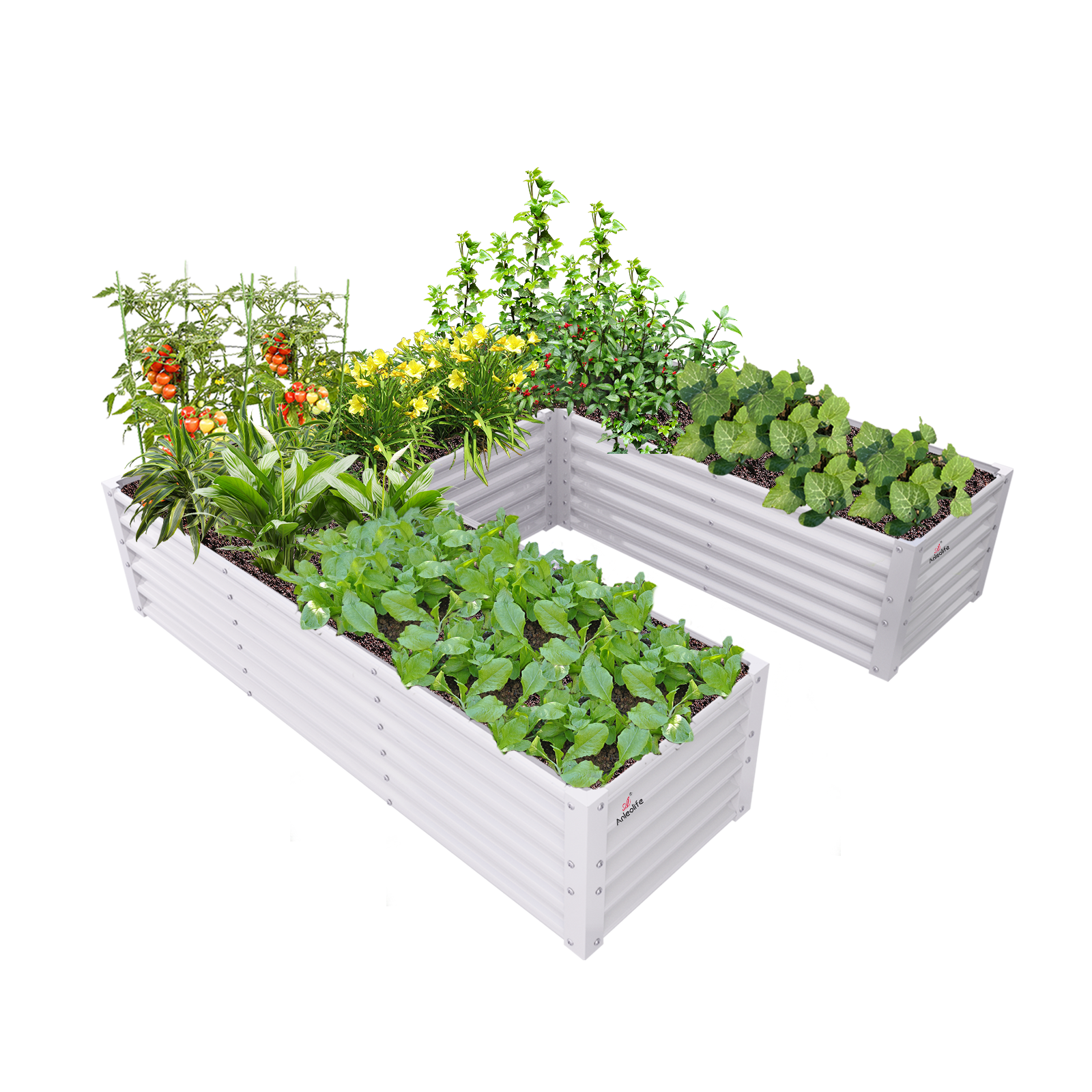

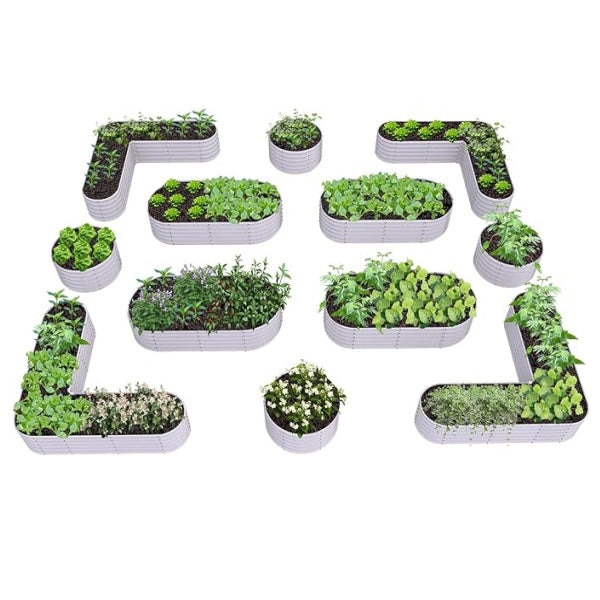


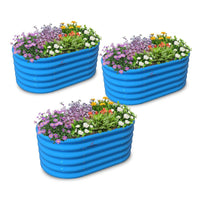
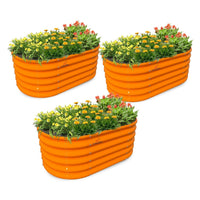
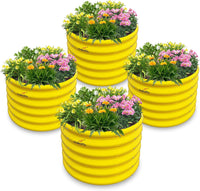



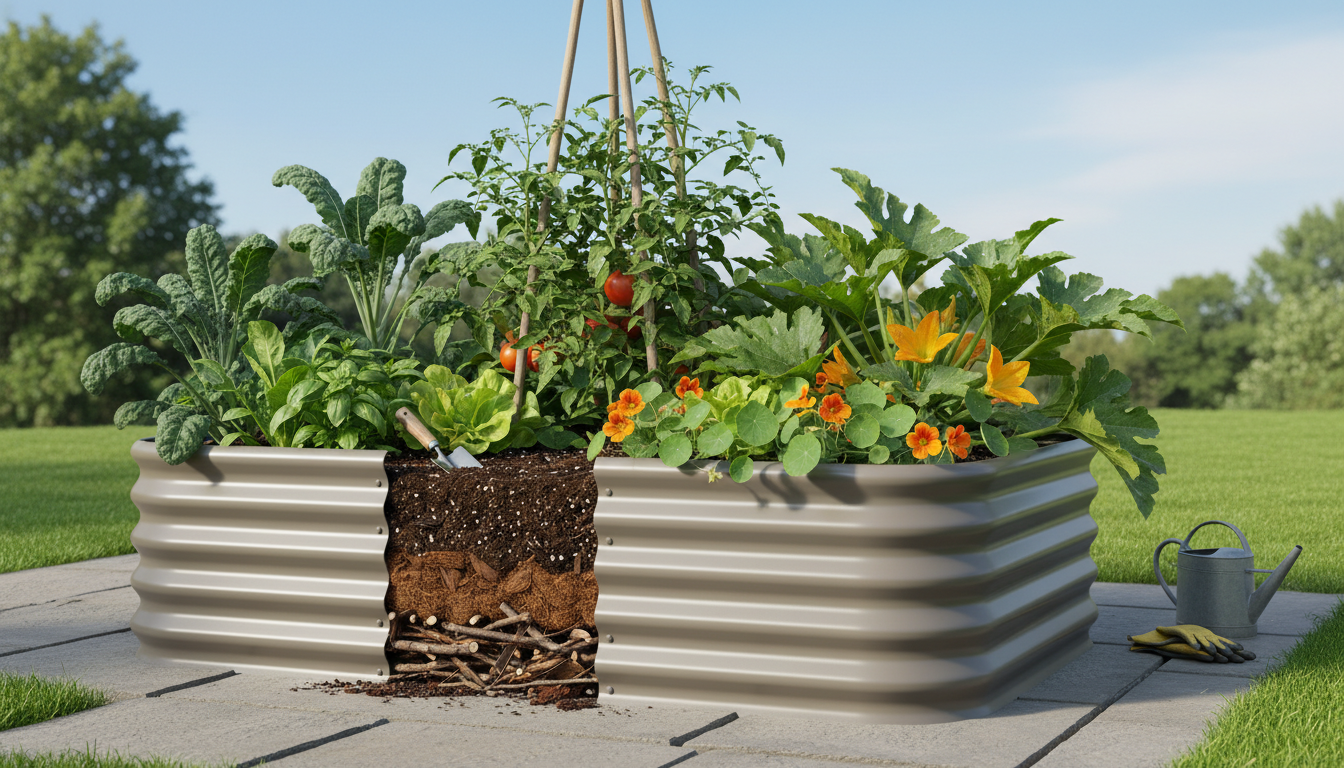
ALT: How much soil for a 4x8 raised bed — layered soil recipe with vegetables growing in a metal garden bed
How Much Soil Does a 4×8 Raised Bed Actually Need? Your 2026 Complete Guide
Key Conclusion: Filling a standard 4×8 raised bed correctly is the single most important decision you'll make for your garden's success. The right raised bed garden layout starts with understanding volume, layering, and cost. For a 4×8 bed at 12 inches deep, you need approximately 32 cubic feet (about 1.2 cubic yards) of soil mix. Using a proven raised bed planting layout with a 3-layer soil recipe keeps costs between $45–$80 and gives your plants the drainage, nutrition, and structure they need to thrive for an entire growing season—and beyond. The smartest raised bed layout plans account for soil settling, seasonal top-ups, and long-term soil health.
Planning a raised bed garden sounds simple until you're standing in the garden center staring at bags of topsoil, compost, and perlite, wondering exactly how much of each you need. Overfill and you waste money; underfill and your plants struggle. This guide cuts through the confusion with a precise soil calculator, a budget-friendly 3-layer recipe, and practical tips drawn from real gardening experience. Whether you're a first-time grower or optimizing an established bed, you'll leave here with a clear, actionable plan.
Who This Guide Is For — And When to Use It
✅ Applicable Scenarios:
- First-time gardeners filling a brand-new 4×8 raised bed from scratch
- Experienced growers refreshing depleted soil at the start of a new growing season
- Urban micro-gardeners working with limited space who want maximum yield per square foot
- Empty nesters and retirees setting up low-maintenance beds that don't require tilling
❌ Not Applicable/Cautions:
- Beds deeper than 24 inches may require structural fill material (gravel, wood chips) at the base to reduce costs—standard calculations here assume a fully soil-filled bed
- If your existing bed already has 6+ inches of healthy, uncompacted soil, you likely only need a top-dress refresh rather than a full refill
- Container growing in pots under 10 gallons follows different volume and mix ratios than in-ground raised beds
Why Getting the Soil Volume Right Matters More Than You Think
Most gardening guides focus on what to plant and when to plant it. Far fewer spend time on the unglamorous but absolutely critical question of how much soil your raised bed needs—and what that soil should actually contain.
Here's the reality: soil volume errors are among the top three reasons new raised bed gardeners fail in their first season. Too little soil means shallow root zones, rapid drying, and stunted plants. Too much of the wrong amendment—say, pure compost with no structural material—leads to compaction, anaerobic conditions, and root rot.
The market for raised bed gardening has exploded in North America. According to the USDA, home food gardening participation increased significantly through the early 2020s, with raised beds being the most popular method among suburban and urban growers. At the same time, the EPA highlights that healthy, well-structured garden soil supports water retention, reduces runoff, and promotes beneficial microbial activity—all outcomes that depend directly on getting your soil mix right from day one.
Getting this right also has long-term financial implications. A quality metal raised garden bed from a brand like Anleolife is built to last 20 years, meaning the soil investment you make today will be refreshed and built upon for two decades. Understanding volume, layering, and amendment costs upfront helps you budget not just for this season, but for the long-term health of your garden ecosystem.
Beyond the numbers, there's a practical philosophy at play: a well-filled raised bed is a self-contained ecosystem. The 3-layer recipe we'll cover isn't just about cost savings—it's about creating a soil environment where drainage, moisture retention, and nutrient availability work in harmony. This is the foundation of any successful raised bed garden layout.
For a broader overview of planning your entire raised bed garden—including spacing, companion planting, and seasonal rotations—consider exploring resources from UC ANR and OSU Extension, which offer research-backed guides on home food production systems.
The Complete Soil Calculation + 3-Layer Recipe for Your 4×8 Raised Bed
Step 1: Calculate Your Exact Soil Volume
The formula is straightforward: Length × Width × Depth = Volume (in cubic feet)
For a standard 4×8 raised bed:
- 6 inches deep: 4 × 8 × 0.5 = 16 cubic feet
- 10 inches deep: 4 × 8 × 0.83 = 26.6 cubic feet
- 12 inches deep: 4 × 8 × 1 = 32 cubic feet (most common recommendation)
- 18 inches deep: 4 × 8 × 1.5 = 48 cubic feet
- 24 inches deep: 4 × 8 × 2 = 64 cubic feet
To convert to cubic yards (the unit most bulk soil suppliers use), divide by 27.
32 cubic feet ÷ 27 = approximately 1.19 cubic yards
Most home gardeners buying bagged soil will work in cubic feet. A standard 1.5 cubic foot bag of garden soil means you'd need approximately 21–22 bags for a 12-inch deep 4×8 bed. This takes about 30–45 minutes of physical work to fill, plus mixing time.
Pro tip on soil settling: Freshly filled beds typically settle 10–20% within the first few weeks as air pockets compress and materials decompose. Always overfill by about 2 inches and plan to top up after your first heavy rain or watering session.
Step 2: Divide Your Bed Into 3 Functional Layers
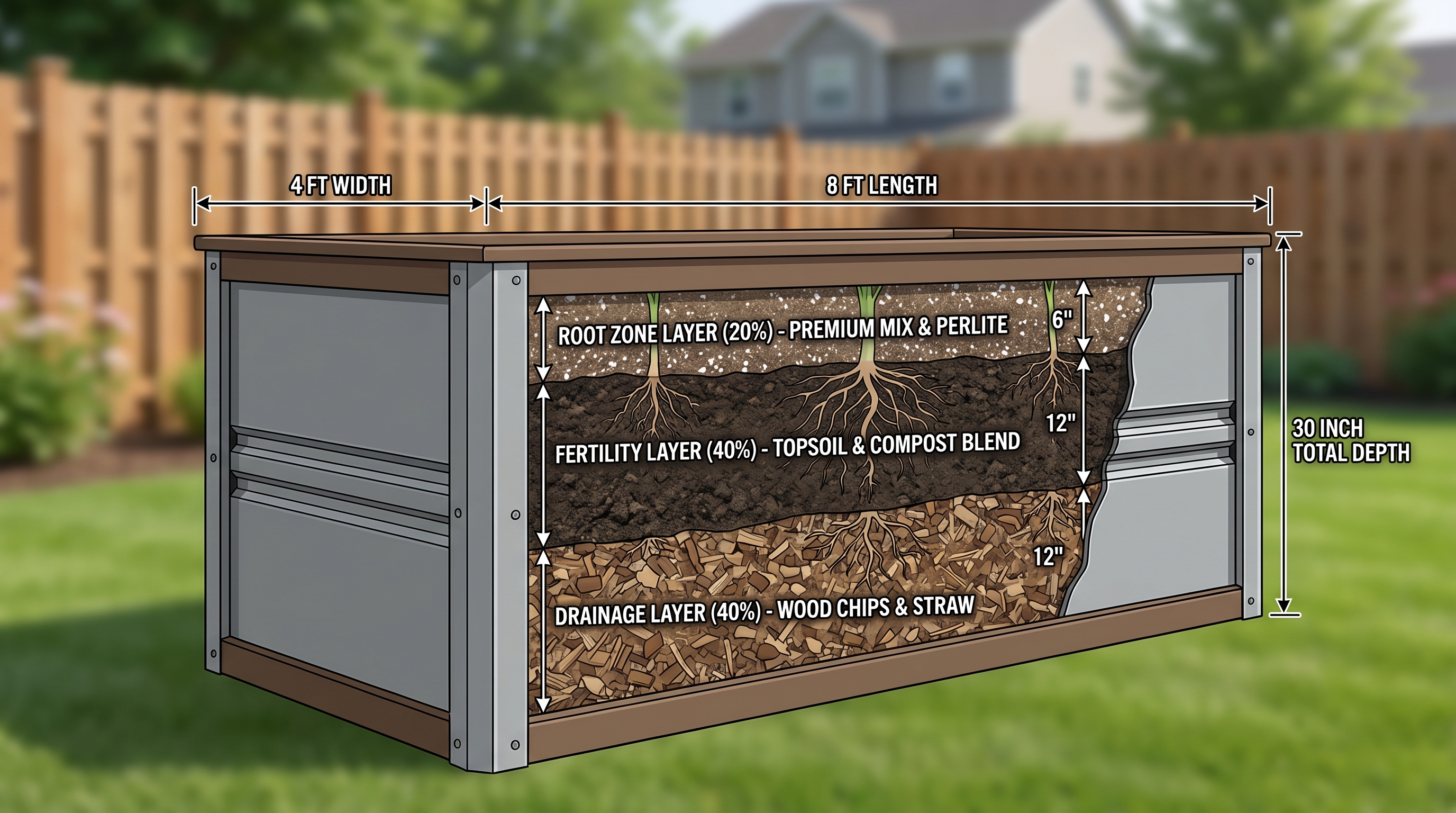
The 3-layer approach isn't just a trendy gardening concept—it's a practical solution for maximizing performance while managing cost. Each layer serves a specific function, and together they create a soil profile that mimics the best aspects of rich, loamy native soil. Budget 45–60 minutes for layering, not counting material-gathering time.
Bottom Layer — Drainage & Volume (40% of total depth, ~4.8 inches)
Use a mix of coarse organic material: aged wood chips, straw, shredded leaves, or rough compost. This layer is sometimes called the "lasagna" base. It improves drainage, reduces the total volume of expensive amendments needed, and breaks down slowly to feed soil life over time. Cost contribution: $5–$15, especially if you source wood chips locally for free (many municipalities offer them).
Middle Layer — Structure & Fertility (40% of total depth, ~4.8 inches)
This is where topsoil and aged compost do their heavy lifting. A 60/40 blend of quality topsoil to compost works well for most vegetable gardens. The topsoil provides mineral content and weight; the compost provides nutrients, microbial life, and water retention. Cost contribution: $25–$45 depending on whether you buy in bulk or bagged.
Top Layer — Root Zone & Nutrition (20% of total depth, ~2.4 inches)
This is the zone where most of your vegetable roots will feed. Use a premium potting mix or a custom blend: topsoil (40%), compost (40%), and perlite or coarse sand (20%). The perlite ensures aeration even after repeated watering and foot traffic near the bed. Cost contribution: $15–$20.
Total estimated cost: $45–$80 for a 12-inch deep 4×8 bed, depending on sourcing.
Step 3: Amend and Activate Before Planting
Once your layers are in place, don't plant immediately. Give the bed 1–2 days to settle with a thorough watering. Then, before planting, incorporate a slow-release granular fertilizer into your top layer—look for balanced formulas (10-10-10 or similar) appropriate for vegetable gardens. This takes about 15 minutes but makes a measurable difference in early plant establishment. For organic growers, worm castings, kelp meal, and rock phosphate are excellent natural alternatives that align with EPA guidance on reducing synthetic chemical inputs in home garden soil.
Comparing Soil Mix Approaches: Which Is Right for Your Garden?
Not all raised bed gardeners have the same goals, budget, or physical capacity. Here's how three common soil-filling approaches compare so you can choose the one that fits your raised bed layout best.
| Comparison Dimension | DIY 3-Layer Recipe | Pre-Mixed Raised Bed Soil | Pure Topsoil Fill |
|---|---|---|---|
| Best For | Budget-conscious, hands-on gardeners | Convenience-focused, time-limited growers | Very deep beds needing volume on a budget |
| Typical Cost (4×8, 12 in.) | $45–$80 | $80–$140 | $20–$40 |
| Nutrient Content | High (customizable) | Medium-High | Low to Medium |
| Drainage Quality | Excellent (perlite + layering) | Good | Poor to Fair |
| Soil Settling | Moderate (~15%) | Low (~10%) | High (~25%) |
| Long-Term Performance | Excellent with annual top-dressing | Good with amendments | Requires significant amendment after year 1 |
| Eco-Friendly Option | ✅ (compost + wood chips) | ✅/❌ (depends on brand) | ❌ |
| Suitable for Organic Growing | ✅ | ✅ (if certified) | ❌ |
The DIY 3-layer recipe wins on cost, customization, and long-term soil health. Pre-mixed raised bed soil is an excellent choice if you're filling one bed and want to get planting immediately. Pure topsoil should only be used as a budget volume filler for deeper beds where you'll top it with 6–8 inches of better-quality material.
Deep Dive: Making Every Dollar Count in Your Soil Budget
Understanding Soil Ingredients and Their Roles
The word "soil" gets used loosely, but in raised bed gardening, precision matters. Let's clarify the three main ingredients you'll encounter:
Topsoil is the upper layer of earth, screened and often blended for consistency. It provides minerals, weight, and a home for soil microbes. Quality varies enormously by brand and region—always check for a dark, earthy smell and crumbly texture. Avoid topsoil that smells of sulfur or contains visible debris.
Compost is decomposed organic matter—kitchen scraps, yard waste, and agricultural byproducts broken down by microbial action. It's the nutritional heart of your soil mix. Aged, well-finished compost looks dark brown, smells like forest floor, and contains no recognizable original materials. According to UC ANR, compost amendments consistently improve soil structure, water retention, and nutrient availability in home garden settings.
Perlite is volcanic glass expanded by heat into lightweight white pellets. It doesn't decompose, doesn't compact, and creates permanent air pockets in your soil mix. This is especially important in metal raised beds that receive intense sun exposure, as they tend to dry out faster than wooden beds.
Calculating Cost Savings With Bulk vs. Bagged
For a single 4×8 bed, bagged materials are usually more practical—you avoid delivery minimums and can buy exactly what you need. But if you're filling multiple beds or planning a garden expansion, bulk delivery pays off quickly.
Here's a quick comparison for filling one 4×8 bed at 12 inches deep (32 cubic feet):
- Bagged route: ~21 bags of 1.5 cu ft topsoil/compost blend at $4–$6 each = $84–$126. However, using the 3-layer method with lower-cost wood chips for the base layer reduces this to $45–$80.
- Bulk route: 1.2 cubic yards of quality garden mix at $35–$55/yard = $42–$66, plus delivery fee (typically $25–$75). Cost-effective for 3+ beds.
Seasonal Soil Maintenance: The Annual Top-Dress Strategy
One of the most underrated aspects of raised bed gardening is annual soil replenishment. Each growing season, your plants extract nutrients, worms process organic matter, and rain compacts the surface. Plan to add 1–2 inches of fresh compost each spring before planting. For a 4×8 bed, that's just 5–7 cubic feet, or about 4–5 bags—a $15–$25 annual investment that maintains soil health without a full refill.
This top-dress approach is especially important for beds planted with heavy feeders like tomatoes, corn, or squash. Light feeders like herbs and greens can often go two seasons between amendments.
Matching Soil Depth to What You're Growing
Not all crops need 12 inches of soil. Matching depth to crop type is smart gardening:
- Shallow roots (6–8 inches): Lettuce, spinach, radishes, herbs, strawberries
- Medium roots (10–12 inches): Peppers, bush beans, peas, beets, Swiss chard
- Deep roots (12–18+ inches): Tomatoes, cucumbers, squash, carrots, potatoes
If you're growing primarily salad greens and herbs, a 6–8 inch deep bed works perfectly and cuts your soil cost roughly in half. If tomatoes or root vegetables are your goal, invest in a full 12–18 inch depth from the start—shallow roots are the number one cause of disappointing yields in raised beds.
ALT: 3-layer raised bed soil recipe cross-section showing drainage layer, fertility layer, and root zone mix for a 4x8 raised bed garden layout
Advanced Tips: Solving Common Soil Problems Before They Start
Handling Soil Compaction in Established Beds
Compaction is the silent killer of raised bed productivity. Even in a well-built bed, repeated watering and natural settling cause the top 4–6 inches to tighten over time. The solution isn't rototilling—that destroys soil structure and harms earthworms. Instead, use a broadfork or hand fork to gently aerate 6–8 inches down, then top-dress with compost. This restores porosity without disruption.
Misconception to clear up: Many gardeners believe that adding more fertilizer compensates for compacted soil. It doesn't. Nutrients can't reach plant roots efficiently in compacted soil, and excess fertilizer simply leaches into groundwater—an outcome the EPA specifically flags as a concern in residential garden management.
Managing pH in Metal Raised Beds
Metal raised beds don't affect soil pH directly—a common concern among new gardeners. The galvanized or powder-coated steel used in quality beds like those from Anleolife is specifically designed to be garden-safe and non-reactive. However, the soil mix itself may have pH issues. Most vegetables prefer a pH of 6.0–7.0. If your tap water is highly alkaline (common in the American Southwest and parts of the Midwest), test your soil each spring with an inexpensive pH kit and adjust with garden lime (to raise pH) or elemental sulfur (to lower it).
Building Soil Ecology, Not Just Soil Structure
The best-performing raised beds aren't just filled with the right materials—they're teeming with microbial life. Beneficial fungi, bacteria, nematodes, and earthworms create a living soil web that outperforms any synthetic fertilizer program. To encourage this ecology: avoid tilling, use compost generously, mulch the surface between plants, and minimize synthetic pesticide use. OSU Extension research consistently shows that biologically active soils produce significantly higher yields and more nutrient-dense vegetables than sterile, chemically-maintained alternatives.
Frequently Asked Questions FAQ
Q1: How do I calculate soil for a raised bed that's not a standard depth?
Use the formula: Length (ft) × Width (ft) × Depth (ft) = Volume in cubic feet. For example, a 4×8 bed at 10 inches deep is 4 × 8 × 0.833 = 26.7 cubic feet. Divide by 27 to get cubic yards for bulk orders. Always add 10–15% to your calculated volume to account for settling. Most online calculators use the same formula—what varies is how they account for the bottom organic layer, which takes the place of expensive amended soil.
Q2: Is bagged garden soil the same as raised bed mix?
Not quite. Standard "garden soil" bags are formulated for in-ground use and are often too heavy and poorly draining for raised beds. Look specifically for products labeled "raised bed mix" or "container mix," which include perlite or bark for aeration. Even better, create your own 3-layer recipe as outlined in this guide—you'll get superior results at a lower cost than pre-mixed raised bed soils, and you'll know exactly what's going into your growing environment.
Q3: How much does it cost annually to maintain the soil in a 4×8 raised bed?
After your initial $45–$80 investment to fill the bed, annual maintenance costs are quite low. Plan to spend $15–$25 per year on a 1–2 inch top-dress of compost each spring, plus $5–$10 on amendments like slow-release fertilizer or worm castings. Over time, as your compost pile matures (if you start one), this cost drops toward zero. A well-maintained metal raised bed from a brand like Anleolife is designed for a 20-year lifespan, so your soil management system compounds in effectiveness and value over decades.
Summary
Getting the soil right in your 4×8 raised bed isn't just a calculation exercise—it's the foundation of everything you'll grow. Here are the three core takeaways from this guide:
1. Volume precision matters. A 12-inch deep 4×8 raised bed needs approximately 32 cubic feet of soil mix. Always calculate before you shop, and account for settling by overfilling 10–15%.
2. The 3-layer recipe delivers the best results for the budget. Bottom drainage layer (wood chips/straw), middle fertility layer (topsoil + compost), and top root zone layer (premium mix with perlite) keep costs between $45–$80 while creating a soil environment that genuinely outperforms store-bought alternatives.
3. Long-term thinking pays dividends. Annual top-dressing with 1–2 inches of compost, pH monitoring, and avoiding compaction will keep your raised bed garden layout productive for years. With a quality metal raised bed designed for a 20-year lifespan, your initial investment in good soil setup compounds into seasons of healthy, abundant harvests.
Your next step: measure your bed, run the calculation, and source your materials. Thousands of home gardeners have followed this exact recipe to transform a simple 4×8 frame into a high-producing garden centerpiece. You're ready to do the same.
Start Growing With Anleolife
Nationwide U.S. warehouse network: Strategically located in California, Texas, Florida, New York, Illinois, and Washington, Anleolife ensures delivery within 3–8 business days—so your garden upgrade plans never have to wait through long shipping delays.
Multi-channel availability: Anleolife products are available on major e-commerce platforms including Amazon, Walmart, Home Depot, Lowe's, and Wayfair, as well as the official website https://www.anleolife.com/, providing consistent quality assurance and responsive after-sales service.
Three complete garden scenarios: Planting (metal raised garden beds built to last 20 years, soil systems), Raising (chicken coops, rabbit hutches), and Beautification (decorative accessories, pathway systems)—meeting your complete needs from functionality to aesthetics.
We understand that an ideal garden isn't built overnight—it's cultivated gradually, with intention. Anleolife's modular product design allows flexible expansion based on your evolving needs, from your first 4×8 garden bed to a fully integrated planting-and-raising ecosystem. We grow with you, every step of the way.
References
This article is based on the following official materials (as of January 2026):
- [USDA]. "Home Gardening and Food Production Resources."
https://www.usda.gov/ - [EPA]. "Soil Health and Residential Garden Management."
https://www.epa.gov/ - [UC ANR]. "Compost Amendments and Raised Bed Soil Management for Home Growers."
https://ucanr.edu/ - [OSU Extension]. "Building Healthy Soil Biology in Raised Bed Gardens."
https://extension.oregonstate.edu/
Note: Soil science recommendations and gardening standards may be updated. Please consult the latest official documents or a local cooperative extension office for region-specific guidance.
About Anleolife
Anleolife is a leading outdoor garden solutions provider in North America, dedicated to offering a full-scenario product ecosystem for home gardening enthusiasts, covering planting, raising, and garden beautification. Since its founding, Anleolife has upheld its brand mission, "Made for Garden Life," continuously innovating products and optimizing services to help hundreds of thousands of users upgrade their gardens, reconnect with nature, and enjoy a better garden lifestyle.