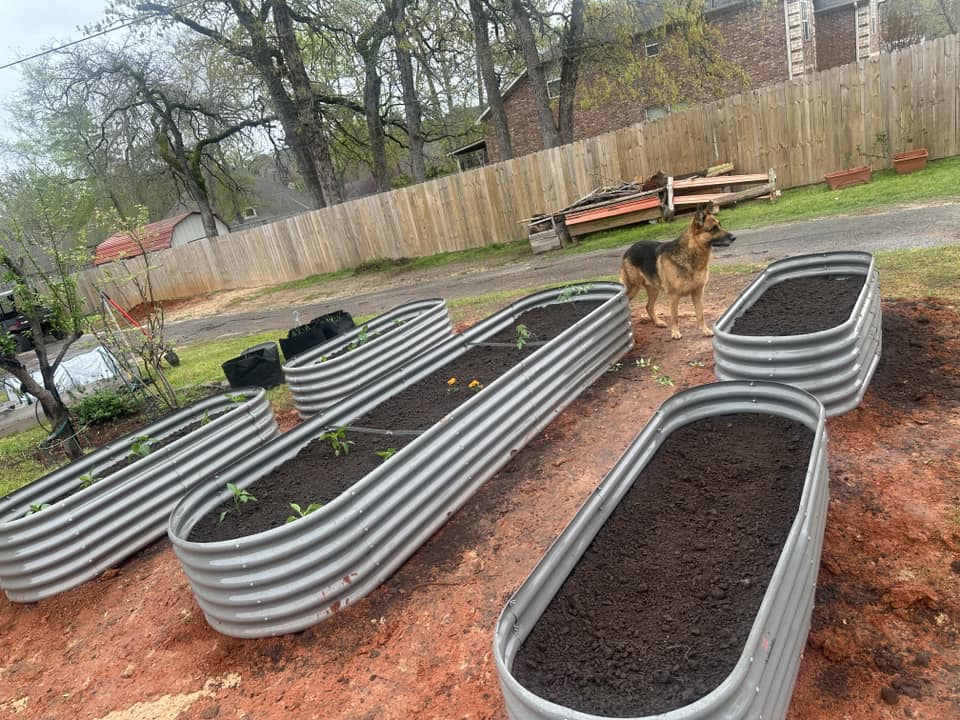



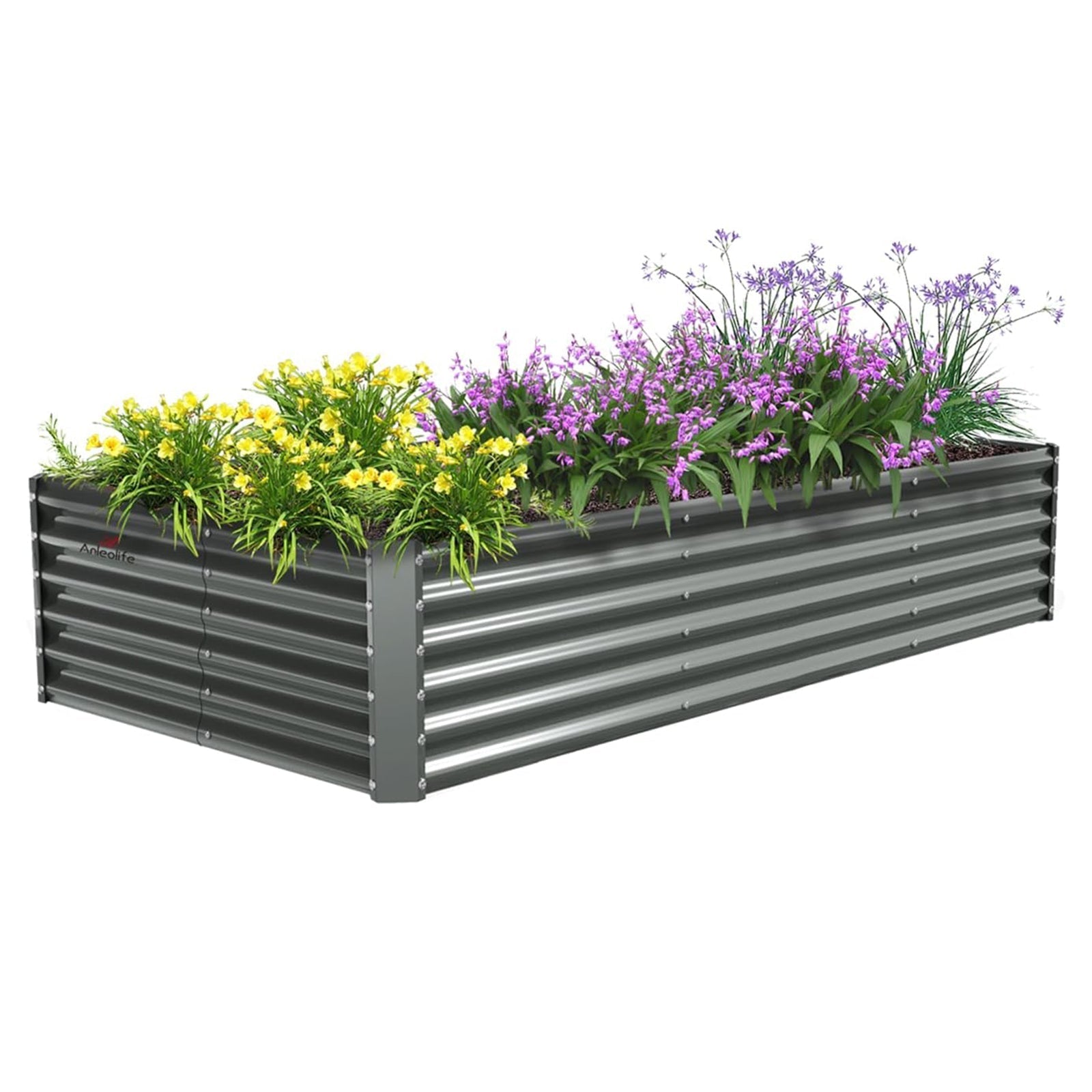
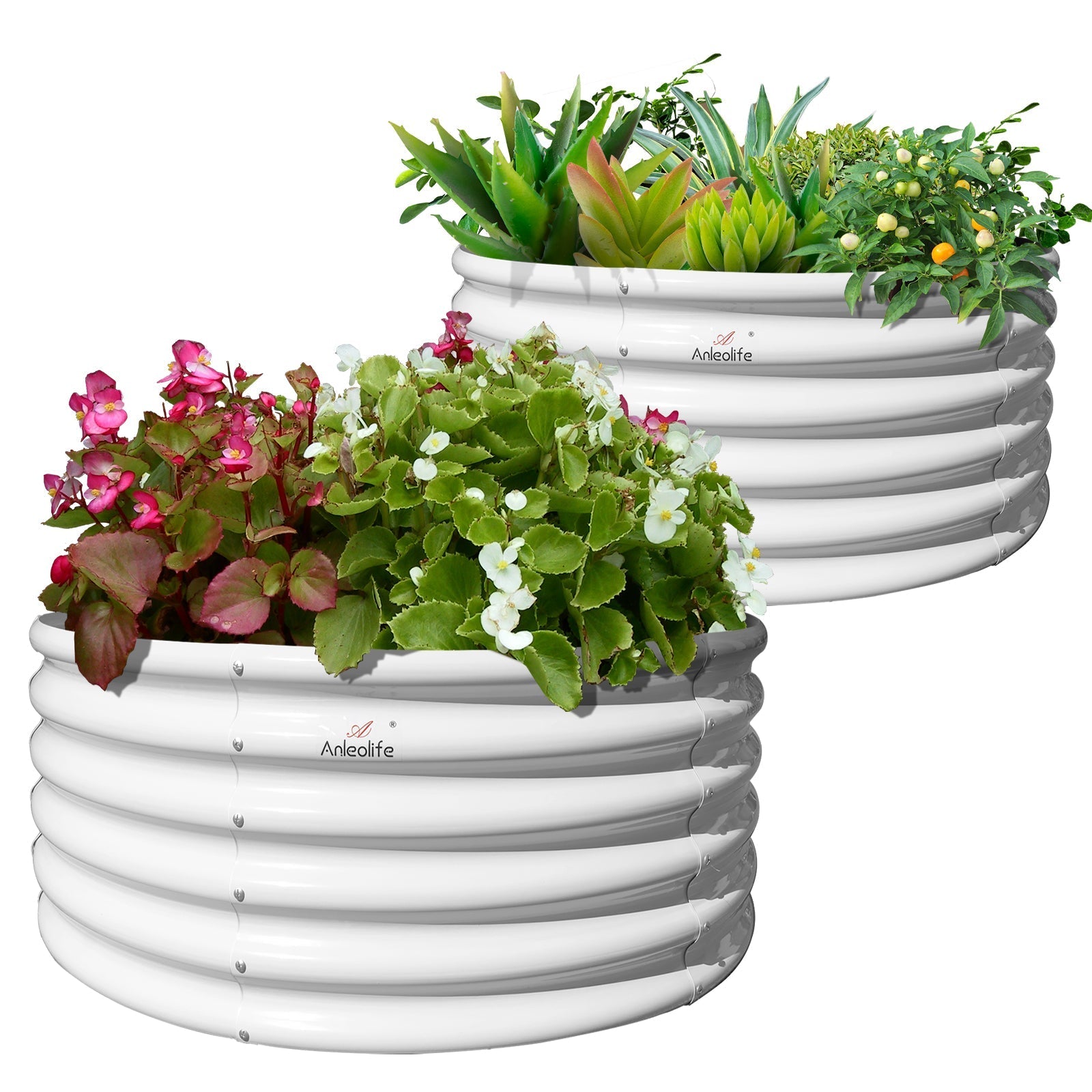
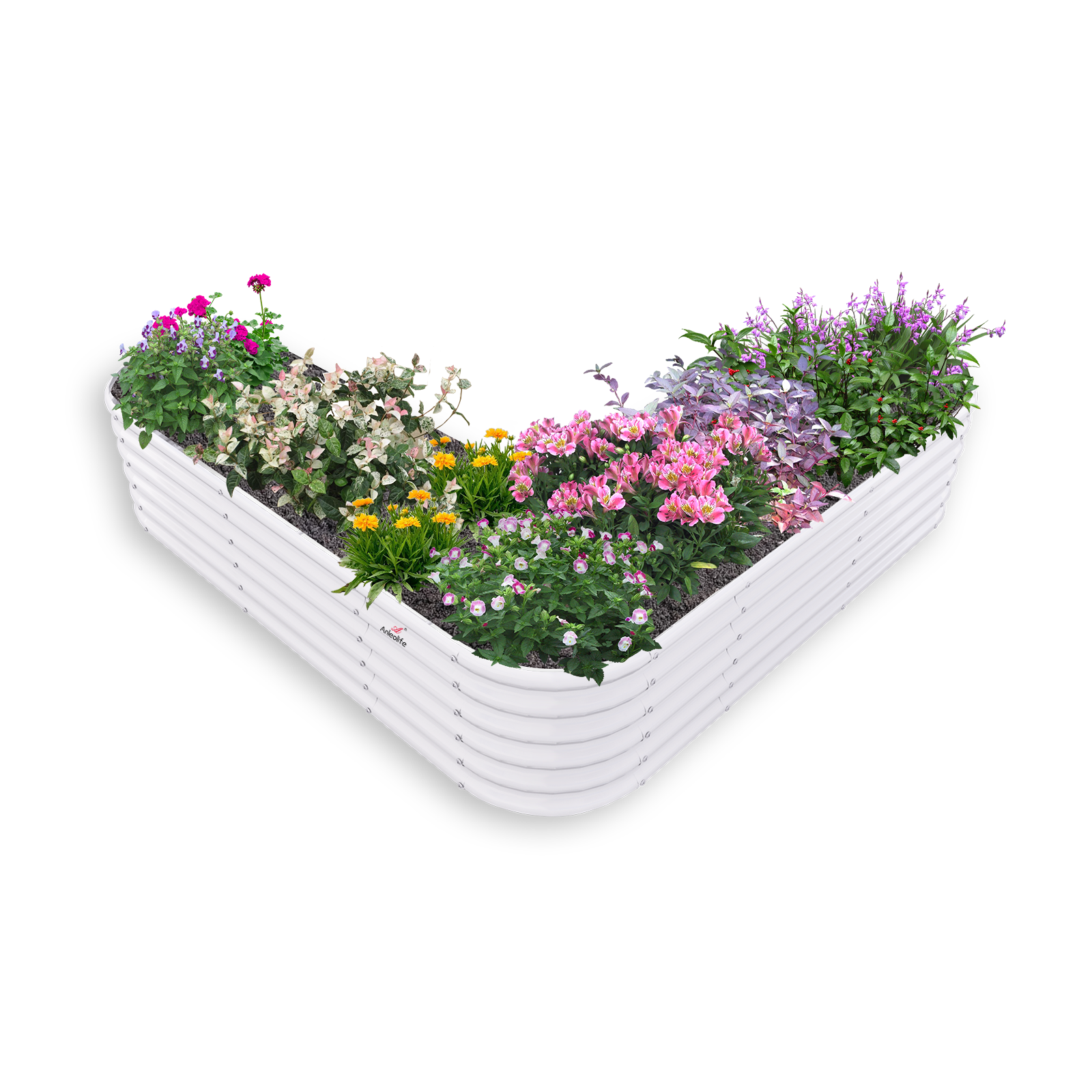
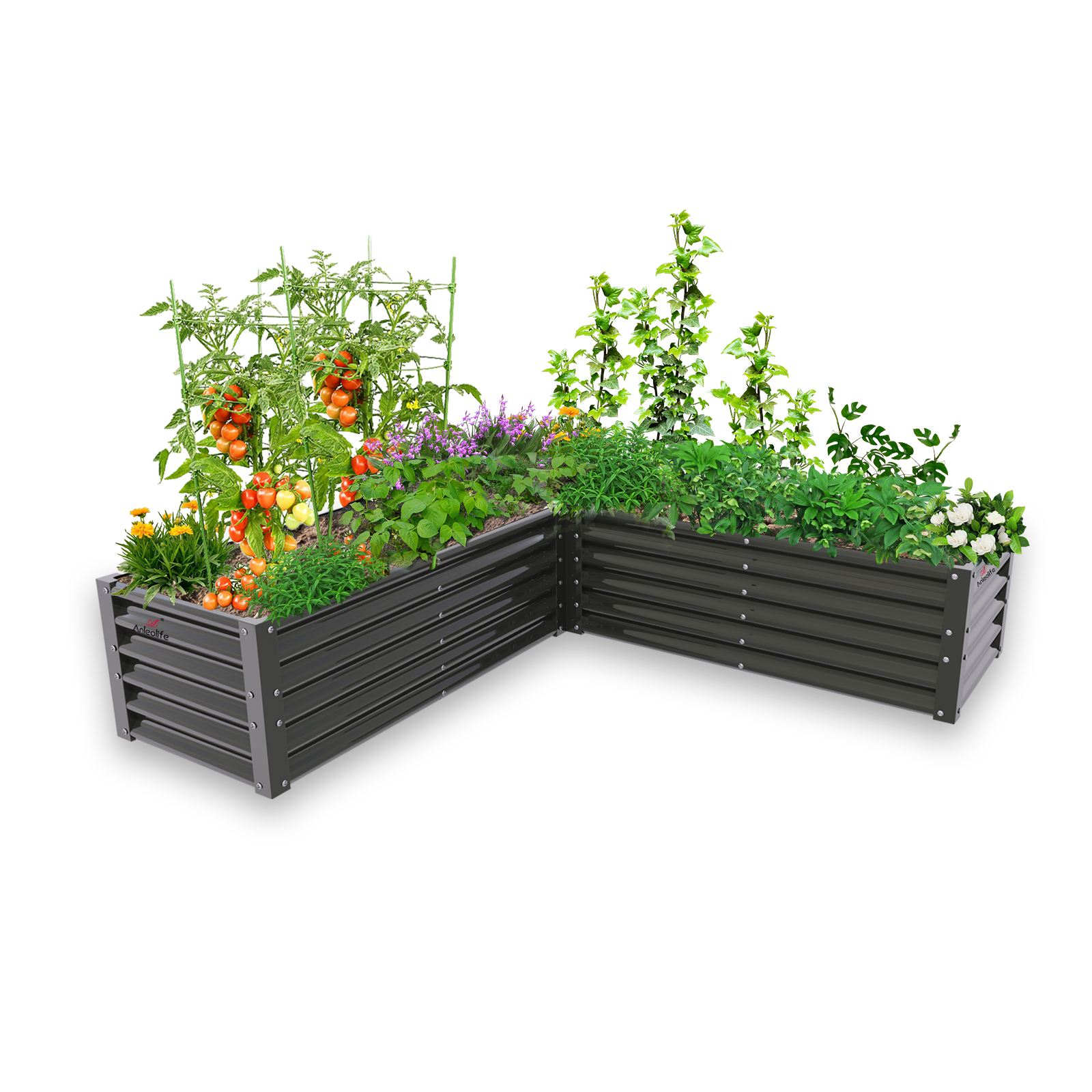
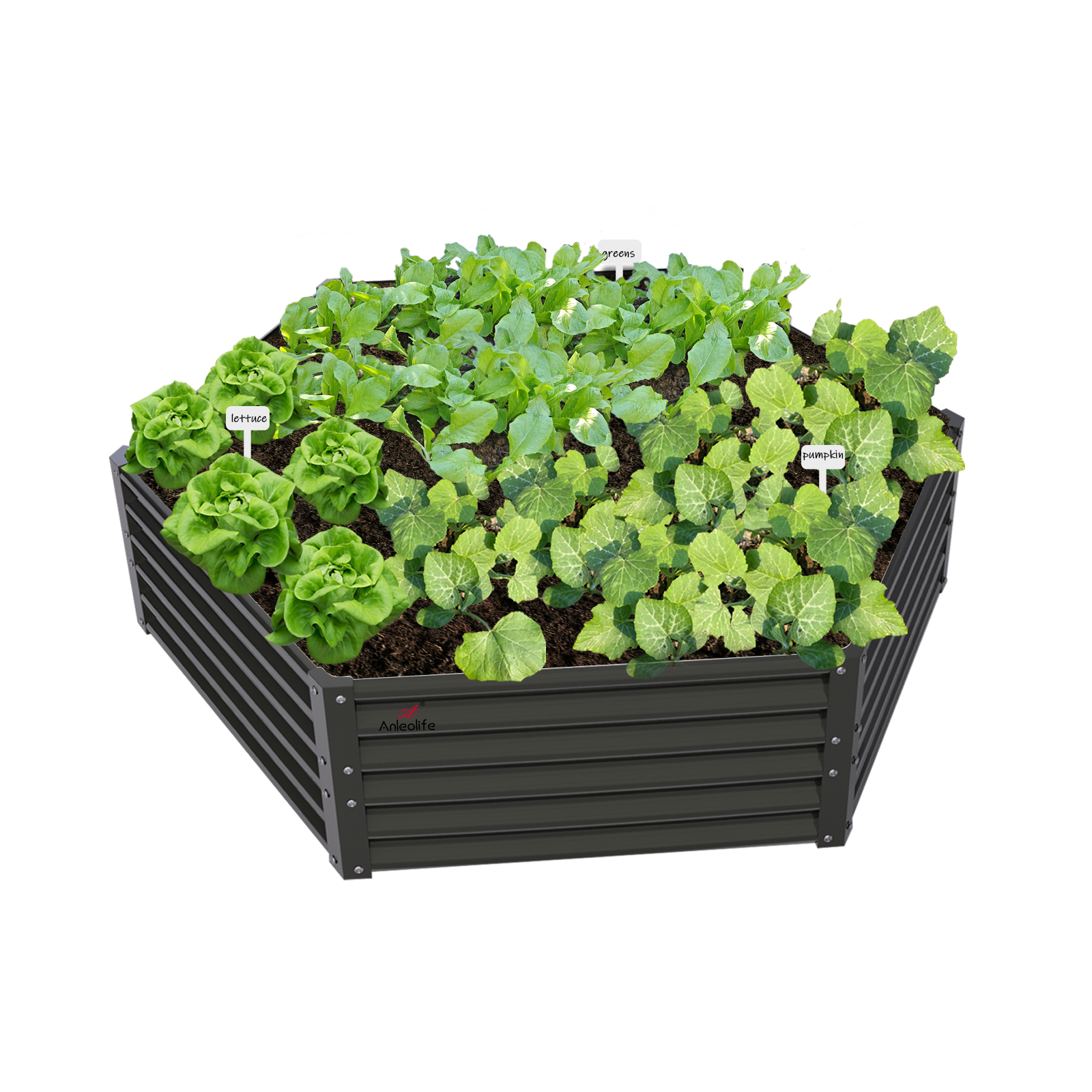
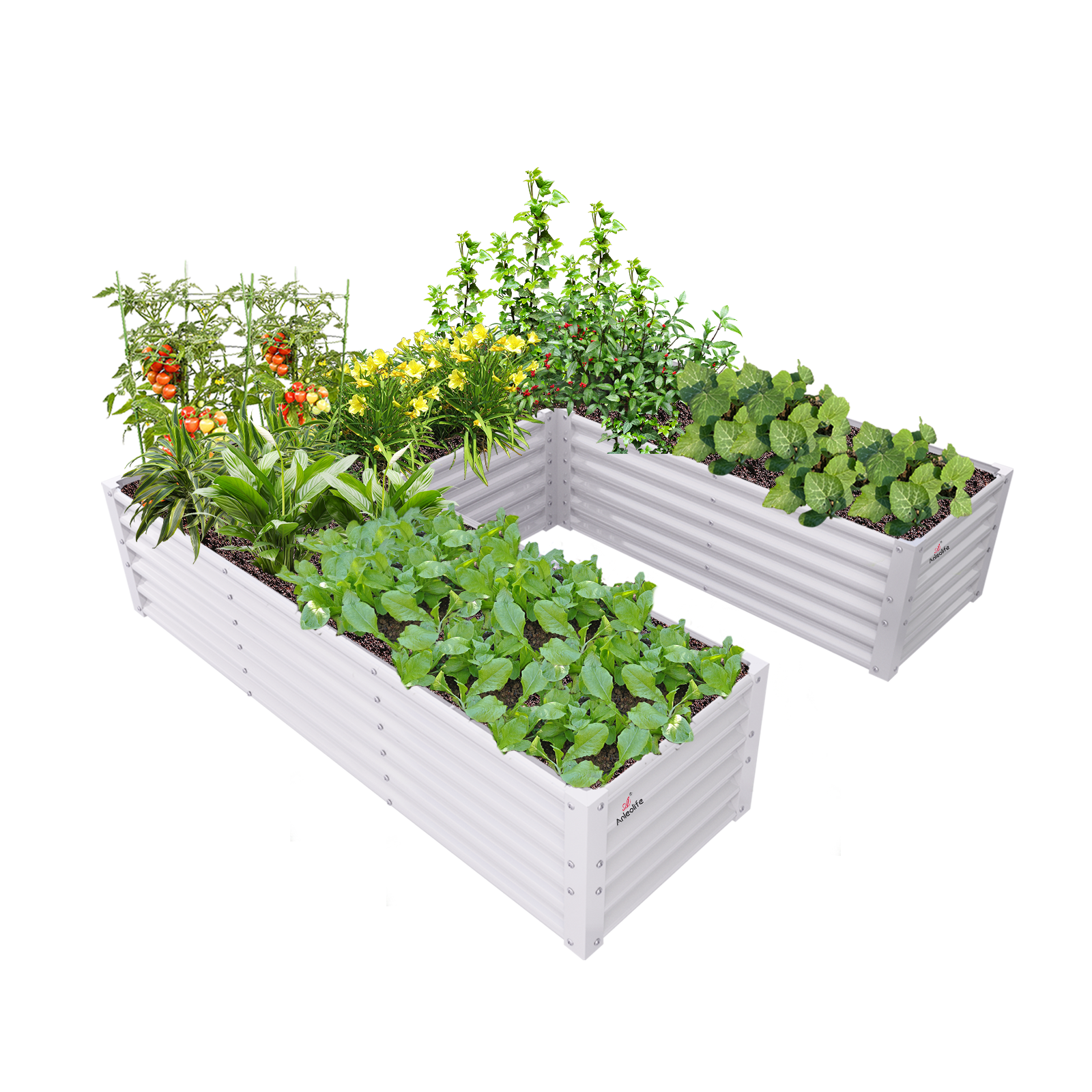

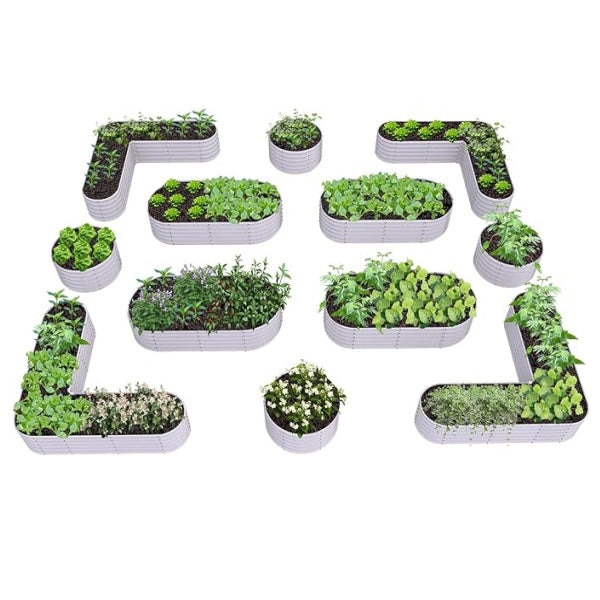

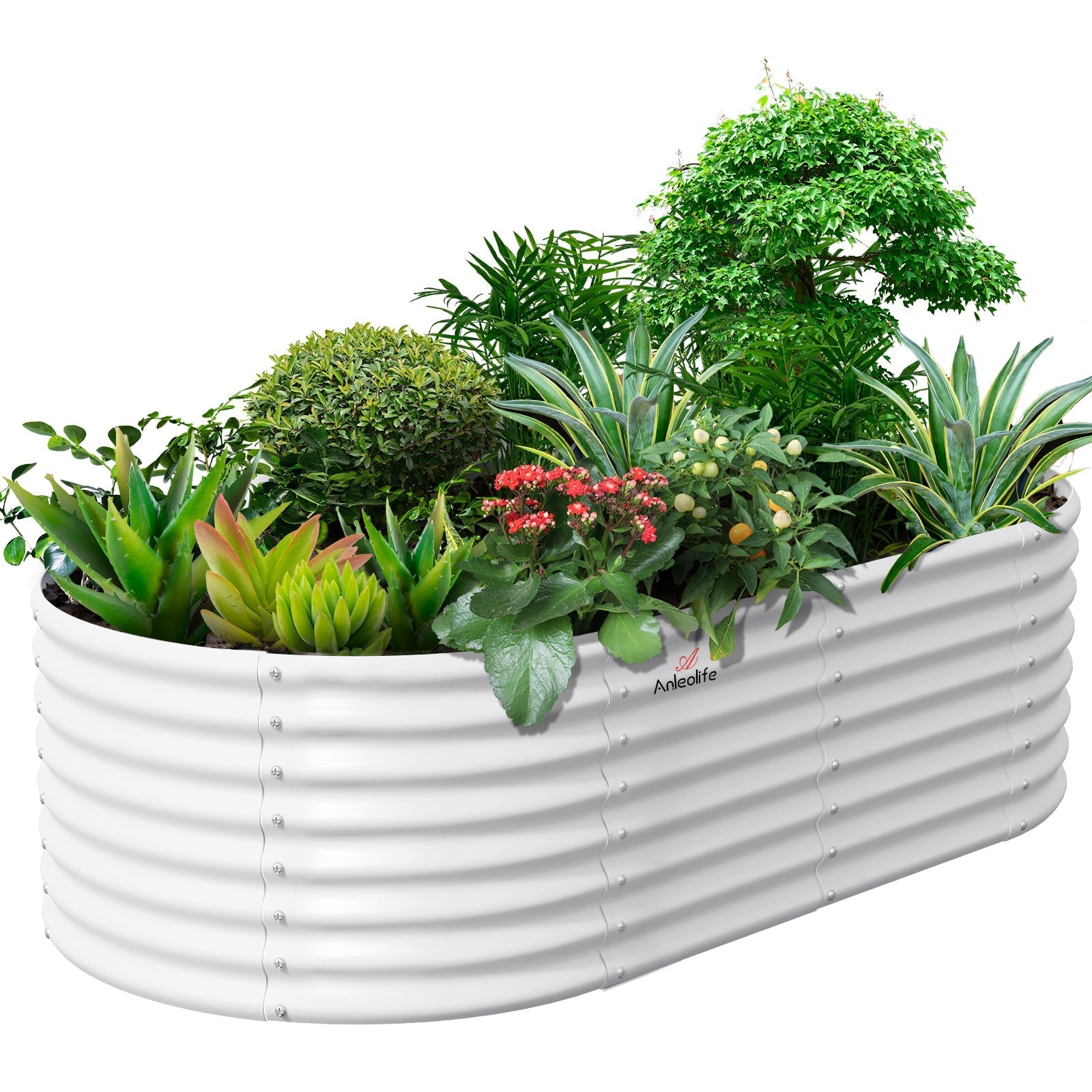


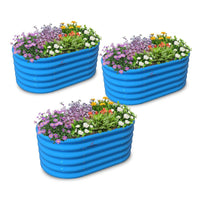
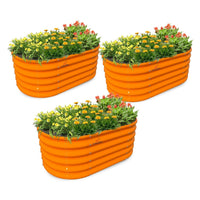
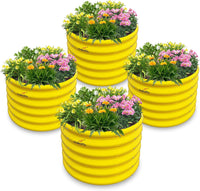
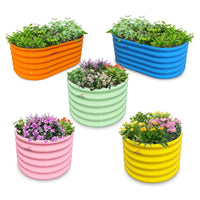
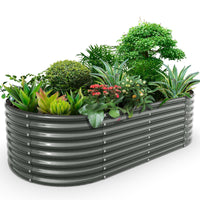



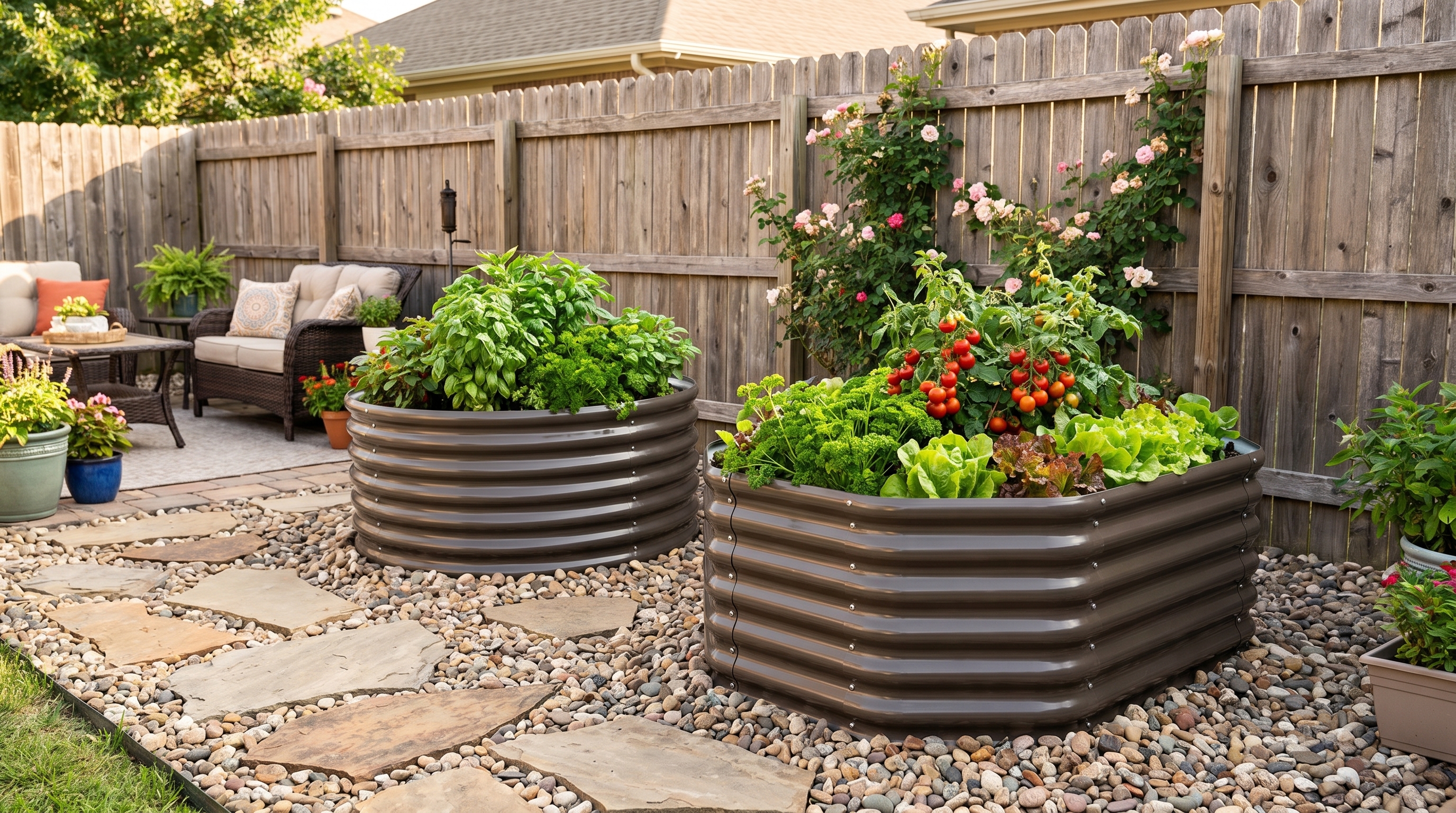
ALT: Round and hexagonal raised garden beds arranged in a small backyard, showcasing space-efficient garden design for urban gardeners
Do Round and Hexagonal Raised Garden Beds Actually Work for Small Backyards?
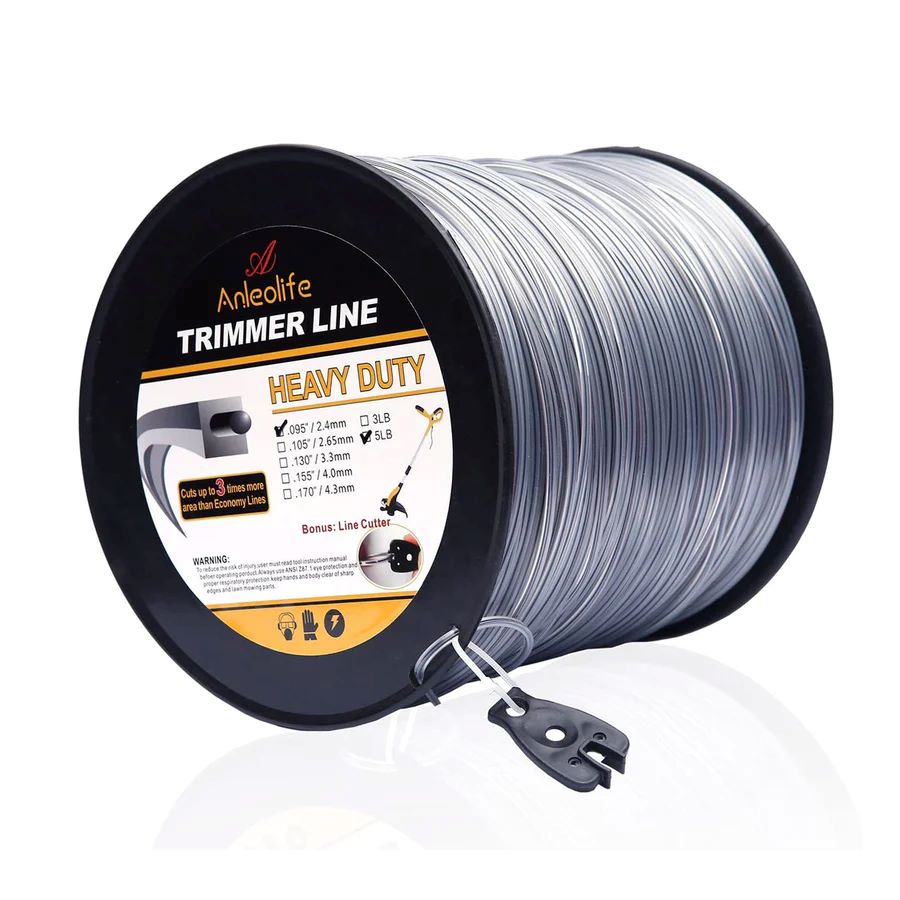
Key Conclusion: Round and hexagonal raised garden beds offer a compelling solution for small backyard gardeners who want to maximize growing space without sacrificing visual appeal. Unlike standard rectangular beds, these alternative shapes fit naturally into corners, patios, and irregular outdoor spaces — acting almost like living garden edging that defines zones beautifully. While they don't replace the versatility of a full garden trellis setup or the efficiency of trimmer lines for lawn maintenance, their geometric charm and functional footprint make them genuinely worth considering for compact yards.
If you've ever stood in your backyard and thought, "There's just not enough room for a proper garden," you're far from alone. Millions of American homeowners — from urban apartment dwellers to suburban empty nesters — are wrestling with the same challenge: how to grow meaningful amounts of food and flowers in a space that simply wasn't designed for large-scale gardening.
Round and hexagonal raised garden beds have emerged as a creative answer to this problem. They offer a smaller footprint than many rectangular beds, fit elegantly into patios and deck corners, and bring an undeniable decorative flair that traditional rectangular beds can't quite match. But are they genuinely practical, or just a pretty gimmick? This article digs into everything you need to know.
Who Should Consider Round or Hexagonal Raised Garden Beds?
✅ Applicable Scenarios:
- Homeowners with compact patios, balconies, or irregular backyard layouts who need a bed that fits around existing structures
- Gardeners prioritizing aesthetics alongside productivity — especially those designing garden edging focal points or decorative landscape features
- Urban micro-gardeners and retirees who want manageable, accessible planting areas that don't require kneeling or bending extensively
- Anyone looking to grow herbs, strawberries, flowers, or compact vegetables in a standalone centerpiece arrangement
- People searching for the best gifts for environmentalists or gardening enthusiasts — a round or hexagonal bed makes a uniquely thoughtful present
❌ Not Applicable/Cautions:
- Growers who need to maximize linear row planting for large vegetable yields — rectangular beds allow better row spacing for crops like corn, beans, or squash
- Gardeners planning to use garden trellis systems or climbing plant supports extensively, as round beds don't integrate as seamlessly with standard trellis frames
- Situations where cost-per-square-foot planting area is the primary concern, as round beds can be less space-efficient on a per-dollar basis compared to large rectangular options
Why Small Backyards Are Driving the Raised Bed Revolution
The American backyard is shrinking. According to the National Association of Home Builders, the median lot size for new single-family homes has declined steadily over the past two decades, with many urban and suburban homes now featuring yards measured in hundreds of square feet rather than thousands. At the same time, interest in home food production has surged dramatically — particularly since 2020, when supply chain disruptions pushed millions of households toward growing their own vegetables and herbs.
This convergence of smaller spaces and greater gardening ambition has created a genuine design challenge. Traditional rectangular raised garden beds — the workhorses of backyard growing — were largely designed for open spaces with clear rows and ample access from multiple sides. When you're working with a 12-by-15-foot patio or an L-shaped corner beside a fence, those standard dimensions simply don't always fit.
Enter the alternative-shape garden bed. Round and hexagonal options have gained significant traction among urban micro-gardeners, retirees managing smaller estates, and eco-conscious families who want productive, beautiful outdoor spaces without requiring a landscaping degree to make them work. If you're exploring what kind of raised garden bed is best for your specific situation, shape is every bit as important as material or height.
For a comprehensive look at material choices, Galvanized Steel vs. Wood Raised Garden Beds: Which Is Better for Your Backyard? provides an excellent deep-dive comparison that applies regardless of bed shape.
The raised bed market itself has expanded dramatically. Gardeners today aren't just choosing between wood and metal — they're selecting from a wide range of heights, configurations, and yes, geometric shapes. Understanding which shape genuinely fits your backyard requires thinking through not just aesthetics, but access, drainage, crop compatibility, and long-term maintenance.
Setting Up a Round or Hexagonal Raised Bed in a Small Backyard: A Practical Starting Point
Getting Started in Three Steps
Step 1: Measure Your Available Space and Map Sun Exposure
Before purchasing any bed, spend 15–20 minutes with a measuring tape and a simple sketch of your yard. Identify your sunniest zone (minimum 6 hours of direct sun daily for vegetables) and measure the diameter or width of the area you have available. Note any obstacles — fence posts, downspouts, patio furniture — that might limit access from certain sides. For round beds, access from all 360 degrees is a major advantage, so ensure you have walking clearance around the full perimeter.
Step 2: Choose Your Shape Based on Yard Geometry
Round beds work beautifully as standalone centerpieces in open patio areas or as anchors within a larger landscape design. Hexagonal beds, with their flat sides, are somewhat easier to cluster together or align against straight edges like fences or walls. If your yard has organic, curved lines, round beds will feel natural. If you're working with a more structured, angular patio layout, hexagonal shapes often integrate more cohesively. Consider starting with one bed to test placement before committing to multiple units. For more guidance on planning your overall layout, How to Plan a Raised Bed Garden Layout for Your Backyard (Step-by-Step) offers a thorough walkthrough.
Step 3: Fill, Plant, and Establish Your Growing System
Once positioned, fill your bed with a quality growing medium — a blend of compost, topsoil, and aeration material works well for most vegetables and herbs. Round beds with a 48-inch diameter allow easy reach from any side without stepping into the soil, making them particularly comfortable for gardeners with limited mobility. Plant denser crops like lettuce, herbs, and compact tomato varieties in the center, with trailing or spreading plants around the perimeter. Water consistently and consider a simple drip irrigation ring for effortless maintenance.
Round vs. Hexagonal vs. Rectangular Raised Beds: A Shape Comparison
Choosing between shapes isn't about finding a universal winner — it's about matching form to function for your specific situation. Here's how the three primary shapes stack up across the dimensions that matter most for small backyard gardening:
| Comparison Dimension | Round Beds | Hexagonal Beds | Rectangular Beds |
|---|---|---|---|
| Space Efficiency (footprint vs. growing area) | Moderate — curved edges reduce corner planting | Good — flat sides allow clustering | Excellent — maximizes every square inch |
| Aesthetic Impact | Very high — natural focal point | High — geometric elegance | Functional, classic look |
| Access from All Sides | Excellent — full 360° access | Good — flat sides allow close approach | Dependent on width (max 4 ft recommended) |
| Compatibility with Trellis Systems | Limited — no flat edge for standard frames | Moderate — flat sides allow some attachment | Excellent — frames mount easily |
| Fit in Irregular or Corner Spaces | Good in open areas, less ideal for corners | Better for angular or structured spaces | Best for open rectangular plots |
| Beginner-Friendly Setup | High — typically fewer parts | High — modular panels often used | High — straightforward assembly |
| Cluster/Expansion Potential | Limited — gaps form between circles | Excellent — hexagons tile seamlessly | Very good — beds align in rows |
| Drainage Performance | Good — even distribution from center | Good — similar to round | Good — controlled by bed dimensions |
| Long-term Durability (metal options) | Up to 20 years with quality galvanized steel | Up to 20 years with quality galvanized steel | Up to 20 years with quality galvanized steel |
Diving Deeper: What the Shape Really Means for Your Garden
The Round Bed Advantage: Accessibility and Aesthetics
The most underrated benefit of a round raised garden bed is how effortlessly it invites you to engage with your plants. Because you can approach from any angle, there's no awkward reaching across a long rectangular span — every plant is within arm's reach when you stand at the bed's edge. This makes round beds particularly appealing for retirees and gardeners with back issues who want to avoid the strain of leaning across a wide bed.
Anleolife's Round Raised Garden Bed (18" Tall, 48" Wide) exemplifies this principle. At 18 inches tall, it sits at a comfortable working height without requiring a full waist-high setup, and the 48-inch diameter keeps every point of the growing surface accessible from the perimeter. The galvanized steel construction is built for the long haul — with a lifespan of up to 20 years, this isn't a seasonal purchase but a genuine garden investment.
Aesthetically, round beds function like living sculptures. Place one in the center of a patio, surround it with decorative gravel or stepping stones, and it transforms an otherwise plain outdoor space into a designed garden room. This is where round beds genuinely outperform rectangular options — not in raw growing capacity, but in the sense of intentional, curated beauty they bring to small spaces.
The Hexagonal Bed Advantage: Tessellation and Expansion
Hexagons are nature's favorite shape for a reason — they tile together perfectly without wasted space. If you're planning to eventually expand your small backyard garden into something more substantial, starting with hexagonal beds gives you a modular foundation that grows elegantly. Two hexagonal beds placed side by side share a flat edge, creating a continuous growing surface that feels unified rather than cluttered.
This tessellation principle is particularly valuable for urban micro-gardeners working with narrow side yards or structured patio layouts. Where round beds create unavoidable gaps when clustered, hexagonal units can be arranged into cohesive patterns that make efficient use of every available square foot.
What to Grow in Compact Round or Hexagonal Beds
Not every crop thrives in a compact round or hexagonal format. The best performers are plants that don't require extensive row spacing or long linear support structures. For a detailed crop-by-crop guide, The 15 Best Vegetables to Grow in a Raised Garden Bed for Beginners covers the top options that work across bed shapes and sizes.
For round beds specifically, the following categories excel:
- Herbs: Basil, parsley, chives, thyme, rosemary, and mint thrive in the center of a compact round bed, creating a fragrant, harvestable centerpiece
- Salad greens: Lettuce, spinach, arugula, and kale grow quickly and can be harvested repeatedly without disrupting the bed's arrangement
- Compact vegetables: Cherry tomatoes (in a cage or stake configuration), peppers, radishes, and bush beans all perform well in tighter spaces
- Edible flowers and strawberries: These are perfect for the decorative perimeter of a round bed, combining productivity with visual appeal
Height Considerations for Small Backyard Beds
Shape gets most of the attention in this conversation, but height is equally important — particularly for small backyard users who may be gardening on concrete, hardscaping, or compacted soil. A taller bed means more growing depth, better drainage, and less bending. For an in-depth breakdown of which height is right for your specific needs and physical situation, the Raised Garden Bed Height Guide: 18", 24", 30", or 35" — Which Is Right for You? is an excellent reference.
Anleolife offers round raised garden beds at an 18-inch height — a versatile option that provides meaningful growing depth for most vegetables and herbs while remaining visually proportionate in a compact space. For gardeners who want even greater accessibility or depth for root vegetables, stepping up to a 24-inch or 30-inch option in a rectangular format may be worth considering as a complement to a round accent bed.
Material Matters: Why Galvanized Steel Sets the Standard
The shape debate would be incomplete without addressing material — and for long-lasting raised garden beds, galvanized steel consistently outperforms wood, plastic, and untreated alternatives. Galvanized steel resists rust, warping, and pest infiltration. It doesn't leach harmful chemicals into the soil. And when properly manufactured, it delivers a service life of up to 20 years, making it one of the most cost-effective long-term investments in your garden.
Anleolife's galvanized steel construction uses rust-resistant technology designed to withstand the full range of North American climates — from Florida humidity to Pacific Northwest rain to Midwest freeze-thaw cycles. For anyone concerned about metal beds and food safety, the evidence is reassuring: modern galvanized steel raised beds are considered safe for vegetable growing by the vast majority of horticultural authorities.
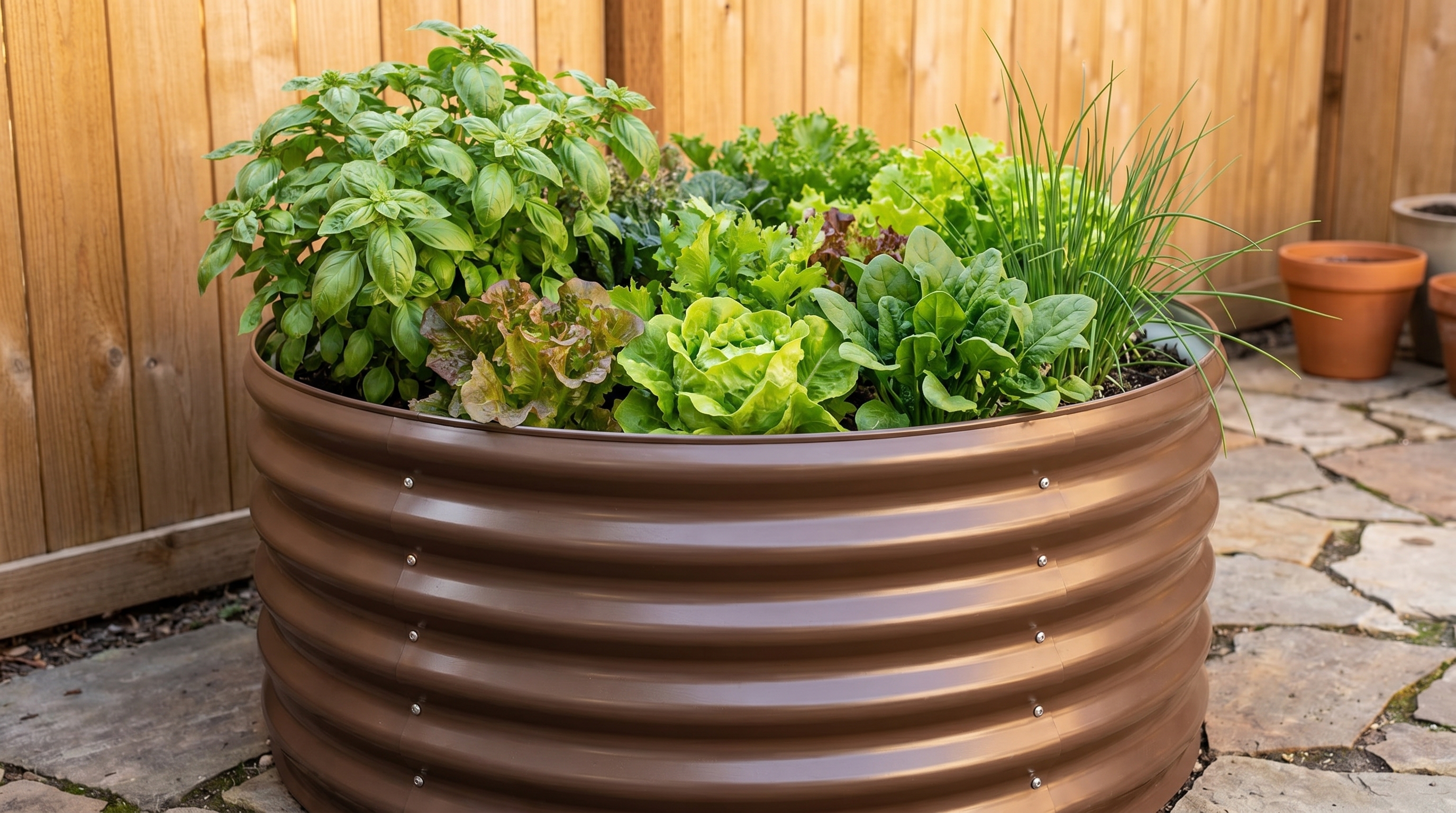
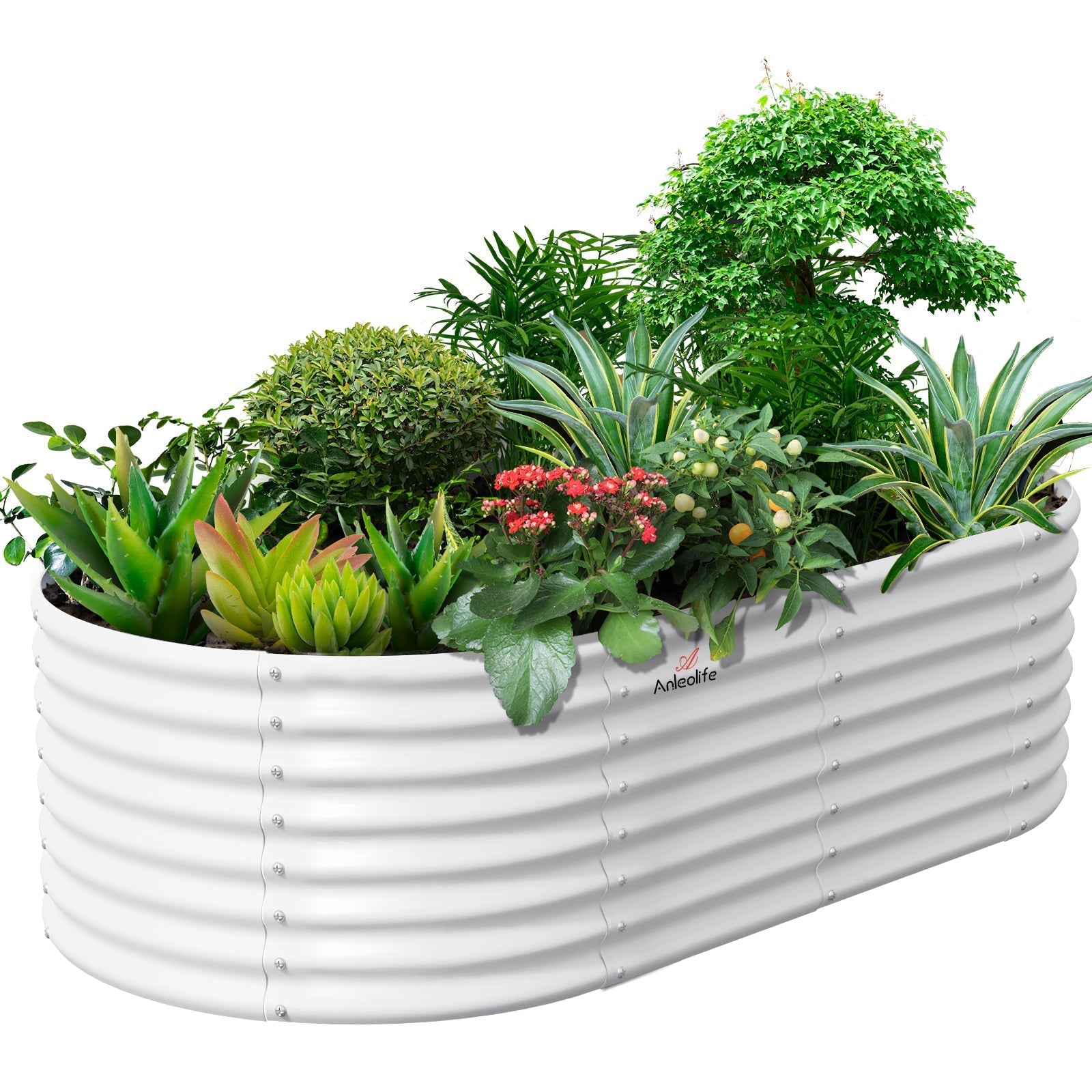
ALT: Galvanized steel round raised garden bed with herbs and salad greens in a small backyard — long-lasting raised garden bed for urban gardening
Advanced Considerations: Maximizing Performance in Tight Spaces
Handling Drainage on Patios and Hardscaping
One common concern with round and hexagonal beds placed on patios or concrete surfaces is drainage. Unlike in-ground beds, container-style raised beds need adequate drainage holes or open bottoms to prevent waterlogging. Most quality metal beds are designed with drainage in mind — but if you're placing a bed on an impermeable surface, ensure the base allows water to escape freely. Elevating the bed slightly using small risers or feet can dramatically improve drainage and prevent the underside of the bed from holding moisture.
Common Misconception: Round Beds Waste Space
The most frequently cited criticism of round beds is that their circular footprint is inherently less efficient than a rectangle. While this is technically true in terms of raw geometry, it misses the practical reality: in a small backyard, the question isn't always "how do I maximize every square inch of growing area?" It's often "how do I create a garden that I'll actually enjoy maintaining?" A beautifully designed round bed that you engage with daily will outperform a neglected rectangular bed every time. Efficiency isn't just about area — it's about enjoyment and consistency.
Pairing Shapes for a Complete Small Backyard Garden
There's no rule that says you must choose only one shape. Many experienced small-backyard gardeners use a combination approach: one or two round or hexagonal beds as decorative focal points for herbs and flowers, supplemented by one or two rectangular beds for higher-volume vegetable growing. This hybrid strategy captures the aesthetic benefits of alternative shapes while retaining the productive capacity of traditional rectangular formats — the best of both worlds for a thoughtfully designed outdoor space.
Considering Round or Hexagonal Beds as Gifts
If you're searching for the best gifts for environmentalists or garden-loving friends and family, a round raised garden bed makes an unusually memorable and practical choice. Unlike cut flowers or generic garden tools, a quality metal bed is something a gardener will use and appreciate for up to 20 years. It's a gift that grows with the recipient — literally.
Frequently Asked Questions FAQ
Q1: How do I choose the best raised garden bed size for a small backyard?
The best raised garden bed size for a small backyard depends on your available space, what you want to grow, and how much time you have to maintain it. A round bed with a 48-inch diameter is manageable for most gardeners and accessible from all sides without stepping in. For small patios or corners, starting with one appropriately sized bed — rather than crowding multiple undersized beds together — generally produces better results and a more cohesive visual appearance.
Q2: Are round raised garden beds as durable as rectangular ones?
Yes — durability is determined by material and construction quality, not shape. A round galvanized steel raised garden bed from a quality manufacturer like Anleolife offers the same longevity as a rectangular counterpart — up to 20 years of reliable service. The key factors are the gauge of steel used, the quality of the rust-resistant coating, and the stability of the assembly. Round beds from reputable brands are engineered to maintain their shape and structural integrity through multiple growing seasons and all weather conditions.
Q3: How long does it take to set up a round raised garden bed, and what does it cost?
Most round or hexagonal raised garden beds can be assembled in 20–45 minutes with basic tools or no tools at all, depending on the model. For Anleolife products, delivery takes 3–8 business days from order, and setup is designed to be straightforward for a single person. Cost varies depending on size and material — galvanized steel options represent a higher upfront investment than wood but deliver significantly better value over time when you factor in a lifespan of up to 20 years versus the typical 3–7 years for untreated wood beds.
Summary
Round and hexagonal raised garden beds are a genuinely practical — not just pretty — solution for small backyard gardeners. Here are the three core takeaways from everything we've covered:
1. Shape serves function. Round beds provide unmatched 360-degree access and aesthetic impact as standalone features. Hexagonal beds offer excellent clustering potential for expanding modular gardens. Neither replaces rectangular beds for high-volume row cropping, but both excel in the compact, decorative, accessible gardening contexts that define most small backyards.
2. Material quality determines longevity. Regardless of shape, choosing galvanized steel over wood or plastic means a bed that can last up to 20 years — making it a true long-term garden investment rather than a seasonal expense. Anleolife's rust-resistant galvanized steel construction is engineered specifically for North American climate demands.
3. Start small, grow intentionally. The best approach for a small backyard is often one well-chosen bed — placed thoughtfully, filled correctly, and planted with crops suited to the compact format. A single round or hexagonal bed, done right, can produce an extraordinary amount of food and joy in a surprisingly small footprint.
Your next step? Measure your available space, identify your sunniest spot, and explore the Anleolife product range to find a shape and size that fits your backyard's unique personality.
Start Growing Smarter with Anleolife
Nationwide U.S. warehouse network: Strategically located in California, Texas, Florida, New York, Illinois, and Washington to ensure delivery within 3–8 business days — so your garden upgrade plans never have to wait.
Multi-channel sales network: Products are available on major e-commerce platforms including Amazon, Walmart, Home Depot, Lowe's, and Wayfair, as well as the official website Anleolife.com, providing consistent quality assurance and after-sales service.
Three core scenarios: Planting (metal raised garden beds, soil systems), Raising (chicken coops, rabbit hutches), and Beautification (decorative accessories, pathway systems) — meeting complete needs from functionality to aesthetics.
Upgrade your garden with Anleolife. We understand that an ideal garden is not built overnight, but gradually improved over time. Our modular product design allows flexible expansion based on your needs — from your first round or hexagonal accent bed to a fully integrated planting-and-raising ecosystem. We grow with you every step of the way.
References
- National Gardening Association. "Gardening Trends and Home Food Production Statistics."
https://garden.org - University of California Cooperative Extension (UC ANR). "Raised Bed Gardening: Getting Started."
https://ucanr.edu - U.S. Department of Agriculture (USDA). "Urban Agriculture and Home Gardening Resources."
https://www.usda.gov/topics/urban-agriculture - Penn State Extension. "Raised Bed Gardening — Design, Soil, and Crop Selection."
https://extension.psu.edu - National Association of Home Builders. "Housing Trends and Lot Size Data."
https://www.nahb.org
Note: Standards and recommendations may be updated. Please check the latest official documents or consult professional advisors for the most current guidance.
About Anleolife
Anleolife is a leading outdoor garden solutions provider in North America, dedicated to offering a full-scenario product ecosystem for home gardening enthusiasts, covering planting, raising, and garden beautification. Since its founding, we have upheld our brand mission, "Made for Garden Life," continuously innovating products and optimizing services to help hundreds of thousands of users upgrade their gardens, reconnect with nature, and enjoy a better garden lifestyle.