



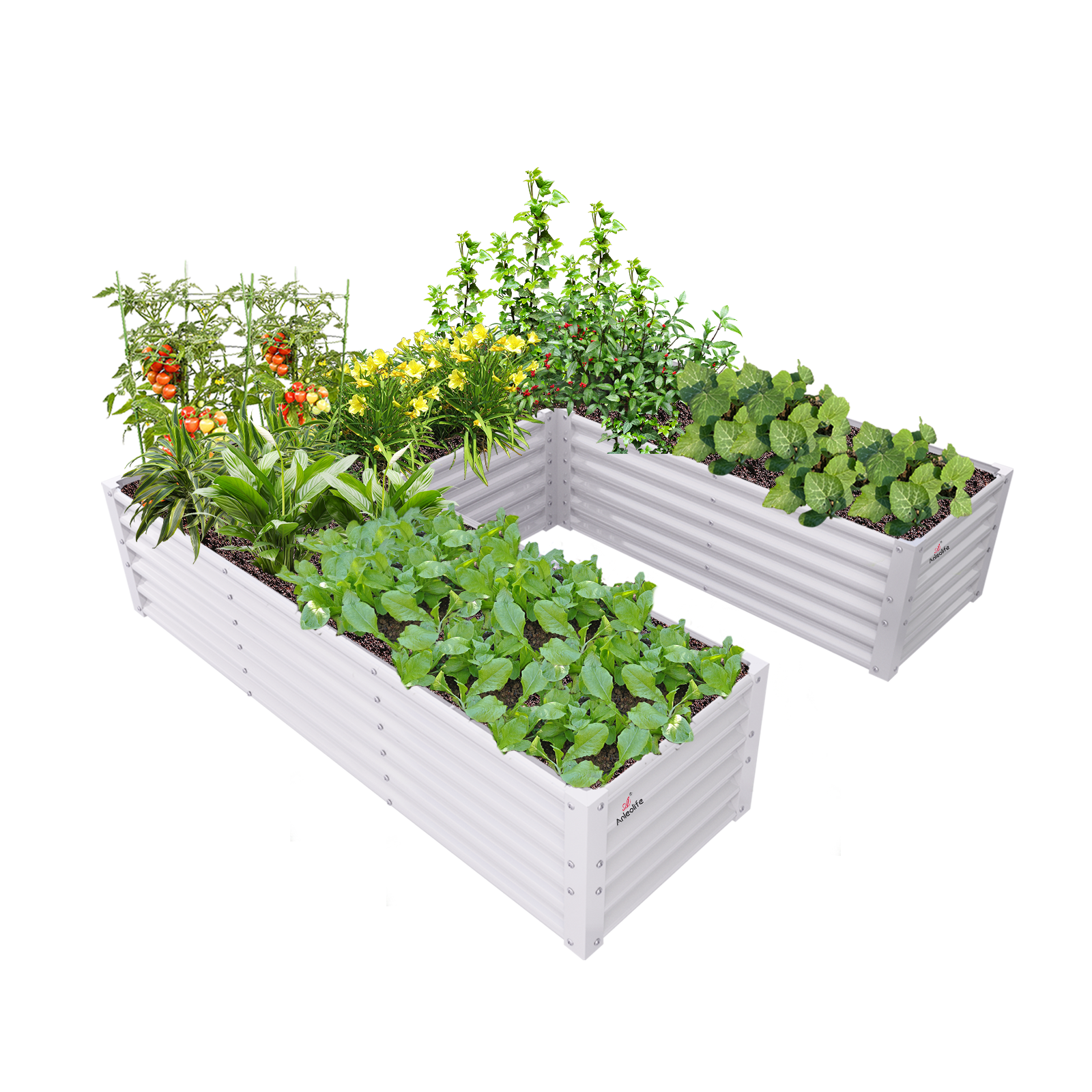

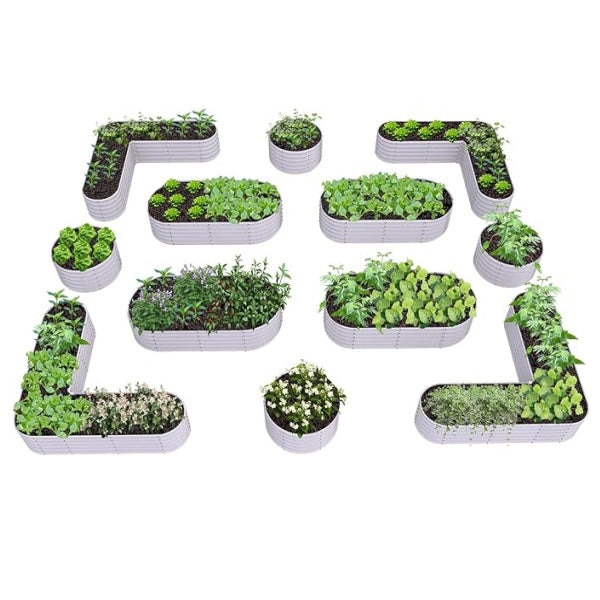


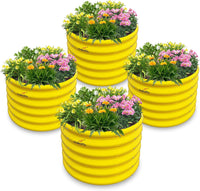
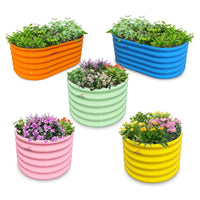
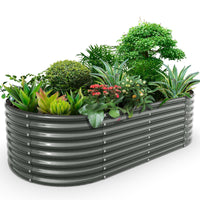



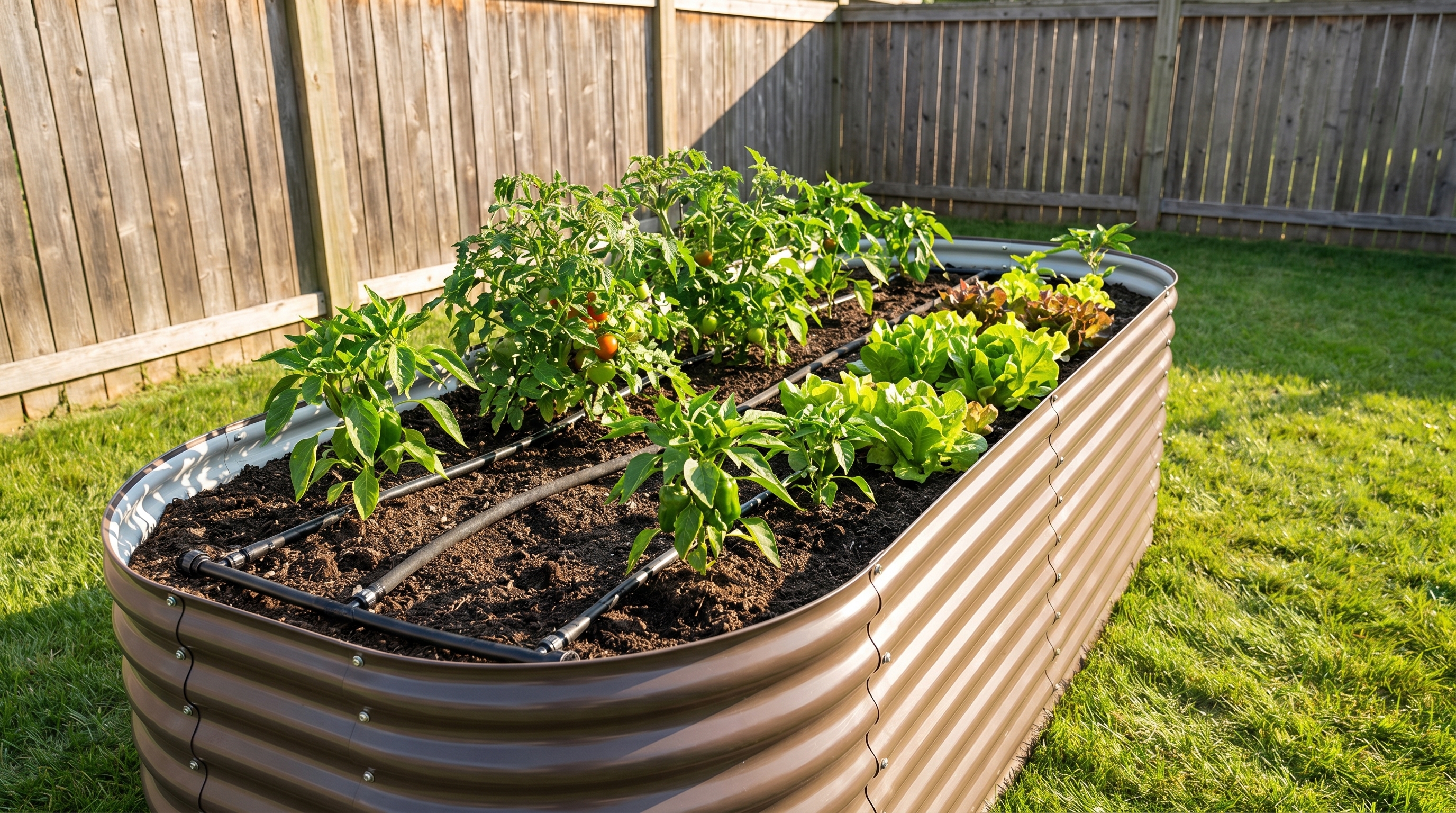
ALT: Soaker hose vs drip irrigation setup in a metal raised garden bed for efficient watering
Soaker Hose vs. Drip Irrigation: Which Watering System Is Better for Metal Raised Beds?
Key Conclusion: Choosing between a soaker hose and drip irrigation for your metal raised garden beds comes down to your garden layout, plant types, and budget. Soaker hoses offer simplicity and even moisture distribution ideal for densely planted rows, while drip irrigation delivers precise, targeted watering perfect for larger or multi-zone setups. Both systems can significantly reduce water waste, improve plant health, and save you time — but understanding the differences helps you make the smarter investment for your specific growing goals.
Water is the single most critical input in any garden, and how you deliver it matters just as much as how much you use. In a metal raised garden bed, soil can warm up faster than in-ground plots, which means evaporation rates are higher and consistent moisture management becomes even more essential. Whether you're growing tomatoes in a 4x8 raised garden bed layout or herbs in a compact container setup, the right irrigation system can be the difference between thriving plants and frustrating crop failures.
This guide breaks down the real-world performance of soaker hoses and drip irrigation systems specifically within the context of metal raised beds — helping you decide which approach fits your garden, your lifestyle, and your plants.
Who Should Read This Guide (and When Each System Applies)
✅ Applicable Scenarios:
- Beginner gardeners setting up their first metal raised bed who want a low-cost, easy-to-install watering solution
- Home growers managing multiple raised beds across a yard or patio who need scalable irrigation
- Eco-conscious gardeners in drought-prone regions looking to minimize water usage and runoff
- Retirees and empty nesters who prefer a "set it and forget it" automated watering approach
- Urban micro-gardeners growing the best plants for beginners in container gardens or compact raised beds
❌ Not Applicable/Cautions:
- Gardeners relying solely on hand-watering in extremely small single-pot setups where a full irrigation system is overkill
- Those in climates with consistently heavy rainfall who may not need supplemental irrigation at all
- Situations where soil type is highly compacted and proper drainage has not been established (irrigation won't fix poor soil)
Why Irrigation Matters More in Metal Raised Beds
Metal raised garden beds have surged in popularity across North America — and for good reason. Compared to traditional wood garden beds or in-ground plots, galvanized steel and rust-resistant metal beds offer superior durability, cleaner aesthetics, and remarkable longevity. If you've been exploring the Galvanized Steel vs. Wood Raised Garden Beds: Which Is Better for Your Backyard? debate, you'll know that metal wins on many fronts — especially when it comes to resistance to rot, pests, and structural wear.
However, metal beds do come with one consideration that wood doesn't: thermal conductivity. Steel walls absorb and radiate heat more readily than wood, which means the soil inside can heat up faster during summer afternoons. While this is actually beneficial for extending growing seasons in cooler climates, it also means soil moisture evaporates more quickly. This makes an efficient, consistent watering system not just a convenience — it becomes a genuine necessity for plant health.
The global trend toward water-efficient gardening has grown alongside the raised bed movement. According to the EPA's WaterSense program, outdoor water use accounts for nearly 30% of total household water consumption in the U.S., and much of that water is wasted through inefficient irrigation. Installing a targeted watering system in your raised beds is one of the most impactful steps you can take to reduce that waste.
For gardeners who are just starting out, we recommend first familiarizing yourself with what to grow. Check out The 15 Best Vegetables to Grow in a Raised Garden Bed for Beginners to pair your plant selection with the right irrigation strategy from day one.
Understanding soaker hoses and drip irrigation side by side — their strengths, their limitations, and their ideal use cases — gives you the foundation to build a garden that waters itself efficiently while you focus on the parts of gardening you actually love.
How to Set Up Irrigation in Your Metal Raised Bed: A Three-Step Quick Start
Step 1: Map Your Bed and Plant Layout
Before purchasing any irrigation hardware, sketch out your raised bed dimensions and intended plant placement. A popular configuration like a 4x8 raised garden bed layout might feature tomatoes along the back, pepper plants in the middle, and herbs or lettuce at the front. Each zone may have different water needs. This mapping process takes roughly 15–20 minutes and will directly determine whether you need a single soaker loop or multiple drip emitter lines. Knowing your layout also helps you calculate how much tubing or hose length to buy.
Step 2: Choose Your Irrigation Method and Gather Materials
Based on your layout, decide between a soaker hose (ideal for densely planted, uniform rows) or a drip irrigation system (better for mixed plantings with individual plant targets). For a soaker hose setup, you'll need the hose itself, a hose-end cap, a connector to your garden spigot, and optionally a timer. For drip irrigation, you'll need mainline tubing, individual emitters, stakes, and a pressure regulator. Budget 30–60 minutes to gather materials and read product instructions before beginning installation.
Step 3: Install, Test, and Adjust
Lay your soaker hose or drip lines following your plant map, securing tubing with garden stakes so it stays in place. Turn on the water at low pressure and observe where moisture appears in the soil — adjust emitter positions or hose placement as needed. Run your system for a full watering cycle before adding mulch on top (a 2–3 inch layer of straw or wood chips over the irrigation lines significantly reduces evaporation). This final testing step takes about 20–30 minutes and is critical for catching any leaks or dry spots before your plants are established.
Soaker Hose vs. Drip Irrigation: Head-to-Head Comparison
Both soaker hoses and drip irrigation systems are classified as "micro-irrigation" — meaning they deliver water slowly and directly to the root zone rather than broadcasting moisture overhead. However, they differ significantly in design, precision, and scalability. Here's how they stack up across the dimensions that matter most for metal raised bed gardeners:
| Comparison Dimension | Soaker Hose | Drip Irrigation | Best For |
|---|---|---|---|
| Installation Complexity | Very simple — uncoil and connect | Moderate — requires assembly of emitters and tubing | Beginners: soaker hose; Experienced: drip |
| Water Precision | Even moisture along entire hose length | Highly targeted per plant or zone | Uniform crops: soaker; Mixed plantings: drip |
| Cost (Entry Level) | Lower upfront cost | Slightly higher upfront cost | Budget-conscious: soaker hose |
| Scalability | Limited to one continuous run | Highly scalable with multiple zones | Multi-bed setups: drip irrigation |
| Clog Risk | Low (no small emitters) | Moderate (emitters can clog with debris) | Low-maintenance preference: soaker |
| Soil Coverage | Entire bed surface | Targeted spots only | Dense planting: soaker; Spaced plants: drip |
| Automation Compatibility | Works with basic timers | Works with advanced smart timers | Full automation: drip preferred |
| Lifespan | Shorter (UV degradation) | Longer with proper maintenance | Long-term investment: drip |
| Heat Stress Performance | Good for consistent coverage | Excellent for precision adjustment | Heat-stressed beds: drip edge |
Deep Dive: Understanding Each System for Metal Raised Beds
Soaker Hoses Explained
A soaker hose is a porous rubber or recycled-material tube that "sweats" water along its entire length at low pressure. You connect one end to a water source (ideally with a timer and pressure regulator), cap the other end, and the hose slowly seeps moisture directly into the soil.
For raised bed gardeners growing leafy greens, root vegetables, or densely planted crops, soaker hoses are genuinely excellent. In a standard metal raised bed, you can snake a soaker hose back and forth across the bed in a serpentine pattern, spacing the lines roughly 6–12 inches apart depending on your crops. This delivers consistent moisture across the entire bed surface — great for crops like lettuce, carrots, spinach, and beets that occupy most of the soil space.
Best plants for beginners in container gardens and raised beds — such as kale, radishes, bush beans, and herbs — respond beautifully to the gentle, consistent moisture delivery of a soaker hose. There's no worry about missing individual plants or adjusting emitters, making it genuinely the simpler option for new gardeners.
The main limitation of soaker hoses is that they deliver moisture somewhat uniformly whether or not every section has a plant nearby. In a sparsely planted bed with widely spaced tomato cages or squash plants, you may end up watering bare soil areas unnecessarily — which promotes weed growth and wastes water.
Drip Irrigation Explained
A drip irrigation system uses a network of mainline tubing with individual emitters (also called drippers) placed at specific intervals or locations. Each emitter delivers a calculated flow rate directly to a plant's root zone. You can customize the number and placement of emitters to match your exact plant layout.
Drip systems shine in beds with mixed plantings, larger plants with defined spacing (like tomatoes, peppers, eggplants, or squash), or when you're managing multiple beds simultaneously. For example, in an Anleolife 8x4 raised bed planted with a classic tomato-pepper-basil combination, you can place individual drip emitters at each plant's base, ensuring each receives the right amount of water without wetting the surrounding soil.
Drip irrigation also integrates more seamlessly with smart garden timers and moisture sensors, making it the preferred choice for gardeners who want a fully automated, data-driven watering system. If you're serious about maximizing yields from a dedicated growing space, the upfront complexity of setting up a drip system pays dividends over the growing season.
For a more detailed walkthrough of setting up a drip system specifically in raised beds, the Drip Irrigation for Raised Garden Beds: A Beginner's Setup Guide is an excellent next step.
How Metal Bed Dimensions Influence Your Choice
The size of your raised bed plays a direct role in which irrigation method works best. Consider these practical scenarios:
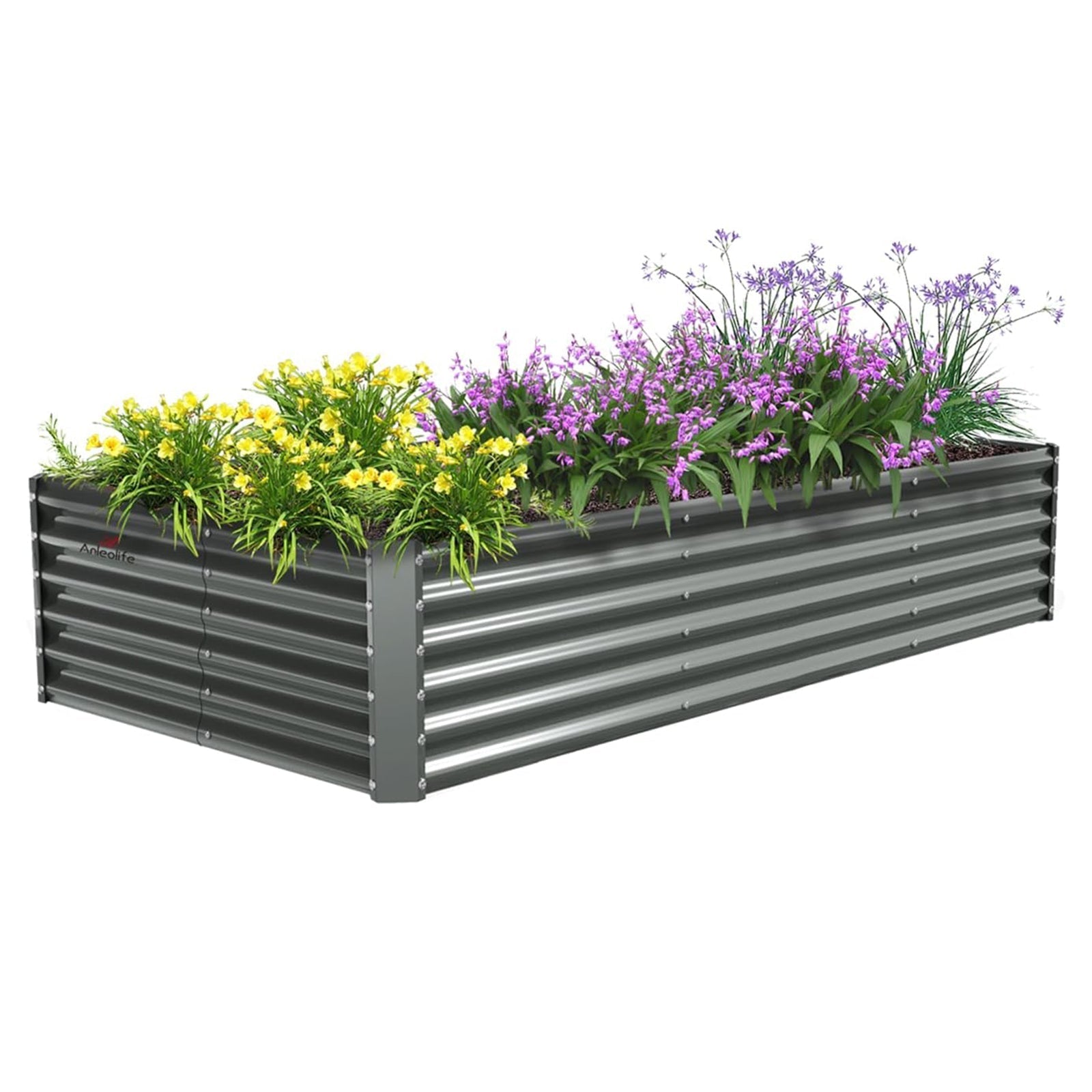
Smaller beds (18" tall, 4x4 ft or 6x3 ft) — These compact configurations typically work perfectly with a single soaker hose loop. The smaller footprint means a soaker hose can cover the entire root zone with one or two passes, and the simplicity is hard to beat.
Mid-size beds (18"–24" tall, 8x4 ft or 12x3 ft) — Either system works well here. A soaker hose serpentine covers the area effectively, while a drip system allows more precision if you're growing a diverse mix of plants with different water requirements.
Extra-tall and large beds (24"–35" tall, 8x4 ft or 10x3 ft) — These deeper growing spaces benefit most from targeted root-zone watering, giving drip irrigation a slight edge. The deeper soil profile also retains moisture better, so precision delivery prevents overwatering.
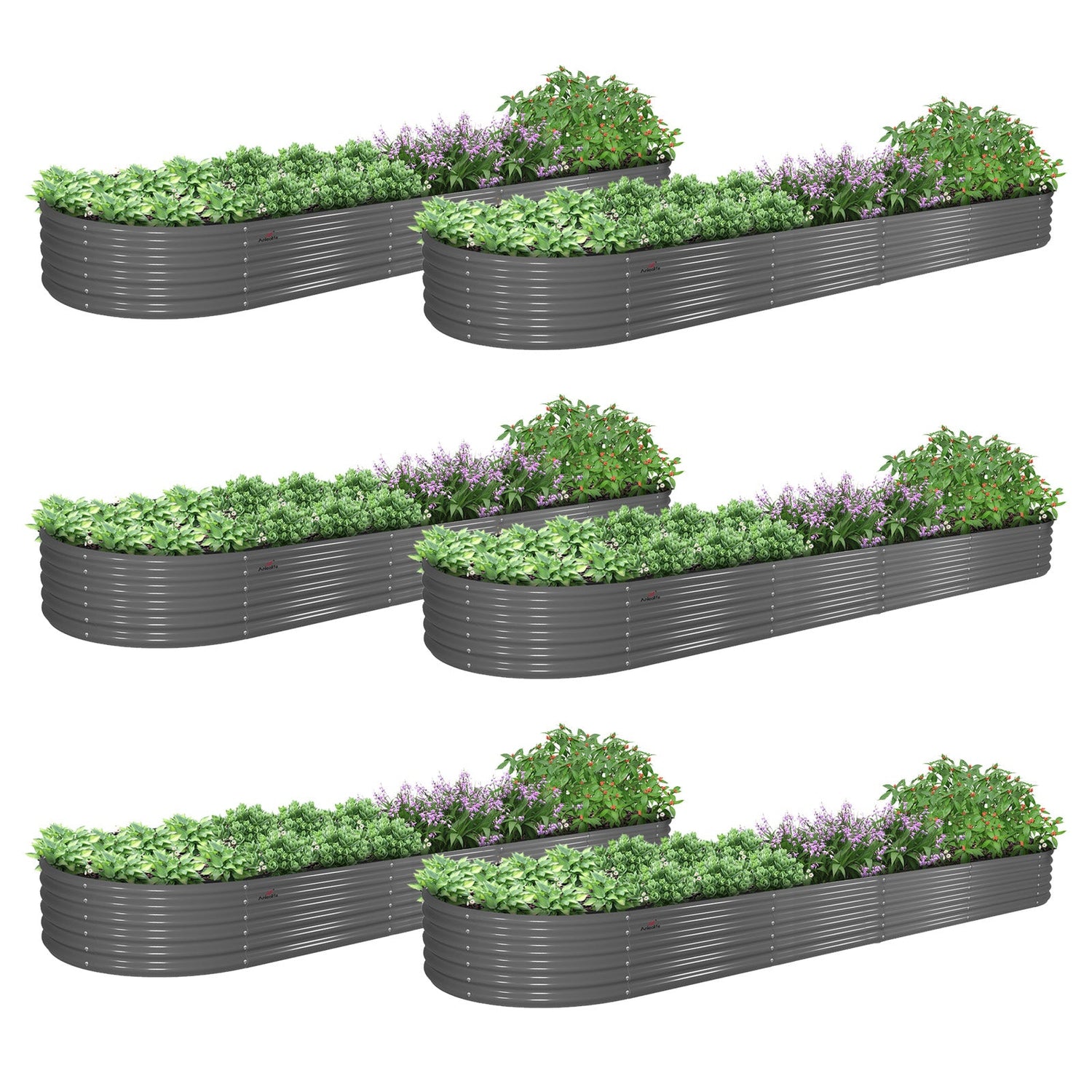
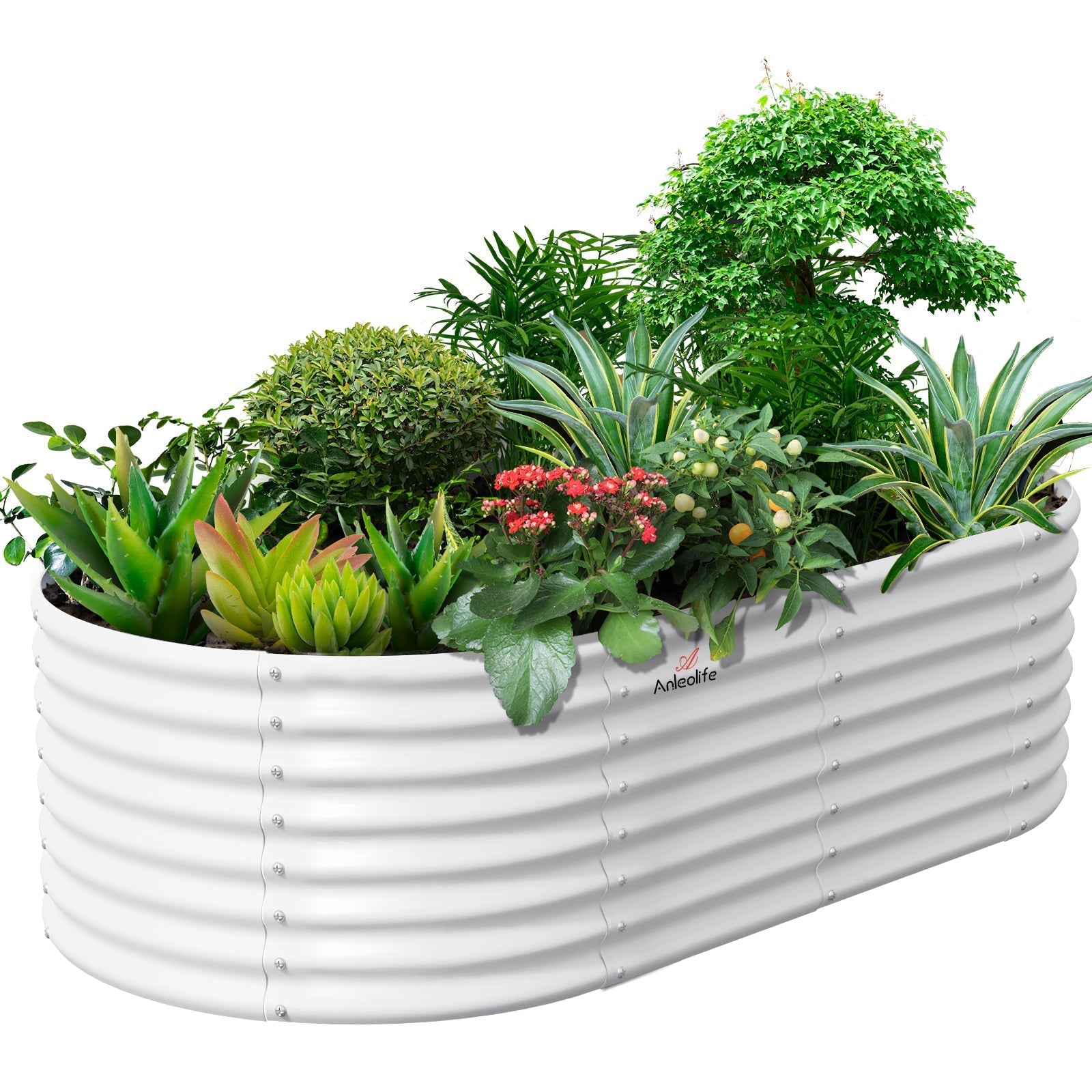
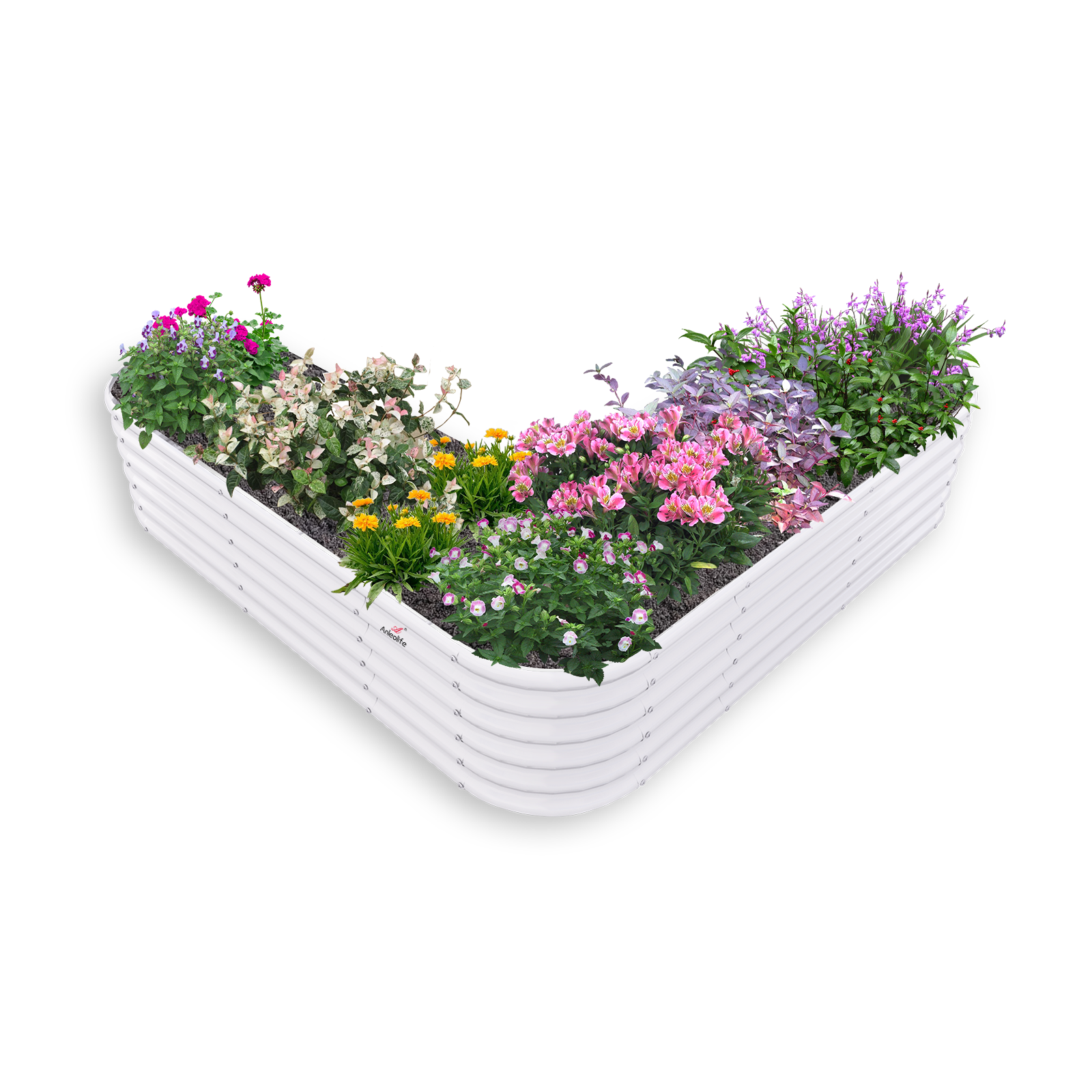
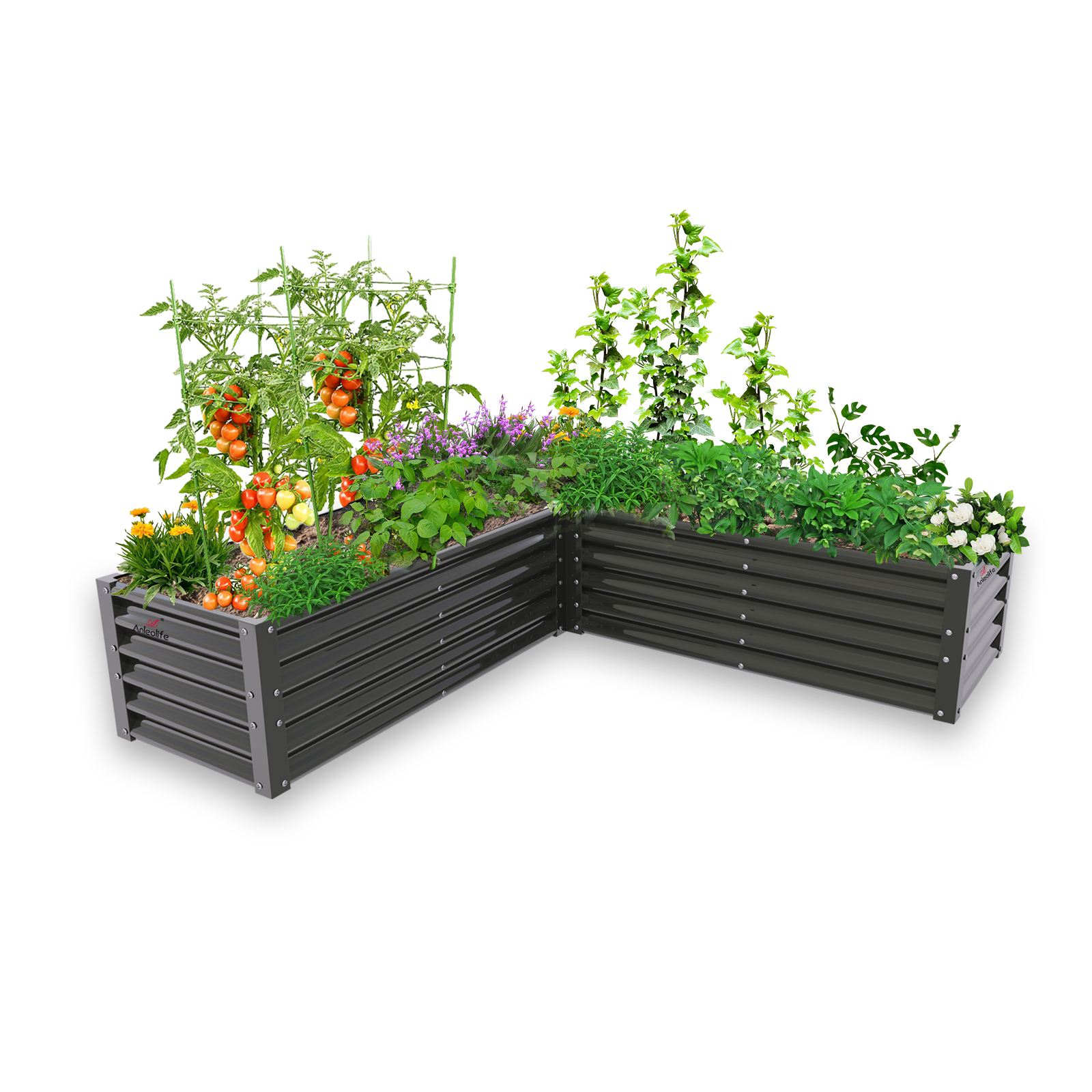
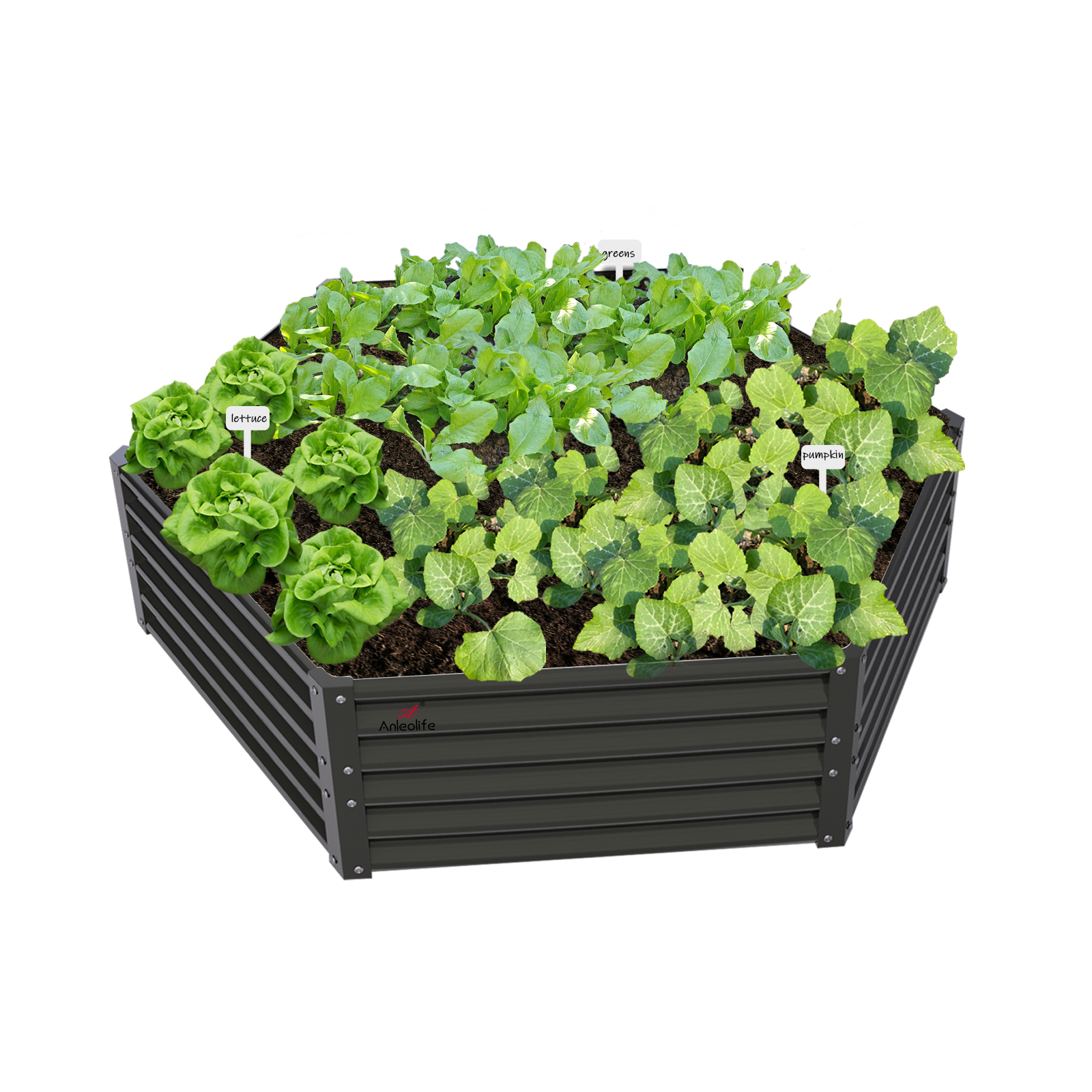
Anleolife offers a wide range of galvanized steel raised garden beds spanning from compact 4x1.5 ft waist-high planters all the way to spacious 12x3 ft configurations, with heights ranging from 18" to 35". With a product lifespan of up to 20 years, pairing the right irrigation system with the right bed size is a long-term investment in your garden's success.
The Role of Mulch: The Irrigation Multiplier
Regardless of which system you choose, mulching over your irrigation lines dramatically improves performance. A layer of straw, shredded leaves, or wood chip mulch placed over your soaker hose or drip lines reduces surface evaporation, keeps soil temperature stable, and prevents the UV degradation that shortens hose lifespan. Think of mulch as the free upgrade that makes any irrigation system work better.
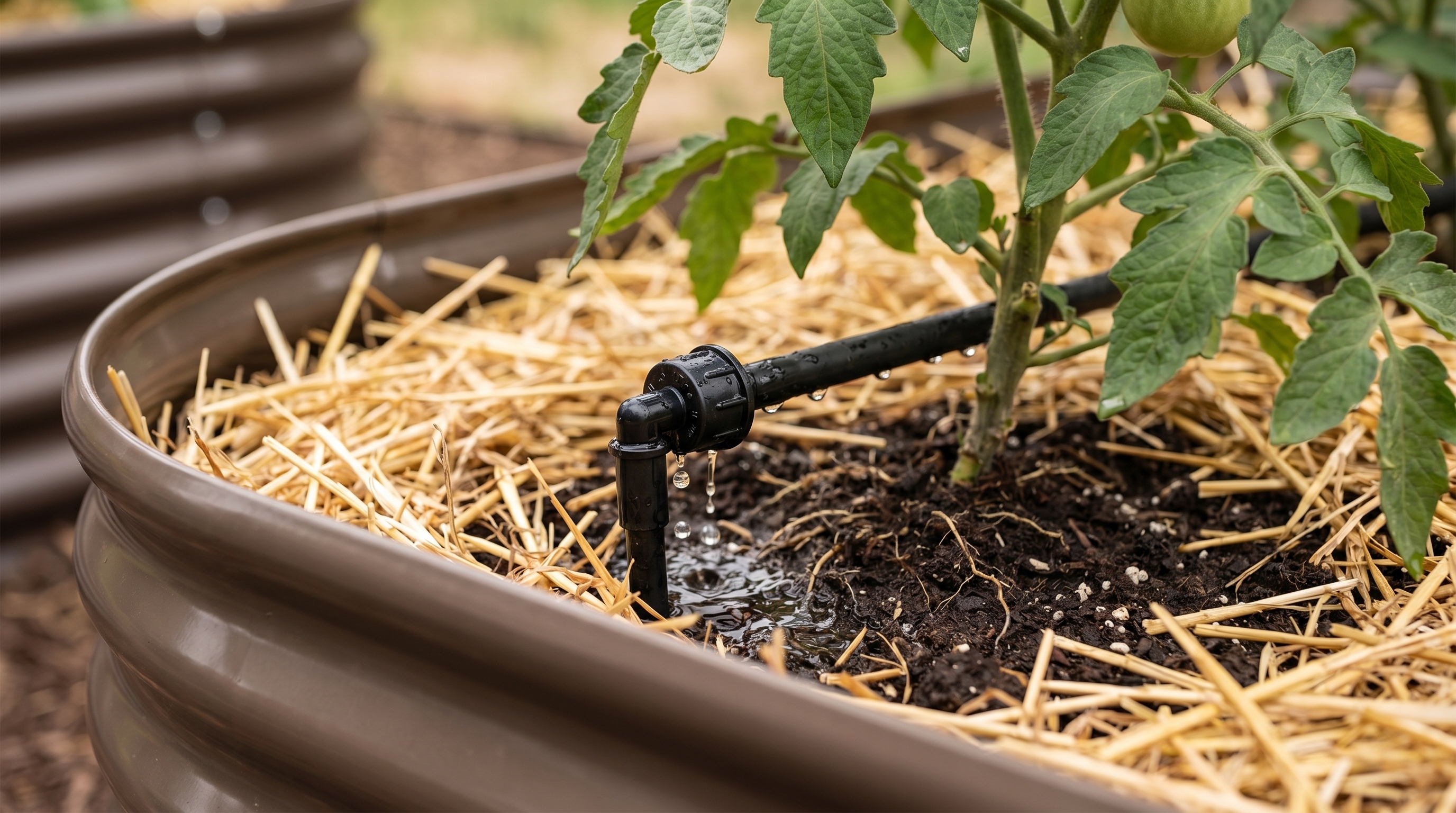
ALT: Drip irrigation emitter watering tomato plant roots in a galvanized metal raised garden bed with protective mulch layer
Advanced Considerations: Getting More from Your Irrigation Setup
Pressure Regulation Is Non-Negotiable
Both soaker hoses and drip systems are designed to operate at low water pressure — typically much lower than standard household water pressure. Without a pressure regulator installed at the faucet connection, you risk bursting soaker hose seams or blowing emitters off drip lines. A quality pressure regulator is an inexpensive addition that dramatically extends the life of your system and ensures consistent output.
Filtration Prevents Clogging
Drip emitters are vulnerable to clogging from mineral deposits and organic debris, especially if you're using well water or water with high sediment content. Installing an in-line filter (typically 150–200 mesh) between your water source and the irrigation system significantly reduces maintenance and keeps emitters flowing properly throughout the season.
Seasonal Winterization
At the end of the growing season, both irrigation systems must be properly drained and stored to prevent freeze damage. Disconnect all lines from faucets, blow out any remaining water, and store soaker hoses coiled in a garage or shed. Drip irrigation components — especially emitters and tubing — should be stored indoors to prevent brittleness from cold temperatures. Proper winterization protects your investment and ensures the system is ready for the next growing season.
Common Misconception: "More Water Equals Better Growth"
One of the most frequent mistakes new gardeners make is assuming that more frequent or longer watering sessions automatically improve plant health. In reality, consistent but moderate soil moisture is the goal. Overwatering in raised beds — regardless of irrigation method — leads to root rot, fungal disease, and nutrient leaching. Both soaker hoses and drip systems, when used with a quality timer, remove the guesswork. Set your timer for early morning watering (6–8 AM is ideal) to allow foliage to dry before evening, reducing disease pressure.
If you're also thinking about the best materials for raised garden beds that won't rust, it's worth reading about how galvanized and rust-resistant coatings interact with consistent moisture exposure over time. The good news is that quality metal beds, like those from Anleolife, are specifically engineered to handle years of irrigation exposure without compromising structural integrity.
Frequently Asked Questions FAQ
Q1: How do I know how long to run my soaker hose or drip system in a raised bed?
A good starting point is running your irrigation system for 20–30 minutes and then checking soil moisture with your finger — push it 2–3 inches into the soil to feel whether it's moist throughout the root zone. Adjust run time based on your soil mix, plant types, and current weather conditions. Using a moisture meter (available at most garden centers) gives you a more accurate reading and takes the guesswork out of scheduling. During peak summer heat, most raised beds benefit from watering every 1–2 days.
Q2: Are soaker hoses safe to use in galvanized metal raised garden beds?
Yes, soaker hoses are completely compatible with galvanized and rust-resistant metal raised beds. In fact, the combination is particularly effective because the metal walls help retain soil warmth while the soaker hose maintains consistent root-zone moisture. The key is ensuring the soaker hose stays in contact with the soil (not elevated above it) and is covered with a layer of mulch to maximize efficiency. There's no chemical interaction between the soaker hose material and the metal bed walls.
Q3: How much does it cost to set up a drip irrigation system for a 4x8 raised garden bed?
A basic drip irrigation kit for a single 4x8 bed typically ranges from around $20–$50 depending on the brand and components included. More comprehensive systems with timers, pressure regulators, and multiple emitter configurations can range from $50–$120 or more. Soaker hose setups are generally less expensive, often starting under $15 for a basic configuration. Both systems are significantly more affordable than the long-term water waste from hand-watering or sprinkler systems, making either choice a financially sound investment over a full growing season.
Summary
Choosing between a soaker hose and drip irrigation for your metal raised garden beds doesn't have to be complicated — it comes down to three core factors:
1. Plant density and layout: Dense, uniform plantings favor soaker hoses for their broad, even coverage. Spaced, mixed plantings with distinct water needs are better served by drip irrigation's precision targeting.
2. Simplicity vs. scalability: Soaker hoses win for beginners and single-bed setups where ease of installation is paramount. Drip irrigation is the smarter long-term choice for multi-bed gardens where automation and customization matter.
3. Your gardening lifestyle: If you prefer a simple, affordable system that just works, start with a soaker hose. If you want full control, smart timer integration, and the ability to expand your irrigation network as your garden grows, invest in a drip system from the beginning.
Both systems dramatically outperform overhead sprinklers and hand-watering in terms of water efficiency, plant health, and time savings. When paired with quality metal raised beds designed to last up to 20 years, either irrigation approach becomes part of a garden infrastructure that pays for itself season after season.
Your next step: measure your raised bed, sketch your plant layout, and decide which system aligns with your gardening style. Then get it set up before your next planting season — your plants (and your water bill) will thank you.
For guidance on planning your full raised bed layout, the How to Plan a Raised Bed Garden Layout for Your Backyard (Step-by-Step) guide is an excellent companion resource.
Upgrade Your Garden with Anleolife
Nationwide U.S. Warehouse Network: Anleolife products ship from strategically located warehouses in California, Texas, Florida, New York, Illinois, and Washington — ensuring delivery within 3–8 business days so your garden upgrade plans never have to wait.
Multi-Channel Availability: Shop on Amazon, Walmart, Home Depot, Lowe's, Wayfair, or directly at Anleolife.com for consistent quality assurance and dedicated after-sales support.
Three Core Garden Scenarios: Whether you're focused on Planting (metal raised garden beds, soil systems), Raising (chicken coops, rabbit hutches), or Beautification (decorative accessories, pathway systems), Anleolife covers your complete garden journey from functionality to aesthetics.
We understand that an ideal garden isn't built overnight — it's cultivated gradually with the right tools and the right foundation. Anleolife's modular product design allows you to start with a single raised bed and expand into a full integrated planting-and-raising ecosystem as your confidence and garden grow. From your first raised bed to a fully productive backyard haven, we grow with you every step of the way.
References
- U.S. Environmental Protection Agency (EPA). "WaterSense: Outdoor Water Use in the United States."
https://www.epa.gov/watersense/outdoor-water-use-us - University of California Cooperative Extension. "Drip Irrigation in the Home Landscape."
https://ucanr.edu/sites/UrbanHort/Water_Use_of_Turfgrass_and_Landscape_Plants/Drip_Irrigation/ - Penn State Extension. "Irrigation Systems for Home Vegetable Gardens."
https://extension.psu.edu/irrigation-systems-for-home-vegetable-gardens - USDA National Agricultural Library. "Drip Irrigation and Micro-Irrigation Resources."
https://www.nal.usda.gov/farms-and-agricultural-production-systems/drip-irrigation - Colorado State University Extension. "Raised Bed Gardening."
https://extension.colostate.edu/topic-areas/yard-garden/raised-bed-gardening-7-238/
Note: Standards and recommendations may be updated. Please check the latest official documents or consult professional advisors for the most current guidance.
About Anleolife
Anleolife is a leading outdoor garden solutions provider in North America, dedicated to offering a full-scenario product ecosystem for home gardening enthusiasts, covering planting, raising, and garden beautification. Since its founding, we have upheld our brand mission, "Made for Garden Life," continuously innovating products and optimizing services to help hundreds of thousands of users upgrade their gardens, reconnect with nature, and enjoy a better garden lifestyle.