


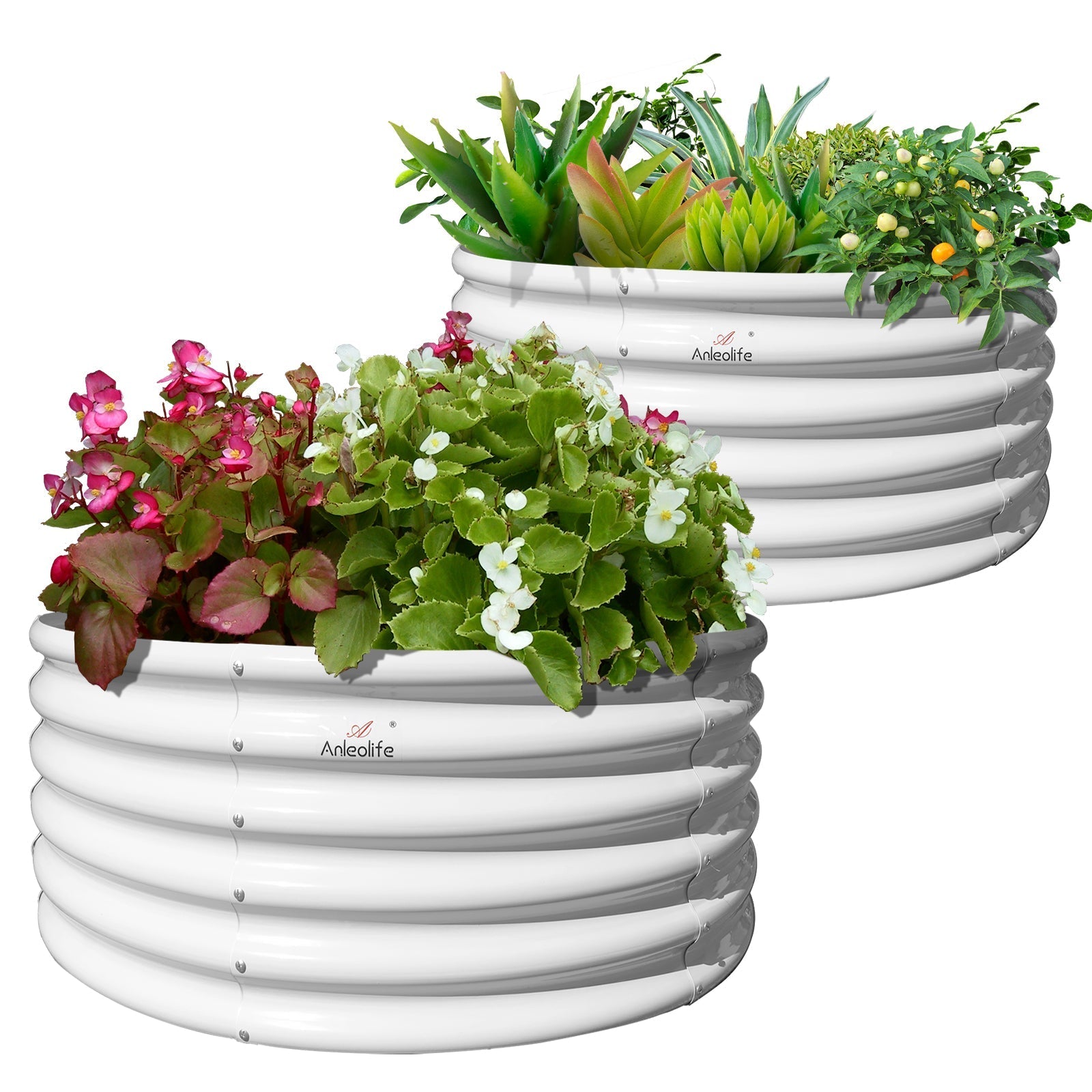
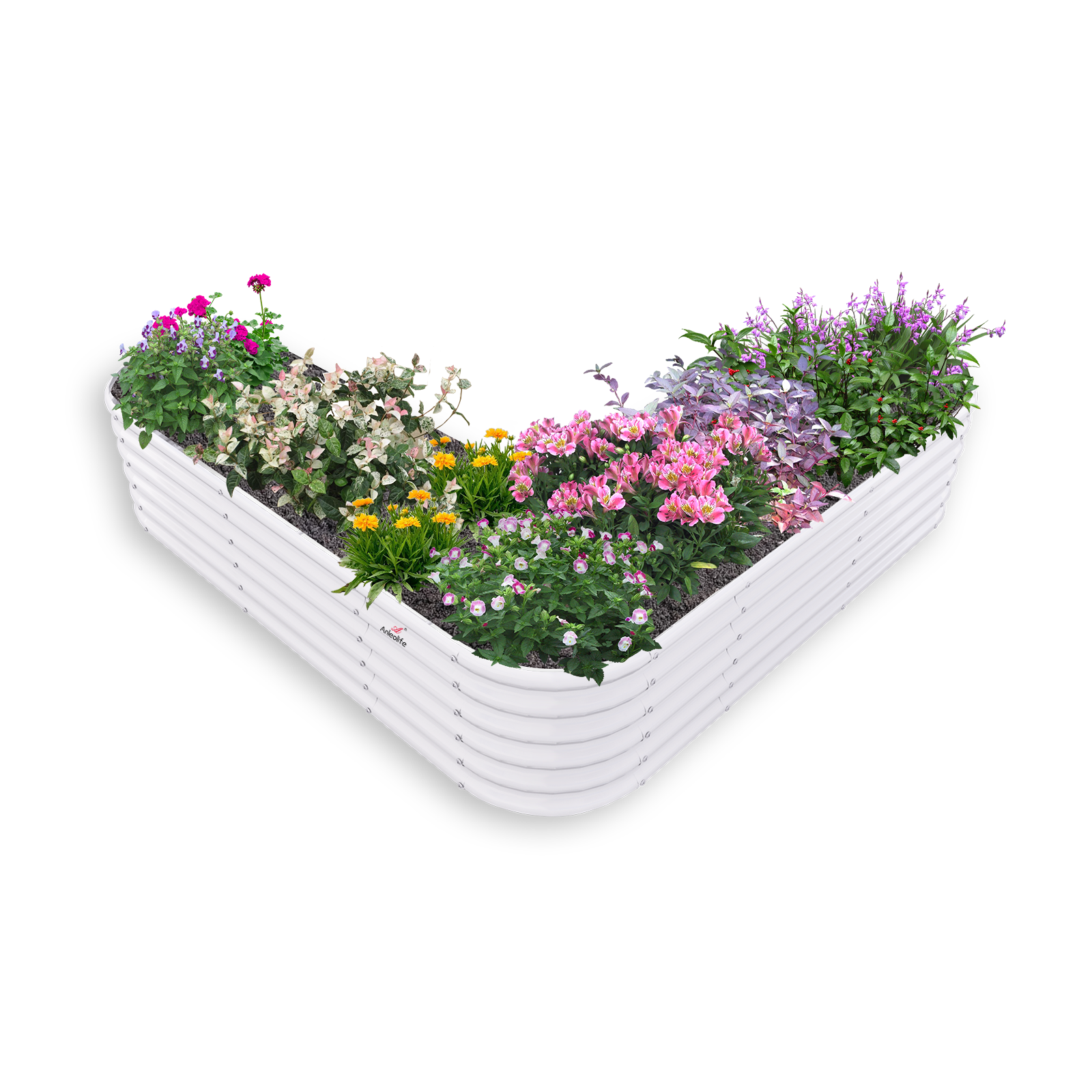
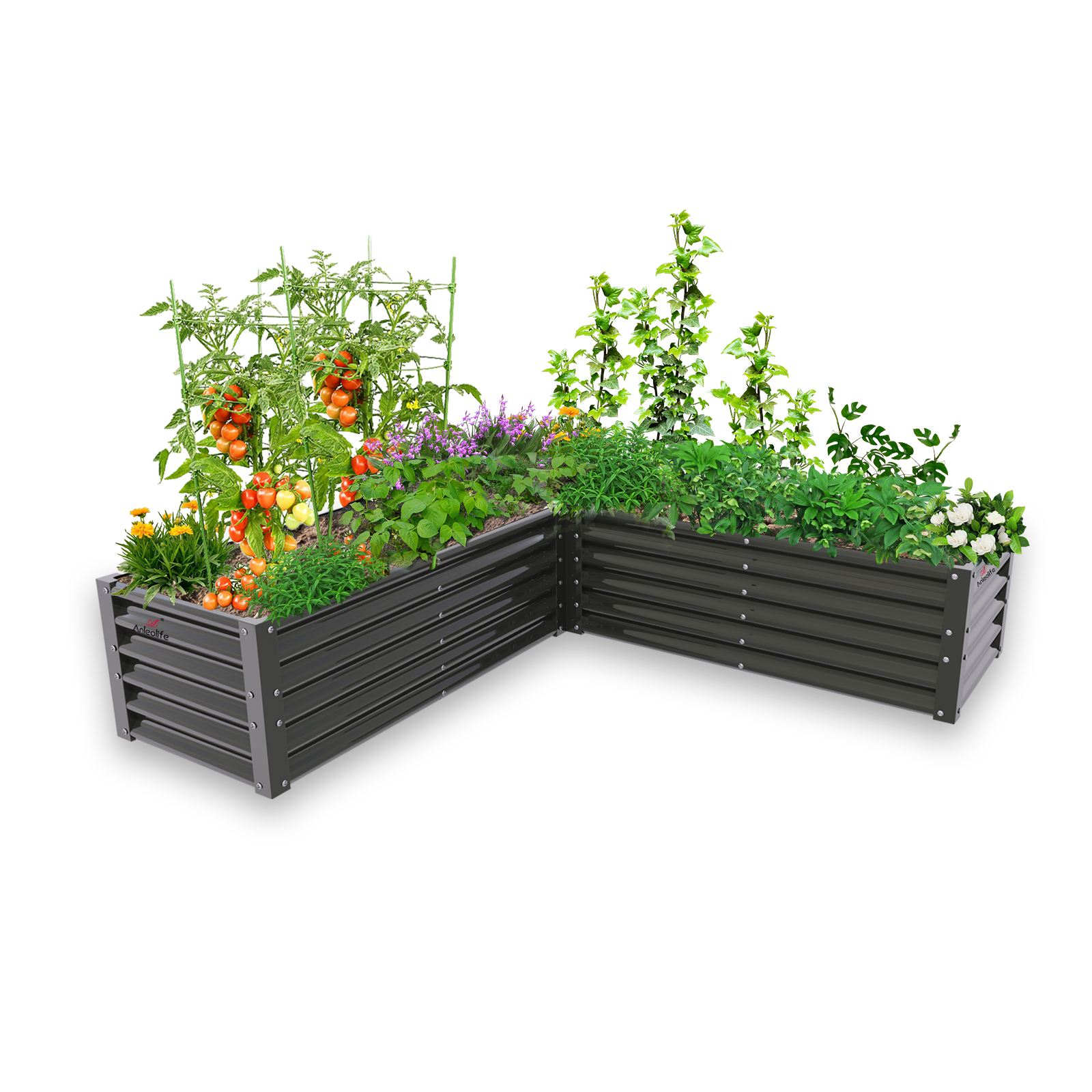
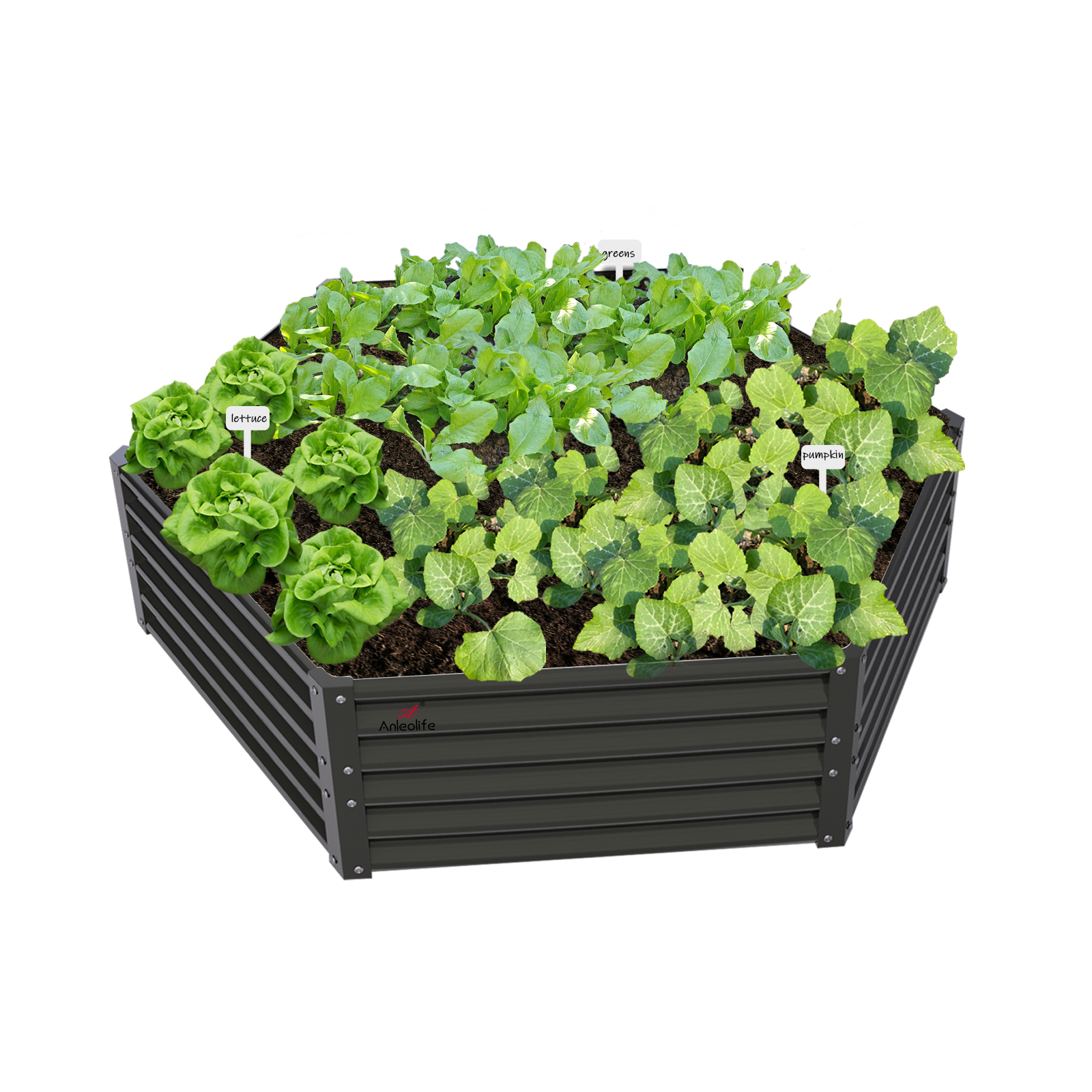
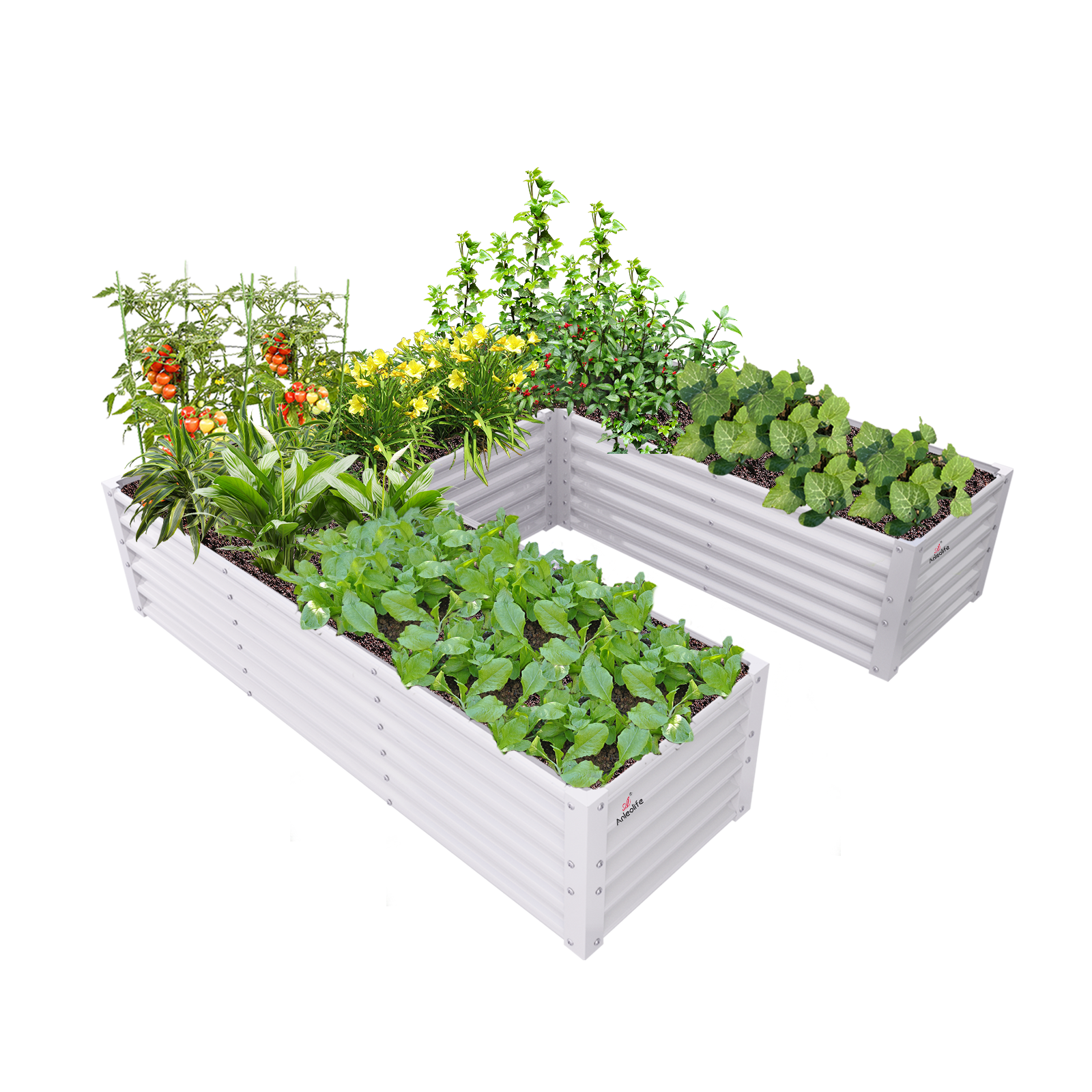

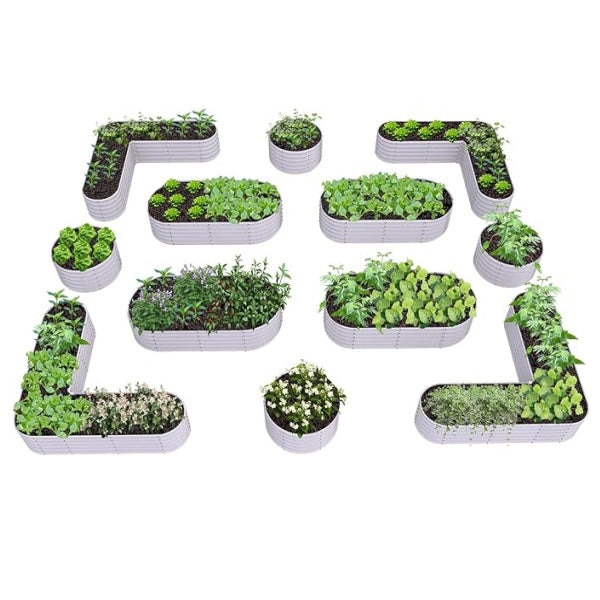

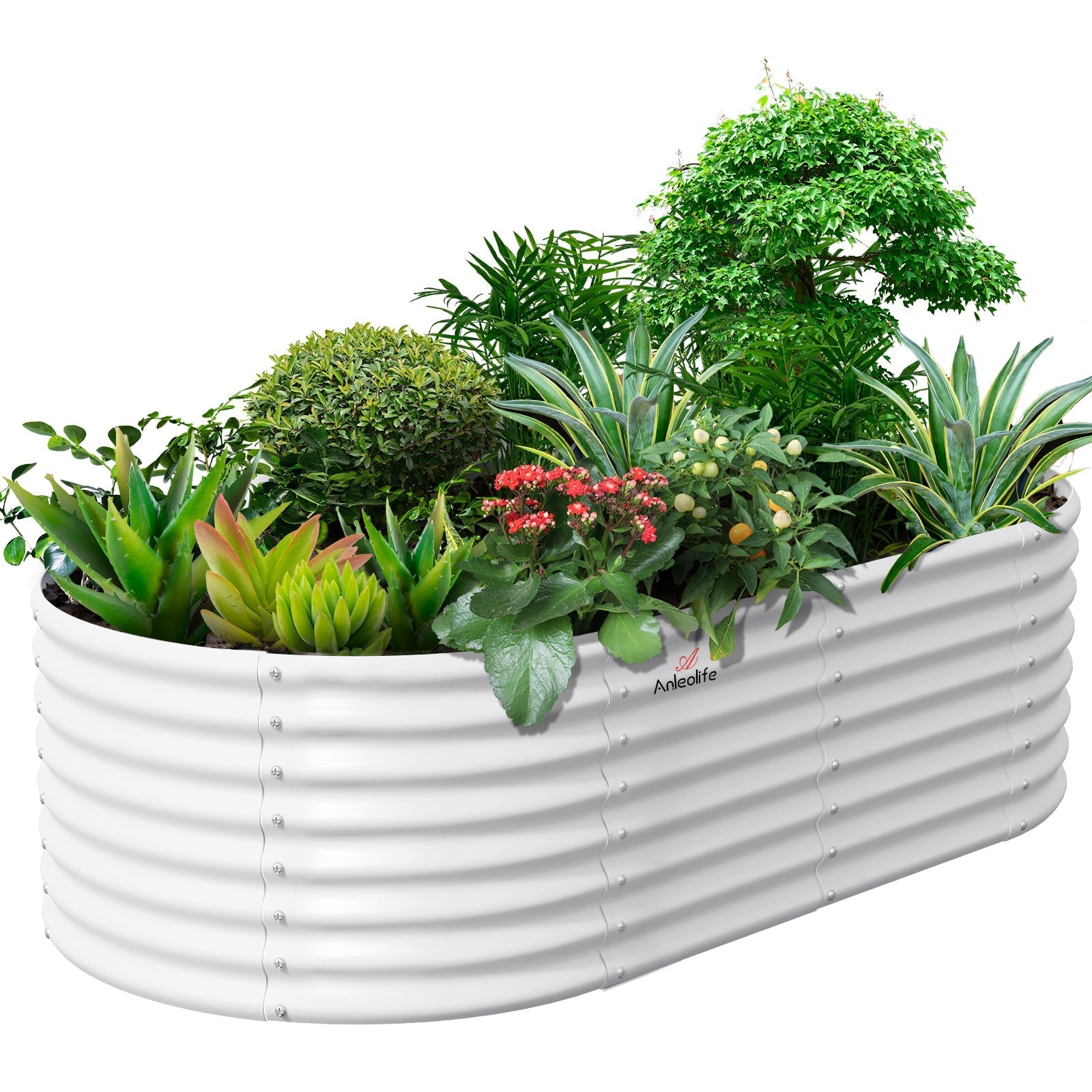


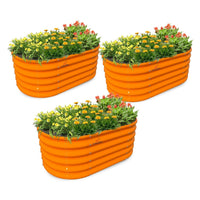
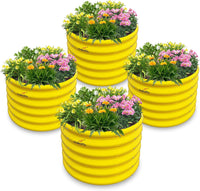
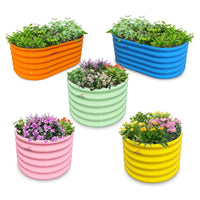
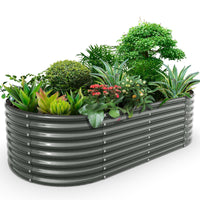



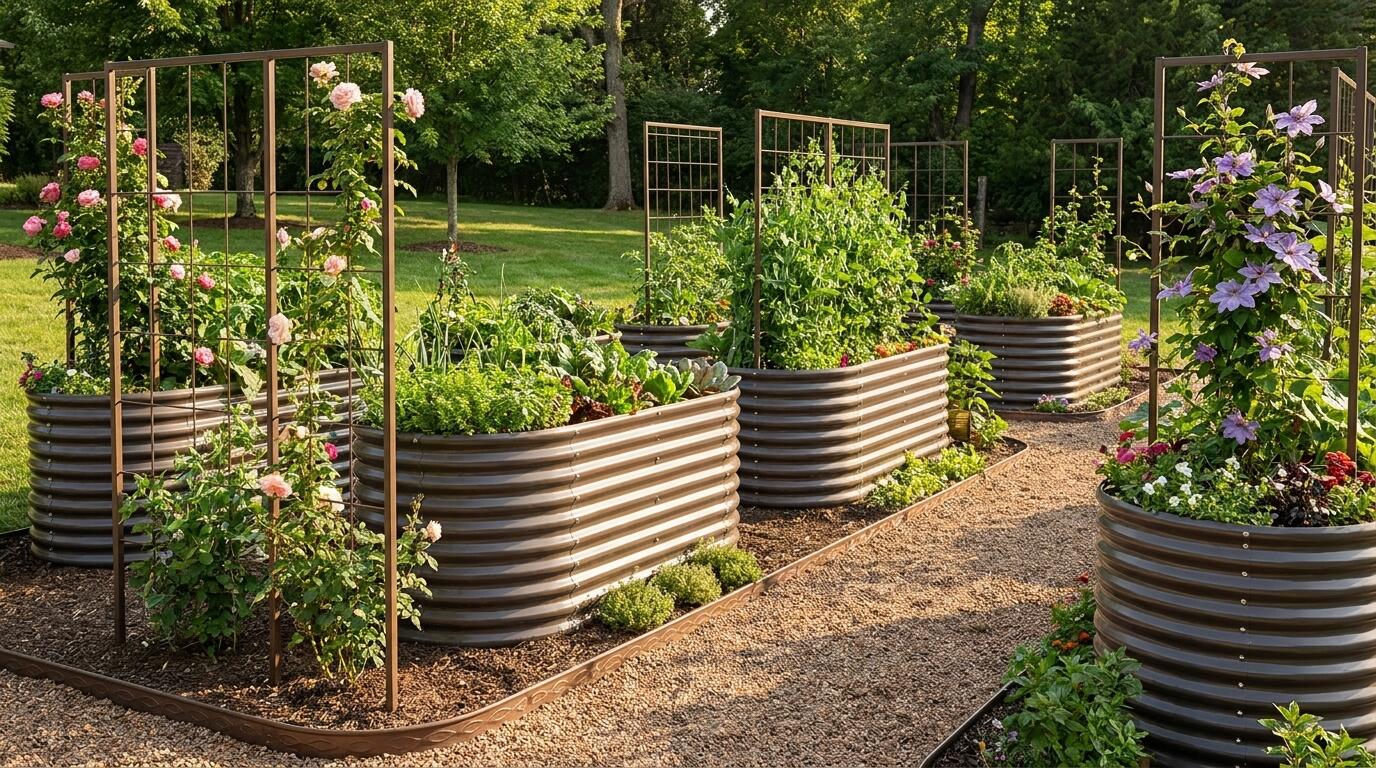
ALT: Galvanized planters, metal edging, and garden trellises creating a stylish raised bed layout in a backyard
Why Your Raised Bed Layout Is the Foundation of Every Beautiful Backyard
You've finally claimed that sunny corner of the yard. You've sketched ideas on graph paper, browsed hundreds of photos, and maybe even ordered a few supplies. But when everything arrives, you stand at the threshold of your garden space and realize the real challenge isn't the plants — it's the framework that holds everything together. A well-considered raised bed garden layout is the difference between a backyard that looks cohesive and intentional and one that feels like an improvised collection of pots and panels.
The central finding of this article is straightforward: combining galvanized planters, decorative metal edging, and vertical trellises into a unified raised bed layout doesn't just improve aesthetics — it fundamentally improves how your garden functions, how easily you maintain it, and how much value you extract from every square foot of soil. These three elements — the planter as growing vessel, the edging as structural boundary, and the trellis as vertical dimension — form a complete design system when chosen with intention and placed with purpose.
This topic deserves more serious attention right now because the home garden market has grown substantially in recent years, driven by a renewed interest in food sovereignty, outdoor living, and thoughtful home improvement. As more homeowners move beyond the starter kit mentality and start thinking about their backyard as a living room extension, the question of how to design a raised bed planting layout with real style and longevity has become genuinely pressing.
The State of Backyard Garden Design: Where Raised Bed Layouts Stand Today
Raised bed gardening is no longer a niche hobby practiced by dedicated homesteaders. In our work with clients across North America, we've seen a clear and consistent shift: backyard gardening has become a mainstream home improvement priority, on par with deck renovations and outdoor kitchens. Homeowners are investing in raised bed garden layouts not just to grow tomatoes, but to create outdoor spaces that reflect the same design sensibility they apply indoors.
Galvanized steel has become the material of choice for this transition. A galvanized raised garden bed is a planting container made from steel coated with a zinc-protective layer, which resists oxidation, weathering, and physical wear over decades of outdoor exposure. According to guidance from ASTM International, zinc coatings applied to structural steel provide robust corrosion resistance across a wide range of environmental conditions — a fact that translates directly to the reliability gardeners experience in the field. This is not a trend material; it is a proven industrial one, repurposed for the residential garden with excellent results.
The current landscape of raised bed gardening is also shaped by a growing interest in verticality. Flat, single-level layouts are giving way to multi-dimensional raised bed planting layouts that incorporate trellises, climbing plants, and tiered structures. The logic is practical: vertical growing expands your yield footprint without expanding your physical footprint. For urban micro-gardeners with limited square footage, and for empty nesters who want a manageable yet productive space, this matters enormously.
Metal edging is the third piece of the contemporary design picture. Where once plastic lawn edging dominated the market, homeowners have discovered that powder-coated or galvanized metal edging provides cleaner lines, longer service life, and a visual coherence that ties the entire raised bed layout together. When the planter, the edging, and the trellis share a common material language — in this case, galvanized or rust-resistant steel — the result is a garden that looks designed rather than assembled.
Savvy Gardening and similar planning resources have documented the growing complexity of home garden layouts, noting that modern gardeners are increasingly seeking guidance on 4x8 raised bed vegetable garden layout ideas that balance productivity with aesthetics. This is the space where thoughtful product selection and design strategy converge.
How Galvanized Planters, Edging, and Trellises Work Together as a System
The most effective raised bed garden layouts succeed because their components reinforce each other structurally and visually. Understanding the underlying mechanism — how each element contributes to the whole — allows you to make smarter decisions at every stage of planning.
The Planter as Anchor and Growing Engine
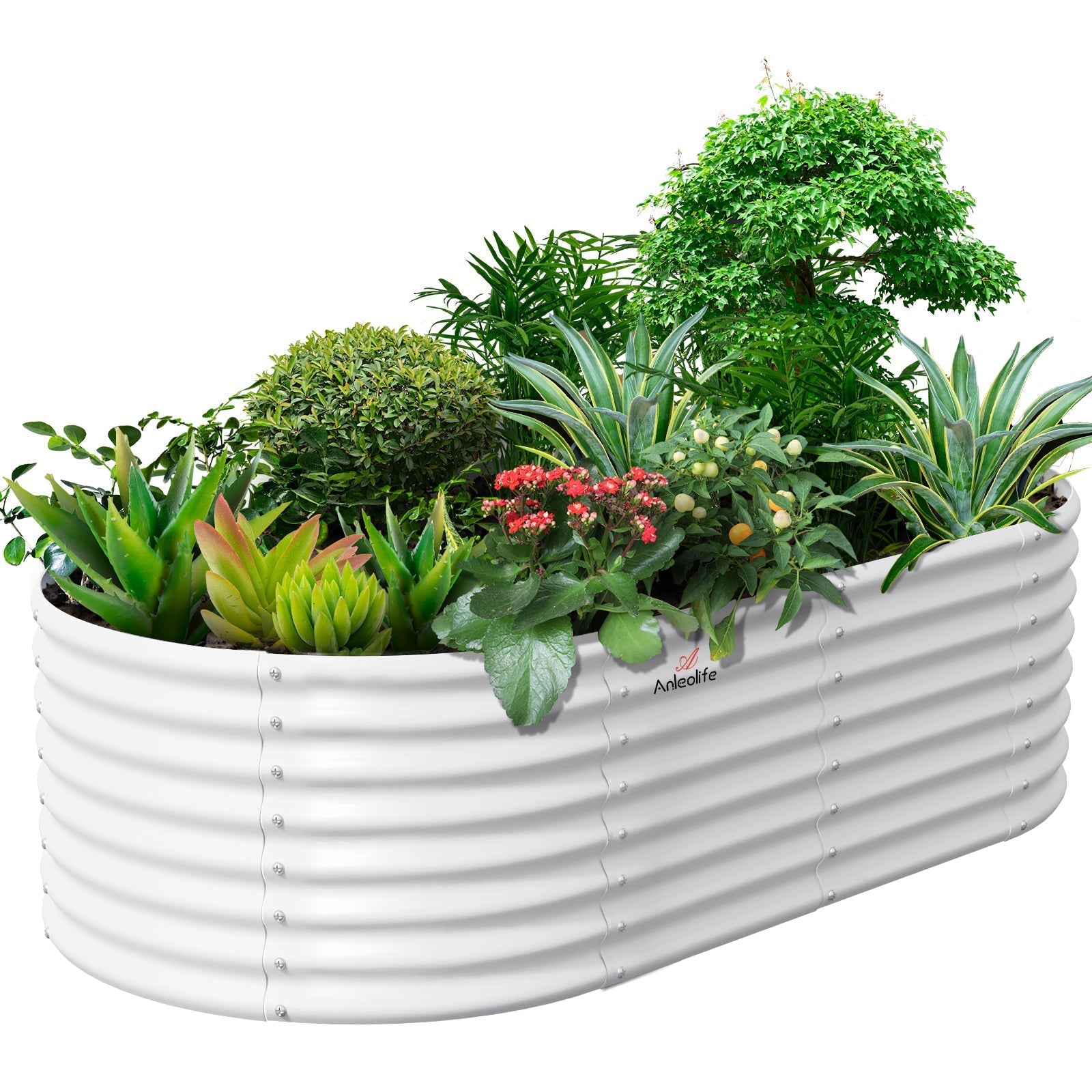
The raised garden bed is the primary productive unit of any raised bed layout. Its dimensions determine what you can grow, how deeply roots can penetrate, and how the space feels to work in. Taller beds, for example, dramatically reduce the physical strain of bending and kneeling — a consideration that is far more important than it might initially appear, especially for gardeners who spend extended periods tending their plots.
Bed height is one of the most consequential decisions in raised bed garden layout planning. A bed at 18 inches provides adequate depth for most vegetables and herbs. Beds in the 24-to-30-inch range suit deeper-rooting crops and are ergonomically easier to access. Waist-high configurations at 35 inches are designed for gardeners who prefer to work standing, or those with mobility considerations. Anleolife's product range covers this full spectrum — from 18-inch standard beds to 35-inch waist-high models — giving you the flexibility to match the bed's function to its intended use and its user.
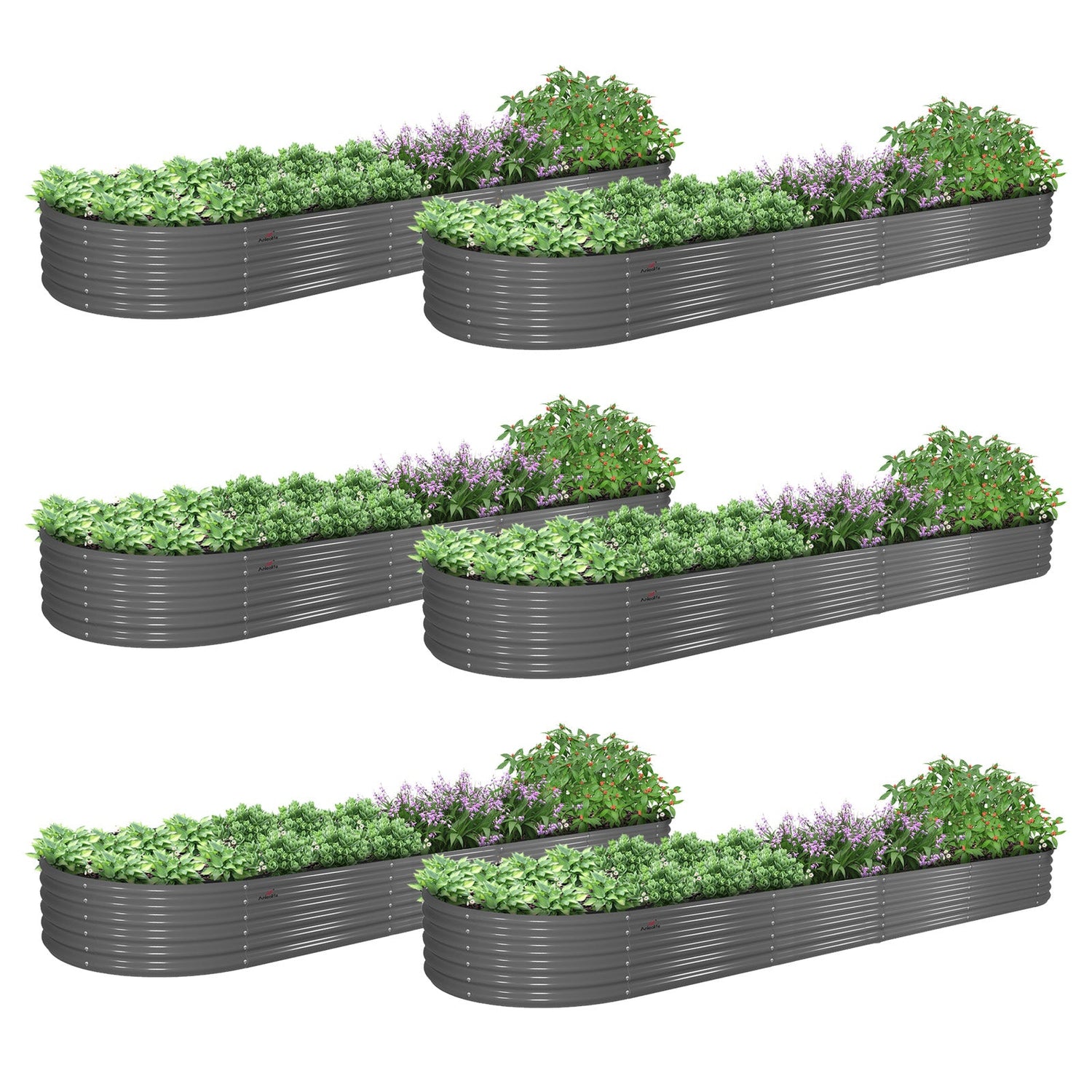
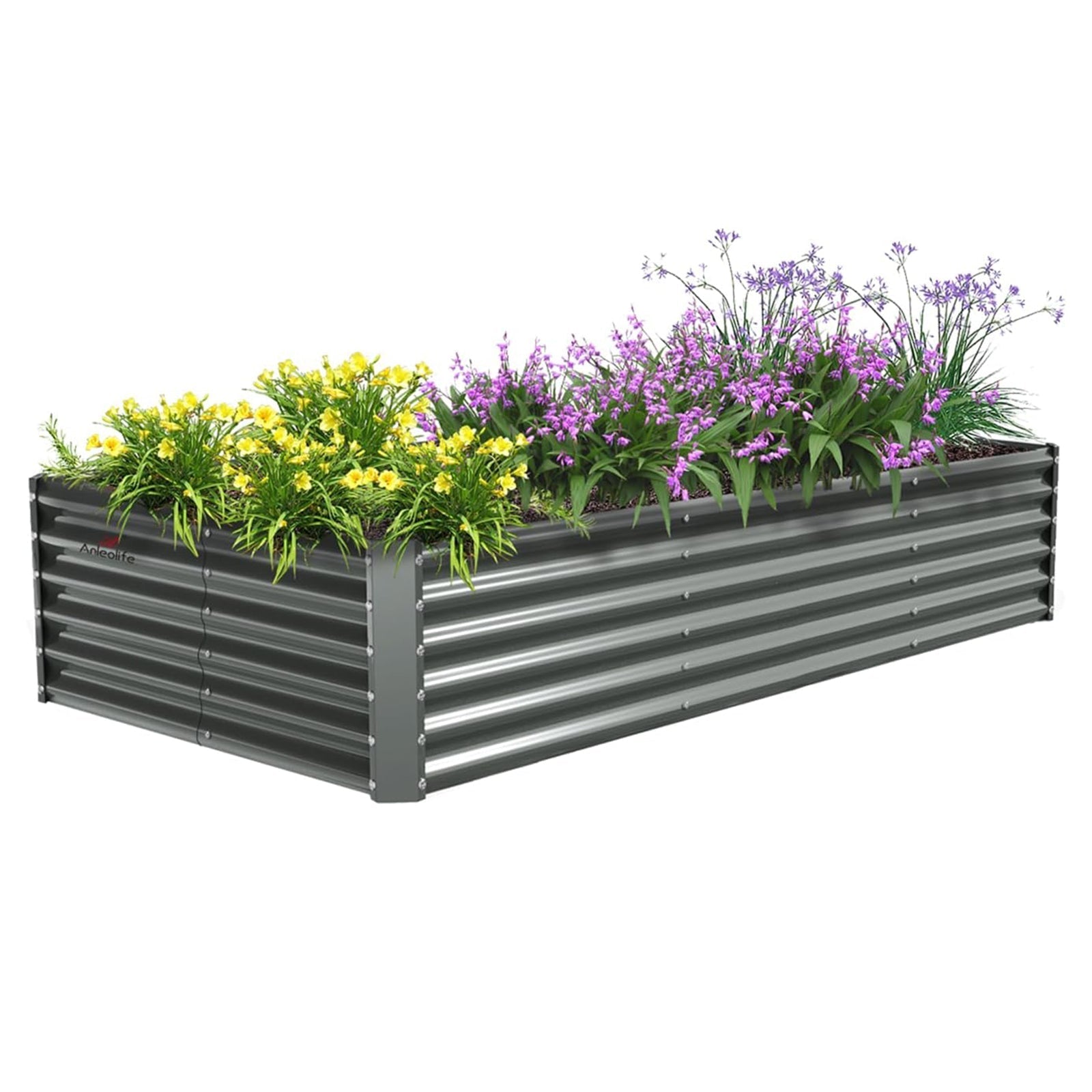
The footprint of the planter also governs your raised bed planting layout in critical ways. A 4x4-foot bed is fully reachable from all sides without stepping in. An 8x4-foot bed is the workhorse format for serious vegetable production, offering enough area to practice companion planting, crop rotation, and intensive spacing while remaining accessible from either long side. Longer beds — 12x3-foot configurations, for example — create dramatic visual lines in a garden, functioning almost like pathways themselves, and work especially well when used in parallel runs with edged gravel or stone paths between them.
Edging as the Defining Boundary
Metal garden edging is the element that separates a well-designed raised bed garden from a loosely arranged one. It performs two functions simultaneously: it contains mulch, gravel, or soil and prevents material migration, and it creates the visual lines that make a garden feel intentional and maintained.
In practice, metal edging placed around a raised bed cluster — defining the pathway between beds, framing a gravel seating area, or delineating a lawn border — transforms the spatial experience of the garden. It tells the eye where one zone ends and another begins. This is particularly effective in larger garden layouts where multiple raised beds coexist with other garden features: water features, seating areas, compost stations, or chicken coops.
The material consistency principle is worth emphasizing here: when your edging shares the galvanized or rust-resistant steel aesthetic of your planters, the garden reads as a unified composition rather than a collection of individual purchases. This coherence is something that experienced garden designers prioritize instinctively, and it is something that homeowners consistently notice — even if they cannot immediately articulate why one garden feels more polished than another.
Trellises as Vertical Structure and Visual Drama
A garden trellis is a vertical support structure designed to guide climbing plants upward, expanding the productive volume of a garden without expanding its horizontal footprint. In the context of a raised bed layout, trellises serve both functional and aesthetic roles that are difficult to overstate.
Functionally, trellises allow indeterminate tomatoes, cucumbers, pole beans, peas, and climbing flowers to grow vertically, improving air circulation (which reduces disease pressure), making harvest easier, and increasing light penetration to lower-growing companion plants at the bed's base. A single trellis-equipped raised bed can produce substantially more than a flat-growing equivalent because it colonizes vertical space that would otherwise go unused.
Aesthetically, trellises introduce vertical rhythm into a garden layout that might otherwise feel flat. Positioned at the northern end of a bed (to avoid shading lower-growing crops), a metal trellis panel creates a sense of enclosure and structure that makes the entire raised bed planting layout feel more considered. Paired with a galvanized planter and metal edging, the trellis becomes the tallest element in a three-tier composition — bed, edging, trellis — that gives the garden genuine visual depth.
Evidence and Design Approaches: Comparing Layout Philosophies
In our experience working with home gardeners across a wide range of contexts — suburban backyards, urban rooftop spaces, rural homesteads, and everything in between — we observe that raised bed layout philosophies fall into a few distinct patterns. Each has real strengths and trade-offs worth understanding.
| Perspective / Approach | Strengths | Trade-offs | Best Fit |
|---|---|---|---|
| Grid / Symmetrical Layout | Clean visual order; easy to navigate; efficient planting zones | Requires precise planning; less flexible for irregular spaces | Formal gardens, larger rectangular backyards, HOA neighborhoods |
| Organic / Curved Layout | Naturalistic feel; suits irregular terrain; creative freedom | Edging and pathways are more complex; harder to plan systematically | Cottage gardens, naturalistic landscapes, sloped yards |
| Linear / Parallel Rows | Maximum bed density; ideal for high-yield food production | Less aesthetic emphasis; can feel utilitarian | Serious food growers, community gardens, homestead setups |
| Vertical-Focus Layout | Maximizes small spaces; strong visual impact; productive | Requires structural planning for trellises; shade management needed | Urban gardeners, small backyards, balcony and patio gardeners |
| Mixed Modular System | Flexible; can expand over time; adapts to changing needs | Requires thoughtful cohesion to avoid visual clutter | Most homeowners who garden over many years |
A pattern we consistently see is that homeowners begin with a single approach — usually a simple grid or parallel-row layout — and evolve toward a mixed modular system as their confidence and ambition grow. This is precisely why modular raised bed systems are so valuable: they allow you to start with one or two beds and expand methodically, adding trellises, edging, and additional planters as your garden develops.
For those planning their first installation, a beginner's roadmap to planning, building, and planting your first raised bed is an excellent starting point that covers the essential decisions without overwhelming first-time growers. Getting the layout right from the beginning — even at a small scale — saves significant rethinking later.
The galvanized steel advantage is also worth examining comparatively. As documented in our in-depth analysis of whether galvanized beds really resist rust better than powder-coated steel, the zinc coating process creates a metallurgical bond with the underlying steel that delivers durability measurably different from surface-applied coatings. For homeowners who are thinking in decades rather than seasons, this distinction matters. Anleolife's galvanized raised garden beds are built to last up to 20 years — a lifespan that puts them firmly in the category of a long-term investment rather than a seasonal purchase.
According to the U.S. Department of Agriculture's research on home food production, gardens that are structurally organized and well-maintained tend to produce more consistently and sustain grower engagement over longer periods. This finding aligns with what we observe in practice: a well-designed raised bed garden layout is not just prettier — it is more productive, because it is easier and more enjoyable to tend.
The soil system inside the planter is another factor that interacts with layout decisions in non-obvious ways. Deeper beds require different soil composition than shallow ones; raised beds in full sun have different moisture retention needs than those in partial shade. Understanding these relationships is essential for matching your raised bed planting layout to your specific site conditions. For a thorough treatment of this subject, see resources on the best soil composition for organic vegetable raised beds, which covers the layering and amendment strategies that complement a well-structured raised bed layout.
Where Backyard Garden Design Is Heading — and What It Means for You
The trajectory of raised bed gardening is clear: gardens are becoming more permanent, more integrated into overall outdoor living design, and more sophisticated in their material choices. A raised bed layout that would have been considered advanced three to five years ago is becoming the baseline expectation among thoughtful homeowners.
Several converging forces are driving this shift. The first is the mainstreaming of food growing as a lifestyle value rather than a purely practical activity. Homeowners increasingly want their vegetable gardens to look as intentional as their perennial borders. The second is the growing availability of high-quality galvanized and rust-resistant steel products designed specifically for residential use — products that deliver the aesthetic of a commercial kitchen garden at a scale appropriate for the home backyard.
The third force is the modular design revolution. As manufacturers have developed systems that allow beds to be configured, combined, and expanded over time, the raised bed garden has become a living structure rather than a fixed installation. This changes the planning conversation fundamentally: instead of designing the perfect layout in advance and building it all at once, gardeners can now start small, observe how they actually use the space, and grow their system organically over seasons and years.
For empty nesters and retirees — a group we work with frequently — this modularity is especially meaningful. A single 8x4-foot bed at a comfortable height is a perfect starting point: manageable, productive, and visually complete. Over time, as confidence builds and the desire for variety grows, additional beds, trellises, and edging elements can be added without disrupting what is already working.
For urban micro-gardeners working with constrained spaces, the vertical dimension is the most important frontier. Trellises installed at the back of a compact raised bed can double the effective growing area of the installation. Combined with thoughtful edging that defines the garden's boundary, even a small urban backyard can feel like a composed outdoor room.
The actionable takeaways from this trajectory are concrete. First, invest in materials that will last — galvanized or rust-resistant steel, properly sealed wood, or powder-coated metal — so that your raised bed layout ages gracefully rather than deteriorating. Second, plan for verticality from the beginning, even if you don't install trellises immediately; knowing where they will go allows you to position beds and edging accordingly. Third, choose a material language and stick to it: the visual coherence of a unified material palette is one of the highest-leverage aesthetic decisions you can make. Fourth, think of your garden layout as a system that will evolve, and prioritize modularity and expandability from the start.
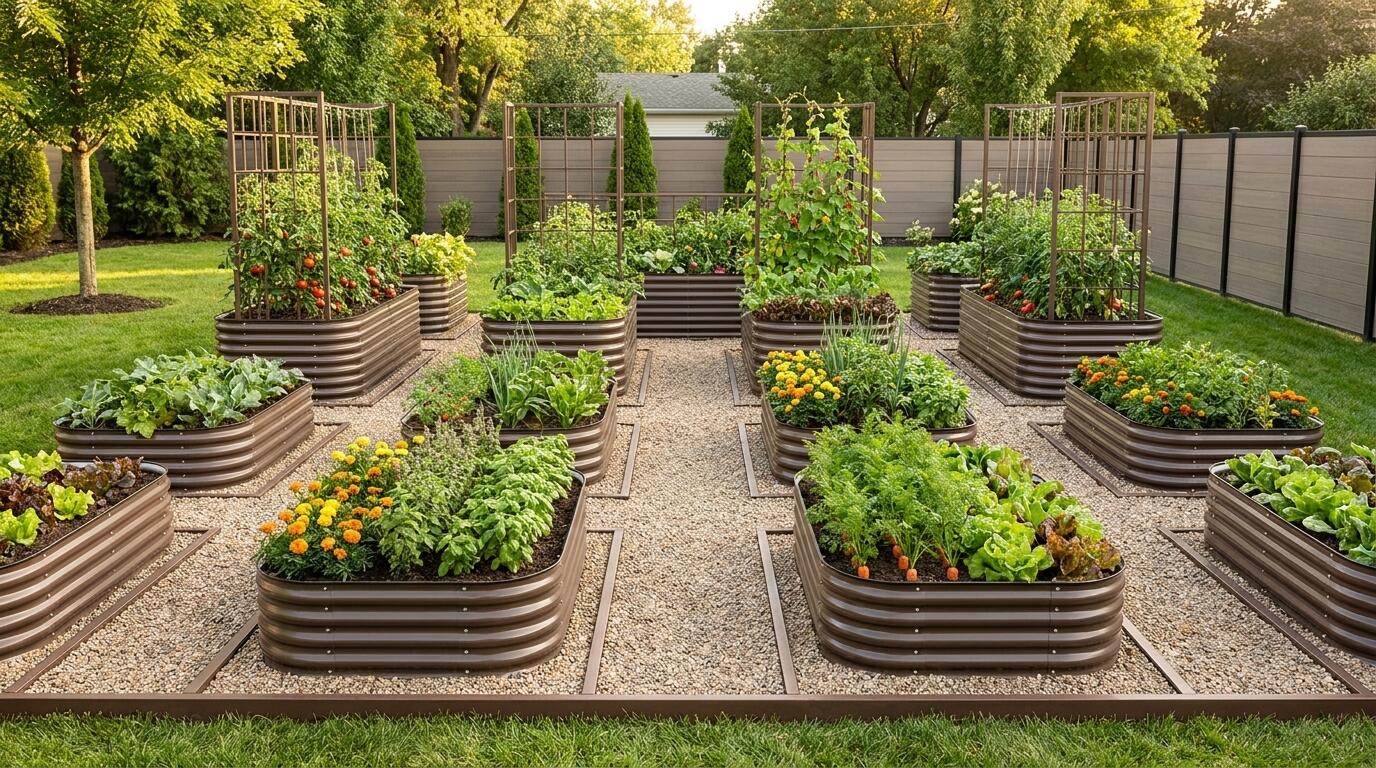
ALT: Organized raised bed garden layout with galvanized planters, metal edging pathways, and vertical trellis structures for a polished backyard
Common Questions
Q1: How do I determine the right number of raised beds for my backyard layout?
The right number of raised beds depends on three variables: the size of your available space, how much time you can realistically commit to maintenance each week, and what you intend to grow. A general principle used by experienced garden designers is to start with one or two beds and expand once you've established a maintenance rhythm. An 8x4-foot bed, for example, can support a meaningful harvest of vegetables for a small family. Overflow ambition is one of the most common mistakes in first-time raised bed garden layouts — it is far better to manage two beds well than to struggle with six.
Q2: Are galvanized planters safe for growing food?
Galvanized steel planters are widely used for food production and are considered safe for vegetable gardening by leading horticultural and extension service authorities. The zinc coating that gives galvanized steel its corrosion resistance is present in trace amounts in most soils naturally and does not accumulate to harmful levels under normal gardening conditions. For growers with specific concerns, lining the interior of the bed with a food-safe barrier is an option, though most gardeners working with quality galvanized products do not find this necessary. The 20-year lifespan of Anleolife's galvanized raised garden beds reflects the material's genuine durability in outdoor food-growing environments.
Q3: How much does it cost to style a complete backyard with raised beds, edging, and trellises?
The total investment in a complete raised bed garden layout with galvanized planters, metal edging, and trellises varies widely based on the number of beds, their dimensions, and the complexity of the edging and trellis systems selected. Entry-level installations with one or two standard-height beds and basic edging can be assembled at a modest cost, while larger multi-bed configurations with waist-high planters and integrated trellis panels represent a more substantial investment. The key framing is return on investment: galvanized steel components rated for a 20-year service life, combined with the value of home-grown produce and the lifestyle benefit of a beautiful outdoor space, make the cost per year of a well-built system quite favorable relative to alternatives.
Key Takeaways
- A well-designed raised bed garden layout is a system, not a collection of parts: galvanized planters, metal edging, and vertical trellises work best when chosen to reinforce each other structurally and visually.
- Galvanized and rust-resistant steel are the most durable material choices for raised bed gardening, with a documented service life of up to 20 years for quality products like those offered by Anleolife.
- Bed height is one of the most consequential decisions in raised bed planting layout planning — matching height to the grower's physical needs and crop requirements dramatically improves both productivity and the gardening experience.
- Trellises are the highest-leverage addition to a small-space raised bed layout, expanding effective growing area vertically without claiming additional ground footprint.
- A modular approach to raised bed layout design allows gardeners to start small and expand intentionally over time, matching the system's growth to the gardener's evolving confidence and ambition.
- The next step for any gardener ready to move from planning to building is to select the primary bed size, establish the material palette, and determine where vertical structures will eventually stand — even before the first seed goes in the ground.
Ready to design a raised bed layout that lasts decades, not seasons? Explore Anleolife's full range of galvanized and rust-resistant raised garden beds, modular systems, and garden beautification accessories at the Anleolife website. With warehouse locations across California, Texas, Florida, New York, Illinois, and Washington, delivery reaches most U.S. addresses within 3–8 business days. Anleolife products are also available on Amazon, Walmart, Home Depot, Lowe's, and Wayfair — so you can shop through whichever channel you trust most, with consistent quality and after-sales support guaranteed across all of them.
References
- ASTM International. "Standard Specifications for Zinc Coatings and Corrosion Resistance of Structural Steel."
https://www.astm.org/ - U.S. Department of Agriculture (USDA). "Home Vegetable Gardening and Food Production Resources."
https://www.usda.gov/ - Savvy Gardening. "4x8 Raised Bed Vegetable Garden Layout Ideas."
https://savvygardening.com/4x8-raised-bed-vegetable-garden-layout/ - Gardeners Supply Company. "Pre-Planned Gardens."
https://www.gardeners.com/pages/kitchen-garden-planner-preplanned-gardens
Note: Standards may be updated; please check the latest official documents or consult professional advisors.