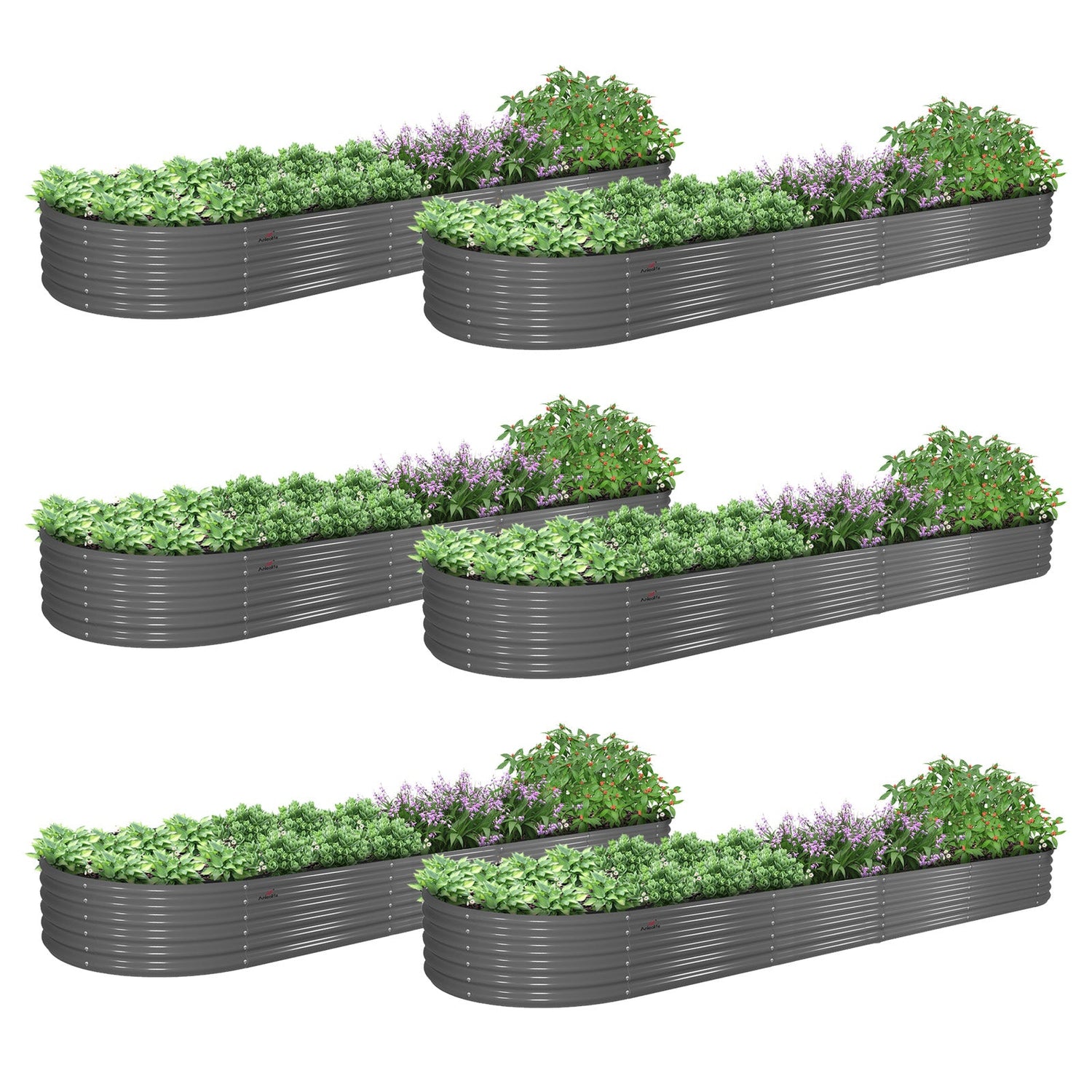



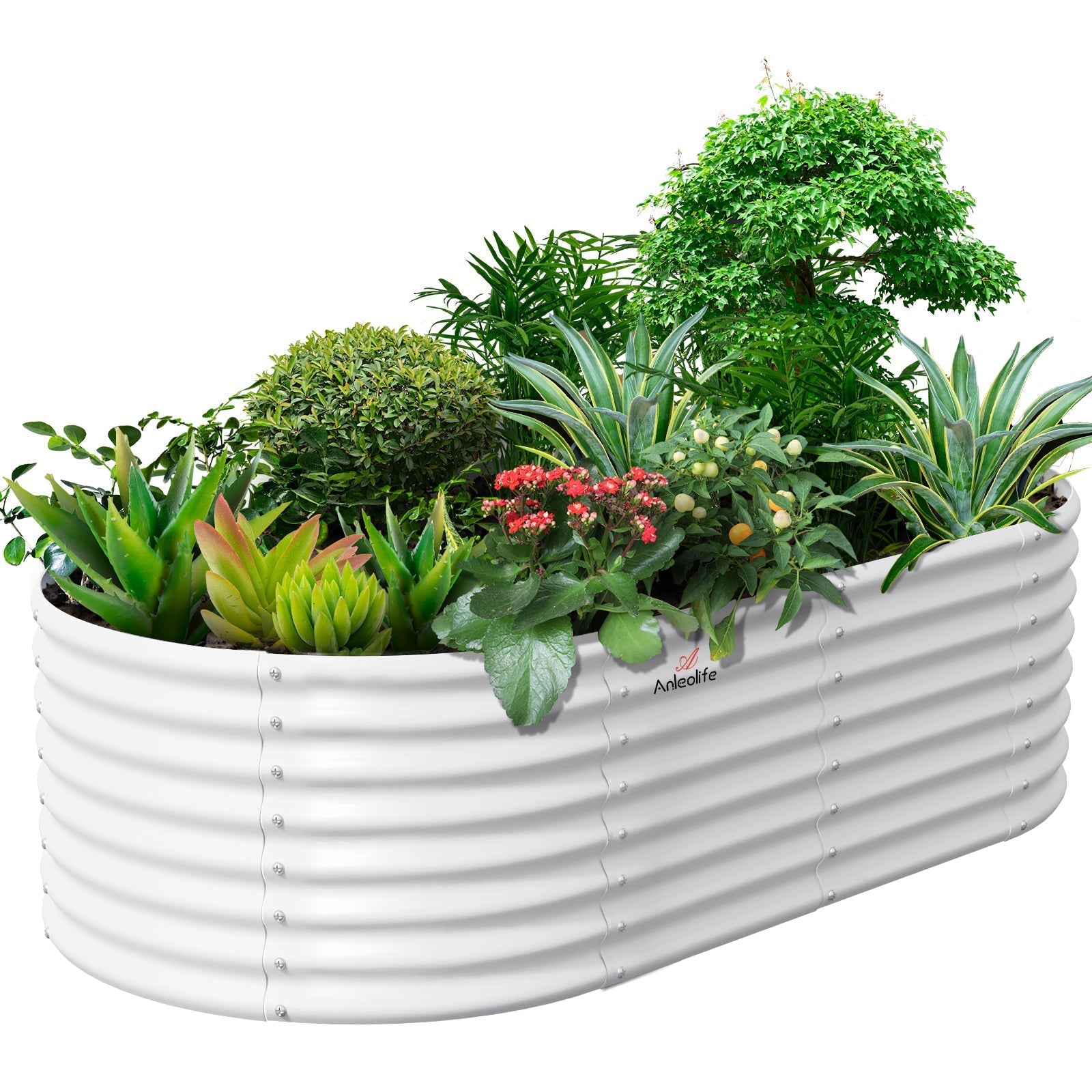
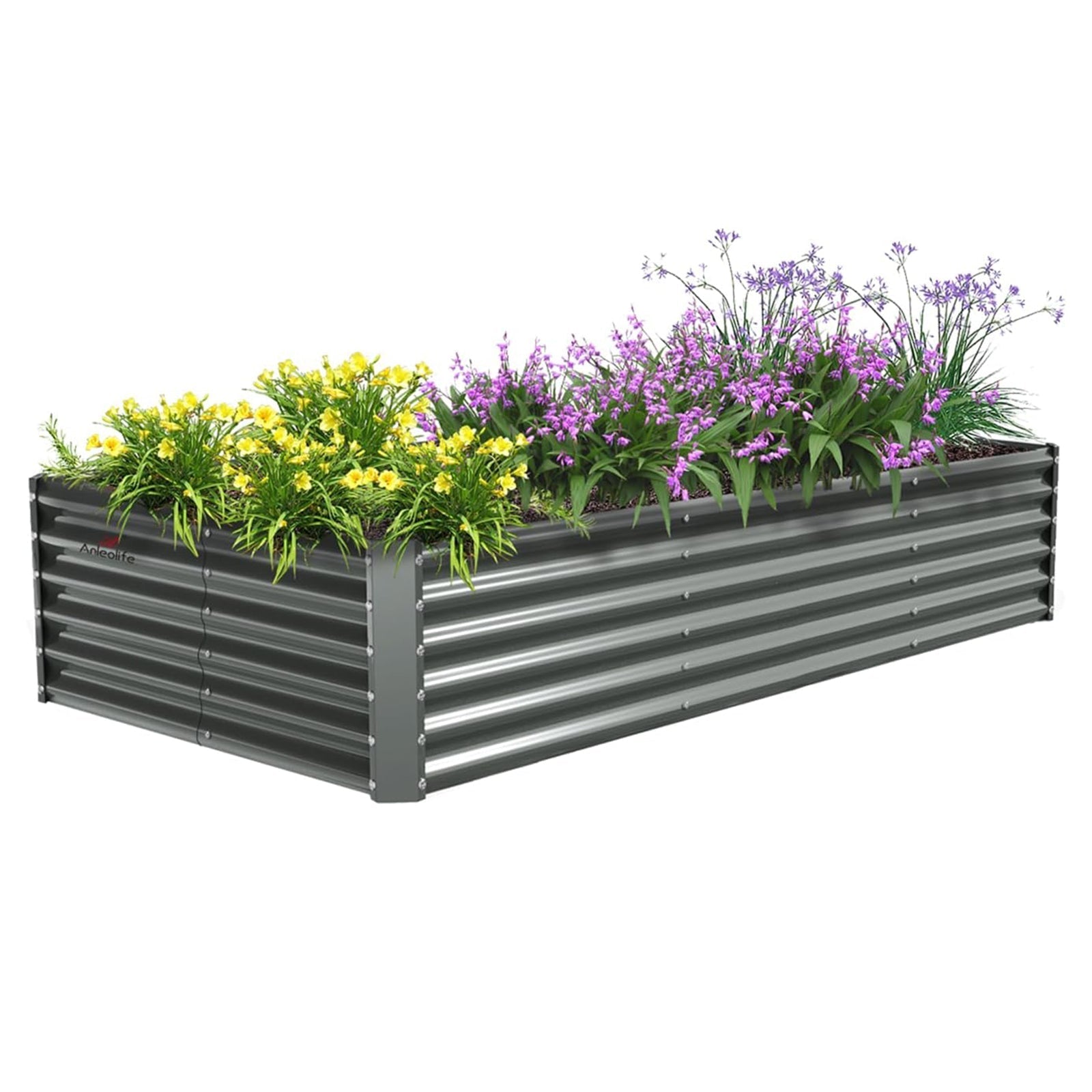

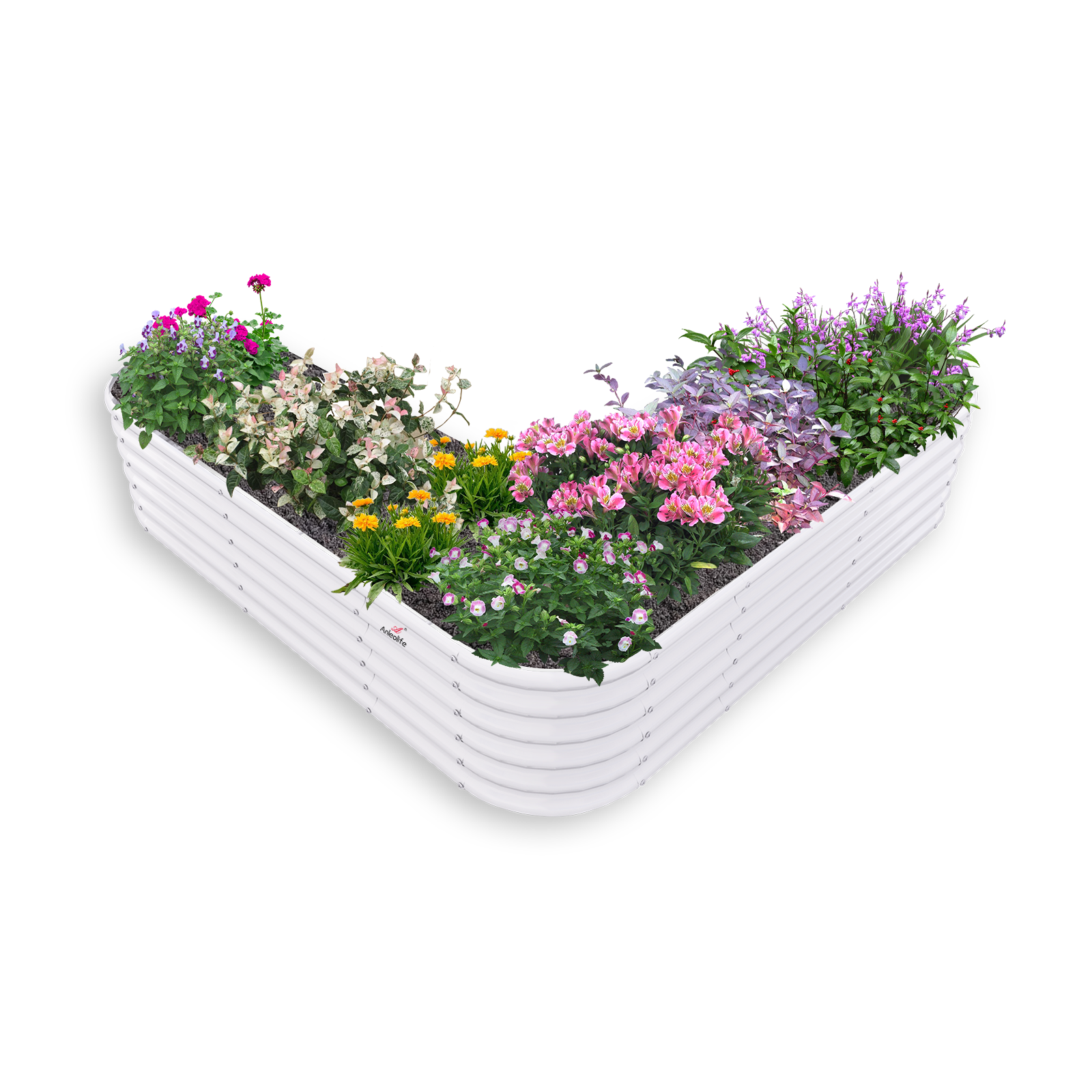
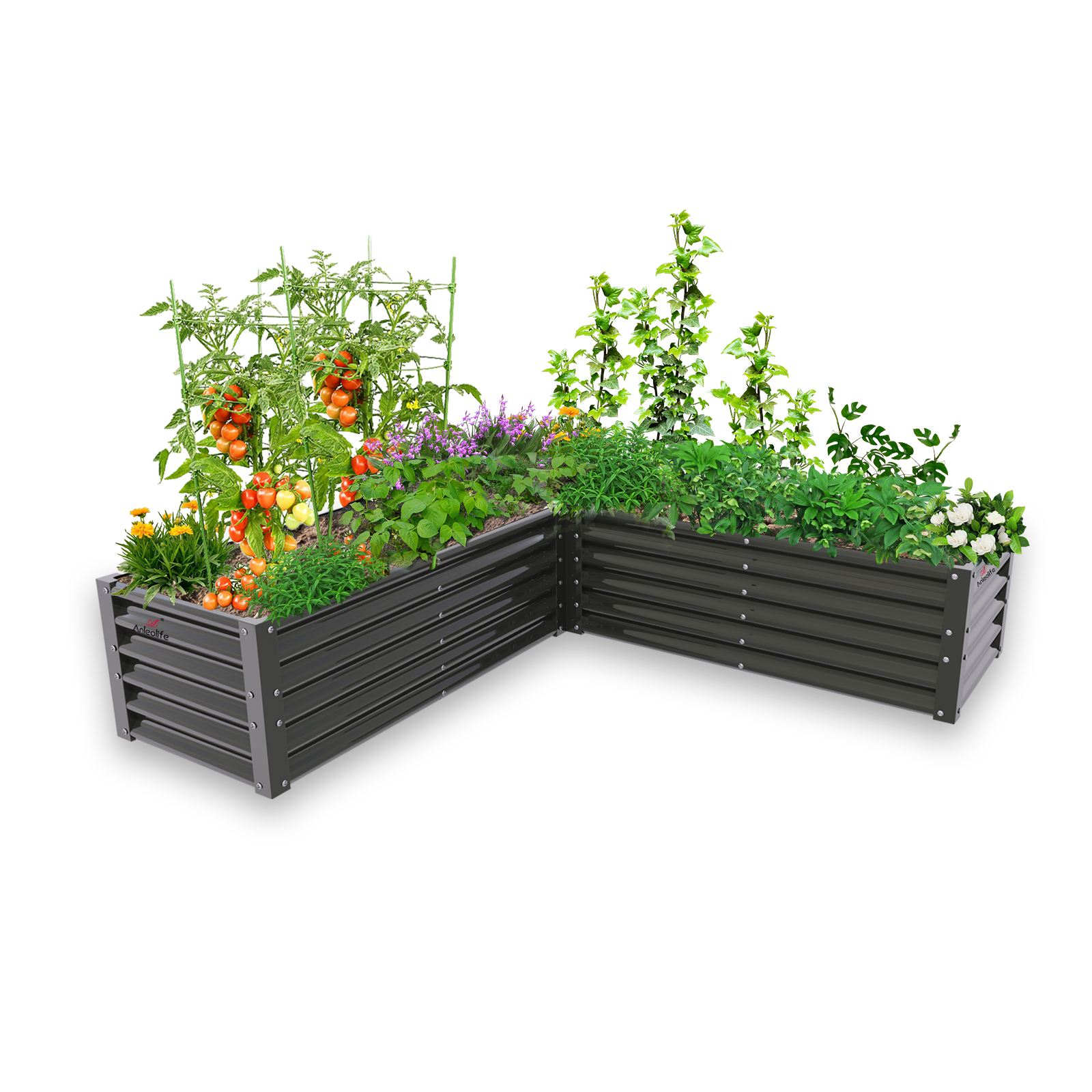
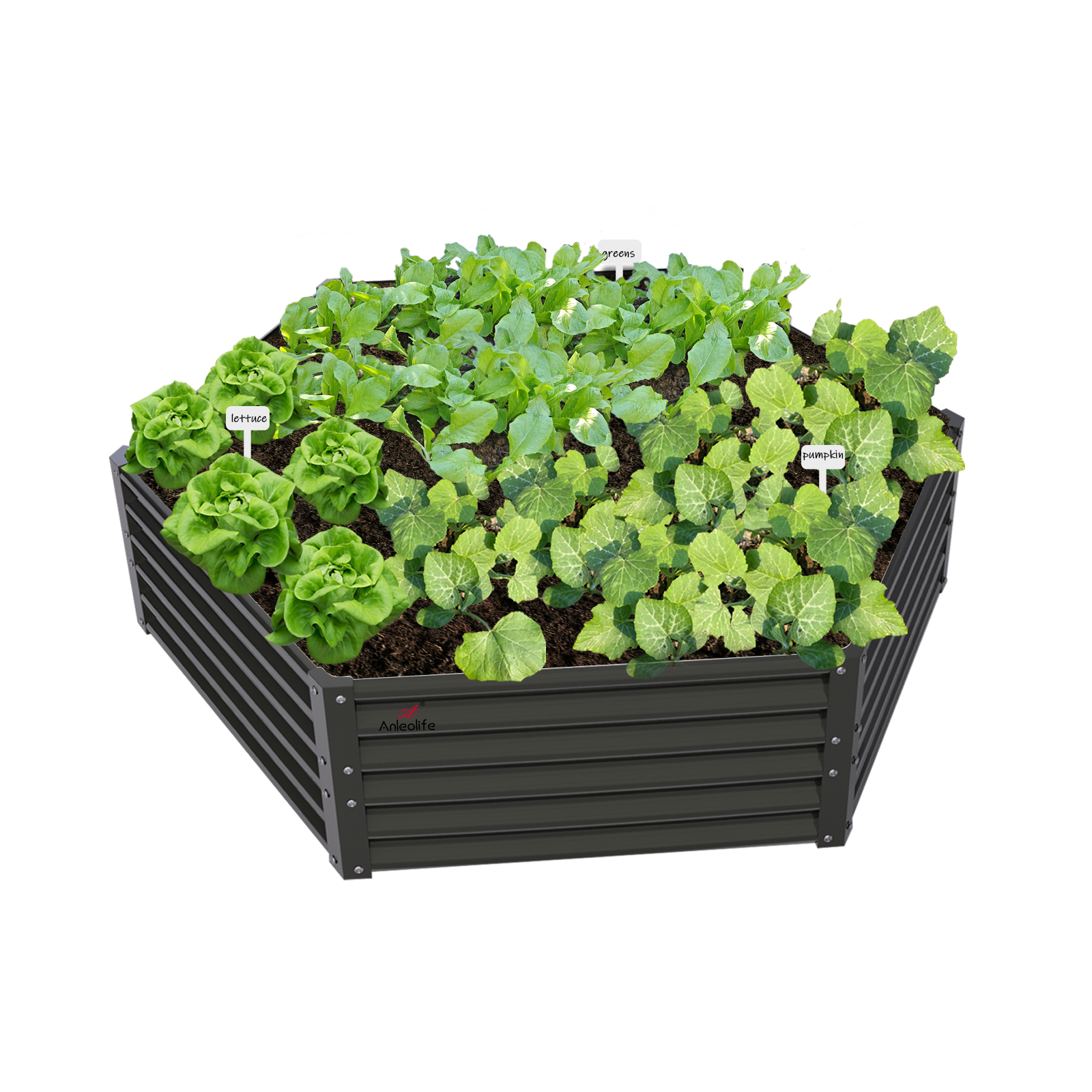
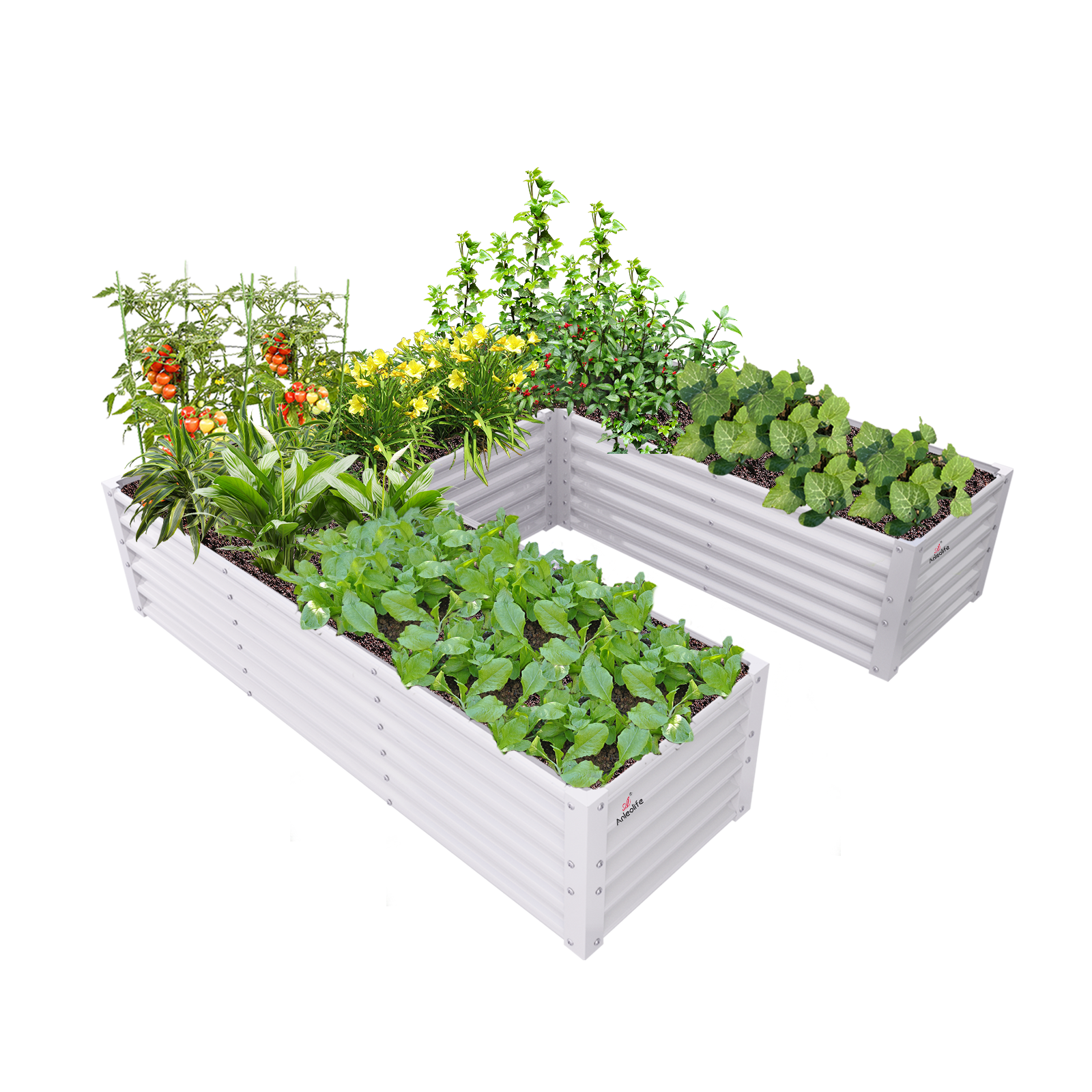

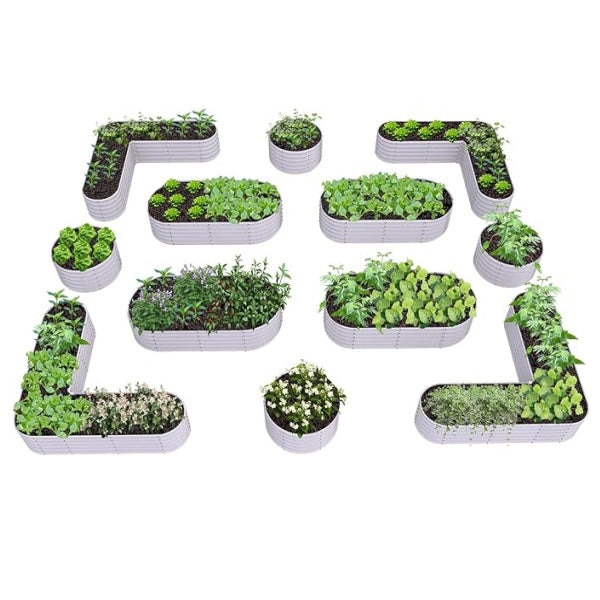


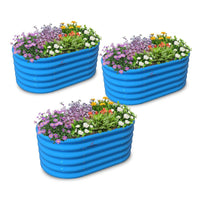
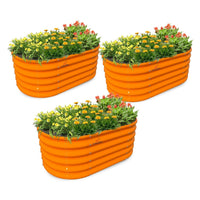
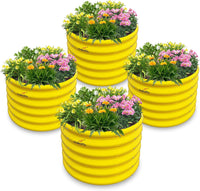
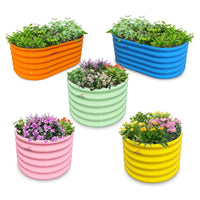
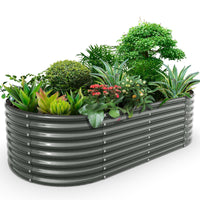



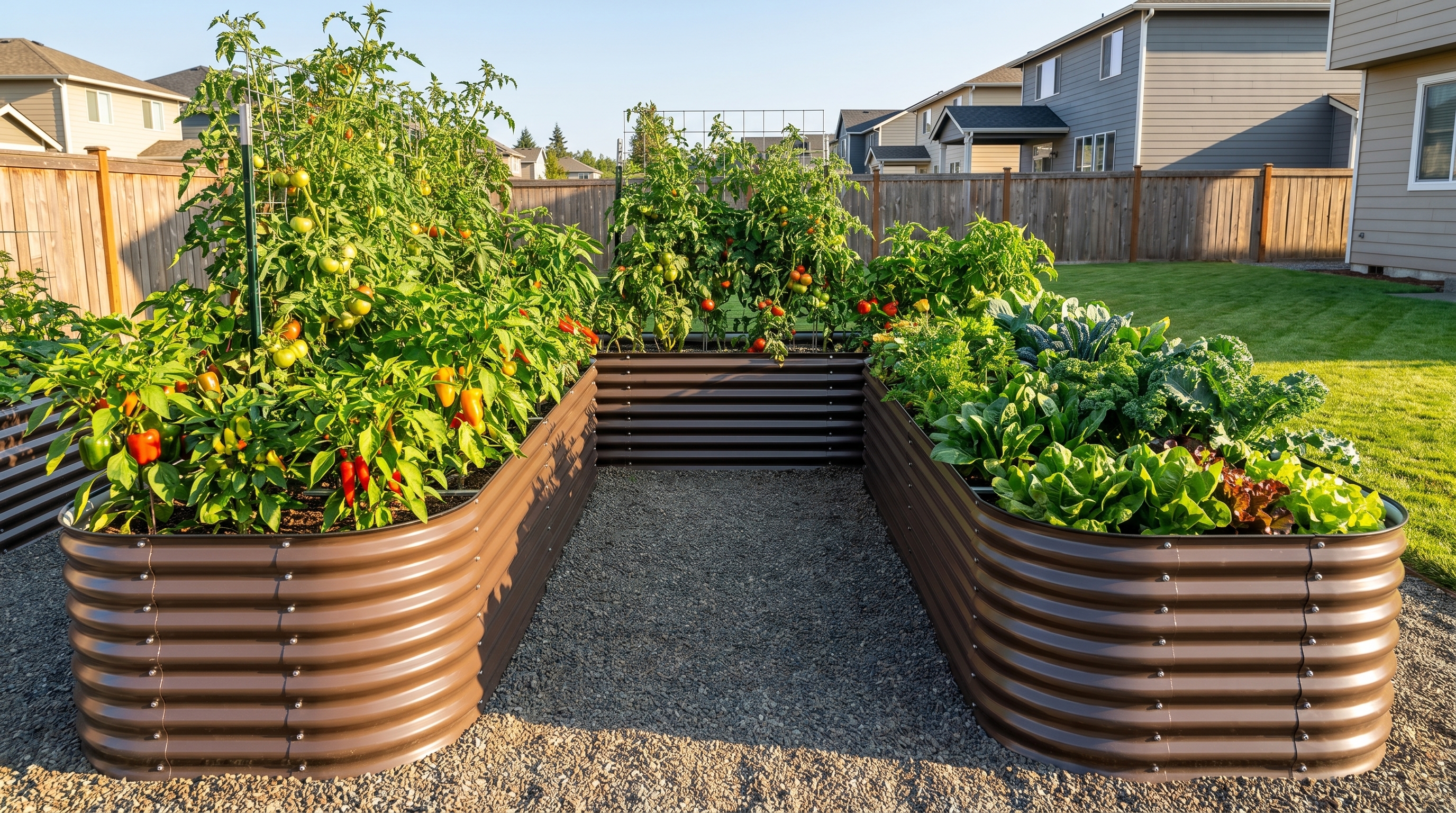
ALT: U-shaped raised garden bed layout in a backyard garden with vegetables and metal beds
Why U-Shaped Raised Garden Bed Layouts Are Transforming the Way Backyard Gardeners Grow
Key Conclusion: The U-shaped raised garden bed layout is widely regarded as one of the most efficient and ergonomic configurations available to home gardeners today. By wrapping growing space around three sides of a central standing area, this design gives you maximum reach across your entire planting zone without ever straining your back or stepping on soil. Whether you're a seasoned grower or just getting started, U-shaped layouts deliver better access, smarter space use, and a visually polished backyard aesthetic that flat or single-row beds simply can't match.
If you've ever stood at the edge of a traditional rectangular bed and stretched awkwardly to reach the center, you already understand the core problem that U-shaped layouts solve. These configurations place the gardener inside the garden rather than outside it, allowing complete access to every inch of planting space from a comfortable, stationary position.
What makes this layout particularly compelling right now is the surge in home gardening adoption. More Americans than ever are investing in backyard food production, and they're demanding smarter solutions — not just more square footage. The U-shaped design answers that call with practical elegance. It combines accessibility, productivity, and curb appeal in a single cohesive structure, making it especially popular among families, retirees, and urban micro-gardeners working with limited but valuable outdoor space.
Who Should (and Shouldn't) Consider a U-Shaped Garden Bed Layout
✅ Applicable Scenarios:
- Gardeners with limited mobility, back pain, or ergonomic concerns who need to reach all plants without bending or stretching excessively
- Homeowners with mid-sized backyards who want to maximize productive growing area within a defined footprint
- Families or empty nesters who want a dedicated, organized vegetable or herb garden that's easy to manage season after season
- Urban micro-gardeners who need to make every square foot count and want a layout that doubles as an attractive landscape feature
- Retirees looking for a low-maintenance structure that keeps soil organized, reduces weeding, and supports raised-bed growing without heavy labor
❌ Not Applicable/Cautions:
- Extremely narrow or oddly shaped yards where a three-sided configuration cannot be comfortably placed without blocking pathways or access points
- Renters or those who move frequently and need fully portable, easily disassembled setups — though modular raised beds can partially address this concern
- Gardeners who want an ultra-minimal single-bed setup and don't plan to expand their growing space beyond one or two plants
The Growing Case for Raised Bed Gardening — and Why Layout Matters More Than You Think
Home gardening in the United States has seen a remarkable resurgence in recent years. According to the National Gardening Association, food gardening participation has grown steadily, with millions of households now growing at least some of their own produce at home. This trend accelerated significantly as people sought greater food security, fresher ingredients, and a more meaningful connection to their outdoor spaces.
But here's what many first-time gardeners discover too late: having raised beds isn't enough. How you arrange them determines whether your garden is a joy to tend or a source of daily frustration. Poor layouts lead to crowded walkways, unreachable plant centers, inefficient watering runs, and wasted growing space at the edges and corners.
This is precisely where layout planning becomes as important as the beds themselves. If you're new to organizing your garden footprint, the guide on Step-by-Step Raised Bed Garden Layout Planning for Summer 2026 Beginners is an excellent place to start — it walks through the fundamental decisions every gardener needs to make before buying their first bed.
The U-shaped layout has emerged as a particularly well-suited answer for backyard gardeners because it solves several problems simultaneously. It creates a natural "garden room" — a defined space with a clear entry and a logical center of activity. It also scales remarkably well: a compact version fits a modest suburban yard, while a larger version can anchor an entire dedicated garden zone with beds of varying heights and purposes.
One question many new gardeners ask is: What's the best size raised garden bed kit for a small backyard? The honest answer depends on your specific footprint, but U-shaped layouts typically work best when each arm of the U is at least 3 feet wide (for full arm-reach access from outside) and at least 6–8 feet long per side. This gives you meaningful growing space without overwhelming a smaller yard. Anleolife's range of galvanized steel raised garden beds — from compact 6x3 ft options to more expansive 12x3 ft configurations — offers the sizing flexibility to build a proportional U-shape for almost any backyard dimension.
How to Set Up Your U-Shaped Raised Garden Bed Layout: A Practical Three-Step Framework
Getting Started: Three Steps to Your First U-Shaped Garden
Step 1: Measure Your Space and Define Your U-Footprint
Before purchasing any beds, measure your available backyard area carefully. Mark out the U-shape on the ground using stakes and string. Ensure the inner standing area (the "bay" of the U) is at least 3 feet wide so you can comfortably stand, kneel, or work between the beds. Account for a clear entry point — typically 3 to 4 feet wide — on the open side. This planning step takes roughly 30–60 minutes but saves significant rework later.
Step 2: Select Your Bed Heights and Sizes to Match Your Needs
Once your footprint is defined, choose bed heights that align with your primary gardening goals and physical comfort. Standard 18-inch beds work well for most vegetables. If mobility is a concern, Anleolife's extra-tall 24-inch and 30-inch options — including the 30" Extra Tall 6x3 ft and the 30" Extra Tall 10x3 ft configurations — bring the soil surface close to waist height, dramatically reducing bending. The 35" Waist-High 4x1.5 ft bed is ideal for gardeners who prefer to work entirely while standing. Mix heights within your U-shape to create visual interest while serving different plant types.
Step 3: Fill, Plant, and Establish Your Irrigation and Pathway System
With your beds assembled and placed, fill them with a quality raised bed soil mix — a blend of compost, topsoil, and aeration material. This is also the ideal time to install any drip irrigation lines or soaker hose systems before planting begins. A consistent watering setup is one of the most impactful upgrades you can make; if you're weighing options, the Raised Bed Watering Guide: How to Conserve Water This Summer with Simple Systems covers practical approaches that work beautifully in U-shaped configurations. Finish by laying a pathway material — gravel, pavers, or bark mulch — in the central standing area for comfort and cleanliness.
Comparing U-Shaped Layouts Against Other Common Raised Bed Configurations
Not every gardener will arrive at the U-shape as their ideal layout. It's worth comparing it directly against the two most common alternatives: straight single rows and L-shaped arrangements.
| Comparison Dimension | U-Shaped Layout | Straight Row(s) | L-Shaped Layout |
|---|---|---|---|
| Ergonomic Access | Excellent — reach all areas from center | Moderate — one-side or two-side reach only | Good — improved corner access |
| Space Efficiency | High — maximizes planting per footprint | Moderate — linear use of space | Good — efficient for corner placement |
| Visual Impact | Strong — creates a defined garden "room" | Minimal — functional but flat | Moderate — frames one corner well |
| Scalability | Highly scalable — extend arms or add beds | Easy to extend linearly | Limited — corner anchoring restricts growth |
| Ideal Yard Shape | Square or rectangular open areas | Narrow or side yards | Corner lots or fence lines |
| Suitable for Mobility Needs | Best fit — no need to lean over large areas | Poor fit — frequent walking around beds | Moderate — one arm may still be hard to reach |
| Beginner-Friendly Setup | Moderate — requires planning | Very easy | Easy to moderate |
The clear pattern here is that U-shaped layouts win on access and efficiency, but require a bit more upfront planning. For gardeners who are serious about productivity and comfort, the trade-off is almost always worthwhile.
The Detail That Makes U-Shapes Work: Material, Height, and Planting Strategy
Why Material Choice Defines the Long-Term Success of Your Layout
The material you choose for your raised beds isn't just an aesthetic decision — it shapes how your U-shaped layout performs over seasons and years. Wood was long the traditional choice, but it degrades, warps, and often requires replacement within a few years. In contrast, galvanized steel raised beds from Anleolife are built to last up to 20 years, offering structural integrity and visual consistency that wood simply can't sustain.
For a deeper look at why metal outperforms wood over the long run, the article on Galvanized Steel Raised Beds: 7 Reasons They Outperform Wood for Summer Gardening is highly recommended reading before you make your final material decision. One concern that sometimes comes up is heat transfer in metal beds — a valid question that's comprehensively addressed in the resource on Are Metal Raised Garden Beds Heat-Safe for Summer Vegetables?
Anleolife's galvanized steel and rust-resistant raised garden beds come in an extensive range of sizes — from the compact 18" Tall 6x3 ft to the expansive 18" Tall 12x3 ft — giving you the exact dimensions needed to build a proportional, symmetrical U-shape. The rust-resistant coating ensures the beds maintain their clean appearance even after years of outdoor exposure, rain, and humidity.
Choosing the Right Heights Within a U-Shape
One of the most effective design strategies for U-shaped layouts is deliberately varying bed heights across the three arms. Consider placing your tallest beds — such as the 30" Extra Tall 10x3 ft or the 35" Waist-High 4x1.5 ft — on the back arm (farthest from the entry), where they create a natural backdrop and visual anchor. Medium-height beds like the 24" Extra Tall 8x4 ft work well on the side arms, and standard 18" beds are ideal for the outer edges if your U is wide enough to incorporate additional elements.
This tiered approach does more than look attractive. Taller beds warm up faster in spring, drain better, and work perfectly for deep-rooted crops like tomatoes, carrots, and peppers. Lower beds suit shallow-rooted crops like lettuce, herbs, and greens. Segregating by plant type also simplifies watering, fertilizing, and rotation planning considerably.
Planting Strategy: How to Fill Each Arm of the U
When it comes to what to grow in each section of your U-shape, think in terms of access frequency and sun exposure. Plants you harvest frequently — herbs, salad greens, cherry tomatoes — belong on the arms closest to where you enter the garden. Plants that need less daily attention — squash, larger tomatoes, root vegetables — can occupy the back arm where they won't block your movement.
Sun direction matters enormously here. In most of the continental United States, the south-facing arm of your U receives the most direct light. Reserve this position for sun-hungry crops like peppers, eggplant, and cucumbers. North-facing arms are better suited to shade-tolerant greens and herbs. Understanding which crops thrive in your region and season is just as important as bed placement — the guide on Top 10 Vegetables to Grow in a Raised Bed This June and Beyond offers excellent crop-specific guidance for maximizing your harvest.
Soil Quality: The Foundation of a Productive U-Shaped Garden
Even the most thoughtfully designed U-shaped layout will underperform if the soil inside your beds isn't right. Raised beds give you a significant advantage here: you control the soil entirely, independent of whatever native ground soil exists beneath. A well-balanced raised bed mix — typically a combination of quality compost, topsoil, and a perlite or vermiculite component for drainage — sets the stage for healthy root development and strong yields.
If you want to optimize your soil mix from the start, the resource on The Best Soil Recipe for Raised Garden Beds in Summer 2026 provides a detailed, practical formula that works across a wide range of vegetables and climates.
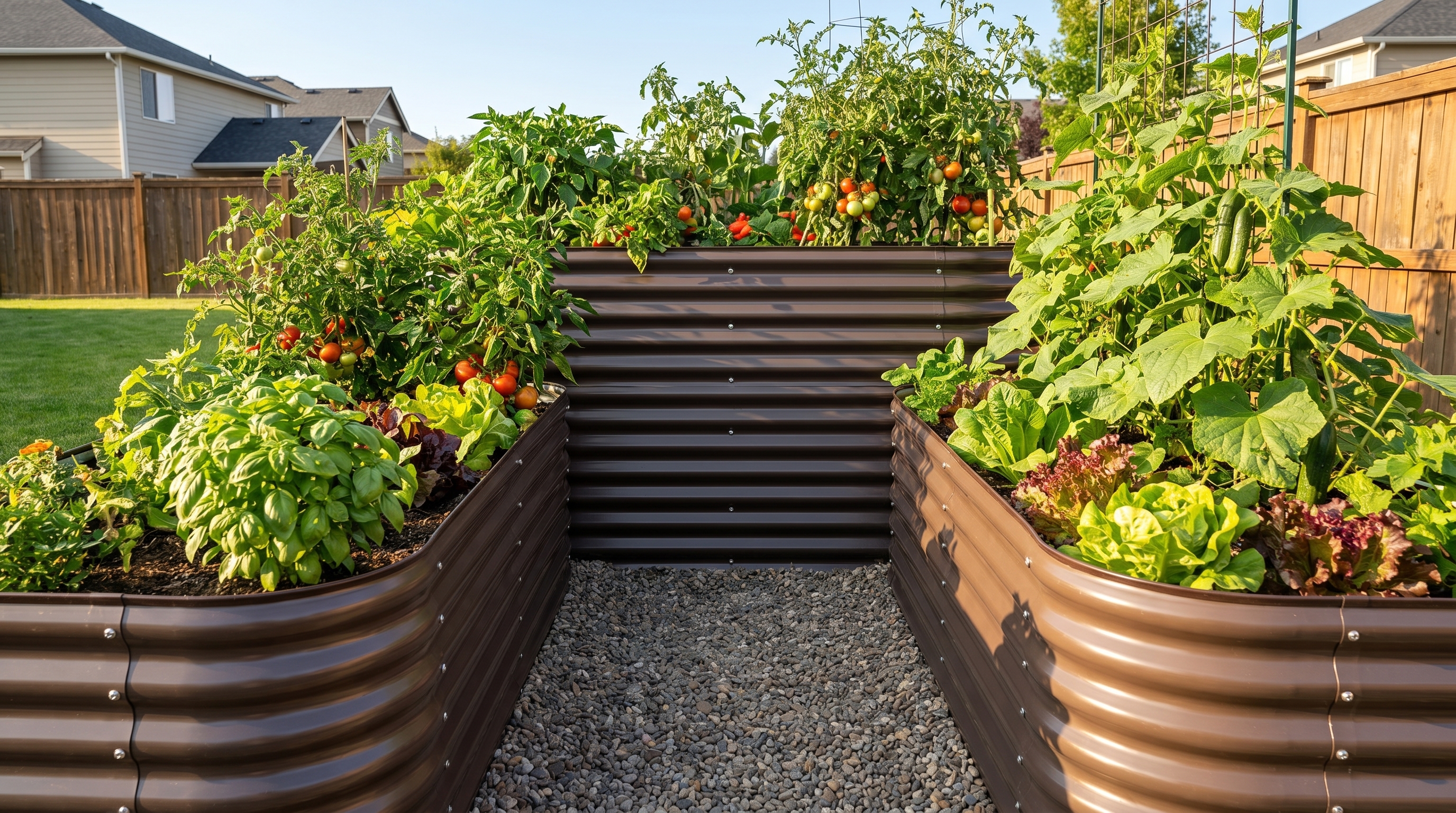
ALT: Tiered U-shaped raised garden bed layout with galvanized steel metal beds growing summer vegetables in a backyard garden
Advanced Considerations: Customization, Misconceptions, and Long-Term Planning
Making Your U-Shape Uniquely Yours
One of the underappreciated advantages of the U-shaped layout is its modularity. Unlike a single large bed, a U-shape is inherently composed of multiple individual beds — which means you can mix and match sizes, add new arms over time, or reconfigure the layout entirely as your gardening ambitions grow. If you're interested in exploring how modular systems can be tailored to unusual yard shapes and growing needs, the article on How to Customize a Modular Garden Bed System for Your Unique Backyard Shape is an excellent resource.
Common Misconceptions About U-Shaped Layouts
"U-shapes take up too much space." This is a persistent myth. A well-proportioned U-shape using 6x3 ft beds on each arm occupies a smaller total footprint than many gardeners expect — and the interior standing area doesn't go to waste, since it's your working zone. The key is matching arm length to your available yard area.
"They're only for large, established gardens." Not at all. U-shaped layouts are equally appropriate for first-time gardeners and experienced growers. In fact, the ergonomic accessibility of the U-shape makes it particularly suitable for beginners who are still learning which crops need the most attention and where they prefer to spend their gardening time.
"All three arms need to be the same size." There's no rule requiring symmetry. Asymmetrical U-shapes — where one arm is shorter than the other — work perfectly well and can actually be better suited to irregular yard shapes or existing landscape features like trees, fences, or patios.
Planning for Seasons Beyond Your First
A U-shaped layout is a long-term investment, and planning for future seasons starts at the beginning. Consider leaving space for companion planting, crop rotation, and mid-season succession plantings. If your beds are made from high-quality galvanized steel like Anleolife's product range — built for a lifespan of up to 20 years — you won't need to rebuild or replace your structure as your garden evolves. The only changes you'll need to make are to what grows inside.
Frequently Asked Questions FAQ
Q1: How do I determine the right size for each arm of my U-shaped raised garden bed?
The general rule is that each arm of a U-shaped layout should be no wider than 3 feet if you're accessing it from one side, or up to 4 feet if you can reach it from both sides. Length depends on your available yard space, but 6–8 feet per arm is a practical starting point for most suburban backyards. Anleolife's lineup — including the 18" Tall 6x3 ft and the 8x4 ft configurations — gives you the flexibility to match arm dimensions precisely to your footprint without compromising access or growing capacity.
Q2: Are galvanized steel raised beds really durable enough for a permanent U-shaped layout?
Yes, absolutely. High-quality galvanized steel raised beds are among the most durable materials available for outdoor garden structures. Anleolife's galvanized steel and rust-resistant beds are designed for a lifespan of up to 20 years, meaning your U-shaped layout is a one-time investment rather than a recurring cost. Unlike wood, galvanized steel won't warp, rot, or splinter — it maintains its structural shape and visual appeal season after season, even through freeze-thaw cycles and heavy rainfall.
Q3: How much time and budget does it take to set up a complete U-shaped raised garden bed layout?
Setup time varies based on the number of beds and your DIY experience, but most gardeners can assemble a three-armed U-shape using modular raised beds in a single weekend. Budget depends on bed size and material selection. For a realistic breakdown of what to expect on the cost side, the guide on Raised Garden Bed Budget Breakdown: What You Can Expect to Pay This Summer offers detailed estimates. With Anleolife's nationwide warehouse network, orders typically arrive within 3–8 business days, so you won't be waiting long to get started.
Summary
The U-shaped raised garden bed layout stands out as one of the most thoughtful, practical, and rewarding configurations a backyard gardener can choose. It solves the #1 frustration of traditional beds — poor reach and awkward access — while simultaneously maximizing your productive growing space and creating a visually defined garden zone that elevates your entire backyard.
Three key takeaways to carry forward:
- Ergonomics drive productivity. A layout you can comfortably work in is a layout you'll actually maintain. The U-shape's inward-facing design puts everything within arm's reach, reducing strain and making daily tending genuinely enjoyable.
- Material quality determines longevity. A U-shaped layout is a structural investment. Choose beds rated for long-term use — Anleolife's galvanized steel and rust-resistant options are built to last up to 20 years, making them the smart foundation for a permanent garden setup.
- Planning upfront saves headaches later. Measure your space, choose appropriate heights, think through sun exposure and crop placement before you buy — and your first growing season in a U-shaped layout will be dramatically more successful than a trial-and-error approach.
Your next step is to sketch your available backyard space, estimate arm lengths, and explore which bed sizes from Anleolife's extensive lineup fit your footprint and growing goals. Once your layout is in place, expanding it over time is straightforward — which is exactly the kind of flexibility a serious home garden deserves.
Start Growing Smarter with Anleolife
Nationwide U.S. warehouse network: Strategically located in California, Texas, Florida, New York, Illinois, and Washington to ensure delivery within 3–8 business days — so your garden upgrade plans never have to wait.
Multi-channel availability: Anleolife products are available on Amazon, Walmart, Home Depot, Lowe's, Wayfair, and directly at Anleolife.com, providing consistent quality assurance and responsive after-sales service wherever you prefer to shop.
Three core scenarios — Planting (metal raised garden beds, soil systems), Raising (chicken coops, rabbit hutches), and Beautification (decorative accessories, pathway systems) — meeting your complete garden needs from functionality to aesthetics.
We understand that an ideal garden is not built overnight, but gradually improved over time. Anleolife's modular product design allows flexible expansion based on your needs — from your first 8x4 ft garden bed to a fully integrated planting-and-raising ecosystem. We grow with you every step of the way.
References
- National Gardening Association. "Garden to Table: A Guide to Cooking in Your School Garden".
https://garden.org - University of California Agriculture and Natural Resources. "Raised Bed Gardening".
https://ucanr.edu/ - U.S. Department of Agriculture (USDA). "People's Garden Initiative and Urban Agriculture".
https://www.usda.gov/peoples-garden - Penn State Extension. "Raised Bed Gardening".
https://extension.psu.edu/raised-bed-gardening - Cooperative Extension System (Extension.org). "Vegetable Gardening Guides and Resources".
https://extension.org/
Note: Standards and best practices may be updated over time. Please check the latest official documents or consult a professional advisor for the most current guidance.
About Anleolife
Anleolife is a leading outdoor garden solutions provider in North America, dedicated to offering a full-scenario product ecosystem for home gardening enthusiasts, covering planting, raising, and garden beautification. Since its founding, we have upheld our brand mission, "Made for Garden Life," continuously innovating products and optimizing services to help hundreds of thousands of users upgrade their gardens, reconnect with nature, and enjoy a better garden lifestyle.