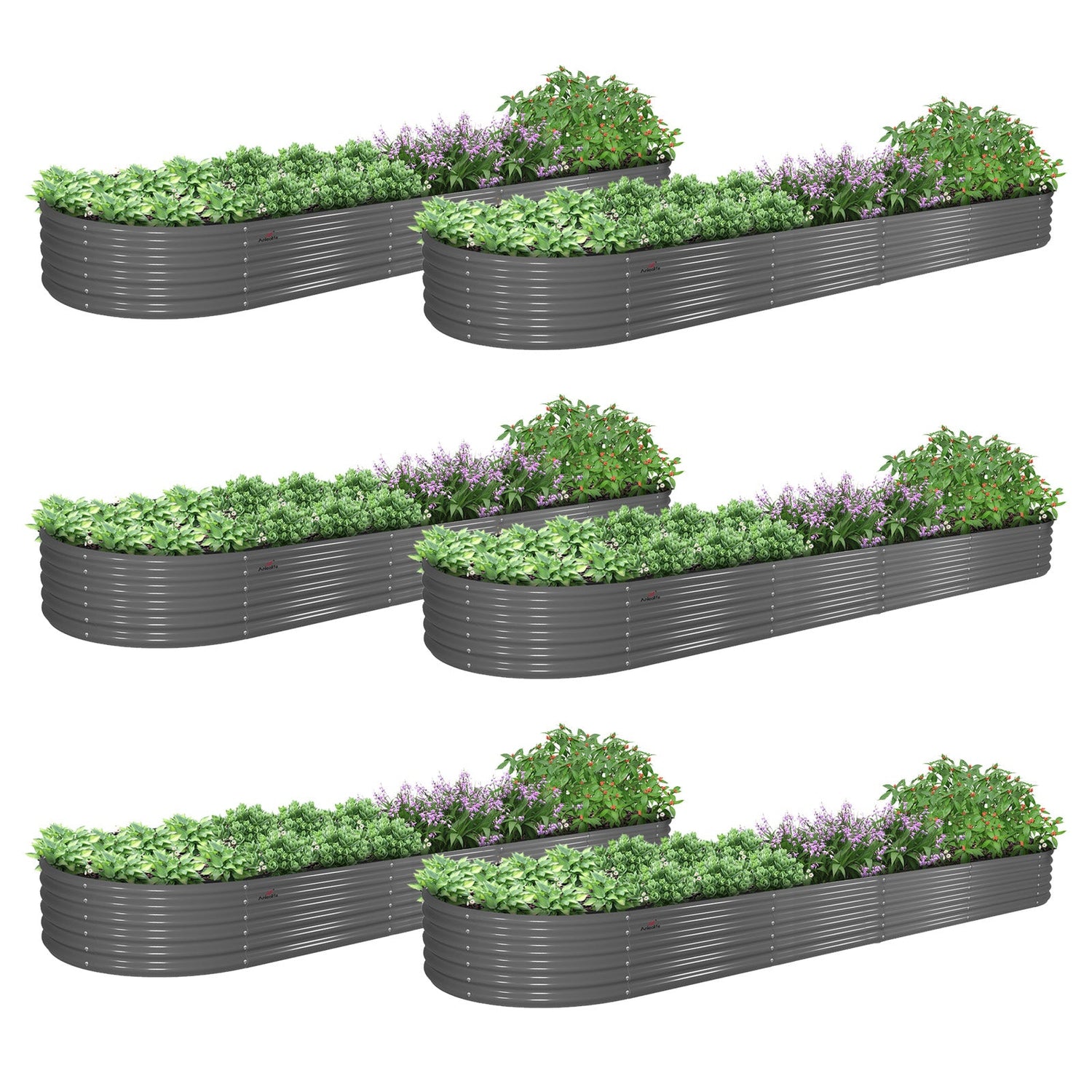



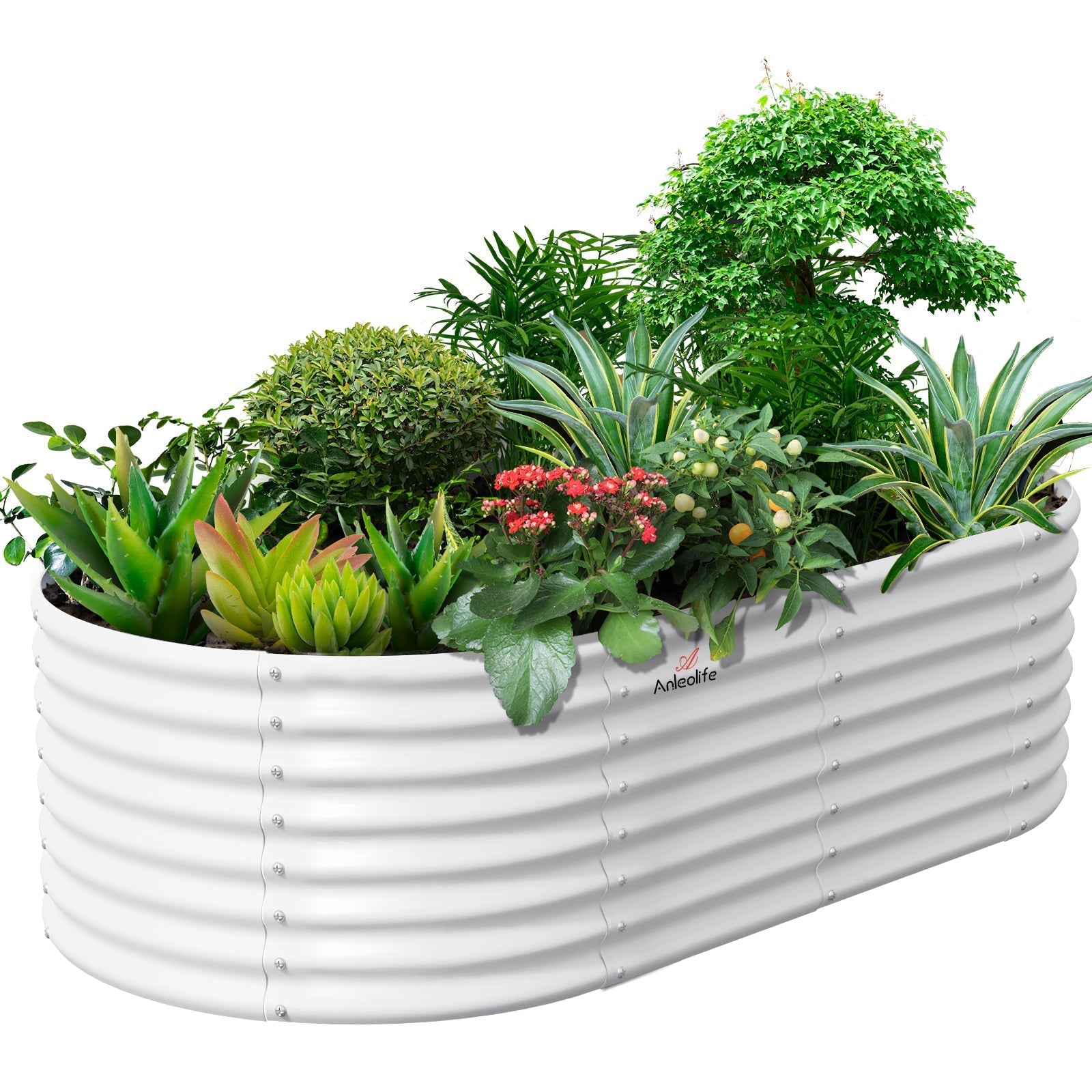
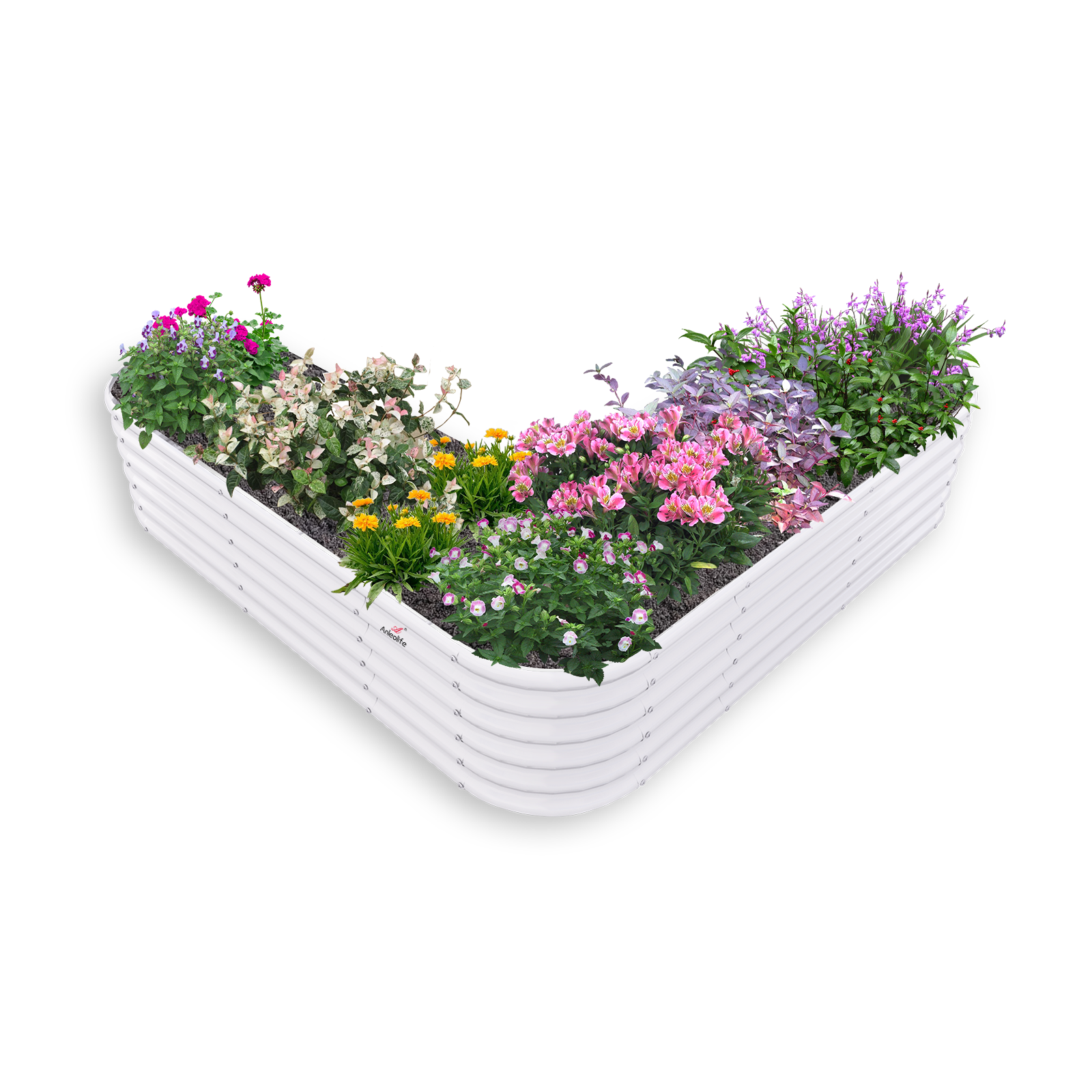
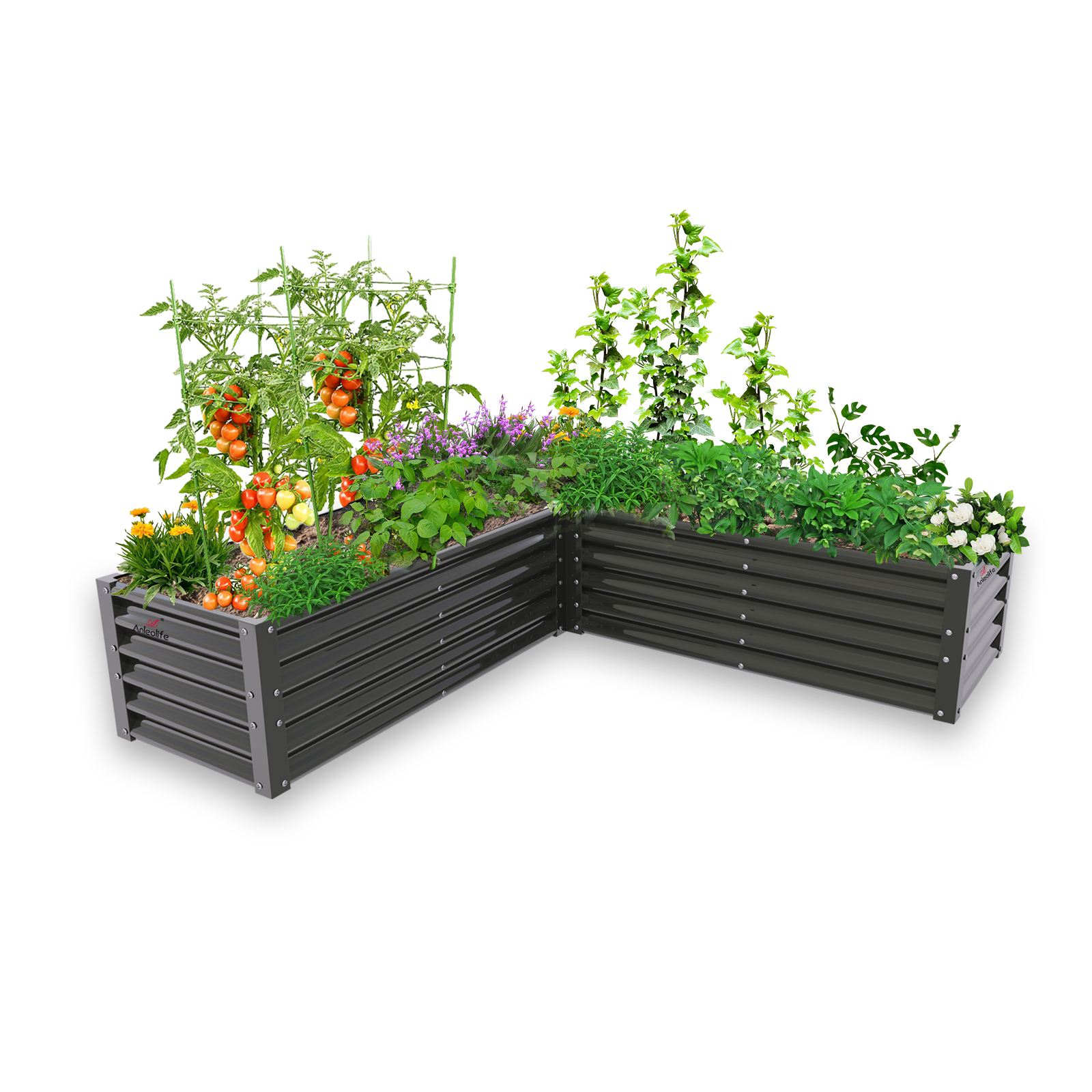
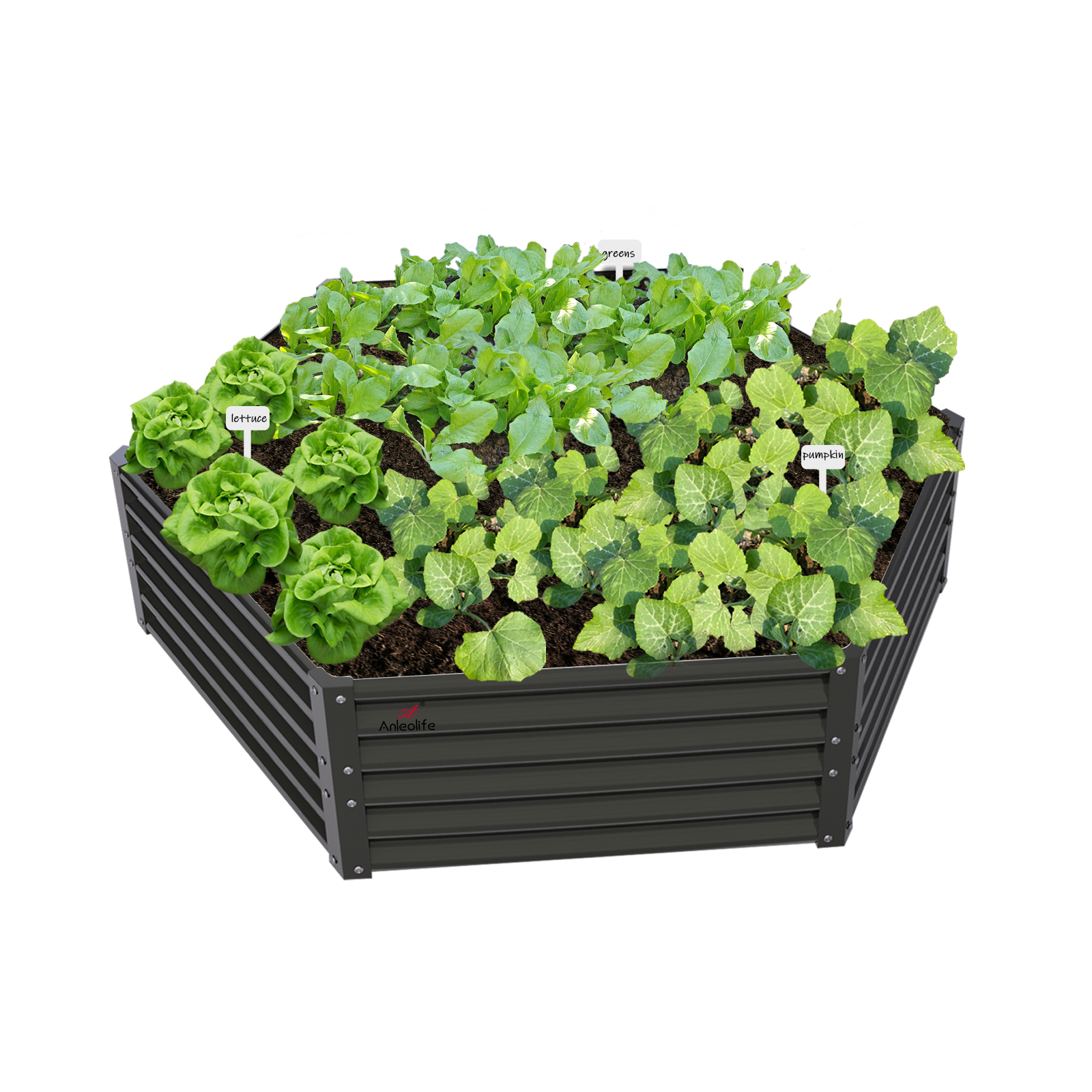
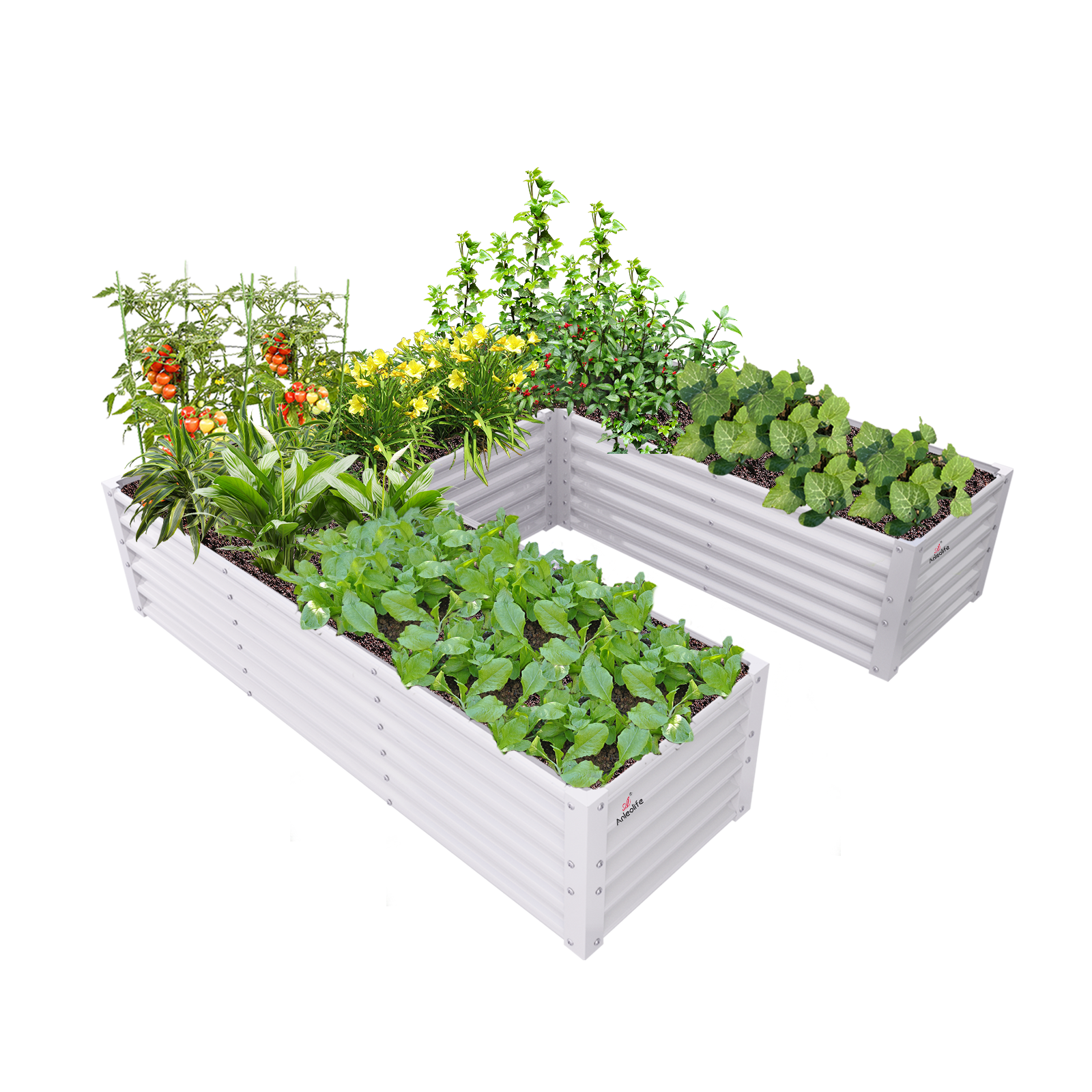

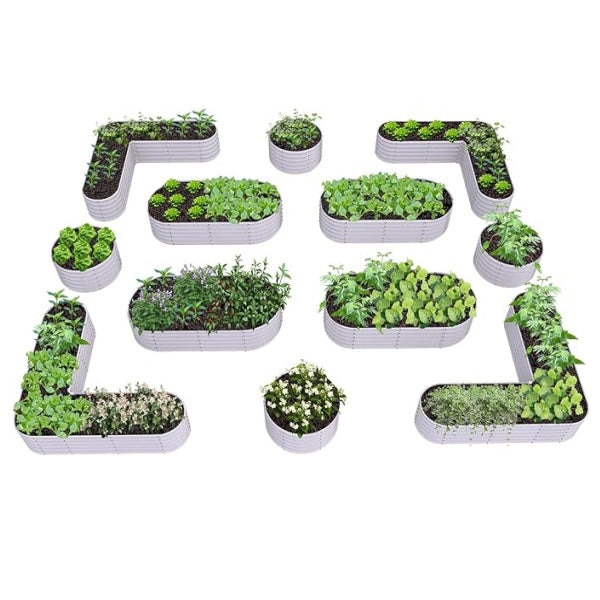



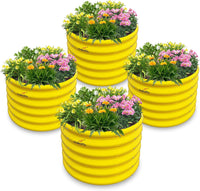
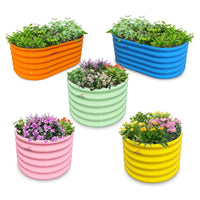
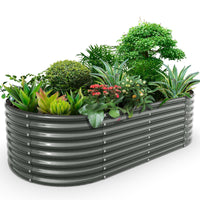



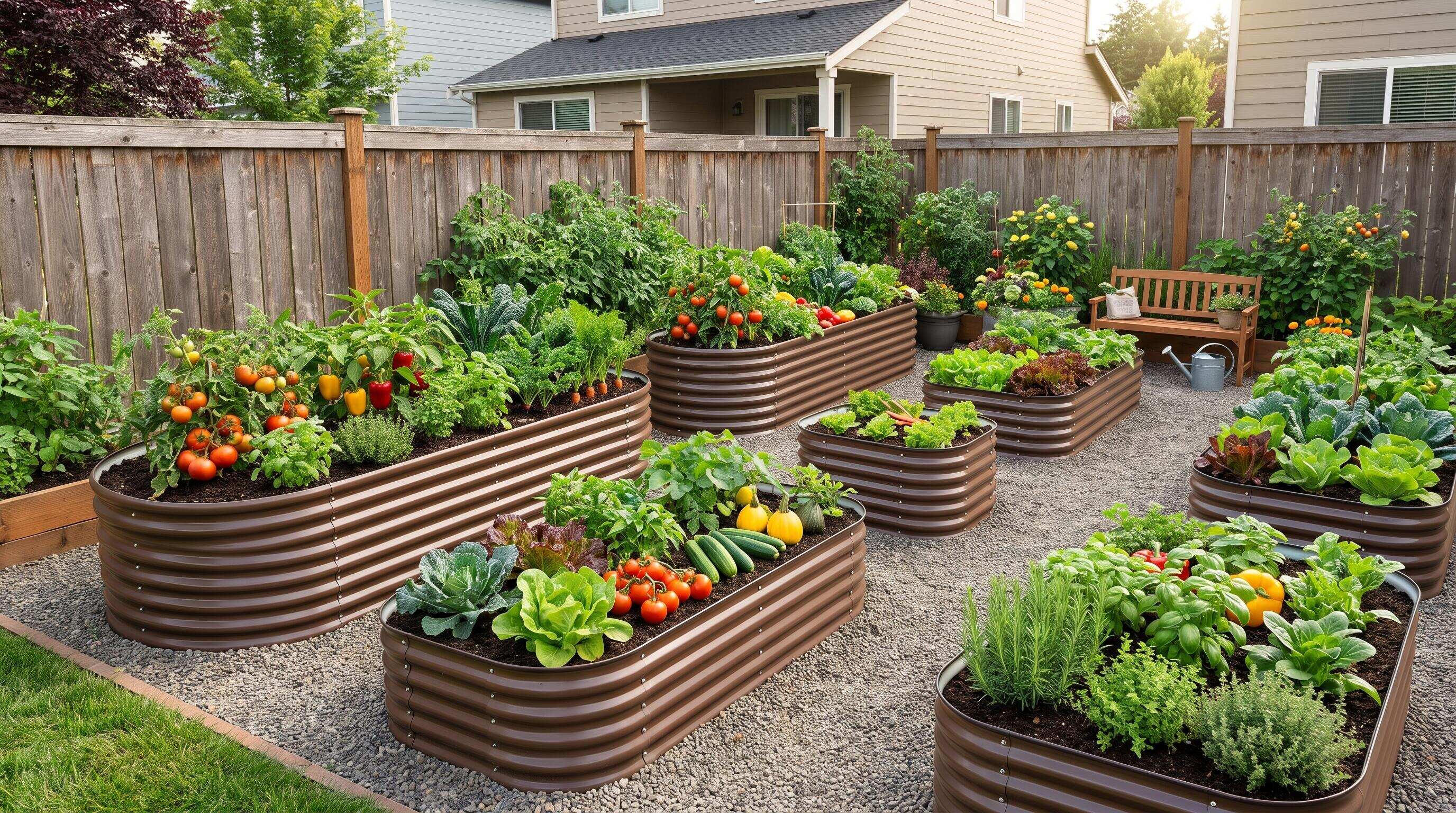
ALT: Compact suburban yard featuring raised bed garden layout with multiple galvanized steel beds in optimal sizes
Choosing the Right Raised Bed Garden Layout for a Compact Suburban Yard
You have a modest suburban backyard — maybe a 20-by-30-foot patch of lawn — and you want to grow your own vegetables without sacrificing what little outdoor living space you have. The tension between productivity and practicality is something we hear about constantly in our work with home gardeners: too small a bed and yields disappoint; too large and you can't reach the center without stepping on your plants. The verdict is this: for most compact suburban yards, a mix of bed sizes anchored by a well-planned raised bed garden layout — not a single "perfect" bed — delivers the best combination of productivity, ergonomics, and space efficiency.
This article compares the most practical raised bed size options for compact suburban yards across the criteria that actually matter: reachability, yield density, soil investment, longevity, and cost-effectiveness. Whether you are a first-time grower, an empty nester reclaiming a backyard, or a health-conscious family looking to produce your own food, these comparisons will help you build a raised bed planting layout that works hard for your space and your budget.
What Makes a Raised Bed Layout Work in a Limited Space?
A well-designed raised bed layout for a compact suburban yard must satisfy six interconnected criteria. Understanding each one before selecting bed sizes prevents the most common and costly planning mistakes.
Reachability (Ergonomic Access)
A raised garden bed is a contained growing area — typically constructed from metal, wood, or composite material — elevated above ground level to improve drainage, soil quality, and access. Reachability is non-negotiable: you must be able to comfortably reach the center of every bed from the edges without stepping inside, which compacts soil and damages roots. The universally accepted guideline, echoed by university cooperative extension programs across North America, is that beds accessible from both sides should be no wider than 4 feet, while beds accessible from one side only should be no wider than 2 feet.
Yield per Square Foot
In a compact yard, every square foot must justify its existence. Deeper beds allow denser planting because roots have more room to grow downward instead of competing laterally. Taller beds also enable intensive spacing techniques — such as square-foot gardening — that can multiply the output of a small footprint dramatically compared to traditional row gardening.
Soil Investment and Quality Control
One of the most underappreciated advantages of raised bed gardening is the ability to build a custom soil system from scratch, bypassing whatever compacted clay or rocky native soil your yard contains. However, more bed volume means more soil to purchase and maintain. Right-sizing your beds keeps soil costs proportional to your actual planting goals.
Durability and Long-Term Value
A raised bed is a capital investment. Beds that warp, rot, or rust within a few seasons deliver poor return on that investment. Material quality and bed design directly determine how long your infrastructure lasts — and whether you are replacing it every three years or relying on it for two decades.
Footprint and Pathway Space
In a compact suburban yard, the space between beds is as important as the beds themselves. Pathways need to be wide enough for comfortable movement, a wheelbarrow, and occasional kneeling. Cramming beds together without adequate clearance creates a frustrating, inaccessible growing space.
Budget and Scalability
For most suburban households, the ideal approach is to start with one or two well-chosen beds and expand over time rather than committing to a full build-out upfront. A modular, scalable raised bed layout protects your initial investment while leaving room to grow.
The Contenders: Raised Bed Sizes Worth Considering for Compact Yards
The Classic 4x8 Bed: Workhorse of the Suburban Garden
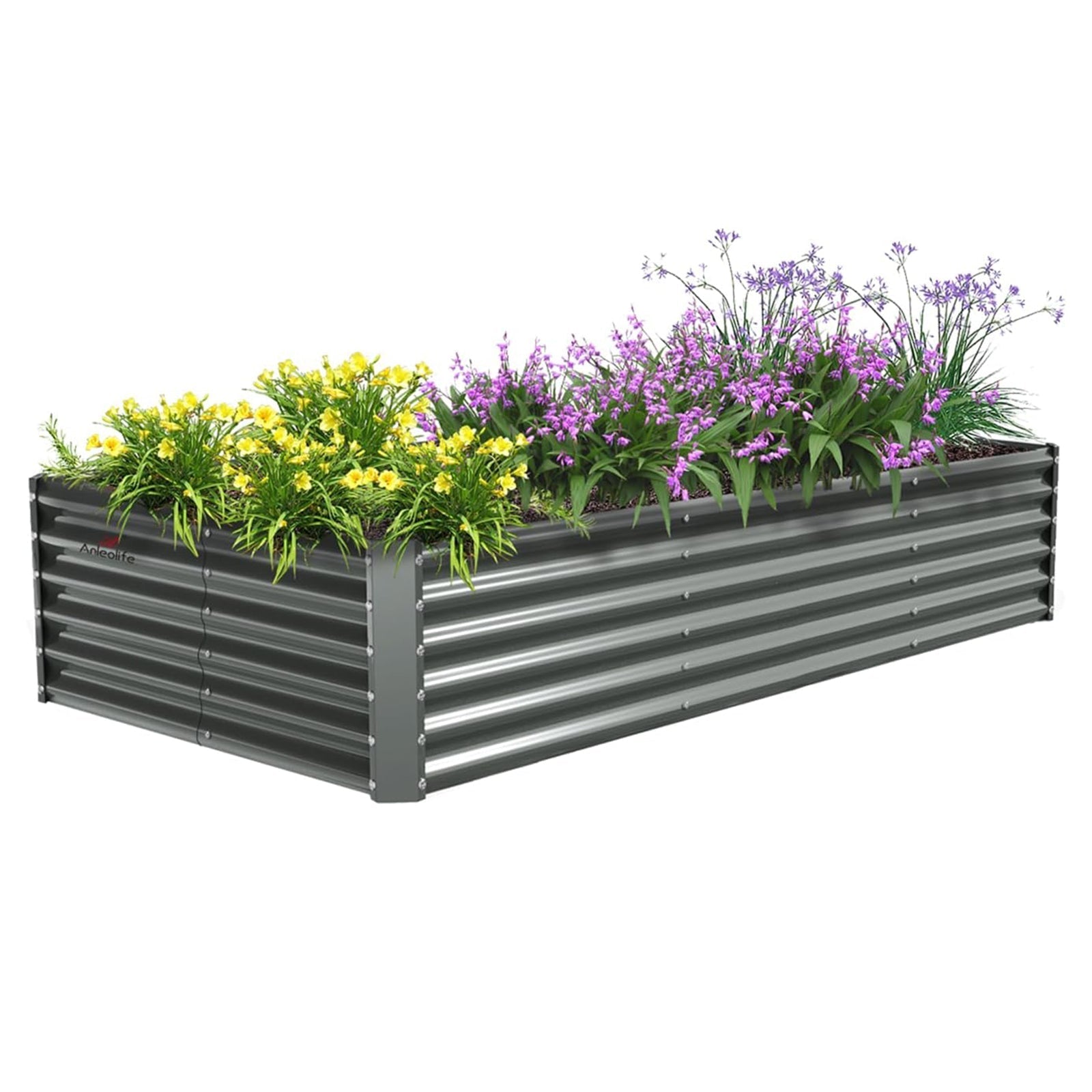
The 4x8 raised garden bed is the single most widely used size in suburban home gardens, and for good reason. At 4 feet wide, it is fully accessible from both sides without overreaching. At 8 feet long, it offers a generous planting area — 32 square feet — while fitting neatly along a fence line, a garage wall, or a property edge without dominating the yard.
This size is well-suited to growing a diverse mix of vegetables: leafy greens, tomatoes, peppers, herbs, and root vegetables can all coexist in a single 4x8 bed with thoughtful companion planting. According to layout planning resources from Savvy Gardening, a 4x8 raised bed vegetable garden layout can support a surprisingly wide variety of crops when organized using intensive spacing principles.
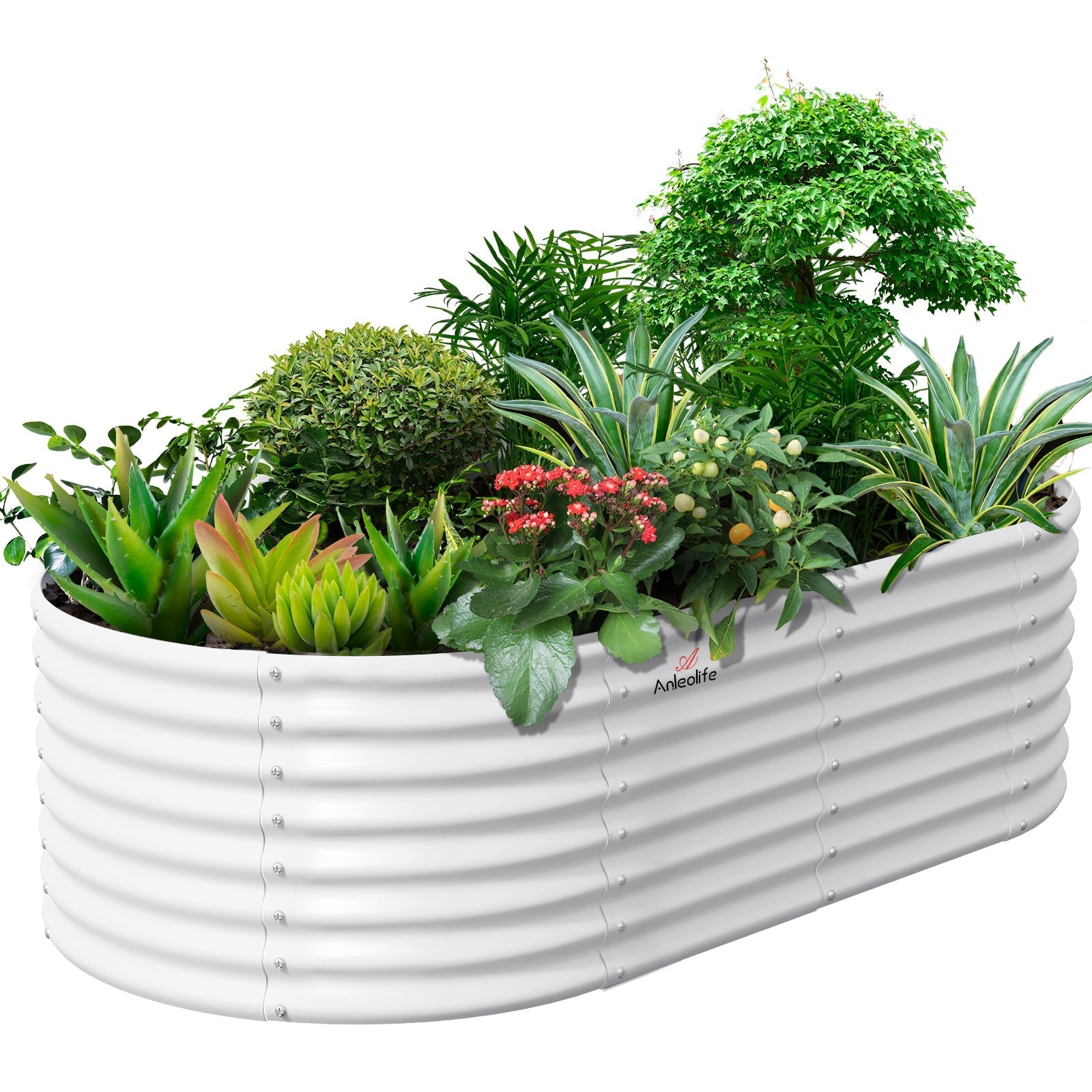
For compact yards, a pair of 4x8 beds arranged in parallel with a 2-foot pathway between them creates a functional, balanced raised bed planting layout without overwhelming the space. The Anleolife 18" Tall 8x4 ft Galvanized Steel Raised Garden Bed is a strong representative of this category, offering meaningful growing depth in the classic footprint.
The Compact 4x4 Bed: Ideal for Corners and First-Timers
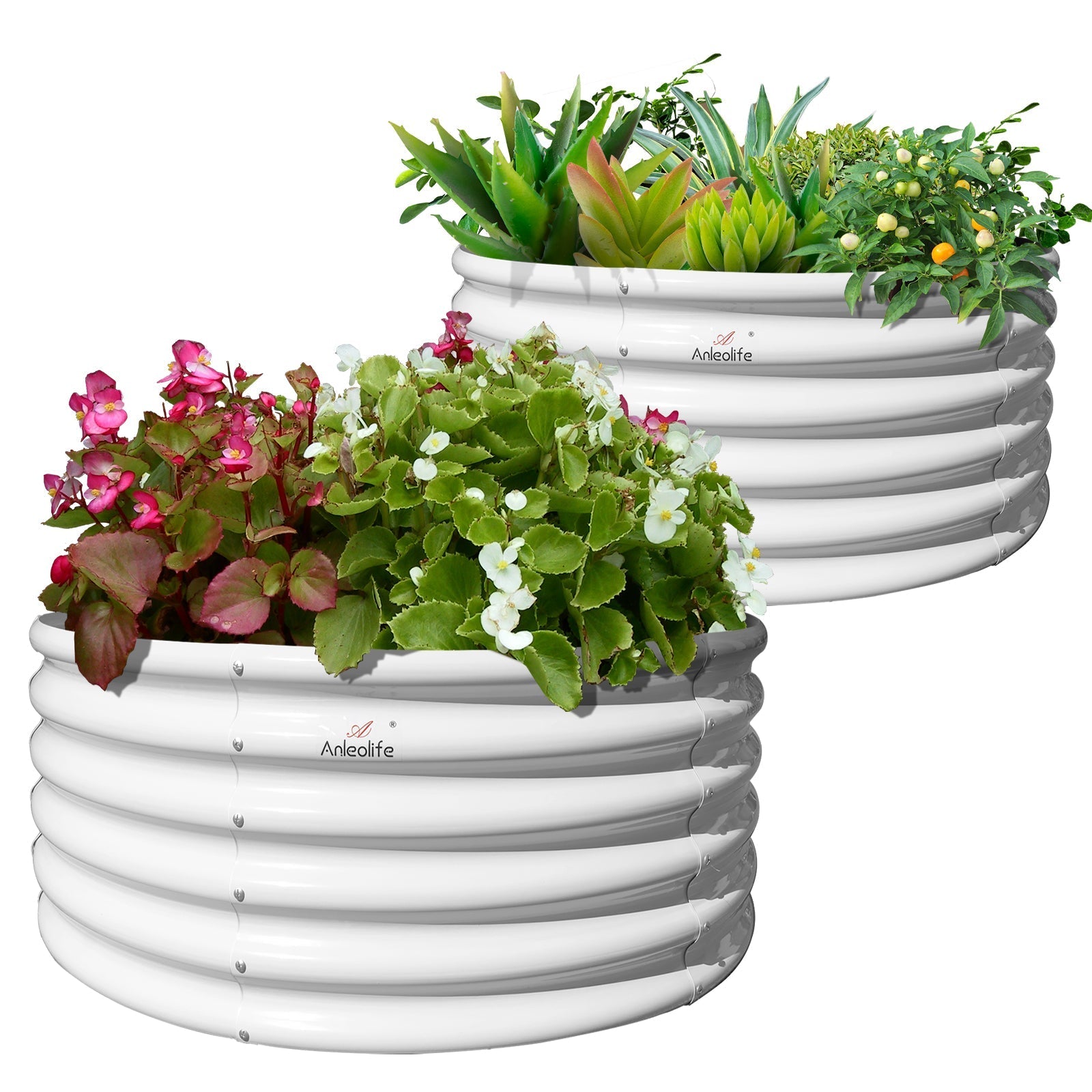
A 4x4 raised garden bed is accessible from all four sides, requires the least square footage of any standard bed, and is an ideal starting point for gardeners who are new to raised bed gardening or working with a particularly constrained space. Corner placement, balcony-adjacent strips, or spots beside a patio all become productive with a 4x4 bed where a larger option would feel intrusive.
The tradeoff is yield: at 16 square feet, a 4x4 bed is best suited to a focused crop selection — herbs, salad greens, or a few tomato plants — rather than a diversified kitchen garden. For this reason, many experienced growers treat the 4x4 as a specialty bed within a larger multi-bed raised bed layout rather than a standalone solution.
Anleolife's 18" Tall 4x4 ft Galvanized Steel Raised Garden Bed fits this use case precisely, offering the compact footprint with enough depth to support a genuine soil system.
The Narrow 12x3 or 6x3 Bed: Space-Efficient Strip Planting
Narrow beds — roughly 3 feet wide and ranging from 6 to 12 feet in length — are underused in suburban raised bed garden layouts but remarkably effective. A 3-foot width is comfortably reachable from either side for most adults, and the elongated shape fits along fence lines, driveway edges, or narrow side yards that a wider bed simply cannot occupy.
Strip beds excel for single-category planting: a row of herbs, a succession of lettuce, or a line of root vegetables like carrots and beets. In a multi-bed layout, they pair well with larger beds to round out crop diversity without consuming additional center-yard space.
Anleolife offers both the 18" Tall 12x3 ft and the 24" Extra Tall 6x3 ft configurations in both galvanized steel and rust-resistant finishes, covering the full range of strip bed applications.
The Extra-Tall 24"–30" Bed: For Accessibility and Deep-Rooted Crops
Extra-tall raised beds — those standing 24 to 30 inches above ground — serve two distinct purposes. First, they dramatically improve ergonomic access for gardeners with mobility limitations, back issues, or anyone who prefers to tend their garden while seated or standing rather than kneeling. Second, the additional soil depth benefits deep-rooted crops like carrots, parsnips, and certain tomato varieties that underperform in standard-depth beds.
The practical tradeoff is cost: more height means more material and more soil volume. In a compact yard where budget discipline matters, extra-tall beds are most valuable as one or two specialized components within a mixed-height raised bed layout rather than the standard for every bed.
Anleolife's lineup includes 24" Extra Tall and 30" Extra Tall options in the 8x4 ft and 6x3 ft footprints, giving compact-yard gardeners meaningful ergonomic upgrades without forcing them to rebuild their entire layout.
The Waist-High 35" Bed: No-Bend Gardening for Accessibility
At 35 inches tall, the Anleolife Waist-High 4x1.5 ft Raised Garden Bed brings gardening to a fully standing height. This size is purpose-built for gardeners who cannot or prefer not to bend — particularly retirees, individuals managing arthritis or back conditions, or anyone recovering from injury. The narrower 1.5-foot width ensures reach from either side remains effortless even at standing height.
In a compact suburban yard, a waist-high bed functions as a dedicated herb or salad station — a high-turnover, frequently-accessed planting area that benefits most from maximum accessibility.
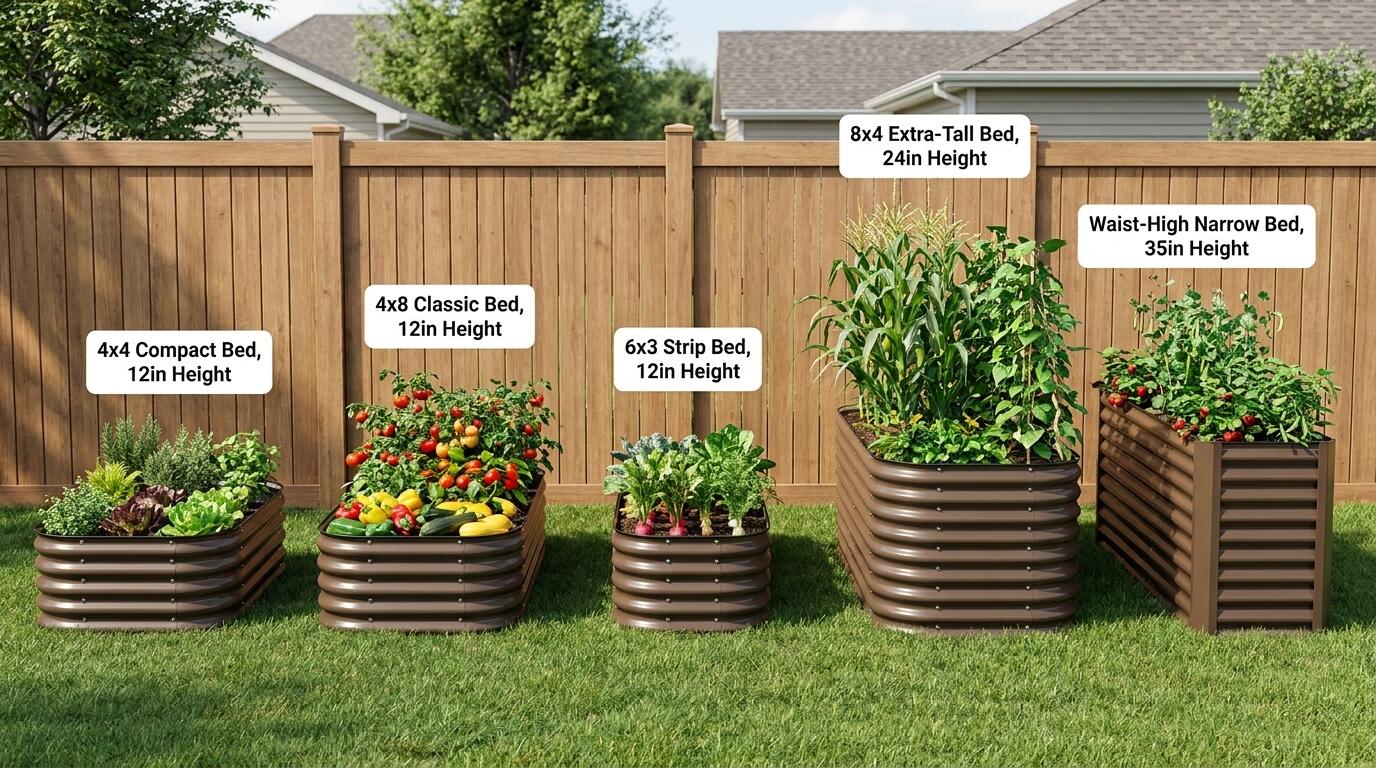
ALT: Side-by-side comparison of raised bed layout sizes from compact 4x4 to extra-tall 8x4 ft galvanized steel raised garden beds in a suburban yard
Head-to-Head Comparison: Raised Bed Sizes for Compact Suburban Yards
| Criterion | 4x8 Bed (18" Tall) | 4x4 Bed (18" Tall) | 12x3 or 6x3 Strip Bed | 24"–30" Extra Tall Bed | 35" Waist-High Bed |
|---|---|---|---|---|---|
| Reachability | Excellent (4 ft max reach from both sides) | Excellent (accessible all sides) | Excellent (3 ft wide) | Excellent (same footprint, taller) | Best (standing height, narrow width) |
| Yield per square foot | High (32 sq ft, intensive planting) | Moderate (16 sq ft) | Moderate–High (depends on length) | High (extra depth supports dense planting) | Low–Moderate (narrow footprint) |
| Soil volume required | High | Moderate | Moderate | Very High | Low |
| Ergonomic benefit | Standard | Standard | Standard | High | Highest |
| Compact yard footprint impact | Moderate | Low | Low–Moderate | Moderate | Very Low |
| Suitability for deep-rooted crops | Good (18" depth) | Good (18" depth) | Good (18"–24" depth) | Excellent (24"–30" depth) | Consult provider |
| Scalability within a layout | Excellent (anchor bed) | Good (specialty/add-on) | Good (perimeter/strips) | Good (1–2 in a mixed layout) | Good (dedicated station) |
| Cost-effectiveness | High (value per sq ft) | Moderate | Moderate–High | Moderate (higher soil cost) | Moderate |
| Long-term durability (galvanized steel) | Up to 20 years | Up to 20 years | Up to 20 years | Up to 20 years | Up to 20 years |
The data above reveals a pattern we consistently see in real-world suburban garden planning: no single bed size is optimal across all criteria, and the highest-performing compact-yard layouts almost always combine at least two different sizes.
The 4x8 bed earns its status as the standard workhorse because it balances yield, reachability, and cost-effectiveness better than any other single size. For a gardener working with limited time and budget who can only install one bed, the 4x8 at standard height (18 inches) delivers the best all-around return. As Gardeners.com's kitchen garden planner resource illustrates, even a single well-designed rectangular bed can serve as the foundation of a genuinely productive kitchen garden.
Where the comparison becomes more nuanced is in the extra-tall category. The 24"–30" beds score highest for deep-rooted crop performance and ergonomic access, but the substantially higher soil volume requirements mean they come with a real upfront cost premium. In a compact yard, the practical approach is to designate one extra-tall bed for crops that genuinely need depth — carrots, beets, parsnips, or heavily-producing tomatoes — and use standard-height beds for crops that are comfortable at 18 inches.
The waist-high 35" bed occupies a distinct niche: it is the right choice for accessibility-first gardening, particularly for empty nesters or retirees who want to maintain an active garden without physical strain. Its narrow 1.5-foot width means it cannot anchor a full kitchen garden layout, but as a dedicated fresh-herb or salad-green station positioned near the back door, it earns its footprint every single day.
Which Raised Bed Size Should You Choose? Scenario Recommendations
If you are starting your first garden and want manageable variety, choose the 4x8 bed at 18" tall as your anchor bed. It offers enough space to grow a meaningful selection of vegetables — tomatoes, peppers, basil, lettuce, and more — without overwhelming a first-timer with soil volume or maintenance. Once you have a season under your belt, adding a 4x4 or a strip bed is a natural and low-cost expansion. For a guided starting point, this first-time buyer's guide to sizing a raised garden bed kit walks through the decision in practical detail.
If your yard has an awkward narrow strip — along a fence, beside a driveway, or bordering a patio — a 12x3 or 6x3 strip bed is your best option. These dimensions turn dead-zone spaces into productive planting areas without intruding on the main yard. Pair them with herbs and succession-planted greens for maximum turnover.
If you or someone in your household has mobility limitations or back pain, prioritize at least one 24"–30" extra-tall bed or the 35" waist-high model. Gardening should be enjoyable, not painful, and the ergonomic premium of a taller bed pays dividends over years of use. Given that Anleolife's galvanized steel beds are built for a 20-year lifespan, that ergonomic investment has a long runway.
If you are an empty nester or retiree with a smaller growing ambition, a 4x4 bed paired with the 35" waist-high bed gives you a complete, low-maintenance setup: the 4x4 for seasonal vegetables, the waist-high unit for fresh herbs and salad greens you can harvest daily without effort.
If you want a full kitchen garden in a compact yard, the high-performance layout is: two 4x8 beds (18" tall) as anchors for high-yield crops, one 6x3 strip bed for succession plantings of greens or root vegetables, and one 24" extra-tall bed for deep-rooted crops. This combination covers the full range of home kitchen garden crops within a footprint most suburban backyards can comfortably accommodate.
Pros and cons at a glance:
- 4x8 (18" tall): Best all-around value and productivity per dollar; slightly more footprint than smaller options
- 4x4 (18" tall): Low footprint, easy to manage, but limited yield for a full kitchen garden
- Strip beds (12x3 or 6x3): Excellent for perimeter use and specialty crops; requires thoughtful crop selection
- Extra-tall beds (24"–30"): Superior for deep roots and ergonomics; higher soil cost upfront
- Waist-high (35"): Best accessibility, minimal maintenance; not suited as a standalone kitchen garden solution
People Also Ask
Q1: How wide should a raised garden bed be for easy access?
A raised garden bed should be no wider than 4 feet if accessible from both sides, or 2 feet if accessible from only one side. This guideline, consistently recommended by North American university extension horticulture programs, ensures you can reach the center of the bed comfortably without stepping inside and compacting the soil. Narrower beds — such as Anleolife's 3-foot-wide strip configurations — are equally reachable and suit fence-line or perimeter raised bed planting layouts.
Q2: Are galvanized steel raised garden beds safe for growing vegetables?
Galvanized steel raised garden beds are widely considered safe for vegetable growing. The zinc coating used in galvanization is the same material used in food-safe cookware and plumbing, and current evidence from agricultural and food safety research does not identify galvanized steel as a meaningful risk in garden bed applications. Anleolife's galvanized steel beds are designed for long-term outdoor use and are built to last up to 20 years — a strong indicator of material quality and structural integrity for raised bed gardening.
Q3: How much does it cost to fill a raised garden bed with soil, and is it worth it?
Soil cost depends on bed dimensions and depth. A standard 4x8x18" bed requires approximately 30 cubic feet of growing medium — a blend of compost, topsoil, and amendments is typical. While the upfront investment can feel significant, raised bed gardening consistently delivers strong long-term value: improved yields, fewer weeds, better water retention, and dramatically reduced labor compared to in-ground gardening. For guidance on building the most productive soil blend, this resource on the best soil composition for organic vegetable raised beds offers practical, season-tested recommendations.
Final Thoughts
Choosing the right raised bed size for a compact suburban yard is not about finding a single perfect dimension — it is about designing a raised bed garden layout that matches your specific space, growing goals, physical needs, and budget. The most productive and satisfying suburban gardens we encounter are built around thoughtful size combinations, not one-size-fits-all solutions.
Key Takeaways:
- The 4x8 bed at 18 inches tall is the best single-bed choice for most compact suburban yards, balancing yield, reachability, and cost-effectiveness.
- Strip beds (12x3 or 6x3) are underused but highly effective for perimeter spaces and specialty crops.
- Extra-tall beds (24"–30") deliver meaningful ergonomic and productivity advantages for deep-rooted crops and accessibility-priority gardeners.
- A multi-size raised bed planting layout — rather than a single large bed — makes the most efficient use of limited suburban space.
- Galvanized steel beds rated for a 20-year lifespan transform a raised bed layout from a seasonal expense into a long-term home improvement investment.
The best next step is to sketch your available yard space, identify your access points and sun exposure, and map out a two-to-three bed layout before purchasing anything. Starting with a plan costs nothing and prevents the most common (and expensive) sizing mistakes.
Ready to put your layout into action? Browse the full range of Anleolife galvanized steel and rust-resistant raised garden beds at the Anleolife website, or find Anleolife products on Amazon, Walmart, Home Depot, Lowe's, and Wayfair. With a nationwide U.S. warehouse network spanning California, Texas, Florida, New York, Illinois, and Washington, delivery arrives in 3–8 business days — so your growing season does not have to wait. Whether you are starting with a single 8x4 bed or designing a complete planting-and-raising ecosystem, Anleolife's modular product lineup grows with you at every stage.
Sources
- Savvy Gardening. "4x8 Raised Bed Vegetable Garden Layout Ideas".
https://savvygardening.com/4x8-raised-bed-vegetable-garden-layout/ - Gardeners.com. "Pre-Planned Gardens — Kitchen Garden Planner".
https://www.gardeners.com/pages/kitchen-garden-planner-preplanned-gardens - U.S. Department of Agriculture (USDA). Agricultural Research and Home Gardening Resources.
https://www.usda.gov - U.S. Environmental Protection Agency (EPA). Soil and Gardening Safety Guidelines.
https://www.epa.gov
Note: Standards and guidelines may be updated; please check the latest official documents or consult professional advisors.